

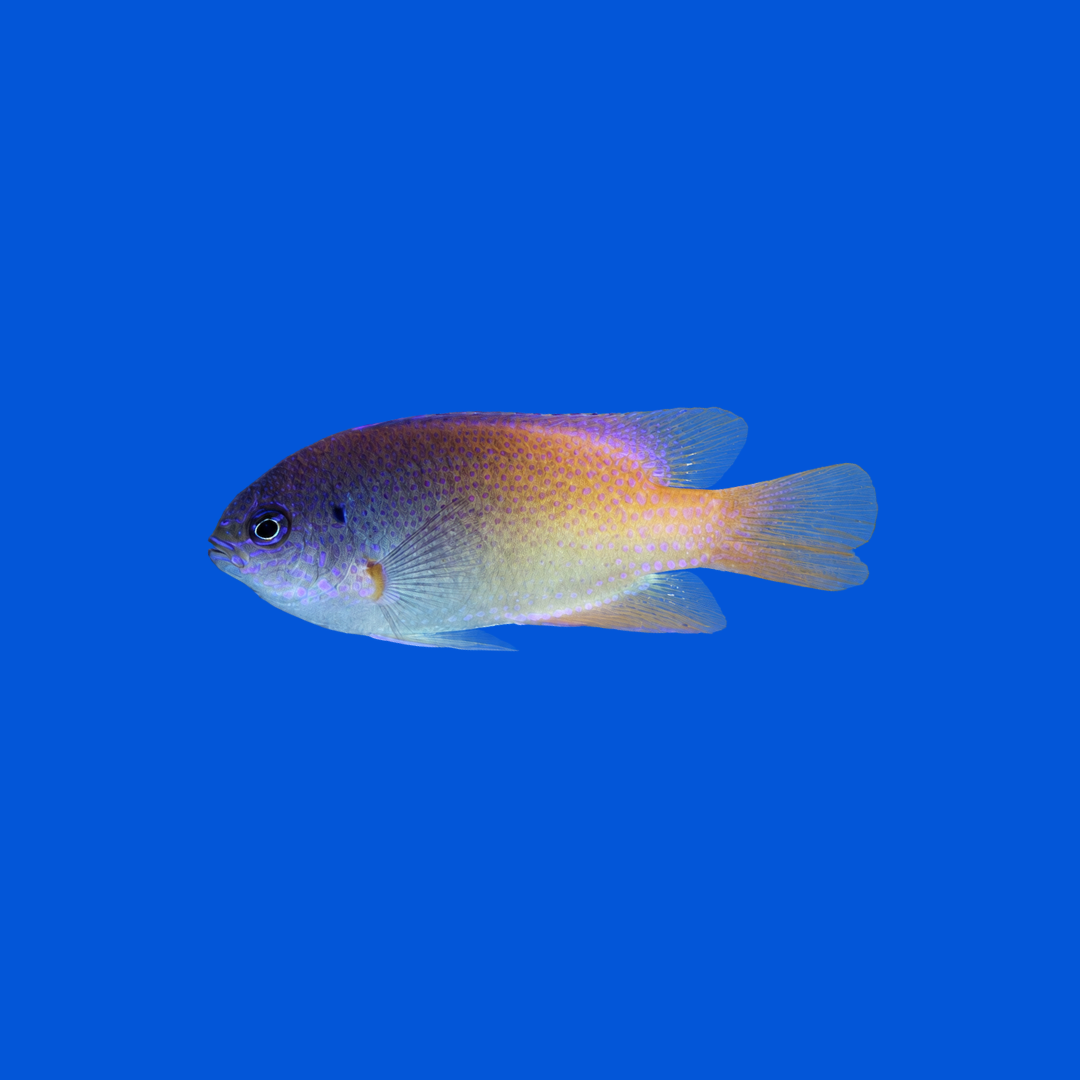
解説 / Description
レモンスズメダイは、琉球列島を含む西太平洋から東インド洋の一部に分布する小型のスズメダイです。幼魚では明るい黄色の体に青いラインや斑点が入り、成長すると頭部から前背部にかけての青みと、体側の淡い黄色から橙色が落ち着いた印象を見せます。近年は、よく似た近縁種との分類整理が進み、かつて本種として扱われた南西太平洋の個体群の一部は別種として扱われるようになっています。 The King demoiselle is a small damselfish distributed in the western Pacific and parts of the eastern Indian Ocean, including the Ryukyu Islands. Juveniles show a bright yellow body with blue lines and spots, while adults develop a calmer pattern with bluish tones around the head and front of the back and pale yellow to orange coloration along the body. Recent taxonomic work has clarified its relationship with very similar relatives, and some south-western Pacific populations once treated as this species are now regarded as separate species.
水槽では丈夫で人工飼料にも慣れやすく、海水魚飼育の入門種として紹介されることがあります。ただし、スズメダイらしく一定の縄張り意識を持つため、同属種や小型で臆病な魚との混泳では注意が必要です。安定した水質、隠れ家の多い岩組み、動物性と植物性を組み合わせた給餌を整えることで、鮮やかな体色と落ち着いた行動を保ちやすくなります。 In aquaria, it is hardy and usually accepts prepared foods readily, so it is often introduced as a beginner-friendly marine fish. However, like many damselfishes, it has a territorial side, and care is needed when keeping it with other Chrysiptera species or timid small fish. Stable water quality, rocky shelters, and a diet that combines animal- and plant-based foods help maintain good coloration and calmer behavior.
基本情報 / Basic Information
| 学名 / Scientific Name | Chrysiptera rex (Snyder, 1909) |
|---|---|
| 通称 / Common Name | レモンスズメダイKing demoiselle |
| 分類 / Family | スズキ目(広義)スズメダイ科ルリスズメダイ属Family Pomacentridae, genus Chrysiptera; often listed under Perciformes in aquarium references |
| 英名 / English Name | King demoiselle, Pink demoiselle, Peach damsel |
| 分布 / Distribution | 琉球列島、台湾、フィリピン、ベトナム、マレーシア、インドネシア東部、パラオ、東ティモール、西オーストラリア沖合など。水深1〜6mほどの浅いリーフクレストでよく見られ、場所によっては水深20m前後まで記録されます。グレートバリアリーフ周辺で過去に本種とされた個体は、現在では近縁種 Chrysiptera caesifrons として扱われる場合があります。Recorded from areas such as the Ryukyu Islands, Taiwan, the Philippines, Vietnam, Malaysia, eastern Indonesia, Palau, Timor-Leste, and offshore western Australia. It is commonly associated with shallow reef crests around 1–6 m deep and may occur to about 20 m in some habitats. Some Great Barrier Reef records formerly attributed to this species are now treated as the related Chrysiptera caesifrons. |
| 最大体長 / Max Size | 最大全長約7cmUp to about 7 cm total length |
| 寿命 / Lifespan | 種単位で確認された飼育下寿命の公開情報は限られます。状態の良い個体を安定した環境で飼育すれば、3〜5年以上の長期飼育を目標にできます。Published species-specific captive lifespan data are limited. With a healthy specimen and stable husbandry, a long-term goal of 3–5 years or more is reasonable. |
飼育環境 / Aquarium Environment
| 水槽サイズ / Tank Size | 単独飼育なら小型水槽でも維持できる場合がありますが、水質の安定と縄張り行動への余裕を考えると、60L以上、目安として60cm規格水槽以上が扱いやすいです。複数飼育や混泳を考える場合は、90cm規格水槽または100L以上を基準にすると管理しやすくなります。A single individual may be kept in a small aquarium, but for stable water quality and easier territory management, 60 L or more, roughly a standard 60 cm aquarium, is easier to manage. For groups or community setups, a standard 90 cm aquarium or at least 100 L is a better starting point. |
|---|---|
| 水温 / Temperature | 23〜27℃。24〜25℃前後を安定して保つと管理しやすく、急な水温変化を避けるためにヒーターと水槽用クーラーを必要に応じて使用します。 23–27°C. Keeping the aquarium around 24–25°C is easy to manage, and a heater or aquarium chiller should be used as needed to prevent sudden temperature swings. |
| 水質 / Water Quality | 比重1.020〜1.025、pH8.1〜8.4を目安にします。硝酸塩は可能な範囲で低く保ち、導入初期や混泳水槽では25〜50ppm以内を意識すると安心です。サンゴ砂やライブロックの緩衝力を活かし、蒸発分は淡水で足し水して塩分濃度の上昇を防ぎます。Aim for a specific gravity of 1.020–1.025 and pH 8.1–8.4. Keep nitrate as low as practical; during introduction or in a community aquarium, staying within about 25–50 ppm provides a safer margin. Coral sand and live rock help buffer the system, and evaporated water should be replaced with freshwater to prevent salinity from rising. |
| レイアウト / Layout | ライブロックやサンゴ骨格を立体的に組み、複数の隠れ家と視線を切れる場所を作ります。自然下ではリーフクレストや岩礁の隙間を利用するため、開けすぎた水槽よりも、隠れながら泳げる環境のほうが落ち着きやすくなります。一般にサンゴを直接傷めにくい魚として扱われ、リーフタンクにも導入しやすい種類です。Build a three-dimensional layout with live rock or coral skeletons, creating several shelters and visual breaks. In nature, this species uses reef crests and rocky crevices, so it settles more easily in an aquarium where it can swim while staying close to cover. It is generally treated as a reef-safe fish and is usually suitable for reef aquaria. |
| 注意点 / Precautions | 丈夫な魚ですが、隠れ家が少ない、水槽が狭い、似た体型や色の魚が近くにいるといった条件では、攻撃性が目立つことがあります。驚いた際に飛び出す可能性もあるため、水槽上部には隙間の少ないフタを設置してください。購入時は産地や採集方法の表示だけで判断せず、体型、呼吸、ヒレの状態、入荷後の管理状況も確認すると導入後の失敗を減らしやすくなります。Although hardy, it may become noticeably aggressive when shelters are limited, the aquarium is cramped, or similarly shaped and colored fish occupy the same area. It may also jump when startled, so use a close-fitting lid. When purchasing, do not rely only on origin or collection labels; also check body condition, breathing, fin condition, and how the fish has been held after arrival. |
餌と給餌 / Feeding
| 餌の種類 / Diet | 雑食性ですが、自然下では藻類をよく利用します。海水魚用ペレット、フレーク、スピルリナ配合フード、海苔の小片、冷凍イサザアミ、ブラインシュリンプ、細かく刻んだイカなどを組み合わせ、動物性の餌だけに偏らせないようにします。This species is omnivorous, but algae are an important part of its natural diet. Offer marine pellets, flakes, spirulina-based foods, small pieces of dried seaweed, frozen mysid shrimp, brine shrimp, and finely chopped squid, avoiding a diet made only of animal-based foods. |
|---|---|
| 給餌のポイント / Feeding Tips | 1日1〜2回、数分で食べ切れる量を与えます。食べ残しは水質悪化につながるため、餌付きが良い個体ほど与えすぎに注意します。痩せや色あせが見られる場合は、植物性原料を含む餌や小型甲殻類系の冷凍餌を少量ずつ組み合わせ、栄養の幅を広げます。Feed once or twice daily, only as much as the fish can finish within a few minutes. Uneaten food quickly degrades water quality, so avoid overfeeding even when the fish eats eagerly. If the fish becomes thin or its color fades, broaden the diet with small amounts of plant-rich foods and crustacean-based frozen foods. |
性格と混泳 / Temperament and Tank Mates
| 性格 / Temperament | スズメダイ科の中では比較的扱いやすい部類ですが、完全に温和な魚ではありません。環境に慣れると岩組みの周辺を自分の行動範囲として主張し、近づく魚を追い払うことがあります。十分な隠れ家と視線を切るレイアウトがあると、過度な追い回しを抑えやすくなります。It is one of the more manageable damselfishes, but it should not be considered completely peaceful. Once settled, it may claim the area around its rocks and chase approaching fish. Multiple shelters and visual barriers help reduce excessive chasing. |
|---|---|
| 混泳の相性 / Compatibility | ヤッコ類、ハギ類、大きめのベラ類など、体格や遊泳層が異なる魚とは比較的合わせやすいです。一方、同属のルリスズメダイ類、似た体型や色彩の小型魚、臆病なハゼ類とは小型水槽でトラブルになりやすいため注意します。複数飼育を行う場合は、できるだけ広い水槽で同時に導入し、隠れ家を水槽全体に分散させると、攻撃が一個体に集中しにくくなります。It usually mixes more easily with angelfish, tangs, larger wrasses, and other fishes with different body sizes or swimming zones. Caution is needed with other Chrysiptera damselfishes, similarly shaped or colored small fish, and timid gobies, especially in small aquaria. For groups, introduce individuals at the same time in a spacious aquarium and spread shelters throughout the layout to reduce focused aggression. |
病気と対策 / Diseases and Prevention
| かかりやすい病気 / Common Diseases | 基本的には丈夫な魚ですが、輸送直後、導入時の水合わせ不足、混泳ストレス、水温変化が重なると、白点病、ウーディニウム症、細菌性のヒレの傷みなどが出ることがあります。It is generally hardy, but transport stress, poor acclimation, social stress, and temperature swings can lead to marine ich, marine velvet, or bacterial fin damage. |
|---|---|
| 対策と予防 / Prevention | 購入後は本水槽へすぐ入れず、検疫水槽で数日から数週間観察すると安全です。白点、呼吸の荒さ、ヒレの傷みが見られる場合は、淡水浴や銅イオン治療などを検疫水槽で検討します。銅はサンゴや甲殻類などの無脊椎動物に強い影響を与えるため、リーフタンク内では使用しません。本水槽では安定した水温、清潔なろ過、適度な栄養、必要に応じた紫外線殺菌灯の併用が予防の助けになります。After purchase, it is safer to observe the fish in a quarantine tank for several days to a few weeks before introducing it to the display. If white spots, rapid breathing, or fin damage appear, freshwater dips or copper-based treatment may be considered in the quarantine tank. Copper strongly affects corals and other invertebrates, so it should not be used in a reef display. In the main aquarium, stable temperature, clean filtration, balanced nutrition, and a UV sterilizer when appropriate can help reduce disease pressure. |
増やし方(繁殖) / Breeding
| 雌雄の判別 / Sexing | 外見だけで雌雄を確実に見分けるのは難しい種類です。繁殖期にはオスが産卵床を整え、求愛行動や卵の保護を行うため、行動観察が雌雄判断の手がかりになります。Reliable sexing by appearance alone is difficult. During breeding, males prepare the spawning site, court females, and guard eggs, so behavior is the most useful clue. |
|---|---|
| 繁殖形態 / Reproduction | 卵生で、岩面や隙間などの硬い基質に粘着性の沈性卵を産み付けます。産卵後はオスが卵を守り、新鮮な海水を送るように世話をします。田中(1998)の飼育観察では、2〜3日の間隔で産卵を繰り返し、前回産んだ卵がふ化する前に次の産卵を行う様子が記録されています。産卵やふ化までの日数は、水温や親魚の状態によって変わります。It is an egg-laying species that deposits adhesive demersal eggs on hard substrates such as rock surfaces and crevices. After spawning, the male guards the clutch and tends it by moving fresh seawater over the eggs. Tanaka (1998) recorded spawning at intervals of 2–3 days in captivity, with another clutch laid before the previous eggs had hatched. Spawning intervals and hatching times depend on temperature and broodstock condition. |
| 繁殖のポイント / Breeding Tips | 家庭水槽で産卵行動が見られる可能性はありますが、孵化後の仔魚は非常に小さく、浮遊幼生期を経て成長するため、一般的な混泳水槽で育て上げるのは難しいです。繁殖を狙う場合は、親魚の栄養状態を整え、卵付き基質を管理できる環境、微細な初期餌料、安定した水質を用意する必要があります。Spawning may occur in home aquaria, but the larvae are very small and pass through a pelagic larval stage, making successful rearing difficult in a standard community tank. Attempted breeding requires well-conditioned adults, a way to manage the egg-covered substrate, very fine first foods, and highly stable water quality. |
雑学と豆知識 / Trivia and Fun Facts
| 1. 沖縄から記載された「王」のスズメダイ / 1. A “Royal” Damselfish Described from Okinawa | レモンスズメダイは1909年、ジョン・オッターバイン・スナイダーによって、沖縄島の那覇で採取された標本をもとに Abudefduf rex として記載されました。その後の分類整理を経て、現在は Chrysiptera rex として扱われています。種小名の rex はラテン語で「王」を意味し、英名 King demoiselle にもその由来が反映されています。The King demoiselle was described in 1909 by John Otterbein Snyder as Abudefduf rex, based on specimens from Naha on Okinawa Island. After later taxonomic revisions, it is now treated as Chrysiptera rex. The species name rex means “king” in Latin, a meaning reflected in the English name King demoiselle. |
|---|---|
| 2. よく似た近縁種との整理が進んだ魚 / 2. A Fish Clarified Through Taxonomic Revision | かつては広い範囲の個体がレモンスズメダイとして扱われていましたが、色彩パターンやミトコンドリアDNAの解析により、近縁種との違いが整理されました。特に Chrysiptera caesifrons は、以前に C. rex と混同された地域個体群を含む近縁種として記載されています。似た見た目のサンゴ礁魚でも、地域ごとに少しずつ分化していることを示す興味深い例です。A broad range of populations was once treated as the King demoiselle, but color-pattern studies and mitochondrial DNA analysis clarified differences among close relatives. In particular, Chrysiptera caesifrons was described as a related species that includes populations previously confused with C. rex. It is an intriguing example of how similar-looking reef fishes can diverge region by region. |
| 3. 青い輝きは構造色として楽しむ / 3. The Blue Shine Is Best Appreciated as Structural Color | 幼魚の額に入る青いラインや、成魚の頭部に散る青い斑点は、スズメダイ類でよく見られる構造色の魅力を伝えてくれます。体表の虹色素胞に含まれる微細な結晶構造が光を反射し、見る角度や魚の状態によって青の見え方が変わります。照明、背景、落ち着ける隠れ家がそろうと、黄色い体色との対比がより鮮やかに感じられます。The blue facial lines of juveniles and blue head spots of adults highlight the structural color often seen in damselfishes. Fine crystal structures in iridophores reflect light, so the blue appearance changes with viewing angle and the fish’s condition. Suitable lighting, background contrast, and secure shelters can make the blue markings stand out beautifully against the yellow body tones. |
| 4. 小さな縄張りを持つ浅場の魚 / 4. A Shallow-Reef Fish with a Small Territory | 自然下では浅いリーフクレストや岩礁の隙間を利用し、単独または小さな群れで生活します。藻類を主に利用しながら、岩やサンゴの構造を隠れ家として使うため、水槽内でも「泳ぐ場所」と「逃げ込む場所」の両方が必要です。広い空間だけでなく、視線を切れる小さな居場所を用意することが、落ち着いた飼育につながります。In nature, this species uses shallow reef crests and rocky crevices, living alone or in small groups. It feeds mainly on algae while using rock and coral structures as shelter, so an aquarium should provide both swimming space and places to retreat. Calm husbandry depends not only on open space but also on small, secure areas where the fish can break line of sight. |
| 5. ハンドコート表記を読むときの視点 / 5. How to Read “Hand-Caught” Labels | 国内流通では、沖縄産や石垣島産のハンドコート個体が販売上の安心材料として示されることがあります。これは薬剤に頼らず、ダイバーが手作業で採集した個体を指す表現です。薬剤採取のリスクを避けるという意味では重要な目安になりますが、最終的には入荷後の蓄養、餌付き、体表やヒレの状態を合わせて確認することが大切です。出どころが明確で状態の良い個体を選ぶことは、長期飼育とサンゴ礁環境への配慮の両方につながります。In the Japanese aquarium trade, hand-caught specimens from Okinawa or Ishigaki may be presented as a point of reassurance. The term generally indicates fish collected manually by divers without relying on chemicals. It is a useful indicator for avoiding the risks associated with chemical collection, but the holding period after arrival, feeding response, body surface, and fin condition should also be checked. Choosing a well-conditioned fish with a clear origin supports both long-term aquarium success and more responsible use of reef resources. |
まとめ / Conclusion
レモンスズメダイは、丈夫で餌付きやすい性質と、黄色の体色に青い斑点が映える美しさをあわせ持つ小型海水魚です。飼育しやすい印象が先に立つ一方で、近縁種との分類整理、浅いリーフでの暮らし、オスが卵を守る繁殖行動など、知るほどに奥行きのある魅力が見えてきます。 The King demoiselle is a small marine fish that combines hardy, easy-feeding behavior with an attractive yellow body and blue markings. Although it is often regarded as easy to keep, a closer look reveals a richer appeal through its taxonomic history, shallow-reef lifestyle, and male egg-guarding behavior.
本種を長く美しく保つには、強健さに頼りすぎず、安定した水質、隠れ家の多い岩組み、植物性も含めた栄養管理を整えることが大切です。小さな縄張りを尊重した環境を用意できれば、レモンスズメダイはリーフタンクや海水魚水槽に明るい彩りを添える、頼もしい一匹になります。 To keep this species healthy and attractive over the long term, it is important not to rely on hardiness alone. Stable water quality, rocky shelters, and nutrition that includes plant-based foods are essential. When its small territory is respected, the King demoiselle becomes a dependable and colorful presence in reef and marine aquaria.

気になる道具や飼い方を見つけてみませんか?
 アイのアクアグッズ案内ショップで見かけるカラフルなバケツ。いったい何が入ってる?道具の特徴や使い方、選ぶときのポイントをアイが紹介します。記事はコチラ →
 アイのアクアグッズ案内旅行中、お魚のごはんはどうする? 自動給餌器・使える餌・スマート水槽の選び方旅行中の魚の餌やりを助ける自動給餌器を、アイとコタロウが紹介。時間指定、おかわり給餌、対応するフレークや顆粒、設置台、スマホ管理、一体型水槽、留守番フードまで、使いどころと選び方を案内します。記事はコチラ →
 アイのアクアグッズ案内アカヒレの仲間に合わせる飼育用品|無加温・混泳・繁殖の水槽とろ過道具の特徴や使い方、選ぶときのポイントをアイが紹介します。記事はコチラ →
 アイのアクアグッズ案内小型カラシンの群れを楽しむ|餌と水換えから考える飼育用品ガイド小型カラシンの群れを眺める時間を、もっと楽しく。泳ぐ余白、餌の食べ方、続けやすい水換えを軸に、日本で揃えやすい用品の選び方を紹介します。記事はコチラ →
さまざまな飼育テーマをご紹介。リンク先の記事には広告・商品紹介が含まれます。
案内・紹介記事一覧へ →分布マップ
レモンスズメダイは、琉球列島、台湾、フィリピン、ベトナム、マレーシア、インドネシア東部、パラオ、東ティモール、西オーストラリア沖合などに分布するとされます。ここでは分布イメージをつかむため、東南アジアから西太平洋周辺を中心とした概略代表地点として表示しています。
Google Earthで開くこの地図は分布欄の記述をもとにした概略プロットです。実際の採集地点や厳密な生息範囲を示すものではありません。
参考文献・参照資料
本種の分類、分布、生息環境、食性、繁殖、飼育上の水質管理、病気への注意点を確認するため、魚類分類データベース、専門機関の魚類データベース、学術論文、大学拡張資料を中心に選定しています。店舗、通販サイト、個人ブログ、まとめサイトは含めていません。
-
Fricke, R., Eschmeyer, W. N. & van der Laan, R. eds. Eschmeyer’s Catalog of Fishes: Chrysiptera rex.
California Academy of Sciences
分類、有効学名、原記載名、タイプ産地、タイプ標本、スズメダイ科内での位置づけ、広域分布の確認に使用。 -
Froese, R. & Pauly, D. eds. FishBase: Chrysiptera rex, King demoiselle.
FishBase
最大体長、生息水深、リーフクレスト周辺での生息、藻類中心の食性、昼行性、卵生、基質産卵、オスによる卵保護の確認に使用。 -
Bray, D. J. Chrysiptera rex in Fishes of Australia.
Museums Victoria / Fishes of Australia
英名、オーストラリア周辺での分布、タイプ産地、グレートバリアリーフ周辺記録の同定上の注意点を補強するために使用。 -
Allen, G. R., Erdmann, M. V. & Kurniasih, E. M. 2015. Chrysiptera caesifrons, a new species of damselfish (Pomacentridae) from the south-western Pacific Ocean.
Journal of the Ocean Science Foundation 15: 16-32
かつて広域の地域変異として扱われた個体群が、C. rex、C. caesifrons、C. chrysocephala を含む近縁種群として整理された経緯、色彩差、遺伝的差異、分布境界の説明に使用。 -
Yanong, R. P. E. Cryptocaryon irritans Infections (Marine White Spot Disease) in Fish.
University of Florida IFAS Extension
海水魚の白点病、原因生物、感染時の注意点、検疫・治療を考える際の基礎資料として使用。 -
Yanong, R. P. E. Fish Health Management Considerations in Recirculating Aquaculture Systems: Part 3.
University of Florida IFAS Extension
アンモニア、亜硝酸、pH、アルカリ度、溶存酸素、水温、硬度、塩分などを継続的に測定・記録し、安定させるという水質管理の基本方針の裏付けとして使用。
補足:水槽サイズ、比重、pH、硝酸塩の許容目安などの実践的な飼育条件は、本種だけを対象にした単独の飼育試験値ではなく、自然下での浅いサンゴ礁環境、FishBaseに記載された生態情報、海水魚の一般的な水質管理資料を組み合わせて設定した飼育上の目安です。
繁殖の参照資料:田中洋一(1998)「スズメダイ科魚類の繁殖習性と卵・仔魚の形状」。レモンスズメダイの産卵間隔に関する飼育観察を参照。




コメント