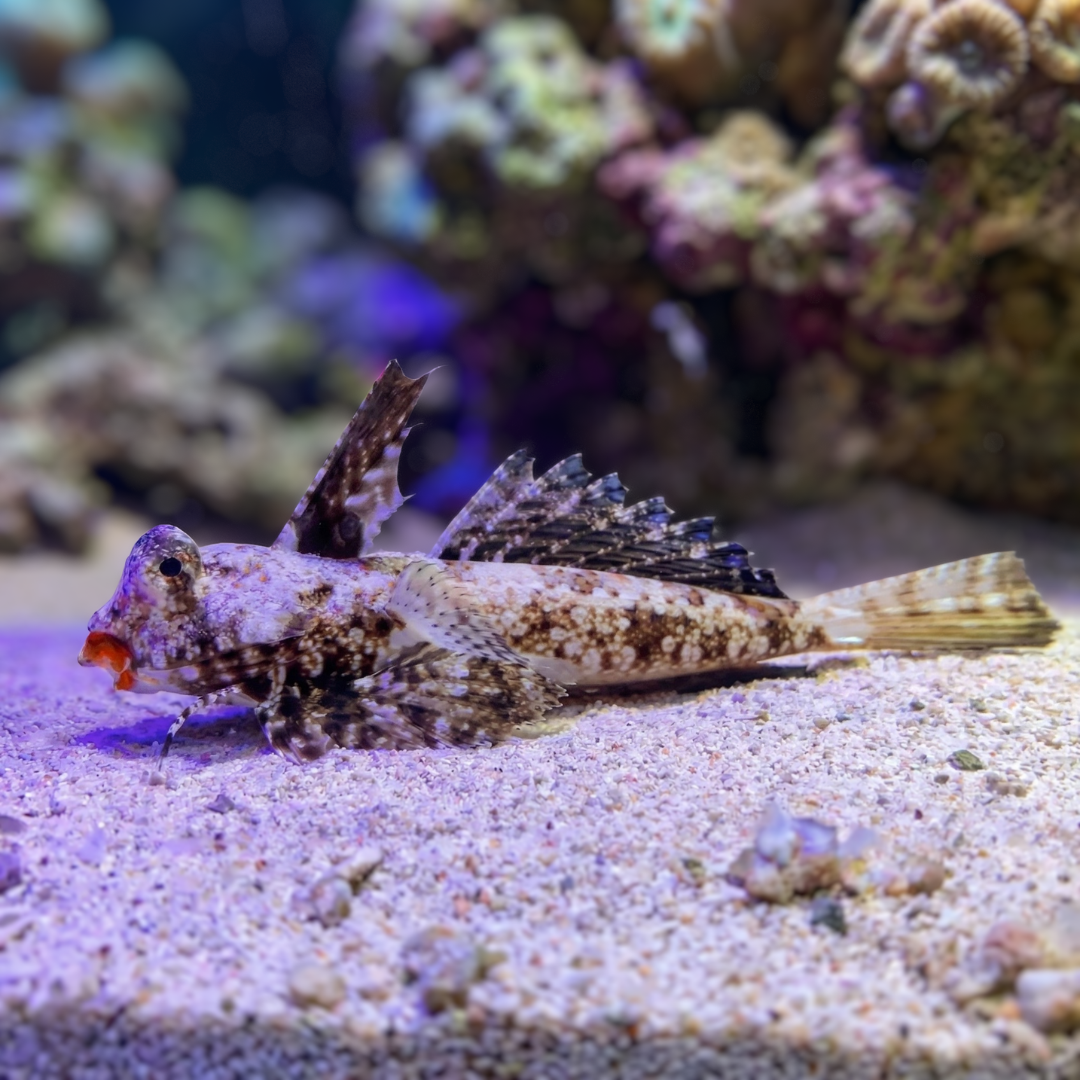
イッポンテグリは、ネズッポ科イッポンテグリ属に分類される底生性の海水魚です。その最大の特徴は、腹鰭の一部が独立した「指」のような形状に進化している点にあります。この特殊な鰭を使って海底をトコトコと歩く姿は、まるで小さな恐竜や四足歩行の動物を彷彿とさせ、見る者を飽きさせません。砂泥底に溶け込む複雑な大理石模様のカモフラージュを身にまとい、夕暮れ時には雄が大きく美しい背鰭を広げて求愛を行うなど、非常に神秘的な生態を持っています。日本国内では出会える機会が極めて少ない「レア種」として知られ、ダイバーや熱心な海水魚愛好家にとって、一度は目にしたい憧れの存在といえるでしょう。The Fingered Dragonet (Dactylopus dactylopus) is a benthic marine fish belonging to the family Callionymidae. Its most striking feature is the evolution of its pelvic fins, where parts have become independent “fingers,” allowing the fish to “walk” along the seabed. With a marbled camouflage pattern that blends perfectly into sandy or muddy substrates, this species displays mysterious behaviors, such as the male’s elaborate courtship dance using its large, ornate dorsal fin at dusk. In Japan, it is considered a rare species, often regarded as a dream encounter for divers and dedicated marine aquarists.
広い砂泥底のスペースと、微生物の繁殖場となる豊富なライブロック。Wide sandy/muddy areas with plenty of live rock for micro-organism growth.
注意点 / Precautions
硫酸銅などの魚病薬に極めて弱いため、薬物治療は原則厳禁です。Highly sensitive to medications like copper; avoid chemical treatments in the main tank.
餌と給餌 / Feeding
餌の種類 / Diet
活イサザアミ、コペポーダ、ヨコエビ、慣れれば冷凍マイシス。Live opossum shrimp, copepods, amphipods; frozen mysis once acclimated.
給餌のポイント / Feeding Tips
非常に代謝が高いため、絶え間なく微小生物を捕食できる環境が理想的です。Requires constant access to micro-prey due to its extremely high metabolic rate.
性格と混泳 / Temperament and Tank Mates
性格 / Temperament
非常に温和で平和主義。自分から他魚を攻撃することはありません。Very peaceful and social; does not initiate aggression toward other fish.
混泳の相性 / Compatibility
同種オス同士は激しく争います。攻撃的な魚や、餌を横取りする魚は避けます。Avoid housing multiple males together. Keep with calm mates that won’t outcompete for food.
病気と対策 / Diseases and Prevention
かかりやすい病気 / Common Diseases
厚い粘液層により白点病には強いですが、水質悪化には敏感です。Resistant to Ich due to a thick mucus coat, but sensitive to poor water quality.
対策と予防 / Prevention
導入前のコンディショニングと、リフジウム等による安定した生態系の構築。Ensure pre-introduction conditioning and maintain a stable ecosystem using a refugium.
増やし方(繁殖) / Breeding
繁殖形態 / Reproduction
夕暮れ時にペアで水中に浮上し、放卵・放精を行う浮遊産卵型。Pelagic spawners; pairs ascend into the water column at dusk to release eggs and sperm.
繁殖のポイント / Breeding Tips
雄のサイズが重要で、雌は一回の浮上で産卵を成功させられる大きな雄を好みます。Female preference is strongly biased toward larger males for efficient spawning.
雑学と豆知識 / Trivia and Fun Facts
1. 海底を「歩く」ために進化した指 / 1. Fingers Evolved for Walking
イッポンテグリの最も驚くべき特徴は、その「歩く」姿です。腹鰭の第一棘条と第一軟条が他の部分から完全に分かれ、まるで指のような独立した器官になっています。彼らはこれを使って砂の上を器用に歩き、獲物である微小な生き物を探します。この進化により、無駄な体力を消耗することなく海底を探索し、水流の中でもしっかりと体を固定することができるのです。The most fascinating trait of the Fingered Dragonet is its ability to “walk.” The first spine and ray of the pelvic fins are separate from the rest, acting like independent fingers. This evolutionary adaptation allows them to roam the seabed searching for prey without wasting energy swimming, while also serving as an anchor in currents.
2. オスの背鰭にある「偽の眼」 / 2. The “False Eye” on the Male’s Fin
成熟した雄の第一背鰭には、青と黒の鮮やかな「眼状斑」が存在します。これは求愛の際に雌にアピールするための装飾であると同時に、身を守るための強力な武器でもあります。捕食者が近づくと、雄は瞬時にこの巨大な背鰭を立てて広げます。すると、自分よりもはるかに大きな生き物の「眼」が現れたかのように見え、驚いた捕食者が攻撃をためらうという、巧妙な擬態・威嚇効果を発揮するのです。Adult males possess a vivid blue and black “eye spot” (ocellus) on their first dorsal fin. While used to attract females, it also functions as a defense mechanism. When a predator approaches, the male flares its fin, creating the illusion of a much larger creature’s eye, which often deters potential attacks.
3. カレイとの不思議な共生関係 / 3. Curious Interaction with Flounders
野生のイッポンテグリの観察では、しばしばカレイやヒラメがそのすぐ後ろを追いかけている様子が報告されています。これは、イッポンテグリが砂を掘り起こして餌を探す際、逃げ出したヨコエビなどの獲物をカレイが横取りしようとする「便乗摂食」と考えられています。一方で、イッポンテグリにとっても、背後に砂に同化したカレイがいることで自分の輪郭がぼやけ、上空の捕食者から見つかりにくくなるというメリットがあるのではないかと推測されています。Observations in the wild have shown flounders following closely behind Fingered Dragonets. This is likely “opportunistic feeding,” where the flounder eats prey stirred up by the dragonet. Interestingly, the dragonet may also benefit as the flounder’s camouflage helps obscure its outline from overhead predators.
4. 特殊な捕食法「体幹突進」 / 4. The “Body Ram” Hunting Strategy
多くの魚は水を吸い込んで獲物を捕らえますが、イッポンテグリは「体幹突進」という独自のスタイルをとります。彼らは吸い込む力が弱いため、獲物にギリギリまで忍び寄り、体全体をバネのように押し出して直接口を獲物に到達させます。このため、水槽内で空中を漂う人工飼料を食べるのが非常に苦手です。彼らの食生活を支えるには、砂床や岩の表面に定着している生き餌が必要不可欠なのです。While most fish rely on suction to catch prey, Fingered Dragonets use “body ramming.” They have weak suction power, so they creep close and propel their entire body forward to grab prey directly. This explains why they struggle with floating food and require benthic live prey found on substrate or rocks.
まとめ / Conclusion
イッポンテグリは、そのユーモラスな歩行や美しい色彩、そして知られざる複雑な生態を持つ、非常に魅力的な海水魚です。その飼育は、単に魚を飼うというだけでなく、水槽内に微生物が自然に湧き続ける「小さな生態系」を構築するプロセスそのものと言えます。彼らが安心して海底を歩き回り、自慢の背鰭を広げる姿を維持するためには、飼育者の深い理解と惜しみない愛情が欠かせません。The Fingered Dragonet is a captivating species with its humorous gait, beautiful colors, and complex behaviors. Keeping one is not just about caring for a fish, but about fostering a “micro-ecosystem” where micro-organisms thrive. To see them confidently roam the substrate and flare their magnificent fins requires deep understanding and dedicated care from the aquarist.
もしあなたが、この「指を持つ珍魚」を家族に迎え入れる準備が整っているなら、彼らはきっとあなたの水槽を、他では決して見ることのできない神秘的な海の世界へと変えてくれるはずです。じっくりと時間をかけて環境を整え、この素晴らしい生命との対話を楽しんでください。If you are prepared to welcome this “fingered wonder” into your home, they will surely transform your aquarium into a mysterious underwater world unlike any other. Take your time to stabilize the environment and enjoy the dialogue with this extraordinary life.
・Cuvier, G. & Valenciennes, A. (1837). Histoire naturelle des poissons. Tome douzième. Suite du livre quatorzième. Gobioïdes. Suite du livre quinzième. Acanthoptérygiens à pectorales pédiculées.
・The IUCN Red List of Threatened Species. Dactylopus dactylopus, Fingered Dragonet (Assessment 2022-03-24 / Least Concern).
・Journal of Experimental Biology (2016). “Body ram, not suction, is the primary axis of suction-feeding diversity in spiny-rayed fishes” (棘鰭類における体幹突進の多様性に関する生体力学的解析).
・Australian Fisheries Management Authority (AFMA). “Ecological Risk Assessment for the Effects of Fishing: Northern Prawn Fishery (ERAEF method version 9.2)”.


 アイのアクアグッズ案内水槽用浄水器の選び方|水換えを楽にするタイプとROの違い道具の特徴や使い方、選ぶときのポイントをアイが紹介します。記事はコチラ →
 アイのアクアグッズ案内水槽フィルターの選び方|外掛け・外部・上部から小型オーバーフローまで道具の特徴や使い方、選ぶときのポイントをアイが紹介します。記事はコチラ →
 アイのアクアグッズ案内水草の肥料の選び方|底床用・液肥・メネデールの使い分け道具の特徴や使い方、選ぶときのポイントをアイが紹介します。記事はコチラ →
 アイのアクアグッズ案内金魚を長く楽しむ飼育用品|水槽・フィルター・エアレーション・水換え道具の特徴や使い方、選ぶときのポイントをアイが紹介します。記事はコチラ →



コメント