

解説 / Description
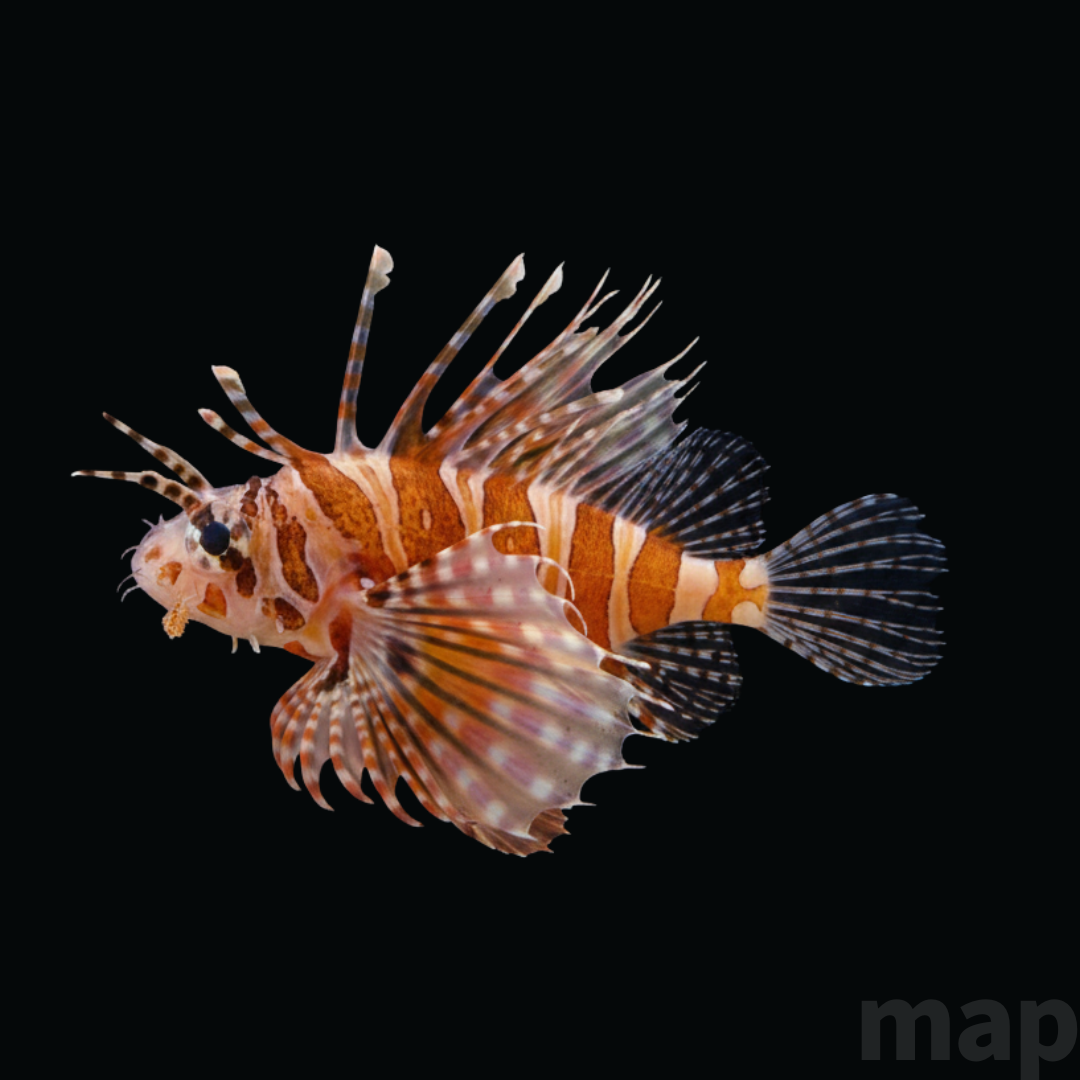
キリンミノカサゴは、フサカサゴ科ヒメヤマノカミ属に分類される、美しくも威厳のある海水魚です。インド太平洋の熱帯から亜熱帯域に広く分布し、日本では伊豆諸島や琉球列島などでその姿を見ることができます。最大の特徴は、団扇のように広がる大きな胸鰭と、体全体を彩る鮮やかな赤褐色の縞模様です。近縁のミノカサゴ属と異なり、胸鰭の鰭条が先端付近まで膜で繋がっているため、より重厚な印象を与えます。夜行性が強く、日中は岩陰やオーバーハングの下で静かに過ごしていますが、その高い知性と社会性は、多くの海洋生物学者たちの研究対象となってきました。 The Zebra Lionfish (Dendrochirus zebra) is a beautiful and majestic marine fish belonging to the family Scorpaenidae. Widely distributed across the tropical and subtropical waters of the Indo-Pacific, it is frequently observed in Japanese waters around the Izu and Ryukyu Islands. Its most striking features are the large, fan-like pectoral fins and the vivid reddish-brown vertical stripes covering its body. Unlike the closely related Pterois genus, its pectoral fin rays are connected by membranes almost to the tips, giving it a more solid, fan-like appearance. Primarily nocturnal, it spends its days resting under rock ledges or overhangs, but its high intelligence and complex social structure have long fascinated marine biologists.
基本情報 / Basic Information
| 学名 / Scientific Name | Dendrochirus zebra |
|---|---|
| 通称 / Common Name | キリンミノカサゴZebra Lionfish |
| 分類 / Family | カサゴ目フサカサゴ科ヒメヤマノカミ属Scorpaenidae, Dendrochirus genus |
| 英名 / English Name | Zebra Turkeyfish / Zebra Lionfish |
| 分布 / Distribution | インド太平洋(南日本、琉球列島、紅海、オーストラリアなど)Indo-Pacific (Southern Japan, Ryukyu Islands, Red Sea, Australia, etc.) |
| 最大体長 / Max Size | 約20cm~25cmApprox. 20cm – 25cm |
| 寿命 / Lifespan | 飼育下で約10年程度Approx. 10 years in captivity |
飼育環境 / Aquarium Environment
| 水槽サイズ / Tank Size | 60cm規格水槽(約60L)以上。理想は60cmワイド水槽または90cm規格水槽。Min. 60cm standard (60L). Ideally 60cm wide or 90cm standard tank. |
|---|---|
| 水温 / Temperature | 23℃~26℃(夏場は水槽用クーラーが必須) |
| 水質 / Water Quality | pH 8.1~8.4、比重 1.020~1.025。肉食で汚しやすいため強力な濾過が必要。pH 8.1-8.4, Specific Gravity 1.020-1.025. Strong filtration is required due to heavy bioload. |
| レイアウト / Layout | ライブロックで洞窟やオーバーハングを作り、日中の隠れ家を確保する。Provide caves and overhangs using live rock for daytime hiding spots. |
| 注意点 / Precautions | 背鰭などの棘に強い毒があります。メンテナンス時は絶対に素手で触れないでください。The spines (especially dorsal) are highly venomous. Never touch them with bare hands during maintenance. |
餌と給餌 / Feeding
| 餌の種類 / Diet | 肉食性。活モエビ、イサザアミ、冷凍クリル、冷凍キビナゴ、慣れれば人工飼料。Carnivorous. Live shrimp, mysis, frozen krill, silver-sides, and eventually pellets. |
|---|---|
| 給餌のポイント / Feeding Tips | 導入初期は活餌が必要です。ピンセットで餌を動かし、狩りの本能を刺激して冷凍餌に慣れさせます。Requires live food initially. Use tongs to wiggle food to mimic prey and transition to frozen foods. |
性格と混泳 / Temperament and Tank Mates
| 性格 / Temperament | 比較的おとなしいですが、縄張り意識があります。口に入るサイズの生体は捕食します。Relatively peaceful but territorial. Will eat anything small enough to fit in its mouth. |
|---|---|
| 混泳の相性 / Compatibility | 口に入らないサイズの中型ヤッコやハギ等とは良好。エビや小型魚は餌になるため不可。Good with medium angels or tangs. Incompatible with shrimp or small fish as they are prey. |
病気と対策 / Diseases and Prevention
| かかりやすい病気 / Common Diseases | 白点病、リムフォシスティス病、水質悪化による眼の白濁(ポップアイ)。Cryptocaryon (White Spot), Lymphocystis, and cloudy eyes (Pop-eye) from poor water. |
|---|---|
| 対策と予防 / Prevention | 殺菌灯の設置と、定期的な換水。導入時のトリートメントが非常に重要です。Use UV sterilizers and perform regular water changes. Quarantine is crucial upon arrival. |
増やし方(繁殖) / Breeding
| 繁殖形態 / Reproduction | ゼラチン質の卵塊を放出する浮遊性卵。1匹の雄と複数の雌でハレムを作ります。Releases a gelatinous egg mass (pelagic eggs). Forms harems of one male and multiple females. |
|---|---|
| 繁殖のポイント / Breeding Tips | 日没後に求愛行動を行い、水面近くで産卵します。家庭での稚魚育成は極めて難易度が高いです。Courtship occurs after sunset, spawning near the surface. Raising fry at home is extremely difficult. |
雑学と豆知識 / Trivia and Fun Facts
| 1. 日本の研究が明かした「ハレム社会」1. The Harem Society Revealed by Japanese Research | 1981年、日本の三宅島でMoyer博士らによって行われた研究は、本種の驚くべき社会性を明らかにしました。キリンミノカサゴは1匹の強い雄が複数の雌を従える「ハレム」を形成して暮らしています。日没が近づくと雄は縄張り内を見回り、雌たちに求愛して回ります。水槽内で複数の雄を飼育すると激しい闘争が起きるのは、この強い縄張り本能とハレムを守る習性に由来しているのです。In 1981, research conducted by Dr. Moyer on Miyakejima Island in Japan revealed the surprising social structure of this species. Zebra Lionfish form “harems” where one dominant male lives with several females. As sunset approaches, the male patrols his territory and visits each female for courtship. The intense fighting observed when keeping multiple males in one tank stems from this deep-seated territorial instinct to protect their harem. |
|---|---|
| 2. 知略を尽くした「追い込み漁」2. Strategic Cooperative Hunting | キリンミノカサゴは、その大きな胸鰭を単なる飾りではなく、巧みな狩りの道具として使います。獲物を見つけると胸鰭を大きく広げて「壁」を作り、獲物の退路を断って岩の隅へと追い込んでいきます。近年では、別の個体と協力して獲物を追い込む「協調的狩猟」を行う可能性も示唆されており、単なる待ち伏せ型の捕食者ではない、高い知性を感じさせる行動を観察することができます。Zebra Lionfish use their large pectoral fins not just for decoration, but as sophisticated hunting tools. When they find prey, they spread their fins wide to create a “wall,” cutting off escape routes and herding the prey into corners. Recent studies suggest they may even engage in “cooperative hunting” with other individuals, showcasing a level of intelligence that goes beyond simple ambush predation. |
| 3. 「麒麟」の名を冠する優雅な瑞獣3. The Graceful “Kirin” or Qilin | 和名の「キリン」は、中国神話に登場する伝説の霊獣「麒麟(きりん)」に由来すると言われています。五色に彩られた体と優雅な立ち振る舞いを持つ瑞獣のイメージが、この魚の複雑な縞模様と、水中をゆったりと舞うように泳ぐ姿に重ね合わされたのでしょう。英名の「Zebra(シマウマ)」がその模様に着目しているのに対し、和名は本種の持つ神々しいまでの美しさを表現していると言えます。The Japanese name “Kirin” is derived from the mythical creature “Qilin” (Kirin in Japanese) from Chinese mythology. The image of this auspicious beast, with its multi-colored body and graceful presence, was likened to the fish’s intricate stripes and its elegant, dance-like swimming. While the English name “Zebra” focuses on its patterns, the Japanese name captures the divine beauty of the species. |
| 4. 毒棘への対処法と「熱」の秘密4. Venomous Spines and the Secret of Heat | キリンミノカサゴの毒はタンパク質性で、非常に激しい痛みを引き起こします。もしメンテナンス中に刺されてしまった場合の応急処置として最も有効なのは、傷口を「お湯(40〜45℃程度)」に浸すことです。毒素のタンパク質は熱に弱く、加熱によって変性・失活するため、痛みを劇的に和らげることができます。もちろん、応急処置の後は速やかに医療機関を受診することが不可欠です。The venom of the Zebra Lionfish is protein-based and causes intense pain. The most effective first aid if stung is to soak the wound in hot water (approx. 40-45°C). Since the venom proteins are heat-labile, they denature and lose toxicity when heated, which can dramatically reduce pain. However, seeking medical attention immediately after first aid is essential. |
まとめ / Conclusion
キリンミノカサゴは、その圧倒的な美しさと、ハレム形成や協調的狩猟といった複雑な生態によって、飼育者に深い充足感を与えてくれる魚です。毒を持つため取り扱いには細心の注意が必要ですが、それを補って余りある魅力に満ちています。 The Zebra Lionfish is a species that offers deep satisfaction to aquarists through its overwhelming beauty and complex behaviors, such as harem formation and potential cooperative hunting. While its venom requires cautious handling, its charm far outweighs the risks for those prepared for its care.
餌付けという最初の壁を乗り越えれば、水槽内で優雅に舞う麒麟のような姿を長く楽しむことができるでしょう。適切な環境を整え、この知性豊かな海の芸術品をぜひあなたの水槽に迎えてみてください。 Once the initial challenge of weaning is overcome, you can enjoy the presence of this “Kirin-like” creature dancing gracefully in your tank for many years. Provide the right environment, and welcome this intelligent masterpiece of the sea into your aquarium.

気になる道具や飼い方を見つけてみませんか?
 アイのアクアグッズ案内水草用ソイルの選び方|土・砂の違いとおすすめ商品道具の特徴や使い方、選ぶときのポイントをアイが紹介します。記事はコチラ →
 アイのアクアグッズ案内エーハイムはおもちゃから始まった? 小さな噴水から水槽へ、アイとコタロウの探訪道具の特徴や使い方、選ぶときのポイントをアイが紹介します。記事はコチラ →
さまざまな飼育テーマをご紹介。リンク先の記事には広告・商品紹介が含まれます。
案内・紹介記事一覧へ →▶ 記事の生体をAMAZONで買う ▶ 記事の生体をYahooで買う
主要引用文献
本報告書作成にあたり参照した学術論文、専門データベースおよび市場情報(最新の知見に基づき精査済み)




コメント