

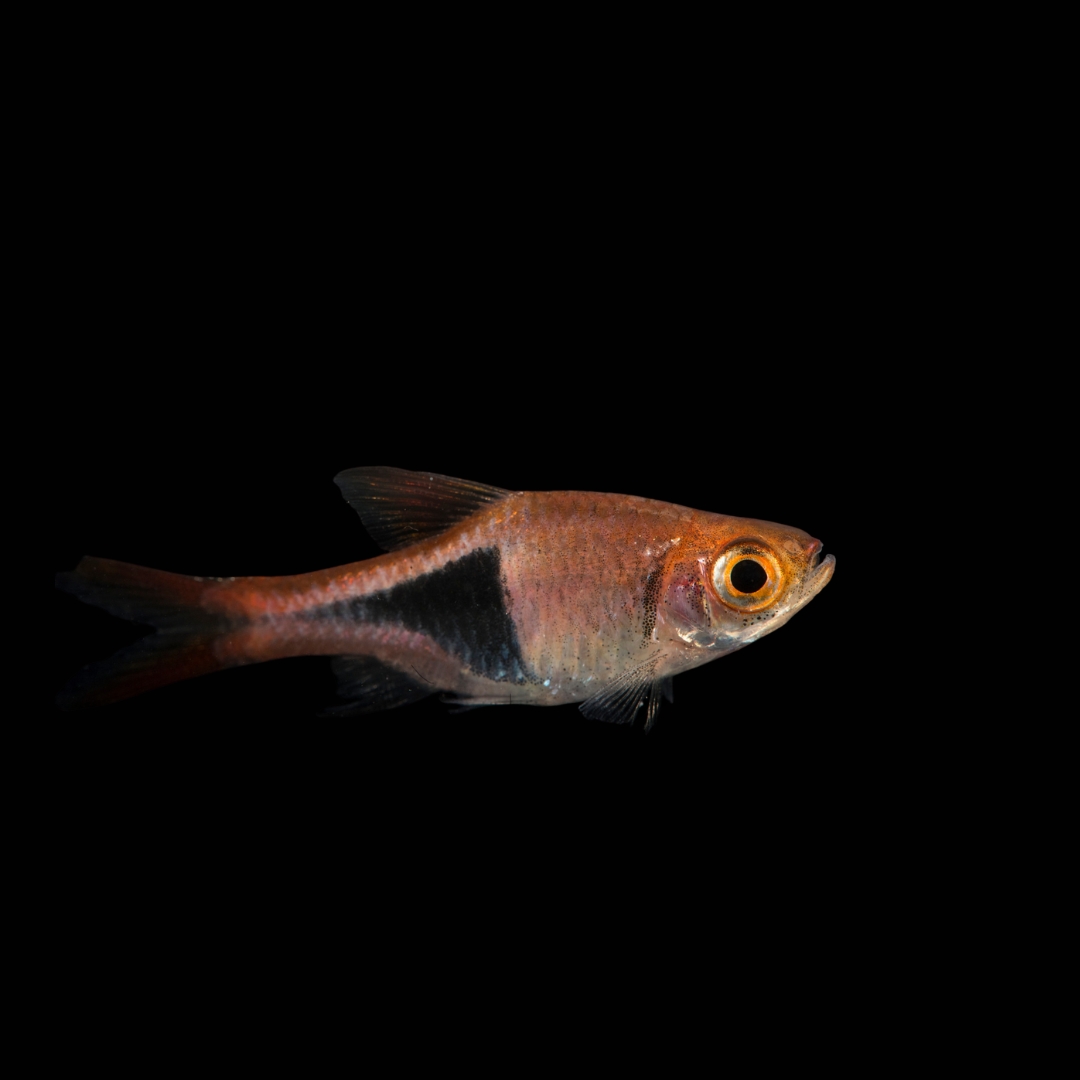
解説 / Description
トリゴノスティグマ・ヘテロモルファは、東南アジアの森林小川や泥炭湿地の水域に暮らす小型の淡水魚です。古くから「ラスボラ・ヘテロモルファ」の名で親しまれてきたため、日本の熱帯魚店や愛好家の会話では現在でも旧名で呼ばれることがあります。赤みを帯びたオレンジから赤銅色の体色と、体側後半に大きく入る黒い楔形の斑紋が印象的で、その斑紋を三味線の撥に見立てて「バチウオ」と呼ぶ愛好家もいます。 Trigonostigma heteromorpha is a small freshwater fish from forest streams and peat-swamp waters in Southeast Asia. Because it was long familiar under the name Rasbora heteromorpha, that older name is still sometimes heard in Japanese aquarium shops and among hobbyists. Its warm orange to coppery body and bold black wedge on the rear half of the body are its defining features; in Japan, some aquarists compare the mark to the bachi, the plectrum used for the shamisen, and call it “bachi-uo.”
性格は非常に温和で、まとまった数で泳がせると水草の緑によく映える美しい群泳を見せます。飼育そのものは比較的やさしい一方、深い発色と落ち着いた行動を引き出すには、弱酸性寄りの軟水、暗色の底床、穏やかな照明、流木や落ち葉由来のタンニンを意識した環境づくりが効果的です。丈夫な入門種でありながら、群泳、発色、繁殖まで追い込むほどに奥行きが見えてくる、小型美魚の代表格です。 It is an exceptionally peaceful species, and in a proper group it forms an elegant shoal that stands out beautifully against aquatic plants. Although relatively easy to keep, its best coloration and calmest behavior are encouraged by soft, slightly acidic water, a dark substrate, gentle lighting, and tannin-rich conditions created by driftwood or botanical leaves. It is beginner-friendly, yet the more one explores shoaling, coloration, and breeding, the more depth this classic small aquarium fish reveals.
基本情報 / Basic Information
| 学名 / Scientific Name | Trigonostigma heteromorpha (Duncker, 1904) |
|---|---|
| 通称 / Common Name | トリゴノスティグマ・ヘテロモルファ、ラスボラ・ヘテロモルファ、ハーレクインラスボラ、バチウオHarlequin rasbora, harlequin fish |
| 分類 / Family | コイ目 ダニオ科 ラスボラ亜科 トリゴノスティグマ属。古い文献や流通上の表現では、広い意味でコイ科の小型ラスボラ類として扱われることもあります。Order Cypriniformes, family Danionidae, subfamily Rasborinae, genus Trigonostigma. In older literature and trade usage, it may also be treated broadly among small cyprinid rasboras. |
| 英名 / English Name | Harlequin rasbora |
| 分布 / Distribution | マレー半島とその周辺の東南アジア。半島マレーシア、シンガポール、インドネシアの一部、特にスマトラ周辺を含む地域から知られます。タイ南部やボルネオを含むかどうかは資料によって異なり、本種の分布として確認が必要な地域です。Southeast Asia around the Malay Peninsula, including Peninsular Malaysia, Singapore, and parts of Indonesia, especially around Sumatra. References differ on whether the range includes southern Thailand or Borneo; records from those areas need confirmation for this species. |
| 最大体長 / Max Size | 約5cm。水槽内では4cm前後の個体として見かけることが多いです。About 5 cm. In aquariums, many individuals are seen at around 4 cm. |
| 寿命 / Lifespan | 飼育下ではおおよそ3〜5年程度とされることが多いです。急な水質変化を避け、落ち着いた群れで管理できると長期飼育を狙いやすくなります。In aquariums, it is commonly kept for about 3–5 years. Avoiding sudden water-quality changes and maintaining a calm group increases the chance of long-term success. |
飼育環境 / Aquarium Environment
| 水槽サイズ / Tank Size | 群れで泳ぐ姿を楽しむ魚なので、実用上は45cm規格水槽から飼育できますが、安定した群泳と水質管理を考えると60cm規格水槽以上がおすすめです。最低でも6匹以上、できれば10匹以上で迎えると、臆病さが和らぎ、まとまった遊泳が見られやすくなります。Because this species is best enjoyed as a shoaling fish, it can be kept practically from a 45 cm standard tank, but a 60 cm standard tank or larger is recommended for stable water quality and natural shoaling. Keep at least six, and preferably ten or more, to reduce shyness and encourage coordinated swimming. |
|---|---|
| 水温 / Temperature | 22〜25℃前後が基本の目安です。一般飼育では24〜26℃程度でも管理しやすく、繁殖を狙う場合は状態を見ながら26℃前後からやや高めで調整することがあります。 Around 22–25°C is a basic reference range. For general aquarium care, 24–26°C is also commonly manageable, while breeding attempts may use slightly warmer conditions around 26°C or a little above, depending on the fish’s condition. |
| 水質 / Water Quality | 弱酸性から中性の軟水を好みます。目安はpH 5.0〜7.0前後、硬度は低めから中程度です。繁殖や深い発色を狙う場合は、急激に酸性へ傾けるのではなく、換水、底床、流木、マジックリーフなどを組み合わせ、ゆっくり安定した弱酸性寄りの水に整えます。They prefer soft water from acidic to neutral, around pH 5.0–7.0 with low to moderate hardness. For breeding or deeper coloration, avoid forcing the water rapidly into an acidic range; instead, use water changes, substrate choice, driftwood, and botanical leaves to create a stable, gently acidic environment over time. |
| レイアウト / Layout | 暗色の底床、水草、流木を組み合わせた落ち着いたレイアウトが向いています。クリプトコリネ、アヌビアス、ミクロソリウム、エキノドルスなどの広い葉を持つ水草は隠れ家になり、繁殖時には葉裏産卵の足場にもなります。前面には群泳のための空間を残し、浮き草で光を和らげると、魚が安心して泳ぎやすくなります。A calm layout with a dark substrate, plants, and driftwood suits this species well. Broad-leaved plants such as Cryptocoryne, Anubias, Microsorum, and Echinodorus provide cover and can serve as surfaces for underside spawning. Leave open swimming space at the front, and use floating plants to soften the light so the fish feel secure. |
| 注意点 / Precautions | 急な水質変化、強すぎる照明、荒い水流はストレスになります。導入直後は輸送疲れや白点病に注意し、可能であればトリートメント期間を設けてください。小型魚のため大型魚との混泳では捕食される恐れがあり、飛び出し事故を防ぐためにフタや水位にも配慮します。Avoid sudden water-quality changes, overly bright lighting, and rough current. Watch new arrivals for shipping stress and ich, and use a quarantine or conditioning period when possible. Since they are small, avoid large tank mates that may prey on them, and use a lid or adjusted water level to reduce jumping accidents. |
餌と給餌 / Feeding
| 餌の種類 / Diet | 人工飼料に慣れやすく、小型魚用のフレーク、顆粒、マイクロペレットをよく食べます。自然界では小さな昆虫、甲殻類、ワーム類などを食べるため、冷凍ブラインシュリンプ、冷凍アカムシ、ミジンコ、イトメなどを補助的に与えると、コンディションづくりに役立ちます。They readily accept prepared foods such as fine flakes, granules, and micro-pellets for small fish. In nature they feed on small insects, crustaceans, and worm-like prey, so frozen brine shrimp, bloodworms, daphnia, and small live foods can be useful supplements for conditioning. |
|---|---|
| 給餌のポイント / Feeding Tips | 口が小さいため、粒の細かい餌を少量ずつ与えます。1日1〜2回、数分で食べ切れる量を目安にし、食べ残しは水質悪化の原因になるため控えめにします。色揚げを狙う場合も、餌だけに頼らず、水質、照明、群れの安心感をあわせて整えることが大切です。Because their mouths are small, offer finely sized foods in modest portions. Feed once or twice daily, only as much as they finish within a few minutes. Uneaten food can quickly affect water quality. For color enhancement, diet helps, but water quality, lighting, and the security of a proper group are just as important. |
性格と混泳 / Temperament and Tank Mates
| 性格 / Temperament | 非常に温和で、同種同士でも激しく争うことは少ない魚です。少数飼育では臆病になりやすいため、群れで飼うほど安心して泳ぎます。状態が良いと中層を中心にまとまって泳ぎ、水草水槽に自然な動きを加えてくれます。This is a very peaceful fish and rarely shows serious aggression toward its own kind. In very small numbers it may become shy, so a proper group helps it feel secure. When settled, it swims mainly in the midwater and adds natural movement to planted aquariums. |
|---|---|
| 混泳の相性 / Compatibility | 小型テトラ、コリドラス、オトシンクルス、小型ラスボラ、小型グラミー、温和な小型エビ類などと相性が良いです。気性の荒い魚、ヒレをかじる魚、口に入るサイズの魚を捕食する中大型魚との混泳は避けます。繁殖を狙う場合は、卵や稚魚が食べられやすいため単独または繁殖用水槽で管理します。Good tank mates include small tetras, Corydoras, Otocinclus, small rasboras, dwarf gouramis, and peaceful dwarf shrimp. Avoid aggressive species, fin nippers, and medium to large fish that may eat them. If breeding is the goal, use a species-only or dedicated breeding tank because eggs and fry are easily eaten. |
病気と対策 / Diseases and Prevention
| かかりやすい病気 / Common Diseases | 特別に病弱な魚ではありませんが、導入直後や水温変化が大きい時期には白点病、尾ぐされ病、水カビ、やせなどに注意します。輸送直後の個体は体力が落ちていることがあるため、最初の数日は観察を丁寧に行います。This is not an especially delicate fish, but new arrivals or fish exposed to unstable temperatures may be prone to ich, fin rot, fungal issues, and weight loss. Newly transported individuals can be weakened, so careful observation during the first few days is important. |
|---|---|
| 対策と予防 / Prevention | 水温と水質を安定させ、週1回を目安に適量の換水を行います。新しく迎えた個体はすぐに本水槽へ入れず、別容器で状態を確認できると安心です。薬浴が必要な場合は、小型魚であることを考慮し、説明書の用量を守って慎重に行います。Maintain stable temperature and water quality, and perform appropriate partial water changes roughly once a week. If possible, observe new fish in a separate container or quarantine tank before adding them to the main aquarium. If medication is needed, dose carefully according to the instructions, considering their small size. |
増やし方(繁殖) / Breeding
| 雌雄の判別 / Sexing | 成熟したオスはやや細身で体色が濃く出やすく、黒い楔形斑の下部が鋭く伸びて見える傾向があります。メスは腹部に丸みがあり、抱卵すると体高が増してふっくら見えます。ただし個体差もあるため、斑紋だけでなく体型、腹部の張り、群れの中での行動をあわせて判断します。Mature males tend to be slimmer, more intensely colored, and often show a sharper lower edge to the black wedge. Females are rounder, especially when carrying eggs. Because individuals vary, judge sex by body shape, abdominal fullness, and behavior within the group rather than the marking alone. |
|---|---|
| 繁殖形態 / Reproduction | 広い葉の裏や似た面に粘着性の卵を産み付ける基質産卵型です。メスは葉の裏側で体を反転させ、オスが寄り添って放精します。多くの小型コイ科・ダニオ科魚類に見られるばらまき型産卵とは異なり、トリゴノスティグマ属を象徴する繁殖行動です。They are substrate spawners that attach adhesive eggs to the underside of broad leaves or similar surfaces. The female turns upside down beneath the leaf, and the male positions himself alongside her to fertilize the eggs. This differs from the egg-scattering style typical of many small cypriniform fishes and is one of the hallmark behaviors of Trigonostigma. |
| 繁殖のポイント / Breeding Tips | 繁殖を狙う場合は、弱酸性の軟水、落ち着いた照明、広葉水草を用意します。親魚には数日前から冷凍餌や活き餌を加えてコンディションを整えるとよいでしょう。産卵後は親魚が卵を食べることがあるため、親を戻すか卵の付いた葉を別容器へ移します。孵化直後の稚魚は非常に小さいため、初期飼料にはインフゾリアなどの微細な餌が必要です。For breeding attempts, prepare soft, acidic water, subdued lighting, and broad-leaved plants. Conditioning adults for several days with frozen or live foods can help. Adults may eat the eggs after spawning, so remove the parents or transfer the leaf with eggs to another container. Newly hatched fry are extremely small and need very fine first foods such as infusoria. |
雑学と豆知識 / Trivia and Fun Facts
| 1. 学名に残る「違う形」の記憶 / 1. The memory of a “different form” in the name | 本種は1904年にRasbora heteromorphaとして記載されました。種小名のheteromorphaは「異なる形」を意味し、細長い体型のラスボラ類が多い中で、やや体高があり菱形に近いシルエットを持つことを反映した名と考えられます。現在の属名Trigonostigmaは、三角形の斑紋を示す名前で、体型と模様の両方がこの魚の名前に刻まれています。The species was described in 1904 as Rasbora heteromorpha. The species name heteromorpha means “different form,” likely reflecting its deeper, more diamond-like body compared with many slender rasboras. Its current genus name, Trigonostigma, refers to a triangular mark, so both body shape and pattern are preserved in its scientific names. |
|---|---|
| 2. ラスボラからトリゴノスティグマへ / 2. From Rasbora to Trigonostigma | 長くラスボラ属の代表的な魚として扱われてきましたが、1999年にKottelatとWitteによってトリゴノスティグマ属へ移されました。三角形の斑紋に加え、広い葉の裏へ卵を産み付ける繁殖行動も、他の多くのラスボラ類と区別して語られる重要な特徴です。古い流通名が残る一方で、分類学の中ではこの魚の個性がよりはっきり整理されてきました。For many years it was treated as a classic Rasbora, but in 1999 Kottelat and Witte placed it in Trigonostigma. Along with the triangular marking, its habit of depositing eggs under broad leaves is an important character that separates it from many egg-scattering rasboras. While the old trade name remains familiar, taxonomy has increasingly highlighted what makes this fish distinctive. |
| 3. 「ハーレクイン」と「バチウオ」 / 3. “Harlequin” and “bachi-uo” | 英名のHarlequin rasboraは、道化師ハーレクインの衣装に見られる菱形模様を思わせることに由来するとされます。一方、日本では体側の黒い斑紋を三味線の撥に見立て、「バチ」または「バチウオ」と呼ぶ愛好家もいます。同じ模様を見ても、欧米では演劇の衣装、日本では伝統楽器の道具へ結びつくところに、観賞魚を眺める文化の面白さがあります。The English name “Harlequin rasbora” is generally associated with the diamond-like costume pattern of the theatrical harlequin. In Japan, some aquarists compare the black wedge to the bachi, the plectrum used for the shamisen, and call it “bachi” or “bachi-uo.” The same pattern is interpreted through theatre in one culture and a traditional musical instrument in another, showing how aquarium fishes gather cultural meaning. |
| 4. 日本の熱帯魚文化との距離感 / 4. Its place in Japanese aquarium culture | 日本で観賞用の熱帯魚が本格的に持ち込まれた時期は、大正末期から昭和初期にかけてとされます。ただし、確認しやすい最初期の魚はグッピーやソードテールなどで、本種そのものの日本初輸入年を明確に示す情報は限られます。そのため、この魚を語るときは「日本の熱帯魚文化の黎明期から確実にいた魚」と断定するよりも、「古くから愛好され、バチウオという愛称とともに定着した古典的な小型美魚」と見るほうが慎重です。Ornamental tropical fishes began to enter Japan in earnest around the late Taisho to early Showa period. However, the earliest clearly documented fishes include guppies and swordtails, and reliable information specifying the first import year of this species itself is limited. It is therefore more careful to describe it not as a species proven from the very beginning of Japanese tropical-fish culture, but as a classic small aquarium fish that became established with the affectionate nickname “bachi-uo.” |
| 5. ブラックウォーターが引き出す落ち着いた美しさ / 5. Blackwater brings out a calm beauty | 原産地の森林小川や泥炭湿地では、落ち葉や倒木から溶け出すタンニンによって水が茶色く染まることがあります。水槽でも暗色の底床、流木、マジックリーフ、弱めの照明を組み合わせると、魚が落ち着きやすく、赤銅色の体と黒い楔形斑がいっそう引き締まって見えます。水を濃く染めること自体が目的ではなく、魚が安心して群れ、自然な色を見せられる環境を整えることが大切です。In forest streams and peat swamps, tannins released by fallen leaves and wood can tint the water brown. In aquariums, a dark substrate, driftwood, botanical leaves, and subdued light help the fish feel secure, making the coppery body and black wedge appear more defined. The aim is not simply to darken the water, but to create a setting in which the fish can settle, shoal, and show natural color. |
| 6. 葉の裏に産むという繊細な戦略 / 6. The delicate strategy of underside spawning | 本種の繁殖で最も印象的なのは、メスが葉の裏で体を反転させ、粘着卵を産み付ける行動です。底へ卵をばらまく魚が多い中で、葉の裏を選ぶ姿はとても個性的です。泥炭湿地の底には有機物が多く、卵が底へ落ちると低酸素や捕食の影響を受けやすいと考えられるため、葉の裏に卵を固定する行動は、小さな魚が次世代を残すための合理的な工夫と見ることができます。The most memorable breeding behavior of this species is the female turning upside down beneath a leaf and depositing adhesive eggs there. Many small fishes scatter eggs toward the bottom, so this choice of the leaf underside is highly distinctive. In peat-swamp habitats, the bottom can be rich in organic matter, where eggs may face low oxygen or predators; attaching eggs beneath a leaf can be understood as a practical strategy for the next generation. |
| 7. 近縁種と見比べる楽しみ / 7. The pleasure of comparing relatives | アクアリウムでは、ヘテロモルファ、エスペイ、ヘンゲリーが並んで販売されることがあります。ヘテロモルファは黒い楔形斑が大きく体高もあり、エスペイはより細身でラムチョップ状の斑紋、ヘンゲリーは透明感のある体に細い黒斑とオレンジのラインが目立ちます。さらに2020年にはT. truncataが新種として記載され、身近な定番魚の周辺にも、まだ整理されつつある多様性が残されていることを感じさせます。In the aquarium trade, T. heteromorpha, T. espei, and T. hengeli are sometimes sold side by side. T. heteromorpha has a large black wedge and deeper body, T. espei is slimmer with a lambchop-like marking, and T. hengeli is more translucent with a narrow dark mark and orange line. The 2020 description of T. truncata reminds us that even around familiar aquarium classics, diversity is still being clarified. |
| 8. 改良品種と流通名は「品種名」として楽しむ / 8. Enjoy variant names as trade or strain names | ブルー、ディープブルー、ゴールド、ビンタンレッドなどの名前で流通する個体は、色彩や産地イメージを楽しむうえで魅力的です。ただし、こうした名称は学術的な亜種名ではなく、流通名や系統名として使われることが多いため、図鑑では分類上の事実と分けて扱うのが安全です。選ぶときは名前だけで判断せず、体型、泳ぎ方、斑紋の整い方、入荷後の状態を見て迎えると良い個体に出会いやすくなります。Fish sold as Blue, Deep Blue, Gold, Bintang Red, and similar names can be very attractive as color variants or strain names. However, these names are usually trade or strain labels rather than formal subspecies, so it is safer to keep them separate from taxonomic facts. When choosing individuals, look beyond the name and check body shape, swimming behavior, the clarity of the wedge, and post-import condition. |
| 9. 水草水槽に似合う理由 / 9. Why it suits planted aquariums | 本種の魅力は、強い派手さではなく、整った存在感にあります。水草の緑に映える赤銅色、流木の陰に溶け込む黒い楔形斑、群れでゆるやかに泳ぐ落ち着いた動きが、水草レイアウトの自然感とよく調和します。明るく光る魚とは別の方向で、空間に深みと静けさを与えてくれるため、陰性水草やブラックウォーター調の水景では特に印象的です。The charm of this species lies not in extreme brightness but in a composed presence. Its coppery color against green plants, black wedge against driftwood shadows, and calm shoaling movement harmonize beautifully with planted aquariums. Rather than adding a flashing glow, it gives depth and quiet movement to the scene, especially in shaded layouts and blackwater-style aquascapes. |
まとめ / Conclusion
トリゴノスティグマ・ヘテロモルファは、丈夫さ、温和さ、美しさのバランスに優れた小型魚です。数匹だけでも魅力は伝わりますが、本来の持ち味は群れの中でこそ際立ちます。水草の陰からゆるやかに現れ、黒い楔形斑をそろえて泳ぐ姿は、派手すぎないのに強く記憶に残ります。 Trigonostigma heteromorpha is a small fish with an exceptional balance of hardiness, peacefulness, and beauty. Even a few individuals are attractive, but its true character appears in a group. When the fish glide out from among plants with their black wedges aligned, the impression is subtle yet unforgettable.
弱酸性寄りの軟水、落ち着いた光、広い葉を持つ水草を用意すると、赤銅色の体色と撥模様はいっそう深く映えます。飼いやすい定番種でありながら、環境づくり、群泳、葉裏産卵という繁殖行動まで、飼育者の観察心に長く応えてくれる魚です。水草の間を静かに泳ぐ小さな群れは、東南アジアの森の水辺を水槽の中にそっと運び込み、日々の眺めに穏やかな奥行きを与えてくれます。 In soft, slightly acidic water with calm light and broad-leaved plants, its coppery body and bachi-like wedge become even more expressive. It is an accessible classic, yet it continues to reward observation through aquascape design, shoaling, and its remarkable underside-spawning behavior. A small group moving quietly among plants gently brings the feeling of a Southeast Asian forest stream into the aquarium and adds calm depth to the daily view.

気になる道具や飼い方を見つけてみませんか?
 アイのアクアグッズ案内水草水槽のCO₂添加|3つの方式の選び方とおすすめ用品道具の特徴や使い方、選ぶときのポイントをアイが紹介します。記事はコチラ →
 アイのアクアグッズ案内カルキ抜き・水質調整剤の選び方|水換えと水槽の種類に合わせて選ぶ道具の特徴や使い方、選ぶときのポイントをアイが紹介します。記事はコチラ →
 アイのアクアグッズ案内マジックリーフ物語|一枚の葉がアクアリウム用品になるまで道具の特徴や使い方、選ぶときのポイントをアイが紹介します。記事はコチラ →
 アイのアクアグッズ案内エーハイムはおもちゃから始まった? 小さな噴水から水槽へ、アイとコタロウの探訪道具の特徴や使い方、選ぶときのポイントをアイが紹介します。記事はコチラ →
さまざまな飼育テーマをご紹介。リンク先の記事には広告・商品紹介が含まれます。
案内・紹介記事一覧へ →▶ 記事の生体をAMAZONで買う ▶ 記事の生体をYahooで買う
参考文献・根拠資料
この記事では、トリゴノスティグマ・ヘテロモルファの分類、分布、生息環境、飼育条件、繁殖、病気や導入時の注意点を支える資料として、店舗、通販サイト、個人ブログ、まとめサイトを除外し、魚類分類データベース、公的機関、査読誌、大学・獣医学系の専門資料を中心に選定しています。
-
Fricke, R., Eschmeyer, W. N. & van der Laan, R. eds. Eschmeyer’s Catalog of Fishes: Trigonostigma heteromorpha.
California Academy of Sciences, Catalog of Fishes
有効学名、原記載、旧名 Rasbora heteromorpha、分類上の位置づけ、分布整理を確認するための中核資料です。 -
GBIF Secretariat. Trigonostigma heteromorpha (Duncker, 1904).
Global Biodiversity Information Facility
ダニオ科、トリゴノスティグマ属としての分類、シノニム、英名の確認に用いた国際的な生物多様性データベースです。 -
Froese, R. & Pauly, D. eds. FishBase: Trigonostigma heteromorpha, Harlequin rasbora.
FishBase species summary
最大体長、水温・pHの目安、森林小川・泥炭湿地での生息、食性、葉裏産卵、群れでの飼育、水槽サイズの目安を支える主要資料です。 -
National Parks Board Singapore. Flora & Fauna Web: Trigonostigma heteromorpha.
NParks Singapore
シンガポール周辺での分布、酸性水を含む日陰の森林小川、群れで中上層を泳ぐ性質、主に昆虫食である点の補強資料です。 -
Lumbantobing, D. & Vidthayanon, C. 2020. Trigonostigma heteromorpha. The IUCN Red List of Threatened Species 2020: e.T188098A89802084.
IUCN Red List DOI
保全状況、分布、利用・取引、脅威を確認するための公式評価資料です。本文では保全や流通の断定を避ける際の参照先として扱っています。 -
Kottelat, M. & Witte, K.-E. 1999. Two new species of Microrasbora from Thailand and Myanmar, with two new generic names for small southeast Asian cyprinid fishes. Journal of South Asian Natural History 4(1): 49–56.
GBIF: Trigonostigma Kottelat & Witte, 1999
旧ラスボラ属からトリゴノスティグマ属へ整理された分類学的背景、三角形斑紋と葉裏産卵をめぐる属の理解を支える文献です。 -
Tan, H. H. 2020. Trigonostigma truncata, a new species of harlequin rasbora from Malay Peninsula (Teleostei: Danionidae). Raffles Bulletin of Zoology 68: 421–433.
Zenodo record / Raffles Bulletin of Zoology
近縁種 T. truncata の記載、ヘテロモルファとの形態差、近縁種比較と分布解釈を補強する資料です。 -
Merck Veterinary Manual. Parasitic Diseases of Fish.
Merck Veterinary Manual
白点病を含む淡水魚の寄生虫性疾患、感染経路、症状、診断上の注意を支える獣医学系の専門資料です。 -
Francis-Floyd, R., Yanong, R. P. & Pouder, D. B. Ichthyophthirius multifiliis (White Spot) Infections in Fish. University of Florida IFAS Extension.
UF/IFAS Extension FA006
白点病の生活環、急速な感染拡大、水温変化や過密との関係、新魚導入時の隔離・観察の必要性を補強する資料です。 -
Francis-Floyd, R., Watson, C., Petty, D. & Pouder, D. B. Ammonia in Aquatic Systems. University of Florida IFAS Extension.
UF/IFAS Extension FA031
食べ残し、魚の代謝、アンモニア毒性、pH・水温との関係、水質検査と換水の重要性など、飼育上の注意点を支える基礎資料です。




コメント