

▶ 記事の生体をAMAZONで買う ▶ 記事の生体をYahooで買う
解説 / Description
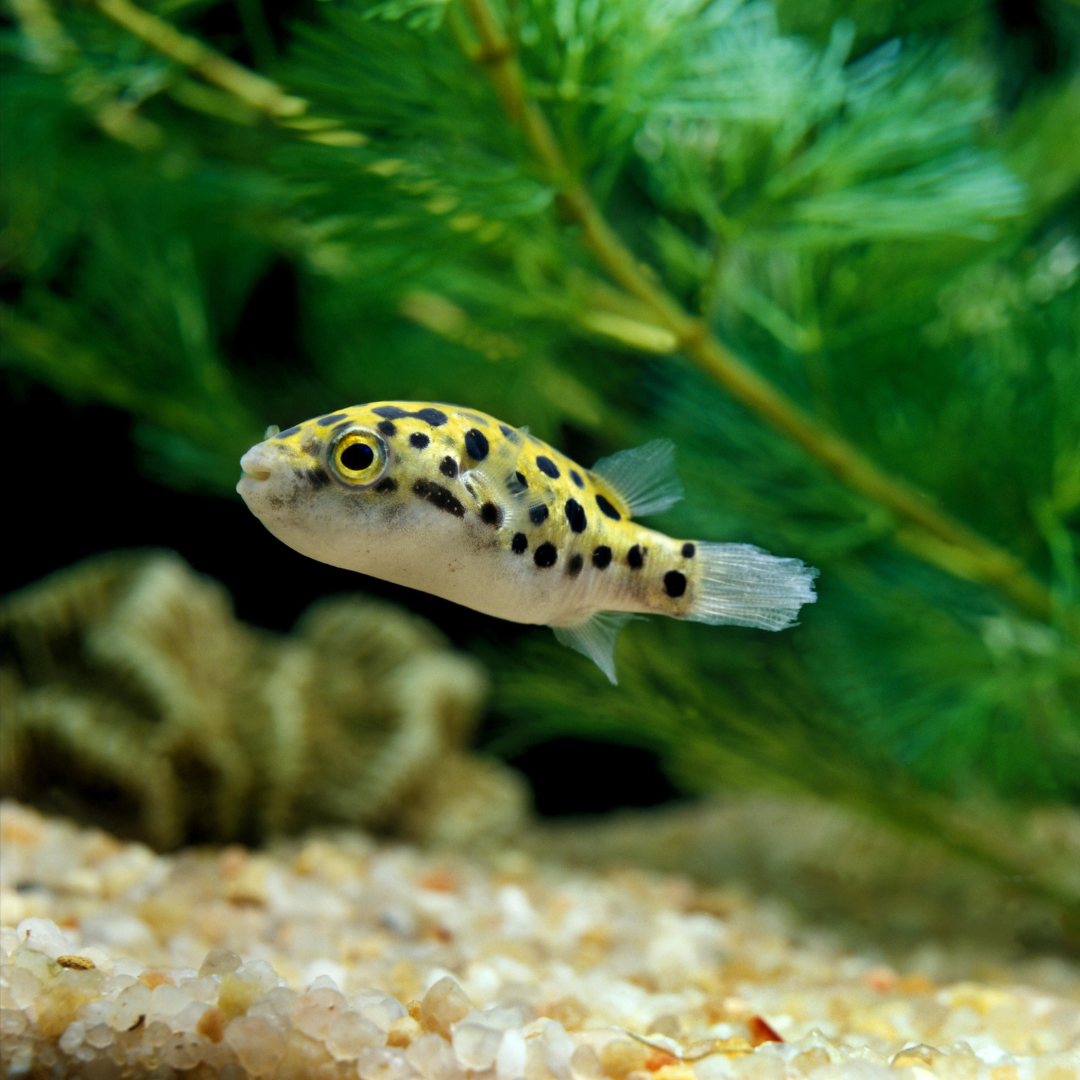
ミドリフグは、背部に広がる鮮やかな緑色と散在する黒い斑点、そして純白の腹部が特徴的な、非常に愛らしいルックスを持つフグの仲間です。東南アジアなどの沿岸域から河川まで広く生息しており、環境の塩分濃度の変化に適応できる広塩性という際立った能力を持っています。知能がとても高く、水槽越しに飼育者の顔を認識して餌をねだったり、周囲の物体に強い興味を示したりするなど、コミュニケーションを楽しめる点が最大の魅力です。かつては淡水魚として誤った認識で流通していた歴史がありますが、実際には成長に応じてより高い塩分環境へ移行させる必要がある、本格的な飼育設備を要する魚です。 The Green Spotted Puffer is a charming fish characterized by its vibrant green back with black spots and a pure white belly. Native to coastal areas and rivers in Southeast Asia, it possesses a remarkable euryhaline ability, allowing it to adapt to varying salinity levels. Highly intelligent, they can recognize their owners, beg for food, and show strong interest in surrounding objects, making them a highly interactive pet. While historically misunderstood and sold as freshwater fish, they actually require a transition to higher salinity environments as they mature, demanding a proper aquarium setup.
基本情報 / Basic Information
| 学名 / Scientific Name | Dichotomyctere nigroviridis |
|---|---|
| 通称 / Common Name | ミドリフグGreen Spotted Puffer |
| 分類 / Family | フグ目 フグ科 Dichotomyctere属Tetraodontiformes, Tetraodontidae |
| 英名 / English Name | Green Spotted Puffer |
| 分布 / Distribution | 東南アジアおよび南アジアの沿岸域、マングローブ林、河口域から河川の淡水域までCoastal areas, mangrove forests, estuaries, and freshwater rivers of Southeast and South Asia. |
| 最大体長 / Max Size | 約15cmから17cm程度Approximately 15 cm to 17 cm (6 to 6.7 inches) |
| 寿命 / Lifespan | 適切な環境下では10年を超えることもあります。Can exceed 10 years under proper environmental conditions. |
飼育環境 / Aquarium Environment
| 水槽サイズ / Tank Size | 運動量が豊富なため、単独飼育であっても最低60cm規格水槽(約60リットル)が必要です。複数飼育を試みる場合は、90cm規格水槽(約150リットル)以上の大型水槽が推奨されます。Due to their high activity level, a minimum of a standard 60cm tank (approx. 60 liters) is required even for solitary keeping. If attempting community keeping, a large tank of 90cm or more (approx. 150 liters) is recommended. |
|---|---|
| 水温 / Temperature | 熱帯気候を模した24℃から28℃ 24°C to 28°C (75°F to 82°F), mimicking a tropical climate. |
| 水質 / Water Quality | pH7.5から8.5の弱アルカリ性。成長に合わせて塩分濃度の変更が必須です。幼魚期は比重1.005から1.012の汽水、成長に伴い徐々に比重を上げ、成魚では1.018から1.026の高汽水または完全な海水で飼育します。排泄物が多いため、硝酸塩は20ppm以下を維持してください。Slightly alkaline, pH 7.5-8.5. Adjusting salinity as they grow is mandatory. Juveniles require SG 1.005-1.012. As they mature, increase SG to 1.018-1.026 (high brackish to full marine). Maintain nitrates below 20ppm due to heavy bio-load. |
| レイアウト / Layout | 汽水環境の塩分に耐えうる素材(人工水草、ライブロック、サンゴ岩など)を使用します。知能が高いため、退屈を防ぐメンタル・エンリッチメントとして、洞窟やアーチなど複雑なレイアウトを構築し、定期的に配置を変えて探索行動を促すのが理想的です。Use materials that can withstand brackish environments (artificial plants, live rock, coral rock). To prevent boredom, construct complex layouts with caves and arches to provide mental enrichment and encourage exploration, changing the layout periodically. |
| 注意点 / Precautions | 淡水での長期的な飼育は浸透圧調節に過度な負担を与え、健康を著しく損なう原因になると考えられています。塩分濃度の測定には必ず光学式屈折計を使用し、高品質な人工海水を用いてください。また、ストレス環境下では、ガラス面に沿って泳ぎ続ける行動を示すことがあります。Long-term keeping in freshwater is believed to put an excessive burden on osmoregulation, leading to severe health issues. Always use a refractometer to measure salinity and use high-quality synthetic sea salt. Under stressful conditions, they may exhibit persistent swimming along the glass. |
餌と給餌 / Feeding
| 餌の種類 / Diet | 雑食性を持つ肉食魚です。サカマキガイなどの巻貝、小さなカニ、殻付きの小エビなど、硬い殻を持つ生き餌が主食として適しています。その他、冷凍アカムシ、クリル、アサリのむき身などもよく食べます。人工飼料への反応には個体差があります。Carnivorous with omnivorous tendencies. Hard-shelled live foods like snails, small crabs, and shrimp with shells are suitable as a staple diet. They also readily eat frozen bloodworms, krill, and clam meat. Their response to artificial pellets varies individually. |
|---|---|
| 給餌のポイント / Feeding Tips | フグの仲間は生涯にわたって歯が伸び続けます。柔らかい餌ばかりを与えていると、歯が伸びすぎて口を塞ぎ、餓死してしまう危険性があります。そのため、日常的に巻貝などの硬い殻を噛み砕かせて歯を摩耗させることが必須です。餌用の巻貝を別の小型容器などで繁殖させておく手法が非常に実用的でおすすめです。Pufferfish teeth grow continuously throughout their lives. Feeding only soft foods can lead to overgrown teeth that seal their mouths shut. It is mandatory to provide hard-shelled foods like snails regularly to grind down their teeth. Culturing feeder snails in a separate container is a highly practical approach. |
性格と混泳 / Temperament and Tank Mates
| 性格 / Temperament | 非常に知能が高く、好奇心旺盛で人によく懐く反面、強烈な縄張り意識と高い攻撃性を持ち合わせています。Highly intelligent, curious, and interactive with their owners, but they also possess fierce territorial instincts and high aggression. |
|---|---|
| 混泳の相性 / Compatibility | 他魚のヒレや体表を齧る攻撃行動を示すことが多いため、混泳は致命的なトラブルを招きやすく、基本的に単独飼育が大前提となります。幼魚期は複数飼育できることもありますが、成長と共に闘争が激化します。また、飼育には塩分が必要なため、淡水性の熱帯魚や一般的な水草との混泳は一般的に不向きです。Because they often exhibit aggressive behavior by nipping the fins and bodies of other fish, community tanks often lead to fatal issues, making solitary keeping the standard. While juveniles may sometimes be kept together, aggression intensifies with age. Furthermore, their need for salt makes mixing them with freshwater fish or common plants generally unsuitable. |
病気と対策 / Diseases and Prevention
| かかりやすい病気 / Common Diseases | 不適切な塩分濃度での飼育による浸透圧異常、アンモニア中毒などの水質悪化による体調不良に最も注意が必要です。これらは特定の病原菌というよりも、環境要因による生理的なダメージです。The most critical concerns are physiological damage caused by environmental factors, such as osmotic stress from incorrect salinity levels and poor health due to water quality issues like ammonia poisoning. |
|---|---|
| 対策と予防 / Prevention | 成長段階に応じた正しい汽水から海水環境の維持と、強力な生物濾過、そして定期的な水換えが最大の予防策です。また、強いストレスを感じると、純白だった腹部が急速に黒く変色する黒色化現象を起こします。これは危険な環境を知らせるサインですので、確認した場合は直ちに水質や比重を見直してください。Maintaining the correct environment according to their growth stage, robust biological filtration, and regular water changes are the best preventive measures. When under severe stress, their pure white belly rapidly turns dark. This is a warning sign; if observed, immediately check water quality and salinity. |
増やし方(繁殖) / Breeding
| 雌雄の判別 / Sexing | 外見から雌雄を見分けることは非常に困難とされています。It is considered extremely difficult to distinguish between males and females based on outward appearance. |
|---|---|
| 繁殖形態 / Reproduction | 自然界では河口などの汽水域で産卵すると考えられていますが、一般的な水槽環境下での自然繁殖は極めて難しいとされています。In the wild, they are believed to spawn in brackish estuaries, but natural breeding in a typical home aquarium environment is considered extremely difficult. |
| 繁殖のポイント / Breeding Tips | 個人レベルでの繁殖はほぼ不可能に近いですが、海外の研究機関では特殊な技術を用いた商業規模の人工繁殖に成功した例があります。将来的には、この技術によって野生採集に頼らない、安全で持続可能な養殖個体が普及することが期待されています。While breeding at an individual level is nearly impossible, some research institutions have succeeded in commercial-scale artificial reproduction using specialized techniques. In the future, this technology is expected to provide sustainable captive-bred individuals, reducing reliance on wild-caught specimens. |
雑学と豆知識 / Trivia and Fun Facts
| 1. フグ類の特異なゲノム:比較ゲノム研究のモデル / 1. Unique Genome: A Model for Comparative Genomics | ミドリフグを含むフグ類は、脊椎動物の中でも非常に小さなゲノムを持つことで知られています。フグ類のゲノムサイズはヒトより大幅に小さく、進化の過程で非コード領域を極端に削ぎ落としてきたと考えられています。しかし、コンパクトなゲノムでありながら、多くの基本的な脊椎動物遺伝子を共有しているため、しばしば比較ゲノム研究のモデルとして利用されています。Pufferfish are known for having very small genomes among vertebrates. Their genome size is significantly smaller than that of humans, as they are believed to have pared down non-coding regions during evolution. Despite its compact size, it shares many basic vertebrate genes, making it a valuable model for comparative genomics research. |
|---|---|
| 2. 感情や健康状態を映し出す体色変化 / 2. Color Changes Reflecting Health and Emotions | 彼らの背中の鮮やかな緑色は、虹色素胞と黄色素胞が重なり合って生み出される複雑な構造色です。ミドリフグは脳からの神経信号によって、これらの色素細胞を瞬時にコントロールすることができます。特に、健康な時は純白の腹部が、水質悪化などで強いストレスを感じると、交感神経の働きによって一気に真っ黒に変化します。これは飼育者に危険を知らせる重要なサインとなります。Their vibrant green color is a complex structural color created by overlapping iridophores and xanthophores. Puffers can instantly control these pigment cells via neural signals. Notably, their pure white belly will rapidly turn pitch black when they experience severe stress, serving as a crucial warning sign for keepers. |
| 3. 毒は作らない?テトロドトキシンの蓄積 / 3. They Don’t Produce Toxins? Accumulation of Tetrodotoxin | フグといえば猛毒のテトロドトキシンですが、実はミドリフグ自身が体内で毒を作り出しているわけではありません。自然界で毒を産生する海洋バクテリアを取り込んだ貝類などを食べることで、食物連鎖を通じて体内に毒を蓄積していくのです。飼育個体でも、餌の種類だけで無毒と判断することはできません。本種を対象にした嗅覚研究では、毒性の低いTTX類縁体(5,6,11-trideoxyTTX)への誘引が確認されましたが、同じ実験でTTXそのものへの誘引は認められていません。While known for the deadly toxin tetrodotoxin, puffers don’t produce it themselves. They accumulate the toxin through the food chain by eating organisms that have ingested toxin-producing marine bacteria. Diet alone does not establish that a captive individual is nontoxic. In an olfactory study of this species, fish were attracted to the nontoxic TTX analog 5,6,11-trideoxyTTX, whereas attraction to TTX itself was not observed in the same experiments. |
| 4. 分類学の見直しと広塩性への理解 / 4. Taxonomic Revision and Understanding Euryhalinity | 長年、ミドリフグはテトラオドン属に分類され、インテリア感覚で飼える淡水魚として誤って販売されることがありました。しかし、2010年代の分類学的見直しにより、アフリカの純淡水性フグとは区別され、汽水から沿岸性のフグとして新たにディコトミクテレ属に分類されました。この学術的な見直しは、彼らが広塩性魚であるという理解の普及にも繋がり、正しい飼育環境の啓蒙に向けた大きな転換点となりました。For many years, they were classified in the genus Tetraodon and often sold as freshwater fish. However, taxonomic reviews in the 2010s separated them from African pure freshwater puffers, reclassifying them into the genus Dichotomyctere. This academic review led to a wider understanding that they are euryhaline fish, marking a turning point in promoting correct husbandry practices. |
まとめ / Conclusion
ミドリフグは、その愛らしい見た目からは想像もつかないほど、高度で特異な生態を持った魅力溢れる魚です。比較ゲノム研究のモデルとして貢献し、巧みな体色変化で感情を表現し、厳しい自然界を生き抜くための戦略を身につけています。飼育にあたっては、成長に合わせた塩分濃度の調整、歯の伸びすぎを防ぐための工夫、そして単独飼育など、専門的な知識と環境作りが求められます。 The Green Spotted Puffer is a fascinating fish with a highly advanced ecology. They serve as models for genomics, express health through color changes, and have developed cunning survival strategies. Keeping them requires specialized knowledge, including salinity adjustment as they grow, dental maintenance, and ensuring solitary housing.
しかし、彼らの知性や生態的ニーズを深く理解し、適切な汽水システムを提供することができれば、ミドリフグはあなたに豊かな反応を返し、長く付き合える最高のパートナーとなってくれるでしょう。日々の行動や体色の変化を観察し、水質と摂餌の状態を継続して確認してください。 If you understand their intelligence and ecological needs and provide an appropriate brackish system, the Green Spotted Puffer will reward you with rich reactions and become an excellent long-term partner. Observe daily behavior and coloration, and monitor water quality and feeding.

気になる道具や飼い方を見つけてみませんか?
 アイのアクアグッズ案内水槽ライトの選び方|魚の見え方・水草・海水で選ぶおすすめ照明道具の特徴や使い方、選ぶときのポイントをアイが紹介します。記事はコチラ →
 アイのアクアグッズ案内水槽の中に陸地がある!? コタロウと探るアクアテラリウムのメカニズム滝の水はどこから来るの? 白い霧の正体は? アイとコタロウが、水の循環、隠れたポンプ、霧の装置、陸上の植物と水草の葉の変化から、アクアテラリウムのメカニズムを探ります。記事はコチラ →
さまざまな飼育テーマをご紹介。リンク先の記事には広告・商品紹介が含まれます。
案内・紹介記事一覧へ →▶ 記事の生体をAMAZONで買う ▶ 記事の生体をYahooで買う
- Kottelat, M. (2013). The fishes of the inland waters of southeast Asia: a catalogue and core bibliography. The Raffles Bulletin of Zoology. 東南アジア魚類の分類整理において重要な文献です。
- Roest Crollius, H., et al. (2000). Estimate of human gene number provided by genome-wide analysis using Tetraodon nigroviridis DNA sequence. Nature Genetics. ミドリフグのコンパクトなゲノムを利用した比較ゲノム研究の代表例です。
- Noguchi, T., & Arakawa, O. (2008). Tetrodotoxin – Distribution and accumulation in aquatic organisms. Marine Drugs. テトロドトキシンの蓄積メカニズムに関する詳細な解説が含まれています。
- Ebert, K. (2001). The Puffers of Fresh and Brackish Waters. Aqualog. 実践的な飼育指針について広く参照されている専門書です。
- Suzuki, T., et al. (2022). Green spotted puffers detect a nontoxic TTX analog odor using crypt olfactory sensory neurons. Chemical Senses, 47, bjac011. DOI: 10.1093/chemse/bjac011ミドリフグのTTX類縁体への嗅覚応答を調べた研究。TTXそのものへの誘引とは区別しています。




コメント