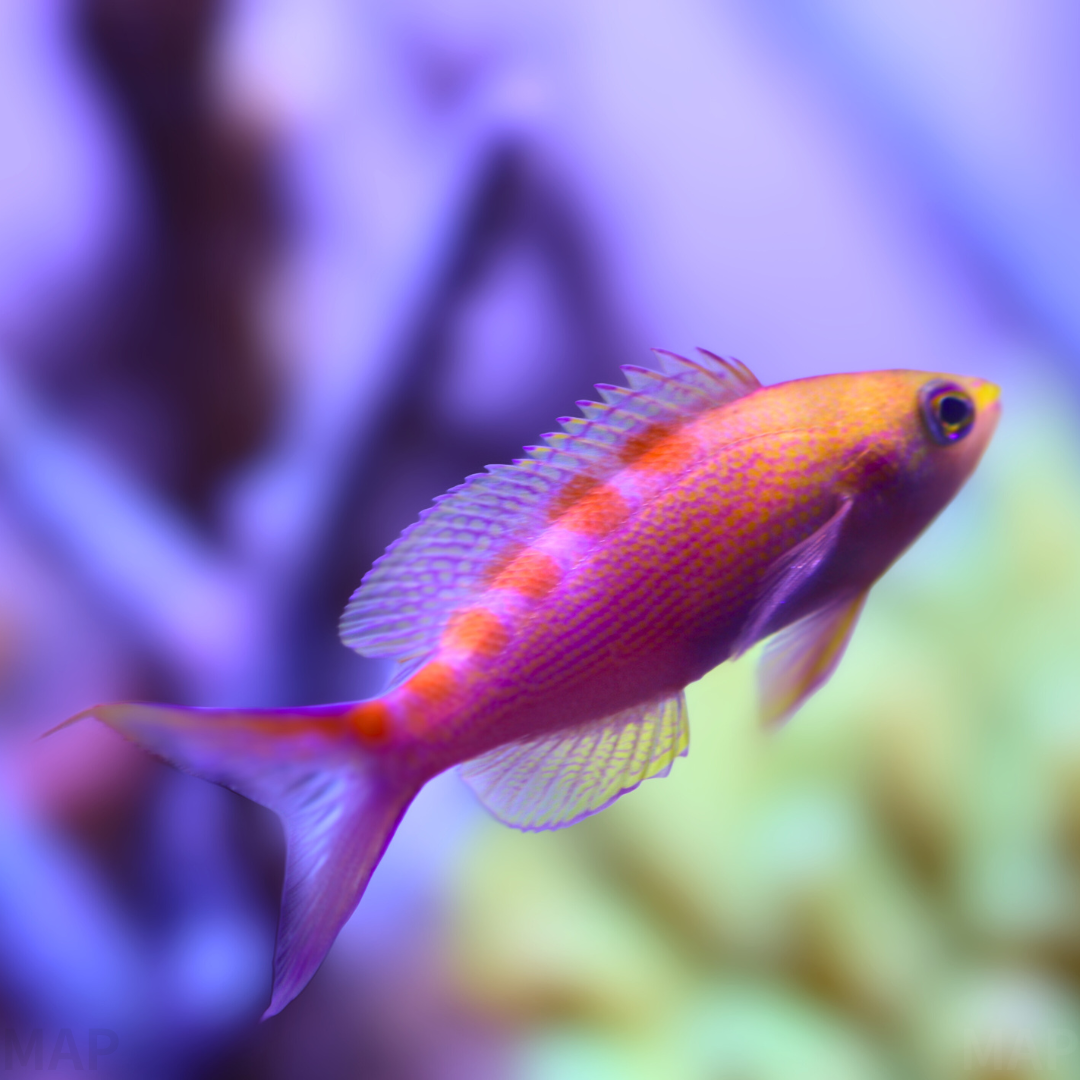
アサヒハナゴイは、ハナダイ科の中でも一際鮮烈な色彩を持つ、深場(メソフォティック帯)を代表する美麗種です。2022年の分類再編により、新たに設立されたパイロノトアンティアス属(Pyronotanthias)へと移行されました。その名の通り、夕焼けや朝日を思わせるピンクから紫への美しいグラデーションと、背部に並ぶ燃えるような赤い斑紋が最大の特徴です。主に水深60メートルから120メートルという深い岩礁域に生息しており、観賞魚としてはその採取の困難さと希少性から、非常に価値の高い「憧れのハナダイ」として知られています。The Yellowspotted Anthias is a stunning species representing the mesophotic zone, boasting some of the most vivid colors among the Anthiadidae family. Following a major taxonomic revision in 2022, it was moved to the newly established genus Pyronotanthias. As its name suggests, it features a beautiful gradient from pink to purple, reminiscent of a sunrise, and is characterized by flaming red patches along its back. Inhabiting deep rocky reefs at depths of 60 to 120 meters, it is known as a highly prized “dream fish” for aquarists due to the difficulty of collection and its rarity.
基本情報 / Basic Information
学名 / Scientific Name
Pyronotanthias flavoguttatus
通称 / Common Name
アサヒハナゴイYellowspotted Anthias
分類 / Family
スズキ目ハナダイ科Anthiadidae
英名 / English Name
Yellowspotted Anthias
分布 / Distribution
インド西太平洋(相模湾以南、フィリピン、インドネシア、パラオなど)Indo-West Pacific (Southern Japan to Philippines, Indonesia, Palau, etc.)
最大体長 / Max Size
約10センチメートル(雄の方が大型になる)Approx. 10 cm (Males grow larger than females)
寿命 / Lifespan
約5年前後(飼育下では環境に大きく依存する)Approx. 5 years (Highly dependent on the aquarium environment)
飼育環境 / Aquarium Environment
水槽サイズ / Tank Size
260リットル以上(90cm規格水槽以上の広さを推奨)260 liters or more (Recommended: 90cm standard tank or larger)
水温 / Temperature
24度から27度(高水温には弱いため、安定した管理が必須)24°C to 27°C (Sensitive to high temperatures; stable management is essential)
水質 / Water Quality
pH 8.1から8.4、比重 1.024から1.026(清浄で安定した水質)pH 8.1–8.4, Specific Gravity 1.024–1.026 (Clean and stable water)
レイアウト / Layout
ライブロックで洞窟やアーチ状の隠れ家を多く作り、かつ前面に十分な遊泳スペースを確保する。Create many caves and arch-like hiding spots with live rock, while ensuring ample open swimming space in the front.
注意点 / Precautions
深場由来のため強い照明には順化が必要。また、減圧症のケアがなされた個体を選ぶことが重要。Acclimation to strong lighting is required due to its deep-sea origin. It is crucial to select individuals that have received proper decompression care.
餌と給餌 / Feeding
餌の種類 / Diet
肉食性。プランクトン、コペポーダ、冷凍のイサザアミ、微細な人工飼料。Carnivorous. Zooplankton, copepods, frozen mysis shrimp, and fine pellet food.
給餌のポイント / Feeding Tips
代謝が激しいため、1日に3回から5回の頻回給餌が長期飼育の鍵。自動給餌器の活用も有効。Due to their high metabolism, frequent feeding (3–5 times daily) is key to long-term success. Using an automatic feeder is effective.
性格と混泳 / Temperament and Tank Mates
性格 / Temperament
非常に温和でシャイ。強い魚に威圧されると拒食に陥りやすいため注意が必要。Very peaceful and shy. Care is needed as they may stop eating if intimidated by aggressive fish.
混泳の相性 / Compatibility
同種間では1匹の雄と複数の雌によるハーレム形成が可能。他種とは温和な魚となら混泳可能。Can form a harem with one male and several females. Compatible with other peaceful fish species.
病気と対策 / Diseases and Prevention
かかりやすい病気 / Common Diseases
ウロネマ病、白点病。特に導入初期のストレス下で発症しやすい。Uronema and Marine Ich (Cryptocaryon). Especially prone to these under stress during the initial introduction.
対策と予防 / Prevention
本槽導入前の徹底した検疫(トリートメント)が必須。水質悪化を防ぎ免疫力を維持する。Thorough quarantine (treatment) before introducing to the main tank is essential. Maintain water quality to support their immune system.
増やし方(繁殖) / Breeding
雌雄の判別 / Sexing
雄は背鰭の第3棘が長く伸長し、体色がより鮮やか。雌はやや小型で色彩が控えめ。Males have an elongated third dorsal spine and more vivid colors. Females are smaller with subdued coloring.
繁殖形態 / Reproduction
雌性先熟の雌雄同体。群れの中で最も優位な個体が雌から雄へと性転換する。Protogynous hermaphrodite. The most dominant female in a group transitions into a male.
繁殖のポイント / Breeding Tips
水槽内での産卵例はあるが、仔魚の育成は極めて微細な初期餌料が必要なため、難易度が非常に高い。Spawning in aquariums has been observed, but raising larvae is extremely difficult due to the need for microscopic initial feed.
雑学と豆知識 / Trivia and Fun Facts
1. 「背中に火を宿す」学名の由来 / 1. “Fire on the Back”: Origin of the Scientific Name
2022年に新設された属名パイロノトアンティアス(Pyronotanthias)は、ギリシャ語の「火(pyr)」と「背中(notos)」に由来します。これは本種を含むグループが、背中に燃えるような赤い斑紋を持つことを表現しており、まさに深海の暗闇に灯る炎のような美しさを称えています。The genus name Pyronotanthias, established in 2022, is derived from the Greek words for “fire” (pyr) and “back” (notos). This refers to the flaming red patches along the backs of this group, praising their beauty as if they were flames lighting up the dark depths of the ocean.
2. 和名「アサヒ」に込められた日本の美意識 / 2. Japanese Aesthetics in the Name “Asahi”
和名の「アサヒハナゴイ」は、その鮮やかな色彩が東の空を染める「朝日」を連想させることから命名されました。1980年に日本の学者である片山正夫氏と益田一氏によって新種記載された際、その芸術的な美しさが日本の伝統的な感性で表現された傑作と言える名称です。The Japanese name “Asahi Hanagoi” was given because its brilliant colors evoke the image of a rising sun (Asahi) painting the eastern sky. When it was described as a new species in 1980 by Japanese scholars Masao Katayama and Hajime Masuda, it was named with a poetic touch reflecting traditional Japanese sensibilities.
3. 深海での「消える赤」の生存戦略 / 3. The “Disappearing Red” Survival Strategy in the Deep
水槽の下では鮮やかに見える赤い斑紋ですが、彼らが暮らす水深60メートル以上の世界では赤い光が届かないため、この模様は黒や濃い灰色に見えます。これは岩陰や洞窟の影に溶け込むための光学的な迷彩(保護色)として機能しており、外敵から身を守るための合理的な進化の結果なのです。The red patches that look so vivid in an aquarium appear black or dark gray at depths of 60 meters or more because red light does not penetrate that far. This functions as optical camouflage, allowing them to blend into the shadows of rocks and caves—a rational evolutionary outcome for protection against predators.
4. 流通の裏側にあるダイバーの命がけの採取 / 4. Behind the Scenes: High-Risk Collection by Divers
アサヒハナゴイが非常に高価な理由は、その生息水深にあります。採取にはテクニカルダイビングの高度な技術が必要であり、さらに急激な減圧によるダメージを防ぐための慎重な浮上プロセスが求められます。私たちが水槽で彼らの姿を拝めるのは、現地ダイバーの多大な努力とリスクの賜物なのです。The reason for their high price lies in their habitat depth. Collection requires advanced technical diving skills and a careful decompression process to prevent damage from rapid pressure changes. Being able to see them in our tanks is a testament to the immense effort and risk taken by local divers.
まとめ / Conclusion
アサヒハナゴイは、その高貴な美しさと引き換えに、飼育者に対して高度な技術と深い愛情を要求する魚です。深場由来の繊細な体質を理解し、安定した低温管理と1日数回に及ぶ丁寧な給餌を行うことで、水槽内でも彼らの放つ「朝日のような輝き」を長く維持することが可能となります。The Yellowspotted Anthias is a fish that demands advanced skills and deep affection from its keeper in exchange for its noble beauty. By understanding its delicate nature as a deep-water species and providing stable low-temperature management and meticulous multiple daily feedings, it is possible to maintain their “sunrise-like brilliance” in an aquarium for a long time.
性転換によって劇的に変化する雄の姿や、群れで見せる優雅な泳ぎは、アクアリストにとって至福の光景となるでしょう。容易な道のりではありませんが、この「深海の宝石」を飼いこなした先には、他では味わえない大きな達成感と感動が待っています。The dramatic transformation of the male through sex change and the graceful schooling behavior are blissful sights for any aquarist. While not an easy journey, mastering the care of this “jewel of the deep” brings a sense of accomplishment and emotion that is truly unparalleled.
学術論文
Katayama, M. and H. Masuda. 1980. Two new anthiine fishes from Sagami Bay, Japan. Japanese Journal of Ichthyology, Vol. 27, No. 3.
学術論文
Gill, A. C. 2022. Revised checklist of the anthiadine fishes of the world (Teleostei: Serranidae: Anthiadinae), with descriptions of eight new genera. Zootaxa, 5092(1).



 アイのアクアグッズ案内水合わせの道具とやり方|魚を迎える前にそろえたい容器・点滴キット・ネット買ってきた魚はすぐ水槽に入れていい? 水温合わせと水合わせの違いから、透明ケース・点滴キット・ネットの選び方、時間をかけすぎない注意点まで、アイとコタロウが紹介します。記事はコチラ →
 アイのアクアグッズ案内水草トリミングの道具とやり方|ハサミ・ピンセットを水草に合わせて選ぼう伸びすぎた水草は切っていい? 有茎草の差し戻し、前景草の絨毯、流木のモスを整える場面から、水草用ハサミ・ピンセット・ゴミ取りネットの選び方と片付けを紹介します。記事はコチラ →




コメント