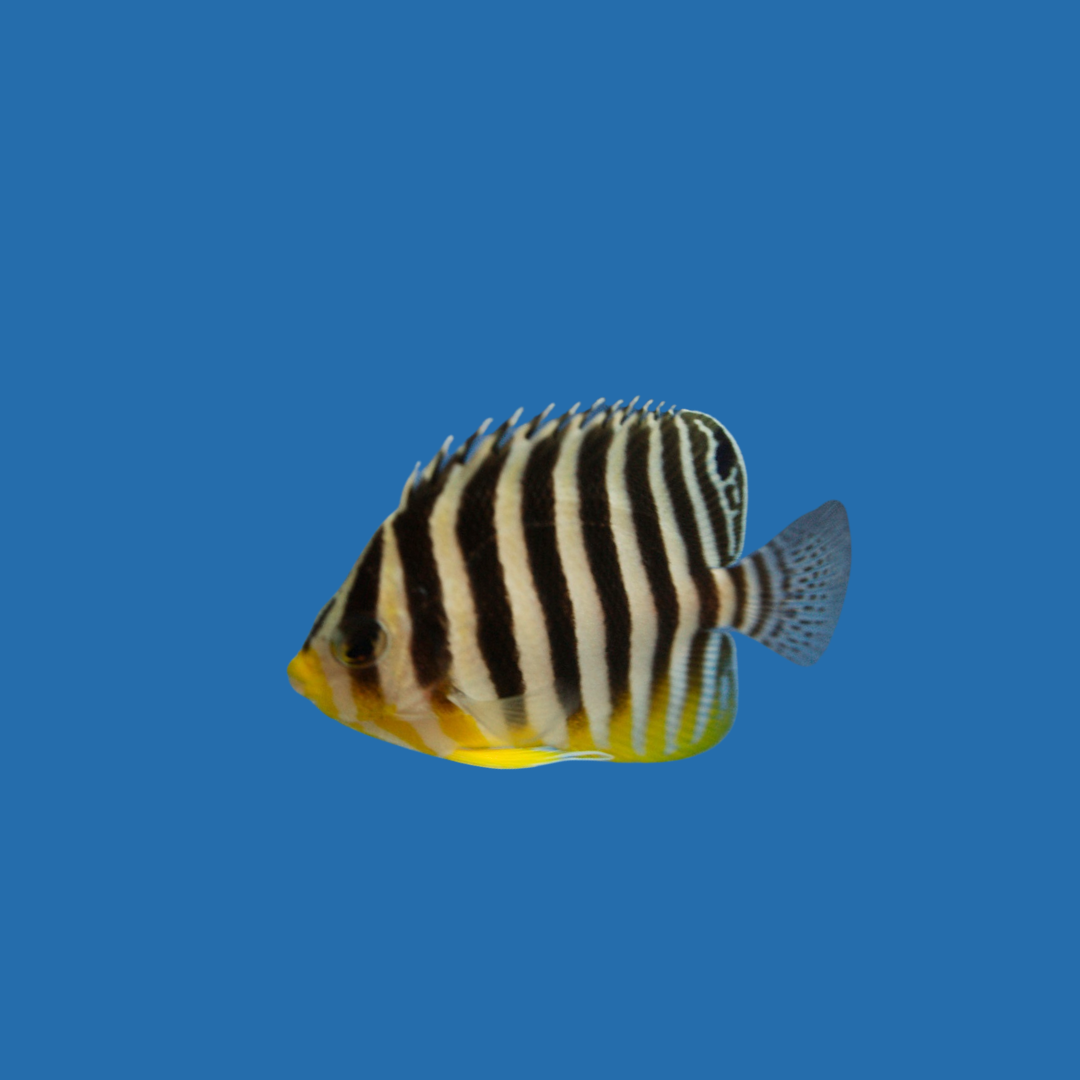
シマヤッコは、白地に黒い縞模様が規則正しく並ぶ、非常に気品のある小型のキンチャクダイです。主に西太平洋からインド洋にかけてのサンゴ礁、特に水深の深い洞窟や岩の裂け目といった薄暗い場所に生息しています。アクアリウムの世界では、その繊細な美しさから古くよりマリンアクアリストの憧れの存在として特別な地位を占めてきました。性格は非常に臆病で警戒心が強く、導入初期の餌付けには工夫が必要ですが、一度環境に馴染むと活発に泳ぎ回り、飼育者にその美しい姿を見せてくれるようになります。深場由来の魚ならではの独特な泳ぎ方や、産地によって異なる性質など、知れば知るほど奥が深い魅力的な魚種です。The Multi-Barred Angelfish is an elegant dwarf angelfish characterized by its regular pattern of black vertical bars on a white body. Inhabiting coral reefs from the Western Pacific to the Indian Ocean, they prefer dim environments such as deep-water caves and rock crevices. In the aquarium hobby, their delicate beauty has long earned them a prestigious status among marine aquarists. While naturally shy and cautious, requiring careful acclimation and feeding during the initial stages, they become active swimmers once settled. Their unique deep-water swimming behaviors and the varied characteristics based on their origin make them a truly fascinating species for dedicated enthusiasts.
ライブロックで多くの洞窟や岩の裂け目を作り、隠れ場所を豊富に用意する。Provide numerous caves and crevices using live rock to create ample hiding spots.
注意点 / Precautions
深場由来のため強い照明にはストレスを感じやすい。導入初期は特に調光し、落ち着かせる。As a deep-water species, they can be stressed by bright lights. Dim the lighting during the initial introduction.
餌と給餌 / Feeding
餌の種類 / Diet
雑食性。野生では海綿、ホヤ、藻類などを食す。飼育下ではアサリ、冷凍イサザアミ、冷凍ブラインシュリンプ、人工飼料(スピルリナ配合)。Omnivorous. In the wild, they eat sponges, tunicates, and algae. In captivity: clams, frozen mysis shrimp, frozen brine shrimp, and pellet foods (with Spirulina).
給餌のポイント / Feeding Tips
導入直後はアサリの剥き身をライブロックに擦り付け、食欲を刺激する。少しずつ冷凍餌や人工飼料に移行させる。少量ずつ1日2回以上の給餌が理想。Start by rubbing fresh clam meat onto live rock to stimulate appetite. Gradually transition to frozen and then pellet foods. Feeding small amounts twice or more daily is ideal.
性格と混泳 / Temperament and Tank Mates
性格 / Temperament
半攻撃的。臆病だが、同属や似た体型のヤッコには激しく争う。Semi-aggressive. Generally shy, but highly territorial toward conspecifics or similarly shaped angelfish.
混泳の相性 / Compatibility
同種・同属は避け、おとなしい他種となら可能。サンゴ水槽では、空腹時にシャコガイや一部のサンゴを突くことがあるため注意。Avoid keeping with the same species. Compatible with peaceful tank mates. Caution in reef tanks as they may nip at clams or LPS corals if hungry.
病気と対策 / Diseases and Prevention
かかりやすい病気 / Common Diseases
白点病、ウーディニウム病、細菌感染症Cryptocaryon irritans (Marine White Spot), Amyloodinium, and bacterial infections.
対策と予防 / Prevention
導入前のトリートメントを徹底する。水温・水質の急変を避け、ストレスの少ないレイアウトを心がける。Quarantine before introduction. Prevent sudden changes in water parameters and minimize stress through proper aquascaping.
増やし方(繁殖) / Breeding
雌雄の判別 / Sexing
外見での判別は困難だが、ペア形成時には大型個体がオス、小型個体がメスとなる。Difficult to distinguish by appearance, but in a pair, the larger individual becomes the male and the smaller one the female.
繁殖形態 / Reproduction
雌性先熟の雌雄同体。浮遊産卵を行う。Protogynous hermaphroditism. They are pelagic spawners.
繁殖のポイント / Breeding Tips
人工飼育下での産卵誘発には、高度な水質管理と光周期の制御が必要。2025年には日本でハイブリッド個体の完全養殖が達成された。Spawning in captivity requires advanced water quality and photoperiod control. In 2025, successful full aquaculture of hybrid individuals was achieved in Japan.
雑学と豆知識 / Trivia and Fun Facts
1. 名前と分類のドラマ / 1. The Drama of Naming and Taxonomy
学名の「multifasciata」はラテン語で「多くの縞」を意味し、まさにその姿を象徴しています。発見当時は別のグループに分類されていましたが、1991年にその特殊な形態から「パラセントロピーゲ属」として独立しました。これは近縁のアブラヤッコ属とは一線を画す、独自の進化の道を歩んできた証でもあります。The scientific name “multifasciata” means “many bands” in Latin, perfectly describing its appearance. Originally classified differently, it was placed in its own genus, Paracentropyge, in 1991 due to its unique morphology, marking its distinct evolutionary path.
2. 逆さ泳ぎの不思議な適応 / 2. The Mystery of Upside-Down Swimming
シマヤッコは洞窟の天井に沿って「逆さま」に泳ぐことで有名です。これは異常行動ではなく、光が上から遮断される閉鎖空間において、海底からの反射光や岩の壁面を基準に姿勢を制御しているためです。この独特な空間認識能力によって、捕食者の死角を突きながら効率よく餌を探しているのです。Famous for swimming upside down along cave ceilings, this is a natural adaptation. In dark crevices, they orient themselves based on reflected light from the seafloor or the physical surface of the rocks, allowing them to search for food while staying hidden from predators.
3. 産地で変わる「強さ」の秘密 / 3. The Secret of Strength by Origin
日本市場では、フィリピン産とマーシャル諸島産で評価が大きく分かれます。フィリピン産は安価ですが、採集時のダメージで餌付きにくい個体が見られます。対してマーシャル産やバヌアツ産は、丁寧な減圧処理と輸送により最初からエネルギッシュで、人工飼料にもすぐに慣れる「強健さ」を備えていることが多いのが特徴です。In the Japanese market, value varies significantly between origins. Philippines specimens are affordable but can be fragile due to collection methods. Conversely, those from the Marshall Islands or Vanuatu are often robust and quick to accept prepared foods, thanks to meticulous decompression and handling.
4. 2025年の奇跡:ハイブリッド完全養殖 / 4. The 2025 Miracle: Hybrid Aquaculture
2025年4月、日本のカミハタグループが、シマヤッコとスミレヤッコの人工交雑個体の完全養殖に成功したという驚きのニュースが駆け巡りました。自然界ではめったに出会えない「聖杯」のような存在を、日本の高度な技術が人工的に再現したのです。これにより、野生個体よりも格段に飼いやすい個体が市場に並ぶ未来が現実のものとなりました。In April 2025, Japan’s Kamihata Group announced the successful aquaculture of a hybrid between the Multibar and Purple-Masked angelfish. This “Holy Grail” of the ocean, rarely seen in the wild, was reproduced through advanced Japanese technology, promising a future of hardier, captive-bred specimens.
まとめ / Conclusion
シマヤッコは、その飼育の難しさゆえに、アクアリストの情熱と技術を試す存在であり続けてきました。しかし、適切な産地の選定、アサリを用いた忍耐強い餌付け、そして何よりも彼らが落ち着ける「洞窟」を再現した環境づくりによって、その気品あふれる姿を長期にわたって楽しむことは十分に可能です。The Multibar Angelfish has long been a test of an aquarist’s passion and skill due to its challenging care requirements. However, by selecting quality specimens, patiently using clams for feeding, and creating a cave-rich environment, it is entirely possible to enjoy their majestic presence in your aquarium for years to come.
2025年の完全養殖成功という新たな時代の幕開けにより、この美しい「縞模様の天使」はより身近な存在になりつつあります。野生個体の保護と飼育の楽しみを両立させる、マリンアクアリウムの新しいスタンダードが、今まさに日本から世界へと発信されています。With the dawn of a new era marked by the 2025 aquaculture success, this beautiful “striped angel” is becoming more accessible. A new standard for marine aquariums—balancing conservation with the joy of keeping fish—is now being broadcast from Japan to the rest of the world.
Smith, H. M. and Radcliffe, L. (1911). Descriptions of three new fishes of the family Chaetodontidae from the Philippine Islands. Proceedings of the United States National Museum, Vol. 40, No. 1822, pp. 319-326.
Burgess, W. E. (1991). Two new genera of angelfishes (family Pomacanthidae). Tropical Fish Hobbyist. (Paracentropyge属の創設に関する原著論文)



 アイのアクアグッズ案内水草水槽のCO₂添加|3つの方式の選び方とおすすめ用品道具の特徴や使い方、選ぶときのポイントをアイが紹介します。記事はコチラ →
 アイのアクアグッズ案内エーハイムはおもちゃから始まった? 小さな噴水から水槽へ、アイとコタロウの探訪道具の特徴や使い方、選ぶときのポイントをアイが紹介します。記事はコチラ →
 アイのアクアグッズ案内水槽のろ材の選び方|ウール・リング・活性炭の違いとおすすめ商品フィルターの中の綿や石は何をしている? アイとコタロウが、ウール・スポンジ・セラミック・焼結ガラス・活性炭・ゼオライトを比較。機種との相性、入れ方、洗い方と交換まで商品とともに紹介します。記事はコチラ →
 アイのアクアグッズ案内小型カラシンの群れを楽しむ|餌と水換えから考える飼育用品ガイド小型カラシンの群れを眺める時間を、もっと楽しく。泳ぐ余白、餌の食べ方、続けやすい水換えを軸に、日本で揃えやすい用品の選び方を紹介します。記事はコチラ →



コメント