

▶ 記事の生体をAMAZONで買う ▶ 記事の生体をYahooで買う
解説 / Description
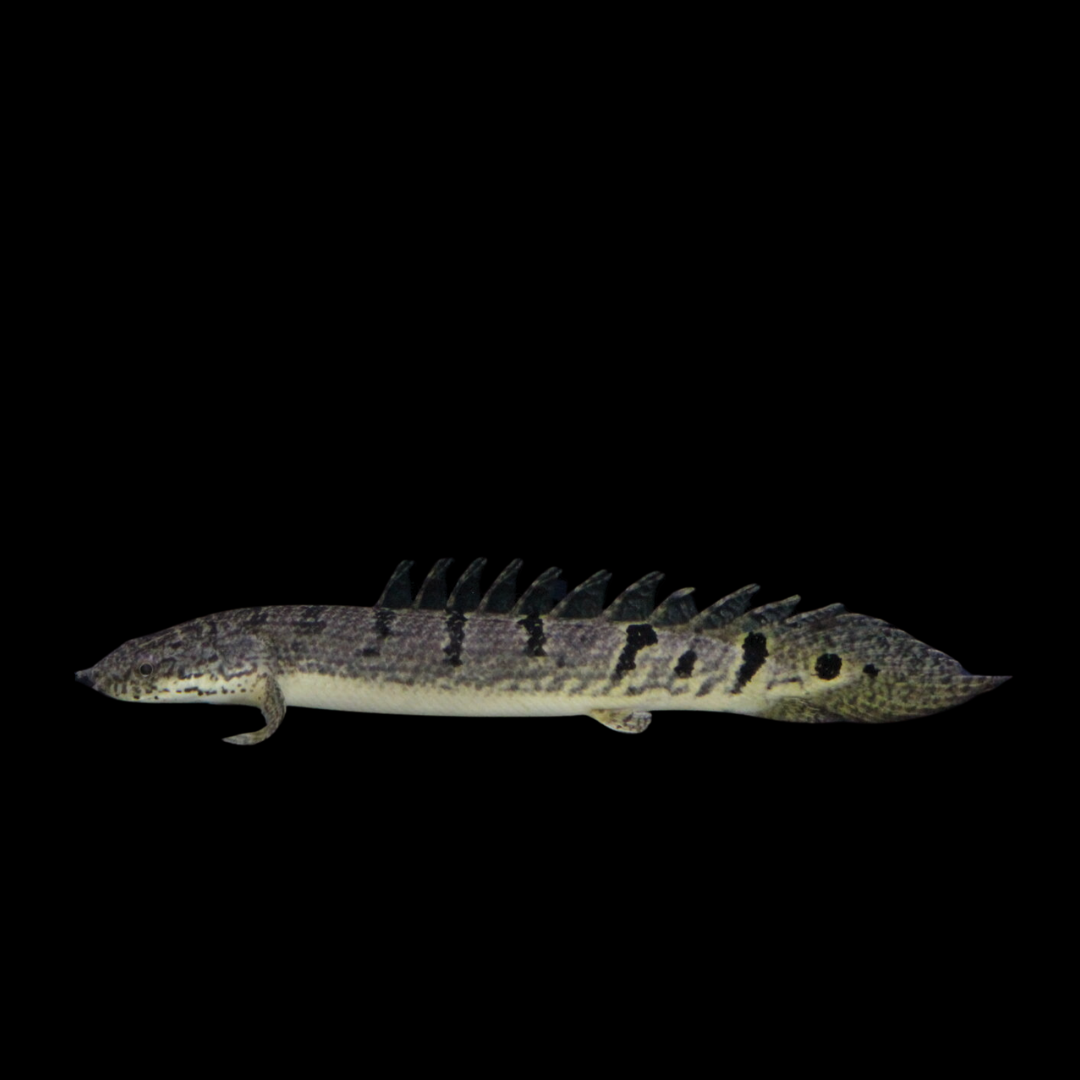
ポリプテルス・デルヘッジは、アフリカ中央部のコンゴ川流域に分布するポリプテルスの仲間です。細長い体、背中に並ぶ小さな背鰭、硬いガノイン鱗、そして体側に入る黒いバンド模様が特徴で、古代魚らしい重厚な雰囲気と、比較的扱いやすい中型ポリプテルスとしての魅力をあわせ持っています。日本の観賞魚市場では、ブリード個体が比較的入手しやすい一方、バンド模様が明瞭な個体やワイルド個体は愛好家から高く評価されます。長く付き合える魚ですが、肉食性、脱走しやすさ、最終的なサイズを理解したうえで飼育環境を整えることが重要です。 Polypterus delhezi is a bichir from the Congo River basin in Central Africa. It is known for its elongated body, rows of small dorsal finlets, hard ganoid scales, and dark vertical bands along the body. In the aquarium trade, captive-bred individuals are commonly available, while wild-caught specimens and individuals with bold, well-defined bands are especially valued by enthusiasts. It is a long-lived and fascinating ancient fish, but successful care requires an understanding of its predatory nature, escape behavior, and adult size.
基本情報 / Basic Information
| 学名 / Scientific Name | Polypterus delhezi |
|---|---|
| 通称 / Common Name | ポリプテルス・デルヘッジ、デルヘッジ、ロイヤルバンド・デルヘッジDelhezi bichir, Barred bichir, Armoured bichir |
| 分類 / Family | ポリプテルス目 ポリプテルス科 ポリプテルス属Order Polypteriformes, family Polypteridae, genus Polypterus |
| 英名 / English Name | Delhezi Bichir / Barred Bichir / Armoured Bichir |
| 分布 / Distribution | コンゴ民主共和国、コンゴ共和国を中心とするコンゴ川流域。プールマレボ、カサイ川、マイ=ンドンベ湖、ツンバ湖、ウバンギ川下流域などから知られます。The Congo River basin, mainly in the Democratic Republic of the Congo and the Republic of the Congo, including areas such as Pool Malebo, the Kasai River, Lake Mai-Ndombe, Lake Tumba, and parts of the lower Ubangi system. |
| 最大体長 / Max Size | 最大で約40〜44cmほど。飼育下では個体差があり、30cm台で落ち着く個体もいます。Up to about 40–44 cm. In aquaria, many individuals remain in the 30 cm range depending on genetics, diet, and environment. |
| 寿命 / Lifespan | 10〜15年以上。安定した水質と十分な水槽サイズを用意すれば、長期飼育を楽しめる魚です。Often 10–15 years or longer when kept in a stable, spacious aquarium. |
飼育環境 / Aquarium Environment
| 水槽サイズ / Tank Size | 幼魚のうちは60cm水槽でも管理できますが、終生飼育では90cm規格水槽以上を目安にします。余裕を持つなら120cm水槽、特に奥行きのある水槽が理想です。体長だけでなく、水質の安定と混泳時の逃げ場を考えて選ぶことが大切です。Juveniles can be started in a 60 cm tank, but adults should be kept in at least a standard 90 cm aquarium. A 120 cm tank, especially one with good front-to-back depth, is preferable for long-term care and stable water quality. |
|---|---|
| 水温 / Temperature | 24〜28℃前後。日本の冬は水温低下が大きな負担になるため、ヒーターで安定させて急変を避けます。 Around 24–28°C. In colder seasons, a reliable heater is necessary to prevent sudden temperature drops. |
| 水質 / Water Quality | 弱酸性〜中性付近を中心に、極端でなければ幅広く適応します。肉食魚で餌の量が多くなりやすいため、強めのろ過と定期的な換水でアンモニア、亜硝酸、硝酸塩の蓄積を抑えることが重要です。It adapts to a fairly wide range of water conditions, especially slightly acidic to neutral water. Because it is a carnivorous fish that produces a heavy waste load, strong filtration and regular water changes are important. |
| レイアウト / Layout | 底床は角のない細かな砂や、体を傷つけにくい素材が向いています。流木や岩、土管などで隠れ家を作ると落ち着きやすく、暗めの底床を使うと体側のバンド模様が引き立ちやすくなります。遊泳スペースを残しつつ、日中に休める場所を用意しておくと安心です。A smooth, fine substrate is recommended to avoid abrasion. Driftwood, rocks, and caves help the fish feel secure, while darker substrates may enhance the contrast of the body bands. Leave open space while providing shaded resting areas. |
| 注意点 / Precautions | 最も重要なのは飛び出し対策です。ポリプテルスは空気呼吸ができ、胸鰭を使って体を押し出す力もあるため、わずかな隙間から脱走することがあります。ガラス蓋や隙間の処理を徹底し、必要に応じて蓋に重しを置くなど、物理的に出られない構造にしておく必要があります。The most important precaution is escape prevention. Bichirs can breathe air and use their strong pectoral fins to push themselves through small gaps. A tight-fitting lid and blocked openings are essential. |
餌と給餌 / Feeding
| 餌の種類 / Diet | 肉食性で、沈下性の肉食魚用ペレット、冷凍アカムシ、冷凍エビ、切り身、貝類、小魚などを食べます。生き餌だけに頼ると栄養や衛生面の管理が難しくなるため、人工飼料を主軸にしながら冷凍餌などを組み合わせると扱いやすくなります。A carnivorous species that accepts sinking carnivore pellets, frozen bloodworms, frozen shrimp, fish pieces, shellfish, and small fish. A pellet-based diet supplemented with frozen foods is usually easier and safer than relying only on live food. |
|---|---|
| 給餌のポイント / Feeding Tips | 夜行性傾向があるため、消灯前後や水槽内が落ち着いた時間帯に給餌すると食いつきがよくなることがあります。食べ残しは水質悪化の原因になるため、量を見ながら与え、残餌は早めに取り除きます。混泳水槽では動きの速い魚に餌を取られやすいため、デルヘッジが確実に食べられているか確認することが大切です。As a mostly nocturnal feeder, it often responds well to feeding around lights-out or during calmer periods. Remove leftovers promptly, and in community tanks make sure faster tank mates do not take all the food. |
性格と混泳 / Temperament and Tank Mates
| 性格 / Temperament | 普段は底付近でゆったり過ごすことが多く、口に入らない相手には比較的無関心です。ただし肉食魚であることに変わりはなく、夜間に小魚やエビを捕食することがあります。おとなしい魚というより、無駄な争いをしにくい捕食魚と考えると扱いやすい魚です。It is usually calm and spends much of its time near the bottom, often ignoring fish too large to swallow. However, it is still a predator and may eat small fish or shrimp, especially at night. |
|---|---|
| 混泳の相性 / Compatibility | 混泳相手は、デルヘッジの口に入らないサイズで、極端に攻撃的ではない中型〜大型魚が候補になります。同程度のポリプテルス類や大型カラシン、性格の荒すぎないシクリッドなどが選ばれることがあります。小型魚、エビ類、小型の底生魚は捕食対象になりやすく、プレコ類は体表を舐めて傷を作るおそれがあるため避けたほうが無難です。Suitable tank mates should be too large to swallow and not excessively aggressive. Other similar-sized bichirs, larger characins, and reasonably calm cichlids may work. Small fish, shrimp, small bottom dwellers, and plecos are generally poor choices. |
病気と対策 / Diseases and Prevention
| かかりやすい病気 / Common Diseases | 丈夫な魚ですが、水質悪化や擦れ傷から皮膚炎、細菌感染、白点病などを起こすことがあります。ワイルド個体では、輸入直後に外部寄生虫や痩せが見られることもあります。硬い鱗を持つ一方で、体表の粘膜や腹部は傷みやすいため、底床や混泳相手にも注意が必要です。It is generally hardy, but poor water quality and abrasions can lead to skin infections, bacterial problems, or ich. Wild-caught individuals may arrive with external parasites or poor body condition. |
|---|---|
| 対策と予防 / Prevention | 予防の基本は、安定した水温、十分なろ過、定期的な換水、傷を作りにくいレイアウトです。新しく導入する個体は、可能であれば隔離水槽で状態を確認してから本水槽へ移すと安心です。薬浴を行う場合は、古代魚が薬剤に敏感なことがあるため、使用量や薬剤の種類を慎重に選ぶ必要があります。Stable temperature, strong filtration, regular water changes, and a safe layout are the basis of prevention. Quarantine new fish when possible, and use medications cautiously because ancient fish can be sensitive to some treatments. |
増やし方(繁殖) / Breeding
| 雌雄の判別 / Sexing | 成熟したオスは、メスに比べて臀鰭が幅広く厚みを帯びる傾向があります。メスは全体にふっくらしやすく、抱卵期には腹部の丸みが目立ちます。幼魚のうちは判別が難しいため、十分に成長した個体で臀鰭の形を確認するのが基本です。Mature males tend to have a broader, thicker anal fin, while females are often fuller-bodied, especially when gravid. Sexing juveniles is difficult. |
|---|---|
| 繁殖形態 / Reproduction | 卵散布型です。オスは発達した臀鰭を使って卵を受け止めるようにしながら受精させ、粘着性の卵が水草や落ち葉、モップ状の産卵床などに付着します。親魚が卵を食べることもあるため、採卵や親魚の隔離を考える必要があります。An egg-scattering species. The male uses his enlarged anal fin during spawning, and adhesive eggs attach to plants, leaf litter, or spawning mops. Eggs may be eaten by the adults, so separation is often required. |
| 繁殖のポイント / Breeding Tips | 水槽内繁殖は容易ではありません。雨季の到来を思わせる水位変化や換水、水温の変化、栄養価の高い餌によるコンディション作りがきっかけになることがあります。ただし急激すぎる変化は魚に負担をかけるため、繁殖を狙う場合でも安全域を守りながら段階的に調整することが重要です。Breeding in aquaria is challenging. Changes that mimic the rainy season, such as water-level changes, water changes, slight temperature shifts, and rich conditioning foods, may help trigger spawning. Avoid excessive changes that could stress the fish. |
雑学と豆知識 / Trivia and Fun Facts
| 1. 「多くの鰭」を意味する属名 / 1. A genus name meaning “many fins” | ポリプテルスという属名は、「多い」を意味する語と「鰭」を意味する語に由来するとされます。背中に小さな旗のような背鰭がいくつも並ぶ姿は、一般的な熱帯魚とはかなり異なり、古代魚らしい印象を強く与えます。デルヘッジの場合、この小離鰭と体側の黒いバンドが組み合わさることで、恐竜や龍を思わせる独特の存在感が生まれています。The genus name Polypterus is derived from words meaning “many” and “fin.” Its row of small dorsal finlets gives it a distinctive ancient appearance, and in P. delhezi the finlets and dark body bands create a dragon-like impression. |
|---|---|
| 2. ガノイン鱗という硬いよろい / 2. Ganoid scales as natural armor | デルヘッジの体表を覆うガノイン鱗は、一般的な魚の柔らかい鱗とは質感が異なり、硬い装甲のような役割を持ちます。水槽内で見ると滑らかな体に見えますが、実際には菱形の硬い鱗が連なる構造です。この頑丈さはポリプテルスの魅力の一つですが、体表の粘膜まで強いわけではないため、擦れや吸い付き被害には注意が必要です。The body is covered with hard ganoid scales, which differ from the softer scales of many modern fishes. They function like natural armor, although the surface mucus and skin can still be damaged by abrasion or unsuitable tank mates. |
| 3. 肺呼吸と脱走対策 / 3. Air breathing and escape prevention | ポリプテルス類は鰓だけでなく、空気を取り込む能力を持つ魚として知られています。この性質は、低酸素になりやすい湿地や氾濫原で生きるうえで役立つものですが、飼育下では脱走事故につながることがあります。水面に隙間があると、想像以上の力で体を押し出してしまうため、見た目以上に「蓋が重要な魚」と考えておく必要があります。Bichirs are known for their ability to breathe air, an adaptation useful in low-oxygen wetlands and floodplains. In aquaria, however, this ability makes escape prevention especially important. |
| 4. 日本市場で重視されるバンド模様 / 4. Body bands valued in the Japanese market | 日本の観賞魚市場では、デルヘッジの黒いバンド模様が鑑賞価値を大きく左右します。太く明瞭で、左右のバランスがよい個体は「ロイヤルバンド」などの呼び名で販売されることがあり、同じ種類でも価格に差が出ます。ただし、模様の美しさだけでなく、痩せていないか、顔つきや背骨に異常がないか、餌を食べているかを確認して選ぶことが大切です。In the Japanese aquarium market, bold and balanced body bands can strongly influence value. Individuals with especially striking bands may be sold under names such as “Royal Band,” but health and body condition should always be prioritized. |
まとめ / Conclusion
ポリプテルス・デルヘッジは、古代魚らしい姿、硬いガノイン鱗、黒いバンド模様が魅力の中型ポリプテルスです。丈夫で飼育しやすい面もありますが、肉食性であること、最終的に30cmを超えること、そして脱走しやすいことを前提に環境を整える必要があります。 Polypterus delhezi is a medium-sized bichir admired for its ancient appearance, hard ganoid scales, and dark body bands. It is generally hardy, but its predatory nature, adult size, and escape behavior must be considered from the beginning.
終生飼育を考えるなら、90cm規格水槽以上の余裕ある環境、強めのろ過、隙間のない蓋、そして口に入らない混泳相手の選定が基本になります。長寿で存在感のある魚なので、導入時の小ささだけで判断せず、成魚になった姿まで見据えて飼育することが大切です。 For long-term care, provide at least a standard 90 cm aquarium, strong filtration, a secure lid, and tank mates that cannot be swallowed. Because this is a long-lived and impressive fish, it should be kept with its adult size and long-term needs in mind.

気になる道具や飼い方を見つけてみませんか?
 アイのアクアグッズ案内小型カラシンの群れを楽しむ|餌と水換えから考える飼育用品ガイド小型カラシンの群れを眺める時間を、もっと楽しく。泳ぐ余白、餌の食べ方、続けやすい水換えを軸に、日本で揃えやすい用品の選び方を紹介します。記事はコチラ →
 アイのアクアグッズ案内エーハイムはおもちゃから始まった? 小さな噴水から水槽へ、アイとコタロウの探訪道具の特徴や使い方、選ぶときのポイントをアイが紹介します。記事はコチラ →
さまざまな飼育テーマをご紹介。リンク先の記事には広告・商品紹介が含まれます。
案内・紹介記事一覧へ →参考文献・参照資料
本記事では、分類・分布・最大体長などの基礎情報は魚類データベースおよび公的機関の情報を中心に確認し、飼育環境に関する実用的な情報は専門的なアクアリウム資料を補助的に参照しました。
-
Froese, R. and Pauly, D. Editors. FishBase. Polypterus delhezi, Barred bichir. World Wide Web electronic publication.
https://www.fishbase.se/summary/Polypterus-delhezi -
Fricke, R., Eschmeyer, W. N. and Van der Laan, R. Editors. Eschmeyer’s Catalog of Fishes. Polypterus delhezi Boulenger, 1899. California Academy of Sciences.
https://researcharchive.calacademy.org/research/ichthyology/catalog/fishcatget.asp?spid=9800 -
GBIF Secretariat. Polypterus delhezi Boulenger, 1899. GBIF Backbone Taxonomy.
https://www.gbif.org/species/2346575 -
U.S. Geological Survey. Nonindigenous Aquatic Species Database. Barred bichir, Polypterus delhezi Species Profile.
https://nas.er.usgs.gov/queries/FactSheet.aspx?SpeciesID=2264 -
U.S. Fish and Wildlife Service. Ecological Risk Screening Summary: Barred Bichir, Polypterus delhezi.
https://www.fws.gov/sites/default/files/documents/Ecological-Risk-Screening-Summary-Barred-Bichir.pdf -
Seriously Fish. Polypterus delhezi species profile.
https://www.seriouslyfish.com/species/polypterus-delhezi/




コメント