

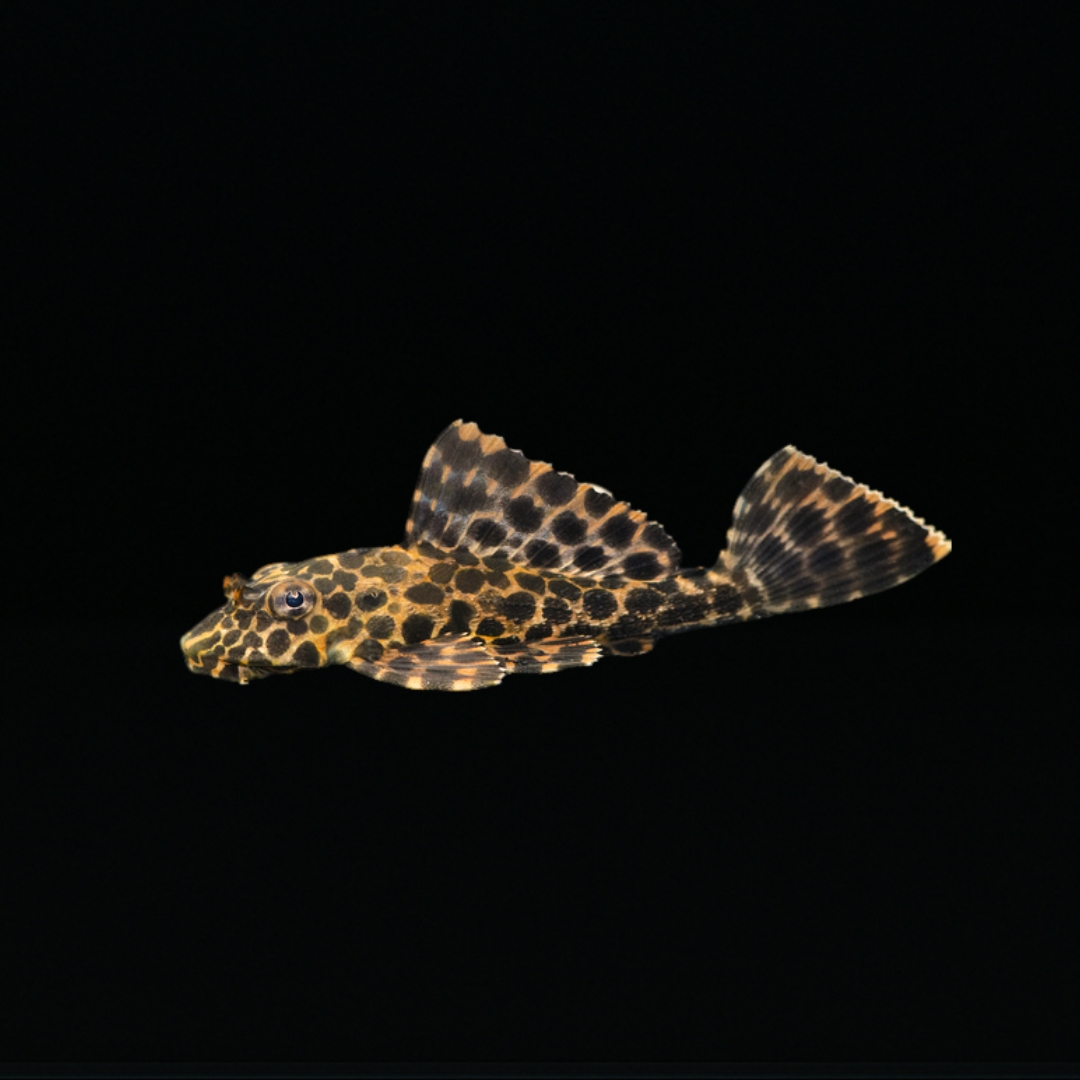
解説 / Description
セルフィンプレコは、帆のように大きく広がる背ビレと、鎧のような骨板に覆われた体が印象的なロリカリア科の大型ナマズです。幼魚は水槽面の藻類をよく食べるため「コケ取り役」として親しまれていますが、成長すると50cm前後に達することもある大型魚で、終生飼育には大きな水槽、強力なろ過、長期的な飼育計画が必要です。安価で丈夫という入口のやさしさに対して、成魚まで付き合うには相応の設備と責任が求められる魚といえるでしょう。 The sailfin pleco is a large loricariid catfish known for its tall, sail-like dorsal fin and armor-plated body. Juveniles are popular as algae grazers, but this species can grow to around 50 cm, so long-term care requires a large aquarium, powerful filtration, and careful planning. It may be hardy and inexpensive when small, but keeping it responsibly into adulthood is a serious commitment.
基本情報 / Basic Information
| 学名 / Scientific Name | Pterygoplichthys gibbiceps |
|---|---|
| 通称 / Common Name | セルフィンプレコ、セイルフィンプレコ、レオパードプレコとして流通することがあります。Sailfin pleco, leopard pleco. |
| 分類 / Family | ナマズ目ロリカリア科ヒポストムス亜科。かつてはGlyptoperichthys属やLiposarcus属として扱われたこともありますが、現在はPterygoplichthys属に整理されています。Family Loricariidae, subfamily Hypostominae. It was historically treated under names such as Glyptoperichthys and Liposarcus, but is now placed in Pterygoplichthys. |
| 英名 / English Name | Sailfin Pleco, Leopard Pleco |
| 分布 / Distribution | 南米のアマゾン川中・上流域およびオリノコ川流域が自然分布域とされます。観賞魚としては東南アジアなどで養殖された個体も広く流通しています。Native to the middle and upper Amazon and Orinoco basins in South America. In the aquarium trade, many individuals are farm-bred in regions such as Southeast Asia. |
| 最大体長 / Max Size | 一般的な参照値では全長約50cm。飼育下でも30cmを超えることは珍しくないため、小型水槽向きの魚ではありません。Common reference values list about 50 cm total length. Even in aquariums, individuals over 30 cm are not unusual, so this is not a fish for small tanks. |
| 寿命 / Lifespan | 良好な環境では10年以上飼育されることがあります。長寿になりやすいため、購入前に将来の水槽サイズと引き取り先を含めて考えておくことが大切です。It can live for more than 10 years in good conditions. Because it can be long-lived, future tank size and long-term responsibility should be considered before purchase. |
飼育環境 / Aquarium Environment
| 水槽サイズ / Tank Size | 幼魚期だけなら60cm規格水槽でも一時的に飼育できますが、終生飼育を考えるなら120cm規格水槽以上、成長した個体では120cmワイド水槽から150cm級水槽を目安にします。体長だけでなく、排泄量と遊泳時の力も考慮してください。Juveniles can be kept temporarily in a standard 60 cm tank, but long-term care should be planned around at least a 120 cm tank, and large adults are better suited to wide 120 cm or 150 cm-class aquariums. Waste production and physical strength matter as much as body length. |
|---|---|
| 水温 / Temperature | 23〜27℃前後を中心に、熱帯魚向けの安定した水温で管理します。低水温には強くないため、日本の屋外や無加温水槽での越冬は基本的に避けてください。 Maintain stable tropical temperatures, ideally around 23–27°C. It is not suited to cold conditions, so outdoor or unheated overwintering in Japan should generally be avoided. |
| 水質 / Water Quality | 弱酸性から弱アルカリ性まで比較的幅広く適応しますが、急変は避けます。目安はpH 6.0〜8.0程度です。丈夫な魚ではありますが、水を汚しやすいため、硝酸塩の蓄積を抑える管理が重要です。It adapts to a fairly broad range from slightly acidic to slightly alkaline water, but sudden changes should be avoided. A practical target is around pH 6.0–8.0. It is hardy, yet produces a lot of waste, so nitrate control is important. |
| レイアウト / Layout | 流木、丈夫な石、隠れ家を入れたシンプルで掃除しやすいレイアウトが向いています。水草レイアウト水槽では、葉を削ったり、成長後の力で根や石組みを崩したりすることがあるため、繊細な水草水槽には不向きです。A simple, easy-to-clean layout with driftwood, sturdy rocks, and hiding places is best. Delicate planted aquariums are not ideal because the fish may rasp leaves and, as it grows, disturb plants and hardscape. |
| 注意点 / Precautions | 見た目はおとなしくても、成長後は力が強く、排泄量も非常に多くなります。外部式フィルターやオーバーフローろ過など余裕のあるろ過を用意し、定期的な水換えを行ってください。また、飼いきれなくなった個体を河川や池に放すことは絶対に避けてください。Although it may appear calm, adults are strong and produce heavy waste. Use oversized filtration such as canister or overflow systems and perform regular water changes. Never release unwanted individuals into rivers, ponds, or other natural waters. |
餌と給餌 / Feeding
| 餌の種類 / Diet | 藻類、植物質の沈下性タブレット、プレコ用フード、ゆでたホウレンソウやキュウリなどの野菜、補助的な動物質飼料を与えます。流木をかじる行動も見られるため、流木を入れておくと行動面でも落ち着きやすくなります。Offer algae, plant-based sinking tablets, pleco foods, blanched vegetables such as spinach or cucumber, and occasional animal-based foods. Driftwood is also useful because the fish naturally rasps surfaces and often settles better with wood present. |
|---|---|
| 給餌のポイント / Feeding Tips | 「水槽内のコケだけで十分」と考えず、成長に応じて専用フードを与えます。夜間に活動しやすいため、照明を落とす前後に沈下性の餌を与えると食べやすくなります。食べ残しは水を汚すため、翌朝まで残る量は減らしましょう。Do not assume that aquarium algae alone is enough. Provide dedicated sinking foods as the fish grows. Because it is more active at night, feeding around lights-out often works well. Reduce portions if food remains by the next morning. |
性格と混泳 / Temperament and Tank Mates
| 性格 / Temperament | 基本的には底層で生活するおとなしい魚ですが、成長すると同じ底層性のプレコ類やナマズ類に対して場所を主張することがあります。幼魚時代の印象だけで混泳計画を立てないことが大切です。It is generally a peaceful bottom-dwelling fish, but adults may become territorial toward other bottom-dwelling plecos or catfish. Tank mate planning should not be based only on its juvenile behavior. |
|---|---|
| 混泳の相性 / Compatibility | 大型魚水槽のタンクメイトとして使われることがありますが、ディスカスやポリプテルスなど体表粘膜が豊かな魚に吸い付く個体もいます。体表に傷が出る、相手の魚が怯える、餌を横取りするなどの兆候があれば隔離を検討してください。小型魚を積極的に捕食する魚ではありませんが、体格差が大きい混泳では事故にも注意が必要です。It is often kept with large fish, but some individuals may rasp the body slime of fish such as discus or bichirs. If tank mates show wounds, stress, or feeding competition, separation should be considered. It is not an active predator of small fish, but accidents can occur in mixed tanks with large size differences. |
病気と対策 / Diseases and Prevention
| かかりやすい病気 / Common Diseases | 白点病、細菌性の皮膚炎、ヒレの損傷、輸送直後のコンディション不良などに注意します。丈夫な魚ですが、汚れた水、急な水温変化、栄養不足が続くと体調を崩します。Watch for ich, bacterial skin problems, fin damage, and poor condition after transport. It is hardy, but dirty water, sudden temperature changes, and poor nutrition can still lead to illness. |
|---|---|
| 対策と予防 / Prevention | 導入時は水合わせを丁寧に行い、可能であれば観察期間を設けます。治療薬を使う場合、ナマズ類は薬剤に敏感なことがあるため、製品の注意書きを確認し、規定量を安易に超えないようにします。予防の基本は、十分なろ過、定期的な水換え、偏らない給餌です。Acclimate carefully and, if possible, observe new fish before adding them to the main tank. Catfish can be sensitive to some medications, so follow product instructions and avoid overdosing. Good filtration, regular water changes, and balanced feeding are the best prevention. |
増やし方(繁殖) / Breeding
| 雌雄の判別 / Sexing | 雌雄差は大きくありません。成熟個体では体型、生殖突起、胸ビレ周辺の質感などが手がかりになることがありますが、幼魚での判別は難しいです。Sexual differences are subtle. In mature fish, body shape, genital papilla, and texture around the pectoral fins may provide clues, but juveniles are difficult to sex reliably. |
|---|---|
| 繁殖形態 / Reproduction | 自然下では土手や泥質の岸に穴を掘り、その中で産卵し、オスが卵や稚魚を守るタイプの繁殖を行うとされます。この巣穴掘り行動は、定着地では河岸の侵食や崩落に関係する可能性が指摘されています。In the wild, it is reported to dig burrows in earthen or muddy banks, spawn inside them, and have the male guard the eggs and fry. In invaded areas, this burrowing behavior may contribute to bank erosion and collapse. |
| 繁殖のポイント / Breeding Tips | 一般家庭の水槽での繁殖は現実的ではありません。成熟サイズの個体を複数維持できる広い空間、巣穴を作れる環境、個体同士の争いを避ける管理が必要になるため、通常の室内水槽では繁殖を狙う魚ではありません。Breeding in a typical home aquarium is generally impractical. It requires space for multiple mature adults, conditions suitable for burrowing, and careful management of aggression, so it is not a practical breeding target for ordinary indoor aquariums. |
雑学と豆知識 / Trivia and Fun Facts
| 1. 学名と分類の変遷 / 1. Scientific name and taxonomic history | セルフィンプレコは、古い資料や流通名ではGlyptoperichthys gibbicepsなどの名前で見かけることがあります。これは単なる表記ゆれではなく、ロリカリア科の分類が長く整理されてきた歴史の名残です。現在は、LiposarcusやGlyptoperichthysをPterygoplichthysに含める扱いが広く採用され、正式な学名はPterygoplichthys gibbicepsとされます。Older books and trade labels may use names such as Glyptoperichthys gibbiceps. This is not just a spelling variation, but a trace of the complex taxonomic history of loricariid catfish. Today, Liposarcus and Glyptoperichthys are generally treated within Pterygoplichthys, and the accepted name is Pterygoplichthys gibbiceps. |
|---|---|
| 2. 「コケ取り魚」から大型魚へ / 2. From algae eater to large fish | 幼魚のセルフィンプレコは、ガラス面を一生懸命なめる姿がかわいらしく、コケ取り役として売られることが多い魚です。しかし、その役割名だけで選ぶと、数年後に水槽サイズやろ過能力が足りなくなることがあります。図鑑としては、掃除役としての便利さよりも「大型ロリカリアを飼う」という意識を先に持つことをおすすめします。Juvenile sailfin plecos are often sold as algae eaters, and their hardworking grazing behavior is charming. However, choosing one only for that role can lead to problems a few years later when the tank and filtration become inadequate. It is better to think of this fish first as a large loricariid, not merely as a cleaner. |
| 3. 外来種問題は「同属プレコ類」として慎重に見る / 3. Invasive impacts should be viewed at the genus level with care | 日本を含む各地で問題になっている大型プレコ類は、Pterygoplichthys gibbicepsだけでなく、P. pardalis、P. disjunctivus、P. multiradiatusなど外見が似た同属種を含んで語られることが多いグループです。侵入地では同定が難しい例もあるため、セルフィンプレコ単独の性質と、Pterygoplichthys属プレコ類全体の外来種問題を分けて考える必要があります。The large plecos causing problems in many regions, including Japan, are often discussed as a group that includes Pterygoplichthys gibbiceps as well as similar species such as P. pardalis, P. disjunctivus, and P. multiradiatus. Because identification in invaded areas can be difficult, it is important to separate facts about the sailfin pleco itself from broader issues involving the genus Pterygoplichthys. |
| 4. 巣穴を掘る魚が河岸に与える影響 / 4. How burrowing fish can affect riverbanks | プレコ類の外来種問題で特に注目されるのが、繁殖時の巣穴掘りです。泥や土の岸に穴を掘る行動は、本来の生息地では繁殖戦略の一部ですが、定着地で個体数が増えると河岸の安定性に影響する可能性があります。このため、単に在来魚と餌を奪い合うだけでなく、水辺の形そのものを変える生き物として扱われることがあります。One notable invasive impact of large plecos is burrow digging during reproduction. In native habitats, digging into muddy or earthen banks is part of their breeding strategy. In invaded areas with high densities, however, burrowing may affect bank stability. This means they are sometimes considered not only competitors for food, but also animals that can alter the physical shape of waterways. |
| 5. 輸入と流通に関する注意 / 5. Notes on import and trade | 観賞魚の輸入には、対象種や用途に応じて水産防疫、動物検疫、通関など複数の制度確認が関わります。すべての熱帯魚に同じ手続きが一律に当てはまるわけではないため、商業輸入を行う場合は、必ず最新の公的情報と輸入予定個体の該当性を確認する必要があります。Importing ornamental fish may involve several regulatory checks, including aquatic animal disease control, quarantine, and customs procedures, depending on the species and intended use. The same procedure does not apply uniformly to every tropical fish, so commercial importers must confirm the latest official requirements and whether the planned shipment is covered. |
まとめ / Conclusion
セルフィンプレコは、丈夫で見応えがあり、幼魚期には水槽のコケ取り役としても魅力的な魚です。一方で、成長後は大型水槽と強力なろ過を必要とするため、初心者向けの小型クリーナーフィッシュとして安易に迎えるべき魚ではありません。 The sailfin pleco is hardy, impressive, and attractive as an algae grazer when young. However, adults require a large aquarium and strong filtration, so it should not be casually purchased as a small cleaner fish for beginners.
終生飼育の覚悟があり、大型魚水槽としてきちんと管理できる環境があれば、迫力ある姿と独特の行動を長く楽しめます。反対に、飼いきれなくなったからといって自然水域へ放すことは、外来種問題につながる重大な行為です。購入前に、成魚の大きさ、寿命、設備、混泳相手まで含めて計画しましょう。 With a realistic long-term plan and a properly managed large-fish aquarium, this species can be enjoyed for many years. Releasing unwanted individuals into natural waters is a serious action that can contribute to invasive species problems. Before buying one, plan for adult size, lifespan, equipment, and tank mates.
気になる道具や飼い方を見つけてみませんか?
 アイのアクアグッズ案内バクテリアって、結局なんなんだ? タマスとアイのボトル探究ロック好きのカバ・タマスが初登場。サイクル、ベストバイオ、バイコムのボトルから、菌の役割と保存の工夫、二本組の歴史をアイと探ります。記事はコチラ →
 アイのアクアグッズ案内カルキ抜き・水質調整剤の選び方|水換えと水槽の種類に合わせて選ぶ道具の特徴や使い方、選ぶときのポイントをアイが紹介します。記事はコチラ →
さまざまな飼育テーマをご紹介。リンク先の記事には広告・商品紹介が含まれます。
案内・紹介記事一覧へ →参考文献・参照資料
この記事では、店舗・通販サイト・個人ブログ・まとめサイトを参考文献から除外し、分類、分布、生息環境、飼育条件、繁殖、病気や飼育上の注意点を確認できる公的データベース、学術論文、政府・国際機関、獣医学系資料を中心に選定しています。なお、セルフィンプレコそのものの情報と、外来種問題でしばしば混同・同定されるPterygoplichthys属近縁種の情報は、記事内でも区別して扱っています。
-
Fricke, R., Eschmeyer, W. N. & Van der Laan, R. Eschmeyer’s Catalog of Fishes, California Academy of Sciences.
Pterygoplichthys gibbiceps (Kner, 1854)
主な確認範囲:有効学名、原記載者、分類上の位置、シノニム、自然分布域、淡水魚であること。学名と分類の基礎資料として使用。 -
Froese, R. & Pauly, D. (eds.). FishBase.
Pterygoplichthys gibbiceps, Leopard pleco
主な確認範囲:最大体長、南米のアマゾン川・オリノコ川流域という分布、淡水・底生性、pH、硬度、水温、藻類食、夜行性、空気呼吸能力。基本情報と飼育条件の根拠として使用。 -
Armbruster, J. W. (2004). Phylogenetic relationships of the suckermouth armoured catfishes Loricariidae with emphasis on the Hypostominae and the Ancistrinae. Zoological Journal of the Linnean Society, 141, 1–80.
著者公開PDF
主な確認範囲:LiposarcusおよびGlyptoperichthysをPterygoplichthysのシノニムとして扱う分類整理。分類史と旧属名に関する記述の根拠として使用。 -
United States Geological Survey, Nonindigenous Aquatic Species Database.
Pterygoplichthys gibbiceps, leopard pleco species profile
主な確認範囲:米国における外来魚としての扱い、学名・英名・シノニム、最大体長、分類参照。外来種としての注意喚起と名称整理の補助資料として使用。 -
Nico, L. G., Butt, P. L., Johnston, G. R., Jelks, H. L., Kail, M. & Walsh, S. J. (2012). Discovery of South American suckermouth armored catfishes Loricariidae, Pterygoplichthys spp. in the Santa Fe River drainage, Suwannee River basin, USA. BioInvasions Records, 1(3), 179–200.
論文PDF
主な確認範囲:Pterygoplichthys属プレコ類の侵入記録、巣穴掘削、繁殖に関わる河岸利用、同定上の注意。外来種問題と繁殖行動の補強資料として使用。 -
Hoover, J. J., Killgore, K. J. & Cofrancesco, A. F. (2004). Suckermouth catfishes: Threats to aquatic ecosystems of the United States? Aquatic Nuisance Species Research Program Bulletin, 4(1), 1–9.
再録PDF
主な確認範囲:サッカーマウス系ナマズ類の生態系影響、河岸掘削、食物網への影響、環境耐性。放流してはいけない理由と外来種リスクの説明に使用。 -
Orfinger, A. B. & Goodding, D. D. (2018). The global invasion of the suckermouth armored catfish genus Pterygoplichthys Siluriformes: Loricariidae: annotated list of species, distributional summary, and assessment of impacts. Zoological Studies, 57, 7.
全文
主な確認範囲:Pterygoplichthys属の世界的な侵入状況、影響評価、在来魚・生息環境へのリスク。記事内の外来種問題を属レベルで慎重に扱う根拠として使用。 -
U.S. Fish and Wildlife Service. Ecological Risk Screening Summary: Vermiculated Sailfin Catfish Pterygoplichthys disjunctivus.
PDF
主な確認範囲:近縁のセイルフィン系プレコにおける巣穴、卵保護、河岸不安定化、シルト化などのリスク。セルフィンプレコ単独ではなく、近縁種を含む外来プレコ類として注意書きを入れるために使用。 -
農林水産省 動物検疫所. Entry into Japan – Aquatic animals.
公式ページ
主な確認範囲:日本へ水産動物を持ち込む際の検疫対象、用途や条件による制度確認の必要性。輸入・流通に関する断定を避けるための公的根拠として使用。 -
Arthur, J. R., Bondad-Reantaso, M. G. & Subasinghe, R. P. (2008). Procedures for the quarantine of live aquatic animals: a manual. FAO Fisheries Technical Paper No. 502.
FAO公開資料
主な確認範囲:生きた水生動物の移動・検疫・隔離管理に関する基本的な考え方。観賞魚の流通や導入時の病原体リスクを説明する補助資料として使用。 -
Merck Veterinary Manual. Providing a Home for Fish.
解説ページ
主な確認範囲:魚の健康維持における水質管理、温度、pHなどの確認の重要性。飼育環境、ろ過、水換え、病気予防の一般的根拠として使用。 -
Merck Veterinary Manual. Disorders and Diseases of Fish.
解説ページ
主な確認範囲:観賞魚を含む魚類の病気、ストレス、水質悪化、外傷、二次感染への注意。セルフィンプレコ特有の病名を過度に断定せず、飼育環境悪化を主因として説明するために使用。
補足:水槽サイズは、成魚の体長や底で暮らす性質、排泄量、水質を維持できる設備を考慮した飼育上の目安です。学術資料に「120cm水槽以上」といった家庭用規格水槽名が直接記載されているわけではありません。




コメント