

解説 / Description
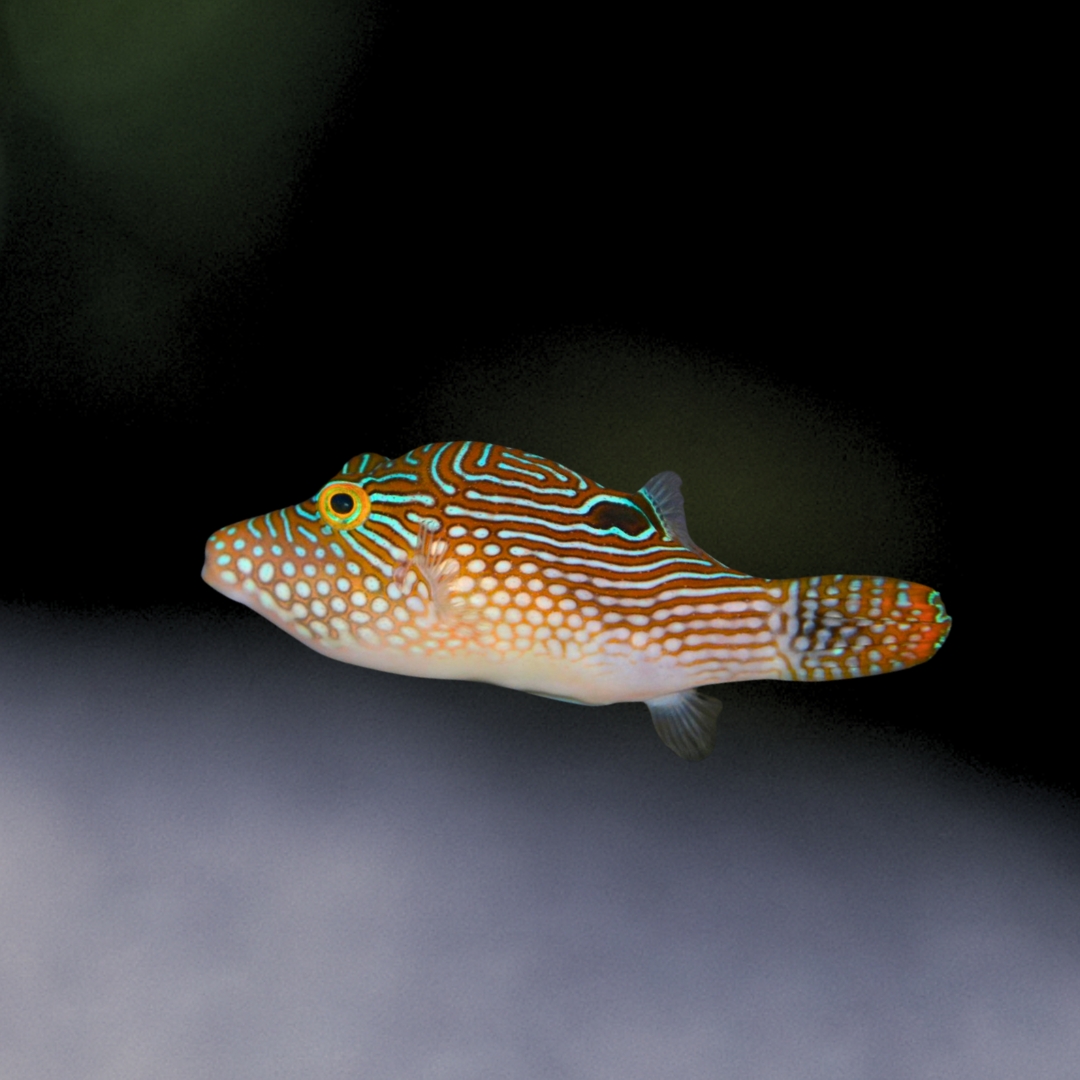
ヒメキンチャクフグは、西部太平洋の浅いラグーンや水道、港湾周辺などで見られる小型の海水フグです。体は左右に薄く側扁し、尾鰭には細い波状線が入り、目の周囲には指紋のように入り組んだ青いラインが現れます。英名の「Fingerprint toby」は、この印象的な模様に由来します。観賞魚としては愛嬌のある表情と美しい体色が魅力ですが、強い歯、縄張り意識、フグ類としての毒性リスクを理解したうえで、単独飼育を基本に慎重に管理したい魚です。 The compressed toby is a small marine pufferfish found in the western Pacific, especially in shallow lagoons, channels, silty bays, and harbor areas. It has a laterally compressed body, fine wavy lines on the caudal fin, and intricate blue markings around the eyes, giving rise to the common name “Fingerprint toby.” It is attractive in aquariums thanks to its charming expression and delicate patterning, but it should be kept with care because of its strong teeth, territorial nature, and the toxicity risk associated with pufferfishes.
基本情報 / Basic Information
| 学名 / Scientific Name | Canthigaster compressa |
|---|---|
| 通称 / Common Name | ヒメキンチャクフグ、キンチャクフグの仲間Compressed toby, Fingerprint toby |
| 分類 / Family | フグ目 フグ科 キタマクラ属Order Tetraodontiformes, family Tetraodontidae, genus Canthigaster |
| 英名 / English Name | Compressed toby / Fingerprint toby |
| 分布 / Distribution | 西部太平洋。フィリピンからソロモン諸島、北は琉球列島および南部マリアナ諸島、南はバヌアツ周辺までの記録があります。日本では主に琉球列島などの暖かい海域で知られます。Western Pacific: recorded from the Philippines to the Solomon Islands, north to the Ryukyu Islands and southern Marianas, and south to Vanuatu. In Japan it is mainly associated with warm waters such as the Ryukyu Islands. |
| 最大体長 / Max Size | 最大で約12cm。観賞魚として流通する個体は、より小さな若魚サイズで見かけることが多いです。Up to about 12 cm. Aquarium specimens are often sold at smaller juvenile or subadult sizes. |
| 寿命 / Lifespan | 本種単独の明確な飼育下寿命データは多くありません。水質、餌、歯の管理が安定していれば、数年以上の長期飼育が期待できます。Reliable species-specific aquarium lifespan data are limited. With stable water quality, appropriate diet, and good tooth management, long-term care for several years or more may be possible. |
飼育環境 / Aquarium Environment
| 水槽サイズ / Tank Size | 単独飼育なら45cm規格水槽から検討できますが、フグ類は食べる量が多く水を汚しやすいため、余裕を持つなら60cm規格水槽以上がおすすめです。混泳を試す場合は、さらに広い水槽と複数の隠れ家を用意します。A 45 cm standard tank can be considered for a single specimen, but a 60 cm standard tank or larger is recommended because puffers feed heavily and can pollute the water quickly. If tank mates are attempted, provide a larger aquarium and multiple shelters. |
|---|---|
| 水温 / Temperature | 24〜27℃を目安に安定させます。分布域から見ても温暖な海域の魚であり、急激な低温化や高水温は避けてください。 Keep the temperature stable at around 24–27°C. As a fish from warm marine habitats, it should be protected from sudden chilling and excessive heat. |
| 水質 / Water Quality | 一般的な海水魚水槽の範囲を保ちます。目安はpH 8.1〜8.4、比重1.020〜1.024です。アンモニアや亜硝酸を出さないよう、立ち上がったろ過、定期的な換水、必要に応じたプロテインスキマーの使用が役立ちます。Maintain typical marine aquarium conditions, roughly pH 8.1–8.4 and specific gravity 1.020–1.024. Mature filtration, regular water changes, and a protein skimmer when appropriate help prevent ammonia and nitrite problems. |
| レイアウト / Layout | ライブロックや人工岩で入り組んだ隠れ家を作ります。自然下では浅いラグーンや水道の砂地、泥質の湾、桟橋周辺などにも見られるため、開けた遊泳スペースと隠れ場所の両方を用意すると落ち着きやすくなります。Create a complex layout with live rock or artificial rockwork. Since the species is associated with shallow lagoons, channels, silty bays, and wharf areas, a combination of open swimming space and secure hiding places helps it settle. |
| 注意点 / Precautions | フグ類として有毒リスクがあるため、食用には絶対にせず、死骸はペットや野生動物が口にしないよう処理します。また、サンゴの共肉、小型甲殻類、巻貝、ヤドカリをかじったり捕食したりする可能性があるため、リーフタンクでは慎重な判断が必要です。Because pufferfishes can pose a toxicity risk, this species must never be treated as food, and dead specimens should be disposed of so pets or wildlife cannot eat them. It may nip coral tissue and prey on small crustaceans, snails, and hermit crabs, so reef-tank use requires caution. |
餌と給餌 / Feeding
| 餌の種類 / Diet | 海水魚用の人工飼料を主食にし、冷凍イサザアミ、クリル、アサリの剥き身、貝類の身などを補助的に与えます。自然下では小型無脊椎動物や藻類などをついばむと考えられ、やや肉食寄りの雑食性として扱うと管理しやすいです。Use quality marine pellets as the staple diet and supplement with frozen mysids, krill, clam meat, and other meaty marine foods. In nature it likely picks at small invertebrates and algae, so it is best managed as an omnivore with a carnivorous tendency. |
|---|---|
| 給餌のポイント / Feeding Tips | 餌付きやすい反面、柔らかい餌だけではクチバシ状の歯が摩耗しにくくなります。殻付きアサリなど硬い素材を定期的に取り入れ、自然な歯の摩耗を促します。食べ残しは水質悪化の原因になるため、少量ずつ観察しながら与えてください。It often accepts prepared foods readily, but soft foods alone may not wear down its beak-like teeth. Offer hard items such as clams in the shell from time to time to encourage natural tooth wear. Feed small portions while observing the fish, because leftovers can quickly degrade water quality. |
性格と混泳 / Temperament and Tank Mates
| 性格 / Temperament | 好奇心が強く、飼育者の動きにもよく反応します。一方で、同種や近縁種に対しては縄張り意識を示すことがあるため、かわいらしい見た目だけで温和な魚と判断しないことが大切です。It is curious and often responsive to its keeper. However, it can show territorial behavior toward its own species and close relatives, so its cute appearance should not be mistaken for a consistently peaceful temperament. |
|---|---|
| 混泳の相性 / Compatibility | 基本は単独飼育が最も安全です。ヒレの長い魚、動きの遅い魚、小型甲殻類、巻貝、ヤドカリ、柔らかなサンゴとの相性はよくありません。混泳を試す場合は、本種より丈夫で遊泳力のある魚を候補にし、導入後も噛み付きやフィン・ニッピングがないか観察します。Single-specimen keeping is the safest approach. It is not well suited to long-finned or slow-moving fish, small crustaceans, snails, hermit crabs, or soft-fleshed corals. If tank mates are attempted, choose robust, active fish and monitor closely for biting or fin nipping. |
病気と対策 / Diseases and Prevention
| かかりやすい病気 / Common Diseases | 輸送ストレスや水温変化により、白点病やウーディニウム病などの外部寄生虫症に注意が必要です。また、フグ科魚類では歯の過長が大きな問題になります。歯が伸びすぎると口が開きにくくなり、摂食不良から衰弱することがあります。Transport stress and temperature swings can make it vulnerable to external parasitic diseases such as marine white spot and marine velvet. A major pufferfish-specific issue is overgrown teeth, which can restrict mouth movement and lead to poor feeding and weakness. |
|---|---|
| 対策と予防 / Prevention | 導入時は水合わせを慎重に行い、可能であれば隔離水槽で観察します。水温と水質を安定させ、硬い餌を取り入れて歯の摩耗を促してください。歯切りは魚体への負担と失敗リスクが大きいため、まず予防を優先し、必要になった場合は経験者や海水魚専門店に相談するのが安全です。Acclimate carefully and, when possible, observe new arrivals in a quarantine tank. Keep temperature and water quality stable, and include hard foods to promote tooth wear. Tooth trimming is stressful and risky, so prevention is the priority; if trimming becomes necessary, consult an experienced keeper or marine aquarium specialist. |
増やし方(繁殖) / Breeding
| 雌雄の判別 / Sexing | 資料上は、体表模様の違いによって雄雌を推定できる可能性が示されています。ストライプ模様が広い個体を雄、スポット模様が目立つ個体を雌とする見方がありますが、一般の飼育環境で確実に判別するには個体差も考慮してください。The provided reference material suggests that sex may be inferred from differences in body pattern, with broader stripe patterns associated with males and more spot-dominated patterns associated with females. In ordinary aquarium conditions, individual variation should still be considered. |
|---|---|
| 繁殖形態 / Reproduction | 卵を産む卵生魚です。キタマクラ属の仲間では、雄が縄張り内の雌をめぐって行動する繁殖生態が知られており、本種でも似た社会構造をとる可能性があります。It is an oviparous fish. Related Canthigaster species are known for territorial reproductive behavior involving males and females within a home range, and this species may show a similar social pattern. |
| 繁殖のポイント / Breeding Tips | 家庭水槽での繁殖は非常に難しい部類です。産卵の成立だけでなく、孵化後の小さな仔魚に適した初期餌料、水流、清浄な飼育水を維持する必要があります。現状では、観賞魚として流通する個体は野生採集個体が中心と考えられます。Breeding in home aquariums is very difficult. Beyond spawning itself, the tiny larvae require suitable first foods, appropriate flow, and very clean water. At present, aquarium specimens are thought to be mainly wild-caught. |
雑学と豆知識 / Trivia and Fun Facts
| 1. 学名に込められた体型の特徴 / 1. A body shape reflected in its name | 属名の「Canthigaster」は、ギリシャ語の「眼角」と「腹」に関係する語に由来するとされます。種小名の「compressa」は「圧縮された」という意味で、ヒメキンチャクフグの左右に薄い体型をよく表しています。サンゴや岩の隙間を縫うように動き、小さな口でついばむ姿を見ると、名前と暮らし方が自然につながって感じられます。The genus name “Canthigaster” is derived from Greek words associated with the corner of the eye and the belly. The specific name “compressa” means “compressed,” neatly describing the fish’s laterally flattened body. Its name feels connected to its lifestyle when seen moving through reef crevices and picking at small food items. |
|---|---|
| 2. 尾鰭の波状線は大切な識別ポイント / 2. Wavy caudal-fin lines are a useful clue | ヒメキンチャクフグを似たキタマクラ属の魚と見分けるとき、尾鰭の細い波状線は重要な手がかりになります。体色だけを見ると近縁種と混同しやすいことがありますが、尾鰭や口元の色、体側の斑紋を順番に確認すると、種の特徴が見えてきます。The fine wavy lines on the caudal fin are an important clue when distinguishing this species from similar Canthigaster relatives. Body color alone can be confusing, but checking the tail pattern, mouth coloration, and body markings step by step helps reveal the species’ identity. |
| 3. 毒性情報は断定しすぎないことが大切 / 3. Toxicity should be described carefully | フグ類にはテトロドトキシンなどの神経毒を持つ種が多く、キタマクラ属や近縁種でも毒性に関する研究報告があります。ただし、魚種、地域、餌、個体差によって毒の有無や量は変わり得ます。飼育時は、食用にせず、死骸を安全に処理してください。Many pufferfishes contain neurotoxins such as tetrodotoxin, and toxicity has been studied in Canthigaster and related puffers. However, toxin presence and concentration can vary with species, region, diet, and individual condition. For aquarium care, it is safer to emphasize practical precautions: never use the fish as food and dispose of dead specimens safely. |
| 4. 膨らむ姿はかわいくても、遊びで膨らませない / 4. Do not make it inflate for fun | フグの膨張行動は、捕食者への防御として発達した緊急反応です。水槽内で見られると印象的ですが、魚にとっては強いストレスのサインです。観察のために驚かせたり、網で追い回したりして意図的に膨らませることは避けてください。Pufferfish inflation is an emergency defensive response against predators. It may look impressive in an aquarium, but it indicates strong stress. Do not startle the fish or chase it with a net simply to make it inflate for observation. |
| 5. リーフタンクでは「小さな主役魚」としての判断を / 5. In reef aquariums, treat it as a small centerpiece with caution | ヒメキンチャクフグは小型で美しい魚ですが、サンゴや小型無脊椎動物に対する安全性は高くありません。サンゴ水槽の脇役として気軽に入れるより、単独または慎重に選んだ混泳水槽で、行動や表情をじっくり楽しむ「小さな主役魚」として迎える方が向いています。Although small and beautiful, the compressed toby is not highly reliable around corals and small invertebrates. Rather than adding it casually as a reef-tank side character, it is better suited as a small centerpiece fish in a single-specimen setup or a carefully planned fish-only community. |
まとめ / Conclusion
ヒメキンチャクフグは、指紋のような青い模様、側扁した独特の体型、尾鰭の波状線が魅力の小型海水魚です。西部太平洋の浅いラグーンや水道に適応した魚で、観賞魚としても存在感があります。 The compressed toby is a small marine fish with fingerprint-like blue markings, a distinctive compressed body, and fine wavy lines on the caudal fin. Adapted to shallow western Pacific lagoons and channels, it has a strong presence as an aquarium fish.
飼育では、安定した海水環境、十分なろ過、硬い餌を取り入れた歯の予防管理、そして単独飼育を基本にした安全な環境づくりが重要です。見た目の愛らしさだけで選ぶのではなく、フグ類としての性質を理解して迎えることで、本種の個性を長く楽しみやすくなります。 Successful care depends on stable marine conditions, strong filtration, preventive tooth management through hard foods, and a safe setup based primarily on single-specimen keeping. By understanding its pufferfish traits rather than choosing it only for its cute appearance, keepers can enjoy its personality for the long term.

気になる道具や飼い方を見つけてみませんか?
 アイのアクアグッズ案内コードもホースもないのに酸素が出る? アイとコタロウのオキシデーター探訪道具の特徴や使い方、選ぶときのポイントをアイが紹介します。記事はコチラ →
 アイのアクアグッズ案内アカヒレの仲間に合わせる飼育用品|無加温・混泳・繁殖の水槽とろ過道具の特徴や使い方、選ぶときのポイントをアイが紹介します。記事はコチラ →
さまざまな飼育テーマをご紹介。リンク先の記事には広告・商品紹介が含まれます。
案内・紹介記事一覧へ →参考文献・参照資料
本記事では、店舗・通販サイト、個人ブログ、まとめサイトを参考文献から除外し、分類、分布、生息環境、飼育条件、繁殖、病気や注意点を確認するために、魚類データベース、学術論文、公的・専門機関資料を中心に参照しました。ヒメキンチャクフグそのものの情報が限られる項目では、同じキタマクラ属の魚に関する研究を補助的に参照しています。同属魚での結果が本種にもそのまま当てはまるとは限りません。
-
Froese, R. and D. Pauly, Editors. FishBase: Canthigaster compressa, Compressed toby.
分類階級、学名、英名、分布、西部太平洋での生息域、水深、最大体長、尾鰭の波状線、浅いラグーンや水道・港湾周辺での生息、卵生であることを確認するための主要資料です。
https://www.fishbase.se/summary/Canthigaster-compressa.html -
World Register of Marine Species. Canthigaster compressa (Marion de Procé, 1822).
学名、著者名、分類上の有効性を確認するための分類データベースです。記事内の分類・学名表記の照合に用います。
https://www.marinespecies.org/aphia.php?p=taxdetails&id=275249 -
Fricke, R., Eschmeyer, W. N. and Van der Laan, R. Editors. Eschmeyer’s Catalog of Fishes.
原記載者、命名年、属・種の分類履歴を確認するための魚類分類カタログです。学名の正確性を補強する資料として選定しています。
https://researcharchive.calacademy.org/research/ichthyology/catalog/fishcatmain.asp -
Shao, K. 2011. Canthigaster compressa. The IUCN Red List of Threatened Species.
保全状況、分布域、自然下での基礎情報を確認するための資料です。本文では保全評価そのものを詳述していませんが、分布・自然史情報の裏取りとして有用です。
https://www.iucnredlist.org/ -
Allen, G. R. and Swainston, R. 1992. Reef Fishes of New Guinea: A Field Guide for Divers, Anglers and Naturalists. Christensen Research Institute.
FishBaseでも主要参照として示される地域魚類相の資料です。西部太平洋のサンゴ礁性魚類としての生息環境・形態情報を補助的に支えます。 -
Lieske, E. and Myers, R. F. 2009. Coral Reef Fishes: Indo-Pacific and Caribbean. Princeton University Press.
サンゴ礁性魚類の識別、分布、生息環境を確認するための標準的なフィールドガイドです。近縁種との見分けや自然下での生息環境の補助資料として用います。 -
Gladstone, W. 1987. Role of female territoriality in social and mating systems of Canthigaster valentini. Marine Biology.
同属種シマキンチャクフグの縄張り、雌雄関係、繁殖社会を扱った研究です。ヒメキンチャクフグの記事では、同属魚類の繁殖生態を説明する補助資料として扱い、直接断定しない表現にしています。 -
Gladstone, W. and Westoby, M. 1988. Growth and reproduction in Canthigaster valentini: a comparison of a toxic reef fish with other reef fishes. Environmental Biology of Fishes.
同属種における産卵、卵、繁殖頻度、毒性をもつサンゴ礁魚としての生活史を確認するための補助資料です。繁殖セクションの慎重な記述を支える文献として選定しています。 -
Stroud, G. J., Goldman, B. and Gladstone, W. 1989. Larval development, growth and age determination in the sharpnose pufferfish Canthigaster valentini. Japanese Journal of Ichthyology.
同属種の卵・仔魚・浮遊期に関する研究です。家庭水槽での繁殖が難しい理由を説明する際の補助資料として用います。 -
Zhu, H., Sonoyama, T., Yamada, M., Gao, W., Tatsuno, R., Takatani, T. and Arakawa, O. 2020. Co-Occurrence of Tetrodotoxin and Saxitoxins and Their Intra-Body Distribution in the Pufferfish Canthigaster valentini. Toxins, 12(7), 436.
同属種であるシマキンチャクフグのTTXおよびSTXに関する研究です。本種そのものへの断定ではなく、キタマクラ属周辺の毒性リスクを説明するための補助資料として扱います。
https://doi.org/10.3390/toxins12070436 -
McGee, G. E. and Clark, T. D. 2014. All puffed out: do pufferfish hold their breath while inflated? Biology Letters, 10, 20140852.
フグ類の膨張行動と呼吸・酸素消費に関する研究です。記事内で「膨らませる行為は魚に負担が大きい」と説明する根拠として選定しています。
https://doi.org/10.1098/rsbl.2014.0852 -
Noguchi, T. and Arakawa, O. 2008. Tetrodotoxin: distribution and accumulation in aquatic organisms, and cases of human intoxication. Marine Drugs, 6(2), 220-242.
水生生物におけるテトロドトキシンの分布、蓄積、食中毒リスクを概説した総説です。観賞魚として扱う場合でも食用にしない、死骸を安全に処理するという注意喚起の背景資料です。
https://doi.org/10.3390/md20080011 -
Colorni, A. 1987. Biology of Cryptocaryon irritans and strategies for its control. Aquaculture.
海水魚の白点病原因生物であるCryptocaryon irritansの生活環と管理を扱う基礎文献です。病気と対策のセクションで、導入時の観察や隔離管理を重視する理由を支えます。 -
Francis-Floyd, R. and Floyd, M. R. 2011. Amyloodinium ocellatum, an Important Parasite of Cultured Marine Fish. Southern Regional Aquaculture Center.
海水魚のウーディニウム病、またはマリンベルベット病に関する専門機関資料です。急性化しやすい外部寄生虫症として注意する理由を補強します。
https://srac.tamu.edu/ -
Spotte, S. 1992. Captive Seawater Fishes: Science and Technology. John Wiley & Sons.
海水魚飼育における水質、ろ過、生理、閉鎖循環環境の基礎を確認するための専門書です。pH、比重、アンモニア・亜硝酸管理、安定した海水環境の必要性を支える背景資料として選定しています。
注記:飼育条件は、野外での生息環境、海水魚飼育の一般的な水質管理、同属魚類の研究を組み合わせて整理したものです。ヒメキンチャクフグ単独で検証された繁殖・毒性・寿命データが限られる項目では、本文でも「可能性がある」「考えられる」などの表現を用い、過度な断定を避けています。




コメント