
解説 / Description
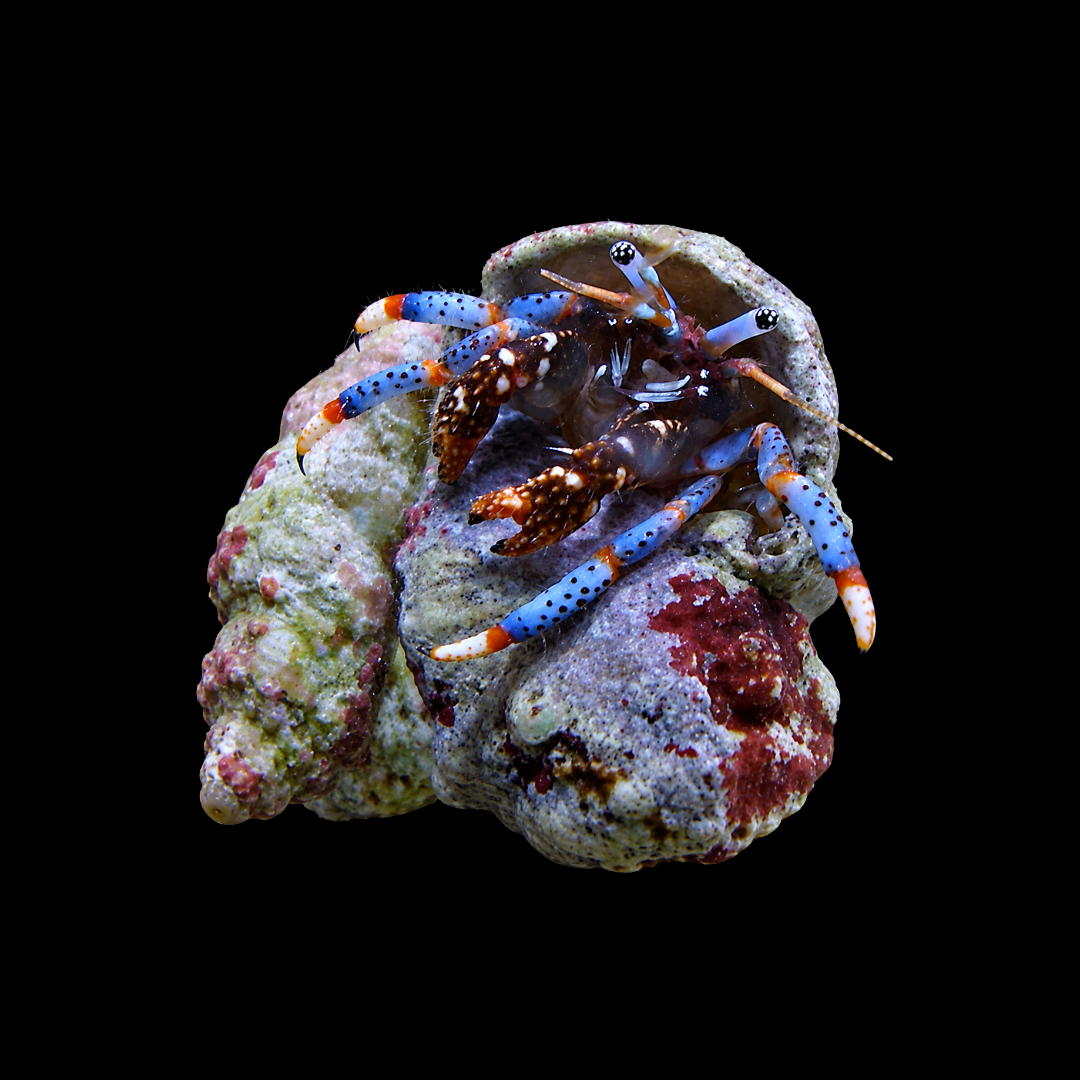
ブルーレッグハーミットクラブは、青い歩脚に赤橙色の帯が入り、脚の先端が白っぽい小型の海産ヤドカリです。カリブ海やフロリダ周辺の浅い海に暮らし、日本では海水水槽のお掃除役として親しまれています。小さなハサミで岩の表面をついばみ、藻類や残り餌を探す姿も魅力です。ただし、食べた有機物は排泄物などとして水槽内に残るため、ろ過や水換えが不要になるわけではありません。また、貝殻を巡ってほかの生体を攻撃することもあります。餌と体に合う空き貝殻を用意し、小さな水槽の仲間として世話をしてあげましょう。 The blue-legged hermit crab is a small marine hermit with blue walking legs, reddish-orange bands, and pale tips. It inhabits shallow waters around the Caribbean and Florida and is popular in Japanese marine aquariums as a clean-up animal. Watching it pick algae and leftover food from rocks with its tiny claws is part of its appeal. Consumed organic matter remains in the aquarium as waste and other products, so filtration and water changes are still necessary. It may also attack other animals when competing for shells. Provide food and suitable empty shells, and care for it as a small member of the aquarium community.
基本情報 / Basic Information
| 学名 / Scientific Name | Clibanarius tricolor (Gibbes, 1850) |
|---|---|
| 通称 / Common Name | ブルーレッグハーミットクラブ、ブルーレッグヤドカリ。青い脚を持つ別種もいるため、購入時には学名も確認すると安心です。Blue-legged hermit crab; also sold in Japan as “Blue Leg Yadokari.” Other hermit species also have blue legs, so checking the scientific name helps confirm identification. |
| 分類 / Family | 節足動物門・軟甲綱・十脚目・異尾下目・ヤドカリ科・ヨコバサミ属。Phylum Arthropoda; class Malacostraca; order Decapoda; infraorder Anomura; family Diogenidae; genus Clibanarius. |
| 英名 / English Name | Blue-legged hermit crab, Dwarf blue leg hermit crab, Tricolor hermit crab |
| 分布 / Distribution | フロリダ周辺を含む西部大西洋とカリブ海。潮間帯や浅い海の岩礁、砂礫底、海草の生える場所などに生息します。The western Atlantic, including Florida, and the Caribbean Sea. It inhabits intertidal and shallow-water rocky areas, sandy or rubble substrates, and seagrass habitats. |
| 最大体長 / Max Size | 飼育情報では最大約2〜2.5cmと案内される小型種です。ただし、貝殻や脚を含めた大きさと、体そのものの長さは異なり、測定範囲が明示されていない場合もあります。甲の長さが2〜2.5cmという意味ではありません。Aquarium references commonly describe it as a small species reaching about 2–2.5 cm. However, shell size, overall size including the legs, and body length are different measurements, and the measurement used is not always specified. This figure should not be interpreted as a shield length of 2–2.5 cm. |
| 寿命 / Lifespan | 本種の寿命を確定できる情報は限られています。購入時の年齢も分からないことが多く、飼育期間には個体差があります。一定の年数を保証することはできませんが、安定した環境を維持して長期飼育を目指しましょう。Reliable species-specific lifespan information is limited. The age of purchased animals is often unknown, and their time in captivity varies. A fixed lifespan cannot be guaranteed; aim for long-term care by maintaining stable conditions. |
飼育環境 / Aquarium Environment
| 水槽サイズ / Tank Size | 水質管理のしやすさを考えると、45cm規格水槽(容量約30〜40L、奥行きと高さによって異なる)以上が扱いやすい目安です。60cm規格水槽(容量約60〜65L)なら、水量に余裕を持たせやすくなります。岩や底砂を入れると実際の水量は減ります。導入数は水量だけで決めず、餌の量や隠れ場所を考えて少数から始めてください。For manageable water stability, a standard 45 cm aquarium, approximately 30–40 L depending on depth and height, is a practical starting point. A standard 60 cm aquarium, approximately 60–65 L, provides more water volume. Rocks and substrate reduce the actual volume. Start with a small number, considering food availability and shelter rather than using tank volume alone. |
|---|---|
| 水温 / Temperature | 22〜26℃を飼育の目安にし、急激な変化を避けます。夏の高温時には冷却し、水面を適度に動かして酸素不足にも注意しましょう。 Use 22–26°C as a practical husbandry range and avoid abrupt changes. During hot weather, provide cooling and adequate surface agitation to help prevent low oxygen conditions. |
| 水質 / Water Quality | 海水で飼育します。塩分33〜35‰程度、比重では25℃付近でおおむね1.024〜1.026、pH8.1〜8.4を管理の目安にしてください。比重の読み値は温度や測定器の基準によって変わるため、器具の説明に従って測定します。ろ過が安定し、アンモニアと亜硝酸が検出されない水槽に導入しましょう。蒸発した分は淡水で補い、微量元素の維持は適切な人工海水と定期的な水換えを基本とします。脱皮を促す目的で、ヨウ素を自己判断で添加することは避けてください。Keep it in seawater. Practical targets are a salinity of about 33–35 ppt, approximately 1.024–1.026 specific gravity near 25°C, and pH 8.1–8.4. Specific gravity readings depend on temperature and instrument calibration, so follow the instrument instructions. Introduce it into a cycled aquarium with no detectable ammonia or nitrite. Replace evaporated water with freshwater. Suitable marine salt and regular water changes should form the basis of trace-element maintenance; avoid adding iodine solely to encourage molting. |
| レイアウト / Layout | ライブロックや海水用の岩を崩れないように組み、身を隠せる隙間を設けます。採餌できる薄い砂地があれば、深い砂床は必須ではありません。空き貝殻は、現在使っている殻と同程度から少し大きめまで、入口の形や大きさが異なるものを複数用意してください。1匹につき2〜3個を準備の目安にしつつ、数よりも体に合う形とサイズを重視しましょう。Arrange live rock or marine-safe rock securely and leave crevices for shelter. A shallow sandy area can provide foraging space; a deep sand bed is not essential. Offer several empty shells with different opening shapes and sizes, ranging from similar to slightly larger than the current shell. Two or three spares per animal are a useful starting point, but suitable shape and fit matter more than the number. |
| 注意点 / Precautions | 本種のいる水槽では、銅を含む魚病薬を使用しないでください。銅による治療歴のある水槽や設備では、底砂や岩などへの残留にも注意が必要です。導入時は輸送水と水槽の温度・塩分を確認し、状態に応じて水合わせを行います。長時間輸送された個体は、開封後の輸送水に必要以上に長く置かないようにしましょう。脱皮中は貝殻から引き出したり、隠れ場所を掘り返したりしないでください。塗装や接着剤の付いた貝殻も使用を避けます。Do not use copper-based fish medication in its aquarium. Tanks and equipment previously used for copper treatment require attention to residues, including those associated with rock and substrate. Check transport-water and aquarium temperature and salinity, and acclimate according to the animal’s condition. After a long journey, avoid unnecessarily prolonged exposure to opened shipping water. Do not pull a molting hermit from its shell or disturb its refuge. Avoid painted or glued shells. |
餌と給餌 / Feeding
| 餌の種類 / Diet | 雑食性で、岩に付いた藻類、残り餌、有機物のかけらなどをついばみます。補助食には海水生体用の沈下性配合飼料、藻類を含む餌、味付けしていない乾燥海苔などが使えます。藻類だけに頼らず、配合飼料も取り入れて栄養が偏らないようにしましょう。An omnivore, it picks at attached algae, leftover food, and organic fragments. Suitable supplements include sinking marine pellets, algae-based foods, and unseasoned dried seaweed. Include formulated food rather than relying entirely on algae to help provide balanced nutrition. |
|---|---|
| 給餌のポイント / Feeding Tips | 成熟した水槽でも、自然に発生する餌だけで足りるとは限りません。活動しやすい夕方以降に少量を与え、食べ方や食べ残しを見ながら量と頻度を調整します。ほかの生体に餌を奪われる場合は、隠れ場所の近くにも分けて与えてください。藍藻やカーリーの駆除効果を確実に期待することはできないため、それらの対策では発生原因の見直しも必要です。Even a mature aquarium may not provide enough natural food. Offer small portions in the evening and adjust quantity and frequency according to feeding response and leftovers. If other animals take the food, distribute some near its refuges. Reliable control of cyanobacteria or Aiptasia cannot be assumed, so addressing their underlying causes remains necessary. |
性格と混泳 / Temperament and Tank Mates
| 性格 / Temperament | 岩や底砂の上を歩きながら餌を探し、夜間に活発になる傾向があります。一方で、貝殻や餌を巡ってほかのヤドカリや巻貝を攻撃することがあります。空き貝殻と餌を十分に用意しても争いを完全には防げないため、個体ごとの行動を観察してください。It forages across rocks and substrate and tends to be more active at night. However, it may attack other hermits or snails when competing for shells or food. Adequate spare shells and feeding cannot completely prevent conflict, so observe individual behavior. |
|---|---|
| 混泳の相性 / Compatibility | 小型のハゼなど、ヤドカリを捕食しない魚と組み合わせやすく、サンゴ水槽にも利用されます。ただし、巻貝への攻撃、小さなサンゴ片の転倒、サンゴの餌を奪う行動には注意してください。フグやモンガラカワハギなどの甲殻類を食べる魚、大型のカニとの同居は避けます。ほかのヤドカリとの混泳も、体格差や貝殻を巡る競争を考慮して判断しましょう。It can be kept with small fish, such as suitable gobies, that do not prey on hermits, and is commonly used in coral aquariums. Watch for attacks on snails, dislodged small coral fragments, and stolen coral food. Avoid crustacean-eating fish such as puffers and triggers, as well as large crabs. Consider size differences and competition for shells when mixing hermit species. |
病気と対策 / Diseases and Prevention
| かかりやすい病気 / Common Diseases | 本種で特に多い感染症については、情報が限られています。飼育中の不調では、水温や塩分の急変、アンモニア、酸素不足、餌不足、争いによる負傷、脱皮時の問題なども確認する必要があります。脚や体のようなものが落ちていても、脱皮で残った抜け殻の場合があるため、すぐに死亡と判断しないようにしましょう。Information on particularly common infections in this species is limited. When an animal appears unwell, also check for abrupt temperature or salinity changes, ammonia, low oxygen, insufficient food, injuries from conflict, and molting problems. Apparent limbs or a body may be a shed exoskeleton, so do not immediately assume the animal has died. |
|---|---|
| 対策と予防 / Prevention | 安定した海水環境、適切な給餌、体に合う空き貝殻、落ち着ける隠れ場所を維持することが基本です。動きが鈍いときは、水温・塩分・アンモニアなどを測り、ほかの生体にも異常がないか確認してください。脱皮の不調をヨウ素不足と決めつけて添加剤を増やしたり、魚用の薬を流用したりしないようにしましょう。負傷や異常が続く場合は、海水無脊椎動物に詳しい販売店や専門家に相談してください。Prevention centers on stable seawater, appropriate feeding, well-fitting spare shells, and quiet refuges. If activity decreases, check temperature, salinity, ammonia, and whether other inhabitants are also affected. Do not assume molting difficulties indicate iodine deficiency, increase additives without evidence, or repurpose fish medication. Seek advice from a marine-invertebrate specialist if injuries or abnormalities persist. |
増やし方(繁殖) / Breeding
| 雌雄の判別 / Sexing | 貝殻に入った状態では、色や大きさだけで確実に見分けるのは困難です。詳しい判別には生殖孔の位置などを確認しますが、そのために無理に殻から出してはいけません。腹部の付属肢に卵を抱えている個体はメスと判断できます。Color and size alone do not reliably identify sex while the animal remains in its shell. Detailed identification involves features such as gonopore position, but never force a hermit out for inspection. An individual carrying eggs on its abdominal appendages is female. |
|---|---|
| 繁殖形態 / Reproduction | 卵生です。メスは腹部の付属肢に卵を付けて保護し、孵化すると浮遊性のゾエア幼生を水中へ放出します。幼生は脱皮と変態を経て、やがて底で暮らす小さなヤドカリになります。孵化直後から親と同じ姿や暮らし方をするわけではありません。It reproduces by eggs. The female protects eggs on abdominal appendages and releases planktonic zoeal larvae at hatching. Through molts and metamorphosis, the larvae eventually become small bottom-dwelling hermits. Newly hatched larvae do not immediately resemble the adults or share their way of life. |
| 繁殖のポイント / Breeding Tips | 一般的な混泳水槽で、孵化した幼生を稚ヤドカリまで育てるのは難しい課題です。幼生用の別水槽で捕食やろ過装置への吸い込みを防ぎ、発育段階に合う生きた餌と安定した水質を維持する必要があります。底で暮らす段階へ移る際には、極小の空き貝殻も必要です。本種について確かな育成条件が分からない部分もあり、幼生の段階数や育成日数を一律に示すことはできません。Raising newly hatched larvae to juvenile hermits in a typical community aquarium is challenging. A separate larval aquarium must prevent predation and filter intake losses while providing appropriately sized live food and stable water quality. Very small empty shells are also needed during the transition to bottom-dwelling life. Some species-specific rearing requirements remain uncertain, so a fixed number of larval stages or development time cannot be given. |
雑学と豆知識 / Trivia and Fun Facts
| 雑学・豆知識 / Trivia & Fun Facts |
種小名の「tricolor」は「三色」を意味します。青い脚、赤橙色の帯、白っぽい先端を眺めると、名前と姿のつながりが感じられるでしょう。1850年にギブズが記載したときの学名は「Pagurus tricolor」で、現在はヨコバサミ属に分類されています。著者名と年を囲む括弧は、最初に記載された属から所属が変わったことを示します。学名には、美しい姿だけでなく、分類が見直されてきた歴史も残っているのです。 左右のハサミがほぼ同じ大きさなのも、観察の楽しみの一つです。片方のハサミが目立って大きいヤドカリもいますが、本種はほぼ同じ大きさの両方のハサミで岩の表面をついばみます。一方、腹部は柔らかく、身を守るために巻貝の殻を利用しています。貝殻は飾りではなく、大切な住まいです。成長に合わせて引っ越す際も、殻全体の大きさだけでなく、入口や内部が体に合うかどうかが重要になります。 野外観察と実験では、比較的安定した集団をつくることや、集まる際に化学的な手掛かりを利用することが報告されています。つまり、単に同じ場所に集まるだけでなく、水中の化学物質を手掛かりに仲間のいる場所へ向かう行動が見られるのです。ただし、集団をつくることと争わないことは別で、貝殻を巡る競争も起こります。水槽で一か所に集まっている場合は、仲間に引き寄せられたと決めつけず、餌や隠れ場所がそこに集中していないかも確認しましょう。 空き貝殻は、ヤドカリと巻貝の暮らしをつなぐ存在です。巻貝が残した殻が別の生き物の住まいとなり、海の中で再び役立ちます。水槽では、清潔で無塗装の空き貝殻を用意することで、住まいを選ぶ機会を増やせます。候補の殻を持ち上げたり、入口に脚を入れたりする姿を見ていると、小さな体で住まいを丁寧に確かめていることが伝わってきます。 脱皮の直後は、新しい外骨格がまだ柔らかく、身を守りにくい時期です。抜け殻だけが見える場所に残り、本人は岩陰で休んでいることもあります。抜け殻を食べることもあるため、生体の無事を確認できた場合は、慌てて取り除く必要はありません。脱皮の間隔は成長段階や環境によって変わるので、一定の日数だけで異常を判断せず、普段の活動や食べ方と合わせて様子を見ましょう。本種は水中で暮らす海産ヤドカリであり、脱皮のための陸場は必要ありません。安心して休める隠れ場所を保ち、そっと見守ることが大切です。 The species epithet “tricolor” means “three-colored.” Its blue legs, reddish-orange bands, and pale tips make the connection between name and appearance easy to appreciate. Gibbes described it as “Pagurus tricolor” in 1850; it is now classified in Clibanarius. Parentheses around the author and year indicate that its genus differs from the original combination. The scientific name preserves both its colorful identity and a history of taxonomic revision. Its nearly equal-sized claws are another rewarding detail to observe. Some hermits have one conspicuously enlarged claw, whereas this species picks food from rocks with two similarly sized claws. Its abdomen is soft and protected by a borrowed snail shell. The shell is an essential home rather than decoration. When changing shells as it grows, the fit of the opening and interior matters as well as overall shell size. Field observations and experiments have reported relatively stable groups and the use of chemical cues during aggregation. In other words, these hermits do more than happen to occupy the same place: they can use waterborne chemical cues to move toward other members of their species. Grouping does not eliminate conflict, however, and competition for shells still occurs. If aquarium animals cluster in one place, do not automatically attribute it to social attraction; check whether food or shelter is concentrated there. Empty shells connect the lives of hermits and snails. A shell left by one animal becomes a home for another and serves a new purpose in the sea. Providing clean, unpainted empty shells in an aquarium gives hermits more housing choices. Watching one lift a candidate shell or explore its opening reveals how carefully a small animal can examine a potential home. Immediately after molting, the new exoskeleton is still soft and offers less protection. The shed exoskeleton may remain visible while the living hermit rests in a crevice. Hermits may consume their exuviae, so there is no need to remove one immediately once the animal’s safety is confirmed. Molting intervals vary with growth and conditions; assess changes alongside normal activity and feeding rather than using a fixed schedule. This aquatic marine hermit does not need a land area for molting. Keep its refuge undisturbed and allow it to recover quietly. |
|---|
まとめ / Conclusion
ブルーレッグハーミットクラブは、鮮やかな青い脚と餌を探すしぐさで、海水水槽に小さな楽しみを添えてくれます。お掃除役としての働きを支えるのは、十分な餌、体に合う空き貝殻、安定した海水環境です。 With vivid blue legs and engaging foraging behavior, the blue-legged hermit crab adds small moments of enjoyment to a marine aquarium. Adequate food, well-fitting spare shells, and stable seawater conditions support its role as a clean-up animal.
岩陰で休み、住まいを選び、脱皮を重ねながら成長する姿にも、このヤドカリの魅力があります。日々の小さな変化を見守りながら、大切な水槽の仲間として長く付き合っていきたい生き物です。 Its appeal also lies in the quieter details of resting in crevices, choosing a home, and growing through molts. Observing these small changes is part of caring for it as a valued, long-term member of the aquarium.
気になる道具や飼い方を見つけてみませんか?
 アイのアクアグッズ案内水槽の流木の選び方|枝・マングローブ・アク抜きとおすすめ商品水槽に小さな森を作る流木。枝流木やマングローブという名前の違いから、魚の隠れ家、水草の取り付け、浮く・水が茶色くなるときの準備まで、アイとコタロウが商品とともに案内します。記事はコチラ →
 アイのアクアグッズ案内アフリカンシクリッドの飼育用品|水槽・ろ過・底砂・岩組み・餌の選び方道具の特徴や使い方、選ぶときのポイントをアイが紹介します。記事はコチラ →
さまざまな飼育テーマをご紹介。リンク先の記事には広告・商品紹介が含まれます。
案内・紹介記事一覧へ →分布マップ
ブルーレッグハーミットクラブ(Clibanarius tricolor)は、フロリダ周辺を含む西部大西洋とカリブ海に分布します。潮間帯や浅い海の岩礁、砂礫底、海草の生える場所などに生息します。
※地図は分布地域の位置関係を示す概略表示です。表示範囲全域での生息や、正確な分布境界を示すものではありません。マーカーはカリブ海に設定した代表地点(北緯18度・西経75度)で、実際の採集地点や生息確認地点ではありません。Google Earthのリンクも同じ代表地点を開きます。
参考文献
-
WoRMS:Clibanarius tricolor (Gibbes, 1850)
World Register of Marine Species(海洋生物の分類データベース)。有効学名、分類上の位置、原記載の確認。
-
Small-scale spatial variation in population- and individual-level reproductive parameters of the blue-legged hermit crab Clibanarius tricolor
Baeza, J. A. & Behringer, D. C.(2017). PeerJ, 5, e3004. 西部大西洋・カリブ海の分布、生息環境、利用する貝殻、抱卵と繁殖特性に関する資料。
-
Social behavior of the Paguridae and Diogenidae of Curaçao
Hazlett, B. A.(1966). Studies on the Fauna of Curaçao and Other Caribbean Islands, 23(1), 1–143. 本種の集団形成、化学的な手掛かり、日周活動、貝殻を巡る争いに関する観察・実験研究。
-
How to look after marine crustaceans
OATA(Ornamental Aquatic Trade Association、英国の観賞用水生生物業界団体). 海産甲殻類全般の飼育指針。水温・水質管理、給餌、脱皮時の隠れ場所、ヤドカリ用の空き貝殻、混泳、浮遊幼生の育成に関する資料。
-
Use of Copper in Marine Aquaculture and Aquarium Systems
Yanong, R. P. E. フロリダ大学・UF/IFAS Extension, FA165. 海水飼育設備における銅の毒性、無脊椎動物への影響、底砂などへの吸着と再溶出に関する資料。
-
Environmental Diseases of Aquatic Animals in Aquatic Systems
Francis-Floyd, R., Yanong, R. P. E. & Petty, B. D. Merck Veterinary Manual(獣医学専門資料). 水生動物の環境性疾患と水質評価の一般的な資料。アンモニア、溶存酸素、塩分、水温などの管理に関する参考文献。



コメント