

解説 / Description
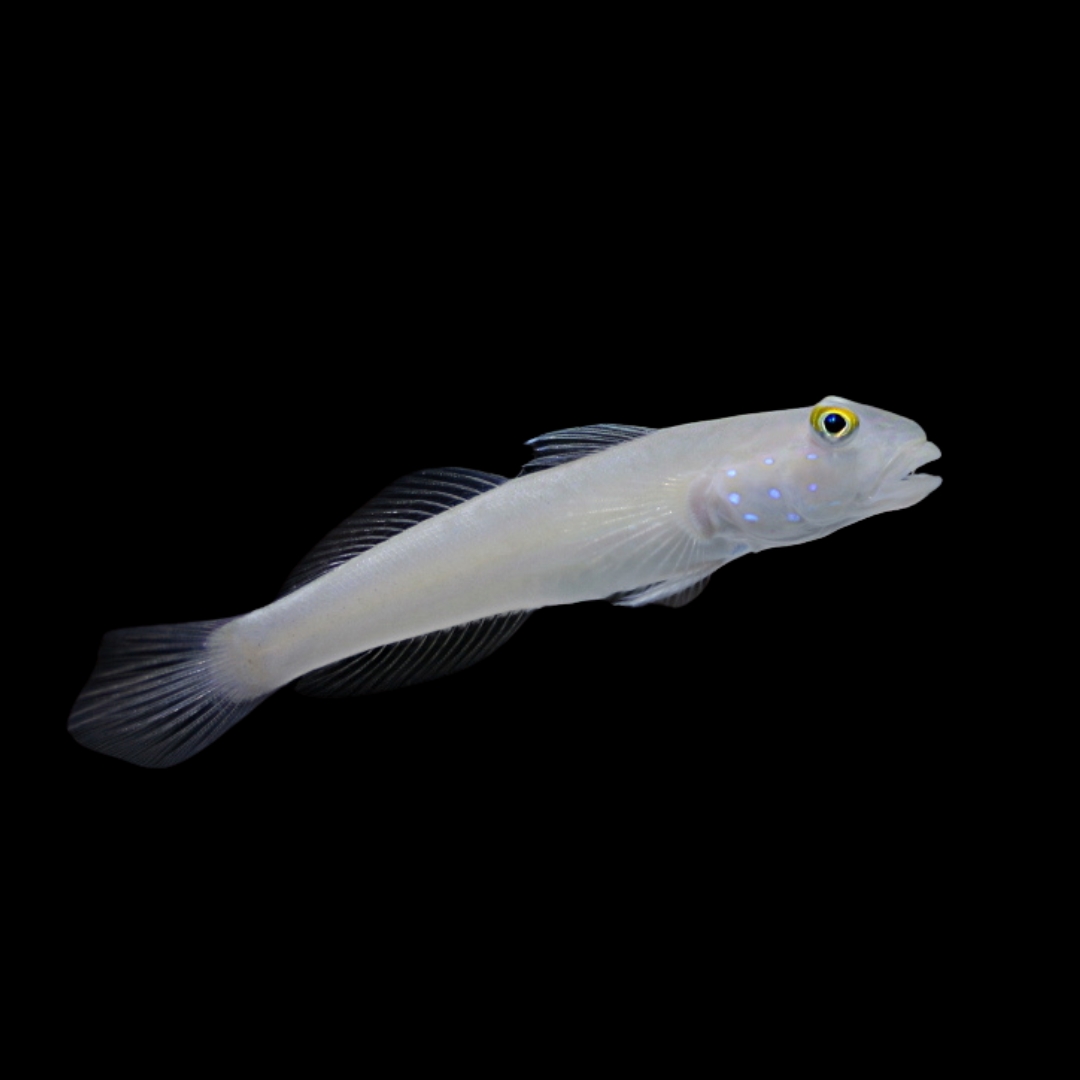
ミズタマハゼは、白から淡い灰色の体に、頬から鰓蓋へかけて淡い青色の斑点を散らした海水性のハゼです。インド太平洋の砂地や砂泥底に生息し、底砂を口に含んで微小な底生生物や有機物をこし取り、砂を鰓から吐き出すサンドシフターとして知られています。水槽では底砂を動かしてくれる魚として人気がありますが、単なる掃除役ではありません。自然下では広い砂地を利用して絶えず餌を探す魚なので、飼育下では細かな底砂、崩れにくい岩組み、飛び出し対策、そして痩せを防ぐための個別給餌が重要です。 The Sixspot goby is a marine goby with a pale white to light gray body and soft blue spots on the cheek and operculum. It inhabits sandy or silty bottoms in the Indo-Pacific and is known as a sand-sifter: it takes mouthfuls of substrate, filters out tiny benthic organisms and organic particles, and expels the sand through its gills. In aquariums it is valued for stirring the sand bed, but it should not be treated as a simple cleaner. In nature, it forages constantly over broad sandy areas, so captive care requires fine substrate, secure rockwork, jump prevention, and targeted feeding to prevent weight loss.
基本情報 / Basic Information
| 学名 / Scientific Name | Valenciennea sexguttata |
|---|---|
| 通称 / Common Name | ミズタマハゼ、シックススポットゴビー、ブルードット系のサンドシフターゴビーSixspot goby, Chalk goby, Sleeper blue dot goby |
| 分類 / Family | ハゼ科クロイトハゼ属。分類体系によってはハゼ目、古い体系や流通表記ではスズキ目として扱われることがあります。Family Gobiidae, genus Valenciennea. Depending on the classification system, gobies may be placed in Gobiiformes, while older or trade-oriented references may still use Perciformes. |
| 英名 / English Name | Sixspot goby, Chalk goby, Sleeper blue dot goby |
| 分布 / Distribution | 紅海、ペルシャ湾、東アフリカからサモア方面までのインド太平洋に広く分布し、北は琉球列島周辺、南はクイーンズランド周辺まで記録されています。浅いラグーン、内湾、サンゴ礁周辺の砂地や砂泥底で見られます。Widely distributed in the Indo-Pacific, from the Red Sea, Persian Gulf, and East Africa eastward to Samoa, north to the Ryukyu Islands, and south to Queensland. It is found on sandy or silty bottoms in shallow lagoons, bays, and reef-associated habitats. |
| 最大体長 / Max Size | 確認しやすい資料では最大約14cmの全長がよく示されます。流通個体はそれより小さいサイズで販売されることが多いです。Common reference sources list a maximum total length of about 14 cm. Aquarium trade specimens are often sold at smaller sizes. |
| 寿命 / Lifespan | 本種単独の確立した飼育下寿命データは限られます。十分に餌を取れて安定した環境なら数年単位の飼育が期待できますが、給餌不足では見た目に活動していても数ヶ月かけて痩せることがあります。Well-established species-specific captive lifespan data are limited. With stable conditions and adequate feeding, multi-year care is possible, but underfeeding can lead to gradual weight loss over several months even when the fish appears active. |
飼育環境 / Aquarium Environment
| 水槽サイズ / Tank Size | 最低限としては90cm規格水槽前後から検討できますが、長期飼育では底面積を広く取れる200L前後以上、奥行きのある90cm水槽や120cm規格水槽以上が安心です。水量だけでなく、砂地として使える面積を重視します。A 90 cm standard aquarium can be considered a practical starting point, but for long-term care, around 200 L or more, such as a deep 90 cm tank or a 120 cm standard aquarium, is safer. Usable sand-bed area is more important than water volume alone. |
|---|---|
| 水温 / Temperature | 飼育では24〜26℃前後を目安に安定させます。自然分布域の浅場ではこれより高い水温帯の記録もありますが、水槽では急変を避けることを優先します。 For aquarium care, keep the temperature stable at about 24–26°C. Records from shallow natural habitats can be higher, but in aquariums avoiding rapid changes is the priority. |
| 水質 / Water Quality | 清浄で安定したサンゴ礁水槽向けの水質を維持します。pHは8.1〜8.4、比重は1.023〜1.026、アルカリ度は8〜12dKHを目安にし、硝酸塩やリン酸塩の急増、酸素不足、底砂の汚れすぎを避けます。Maintain clean, stable reef-style water conditions. Aim for pH 8.1–8.4, specific gravity 1.023–1.026, and alkalinity around 8–12 dKH. Avoid sudden nutrient spikes, oxygen deficiency, and excessive accumulation of waste in the substrate. |
| レイアウト / Layout | 粒の細かいアラゴナイトサンドや丸みのあるサンゴ砂を使います。砂の厚みは、薄すぎると巣穴を作りにくいため、最低でも数cm以上を確保し、深めにする場合は嫌気域の管理や底砂交換の方針まで考えて設計します。ライブロックは砂の上に置くだけにせず、水槽底面や台座に安定させてから周囲に砂を入れます。Use fine aragonite sand or rounded coral sand. A substrate that is too shallow makes burrow construction difficult, so provide at least several centimeters; if using a deeper sand bed, plan carefully for anaerobic-zone management and long-term substrate maintenance. Secure live rock on the tank bottom or on stable supports before adding sand around it. |
| 注意点 / Precautions | 底砂を掘る力があるため、岩組みの崩落に注意します。驚いた時に飛び出すことがあるため、フランジ、細かいメッシュ、アクリル板などで隙間をふさぎます。粗く角ばった砂は鰓や口を傷める恐れがあるため避け、低い位置のサンゴには砂がかからないよう配置を工夫します。Because it can dig under structures, unstable rockwork may collapse. It may jump when startled, so close gaps with a rim, fine mesh, or acrylic cover. Avoid coarse, sharp substrate that may damage the gills or mouth, and place low corals where they will not be repeatedly buried by sand. |
餌と給餌 / Feeding
| 餌の種類 / Diet | 冷凍イサザアミ、冷凍ブラインシュリンプ、細かく刻んだ海産甲殻類、沈下性の海水魚用ペレットなどを与えます。自然下ではカイアシ類、端脚類、多毛類などの微小な底生生物や有機物を、砂ごとこし取って食べます。Offer frozen mysid shrimp, frozen brine shrimp, finely chopped marine crustaceans, and sinking marine fish pellets. In nature, it filters tiny benthic organisms such as copepods, amphipods, polychaetes, and organic particles from sand. |
|---|---|
| 給餌のポイント / Feeding Tips | 最大の注意点は痩せと餓死です。砂を口に含む行動は餌を十分に食べている証拠とは限りません。水流で流されにくい沈下性の餌を使い、長いスポイトで巣穴の前や魚の目の前の砂面へ直接届けます。目安として少量を1日2回程度から始め、体型や混泳魚の食べる速さに合わせて調整します。給餌後に腹部が軽く丸みを帯びているか、頭の後ろがくぼんでいないかを定期的に見てください。The main risks are weight loss and starvation. Sand-sifting behavior alone does not prove that the fish is eating enough. Use sinking foods that are not easily swept away and deliver them directly to the burrow entrance or the sand in front of the fish with a long pipette or baster. Start with small portions about twice daily and adjust according to body condition and competition from tankmates. Regularly check that the belly is slightly rounded and the area behind the head is not becoming sunken. |
性格と混泳 / Temperament and Tank Mates
| 性格 / Temperament | 基本的には温和で、底砂の上を中心に生活します。自然界では単独、ペア、小さな集まりで見られることがあり、巣穴周辺では一定の縄張り意識を示す場合があります。同じ底面を使う魚同士では小競り合いが起こることがあります。Generally peaceful and mostly active over the sand bed. In nature it may be seen singly, in pairs, or in small groups, and it can show some territorial behavior around a burrow. Minor conflicts may occur with fishes that use the same bottom area. |
|---|---|
| 混泳の相性 / Compatibility | 遊泳層の異なるクマノミ類、小型ヤッコ、ハナダイ類などとは比較的合わせやすい魚です。強く威圧する大型魚、餌を独占する素早い魚、同じ砂地を強く主張する底棲ハゼ類とは注意が必要です。サンゴを積極的に食害する魚ではありませんが、砂をまき上げてサンゴにかけることがあります。It is usually compatible with fishes that use different swimming zones, such as clownfish, small angelfish, and anthias. Be cautious with aggressive large fishes, fast feeders that monopolize food, and strongly territorial bottom-dwelling gobies. It does not normally eat corals, but it may scatter sand onto them. |
病気と対策 / Diseases and Prevention
| かかりやすい病気 / Common Diseases | 海水性白点病、リムフォシスティス病、輸入や移動に伴う体力低下、外部寄生虫、内部寄生虫や餌不足による痩せが問題になることがあります。体表や鰓の異常、呼吸の荒さ、食欲低下、頭部後方や腹部の痩せに注意します。Potential issues include marine ich, lymphocystis, stress after import or transfer, external parasites, and weight loss caused by internal parasites or inadequate feeding. Watch for body or gill abnormalities, rapid breathing, appetite loss, and thinning behind the head or along the belly. |
|---|---|
| 対策と予防 / Prevention | 導入時は可能であれば隔離水槽で観察し、餌付きと体型を確認してから本水槽へ移します。病気が疑われる場合は、サンゴや無脊椎動物のいない隔離環境で治療します。銅系薬剤や強い薬剤は魚種や個体状態によって負担になる場合があるため、製品表示を守り、迷う時は海水魚専門店や獣医師に相談します。痩せが続く場合は、単なる底砂不足ではなく、給餌量、餌の到達、混泳魚による横取り、内部寄生虫の可能性を順に確認します。When possible, observe new specimens in quarantine and confirm feeding response and body condition before moving them to the display aquarium. If disease is suspected, treat in a separate system without corals or invertebrates. Copper-based or strong medications can be stressful depending on species and condition, so follow product instructions and consult a marine-fish specialist or veterinarian when uncertain. If weight loss continues, check feeding amount, whether food reaches the fish, competition from tankmates, and the possibility of internal parasites. |
増やし方(繁殖) / Breeding
| 雌雄の判別 / Sexing | 外見だけでの雌雄判別は難しく、明瞭な性的二形は目立ちません。尾鰭や体型に差が出る可能性はありますが、一般的な飼育者が確実に判別できる特徴としては扱いにくい魚です。Sexing by appearance is difficult because obvious sexual dimorphism is limited. Differences in tail shape or body form may occur, but they are not reliable enough for most aquarists to use with confidence. |
|---|---|
| 繁殖形態 / Reproduction | クロイトハゼ属では、ペアが巣穴を利用し、その内部に粘着性の卵を産み付ける繁殖様式が知られています。本種でも同様の巣穴産卵型と考えられ、孵化後の仔魚は浮遊生活を送ります。In the genus Valenciennea, pairs are known to use burrows and lay adhesive eggs inside them. This species is considered to follow a similar burrow-spawning pattern, with larvae entering a planktonic stage after hatching. |
| 繁殖のポイント / Breeding Tips | 家庭水槽での繁殖難易度は高めです。ペア形成、落ち着ける巣穴、安定した水質、十分な栄養状態が前提になります。さらに仔魚は小さく、初期餌料や育成水槽の管理が難しいため、一般的な観賞魚飼育の範囲では繁殖成功例は多くありません。Captive breeding in home aquariums is challenging. Pair formation, a secure burrow, stable water quality, and excellent nutrition are required. The larvae are small, and managing first foods and a larval-rearing system is difficult, so successful home breeding is uncommon. |
雑学と豆知識 / Trivia and Fun Facts
| 1. 学名に残る青い斑点の印象 / 1. The blue spots reflected in the name | 種小名のsexguttataは、「六つ」と「斑点を持つ」という意味に関係するラテン語由来の名前です。頬から鰓蓋にかけて見られる青い斑点が印象的だったため、和名のミズタマハゼや英名のSixspot gobyにも同じ特徴が反映されています。実際に見える斑点数は個体や姿勢、照明によって六つに限らないため、「六つ」は本種の印象を表す象徴的な名前として捉えると自然です。The species name sexguttata is related to Latin words meaning “six” and “spotted.” The blue spots on the cheek and operculum are so distinctive that they are also reflected in the Japanese name Mizutama-haze and the English name Sixspot goby. The visible number of spots is not always exactly six, depending on the individual, posture, and lighting, so the name is best understood as a symbolic description of the fish’s appearance. |
|---|---|
| 2. 属名はヴァランシエンヌへの献名 / 2. A genus name honoring Valenciennes | クロイトハゼ属のValencienneaは、フランスの動物学者アシル・ヴァランシエンヌにちなむ名前です。ミズタマハゼも1837年にヴァランシエンヌによって記載された種で、現在はValenciennea sexguttataとして扱われています。水槽の底砂を一口ずつはむ身近な姿の背後には、19世紀から続く魚類分類学の歴史が重なっています。The genus name Valenciennea honors the French zoologist Achille Valenciennes. The Sixspot goby was also described by Valenciennes in 1837 and is currently treated as Valenciennea sexguttata. Behind the familiar aquarium sight of this fish taking mouthfuls of sand lies a taxonomic history that reaches back to the nineteenth century. |
| 3. 「掃除屋」よりも「砂をはむ採餌者」 / 3. More sand-feeder than cleaner | ミズタマハゼは底砂をきれいにしてくれる魚として紹介されることがありますが、より正確には砂の中から小さな餌を選び取る魚です。結果として底砂が動き、デトリタスが舞い上がりやすくなり、表層のよどみを減らす効果が期待できます。ただし、汚れだけで生きられるわけではないため、水槽では人の手で十分な餌を届ける必要があります。The Sixspot goby is often introduced as a fish that cleans sand, but more accurately it selects small food items from the substrate. As a result, the sand is stirred, detritus is loosened, and stagnation near the surface layer may be reduced. However, it cannot live on “dirt” alone, so aquarists must deliberately provide enough food. |
| 4. 巣穴づくりは小さな土木作業 / 4. Burrow building as small-scale engineering | 本種は砂、死サンゴ片、貝殻片などを使って巣穴を整えます。観察例では、入口に庇のような構造を作ったり、複数の開口部を利用したりする行動が報告されています。水槽内でも、気に入った場所を少しずつ改装するように砂を運ぶ様子は、ミズタマハゼを飼う楽しみの一つです。This species arranges burrows using sand, dead coral pieces, and shell fragments. Observations have reported entrance structures resembling small overhangs and the use of more than one opening. In aquariums, watching the fish gradually remodel a favored spot by moving sand is one of the pleasures of keeping it. |
| 5. 手頃な流通魚でも、長期飼育は給餌が要 / 5. Affordable, but long-term care depends on feeding | ミズタマハゼは日本の海水魚ショップで見かける機会があり、比較的導入しやすい価格帯で販売されることもあります。しかし、価格の手軽さと飼育の簡単さは同じではありません。導入後しばらく元気に砂をはんでいても、十分な栄養が得られなければ少しずつ痩せていきます。「掃除を任せる魚」ではなく、「毎日食べられているか確認する魚」として迎えることが長期飼育の第一歩です。The Sixspot goby appears in Japanese marine-fish shops and is sometimes sold at a relatively accessible price. However, affordability does not mean easy long-term care. Even if it actively sifts sand after introduction, it will gradually lose weight if it does not obtain enough nutrition. The first step toward long-term success is to keep it not as a fish that simply cleans for you, but as a fish whose daily feeding must be confirmed. |
まとめ / Conclusion
ミズタマハゼは、淡い体色と青い水玉模様、そして砂をはむ動きが魅力の海水魚です。底砂を動かす働きが期待できる一方で、本質的には砂の中から微小な餌を探す底生性の採餌者であり、飼育者による十分な給餌が欠かせません。 The Sixspot goby is an appealing marine fish with a pale body, blue spots, and engaging sand-sifting behavior. Although it can help stir the substrate, it is fundamentally a benthic forager that searches for tiny food items in the sand, so adequate feeding by the aquarist is essential.
細かい底砂、崩れない岩組み、飛び出し防止のフタ、そしてスポイトなどを使った確実な給餌を整えれば、本種は水槽内で砂地の魚らしい自然な行動を見せてくれます。掃除役としてだけでなく、砂地の生態を観察できる主役級の魚として、大切に迎えたい種類です。 With fine substrate, stable rockwork, a secure lid, and reliable feeding using a pipette or baster, this species can display natural sandy-bottom behavior in the aquarium. It deserves to be valued not merely as a cleaner, but as a main attraction that reveals the ecology of reef sand habitats.
気になる道具や飼い方を見つけてみませんか?
 アイのアクアグッズ案内水草の肥料の選び方|底床用・液肥・メネデールの使い分け道具の特徴や使い方、選ぶときのポイントをアイが紹介します。記事はコチラ →
 アイのアクアグッズ案内水草水槽のCO₂添加|3つの方式の選び方とおすすめ用品道具の特徴や使い方、選ぶときのポイントをアイが紹介します。記事はコチラ →
 アイのアクアグッズ案内アフリカンシクリッドの飼育用品|水槽・ろ過・底砂・岩組み・餌の選び方道具の特徴や使い方、選ぶときのポイントをアイが紹介します。記事はコチラ →
 アイのアクアグッズ案内海水魚初心者の必需品|水槽・人工海水・比重計・水質検査道具の特徴や使い方、選ぶときのポイントをアイが紹介します。記事はコチラ →
さまざまな飼育テーマをご紹介。リンク先の記事には広告・商品紹介が含まれます。
案内・紹介記事一覧へ →参考文献・参照資料
この記事では、店舗・通販ページ、個人ブログ、まとめサイトは参考文献から除外し、分類、分布、生息環境、飼育条件、繁殖、病気・注意点を支える資料に絞って選定しています。飼育条件は自然下の生息情報と魚病・検疫資料をもとに、家庭水槽向けに安全側で解釈しています。
-
World Register of Marine Species. “Valenciennea sexguttata (Valenciennes, 1837).” WoRMS taxon details.
用途:学名、命名者、分類上の受容名、シノニム確認。記事内の「基本情報」「分類」「学名表記」の根拠として使用。
https://www.marinespecies.org/aphia.php?id=219598&p=taxdetails
-
Froese, R. and Pauly, D. (eds.). “Valenciennea sexguttata, Sixspot goby.” FishBase.
用途:最大体長、インド太平洋の分布、礁性・海水性・非回遊性、自然下の水深帯、水温帯、繁殖に関する「一夫一婦性」の記述確認。記事内の「基本情報」「分布」「飼育環境」「増やし方(繁殖)」の主要根拠として使用。
-
Reef Life Survey. “Valenciennea sexguttata – Sixspot Glidergoby.”
用途:頬の淡青色斑、第一背鰭の黒斑、最大体長、自然下の水深、海水温レンジ、熱帯インド太平洋分布の照合。記事内の「解説」「基本情報」「飼育環境」における形態・環境条件の補助根拠として使用。
-
Hoese, D. F. and Larson, H. K. (1994). “Revision of the Indo-Pacific gobiid fish genus Valenciennea, with descriptions of seven new species.” Indo-Pacific Fishes, 23: 1-71.
用途:クロイトハゼ属全体の分類・形態比較・属レベルの整理を支える基礎文献。記事内の「分類」「近縁種との比較」「雑学と豆知識」で、属名や近縁種に触れる部分の背景資料として使用。
-
Brodnicke, O. B. et al. (2022). “Trophic impact of sand-sifting fishes on coral reefs.” Functional Ecology.
用途:サンドシフティングを行うクロイトハゼ属魚類が砂中の小型底生動物群に与える影響、採餌行動、砂をこし取る生態の理解に使用。記事内の「解説」「餌と給餌」「雑学と豆知識」で、底砂だけに依存させない給餌説明を補強する資料。
https://www.diva-portal.org/smash/get/diva2:1687912/FULLTEXT01.pdf
-
Myers, R. A. (2019). “Bioresuspension behaviors of the gobiid, Valenciennea puellaris.” Ichnos.
用途:近縁のサンドシフターゴビーによる砂の移動、底質撹拌、バイオレスペンション行動の理解に使用。記事内の「解説」「飼育環境」「注意点」で、砂を動かす魚としての行動リスクを説明する補助資料。
-
Yanong, R. P. E. “Cryptocaryon irritans Infections (Marine White Spot Disease) in Fish.” University of Florida IFAS Extension, FA164.
用途:海水性白点病の原因、生活環、症状、隔離、予防、銅治療や低比重治療などの一般的な管理方針の確認。記事内の「病気と対策」「注意点」で、サンゴ水槽本体に安易に薬剤を入れない説明を支える資料。
-
Australian Government Department of Agriculture, Fisheries and Forestry. “Approved chemicals for ornamental fish.”
用途:観賞魚の輸入後検疫、隔離、承認薬剤の扱いに関する公的資料。記事内の「病気と対策」「注意点」で、導入前の隔離観察や薬剤使用を慎重に扱う方針の補助根拠として使用。
補足:国内の販売価格、在庫状況、通販レビュー、店舗ごとの飼育コメントは変動性が高く、かつ販売促進の文脈を含むため、この記事の参考文献リストからは意図的に除外しています。




コメント