

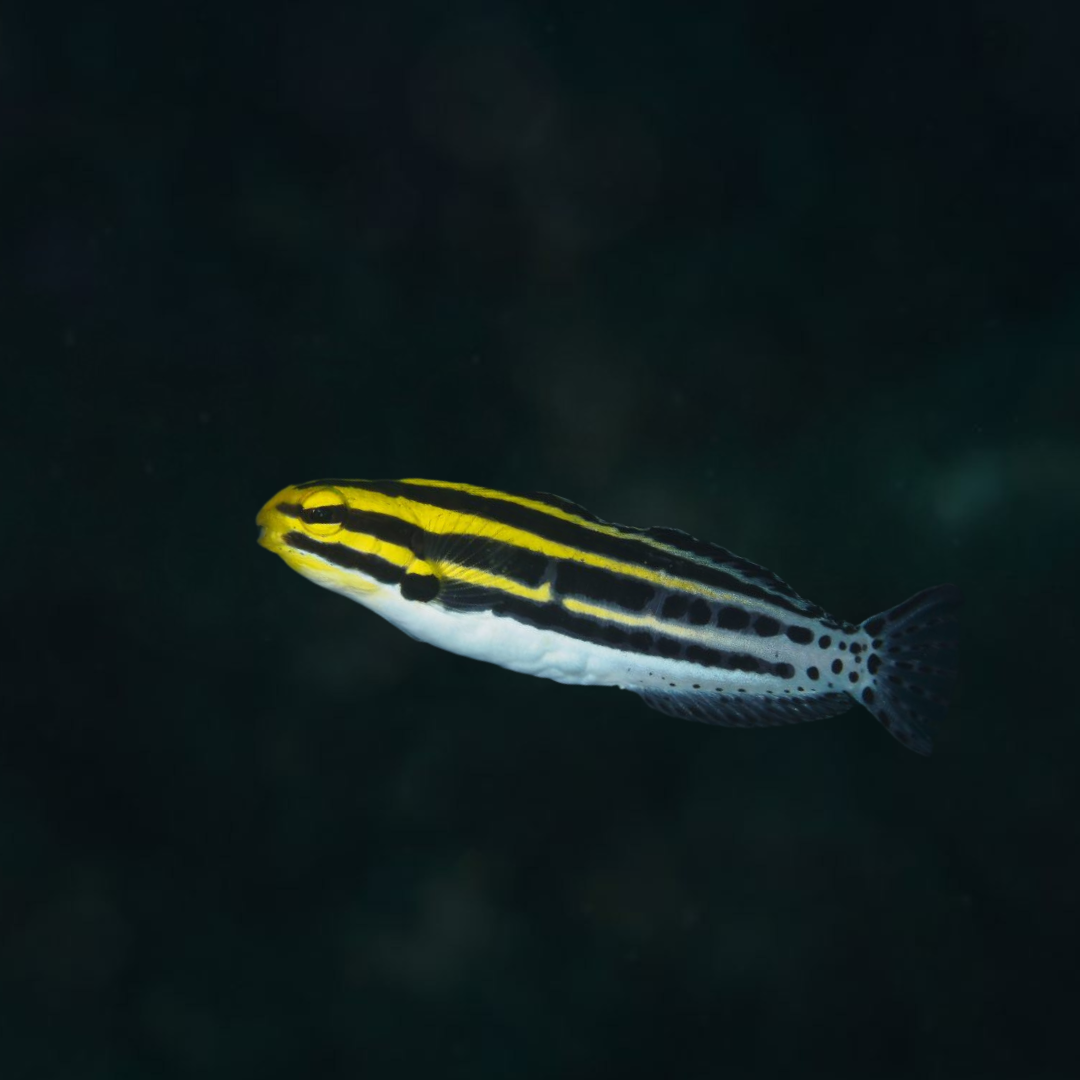
解説 / Description
ヒゲニジギンポは、琉球列島を含む西太平洋のサンゴ礁域に分布するイソギンポ科の小型海水魚です。黄色い頭部から白っぽい体へ移る明るい体色と、体側を走る黒いストライプが特徴で、尾の付け根から尾鰭にかけてストライプが点状に分かれることが大きな見分けポイントになります。一般的なギンポ類のように底でじっとする時間が長い魚ではなく、水槽内の中層をホバリングするように泳ぐため、小型魚ながら存在感があります。 The striped poison-fang blenny is a small marine blenny from western Pacific reef habitats, including the Ryukyu Islands. It has a bright yellow head that fades into a pale body with bold dark stripes, and a key identification point is that the stripes break into spots around the caudal peduncle and tail fin. Unlike many blennies that spend much of their time resting on the bottom, this species often hovers in the water column, giving it a strong presence even at a small size.
本種はサンゴをつつきにくいリーフセーフな魚として扱いやすく、人工飼料にも慣れやすい一方、飛び出しと同種・近縁種への縄張り行動には注意が必要です。また、下顎に毒牙をもつヒゲニジギンポ属の一種であるため、メンテナンス時に素手で追い詰めたり、つかんだりしないようにしましょう。飼育しやすさと、生態学的な面白さをあわせ持つ、図鑑記事としても紹介価値の高い海水魚です。 It is generally suitable for reef aquariums because it does not usually nip at corals, and it often adapts well to prepared foods. However, keepers should take care to prevent jumping and avoid keeping it with conspecifics or very similar relatives in cramped conditions. As a member of the venomous fang blenny genus Meiacanthus, it should not be cornered or grabbed with bare hands during maintenance. It is both practical to keep and biologically fascinating, making it a highly worthwhile species for an aquarium encyclopedia.
基本情報 / Basic Information
| 学名 / Scientific Name | Meiacanthus grammistes |
|---|---|
| 通称 / Common Name | ヒゲニジギンポ、ストライプドファングブレニー、ストライプドポイズンファングブレニー、ラインスポットハープテールブレニーStriped poison-fang blenny, striped fang blenny, striped blenny, line-spot harptail blenny, Grammistes blenny |
| 分類 / Family | ギンポ目、イソギンポ科、イソギンポ亜科、ヒゲニジギンポ属Order Blenniiformes, family Blenniidae, subfamily Blenniinae, genus Meiacanthus |
| 英名 / English Name | Striped Poison-fang Blenny / Line-spot Harptail Blenny |
| 分布 / Distribution | 西太平洋。インドシナ周辺からパプアニューギニア、北は琉球列島、南はオーストラリア北西部およびグレートバリアリーフ周辺まで分布します。Western Pacific: from the Indochina region to Papua New Guinea, north to the Ryukyu Islands, and south to northwestern Australia and the Great Barrier Reef. |
| 最大体長 / Max Size | 最大で約11cm。飼育下では8〜10cm前後で扱われることが多い魚です。Up to about 11 cm. In aquariums, it is often encountered at around 8 to 10 cm. |
| 寿命 / Lifespan | 本種単独の寿命データは限られます。安定した海水環境では数年単位の長期飼育が期待できますが、確定的な年数としては扱わない方が安全です。Species-specific lifespan data are limited. In stable marine aquarium conditions, long-term keeping for several years can be expected, but it is safer not to present a fixed lifespan as certain. |
飼育環境 / Aquarium Environment
| 水槽サイズ / Tank Size | 単独飼育の最低目安は60cm規格水槽からですが、よく泳ぐ魚なので、余裕をもって60cmワイド水槽や90cm規格水槽以上を選ぶと安定します。混泳や複数の隠れ家を確保したい場合は、90cm規格水槽以上が扱いやすいです。For a single specimen, a standard 60 cm aquarium can be considered a minimum starting point, but because this fish swims actively, a 60 cm wide tank or a standard 90 cm aquarium is more comfortable. For community tanks or layouts with multiple refuges, a standard 90 cm aquarium or larger is easier to manage. |
|---|---|
| 水温 / Temperature | 24〜26℃前後が管理しやすい範囲です。自然下ではより広い水温帯にも記録がありますが、飼育下では急変を避け、リーフタンクとして安定した温度を保つことが大切です。 Around 24 to 26°C is easy to manage. The species is recorded across a broader natural temperature range, but in captivity the priority is to avoid sudden changes and maintain stable reef-tank conditions. |
| 水質 / Water Quality | 一般的な海水魚・リーフタンクの水質を維持します。目安として比重1.023〜1.025前後、pH8.1〜8.4前後を保ち、アンモニアと亜硝酸は検出されない状態にします。硝酸塩も蓄積させすぎず、定期的な水換えで安定を優先しましょう。Maintain standard marine fish and reef aquarium water quality. As a guide, keep specific gravity around 1.023 to 1.025, pH around 8.1 to 8.4, and ammonia and nitrite undetectable. Avoid excessive nitrate accumulation and prioritize stability through regular water changes. |
| レイアウト / Layout | 中層を泳ぐための開けた空間と、休息・退避用のライブロックの隙間や小さな洞窟を両方用意します。日中は表に出ることが多い魚ですが、落ち着ける巣穴がある方がストレスを抑えられます。水槽上部は、フタまたはスクリーンネットで隙間なく覆ってください。Provide both open water for swimming and live rock crevices or small caves for resting and retreating. It is often visible during the day, but secure dens help reduce stress. Cover the top of the aquarium tightly with a lid or screen net. |
| 注意点 / Precautions | 最大の注意点は飛び出しです。照明の点灯・消灯、急な物音、混泳魚との小競り合いで水面から飛び出すことがあります。また、毒牙をもつため、素手で追い詰めたりつかんだりしないでください。人に対して危険性が高い魚ではありませんが、噛まれた場合は局所的な痛みや炎症、まれなアレルギー反応に注意します。The biggest husbandry risk is jumping. It may leap from the water when startled by light changes, sudden noises, or conflicts with tank mates. It also has venomous fangs, so do not corner or grab it with bare hands. It is not considered highly dangerous to humans, but a bite may cause localized pain, inflammation, or rarely an allergic reaction. |
餌と給餌 / Feeding
| 餌の種類 / Diet | 自然下では動物プランクトンや小型甲殻類を中心に食べる魚です。飼育下では小粒の海水魚用ペレット、フレーク、冷凍ブラインシュリンプ、冷凍コペポーダ、イサザアミ、細かくした動物性冷凍フードを組み合わせます。ヤエヤマギンポのようなコケ取り役ではないため、植物質やコケだけに頼らないでください。In nature, it feeds mainly on zooplankton and small crustaceans. In aquariums, offer small marine pellets, flakes, frozen brine shrimp, frozen copepods, mysid-type foods, and finely chopped meaty frozen foods. It is not an algae-control blenny like some grazing species, so do not rely on plant matter or algae as its main food. |
|---|---|
| 給餌のポイント / Feeding Tips | 代謝が高く、少量をこまめに食べるタイプです。1日2〜3回を目安に、食べ切れる量を少量ずつ与えると痩せにくくなります。導入直後は冷凍餌で食欲を確認し、慣れてきたら小粒の人工飼料を混ぜると管理しやすくなります。It has a high metabolism and does best with small, frequent meals. Feed small amounts two to three times per day, giving only what it can finish. After introduction, frozen foods are useful for confirming appetite, and small prepared foods can be mixed in as it settles. |
性格と混泳 / Temperament and Tank Mates
| 性格 / Temperament | 基本的には温和で、単独または緩い距離感で生活する傾向があります。日中は水槽の中層に出て泳ぐことが多く、毒牙による防御手段をもつため、必要以上に隠れ続けるタイプではありません。ただし、同種や体型・模様が似た魚に対しては縄張り意識を見せることがあります。It is generally peaceful and tends to live singly or with loose spacing from others. During the day it often swims in the water column, and because its fangs provide defense, it is not usually a fish that hides constantly. However, it may show territorial behavior toward conspecifics or fishes with a similar shape and pattern. |
|---|---|
| 混泳の相性 / Compatibility | 小型から中型の温和な海水魚、クマノミ類、ハゼ類、ハギ類、小型ヤッコなどとは比較的合わせやすい魚です。サンゴを食害しにくいためリーフタンクにも向きます。同種複数飼育は、ペアが確認できる場合や十分に広い水槽を除き避けるのが無難です。極端に気の荒い大型肉食魚との混泳も避けてください。It is usually compatible with peaceful small to medium marine fishes such as clownfishes, gobies, tangs, and smaller angelfishes. Because it is unlikely to damage corals, it is suitable for reef aquariums. Keeping multiple individuals is best avoided unless a pair is confirmed or the tank is spacious. Avoid highly aggressive large predatory fishes. |
病気と対策 / Diseases and Prevention
| かかりやすい病気 / Common Diseases | 特定の病気に極端に弱い魚ではありませんが、導入直後のストレスでは海水性白点病、ウーディニウム病、体表のスレ傷からの細菌感染、餌不足による痩せに注意します。よく泳ぐため、追い回される混泳環境や隠れ家不足では消耗しやすくなります。It is not extremely prone to one specific disease, but after introduction stress may lead to marine ich, marine velvet, bacterial infection from skin abrasions, or weight loss from insufficient feeding. Because it is an active swimmer, it can become worn down in tanks where it is chased or lacks hiding places. |
|---|---|
| 対策と予防 / Prevention | 購入後は可能であれば検疫水槽で観察し、白点、体表の曇り、呼吸の速さ、餌付きの有無を確認します。水温と比重を急変させないこと、導入時の水合わせを丁寧に行うこと、落ち着ける隠れ家を作ることが予防の基本です。薬浴を行う場合は、海水魚用薬剤の用法を守り、魚の反応を見ながら慎重に進めます。If possible, observe new arrivals in a quarantine tank and check for white spots, cloudy patches, rapid breathing, and feeding response. Preventive care is based on avoiding sudden temperature or salinity changes, acclimating carefully, and providing secure hiding places. If medication is needed, use marine fish medications as directed and monitor the fish closely. |
増やし方(繁殖) / Breeding
| 雌雄の判別 / Sexing | 外見だけでの雌雄判別は難しい魚です。成熟した状態の良い個体では、オスの尾鰭上下がやや伸びてハープ状に見えることがありますが、確実な判断にはペア形成や産卵行動の観察が必要です。Sexing by appearance alone is difficult. In mature, well-conditioned individuals, males may develop slightly elongated upper and lower caudal-fin tips that give the tail a harp-like appearance, but reliable identification requires observing pair formation or spawning behavior. |
|---|---|
| 繁殖形態 / Reproduction | 卵生で、基質に粘着性の卵を産み付けるタイプです。卵は糸状の粘着構造で産卵床に固定され、孵化後の仔魚は浮遊生活を行います。飼育下では小さな洞窟、塩ビパイプ片、貝殻の内側などを産卵場所として利用することがあります。It is oviparous and lays adhesive eggs on a substrate. The eggs are fixed to the spawning surface by filamentous adhesive structures, and the larvae are planktonic after hatching. In captivity, small caves, pieces of PVC pipe, or the inside of shells may be used as spawning sites. |
| 繁殖のポイント / Breeding Tips | ペアを得るには、若魚を複数導入して自然に相性のよい組み合わせができるのを待つ方法が現実的です。ただし、同種間で争うことがあるため、広い水槽と複数の隠れ家を用意し、相性が悪い個体は分けます。孵化仔魚の育成は難度が高く、初期飼料としてシオミズツボワムシ、その後にアルテミア幼生や微小な配合飼料へ移行する管理が必要です。A practical way to obtain a pair is to introduce several juveniles and allow a compatible pair to form naturally. Because conspecific aggression can occur, provide a spacious tank and multiple hiding places, and separate incompatible individuals. Larval rearing is challenging and requires rotifers as the first food, followed later by Artemia nauplii and very fine prepared foods. |
雑学と豆知識 / Trivia and Fun Facts
| 1. 学名と分類の整理 / 1. Name and classification | ヒゲニジギンポは1836年にヴァランシエンヌによって記載され、もともとはBlennechis grammistesという学名で扱われていました。現在はMeiacanthus grammistesとして扱われ、主要な海産生物データベースではギンポ目、イソギンポ科、ヒゲニジギンポ属に位置づけられています。種小名grammistesは「線のある」という意味に由来するとされ、体に走るストライプをよく表しています。The striped poison-fang blenny was described by Valenciennes in 1836 and was originally treated under the name Blennechis grammistes. It is now recognized as Meiacanthus grammistes and is placed in the order Blenniiformes, family Blenniidae, and genus Meiacanthus by major marine species databases. The species name grammistes is associated with the meaning “lined,” a fitting reference to its striped body pattern. |
|---|---|
| 2. 尾の点模様が見分けの鍵 / 2. Tail spots as an identification key | ヒゲニジギンポを見分けるうえで重要なのは、黒いストライプが尾の付け根から尾鰭にかけて点状に分かれることです。似た模様をもつ近縁種や擬態種では、線がそのまま続いたり、点状にならなかったりするため、この「線が点に変わる尾部」は写真で同定する際にも役立ちます。水槽内でも、横から眺めるとこの特徴がはっきり確認できます。A key way to identify this species is that the dark stripes break into spots around the tail base and tail fin. In some similar relatives or mimics, the lines continue more cleanly or do not break into spots, so this “lines becoming dots” pattern is useful even when identifying photos. In the aquarium, it is especially visible when the fish is viewed from the side. |
| 3. 痛みよりも「逃げる隙」を作る毒 / 3. Venom that creates a chance to escape | ヒゲニジギンポを含むヒゲニジギンポ属の大きな特徴が、下顎にある一対の毒牙です。研究では、ファングブレニー類は先に牙を発達させ、その後に毒腺を獲得したと考えられています。毒は捕食者に強い痛みを与えるというより、血圧低下や運動の鈍化を引き起こし、捕食者の口から逃げ出すための一瞬の隙を作る方向に働くとされています。このため、派手な模様は「食べると厄介だ」と知らせる警告色としても機能していると考えられます。One of the defining features of Meiacanthus blennies, including this species, is the pair of venomous fangs in the lower jaw. Research suggests that fangblennies evolved fangs first and venom glands later. Rather than mainly causing intense pain, the venom appears to lower blood pressure and slow the predator, creating a brief opportunity for the blenny to escape from the predator’s mouth. Its striking pattern is therefore thought to function as a warning signal that it is troublesome to eat. |
| 4. サンゴ礁の擬態ネットワークを支えるモデル / 4. A model in reef mimicry networks | ヒゲニジギンポの警告色は、他の魚にも利用されています。クロスジギンポ近似種のPetroscirtes brevicepsやミミックカーディナルフィッシュは、ヒゲニジギンポに似た姿や泳ぎ方をもつベイツ型擬態の例として知られています。さらに、サンゴ礁では姿を似せることで他魚の警戒を弱め、鱗や体表組織をかじる攻撃的擬態の魚も知られています。小さな観賞魚として見るだけでなく、サンゴ礁で「まねされる側」として機能する点が、本種の非常に面白いところです。The warning appearance of this species is also used by other fishes. Petroscirtes breviceps and the mimic cardinalfish are known examples of Batesian mimics that resemble Meiacanthus grammistes in appearance or swimming style. Reef systems also include aggressive mimics that use resemblance to approach other fishes and bite scales or body tissue. This makes the species interesting not only as an aquarium fish, but also as a model that other reef fishes imitate. |
| 5. 人工繁殖個体が選べることの価値 / 5. The value of captive-bred specimens | ヒゲニジギンポは海外では人工繁殖個体も流通しており、人工飼料への慣れやすさや輸送後の立ち上がりの面でメリットがあります。野生採集個体を否定する必要はありませんが、人工繁殖個体を選べる状況では、サンゴ礁への採集圧を下げる選択肢にもなります。美しさ、丈夫さ、持続可能性という三つの視点を一緒に語れる点は、現代のマリンアクアリウムにとって大きな魅力です。Captive-bred striped poison-fang blennies are available in some overseas markets and offer advantages such as easier adaptation to prepared foods and smoother adjustment after transport. Wild-collected specimens do not need to be dismissed, but when captive-bred fish are available, they can help reduce collection pressure on reefs. The ability to discuss beauty, hardiness, and sustainability together is a major appeal in modern marine aquarium keeping. |
まとめ / Conclusion
ヒゲニジギンポは、美しいストライプ、活発なホバリング遊泳、サンゴを傷めにくい性質を兼ね備えた、リーフタンク向きの小型海水魚です。単独飼育なら60cm規格水槽から検討できますが、よく泳ぐため、可能であれば60cmワイド水槽や90cm規格水槽以上で、開けた遊泳スペースとライブロックの隠れ家を両立させるとよいでしょう。 The striped poison-fang blenny is a small reef-tank-friendly marine fish that combines beautiful stripes, active hovering behavior, and a low tendency to harm corals. A standard 60 cm aquarium can be considered for a single fish, but because it swims actively, a 60 cm wide tank or a standard 90 cm aquarium is preferable when possible, with both open swimming space and live rock refuges.
飼育の要点は、飛び出し防止、同種・近縁種との争いへの配慮、そして動物性の餌を少量ずつこまめに与えることです。毒牙をもつ魚ではありますが、むやみに怖がる必要はなく、素手でつかまないという基本を守れば観察しやすい魚です。分類、毒、擬態、人工繁殖という背景まで含めて紹介すると、単なる「きれいな海水魚」以上の魅力が伝わる種類です。 The key points are preventing jumps, managing possible aggression toward conspecifics or close relatives, and feeding small animal-based foods several times a day. Although it has venomous fangs, it does not need to be feared if basic handling rules are followed, especially avoiding grabbing it by hand. When its classification, venom, mimicry, and captive-breeding background are included, its appeal extends far beyond that of a simply beautiful marine fish.

気になる道具や飼い方を見つけてみませんか?
 アイのアクアグッズ案内ショップで見かけるカラフルなバケツ。いったい何が入ってる?道具の特徴や使い方、選ぶときのポイントをアイが紹介します。記事はコチラ →
 アイのアクアグッズ案内お魚を撮ったのに、ボクが写ってる! スマホで楽しむ水槽撮影と便利な道具道具の特徴や使い方、選ぶときのポイントをアイが紹介します。記事はコチラ →
 アイのアクアグッズ案内エーハイムはおもちゃから始まった? 小さな噴水から水槽へ、アイとコタロウの探訪道具の特徴や使い方、選ぶときのポイントをアイが紹介します。記事はコチラ →
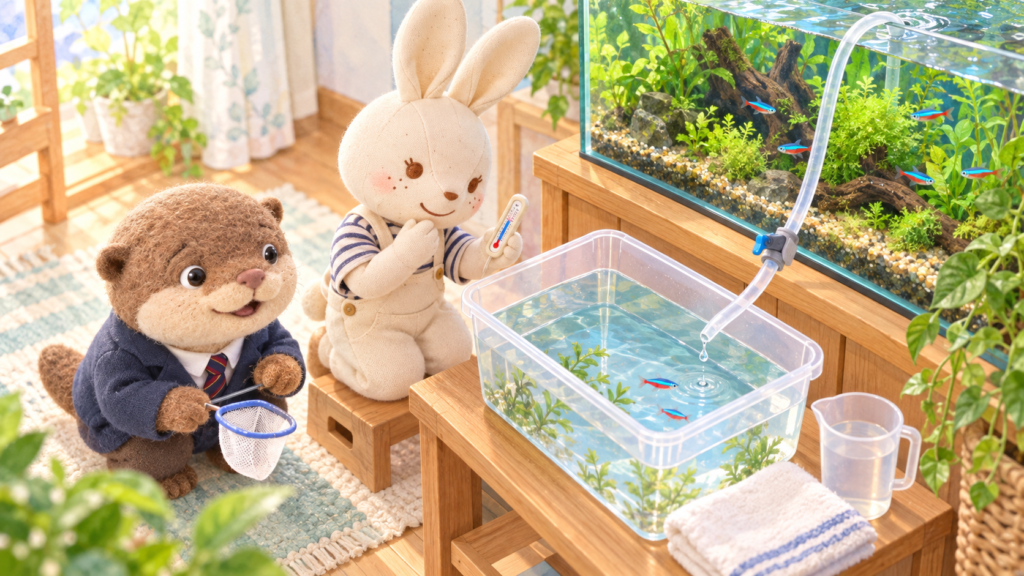 アイのアクアグッズ案内水合わせの道具とやり方|魚を迎える前にそろえたい容器・点滴キット・ネット買ってきた魚はすぐ水槽に入れていい? 水温合わせと水合わせの違いから、透明ケース・点滴キット・ネットの選び方、時間をかけすぎない注意点まで、アイとコタロウが紹介します。記事はコチラ →
さまざまな飼育テーマをご紹介。リンク先の記事には広告・商品紹介が含まれます。
案内・紹介記事一覧へ →本リストは、ヒゲニジギンポの記事内にある分類、分布、生息環境、飼育条件、繁殖、病気や注意点を支える資料に限定して選定しています。店舗、通販サイト、個人ブログ、まとめサイト、価格情報のみのページは除外しています。
-
World Register of Marine Species. Meiacanthus grammistes (Valenciennes, 1836).分類体系、受容名、原記載名、海産種であることの確認に使用。分類は本ページを最優先の根拠としています。https://www.marinespecies.org/aphia.php?p=taxdetails&id=279310
-
Froese, R. and Pauly, D. Editors. FishBase: Meiacanthus grammistes, Striped poison-fang blenny.最大体長、分布、生息水深、リーフ関連種であること、ラグーンや外礁側で見られること、卵生・粘着性沈性卵・浮遊仔魚などの繁殖概要、推定適水温の確認に使用。https://www.fishbase.se/summary/meiacanthus-grammistes
-
Reef Life Survey. Meiacanthus grammistes – Striped fang-blenny.熱帯インド太平洋での分布、体色、3本の黒色縦帯が尾柄部から尾鰭で斑点状に分かれる識別点、近似種との見分け方の確認に使用。https://reeflifesurvey.com/species/meiacanthus-grammistes/
-
Bray, D.J. Fishes of Australia: Linespot Fangblenny, Meiacanthus grammistes.形態、分布、リーフ関連の生息環境、毒腺に連なる下顎の溝付き犬歯、防衛としての毒牙、擬態関係、種小名の由来の確認に使用。https://fishesofaustralia.net.au/home/species/4738
-
Casewell, N.R. et al. 2017. The Evolution of Fangs, Venom, and Mimicry Systems in Blenny Fishes. Current Biology.ファングブレニー類における毒牙、毒腺、毒成分、血圧低下作用、擬態ネットワークの進化に関する査読論文。毒の医学応用については可能性の段階として扱います。https://doi.org/10.1016/j.cub.2017.02.067
-
Kien, N.T. and Zeng, C. 2019. Reproductive behavior and larval development of the striped blenny Meiacanthus grammistes. Vietnam Journal of Marine Science and Technology, 19(4A), 183-189.飼育下繁殖、PVCパイプ内への産卵、雄による卵保護、産卵間隔、孵化時間、仔魚の成長と着底時期の確認に使用。https://doi.org/10.15625/1859-3097/19/4A/14591
-
Olivotto, I., Piccinetti, C.C., Avella, M.A., Rubio, C.M. and Carnevali, O. 2010. Feeding strategies for striped blenny Meiacanthus grammistes larvae. Aquaculture Research, 41(9), e307-e315.仔魚育成時の初期飼料、ワムシ、アルテミア、給餌切り替えなど、繁殖項目の給餌面を支える資料として使用。https://doi.org/10.1111/j.1365-2109.2010.02531.x
-
Groover, E.M. et al. 2020. Aquaculture Applications of the Family Blenniidae. UF/IFAS Extension.イソギンポ科の人工繁殖、ペア形成、産卵床、親魚管理、給餌、グリーンウォーターとワムシ利用など、飼育下繁殖プロトコルの補助資料として使用。https://ask.ifas.ufl.edu/publication/FA225
-
Yanong, R.P.E. Cryptocaryon irritans Infections (Marine White Spot Disease) in Fish. UF/IFAS Extension.海水白点病の原因、症状、検疫、治療時の隔離、再発防止など、病気と予防の項目を支える資料として使用。https://ask.ifas.ufl.edu/publication/FA164
-
Francis-Floyd, R. and Floyd, M.R. 2011. Amyloodinium ocellatum, an Important Parasite of Cultured Marine Fish. Southern Regional Aquaculture Center Publication No. 4705.海水魚のベルベット病、閉鎖環境での急速な増殖、重症化、検疫とバイオセキュリティの重要性を説明する資料として使用。https://agrilife.org/fisheries/files/2013/09/SRAC-Publication-No.-4705-Amyloodinium-ocellatum-an-Important-Parasite-of-Cultured-Marine-Fish.pdf
注記:水槽サイズ、飛び出し防止、人工飼料への餌付きや国内価格など、アクアリウム実務上よく知られる内容でも、店舗・通販・個人ブログ由来の情報に依存するものは本参考文献リストから外しています。これらの飼育上の助言は、種固有の実験結果と区別して参考にしてください。餌付きや成長には個体差もあります。





コメント