
解説 / Description
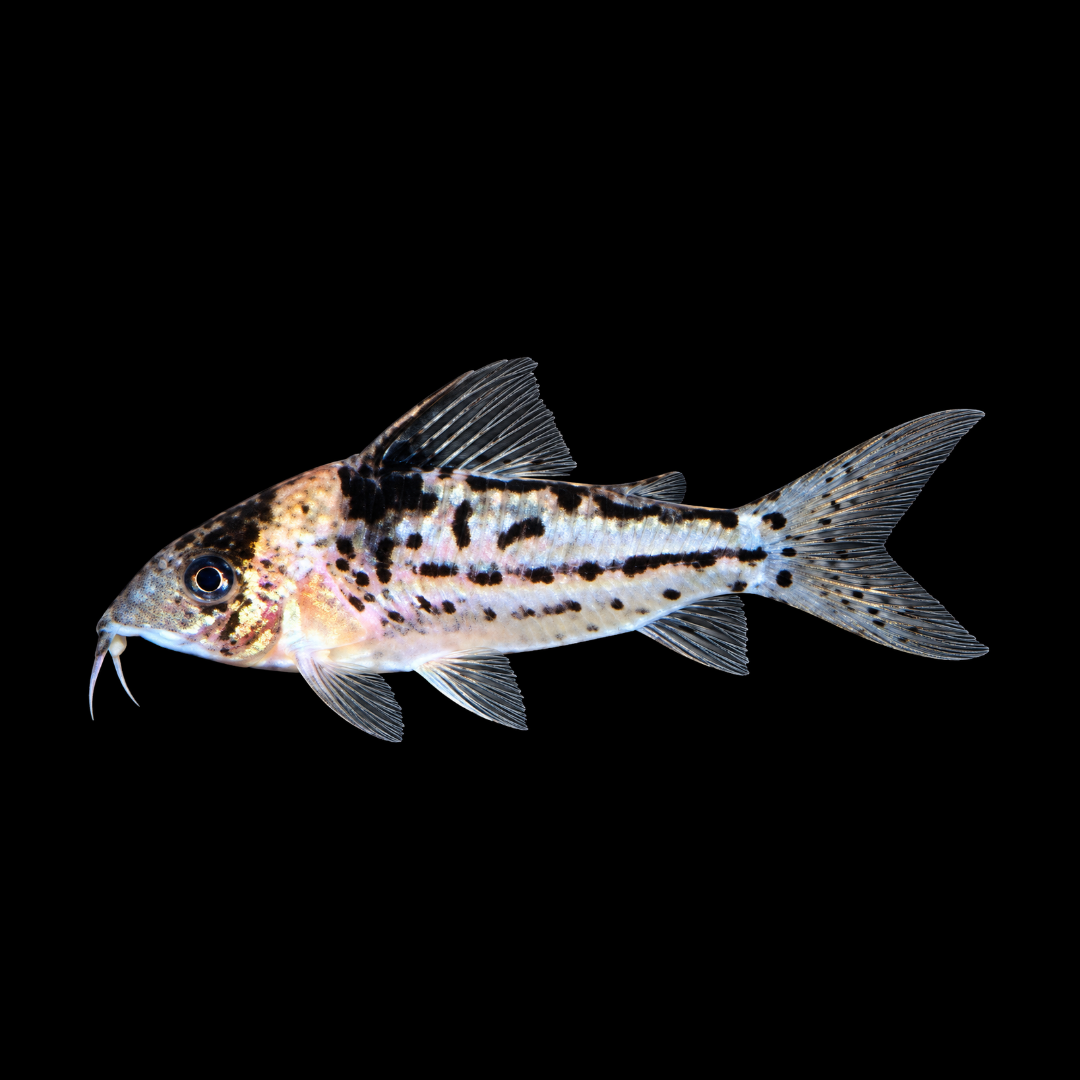
ニューインコリカーナは、南米のネグロ川上流域に由来するとされる、コリドラスの仲間として流通している底生魚です。「インコリカーナII」「ペペリアII」という名前でも知られ、独特の模様とセミロングノーズと呼ばれるやや長い吻(口先)が魅力となっています。淡いクリーム色から薄いピンク色を帯びた体色を基調に、眼を通る暗色の帯と背びれの付け根の黒斑、体側に伸びる黒い模様が組み合わさり、落ち着いた色彩の中にも存在感があります。特に体側の模様は個体差が大きく、斑点がつながったような太いラインを持つ個体から、不規則な斑紋が残る個体まで、さまざまな表情が見られます。 New Incolicana is a trade name used for an armoured catfish reportedly originating from the upper Rio Negro region of South America. Also sold as Incolicana II or Peperia II, it is admired for its variable markings and moderately elongated snout, commonly described as a semi-longnose form. Its pale cream-to-pinkish body is decorated with a dark stripe through the eye, a dark marking near the dorsal-fin base, and irregular dark patterns along the flanks. These markings vary considerably among individuals, ranging from broad, connected lateral stripes to more fragmented blotches.
名前の由来となった真性インコリカーナは、1993年に新種として記載された魚で、2024年の分類改訂によって学名が Brochis incolicana に変更されました。一方、ニューインコリカーナは真性種に似た流通個体を指す名称であり、独立した種なのか、地域的な変異を示す個体群なのかは十分に解明されていません。そのため、両者を別種と断定したり、ニューインコリカーナに正式な学名が確定しているものとして扱ったりすることはできません。飼育面では、温和な性格と活発な底床探索行動が魅力ですが、比較的大きく育つことや、導入時の水質変化に注意が必要です。 The original Incolicana was formally described in 1993 and was transferred to Brochis incolicana following a taxonomic revision in 2024. New Incolicana, however, refers to similar-looking fish in the aquarium trade whose exact identity remains unresolved. It has not been conclusively established whether these fish represent a separate species or a geographically variable population. They should therefore not be treated as a formally identified species. In aquaria, they are generally peaceful and active bottom foragers, but their relatively large adult size and the importance of careful acclimation deserve attention.
基本情報 / Basic Information
| 学名 / Scientific Name | 未確定。流通上は Corydoras sp. や Corydoras cf. incolicana と表記されることがある。近縁とされる真性インコリカーナの有効学名は Brochis incolicana (Burgess, 1993)。Unresolved. The trade form is sometimes labelled Corydoras sp. or Corydoras cf. incolicana. The accepted scientific name of the original Incolicana is Brochis incolicana (Burgess, 1993). |
|---|---|
| 通称 / Common Name | ニューインコリカーナ、インコリカーナII、ペペリアII、コリドラス cf. インコリカーナNew Incolicana, Incolicana II, Peperia II, Corydoras cf. incolicana |
| 分類 / Family | ナマズ目・カリクティス科・コリドラス亜科。ブロキス属に近縁と考えられるが、ニューインコリカーナとして流通する個体の正確な属・種の帰属は未確定。Order Siluriformes, family Callichthyidae, subfamily Corydoradinae. Possibly related to the genus Brochis, but the precise genus and species identity of the traded form remain unresolved. |
| 英名 / English Name | New Incolicana (aquarium trade name) |
| 分布 / Distribution | 南米。主にコロンビア経由で流通し、コロンビア領のネグロ川上流域に由来するとされる。ただし、流通名に対応する個体群の正確な採集地点や分布範囲は十分に確認されていない。South America. Specimens are commonly imported through Colombia and are reportedly associated with the upper Rio Negro basin. Exact collecting localities and the geographical range of the traded form remain insufficiently documented. |
| 最大体長 / Max Size | 全長約7~8cmが飼育・流通上の目安。信頼できる標準体長による最大記録は未確定。Approximately 7–8 cm in total length as an aquarium-trade estimate. A reliably established maximum standard length is unavailable. |
| 寿命 / Lifespan | 本流通個体に限定した信頼できる寿命データはない。近縁のコリドラス類と同様、適切な環境で数年以上の長期飼育を想定する。Reliable lifespan data specific to this trade form are unavailable. As with related corydoradine catfish, care should be planned for a commitment lasting several years or longer. |
飼育環境 / Aquarium Environment
| 水槽サイズ / Tank Size | 複数飼育では90cm規格水槽(約180L)以上を推奨。4~6匹程度の群れを維持する場合は底面積を十分に確保し、余裕があれば120cm規格水槽(約240L)も適している。水量だけでなく、底を自由に移動できる広さが重要。A standard 90 cm aquarium (approximately 180 L) or larger is recommended for a group. Provide ample bottom area for approximately 4–6 individuals. A standard 120 cm aquarium (approximately 240 L) is a good option when space permits. Floor area is as important as water volume. |
|---|---|
| 水温 / Temperature | 23~26℃を飼育管理の目安とし、急激な温度変化を避ける。高水温による酸素不足に注意し、夏季は必要に応じて冷却する。 Maintain approximately 23–26°C as a practical husbandry range, avoiding sudden fluctuations. Prevent oxygen depletion during warm weather and provide cooling when necessary. |
| 水質 / Water Quality | 弱酸性~中性(pH6.0~7.2程度)の軟水を飼育管理の目安とする。ネグロ川水系には強い酸性を示すブラックウォーター環境が存在するが、水槽内で極端な低pHを再現する必要はない。アンモニアと亜硝酸が検出されない状態を維持し、硝酸塩の蓄積を抑える。数値を急激に変えるより、水質の安定を優先することが大切。Soft, slightly acidic to neutral water, approximately pH 6.0–7.2, is a reasonable starting point for aquarium care. Although strongly acidic blackwater habitats occur in the Rio Negro basin, recreating extremely low pH is unnecessary for routine husbandry. Keep ammonia and nitrite undetectable, limit nitrate accumulation, and prioritize stability over abrupt changes to water chemistry. |
| レイアウト / Layout | 底床には、粒が細かく角の丸い砂を薄く敷くと、口髭を使った自然な採餌行動を観察しやすい。十分に清潔に保てる丸みのある細砂利も選択肢となる。流木や水草で落ち着ける場所を作り、前面には広い採餌スペースを残す。モモタマナの葉などの落ち葉を利用すると自然な雰囲気を演出できるが、過剰に堆積させず、分解による水質悪化を防ぐ。ろ過とエアレーションを十分に行い、水槽内には適度な水流を作る。A thin layer of fine, smooth sand supports natural foraging with the barbels. Rounded fine gravel can also be used if kept thoroughly clean. Provide shelter with driftwood and plants while leaving open bottom space for movement and feeding. Dried Indian almond leaves can create a natural appearance, but excessive decomposing material should be avoided. Maintain effective filtration, aeration, and moderate water movement. |
| 注意点 / Precautions | 導入時は水温・水質の急変を避け、呼吸状態や体表、口髭の状態を確認する。底床の汚れや残餌を放置しないことも重要。コリドラス類の一部では、強いストレスを受けた際に有害な分泌物が水中へ放出され、狭い輸送容器内で魚に悪影響を与える事例が知られている。輸送水に異常な白濁が見られる場合は、分泌物や水質悪化による汚染を考慮し、水温・水質をできるだけ合わせた清浄な水へ速やかに移す。本種での発生頻度や原因物質の詳細は未解明。また、胸びれや背びれの硬い棘が網に引っ掛かりやすいため、移動時は慎重に扱う。Avoid abrupt temperature or water-chemistry changes during introduction, and inspect respiration, body condition, and barbels. Remove accumulated debris and uneaten food. Stress-induced secretions have been associated with harmful water conditions during the transport of some corydoradine catfish. If transport water becomes abnormally cloudy, consider possible contamination from secretions or deteriorating water quality and promptly transfer the fish into clean, appropriately matched water. The incidence and precise mechanisms of this phenomenon in New Incolicana have not been established. Handle the fish carefully because its sharp pectoral and dorsal spines can become caught in nets. |
餌と給餌 / Feeding
| 餌の種類 / Diet | 雑食性で、底生の小動物を好む傾向がある。沈下性のコリドラス用配合飼料を基本とし、冷凍赤虫、ブラインシュリンプ、ミジンコなどを組み合わせる。人工飼料に慣れる個体が多いが、輸入直後は食べ慣れた餌から徐々に切り替えるとよい。Omnivorous, with a preference for small benthic animals. Use high-quality sinking catfish foods as a staple and supplement them with frozen bloodworms, brine shrimp, and daphnia. Many individuals accept prepared diets, although newly imported fish may need a gradual transition from familiar foods. |
|---|---|
| 給餌のポイント / Feeding Tips | 1日1~2回を目安に、食べ切れる量を与える。活発な中層魚と混泳させる場合は、底まで餌が届いているかを確認する。必要に応じて水槽の複数箇所に餌を落としたり、照明を落とす前後に給餌したりすると、採餌の機会を確保しやすい。痩せた個体が出ないよう腹部の状態を観察し、残餌は速やかに取り除く。ほかの魚の食べ残しだけで十分な栄養を得られるわけではないため、専用の給餌が必要。Feed manageable portions once or twice daily. In community aquaria, ensure that food reaches the bottom rather than being consumed entirely by midwater fish. Distributing food across several locations or feeding around lights-out may help. Monitor body condition, promptly remove leftovers, and never rely on scraps from other tank inhabitants as the sole food source. |
性格と混泳 / Temperament and Tank Mates
| 性格 / Temperament | 基本的に温和で、底床を探索しながら活発に動き回る。コリドラス類に共通する社会性が期待されるため、可能であれば同じ流通タイプを4~6匹程度で飼育したい。隠れ場所を確保すると、落ち着いて行動しやすくなる。Generally peaceful and active, spending much of its time searching the substrate for food. As with many related catfish, keeping a group of approximately 4–6 individuals of the same trade form is preferable when possible. Adequate shelter helps the fish feel secure. |
|---|---|
| 混泳の相性 / Compatibility | 小~中型の温和なテトラ類、ラスボラ類などと混泳しやすい。ほかの底生魚と組み合わせる場合は、底面積と隠れ場所、餌の量を十分に確保する。大型の肉食魚や攻撃的なシクリッド、ひれを執拗につつく魚との混泳は避ける。真性インコリカーナとの同種性が確定していないため、繁殖を目的とする場合は流通名や由来の異なる個体を安易に組み合わせない方がよい。Usually compatible with peaceful small-to-medium tetras, rasboras, and similar community fish. Provide adequate floor space, hiding places, and food when keeping other bottom dwellers. Avoid large predators, aggressive cichlids, and persistent fin-nippers. Because its identity relative to the original Incolicana is unresolved, mixing fish of different trade identities for breeding should be approached cautiously. |
病気と対策 / Diseases and Prevention
| かかりやすい病気 / Common Diseases | 本種に特有の病気が確認されているわけではないが、ほかのコリドラス類と同様に白点病、細菌性のひれや皮膚の感染症、口髭周辺の炎症などに注意する。輸入直後の体力低下や、不衛生な底床、急激な水質変化が健康状態に悪影響を及ぼすことがある。No disease has been established as uniquely characteristic of this trade form. As with other corydoradine catfish, watch for ich, bacterial infections affecting the skin or fins, and inflammation around the barbels. Transport stress, poor substrate hygiene, and abrupt water changes can contribute to declining health. |
|---|---|
| 対策と予防 / Prevention | 定期的な部分換水と底床の清掃、十分な酸素供給、栄養バランスのよい給餌を基本とする。新規導入魚は可能な範囲で隔離観察し、呼吸の速さ、食欲、体表の異常を確認する。治療薬は魚種や製品によって安全性が異なるため、コリドラス類への使用上の注意を確認し、適切な用法・用量を守る。一律に薬量を半減する方法や、むやみな昇温・塩水浴は、治療効果が不足したり負担を増やしたりする可能性がある。病気の原因を見極め、必要に応じて魚類診療に詳しい獣医師などに相談する。Prevention relies on regular partial water changes, clean substrate, adequate oxygenation, and balanced feeding. Quarantine new arrivals when practical and observe breathing, appetite, and external condition. Medication safety varies by species and product, so follow instructions appropriate for catfish rather than automatically reducing every dose. Unnecessary heating or salt treatment may be ineffective or stressful. Identify the likely cause of illness and seek advice from a veterinarian experienced with fish when needed. |
増やし方(繁殖) / Breeding
| 雌雄の判別 / Sexing | ニューインコリカーナ固有の雌雄差は十分に検証されていない。近縁のコリドラス類では、成熟したメスの方が大きく、上から見ると腹部に幅が出る傾向がある。オスは比較的細身になることが多いが、若魚や痩せた個体では判別が難しい。Sexual differences specific to New Incolicana have not been adequately documented. In related corydoradine catfish, mature females are often larger and broader around the abdomen when viewed from above, while males tend to be slimmer. Juveniles and underconditioned fish may be difficult to sex reliably. |
|---|---|
| 繁殖形態 / Reproduction | 卵生と考えられる。コリドラス類では、雌雄がT字形に交差する「Tポジション」と呼ばれる繁殖姿勢を取り、メスが腹びれの間に卵を保持してから水槽のガラス面や水草などに付着させる例が知られる。ただし、ニューインコリカーナとして流通する個体に限定した繁殖過程は十分に記録されていない。Presumed to be an egg-layer. Many corydoradine catfish exhibit a characteristic T-position during spawning, with females holding eggs between their pelvic fins before attaching them to aquarium glass, plants, or other surfaces. The complete reproductive sequence of fish specifically traded as New Incolicana remains insufficiently documented. |
| 繁殖のポイント / Breeding Tips | 十分に成熟した雌雄を健康な状態で維持し、栄養価の高い餌を偏りなく与えることが基本となる。近縁のコリドラス類では、乾季から雨季への変化に相当する新鮮な水の流入や、穏やかな水温変化が産卵のきっかけになる場合がある。ただし、本流通個体で有効な条件は確立されておらず、大量換水や急冷を無理に行うべきではない。産卵した場合は親魚による食卵を防ぎ、卵を清潔で酸素の豊富な環境に置く。孵化後は卵黄嚢の吸収状態と稚魚の摂食行動を観察し、食べられる大きさの微小な生餌を与える。近縁種の繁殖記録をそのまま本種に当てはめないことも重要。Maintain healthy, sexually mature adults and provide a varied, nutritious diet. In related catfish, the introduction of fresh water and modest temperature changes resembling seasonal rainfall can sometimes stimulate spawning. Effective triggers for this particular trade form have not been established, so extreme water changes or rapid cooling should be avoided. If spawning occurs, protect the eggs from predation and maintain clean, oxygen-rich incubation conditions. After hatching, observe yolk-sac absorption and feeding readiness before providing appropriately sized live foods. Breeding observations from related species should not automatically be applied to New Incolicana. |
雑学と豆知識 / Trivia and Fun Facts
| 1. C001から始まったインコリカーナの歴史 / 1. The Story of C001 and Incolicana |
ニューインコリカーナの背景を知るうえで欠かせないのが、名前の基になった真性インコリカーナの歴史です。1993年、魚類学者W. E. Burgessによって Corydoras incolicana の名で新種記載されたこの魚は、ブラジルのネグロ川上流域にあるイサナ川(Rio Içana)を基準産地としています。種小名の「incolicana」は、ラテン語で住人を意味する「incola」とイサナ川の名前に由来し、おおむね「イサナ川の住人」という意味を持ちます。
The history of New Incolicana begins with the fish from which its trade name was derived. In 1993, ichthyologist W. E. Burgess formally described Corydoras incolicana from the Rio Içana, a tributary in the upper Rio Negro basin of Brazil. Its specific name combines the Latin word “incola,” meaning inhabitant, with the name of the river. It can therefore be understood as referring to an inhabitant of the Rio Içana.
この魚は、ドイツのアクアリウム誌『DATZ』で始まったコリドラス類の識別番号制度「Cナンバー」において、最初の番号であるC001を与えられた魚としても知られています。Cナンバーは、学名が定まっていない魚や同定の難しい魚を流通上で区別するために活用されてきたものです。学名が付いた後もC001という番号は愛好家の間に残り、インコリカーナを象徴する存在となりました。ただし、C001は真性インコリカーナに対応する番号であり、ニューインコリカーナに正式に割り当てられた番号ではありません。 The species is also historically important as the first fish assigned a C-number, C001, through the identification system introduced by the German aquarium magazine DATZ. These codes helped distinguish unidentified or difficult-to-identify corydoradine catfish in the aquarium trade. Even after the species received a formal scientific name, C001 remained closely associated with it. Importantly, C001 refers to the original Incolicana and is not an officially assigned code for New Incolicana. |
|---|---|
| 2. 2024年の分類改訂で変わった学名 / 2. The Taxonomic Revision of 2024 |
長い間、アクアリウムの世界では数多くの底生ナマズが「コリドラス」という名前で親しまれてきました。しかし、外見の似た魚が必ずしも進化の歴史において最も近い関係にあるとは限りません。そこで、DNAの情報と骨格などの形態的特徴を組み合わせ、コリドラス亜科全体の進化的なつながりを調べる研究が進められてきました。
For many years, aquarium hobbyists used the name Corydoras for a remarkably diverse collection of armoured catfish. Yet physical similarity does not always reflect the closest evolutionary relationship. Researchers therefore combined DNA-based evidence with anatomical characteristics to investigate the relationships among members of the subfamily Corydoradinae.
2024年に発表されたDiasらの研究では、従来の大きなコリドラス属が再編され、ブロキス属、ホプリソマ属、オステオガステル属、ガストロデルムス属などを認める分類体系が示されました。この改訂によって、真性インコリカーナは Corydoras incolicana から Brochis incolicana へと属名が変更されました。これは魚そのものが新しい種類に変わったという意味ではなく、進化的な関係をより適切に反映するために分類上の所属が見直されたということです。 In 2024, Dias and colleagues published a major revision that reorganized the formerly broad genus Corydoras and recognized genera including Brochis, Hoplisoma, Osteogaster, and Gastrodermus. Under this revised classification, the original Incolicana was transferred from Corydoras incolicana to Brochis incolicana. The change does not mean the fish itself became a different species. Rather, its generic placement was revised to better reflect evolutionary relationships. 一方、ニューインコリカーナは正式な種の同定が完了していないため、この分類改訂だけを根拠にブロキス属へ確定的に移すことはできません。外見からは真性インコリカーナに近い仲間と考えられますが、正確な分類には詳しい形態比較や系統解析が必要です。名前の似た二つの魚を考える際には、学名が確定している真性種と、まだ分類上の位置づけが明らかでない流通個体を区別することが大切です。 New Incolicana presents a different situation. Because its exact identity has not been resolved, the 2024 revision alone does not establish that it belongs to Brochis. Its appearance suggests an affinity with the original Incolicana, but detailed morphological comparisons and phylogenetic analyses would be required to confirm its placement. The distinction between a formally identified species and an unresolved trade form remains important. |
| 3. 一本のラインが生み出す個性と識別の難しさ / 3. The Individuality of Lateral Markings |
ニューインコリカーナを選ぶ楽しみの一つは、体側の黒い模様をじっくり観察することです。日本の観賞魚市場では、真性インコリカーナに見られる不規則な斑点状の模様に対し、ニューインコリカーナは斑点が連続してライン状になりやすいと説明されてきました。実際に、体側に伸びる黒いラインは、流通個体を特徴づける印象的な要素です。
One of the pleasures of keeping New Incolicana is observing the dark patterns along its body. In the Japanese aquarium trade, the original Incolicana has often been described as having irregular blotches, whereas New Incolicana is said to show more connected, stripe-like markings. A dark lateral stripe can certainly be a striking feature of these fish.
ただし、この違いだけで両者を確実に識別できるわけではありません。真性インコリカーナ自身にも模様の変異があり、斑点がつながって線状に見える個体が知られています。したがって、ラインの有無や太さは流通上の識別の参考にはなっても、別種であることの決定的な証拠にはなりません。また、模様の違いを自然交雑や擬態によるものと説明するには、遺伝学的・生態学的な裏付けが必要です。現状では、個体ごとの色彩や斑紋の違いを、自然に見られる模様の変異として楽しむのが適切でしょう。 However, this distinction is not definitive. The original Incolicana is itself known to display considerable variation, and some individuals have spots that merge into stripe-like patterns. Stripe thickness and continuity are therefore useful trade characteristics but cannot independently prove that two fish belong to different species. Explanations involving natural hybridization or mimicry would require genetic and ecological evidence. For now, the diversity of markings is best appreciated as an observed feature whose biological significance remains unresolved. |
| 4. 真性インコリカーナの繁殖で観察された大きな卵 / 4. Remarkably Large Eggs Observed in the Original Incolicana |
インコリカーナの仲間には、繁殖についても興味深い記録があります。国内では2018年に真性インコリカーナとして飼育されていた個体群の繁殖が観察され、翌2019年にその経過が紹介されました。この事例では、直径約2mmの比較的大きな卵が産み付けられ、7匹の稚魚が孵化したと報告されています。稚魚は全長約5~6mmで、観察者がそれまでに見てきたコリドラス類の稚魚とは異なる、細長い体形をしていたといいます。
The original Incolicana also has an intriguing breeding history. In Japan, a breeding event involving fish kept as the original Incolicana was observed in 2018 and described in 2019. The account reported eggs approximately 2 mm in diameter and seven newly hatched fry. The fry measured about 5–6 mm and were described as unusually elongated compared with other young corydoradine catfish familiar to the observer.
特に注目されたのは、孵化直後の稚魚に目立った卵黄嚢が確認されなかったことです。卵黄嚢とは、孵化したばかりの魚が自分で餌を食べ始めるまでの間、栄養を得るために利用する器官です。ただし、観察時に見えなかったことは、卵黄嚢を形成しないことや、孵化時点で完全に存在しなかったことを意味するものではありません。孵化後の早い段階で吸収された可能性も考えられます。 One particularly notable observation was the absence of a clearly visible yolk sac in the newly hatched fry. The yolk sac is a nutrient reserve that typically supports a young fish before it begins feeding independently. However, failure to observe a visible yolk sac does not demonstrate that one never developed or was completely absent at hatching. Rapid absorption soon after hatching is another possible explanation. このような限られた繁殖記録から、独自の進化的適応や特別な発生機構が確立されたと結論づけることはできません。それでも、比較的大きな卵や特徴的な稚魚の体形は、インコリカーナの繁殖生態を考えるうえで興味深い手掛かりとなります。なお、この記録はニューインコリカーナの繁殖を直接確認したものではなく、両者の繁殖特性が同じであるかどうかは分かっていません。 These limited observations cannot establish a unique evolutionary adaptation or developmental mechanism. Nevertheless, the relatively large eggs and unusual fry shape offer interesting clues about reproduction in Incolicana. These observations concern fish kept as the original form and do not directly document breeding in New Incolicana. Whether the two share the same reproductive characteristics remains unknown. |
| 5. Tポジションと不思議な受精の仕組み / 5. The T-Position and an Unusual Fertilization Mechanism |
多くのコリドラス類では、繁殖の際にオスとメスがT字形に組み合う「Tポジション」が観察されます。この姿勢はアクアリストにもよく知られていますが、精子がどのように卵へ到達するのかという問題には、長い研究の歴史があります。
Many corydoradine catfish display a characteristic T-position during reproduction, in which the male and female form a T-shaped arrangement. Although this behavior is familiar to aquarists, the mechanism by which sperm reaches the eggs has been the subject of scientific discussion for many years.
1995年には、アエネウスとして知られるコリドラス類を対象とした研究で、メスがオスの精子を口から取り込み、腸管を経由して腹びれの間に保持した卵へ運ぶという、きわめて珍しい受精方式が提案されました。その後も、この解釈については議論があり、精子の移動経路や受精に関わる仕組みについて研究が続けられています。つまり、Tポジションは単なる特徴的な姿勢ではなく、魚類の生殖の仕組みを考えるうえで重要な行動なのです。 In 1995, research on the bronze cory group proposed an unusual mechanism in which the female takes sperm into her mouth and transports it through her digestive tract toward eggs held between her pelvic fins. The interpretation has been debated, and research continues into sperm transport and the mechanisms involved in fertilization. The T-position is therefore more than an unusual posture; it is a behavior of considerable interest in fish reproductive biology. ただし、この特殊な精子輸送がすべてのコリドラス類に共通するとは確認されておらず、ニューインコリカーナで同じ仕組みが実証されたわけでもありません。近縁種の研究で明らかになったことと、ニューインコリカーナ自身について分かっていることを区別することで、その生態をより正確に理解できます。 This proposed mechanism has not been demonstrated for every corydoradine species, nor has it been established specifically in New Incolicana. Distinguishing findings from related species from direct observations of this trade form is essential for an accurate understanding of its biology. |
| 6. 自分を守る分泌物が輸送中の危険になる理由 / 6. Defensive Secretions and Transport Risks |
コリドラス類の体は、硬い骨板に覆われています。この骨板は外敵から身を守る構造であり、胸びれや背びれに備わる硬い棘も防御に役立ちます。さらに、一部のコリドラス類では、強いストレスを受けた際に水中へ分泌物を放出する現象が知られています。胸びれの付け根付近にある腋窩腺という器官は、その分泌に関わるものとして研究されてきました。
Corydoradine catfish possess protective bony plates and sharp pectoral and dorsal fin spines. In some species, an additional phenomenon has been observed: the release of substances into the surrounding water during severe stress. A gland near the base of the pectoral fin, known as the axillary gland, has been investigated for its contribution to these secretions.
例えば、ステルバイを対象とした研究では、輸送時に水中へ放出された分泌物と腋窩腺に共通するタンパク質成分が検出されています。また、その分泌物を含む試料が発光細菌の光の強さを低下させることも確認されました。ただし、この結果だけで特定の殺菌物質が同定されたわけではなく、腋窩腺の分泌物そのものに殺菌作用があると証明されたわけでもありません。 Research on the sterbai cory detected protein components shared by secretions released into transport water and material from the axillary gland. Samples containing the secretions also reduced light emission from bioluminescent bacteria. However, these findings do not identify a particular antibacterial substance or demonstrate that the axillary gland secretion itself has bactericidal properties. 自然の水域では分泌物が広い範囲へ拡散しますが、輸送用の小さな袋では水中の成分が蓄積しやすくなります。一部のコリドラス類では、このような閉鎖環境で魚自身が衰弱する「自己中毒」と呼ばれる現象が報告されています。ストレスによる分泌物が関与すると考えられるものの、輸送中の水質悪化など別の要因も考慮する必要があります。ニューインコリカーナで同じ現象がどの程度起こるかは未確認ですが、十分な水量の確保、丁寧な取り扱い、輸送時間の短縮、異常時の清浄な水への移動は重要です。 In natural waters, secretions can disperse, whereas they may accumulate in a small transport bag. Some corydoradine catfish have experienced serious deterioration under such conditions, a phenomenon commonly described as self-poisoning. Stress-related secretions are suspected to play a role, although ordinary transport-related water deterioration must also be considered. The frequency of this problem in New Incolicana is unknown. Gentle handling, adequate water volume, short transport times, and rapid transfer to clean water when abnormalities occur are sensible precautions. なお、ニンニク抽出液などを分泌物の確実な解毒剤として使用できるという科学的根拠は確立されていません。異常が起きたときには、効果が確認されていない添加剤に頼るのではなく、適切な水温・水質と酸素供給を確保することが優先されます。 There is no established scientific basis for treating garlic extract or similar additives as a reliable antidote to these secretions. When problems occur, restoring suitable water conditions and oxygenation should take priority over unproven chemical remedies. |
| 7. 水面に上がる行動と腸呼吸の秘密 / 7. Surface Visits and Intestinal Air Breathing |
ニューインコリカーナのようなコリドラス類を飼育していると、普段は水底を泳いでいる魚が突然水面へ向かい、空気を一口取り込んで素早く戻ることがあります。この行動は、コリドラス類が持つ「腸呼吸」という能力と関係しています。
Aquarists keeping New Incolicana or related catfish may occasionally see a fish rush toward the surface, gulp air, and quickly return to the bottom. This behavior is associated with intestinal air breathing, a remarkable ability found in corydoradine catfish.
コリドラス類では、腸の壁に発達した血管を利用して、飲み込んだ空気から酸素を取り込むことができます。これは、水中の酸素が少なくなる環境でも生きるための補助的な呼吸機能です。ときどき水面へ上がるだけであれば自然な行動の範囲と考えられますが、頻繁に水面へ向かう、呼吸が異常に速い、ほかの魚も苦しそうにしているといった場合には、水中の酸素量やアンモニア・亜硝酸などを確認する必要があります。 Corydoradine catfish can use specialized blood vessels in the intestinal wall to absorb oxygen from swallowed air. This provides an additional way to obtain oxygen in environments where dissolved oxygen may be limited. Occasional surface visits can be normal. Repeated frantic gulping, unusually rapid respiration, or similar distress among other fish should prompt checks of aeration, ammonia, nitrite, and overall water quality. 腸呼吸ができるからといって、酸素の少ない水で飼育してよいわけではありません。十分なエアレーションと良好な水質を確保したうえで、時折見せるこの行動を観察すると、コリドラス類の独特な体の仕組みを身近に感じられます。 The ability to breathe air does not mean that poorly oxygenated aquarium water is acceptable. With good aeration and water quality, occasional surface visits offer an opportunity to appreciate the unusual physiology of these fish. |
| 8. 日本で親しまれるもう一つのインコリカーナ / 8. Another Incolicana in the Japanese Aquarium Trade |
ニューインコリカーナは、2019年ごろから日本の観賞魚市場で流通記録が確認できる魚です。コロンビア経由で輸入された、真性インコリカーナによく似た個体として注目され、ニューインコリカーナ、インコリカーナII、ペペリアIIなど複数の呼び名が使われるようになりました。「ペペリア」という名前自体は、真性インコリカーナに古くから用いられてきた日本の流通名です。
New Incolicana has appeared in documented Japanese aquarium trade records since around 2019. Imported primarily through Colombia and resembling the original Incolicana, these fish attracted attention under names including New Incolicana, Incolicana II, and Peperia II. The name Peperia itself had already been associated with the original Incolicana in the Japanese aquarium trade.
その魅力の中心にあるのは、魚ごとに違う模様です。まっすぐなラインを持つ個体もいれば、太い斑紋が複雑につながる個体もあり、同じ入荷群の中でも印象が異なります。体形や色彩、入荷時の状態によって販売価格に違いが生じることもありますが、価格は入荷量や販売時期によって変動するため、一定の価格帯を生物学的な価値と結びつけることはできません。 Much of its appeal lies in the individuality of each fish. Some specimens carry relatively straight lateral stripes, while others display thick, irregular, interconnected markings. Even individuals from a single shipment can look noticeably different. Appearance, size, availability, and condition may influence retail prices, but market value fluctuates and should not be confused with biological distinctiveness. また、流通名だけでは正確な分類や採集地点を確定できない点にも注意が必要です。同じ名前で販売される個体が常に同一の自然個体群に属するとは限りません。由来が分かる個体についてはその情報を大切にしながら、健康状態と飼育環境を優先して選ぶことが、長く楽しむための確かな方法です。 A trade name alone does not establish exact taxonomy or collection locality, and fish sold under the same name do not necessarily originate from a single natural population. Preserving reliable provenance information where available, while prioritizing fish health and appropriate husbandry, offers the best foundation for long-term enjoyment. |
まとめ / Conclusion
ニューインコリカーナは、淡い体色に浮かぶ黒いラインと斑紋、やや長い吻を持つ独特の姿が魅力的な南米産の底生魚です。名前の由来となった真性インコリカーナとは外見上よく似ていますが、分類学的な関係はまだ十分に明らかになっていません。その一方で、個体ごとに異なる模様や活発な底床探索行動は、飼育を通じてじっくり楽しめる特徴となっています。 New Incolicana is an appealing South American bottom-dwelling catfish, distinguished by its pale body colour, variable dark markings, and moderately elongated snout. Although it closely resembles the original Incolicana, its exact taxonomic relationship remains unresolved. Its individual patterns and active bottom-foraging behavior nevertheless make it rewarding to observe in an aquarium.
健やかに育てるためには、十分な底面積を持つ水槽、清潔で口髭を傷めにくい底床、安定した水質、栄養バランスのよい給餌が欠かせません。温和な性格を生かして複数で飼育し、落ち着ける場所と自由に動き回れる空間を整えれば、それぞれの個性をより自然な姿で観察できます。繊細な模様の違いだけでなく、砂を探るしぐさや仲間との穏やかな動きも、ニューインコリカーナと長く付き合うなかで深まっていく楽しみです。 Successful long-term care depends on sufficient floor space, a clean and gentle substrate, stable water conditions, and balanced feeding. Keeping a peaceful group with suitable shelter and open foraging areas encourages natural behavior. Beyond its attractive markings, the gentle movements, substrate-searching habits, and social interactions of New Incolicana offer lasting enjoyment to the attentive aquarist.
気になる道具や飼い方を見つけてみませんか?
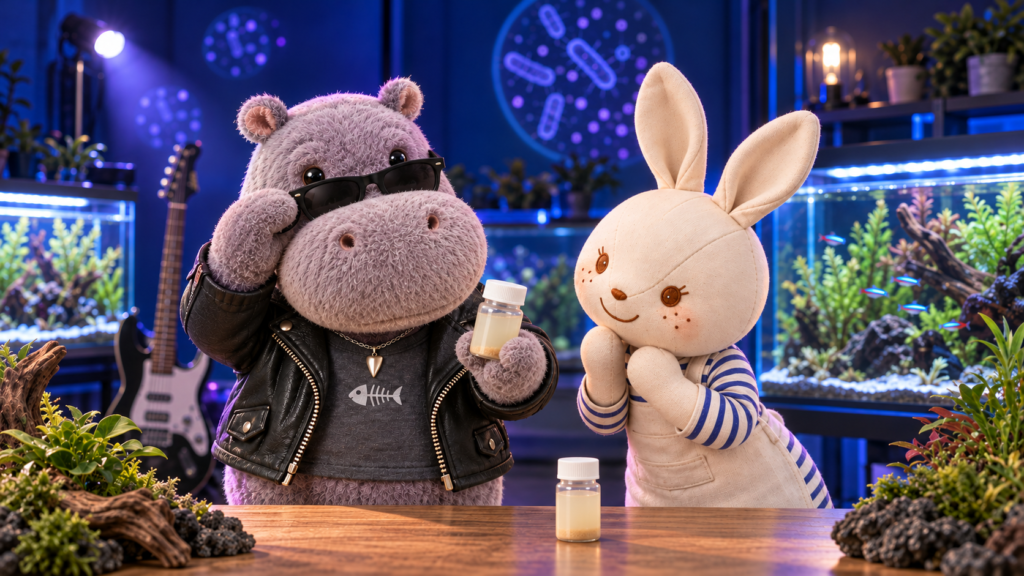 アイのアクアグッズ案内バクテリアって、結局なんなんだ? タマスとアイのボトル探究ロック好きのカバ・タマスが初登場。サイクル、ベストバイオ、バイコムのボトルから、菌の役割と保存の工夫、二本組の歴史をアイと探ります。記事はコチラ →
 アイのアクアグッズ案内水槽の中に波がある!? コタロウと探る、サンゴがゆらゆら揺れる秘密道具の特徴や使い方、選ぶときのポイントをアイが紹介します。記事はコチラ →
さまざまな飼育テーマをご紹介。リンク先の記事には広告・商品紹介が含まれます。
案内・紹介記事一覧へ →分布マップ
ニューインコリカーナは、南米のコロンビア領ネグロ川上流域に由来するとされるコリドラス類です。主にコロンビア経由で流通していますが、正確な採集地点や自然分布の範囲は十分に確認されていません。地図では、流通情報から関連が示唆されるネグロ川上流域とその周辺を概略表示しています。
※ 地図は推定される流通由来地域を示した概略図です。マーカーは地図表示のために設定した代表地点であり、実際の採集地点や生息確認地点を示すものではありません。また、表示範囲は本種の確定した分布域や分布境界を意味するものではありません。
参考文献
-
Phylogenomic analyses in the complex Neotropical subfamily Corydoradinae (Siluriformes: Callichthyidae) with a new classification based on morphological and molecular data
Dias, A. C. et al. (2024). Zoological Journal of the Linnean Society. DOI: 10.1093/zoolinnean/zlae053該当内容:コリドラス亜科の分類改訂とブロキス属の再整理。
-
Eschmeyer’s Catalog of Fishes:Brochis incolicana (Burgess, 1993)
California Academy of Sciences. オンライン魚類分類データベース。該当内容:真性インコリカーナの有効学名、原記載、基準産地(ブラジル・イサナ川)と分類上の位置づけ。
-
Freshwater Ecoregions of the World:Rio Negro(地域番号314)
Petry, P. & Hales, J. Freshwater Ecoregions of the World.該当内容:ネグロ川流域の地理的範囲、コロンビア側を含む水系、ブラックウォーターの環境特性。
-
A Contribution to the Chemical Characterization of Rivers in the Rio Negro Basin, Brazil
Küchler, I. L., Miekeley, N. & Forsberg, B. R. (2000). Journal of the Brazilian Chemical Society, 11(3), 286–292. DOI: 10.1590/S0103-50532000000300015該当内容:ネグロ川水系のpH、導電率、溶存有機物と水質の特徴。
-
Comprehensive Husbandry Protocol for Corydoras Catfish and Many Other Amazonian Species
Chiang, A. et al. (2024). Journal of the American Association for Laboratory Animal Science, 63(5), 472–479. DOI: 10.30802/AALAS-JAALAS-24-039該当内容:近縁コリドラス類の水質管理、底床、給餌、群れでの飼育、健康観察および繁殖管理。
-
Sperm drinking by female catfishes: a novel mode of insemination
Kohda, M., Tanimura, M., Kikue-Nakamura, M. & Yamagishi, S. (1995). Environmental Biology of Fishes, 42, 1–6. DOI: 10.1007/BF00002344該当内容:アエネウス系コリドラスにおけるTポジションと、精子を口から取り込む受精方式の報告。
-
Seminal vesicle protein caCA12 in Corydoras aeneus inhibits sperm motility for sperm drinking
Yoshida, J. et al. (2025). Journal of Experimental Biology, 228(9), jeb250293. DOI: 10.1242/jeb.250293該当内容:近縁種の特殊な受精に関与する精液中のタンパク質と精子運動の研究。
-
Adaptations to the air breathing in the posterior intestine of the catfish (Corydoras aeneus, Callichthyidae): A histological and ultrastructural study
Podkowa, D. & Goniakowska-Witalińska, L. (2002). Folia Biologica, 50(1–2), 69–82.該当内容:コリドラス類の腸呼吸と、腸壁を利用した酸素の取り込み。
-
Axillary gland secretions contribute to the stress-induced discharge of a bactericidal substance in Corydoras sterbai (Callichthyidae, Siluriformes)
Kiehl, E., Rieger, C. & Greven, H. (2006). Verhandlungen der Gesellschaft für Ichthyologie, 5, 111–115.該当内容:ステルバイの輸送時分泌物、腋窩腺由来成分、発光細菌への作用と解明されていない点。
-
Management of Aquarium Fish
Petty, B. D., Francis-Floyd, R. & Yanong, R. P. E. Merck Veterinary Manual(専門家向け獣医療資料)。該当内容:観賞魚の水質管理、隔離観察、ストレス対策、病気の診断と薬剤使用上の注意。
-
Parasitic Diseases of Fish
MSD Veterinary Manual(専門家向け獣医療資料)。該当内容:白点病を含む魚類の寄生虫病、症状、検査および治療上の注意。



コメント