

▶ 記事の生体をAMAZONで買う ▶ 記事の生体をYahooで買う
解説 / Description
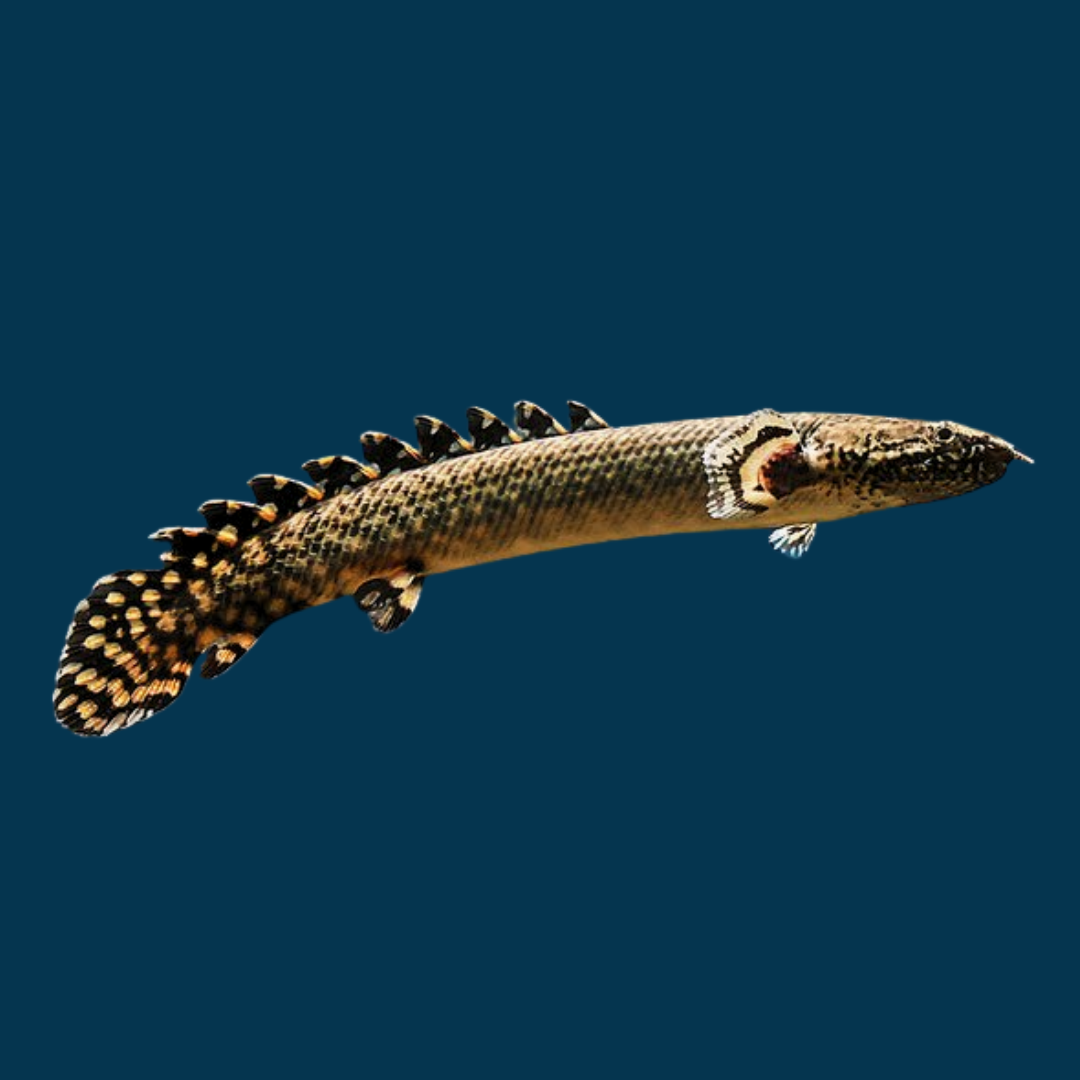
ポリプテルス・オルナティピニスは、アフリカの河川や湿地に生息するポリプテルスの仲間で、黄色みを帯びた明色斑と暗色の網目模様が美しい大型古代魚です。幼魚期は黒と黄色のコントラストが強く、成長にともなって重厚な雰囲気へ変化していくため、ポリプテルスの中でも観賞価値の高い種類として親しまれています。空気呼吸を行う性質や、硬いガノイン鱗、複数に分かれた背びれなど、原始的な魚類を思わせる特徴を多く残している点も大きな魅力です。一方で、最終的にはかなり大型化するため、幼魚の姿だけで判断せず、終生飼育を見据えた水槽サイズと飛び出し対策を整えることが大切です。 Polypterus ornatipinnis, commonly known as the ornate bichir, is a large ancient-looking fish from African rivers and wetlands. It is admired for its dark reticulated pattern with pale yellowish markings, which is especially vivid in juveniles and becomes more powerful and impressive as the fish matures. Its air-breathing ability, hard ganoid scales, and separated dorsal finlets give it a distinctly primitive appearance. Because it can grow large, keepers should plan for long-term housing rather than choosing it only for its attractive juvenile form.
基本情報 / Basic Information
| 学名 / Scientific Name | Polypterus ornatipinnis |
|---|---|
| 通称 / Common Name | ポリプテルス・オルナティピニス、オルナティピンニス、オルナティOrnate bichir |
| 分類 / Family | ポリプテルス目 ポリプテルス科 ポリプテルス属Order Polypteriformes, family Polypteridae, genus Polypterus |
| 英名 / English Name | Ornate bichir |
| 分布 / Distribution | 主にコンゴ川流域を中心とする中央アフリカの淡水域に分布し、タンガニーカ湖周辺や東アフリカの一部水系からも記録されています。It is found mainly in freshwater systems of Central Africa, especially the Congo River Basin, with records also from areas around Lake Tanganyika and parts of East African drainages. |
| 最大体長 / Max Size | 野生下では約60cmに達する大型種です。水槽内では環境や個体差によりそれより小さく収まることもありますが、50cm前後を見据えて飼育計画を立てる必要があります。It can reach around 60 cm in the wild. Aquarium specimens may remain smaller depending on conditions, but keepers should plan for a fish approaching about 50 cm or more. |
| 寿命 / Lifespan | 適切な環境では10年以上の長期飼育が期待できる魚です。大型魚として、設備と管理を長く維持できるかを考えて迎えることが重要です。With proper care, it can live for more than 10 years. As a large fish, it should be kept only when long-term housing and maintenance can be provided. |
飼育環境 / Aquarium Environment
| 水槽サイズ / Tank Size | 幼魚期は60cm規格水槽から飼育を始めることもできますが、成長後は最低でも120cm水槽、できれば120cmワイド水槽以上を用意したい大型魚です。終生飼育を考えるなら、体長だけでなく反転できる奥行きと底面積を重視する必要があります。Juveniles can be started in a standard 60 cm tank, but adults require at least a 120 cm tank, preferably a wider 120 cm setup or larger. For long-term care, floor space and turning room are as important as tank length. |
|---|---|
| 水温 / Temperature | 24〜28℃前後が目安です。急な温度変化には負担がかかるため、冬場は容量に合ったヒーターを使い、水温を安定させて管理します。 A temperature of about 24–28°C is suitable. Sudden fluctuations should be avoided, and a heater appropriate for the tank volume is important in colder seasons. |
| 水質 / Water Quality | 弱酸性から中性付近を中心に、比較的幅広い水質に適応します。ただし肉食魚で排泄量が多いため、アンモニアや亜硝酸の蓄積を避ける強いろ過と定期的な換水が必要です。It adapts to a fairly wide range of water conditions, especially slightly acidic to neutral water. Because it is a carnivorous fish that produces a lot of waste, strong filtration and regular water changes are essential. |
| レイアウト / Layout | 底砂は細かく角のない砂、またはメンテナンス性を重視したベアタンクが向いています。流木や塩ビ管などで隠れ家を作ると落ち着きやすくなりますが、体をこすって傷つけないよう、鋭利な石や不安定なレイアウトは避けてください。Fine, smooth sand or a bare-bottom setup works well. Driftwood and PVC pipes can provide hiding places, but sharp stones and unstable decorations should be avoided to prevent injuries. |
| 注意点 / Precautions | 最大の注意点は飛び出しです。空気呼吸のために水面へ上がる習性があり、驚いた拍子や夜間に水槽外へ飛び出すことがあります。ガラス蓋やポリカーボネート板で隙間をふさぎ、配管まわりまで確認しておくと安心です。Jumping is one of the most important risks. Because it rises to the surface to breathe air, it may leap out when startled or at night. A tight-fitting glass or polycarbonate lid should be used, including around pipes and gaps. |
餌と給餌 / Feeding
| 餌の種類 / Diet | 肉食性で、幼魚には冷凍アカムシ、イトメ、小さく刻んだエビ類など、口に合うサイズの餌を与えます。成長後は肉食魚用の沈下性人工飼料を主食にし、冷凍ワカサギ、エビ、ミミズなどを補助的に使うと管理しやすくなります。メダカや小赤などの活餌も食べますが、寄生虫や病原体の持ち込み、栄養の偏りには注意が必要です。It is carnivorous. Juveniles can be fed frozen bloodworms, tubifex worms, and suitably sized pieces of shrimp or similar meaty foods, while larger specimens should be trained onto sinking carnivore pellets as a staple. Frozen fish, shrimp, and earthworms can be used as supplementary foods. Live feeder fish may be accepted, but they carry risks of parasites, pathogens, and nutritional imbalance. |
|---|---|
| 給餌のポイント / Feeding Tips | 幼魚期は成長に合わせて少量をこまめに与え、成魚では数日に1回を目安に太らせすぎない量へ調整します。本来は夜行性の傾向があるため、消灯前後や夕方以降に与えると反応がよい個体も多いです。冷凍餌は必ず完全に解凍してから与えることが大切です。Juveniles should be fed small amounts more frequently to support growth, while adults do better with moderate feeding every few days to avoid obesity. Since it tends to be nocturnal, many individuals respond well to feeding in the evening or around lights-out. Frozen foods should always be fully thawed before feeding. |
性格と混泳 / Temperament and Tank Mates
| 性格 / Temperament | 見た目は迫力がありますが、性格は比較的落ち着いており、自分から積極的に他魚を攻撃するタイプではありません。ただし口に入るサイズの生き物は餌として認識しやすく、夜間に捕食されることがあります。穏やかに見えても、捕食魚であることを前提に考える必要があります。Despite its imposing appearance, it is generally calm and not strongly aggressive toward fish it cannot eat. However, any tank mate small enough to fit in its mouth may be treated as food, especially at night. It should always be managed as a predatory fish. |
|---|---|
| 混泳の相性 / Compatibility | 同程度以上の大きさで、丸呑みされにくい体型の魚とは混泳しやすい傾向があります。ポリプテルス類、大型シクリッド、大型ナマズ類などが候補になりますが、体格差があると共食いや捕食の危険があります。プレコ類は体表をなめて傷をつけることがあるため、混泳する場合は異常がないか観察が必要です。It can be kept with similarly sized fish that are not easily swallowed, such as other bichirs, larger cichlids, and some large catfish. Size differences can lead to predation or cannibalism. Plecos may sometimes rasp the bichir’s slime coat, so close observation is needed if they are kept together. |
病気と対策 / Diseases and Prevention
| かかりやすい病気 / Common Diseases | 特定の病気に極端に弱い魚ではありませんが、水質悪化による肌荒れ、外傷からの細菌感染、外部寄生虫などに注意します。特にワイルド個体では、体表や鰓に寄生する外部寄生虫を持ち込む可能性があるため、導入直後のこすりつけ行動や呼吸の乱れは見逃さないようにします。It is not especially fragile when kept in stable conditions, but poor water quality can lead to skin irritation, bacterial infections from injuries, and external parasite problems. Wild-caught specimens may carry external parasites on the skin or gills, so scratching behavior and abnormal breathing after introduction should be watched carefully. |
|---|---|
| 対策と予防 / Prevention | 予防の基本は、過密を避け、強いろ過と定期換水で水質を安定させることです。薬品には敏感な面があるため、銅を含む薬剤や強い駆虫薬を安易に使うのは避けます。治療が必要な場合は、ポリプテルスに使える薬剤かどうかを確認し、規定量より慎重に始めるなど安全を優先することが重要です。Prevention is based on avoiding overcrowding and maintaining stable water quality with strong filtration and regular water changes. Bichirs can be sensitive to medications, so copper-based treatments and strong parasite medications should not be used casually. When treatment is needed, confirm that the medication is safe for Polypterus and proceed cautiously. |
増やし方(繁殖) / Breeding
| 雌雄の判別 / Sexing | 成熟したオスは尻びれが幅広く厚みを帯び、繁殖時に卵を受け止めるような形に使われます。メスは体に丸みが出やすい傾向がありますが、幼魚期の判別は難しく、十分に成熟した個体で確認する必要があります。Mature males have a broader, thicker anal fin that is used during spawning. Females tend to have a fuller body, but juveniles are difficult to sex accurately, and reliable identification usually requires mature specimens. |
|---|---|
| 繁殖形態 / Reproduction | 卵生で、オスが尻びれをカップ状に使い、メスが放出した卵を受け止めて受精させるとされます。受精卵は水草や産卵床などにばらまかれる形で付着します。It is an egg-laying species. The male uses the anal fin like a cup to receive and fertilize eggs released by the female, after which adhesive eggs are scattered onto plants or spawning material. |
| 繁殖のポイント / Breeding Tips | 家庭水槽での繁殖は難易度が高く、十分な水槽サイズ、成熟したペア、安定した水質が必要です。雨季を意識した水換えや水温変化が刺激になることもありますが、無理な環境変化は親魚への負担になります。稚魚は外鰓をもつ特徴的な姿で成長し、共食いを防ぐためのサイズ分けが重要です。Breeding in home aquaria is difficult and requires mature pairs, ample space, and stable water conditions. Water changes and slight seasonal cues may help trigger spawning, but abrupt changes can stress the adults. Fry have distinctive external gills and must be sorted by size to reduce cannibalism. |
雑学と豆知識 / Trivia and Fun Facts
| 1. 名前に込められた「装飾されたヒレ」 / 1. The meaning behind its ornate name | 種小名のornatipinnisは、「装飾された」「飾られた」という意味をもつ語と、ヒレを意味する語に由来するとされます。実際に本種は、体側だけでなく各ヒレにも斑点や模様が入り、ポリプテルスの仲間の中でもひときわ華やかな印象を与えます。幼魚期の鮮やかな模様に惹かれて迎える人も多いですが、成長後の落ち着いた迫力こそ本種の本領といえます。The species name ornatipinnis is generally understood to refer to decorated or ornamented fins. The fish lives up to this name with markings not only on the body but also on the fins. Many keepers are attracted to the vivid juvenile pattern, but the heavier, more mature appearance of adults is one of the species’ greatest appeals. |
|---|---|
| 2. 背中に並ぶ小さな背びれ / 2. A row of separate dorsal finlets | ポリプテルスの背びれは、一般的な魚のように一枚の大きなヒレではなく、複数の小さな背びれが一列に並ぶ独特の形をしています。属名のPolypterusも「多くのヒレ」を連想させる名前で、この特徴をよく表しています。水槽の中でゆっくりと底を歩くように移動する姿と合わせて、古代魚らしい存在感を強く感じさせる部分です。The dorsal fin of a bichir is not a single continuous fin like that of many modern fishes. Instead, it is made up of a row of separate finlets. The genus name Polypterus also evokes the idea of “many fins,” reflecting this striking feature. Together with its slow, walking-like movement along the bottom, this gives the fish its ancient appearance. |
| 3. 肺を使って空気を吸う古代魚 / 3. An ancient fish that breathes air | ポリプテルス類は鰓だけでなく、肺のように働く器官で空気中の酸素を取り込むことができます。そのため、水面へ上がって空気を飲み込む行動が見られます。この能力は低酸素になりやすい湿地や流れの緩い水域で生きるうえで役立つ一方、水槽では飛び出し事故の原因にもなります。魅力的な生態であると同時に、飼育ではしっかりしたフタが欠かせない理由でもあります。Bichirs can breathe atmospheric oxygen using lung-like organs in addition to their gills. This is why they rise to the surface and gulp air. The ability helps them survive in oxygen-poor wetlands and slow waters, but in aquaria it also increases the risk of jumping. It is a fascinating biological trait and the reason a secure lid is essential. |
| 4. 鎧のようなガノイン鱗 / 4. Armor-like ganoid scales | 本種の体表は、硬く光沢のあるガノイン鱗で覆われています。これは一般的な熱帯魚の薄い鱗とは質感が大きく異なり、見た目にも触感にも古代魚らしさを感じさせる特徴です。ただし、硬い鱗をもつからといって薬品に強いわけではありません。ポリプテルスは薬剤に敏感な面があるため、治療時には「丈夫そうに見えるから大丈夫」と考えないことが重要です。This species is covered with hard, glossy ganoid scales. These differ greatly from the thinner scales of many common tropical fish and contribute to the bichir’s primitive impression. However, hard scales do not mean strong resistance to medication. Bichirs can be sensitive to chemicals, so treatment should never be chosen simply because the fish looks tough. |
まとめ / Conclusion
ポリプテルス・オルナティピニスは、華やかな網目模様と古代魚らしい重厚な姿をあわせ持つ、非常に魅力的な大型ポリプテルスです。幼魚期の美しさだけでなく、成長後に見せる迫力や落ち着いた存在感も楽しめるため、長期飼育の対象として高い満足感を得やすい魚といえます。 Polypterus ornatipinnis is a highly attractive large bichir with ornate reticulated markings and a powerful ancient-fish appearance. Its appeal is not limited to the vivid juvenile stage; mature individuals develop an impressive presence that makes long-term keeping especially rewarding.
一方で、最終的な体格、飛び出しやすさ、肉食魚としての水質負荷、薬品への慎重な対応など、飼育には明確な準備が必要です。十分な水槽サイズと安全なフタ、強いろ過、適切な餌を用意できれば、本種は家庭の水槽で古代魚ならではの魅力を長く見せてくれる存在になります。 At the same time, it requires clear preparation, including adequate space, secure lids, strong filtration, careful feeding, and caution with medication. When these needs are met, this species can become a long-lived centerpiece that brings the appeal of ancient fishes into the home aquarium.

気になる道具や飼い方を見つけてみませんか?
 アイのアクアグッズ案内エビのおうち、食べちゃっていいの!? コタロウと探る、不思議なエビのごはん道具の特徴や使い方、選ぶときのポイントをアイが紹介します。記事はコチラ →
 アイのアクアグッズ案内グッピー・プラティ・モーリーを親子で楽しむ飼育用品|水槽・稚魚保護・ろ過・餌・水草道具の特徴や使い方、選ぶときのポイントをアイが紹介します。記事はコチラ →
さまざまな飼育テーマをご紹介。リンク先の記事には広告・商品紹介が含まれます。
案内・紹介記事一覧へ →分布マップ
ポリプテルス・オルナティピニスは、主にコンゴ川流域を中心とする中央アフリカの淡水域に分布し、タンガニーカ湖周辺や東アフリカの一部水系からも記録されています。この地図では、分布イメージを示すため、中央アフリカ・コンゴ川流域の概略代表地点を表示しています。
※この地図上のプロットは、分布欄の記述をもとにした分布イメージ用の概略代表地点です。実際の採集地点や厳密な生息範囲を示すものではありません。
参考文献・参照資料
本記事では、ポリプテルス・オルナティピニスの分類、分布、最大体長、形態的特徴、飼育環境、給餌、混泳、保全状況に関する記述を確認するため、以下の資料を参照しました。
-
Froese, R. and Pauly, D. Editors. FishBase. Polypterus ornatipinnis, Ornate bichir. World Wide Web electronic publication.
https://www.fishbase.se/summary/Polypterus-ornatipinnis.html
分布、最大体長、背びれ小鰭数、臀鰭数、ガノイン鱗、基本的な生態およびIUCN評価の確認に使用。 -
California Academy of Sciences. Eschmeyer’s Catalog of Fishes. Polypterus ornatipinnis Boulenger, 1902.
https://researcharchive.calacademy.org/research/ichthyology/catalog/fishcatget.asp?spid=9803
学名、記載者、記載年、分類上の有効性、分布情報の確認に使用。 -
GBIF Secretariat. Polypterus ornatipinnis Boulenger, 1902. GBIF Backbone Taxonomy.
https://www.gbif.org/species/2346593
学名、分類、原記載文献、分類データベース上の扱いを確認する補助資料として使用。 -
Seriously Fish. Polypterus ornatipinnis — Ornate Bichir.
https://www.seriouslyfish.com/species/polypterus-ornatapinnis/
水槽サイズ、底面積を重視した飼育環境、底砂、隠れ家、餌、混泳に関する実用的な飼育情報の確認に使用。 -
Fishkeeper. Ornate Bichir — Polypterus ornatipinnis.
https://www.fishkeeper.co.uk/fish/freshwater/miscellaneous/ornate-bichir
成魚に必要な大型水槽、飛び出し防止、フタや配管まわりの対策など、飼育設備面の補足確認に使用。 -
IUCN Red List / FishBase summary. Polypterus ornatipinnis — Least Concern assessment, assessed 01 May 2009.
https://www.iucnredlist.org/species/182062/7807150
保全状況が低懸念(Least Concern)として扱われている点の確認に使用。
販売店・個人ブログ由来の情報は補助的に扱い、分類・分布・最大体長などの基礎情報はFishBase、Eschmeyer’s Catalog of Fishes、GBIFなどのデータベースを優先しました。




コメント