

解説 / Description
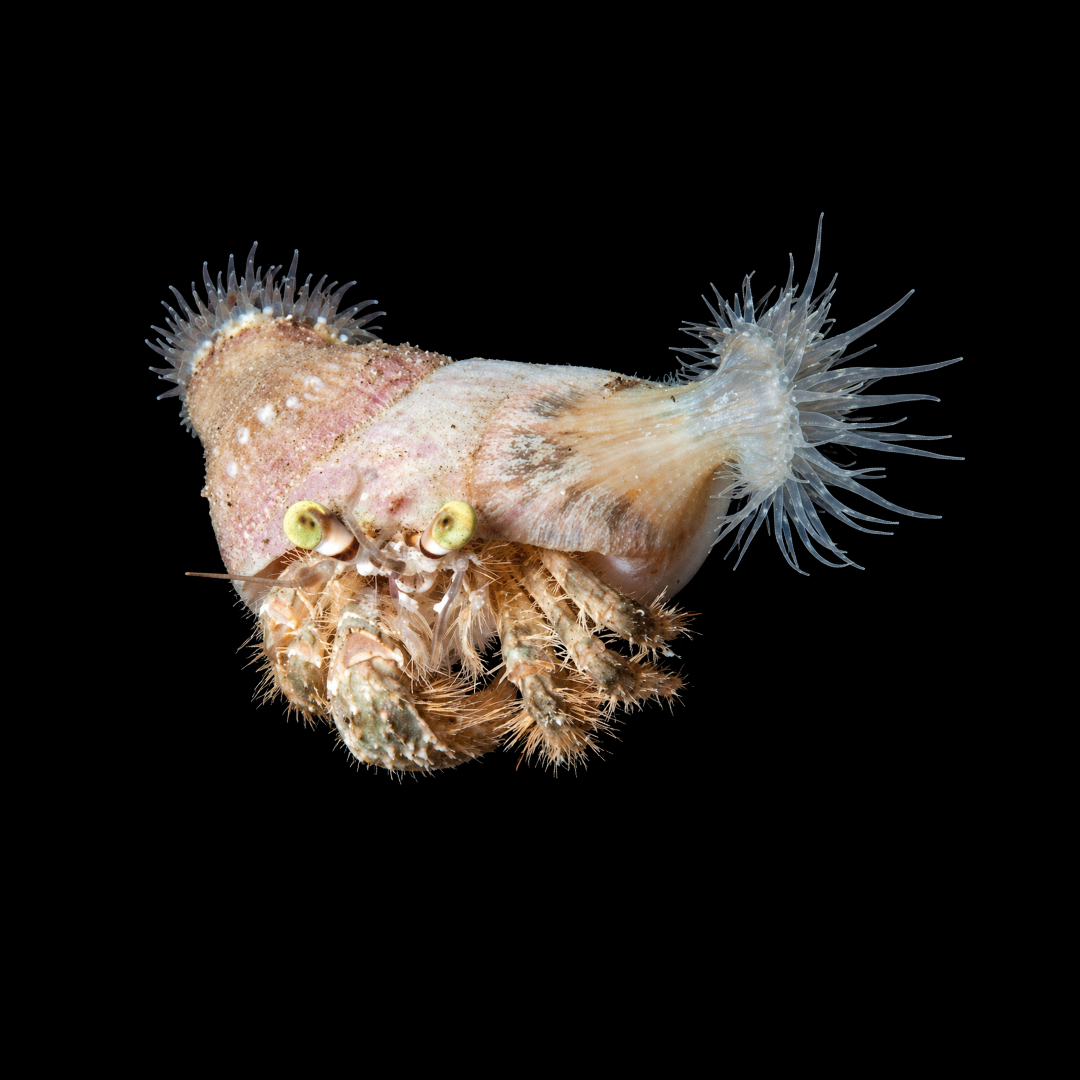
カブトヤドカリは、インド太平洋の暖かい浅海に暮らす海水性のヤドカリです。淡い褐色の体、大きく発達した左のハサミ、縞模様のある眼柄が特徴で、巻貝の空き殻に柔らかい腹部を収めて生活します。主に夜に活動し、海底を歩きながら餌を探します。イソギンチャクとの共生でも知られ、貝殻の外側だけでなく、入り口付近に小さなイソギンチャクが付いていることもあります。飼育では脱皮中の安全と水質の安定に気を配り、小型生体への捕食にも注意が必要です。お掃除役として気軽に加えるより、本種の暮らしを落ち着いて観察できる専用水槽に向いています。 The pale anemone hermit is a marine hermit crab inhabiting warm, shallow waters of the Indo-Pacific. It has a pale brown body, an enlarged left claw, and banded eyestalks, and shelters its soft abdomen inside an empty snail shell. Mainly active at night, it walks over the seabed searching for food. It is also known for its association with sea anemones, which may occupy the shell exterior or its opening. In captivity, it needs stable water conditions and protection during molting, and may prey on smaller animals. A dedicated aquarium provides a suitable setting for observing its life.
基本情報 / Basic Information
| 学名 / Scientific Name | Dardanus deformis (H. Milne Edwards, 1836) |
|---|---|
| 通称 / Common Name | カブトヤドカリ。イソギンチャクを伴う個体は、「イソギンチャク付き」として販売されることもあります。Pale anemone hermit. Individuals carrying anemones may be sold with their accompanying anemones noted in the description. |
| 分類 / Family | 節足動物門・軟甲綱・十脚目・ヤドカリ下目・ヤドカリ科・ヤドカリ属。Phylum Arthropoda; class Malacostraca; order Decapoda; infraorder Anomura; family Diogenidae; genus Dardanus. |
| 英名 / English Name | Pale anemone hermit |
| 分布 / Distribution | アフリカ東岸から東南アジア、日本などに及ぶインド太平洋。日本では紀伊半島、四国、南西諸島などの暖かい沿岸域に分布します。岩礁やサンゴ礁の周辺、礁湖の浅い海底などで見られます。The Indo-Pacific, including eastern Africa, Southeast Asia, and Japan. In Japan it occurs along warm coasts such as the Kii Peninsula, Shikoku, and the Nansei Islands. It inhabits shallow rocky areas, reef-associated habitats, and lagoons. |
| 最大体長 / Max Size | 測定部位が明確な最大体長の情報は十分ではありません。貝殻の長さ、脚を広げた幅、体そのものの長さは異なるため、購入時には殻を含む実際の大きさを確認し、歩き回れる空間を確保してください。Reliable maximum body-size information with a clearly defined measurement is limited. Shell length, leg span, and body length are different measurements. Check the animal’s actual dimensions, including its shell, and allow enough space for movement. |
| 寿命 / Lifespan | 本種の飼育下での寿命について、確実な情報は十分ではありません。購入個体の年齢も分かりにくく、寿命を一律の年数で示すことは困難です。Reliable species-specific information on captive lifespan is limited. Purchased animals are also difficult to age, so a fixed lifespan cannot be stated confidently. |
飼育環境 / Aquarium Environment
| 水槽サイズ / Tank Size | 水槽選びの実用的な目安として、小さめの個体を単独で飼う場合は60cm規格水槽(60×30×36cm、総容量約65L)以上を検討します。大きな個体には90cm規格水槽(90×45×45cm、総容量約180L)以上を用意すると、歩行場所と隠れ家を確保しやすくなります。これらは本種の最低水量を実験で確かめた数値ではありません。殻を含む個体の大きさやろ過能力に合わせて選び、底砂や岩を入れると実際の水量が減ることも考慮してください。As a practical planning guideline, consider a standard Japanese 60 cm aquarium (60 × 30 × 36 cm; approximately 65 L gross volume) or larger for one smaller individual. A standard 90 cm aquarium (90 × 45 × 45 cm; approximately 180 L gross volume) or larger provides more space for a larger animal. These are not experimentally established minimum volumes. Select the aquarium according to the animal’s size, including its shell, and filtration capacity. Substrate and rocks reduce the actual water volume. |
|---|---|
| 水温 / Temperature | 24〜27℃を飼育管理上の目安とし、採集地や入荷時の水温も確認して、急な変化を避けます。この範囲が本種の最適水温として実験的に確立されているわけではありません。高温時は酸素不足にも注意し、夏季は必要に応じて冷却と通気を行ってください。Use 24–27°C as a practical husbandry target, while checking the collection origin and arrival temperature and avoiding abrupt changes. This range is not an experimentally established optimum for the species. Watch for low oxygen during hot weather and provide cooling and aeration as needed. |
| 水質 / Water Quality | 海水飼育用の人工海水などを使用し、一般的な海水水槽の管理値として塩分33〜35‰、pH8.0〜8.4を目安に安定させます。アンモニアと亜硝酸は検出されない状態を維持し、硝酸塩の蓄積を換水で抑えます。生物ろ過が十分に働く状態になってから導入し、残餌は取り除いてください。蒸発で減った分は淡水で補い、換水には温度と塩分を合わせた海水を使います。Use properly prepared marine aquarium saltwater. As general marine aquarium targets, maintain stable salinity of 33–35 ppt and pH of 8.0–8.4. Ammonia and nitrite should remain undetectable, and water changes should control nitrate accumulation. Introduce the animal only after biological filtration is established, and remove leftovers. Replace evaporation losses with freshwater; use temperature- and salinity-matched saltwater for water changes. |
| レイアウト / Layout | 歩きやすい細かめのサンゴ砂と、殻ごと隠れられる岩陰を用意します。岩は押されても崩れないように固定し、開けた歩行場所も残してください。交換用には、現在の殻と同程度から少し大きい、形の異なる清潔な空き貝殻を複数置きます。明るい照明を使う場合も日陰を確保します。水流は底に汚れがたまりにくい程度とし、共生イソギンチャクに強い流れを直接当て続けないようにしてください。Provide fine coral sand, shaded shelters large enough for the occupied shell, and open walking space. Secure rocks against displacement. Offer several clean empty shells of different shapes, ranging from the current size to slightly larger. Ensure shaded areas under bright lighting. Provide enough circulation to limit debris accumulation without directing a strong continuous jet at accompanying anemones. |
| 注意点 / Precautions | オカヤドカリとは異なり、水中で暮らす海水性の種類です。陸地を主な生活場所にする飼い方は適しません。脱皮前後は無理に動かさず、隠れ家で静かに過ごせるようにします。殻から引き抜いたり、付着したイソギンチャクを無理に剥がしたりしないでください。循環ポンプの吸水口には保護を施します。銅を含む魚用治療薬は飼育水槽に入れず、ヨウ素などの添加剤も脱皮を促す目的で自己判断による増量をしないでください。This is an aquatic marine hermit crab, not a land hermit crab, and should not be kept primarily on land. Leave it undisturbed around molting and provide a secure shelter. Never pull it from its shell or forcibly detach its anemones. Protect pump intakes. Do not add copper-containing fish medications to its aquarium or increase iodine and other supplements simply to promote molting. |
餌と給餌 / Feeding
| 餌の種類 / Diet | 動物質の餌も食べる雑食性です。海水魚・甲殻類向けの沈下性配合飼料を基本に、無調味のアサリ、エビ、イカなどを小さく切って組み合わせます。藻類を含む餌も補助的に利用できます。水槽内の残餌やコケだけに頼らず、本種にも直接餌を与えてください。An omnivore that also consumes animal foods. Use sinking formulated marine fish or crustacean foods, supplemented with small pieces of unseasoned clam, shrimp, or squid. Algae-containing foods may also be offered. Feed the crab directly rather than relying solely on aquarium leftovers and algae. |
|---|---|
| 給餌のポイント / Feeding Tips | 夕方から消灯後など、活動している時間に少量を与え、食べ方と食べ残しを見ながら量や頻度を調整します。餌をちぎって食べるため、散らばった残餌も早めに回収してください。給餌場所を決めると清掃しやすくなります。イソギンチャクが付いている場合は、ヤドカリの食べかすだけで十分とは限りません。種類と大きさに応じて、ごく小さな海産の餌を触手にそっと与え、食べないときや吐き戻すときは回収します。Offer small portions while the crab is active, such as in the evening or after lights-out, and adjust quantity and frequency to its appetite and leftovers. Remove scattered fragments promptly. A consistent feeding spot simplifies cleaning. Accompanying anemones may need more than scraps. Depending on their species and size, gently offer tiny marine food pieces to the tentacles and remove food that is not accepted or is expelled. |
性格と混泳 / Temperament and Tank Mates
| 性格 / Temperament | 主に夜行性で、餌を探しながら底を歩き回ります。ハサミを使って餌や周囲の物を扱うため、軽い飾りや固定されていない岩は動かされることがあります。他の生体に対して常に攻撃的とは限りませんが、小さな生体を捕食する可能性があるため、温和な種類として扱うことはできません。Mainly nocturnal, it walks over the substrate searching for food. It uses its claws to manipulate food and nearby objects, and may move lightweight decorations or unsecured rocks. It is not necessarily aggressive at all times, but its potential to prey on smaller animals means it should not be treated as a peaceful community animal. |
|---|---|
| 混泳の相性 / Compatibility | 単独飼育が管理しやすい選択です。小型のエビ、貝、小型ヤドカリ、底で休む小魚との混泳には、捕食や負傷の危険があります。大型のフグやモンガラカワハギ、タコなど、ヤドカリを捕食する生物も不向きです。サンゴは歩行や貝殻との接触で傷つく可能性があり、共生イソギンチャクが触れることもあるため、繊細なサンゴを育てる水槽への導入は勧められません。複数飼育をする場合は、十分な空間、隠れ家、交換用の殻を用意し、争いが起きた際に分けられるようにしてください。Keeping it alone is the most manageable option. Small shrimp, snails, smaller hermit crabs, and fish resting near the bottom may be injured or eaten. Predators such as large puffers, triggerfish, and octopuses are also unsuitable. Corals may be damaged by walking or shell contact, and may come into contact with accompanying anemones, making delicate reef displays a poor choice. If several crabs are kept, provide ample space, shelters, and spare shells, together with a means of separating them if disputes occur. |
病気と対策 / Diseases and Prevention
| かかりやすい病気 / Common Diseases | 本種に多い病気を特定できる情報は限られています。飼育上は、脱皮不全、外傷、水質悪化や酸素不足による衰弱に注意が必要です。脱皮不全は感染症とは限らず、水質、栄養状態、ストレスなどが関係する可能性があります。食欲低下や動きの鈍さだけでは原因を判断できないため、飼育環境と個体の状態を合わせて確認します。Information identifying the most frequent diseases in this species is limited. Husbandry concerns include failed molts, injuries, and weakness caused by poor water quality or low oxygen. Molting problems are not necessarily infectious and may involve water conditions, nutrition, and stress. Reduced appetite or activity alone does not identify the cause, so assess both the aquarium conditions and the animal. |
|---|---|
| 対策と予防 / Prevention | 導入前に摂餌の様子、脚の状態、貝殻の適合、共生イソギンチャクの傷みを確認し、可能であれば別の水槽で状態を観察します。導入時は温度と塩分を合わせ、換水時も急変を避けてください。食欲低下は脱皮前にも起こるため、すぐに薬を使わず、まず水質と動き方を確認します。安定した海水、偏りの少ない餌、安全な隠れ家を整えることが基本です。異常が続く場合は、海水性無脊椎動物に詳しい専門家へ相談してください。Before introduction, inspect feeding behavior, limbs, shell fit, and the condition of accompanying anemones. Observe the animal in a separate aquarium when possible. Match temperature and salinity, and avoid abrupt changes during water changes. Reduced appetite can precede molting, so check water conditions and movement before considering medication. Stable saltwater, a varied diet, and secure shelters are the foundation of prevention. Seek specialist advice if abnormalities persist. |
増やし方(繁殖) / Breeding
| 雌雄の判別 / Sexing | 体の大きさやハサミの大きさだけで、雌雄を確実に見分けることはできません。雌は腹部の腹肢に卵を抱えますが、腹部は通常、貝殻の中に隠れています。抱卵の有無を調べるために殻から引き抜かず、自然に見える範囲で観察してください。Body or claw size alone does not reliably distinguish the sexes. Females carry eggs on abdominal pleopods, but the abdomen is normally concealed within the shell. Do not pull an animal out to check for eggs; observe only what is naturally visible. |
|---|---|
| 繁殖形態 / Reproduction | 卵生で、雌が腹部に抱卵します。孵化後は浮遊生活を送るゾエア幼生となり、脱皮を重ねてグラウコトエと呼ばれる段階へ移行します。その後、海底での生活に移り、小さな貝殻を使う稚ヤドカリへ成長します。孵化直後から親と同じ姿で暮らすわけではなく、浮遊する幼生の時期を経ることが、飼育下で増やす際の難しさにつながります。Oviparous, with females brooding eggs on the abdomen. Hatchlings are planktonic zoeae that molt through successive stages before becoming glaucothoes. They then settle and develop into juvenile hermit crabs using small shells. This planktonic phase, rather than hatching as miniature adults, contributes to the difficulty of breeding them in captivity. |
| 繁殖のポイント / Breeding Tips | 本種の家庭向け繁殖手順について、確立した情報は十分ではありません。幼生は同居生体に食べられたり、ろ過装置に吸い込まれたりするため、育成を試みる場合は別の容器と穏やかな通気を用意します。幼生に適した餌と水質管理、着底時に使える小さな空き貝殻も必要です。ただし、本種に適した餌の種類や給餌量を、成体の飼育方法や他種の例だけから決めることはできません。A well-established home breeding protocol for this species is not sufficiently documented. Larvae may be eaten by tank inhabitants or drawn into filtration, so rearing attempts require a separate vessel with gentle aeration. Suitable larval food, careful water-quality management, and tiny empty shells for settlement are also needed. Appropriate food types and quantities cannot be determined solely from adult husbandry or examples involving other species. |
雑学と豆知識 / Trivia and Fun Facts
| 1. 学名に残る分類の歩み / 1. A Name with a Taxonomic History | カブトヤドカリは1836年に記載され、当初はPagurus deformisという学名で扱われました。現在はDardanus属に分類され、学名に続く命名者と年は括弧に入っています。この括弧は、最初に記載された属と現在の属が異なることを表します。学名に添えられた小さな記号にも、仲間同士を比較しながら分類を見直してきた歴史が残っています。Described in 1836 as Pagurus deformis, this species is now placed in Dardanus. The parentheses around its author and year indicate that its current genus differs from the original one. This small detail preserves part of its taxonomic history. |
|---|---|
| 2. 貝殻の外側と入り口にいる同居者 / 2. Companions Outside and at the Entrance | 殻の外側にはCalliactis属のイソギンチャクが、入り口付近にはモンバンイソギンチャクと呼ばれるVerrillactis属の小さなイソギンチャクが見られます。イソギンチャクの刺胞がヤドカリの防御に役立ち、イソギンチャクは移動や餌の破片から利益を得る関係です。ただし、入り口のイソギンチャクがどの程度防御に役立つかは、この配置だけで断定できません。同居者の有無や組み合わせにも個体差があります。Calliactis anemones may occupy the shell exterior, while small Verrillactis occur near its opening. Anemone stinging cells can aid defense, while transport and food fragments benefit the anemones. The defensive effectiveness of the entrance anemones cannot be established from placement alone. Associations vary among individuals. |
| 3. 引っ越しには同居者も連れていく / 3. Moving with Its Companions | 飼育下の観察では、カブトヤドカリがモンバンイソギンチャクを脚やハサミで繰り返し触れてから取り外し、新しい殻の入り口付近へ移す行動が確認されています。つまり、イソギンチャクの付着場所は偶然だけで決まるのではなく、ヤドカリの行動も関わっていると考えられます。ただし、この結果だけで人間のような計画や記憶を持つと断定することはできません。Captive observations documented repeated touching followed by detachment and transfer of Verrillactis to the new shell opening. This suggests that placement is influenced by the crab rather than chance alone. It does not, by itself, establish human-like planning or memory. |
| 4. 大きな左のハサミと柔らかい腹部 / 4. A Large Left Claw and a Soft Abdomen | 大きなハサミとは対照的に、殻の中の腹部は柔らかく、身を守るために貝殻が欠かせません。左のハサミは餌を扱うほか、殻に引っ込んだときに入り口を守る役割も果たします。一方、貝殻は体の一部ではないため、脱皮しても大きくなりません。体が成長して住まいが手狭になったときに選べるよう、交換用の殻を用意しておくことが大切です。Its large claw contrasts with the soft abdomen protected inside the shell. The left claw handles food and helps guard the entrance when the crab retreats. The shell is not part of its body and does not grow during molting, so replacement shells should be available as the crab grows. |
まとめ / Conclusion
カブトヤドカリは、貝殻を背負って夜の水槽を歩く姿や、イソギンチャクとの関わりが魅力の生き物です。餌を探す動きや貝殻を選ぶ様子を見守ると、見た目だけでは分からない暮らしの一面に触れられます。 The pale anemone hermit is appealing for its nighttime movements within a borrowed shell and its association with sea anemones. Watching it search for food and choose shells reveals aspects of its life that appearance alone cannot convey.
安定した海水、歩き回れる空間、安全な隠れ家、体に合う交換用の貝殻を整え、小さな生体との同居は慎重に考えてください。食欲や脱皮前後の変化に気を配り、その暮らしに合った環境を保つことが、健やかな姿を見守る支えになります。 Provide stable saltwater, room to move, secure shelters, and suitable replacement shells, and consider smaller tank mates carefully. Attention to appetite and molting, together with an environment suited to its needs, supports its well-being.

気になる道具や飼い方を見つけてみませんか?
 アイのアクアグッズ案内エーハイムはおもちゃから始まった? 小さな噴水から水槽へ、アイとコタロウの探訪道具の特徴や使い方、選ぶときのポイントをアイが紹介します。記事はコチラ →
 アイのアクアグッズ案内水草の肥料の選び方|底床用・液肥・メネデールの使い分け道具の特徴や使い方、選ぶときのポイントをアイが紹介します。記事はコチラ →
 アイのアクアグッズ案内そのごはん、泳いでる! 卵から始めるブラインシュリンプの孵化と道具選び道具の特徴や使い方、選ぶときのポイントをアイが紹介します。記事はコチラ →
 アイのアクアグッズ案内ショップで見かけるカラフルなバケツ。いったい何が入ってる?道具の特徴や使い方、選ぶときのポイントをアイが紹介します。記事はコチラ →
さまざまな飼育テーマをご紹介。リンク先の記事には広告・商品紹介が含まれます。
案内・紹介記事一覧へ →分布マップ
カブトヤドカリ(Dardanus deformis)は、アフリカ東岸から東南アジア、日本などに及ぶインド太平洋に分布します。日本では紀伊半島、四国、南西諸島などの暖かい沿岸域で見られます。
地図は分布地域を広く見渡すための概略表示です。表示範囲全体に生息することを示すものではありません。マーカーは表示上の代表地点(北緯15度・東経120度)であり、実際の採集地点や確認された生息地点を示すものではありません。Google Earthのリンクも同じ代表地点を開きます。
参考文献
-
海洋研究開発機構(JAMSTEC).BISMaL「Dardanus deformis カブトヤドカリ」.
学名、和名、分類体系、旧学名の確認。
BISMaLで読む -
Thomas, M. M.(1989).On a collection of hermitcrabs from the Indian waters.Journal of the Marine Biological Association of India, 31(1–2), 59–79.
本種の形態、インド太平洋の分布、浅海での採集記録。
中央海洋水産研究所の公開論文を読む(PDF) -
Yoshikawa, A., Goto, R. & Asakura, A.(2018).Transfer of the gatekeeper sea anemone Verrillactis sp. (Cnidaria: Actiniaria: Sagartiidae) between shells by the host hermit crab Dardanus deformis (H. Milne Edwards, 1836) (Decapoda: Anomura: Diogenidae).Crustacean Research, 47, 55–64.
和歌山県の潮間帯岩礁での採集記録、イソギンチャクとの共生、貝殻交換時の移植行動。
論文を読む(J-STAGE) -
Litulo, C.(2005).Population structure and reproduction of the hermit crab Dardanus deformis (Anomura: Diogenidae) in the Indian Ocean.Journal of the Marine Biological Association of the United Kingdom, 85(4), 883–887.
モザンビークのマプート湾における本種の個体群、抱卵、繁殖活動。
論文情報と要旨を読む(Cambridge University Press) -
千葉県立中央博物館分館 海の博物館.「ヤドカリの世界:これがヤドカリだ!」.
ヤドカリ類の体の構造、カブトヤドカリの抱卵例、ゾエアからグラウコトエ・稚ヤドカリへの成長、脱皮と貝殻交換。
博物館の解説を読む -
Caskey, P..4-H Marine Aquarium Project Book: Youth Project Guide to Starting and Maintaining a Saltwater Aquarium System.University of Florida, IFAS Extension, 4H433.
海水水槽一般の温度・塩分管理、生物ろ過、水質測定、換水、蒸発分の淡水補充。
フロリダ大学の飼育資料を読む -
Yanong, R. P. E..Use of Copper in Marine Aquaculture and Aquarium Systems.University of Florida, IFAS Extension, FA165.
魚の治療に用いる銅の無脊椎動物への毒性と、薬剤使用時の注意。
フロリダ大学の解説を読む




コメント