

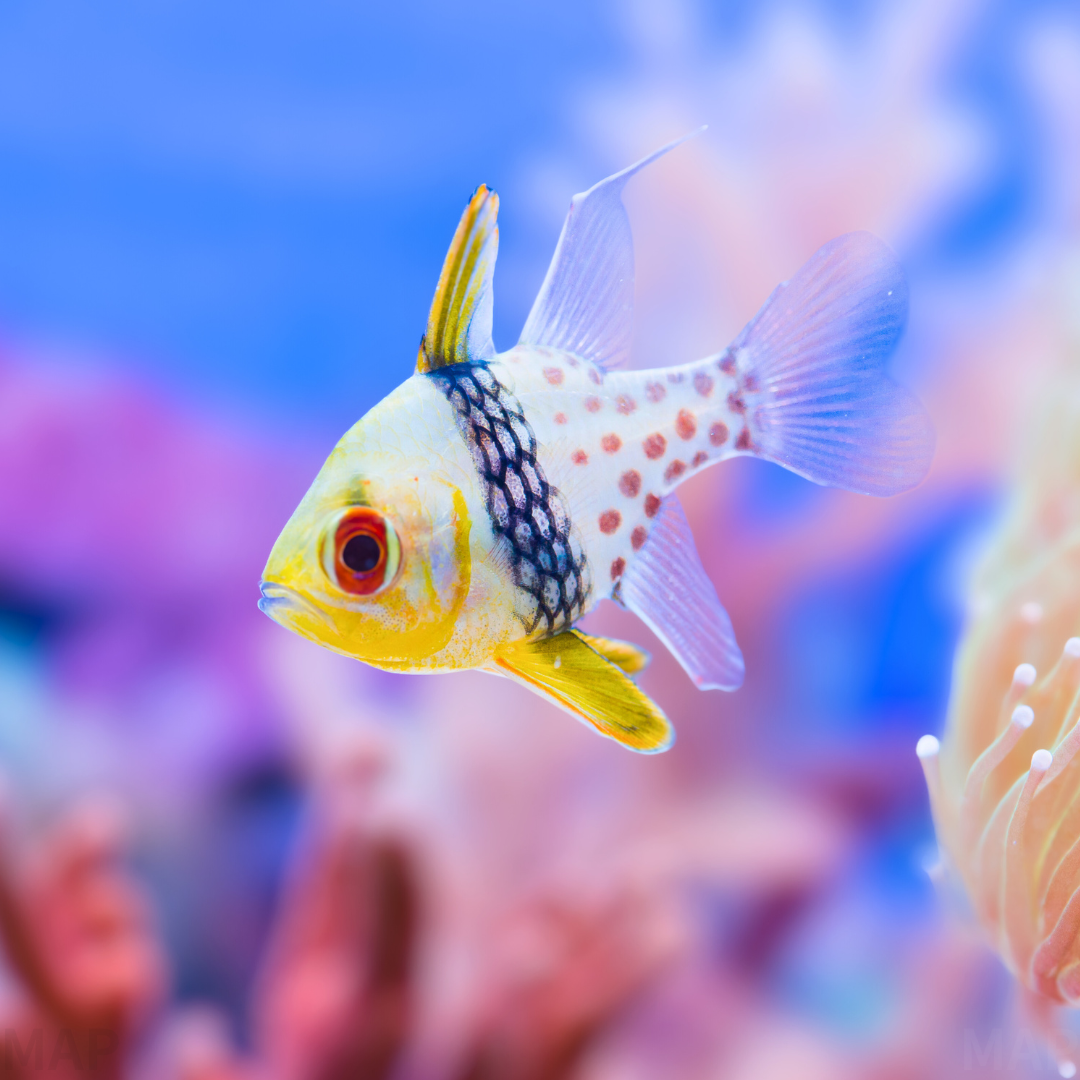
解説 / Description
マンジュウイシモチは、黄色みを帯びた頭、体の中央を走る黒褐色の帯、後半部に散りばめられた赤褐色の水玉模様が印象的な小型海水魚です。丸みのある体と大きな目が愛らしく、岩組みの近くでふわりと浮かぶ姿には、穏やかな魅力があります。日本では「イチゴパンツ」という愛称で呼ばれることもあります。 The pajama cardinalfish is a small marine fish distinguished by a yellowish head, a dark brown band across the middle of its body, and reddish-brown spots over its rear half. Its rounded body and large eyes give it an endearing appearance, while its gentle hovering near rockwork brings a quiet charm to an aquarium. In Japan, it is sometimes affectionately nicknamed “strawberry underpants.”
自然界では波の穏やかなサンゴ礁や礁湖に暮らし、日中は枝状サンゴなどのそばに集まり、夕暮れから夜にかけて小さな甲殻類を捕食します。水槽では人工飼料に慣れる個体も多く、比較的飼育しやすい種類です。ただし、落ち着ける隠れ家と、餌を確実に食べられる混泳環境を整える必要があります。雄が卵を口の中で守る口内保育も、この魚の興味深い習性の一つです。 In the wild, it inhabits sheltered coral reefs and lagoons, gathering near branching corals by day and feeding on small crustaceans from dusk into the night. Many individuals accept prepared foods in captivity, making the species relatively approachable to keep. Sheltered resting places and tank mates that allow it to feed comfortably are essential. Another fascinating feature is paternal mouthbrooding, in which the male protects the eggs inside his mouth.
基本情報 / Basic Information
| 学名 / Scientific Name | Sphaeramia nematoptera (Bleeker, 1856) |
|---|---|
| 通称 / Common Name | マンジュウイシモチ。愛称としてイチゴパンツ。Pajama cardinalfish; sometimes nicknamed “strawberry underpants” in Japan. |
| 分類 / Family | 条鰭綱・テンジクダイ科・テンジクダイ亜科・マンジュウイシモチ属。目の扱いは分類体系によって異なり、従来のスズキ目に含める体系と、クルトゥス目に置く体系があります。Class Actinopterygii; family Apogonidae; subfamily Apogoninae; genus Sphaeramia. Depending on the classification system, cardinalfishes are placed in either the traditional Perciformes or Kurtiformes. |
| 英名 / English Name | Pajama cardinalfish / Pyjama cardinalfish |
| 分布 / Distribution | 東部インド洋から西太平洋。マレーシアやインドネシアのジャワ島周辺からカロリン諸島、フィジーまで分布し、北は日本の八重山諸島、南はオーストラリア北東部やニューカレドニアに及びます。主に浅く、波の穏やかな内湾や礁湖に生息します。Eastern Indian Ocean and western Pacific, from Malaysia and Java in Indonesia eastward to the Caroline Islands and Fiji, north to Japan’s Yaeyama Islands, and south to northeastern Australia and New Caledonia. It mainly inhabits shallow, sheltered bays and lagoons. |
| 最大体長 / Max Size | 全長約8.5〜9cm。水槽は成魚の大きさを見込んで用意します。Approximately 8.5–9 cm total length. Choose aquarium space with its adult size in mind. |
| 寿命 / Lifespan | 飼育下では数年にわたる飼育が可能です。平均寿命を明確に示せる情報は十分ではなく、導入時の年齢や健康状態、飼育環境によって変わります。It can live for several years in captivity. A reliable average lifespan is not well established, and longevity varies with age at purchase, health, and aquarium conditions. |
飼育環境 / Aquarium Environment
| 水槽サイズ / Tank Size | 単独または相性のよいペアでは、60cm規格水槽(幅60×奥行30×高さ36cm、総容量約65L)以上を目安にします。複数匹や他魚との混泳には、90cm規格水槽(幅90×奥行45×高さ45cm、総容量約180L)以上を選ぶと、隠れ家と遊泳空間を確保しやすくなります。これらは飼育計画の目安であり、水槽の大きさだけで適切な匹数が決まるわけではありません。実際の水量は底砂や岩、注水する高さによって減るため、ろ過能力や個体同士の相性も考慮します。For a single fish or a compatible pair, use a standard 60 cm aquarium measuring 60 × 30 × 36 cm, with a gross capacity of about 65 L, as a planning guide. For several individuals or a mixed community, a standard 90 cm aquarium measuring 90 × 45 × 45 cm, about 180 L gross, provides more room for shelter and swimming. These are practical guidelines rather than fixed stocking rules. Actual water volume is lower after adding substrate and rockwork, and filtration capacity and compatibility also matter. |
|---|---|
| 水温 / Temperature | 24〜26℃を目安に、安定して維持します。季節に応じてヒーターや冷却機器を使用し、急な温度変化を避けます。 Maintain a stable temperature around 24–26°C. Use heating or cooling equipment as needed and avoid sudden changes. |
| 水質 / Water Quality | 十分にろ過が立ち上がった海水を用い、pH8.0〜8.4、塩分33〜35‰程度を目安にします。比重では25℃付近でおよそ1.024〜1.026に相当しますが、測定器の校正条件を確認してください。アンモニアと亜硝酸は検出されない状態を保ち、硝酸塩の過度な蓄積を避けます。サンゴを飼育している場合は、その種類に適した水質も考慮します。蒸発した分は淡水で補い、塩分の変動を抑えます。Use a fully cycled marine aquarium, aiming for pH 8.0–8.4 and salinity around 33–35 ppt. This corresponds roughly to a specific gravity of 1.024–1.026 near 25°C, subject to the instrument’s calibration. Ammonia and nitrite should remain undetectable, and excessive nitrate accumulation should be avoided. If corals are present, also consider their water-quality requirements. Replace evaporated water with freshwater to keep salinity stable. |
| レイアウト / Layout | ライブロックや海水用の人工岩で、アーチや奥行きのある隙間、陰になる場所を設けます。岩組みのそばには浮かんで過ごせる空間も残し、複数匹を飼育する場合は隠れ家を離して配置します。強い水流が常に当たる場所を避け、穏やかな流れの中で休める場所を用意してください。生きた枝状サンゴは飼育の必須条件ではありません。Arrange live rock or marine-safe artificial rock to provide arches, deep crevices, and shaded areas. Leave open hovering space beside the rockwork, and distribute shelters across the aquarium when keeping several fish. Provide resting areas with gentle flow rather than continuous strong currents. Live branching corals are not essential. |
| 注意点 / Precautions | 導入直後は照明を控えめにし、水温と塩分を確認して慎重に水合わせを行います。新しい魚は可能なら別水槽で健康状態を観察してから本水槽へ移してください。日中に動きが少ないこと自体は異常とは限りませんが、呼吸の速さ、食欲、体の痩せ具合、他魚に追われていないかを合わせて確認します。飛び出しに備えてふたも用意します。Keep lighting subdued during introduction and acclimate carefully after checking temperature and salinity. Where possible, observe new fish in a separate quarantine aquarium before adding them to the display. Limited daytime movement is not necessarily abnormal, but monitor breathing, appetite, body condition, and harassment. Use a cover to reduce the risk of jumping. |
餌と給餌 / Feeding
| 餌の種類 / Diet | 肉食性です。小型海水魚用の人工飼料を基本に、冷凍イサザアミ、冷凍ブラインシュリンプ、細かくしたエビなどを組み合わせます。野生ではカイアシ類などの小さな甲殻類を捕食します。人工飼料を食べない個体には冷凍餌などを試し、食べるようになってから、口に入る大きさの人工飼料へ徐々に慣らします。A carnivorous species. Offer appropriately sized prepared marine fish foods, supplemented with frozen mysid shrimp, brine shrimp, or finely chopped shrimp. Wild fish feed on small crustaceans such as copepods. Individuals that reject prepared foods may first accept frozen foods and can then be gradually accustomed to suitably sized prepared diets. |
|---|---|
| 給餌のポイント / Feeding Tips | 通常は1日1〜2回、短時間で食べ切れる量を与えます。導入初期は夕方や照明を弱めた時間帯に試すと、食べやすいことがあります。泳ぎの速い魚に餌を奪われる場合は、複数の場所に分けて給餌し、本種が実際に食べているかを確認してください。食べ残しは取り除きます。口内保育中の雄は通常、摂餌を控えるため、食欲だけでなく口の膨らみや行動も観察します。Feed modest portions once or twice daily, offering only what can be consumed promptly. Newly introduced fish may feed more readily at dusk or under subdued lighting. If faster fish intercept food, feed at several locations and confirm that the cardinalfish actually eats. Remove leftovers. A mouthbrooding male typically refrains from feeding, so assess the shape of its mouth and its behavior as well as appetite. |
性格と混泳 / Temperament and Tank Mates
| 性格 / Temperament | おおむね温和で、岩組みの近くにとどまって過ごす時間が長い魚です。ただし、同種間では順位関係やペア形成に伴う追い払いが起こることがあり、どの組み合わせでも仲よく暮らせるとは限りません。群れは常に同じ方向へ泳ぐというより、隠れ家の周囲にゆるく集まる姿が中心です。Generally peaceful, it spends much of its time hovering near shelter. However, dominance relationships and pair formation can lead to chasing among conspecifics, and compatibility is not guaranteed. Its groups tend to gather loosely around shelter rather than constantly swim in tightly coordinated schools. |
|---|---|
| 混泳の相性 / Compatibility | 温和な小型ハゼ類などが候補になります。カクレクマノミとも混泳できる場合がありますが、成熟したペアは縄張りを守ることがあるため、追い払われていないか観察します。攻撃的なスズメダイ類、餌を独占する魚、本種を飲み込める大型魚は避けます。通常はサンゴを食害しませんが、口に入る小型エビや稚エビは捕食される可能性があります。クリーナーシュリンプでも、大きさによっては注意が必要です。同種を3匹にすると、ペア以外の1匹が追われる場合があります。ただし、4匹以上なら安全という保証もありません。相性のよいペアで飼育するか、群れであれば十分な広さと複数の隠れ家を確保し、追われる個体を隔離できるようにします。Peaceful small gobies can be suitable companions. Ocellaris clownfish may coexist with it, although mature pairs can defend territories, so monitor for harassment. Avoid aggressive damselfishes, food-dominating tank mates, and predators large enough to swallow it. The species generally leaves corals unharmed, but tiny shrimp and shrimp juveniles may be eaten; size also matters with cleaner shrimp. In a trio, a pair may exclude the remaining fish, but keeping four or more does not guarantee harmony. Keep a compatible pair, or provide a spacious group aquarium with several shelters and a way to separate bullied fish. |
病気と対策 / Diseases and Prevention
| かかりやすい病気 / Common Diseases | 他の海水魚と同様に、海水性白点病や、いわゆるウーディニウム病などの外部寄生虫感染に注意します。白い点、体をこすりつける動作、速い呼吸、食欲低下が異常に気づく手がかりになりますが、症状だけで病気を特定することはできません。エラに寄生している場合は、体表に明瞭な点が見えないこともあります。輸送による傷に伴う細菌感染や、餌不足による衰弱にも注意が必要です。白点病は寄生虫の感染によって起こる病気で、水温の変化だけが原因ではありません。As with other marine fish, watch for marine white spot disease, marine velvet, and other external parasite infections. White spots, rubbing, rapid breathing, and reduced appetite can indicate a problem, but symptoms alone do not establish a diagnosis. Gill infections may occur without obvious spots on the body. Transport injuries can also lead to bacterial infection, while inadequate feeding can cause deterioration. White spot disease is caused by a parasite, not by temperature changes alone. |
|---|---|
| 対策と予防 / Prevention | 新規導入魚の隔離観察で病気の持ち込みを減らし、水温と塩分の安定、十分な酸素供給、適切な給餌によって健康を保ちます。異常があれば水質も測定し、原因を確認したうえで治療水槽で対処してください。銅系薬剤はサンゴ、エビ、貝に有害なので、これらのいる本水槽へ投入してはいけません。銅治療には底砂やライブロックのない専用水槽を使い、製品に対応した試薬で濃度を測定します。有効濃度と治療期間は銅の化学形態や製品によって異なるため、別の製品の数値を流用せず、使用説明に従ってください。白点が見えなくなっても寄生虫が残っている場合があり、治療した魚を感染の残る本水槽へ戻すと再感染する可能性があります。魚の治療と本水槽の管理を合わせて計画し、判断に迷う場合は魚病に詳しい獣医師などへ相談します。Quarantine new arrivals to reduce the risk of introducing disease, and support health with stable temperature and salinity, good oxygenation, and adequate feeding. If symptoms appear, also check water quality and identify the cause before treating in a separate aquarium. Copper medications are harmful to corals, shrimp, and snails and must not be added to a display containing them. Use a dedicated treatment aquarium without substrate or live rock and a test kit compatible with the medication. Effective concentrations and treatment durations depend on copper formulation and product, so do not transfer dosing values between products; follow the specific instructions. Parasites may remain after visible spots disappear, and returning treated fish to an infected display can cause reinfection. Plan both fish treatment and display management, seeking advice from a veterinarian experienced with fish when needed. |
増やし方(繁殖) / Breeding
| 雌雄の判別 / Sexing | 通常の外見だけで確実に判別するのは困難です。顎の形や体高、鰭の長さを手がかりにする方法もありますが、個体差があり、単独の特徴を決め手にはできません。産卵を観察し、卵を産む個体を雌、受精卵を口に収めて保育する個体を雄と確認する方法が確実です。Reliable sexing from ordinary external appearance is difficult. Jaw shape, body depth, and fin length may offer clues, but individual variation makes these unreliable on their own. Observing spawning provides the clearest confirmation: the female lays the eggs, and the male takes the fertilized clutch into his mouth. |
|---|---|
| 繁殖形態 / Reproduction | 卵生で、雄による口内保育を行います。雌が産んだ卵塊を受精後に雄が口へ収め、孵化まで守ります。孵化までの日数は水温などによって変わり、およそ8〜10日が目安です。孵化した小さな仔魚は雄の口から放出され、浮遊生活を経て、成長とともにサンゴ礁で暮らすようになります。プテラポゴン・カウデルニィも雄が口内保育をしますが、口から出る時点で仔魚がより大きく発育しているため、育成に必要な餌や管理は異なります。An egg-laying paternal mouthbrooder. After fertilization, the male collects the egg mass into his mouth and guards it until hatching. Incubation varies with temperature and other conditions, with approximately 8–10 days serving as a guide. Small larvae are released from the male’s mouth and pass through a pelagic stage before settling into reef life. The Banggai cardinalfish also shows paternal mouthbrooding, but its young are larger and more developed when released, so feeding and rearing requirements differ. |
| 繁殖のポイント / Breeding Tips | 相性のよい成熟ペアを、安定した水質と十分な栄養で維持します。口内保育中の雄を追い回したり、口を無理に開けたりしないでください。仔魚は本水槽では吸水口に吸い込まれたり、他魚に食べられたりするため、放出に合わせた回収と専用育成水槽が必要です。初期には口の大きさに合う海産ワムシなどを安定して供給し、栄養強化した餌を利用します。成長と捕食状況を確かめながら、孵化直後のブラインシュリンプ、さらに細かな人工飼料へ段階的に移行します。弱い通気、吸い込みを防ぐ設備、丁寧な残餌除去と換水が重要です。親魚を産卵させるだけでなく、仔魚を育て上げるには、生き餌の培養と細かな管理が求められます。Maintain a compatible mature pair with stable water quality and a nutritious diet. Avoid chasing a mouthbrooding male or forcing its mouth open. Larvae in a display aquarium may be drawn into intakes or eaten, so collect them around release and use a dedicated rearing aquarium. Provide a dependable supply of suitably sized marine rotifers or other appropriate starter prey, using nutritional enrichment. Introduce newly hatched brine shrimp and then fine prepared foods gradually as growth and feeding ability permit. Gentle aeration, protected intakes, careful waste removal, and water changes are essential. Raising larvae successfully requires live-food culture and detailed management beyond obtaining a spawning. |
雑学と豆知識 / Trivia and Fun Facts
| 1. 学名に残された、丸い体と糸のような鰭 / 1. A Rounded Body and Threadlike Fins in Its Name | マンジュウイシモチは、1856年に魚類学者ピーター・ブリーカーによって記載され、当初はアポゴン属に分類されていました。その後、1930年にファウラーとビーンが設立したマンジュウイシモチ属に移され、現在の学名になりました。属名のSphaeramiaにはギリシャ語で球を表す「sphaira」が含まれ、種小名のnematopteraは「糸」と「鰭」に由来します。丸みのある体と、糸のように伸びる背鰭の一部を思い浮かべると、難しく見える学名にも姿とのつながりが見えてきます。学名に添えられた命名者と年が括弧で囲まれているのは、記載時とは異なる属に分類されていることを示しています。Pieter Bleeker described this fish in 1856, originally placing it in Apogon. It was later assigned to Sphaeramia, a genus established by Fowler and Bean in 1930. The genus name incorporates the Greek “sphaira,” meaning sphere, while nematoptera combines words for thread and fin. Its rounded body and elongated dorsal-fin elements help connect the scientific name with its appearance. Parentheses around the author and year indicate that the species is now placed in a different genus from the one used in its original description. |
|---|---|
| 2. 饅頭、パジャマ、イチゴパンツ / 2. A Bun, Pajamas, and Strawberry Underpants | 一匹の魚に、食べ物と衣服を連想させる名前が集まっているのも面白いところです。「マンジュウ」は丸みのある体を饅頭に見立てた呼び名とされ、英名の「パジャマ」は体の前後で異なる色柄や水玉模様にちなんでいます。日本の愛称「イチゴパンツ」も、後半部の赤い斑点を捉えた親しみやすい表現です。一方、「イシモチ」は大きな耳石を持つことに由来するとされます。耳石は内耳にある硬い構造で、平衡感覚や聴覚に関わります。かわいらしい呼び名には、見た目だけでなく、魚の体の仕組みを捉えた観察も隠れています。This fish has inspired names linked to both food and clothing. The “manju” part of its Japanese name is associated with its bun-like rounded body, while “pajama cardinalfish” refers to its contrasting colors and spotted pattern. The affectionate nickname “strawberry underpants” likewise evokes the reddish spots on its rear half. The “ishimochi” portion is associated with prominent otoliths, hard structures in the inner ear involved in balance and hearing. Its playful names reflect observations of both appearance and anatomy. |
| 3. 水玉模様の魚が、夕暮れに動き出す理由 / 3. Why the Spotted Fish Becomes Active at Dusk | 日中に岩のそばで静かに浮かんでいると、あまり動かない魚に見えるかもしれません。しかし自然界では、夕暮れから夜にかけて小さな甲殻類を探して食べています。大きな目は、こうした薄暗い環境での活動に適した特徴と考えられます。特徴的な体色も目を引きますが、水玉模様や黒い帯がどのように身を守る役割を果たしているかは、見た目だけから断定できません。水槽では照明を少し落とした時間に観察すると、昼間とは違う動きに出会えることがあります。A fish quietly hovering beside rockwork by day may seem inactive, yet in nature it searches for small crustaceans from dusk into the night. Its large eyes are consistent with activity in dim light. Its distinctive colors are also striking, but the protective function of its spots and dark band cannot be established from appearance alone. Watching under subdued aquarium lighting may reveal behavior that is less apparent during the day. |
| 4. 仲よく寄り添うペアにも、複雑な繁殖の関係がある / 4. Pair Bonds and a More Complex Breeding System | マンジュウイシモチは群れの中で継続的なペア関係を形成しますが、繁殖する相手がそのペアに限られるわけではありません。パプアニューギニアのキンベ湾で行われた遺伝的な親子関係の研究では、雄64匹が保育していた105の卵塊が調べられました。その約3割でペア相手以外の雌による産卵が確認され、約1割には複数の雌の卵が含まれていました。つまり、ある雄と雌がふだんペアとして暮らしていても、雄が守る卵の母親が、その雌だけとは限らないのです。この結果は、寄り添う姿から分かるペア関係と、実際の繁殖相手を分けて考える必要があることを示しています。ただし、こうした繁殖が起こる理由を、近親交配の回避や遺伝的多様性の維持と断定することはできません。Pajama cardinalfish maintain lasting pair relationships within groups, but reproduction is not necessarily restricted to those partners. A genetic parentage study in Kimbe Bay, Papua New Guinea, examined 105 broods carried by 64 males. About three in ten involved eggs from a female other than the male’s social partner, and roughly one in ten contained eggs from multiple females. In other words, even when a male and female live as a pair, the eggs he guards are not necessarily all hers. The finding distinguishes social pair relationships from actual reproductive partnerships. It does not, however, establish avoidance of inbreeding or maintenance of genetic diversity as the reason for this behavior. |
| 5. 口から出たあとに続く、仔魚の旅 / 5. The Larval Journey After Mouthbrooding | 雄の口は卵を守る場所ですが、仔魚がサンゴ礁で暮らせる大きさになるまで育つ場所ではありません。孵化して放出された仔魚は、しばらく水中で浮遊生活を送り、小さな餌を食べながら成長したのち、サンゴ礁に定着します。この段階があるため、家庭の水槽で産卵を見つけても、そのまま稚魚が育つとは限りません。近い仲間のプテラポゴン・カウデルニィでは、雄の口からより大きく発育した仔魚が放出され、すぐに物陰へ集まります。同じ「口内保育」でも、放出される仔魚の発育段階が違えば、必要な餌や育て方も変わります。繁殖に挑戦するときは、親魚の習性と同じくらい、口を離れたあとの暮らしを知ることが大切です。The male’s mouth protects the eggs, but it does not hold the young until they are ready to settle on the reef. Once released, the larvae spend a period living in the water column, feeding on tiny prey and growing before settlement. Consequently, spawning in a home aquarium does not mean that young will survive without specialized care. The related Banggai cardinalfish releases larger, more developed young that quickly gather around shelter. Although both species are mouthbrooders, differences in development at release lead to different feeding and rearing needs. Successful breeding depends on understanding life after release as carefully as the parents’ behavior. |
| 6. 身近な海水魚と、人工繁殖を選ぶ楽しみ / 6. A Familiar Aquarium Fish and the Value of Captive Breeding | 日本では海水魚を扱う店で見かける種類で、野生採集個体に加えて人工繁殖個体も販売されています。価格や入荷状況は店、体格、供給元によって変わるため、購入時には産地や人工繁殖かどうか、どの餌を食べているかを確かめると選びやすくなります。人工繁殖個体は水槽での給餌に慣れている場合がありますが、病気を持ち込まない保証があるわけではなく、導入時の健康観察は同じように必要です。人工繁殖された魚を選ぶことは、野生からの採集への依存を減らす選択にもつながります。大切に育てながら口内保育まで観察できれば、水槽の中でこの魚の暮らしをより深く知る楽しみが広がります。This species is familiar in Japan’s marine aquarium trade, where both wild-caught and captive-bred individuals are sold. Prices and availability vary with retailer, size, and supplier, so ask about origin, breeding status, and accepted foods. Captive-bred fish may already be accustomed to aquarium feeding, but they are not guaranteed to be disease-free and still require health observation on arrival. Choosing captive-bred fish can help reduce dependence on wild collection. With patient care, observing mouthbrooding can bring a deeper appreciation of the fish’s life within an aquarium. |
まとめ / Conclusion
マンジュウイシモチは、愛らしい水玉模様とゆったりした泳ぎで、海水水槽に穏やかな存在感を添える魚です。安定した海水、落ち着ける岩陰、確実に食べられる餌を用意し、混泳相手との関係を見守ることが、健やかな暮らしを支えます。 With its charming spots and unhurried hovering, the pajama cardinalfish brings a gentle presence to a marine aquarium. Stable seawater, sheltered rockwork, dependable feeding, and attention to its relationships with tank mates support a healthy life.
昼間に静かに浮かぶ姿、夕暮れに餌を追う動き、卵を守る雄のふくらんだ口には、それぞれ異なる魅力があります。一匹ずつの食欲や居場所に目を配りながら過ごす時間は、この小さな魚の豊かな暮らしを知る楽しみにつながります。 Quiet hovering by day, feeding activity at dusk, and the swollen mouth of a male guarding eggs each reveal a different aspect of its charm. Paying attention to each fish’s appetite and resting places offers an enjoyable way to understand the rich life of this small reef fish.

気になる道具や飼い方を見つけてみませんか?
 アイのアクアグッズ案内ダニオの仲間に合わせる飼育用品|ゼブラダニオから超小型種まで水槽・ろ過・餌を選ぶ道具の特徴や使い方、選ぶときのポイントをアイが紹介します。記事はコチラ →
 アイのアクアグッズ案内水槽用ヒーターの選び方|固定式・温度調節式と、水量に合うW数の考え方水槽の魚は冬に寒くない? アイとコタロウが水温計から固定式・温度調節式・分離式ヒーターまで比較。水量と室温に合うW数、設置場所、水換えや交換の注意点を、国内メーカーの商品とともに紹介します。記事はコチラ →
さまざまな飼育テーマをご紹介。リンク先の記事には広告・商品紹介が含まれます。
案内・紹介記事一覧へ →分布マップ
マンジュウイシモチ(Sphaeramia nematoptera)は、東部インド洋から西太平洋に分布します。マレーシアやインドネシア周辺からカロリン諸島、フィジーまで広がり、北は日本の八重山諸島、南はオーストラリア北東部やニューカレドニアに及びます。
地図は分布地域の位置関係を示す概略表示です。表示範囲全体に生息することや、正確な分布境界を示すものではありません。マーカーは地図表示用に設定した代表地点(北緯0度・東経140度)であり、実際の採集地点や生息確認地点ではありません。
参考文献
-
FishBase:Sphaeramia nematoptera(マンジュウイシモチ)
魚類の学術データベース。学名、分類、分布、最大体長、生息環境、食性の参照資料。
-
Bray, D. J.(2019)Pajama Cardinalfish, Sphaeramia nematoptera. Fishes of Australia.
Museums Victoriaが公開する魚類解説。形態、分布、枝状サンゴ周辺の生息環境、雄の口内保育、原記載と学名の由来の参照資料。
-
Mabuchi, K., Fraser, T. H., Song, H., Azuma, Y. & Nishida, M.(2014)Revision of the systematics of the cardinalfishes (Percomorpha: Apogonidae) based on molecular analyses and comparative reevaluation of morphological characters.
Zootaxa, 3846(2), 151–203。分子解析と形態の比較に基づくテンジクダイ科の分類研究。科内の分類とマンジュウイシモチ属の位置づけの参照資料。
-
Rueger, T., Harrison, H. B., Gardiner, N. M., Berumen, M. L. & Jones, G. P.(2019)Extra-pair mating in a socially monogamous and paternal mouth-brooding cardinalfish.
Molecular Ecology, 28(10), 2625–2635。継続的なペア関係とペア外の繁殖を調べた研究。雄64匹が保育した105の卵塊について、ペア相手以外の雌による産卵と、複数の雌の卵が含まれる事例を示す参照資料。
-
Lan, Z., Zheng, J., Chen, Y., Chen, N. & Wang, S.(2024)Copulation, embryonic and post-embryonic development of Sphaeramia nematoptera.
Journal of Tropical Oceanography, 43(1), 116–125。飼育下での繁殖と発育を観察した研究。繁殖時の飼育条件、雄の口内保育、孵化までの日数、仔魚の摂餌開始と浮遊生活の参照資料。
-
Yanong, R. P. E.:Cryptocaryon irritans Infections (Marine White Spot Disease) in Fish.
フロリダ大学UF/IFAS Extension、FA164。海水性白点病の原因、症状、寄生虫の生活環、隔離と感染予防、治療後の再感染に関する参照資料。
-
Yanong, R. P. E.:Use of Copper in Marine Aquaculture and Aquarium Systems.
フロリダ大学UF/IFAS Extension、FA165。海水飼育設備での銅の使用、無脊椎動物への毒性、底砂や岩への吸着、銅の形態に応じた濃度測定と管理の参照資料。




コメント