

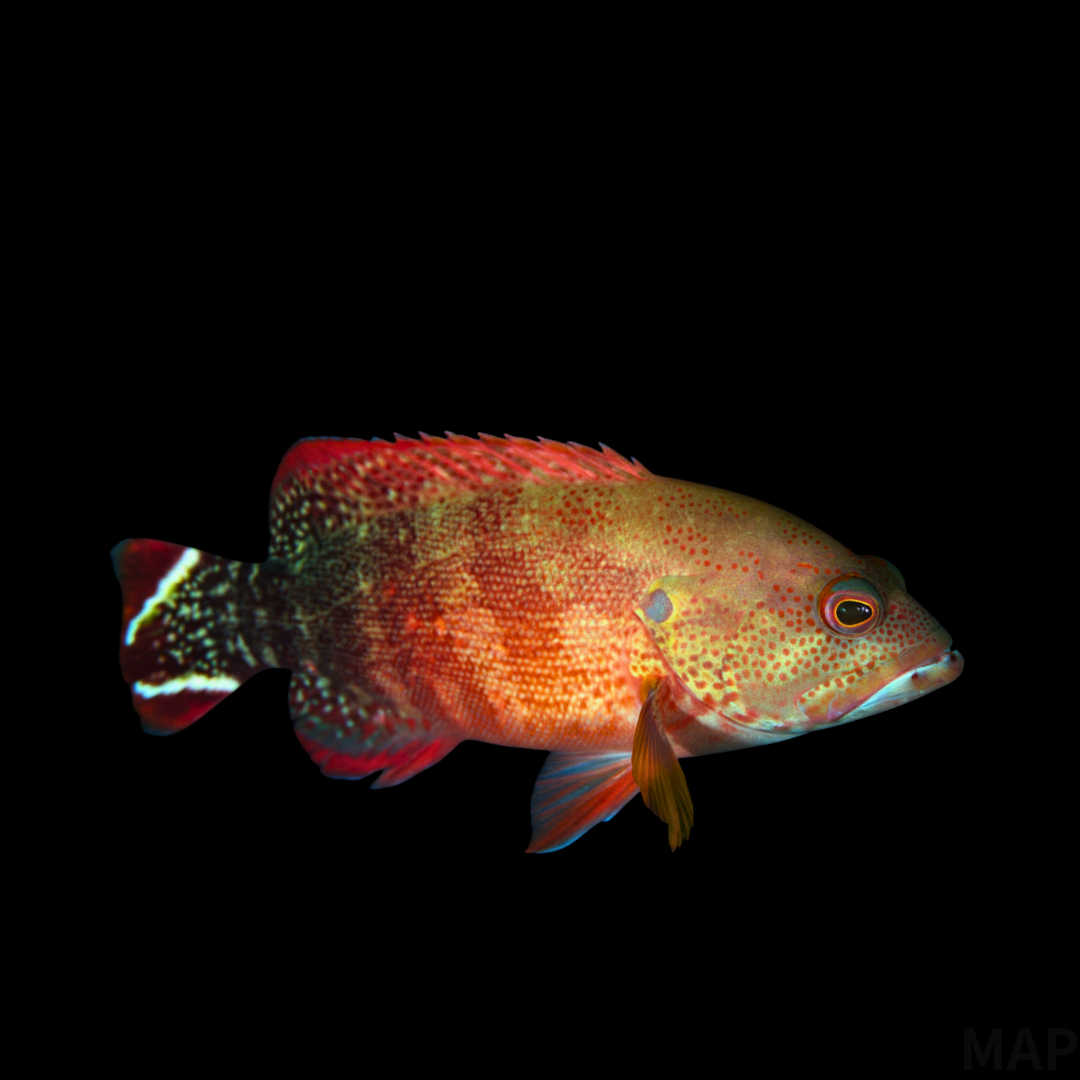
解説 / Description
ニジハタは、赤褐色から暗褐色の体と、尾鰭に走る白い斜線が印象的な海水魚です。岩陰から周囲をうかがい、餌に素早く反応する姿には、ハタ類らしい力強さがあります。最大全長は約28cmとハタの仲間では小型ですが、大きな口を備えた肉食魚で、小魚やエビとの混泳には向きません。広い水槽に隠れ家を設け、水質を安定させることで、落ち着いた佇まいと食事のときの活発な動きを楽しめます。 The darkfin hind is a marine fish with a reddish to dark brown body and distinctive white diagonal bands on its tail. Watching from rocky shelter and responding quickly to food, it displays the strength typical of groupers. Although relatively small for a grouper, reaching about 28 cm in total length, it is a large-mouthed predator unsuitable for keeping with small fish or shrimp. A spacious aquarium with shelters and stable water quality allows its quiet presence and lively feeding behavior to be enjoyed.
基本情報 / Basic Information
| 学名 / Scientific Name | Cephalopholis urodeta (Forster, 1801) |
|---|---|
| 通称 / Common Name | ニジハタDarkfin hind; flagtail grouper |
| 分類 / Family | ハタ科・マハタ亜科・ユカタハタ属。分類体系によっては、マハタ亜科を独立した科として扱います。Family Serranidae, subfamily Epinephelinae, genus Cephalopholis. Some classification systems recognize Epinephelinae as a separate family. |
| 英名 / English Name | Darkfin hind, Flagtail grouper, Flagtail rockcod |
| 分布 / Distribution | 西太平洋から中部太平洋を中心に分布し、東部インド洋のクリスマス島にも生息します。日本では南日本の太平洋側、伊豆・小笠原諸島、琉球列島などで見られます。主な生息場所はサンゴ礁や岩礁です。かつて本種に含められていたインド洋の個体群は、現在では別種の Cephalopholis nigripinnis として区別されています。Distributed mainly across the western and central Pacific, also occurring at Christmas Island in the eastern Indian Ocean. In Japan, it is found along southern Pacific coasts, in the Izu and Ogasawara islands, and in the Ryukyu Islands, mainly on coral and rocky reefs. Indian Ocean populations formerly included in this species are now distinguished as Cephalopholis nigripinnis. |
| 最大体長 / Max Size | 全長約28cm。水槽は30cm近くまで成長することを見込んで選びます。About 28 cm total length. Choose an aquarium with an adult size approaching 30 cm in mind. |
| 寿命 / Lifespan | 飼育下での寿命について、信頼できる情報は限られています。明確な年数は示せませんが、成魚になっても飼い続けられる設備を準備してください。Reliable information on captive lifespan is limited, so a specific number of years cannot be given. Prepare facilities suitable for continued care after the fish reaches adulthood. |
飼育環境 / Aquarium Environment
| 水槽サイズ / Tank Size | 成魚の長期飼育では、遊泳空間と隠れ家を両立できる120cmワイド水槽(幅120×奥行60×高さ60cm、寸法から算出した容量約432L)を目安としておすすめします。これは本種の飼育に必要な最低容量が実証されているという意味ではなく、成長後の体格に余裕を持たせるための提案です。実際の水量はガラスの厚さ、水位、岩組みなどによって少なくなります。90cm規格水槽(90×45×45cm、同約182L)で若魚を育てる場合も、成長に合わせて大型水槽へ移す計画を立てましょう。混泳では、さらに広い空間が必要です。For long-term adult care, a wide 120 cm aquarium measuring 120 × 60 × 60 cm, with a calculated dimensional volume of about 432 L, is recommended to accommodate both swimming space and shelter. This is a practical recommendation allowing room for growth, rather than an experimentally established minimum for the species. Actual water volume is lower because of glass thickness, water level, and rockwork. Juveniles kept in a standard 90 × 45 × 45 cm aquarium, about 182 L by dimensions, should have a planned upgrade as they grow. Keeping companions requires additional space. |
|---|---|
| 水温 / Temperature | 飼育上の目安は24〜26℃です。急な変化を避け、導入時はそれまで飼育されていた水温からゆっくり慣らします。夏は冷却と十分な酸素供給、冬は保温を行い、安定した環境を保ちましょう。A practical aquarium range is 24–26°C. Avoid sudden changes and acclimate gradually from the temperature of the previous aquarium. Provide cooling and adequate oxygenation in summer and heating in winter to maintain stable conditions. |
| 水質 / Water Quality | 海水で飼育し、塩分33〜35‰、pH 8.1〜8.4を管理の目安にします。比重は測定条件によって値が変わるため、25℃付近でおおむね1.024〜1.026を目安とし、測定器の仕様や温度補正を確認してください。アンモニアと亜硝酸は検出されない状態を維持します。硝酸塩やリン酸塩も定期的に測定し、換水や残餌の除去で蓄積を抑えましょう。十分な生物ろ過に加え、飼育負荷に見合うプロテインスキマーが水質管理を助けます。Maintain marine conditions, using salinity of 33–35 ppt and pH of 8.1–8.4 as management guidelines. Specific gravity depends on measurement conditions; approximately 1.024–1.026 near 25°C is a useful guide, with attention to the instrument’s specifications and temperature compensation. Keep ammonia and nitrite undetectable. Test nitrate and phosphate regularly and limit accumulation through water changes and removal of uneaten food. Adequate biological filtration and a suitably sized protein skimmer help maintain water quality. |
| レイアウト / Layout | 体全体を隠せる洞穴や岩陰を設け、その周囲には泳げる空間を残します。岩組みは安定させ、魚がぶつかっても崩れないようにしてください。隠れ家の内部を無理にのぞき込まずに観察できる配置にすると、休んでいる姿も楽しめます。飛び出しを防ぐため、配管周辺の隙間も含めてふたで覆います。Provide caves and shaded spaces large enough to conceal the whole fish, leaving swimming room around them. Secure the rockwork so that it cannot collapse if struck. Position shelters where resting behavior can be observed without disturbing the fish. Fit a lid that also covers gaps around plumbing to prevent escape. |
| 注意点 / Precautions | 販売時に小さくても、成長に伴って捕食できる相手の大きさや必要な空間が変わります。購入前に成魚用の設備を考え、導入時は照明を抑えて隠れ家で落ち着けるようにします。与えすぎによる水質悪化や、過密飼育による争いに注意してください。捕獲・輸送はほかの魚と分けて行い、酸欠、急な温度変化、体表の傷を防ぎます。Even a small specimen will be able to swallow larger prey and require more space as it grows. Plan adult accommodation before purchase, and provide subdued lighting and shelter during introduction. Avoid water deterioration from overfeeding and aggression caused by overcrowding. Capture and transport separately from other fish, preventing oxygen depletion, sudden temperature changes, and skin injuries. |
餌と給餌 / Feeding
| 餌の種類 / Diet | 肉食性で、自然下では小魚や甲殻類を食べます。飼育下では、受け付ける場合は海水性肉食魚用の配合飼料を活用し、冷凍エビ、オキアミ、海産魚やイカの切り身などを組み合わせます。乾燥オキアミや一種類の切り身だけに偏らないようにしましょう。観賞魚用の栄養補助剤を使う場合は、製品の指示に従って添加します。A carnivore that naturally eats small fish and crustaceans. In captivity, use formulated food for marine predatory fish if accepted, alongside frozen shrimp, krill, and pieces of marine fish or squid. Avoid relying entirely on dried krill or a single type of flesh. Use aquarium nutritional supplements according to their instructions. |
|---|---|
| 給餌のポイント / Feeding Tips | 導入直後は販売店で食べていた餌を確認し、給餌用のピンセットで隠れ家の近くに差し出してみましょう。手を口元に近づけないようにします。成魚では週2〜4回を管理上の出発点とし、体つき、食欲、水温に応じて量と頻度を調整してください。本種に一律に当てはまる給餌回数ではありません。成長中の若魚には少量をよりこまめに与え、腹部が大きく膨らむほど食べさせず、残餌は回収します。For newly introduced fish, ask which foods were accepted at the shop and try offering them near the shelter with feeding tongs. Keep fingers away from the mouth. For adults, two to four feedings per week can be a management starting point, adjusted to body condition, appetite, and temperature; it is not a fixed requirement for every individual. Growing juveniles need smaller, more frequent meals. Avoid feeding until the abdomen is greatly distended, and remove leftovers. |
性格と混泳 / Temperament and Tank Mates
| 性格 / Temperament | 隠れ家を拠点にする縄張り性のある魚です。導入直後は警戒して姿を見せないことがありますが、慣れると給餌時に隠れ家から出てくることもあります。普段は静かに見えても、捕食時には素早く動き、同種などを攻撃する場合があるため、穏やかな動きだけで混泳の可否を判断しないようにしましょう。A territorial fish that uses a shelter as its base. Newly introduced individuals may remain hidden, while settled fish may emerge at feeding time. Despite its often quiet appearance, it can strike rapidly at prey and attack its own species or other fish. Calm movements alone should not be taken as evidence of compatibility. |
|---|---|
| 混泳の相性 / Compatibility | 単独飼育が最も管理しやすい方法です。小魚や観賞用のエビ・カニは捕食されるおそれが高く、同種や似た体形のハタ類とは縄張り争いが起こりやすくなります。混泳させる場合は、口に入らない十分な体格の魚を選び、広い水槽、複数の隠れ家、すぐに隔離できる設備を用意してください。ただし、大きさだけで安全は保証されません。相手が攻撃的すぎると、ニジハタが傷つけられることもあります。Solitary care is the easiest arrangement to manage. Small fish and ornamental shrimp or crabs are at high risk of predation, while other darkfin hinds and similarly shaped groupers may provoke territorial disputes. Any companions must be too large to swallow, with ample space, multiple shelters, and facilities for immediate separation. Size alone does not guarantee safety, and overly aggressive companions may injure the hind. |
病気と対策 / Diseases and Prevention
| かかりやすい病気 / Common Diseases | 本種だけに特有の病気としてではなく、海水魚全般で問題になる白点病やウーディニウム病などの寄生虫感染、外傷に伴う細菌感染に注意します。白い点、体をこする動作、呼吸の速まり、食欲低下は異常に気づく手がかりです。鰓への感染では体表に白点が見えないこともあり、症状の見た目だけで病気を確定することはできません。Watch for problems affecting marine fish generally, rather than diseases unique to this species: marine white spot, marine velvet, and bacterial infections associated with injuries. White spots, rubbing, rapid breathing, and reduced appetite are warning signs. Gill infections may occur without visible body spots, so appearance alone cannot establish a diagnosis. |
|---|---|
| 対策と予防 / Prevention | 新しい魚は独立した検疫水槽で観察し、器具の共用も避けます。異常があれば、まず水質と酸素供給を確認し、原因に応じた治療を行ってください。銅薬は白点病などへの治療手段の一つですが、製剤によって有効濃度と適切な測定方法が異なります。製品の指示と専門家の助言に従い、対応する測定器で濃度を確認しながら使用します。サンゴや甲殻類を含む本水槽では使わず、独立した治療水槽で管理してください。白点が消えても寄生虫が残っていることがあるため、外見だけで治療を終了しないことが大切です。Observe new fish in a separate quarantine aquarium and avoid sharing equipment. If abnormalities appear, first check water quality and oxygenation, then treat the underlying cause. Copper is one treatment option for marine white spot, but effective concentrations and suitable testing methods vary between formulations. Follow product instructions and professional advice, measuring concentrations with a compatible test. Use a separate treatment aquarium rather than a display containing corals or crustaceans. Visible spots may disappear while parasites remain, so do not end treatment based on appearance alone. |
増やし方(繁殖) / Breeding
| 雌雄の判別 / Sexing | 体色だけで雌雄を確実に見分けることは困難です。雌として成熟した個体が雄へ性転換する「雌性先熟」が知られています。雄は社会集団の中で比較的大型になる傾向がありますが、体長だけで性別を断定することはできません。Color alone does not reliably distinguish the sexes. The species exhibits protogyny, in which individuals mature as females and may later become males. Males tend to be relatively large within their social group, but size alone cannot establish sex. |
|---|---|
| 繁殖形態 / Reproduction | 卵生です。自然下では、雄が複数の雌と繁殖する社会構造が知られています。産卵時には水中へ卵と精子を放出し、体外受精します。卵や仔魚が水中を漂う段階を経るため、親魚と同じ水槽でそのまま稚魚まで育てることは難しい魚です。An egg-laying species with a social system in which a male breeds with several females. Eggs and sperm are released into the water for external fertilization. Because development includes drifting egg and larval stages, rearing offspring to juveniles in the adults’ aquarium is difficult. |
| 繁殖のポイント / Breeding Tips | 家庭水槽で実践できる、本種の確立した繁殖・仔魚育成方法については情報が限られています。複数個体の維持には十分な空間と争いへの対応が必要です。仔魚を育てるには、採卵、専用水槽の管理、口の大きさに合った微小な餌の確保なども課題になります。性転換を期待して狭い水槽に複数個体を入れず、まずは親魚を健康に飼い続けることを優先しましょう。Information on established breeding and larval-rearing methods suitable for home aquariums is limited for this species. Maintaining several adults requires ample space and aggression management. Rearing larvae also presents challenges such as egg collection, dedicated tank management, and provision of foods small enough for their mouths. Do not crowd fish together in the hope of encouraging sex change; prioritize healthy long-term care of the adults. |
雑学と豆知識 / Trivia and Fun Facts
| 1. 尾の白い線がつくる目印 / 1. A distinctive tail pattern | ニジハタの尾鰭には、上下から後方へ向かって近づく2本の白色から淡い青白色の斜線があります。体の赤みが個体や状態によって変わっても、この模様は見分けるための大切な手がかりです。英名の一つ「V-tail grouper」も、尾に見えるV字状の模様に由来します。日本語の名前が似ているニジハギは、ニザダイ科に属する別の魚です。必要な餌や混泳条件も異なるため、購入時には名前だけでなく、姿と学名も確認すると安心です。Two white to pale bluish diagonal bands converge toward the rear of the tail. Although body redness varies between individuals and conditions, this pattern is an important identification clue. The name “V-tail grouper” refers to the V-shaped tail markings. Its Japanese name resembles that of the lined surgeonfish, an unrelated member of the surgeonfish family. Their diets and compatibility requirements differ, so check appearance and scientific name as well as the common name before purchase. |
|---|---|
| 2. 学名に残る分類の歴史 / 2. History preserved in its scientific name | ニジハタは1801年に Perca urodeta という学名で記載され、その後、ユカタハタ属に移されました。属名 Cephalopholis は、ギリシャ語の「頭」と「鱗」に由来します。一方、種小名 urodeta の詳しい語源は明確ではないため、尾の模様を意味すると断定することはできません。現在の学名で命名者と年が括弧に入っているのは、最初に記載された属から移されたことを示しています。短い学名の表記にも、分類が見直されてきた歴史が残っているのです。The darkfin hind was described in 1801 as Perca urodeta and later transferred to Cephalopholis. The genus name comes from Greek words for “head” and “scale.” The precise origin of urodeta is less clear, so it should not be stated definitively to refer to the tail pattern. Parentheses around the author’s name and year indicate a transfer from the original genus. Even this brief scientific notation preserves part of its taxonomic history. |
| 3. 海の境界で出会う近縁種 / 3. Related species meeting at an ocean boundary | かつてニジハタと同じ種に含められていたインド洋の個体群は、現在では Cephalopholis nigripinnis として区別されています。両種の分布が接するクリスマス島では、自然交雑が知られています。別種として区別されていても、出会った場所で交雑することがあるという事実は、魚の種の境界を理解する手がかりになります。インド洋の古い生態記録では、ニジハタという名前で近縁種が扱われている場合があるため、現在の分類に照らして読む必要があります。Indian Ocean populations once included in the darkfin hind are now distinguished as Cephalopholis nigripinnis. Natural hybridization is known at Christmas Island, where their distributions meet. The fact that recognized species can interbreed where they encounter one another offers insight into species boundaries. Older Indian Ocean records may use the darkfin hind’s name for its relative and need to be interpreted in light of current taxonomy. |
| 4. 暮らしの中で変わる性 / 4. Sex change within a social setting | 西表島のニジハタでは、生殖腺の組織を調べることで、雌から雄への性転換を裏づける証拠が得られています。性転換には、体の大きさだけでなく、周囲の個体との社会的な関係も関わると考えられています。このような繁殖の仕組みを説明する考え方の一つが「サイズ有利モデル」です。小さいときは雌として、大きくなってからは雄として繁殖するほうが、生涯に残せる子の数を増やしやすい条件では、性転換が有利になるという意味です。ただし、これは性転換の進化を説明する考え方であり、個々の魚がいつ性転換するかを決めるものではありません。Examination of gonadal tissue in darkfin hinds at Iriomote Island has provided evidence of female-to-male sex change. Social relationships, as well as body size, are considered relevant. One explanation for this reproductive strategy is the size-advantage model: sex change can be advantageous when reproducing as a female while small and as a male when larger increases lifetime reproductive success. This explains why sex change may evolve; it does not determine when an individual fish will change sex. |
| 5. 国内流通と個体選び / 5. Japanese trade and specimen selection | 国内では、輸入個体のほか、南日本で採集された個体が観賞魚として販売されることがあります。価格はサイズ、入荷状況、産地、個体の状態などによって変わります。赤みの強さも魅力ですが、購入時には呼吸が落ち着いているか、体表に傷がないか、どの餌を食べているかを確認しましょう。美しい体色だけに目を向けず、健康状態と餌付きも確かめることが、無理のない飼育につながります。Imported specimens and fish collected in southern Japan may be sold in the Japanese aquarium trade. Prices vary with size, availability, origin, and condition. Strong reddish coloration is attractive, but also check for calm breathing, intact skin, and the foods currently accepted. Considering health and feeding alongside color helps establish a sound basis for care. |
| 6. 食用利用とシガテラへの注意 / 6. Food use and ciguatera awareness | ニジハタは地域によって食用にも利用されますが、サンゴ礁の食物連鎖を通じてシガテラ毒を蓄積する可能性があります。毒の有無は見た目、鮮度、味などでは判断できず、小さい個体であれば必ず安全ともいえません。また、通常の加熱や冷凍では毒を取り除けません。食用利用では、地域の公的な注意情報を確認し、産地の分かる適切な流通経路を選ぶことが大切です。観賞魚として購入した個体は、薬剤の使用歴などを把握できない場合があるため、食用に転用しないでください。The darkfin hind is eaten in some regions, but may accumulate ciguatera toxins through reef food webs. Appearance, freshness, and taste cannot establish safety, and small size is no guarantee. Ordinary cooking or freezing does not remove the toxins. Food use requires attention to official local guidance and appropriate supply chains with known origins. Aquarium specimens should not be repurposed for food because their medication history and other relevant information may be unknown. |
| 7. 近縁な魚でも異なる防御の仕組み / 7. Different defenses in related fishes | ヌノサラシ類には、皮膚の分泌物にグラミスチンという毒を含む魚がいます。しかし、ニジハタが同じ毒を分泌することは確認されていません。近縁な魚でも、体を守る仕組みまで共通しているとは限らないのです。ニジハタでは、捕食や縄張り争いへの配慮と、水質を安定させる日々の管理が飼育の中心になります。Some soapfishes have grammistin toxins in their skin secretions, but secretion of the same toxin has not been confirmed in the darkfin hind. Related fishes do not necessarily share the same defensive mechanisms. Care of the darkfin hind centers on managing predation and territorial conflict while maintaining stable water quality. |
まとめ / Conclusion
ニジハタは、尾鰭の白いラインと、岩陰から周囲をうかがう姿が魅力的な魚です。ハタの仲間では小型でも、成魚には広い生活空間が必要です。十分な大きさの水槽、安定した水質、安心して休める隠れ家を整えることが、健やかな暮らしを支えます。 The darkfin hind is appealing for its white tail bands and the way it watches its surroundings from rocky shelter. Although small for a grouper, an adult needs generous living space. A suitably large aquarium, stable water quality, and secure resting places support its well-being.
捕食される小魚やエビとの混泳を避け、落ち着ける環境で見守ると、静かに過ごす姿と餌に素早く反応する姿の両方を楽しめます。鮮やかな色彩に加え、サンゴ礁の捕食者らしい動きも、ニジハタと長く付き合う魅力の一つです。 Avoiding companions such as small fish and shrimp, and providing a settled environment, allows both its quiet resting behavior and rapid responses to food to be observed. Alongside its coloration, its behavior as a reef predator is part of the appeal of keeping a darkfin hind over the long term.

気になる道具や飼い方を見つけてみませんか?
 アイのアクアグッズ案内バルブの仲間に合わせる飼育用品|チェリーバルブ・スマトラ・中型種の水槽とろ過道具の特徴や使い方、選ぶときのポイントをアイが紹介します。記事はコチラ →
 アイのアクアグッズ案内水草用ソイルの選び方|土・砂の違いとおすすめ商品道具の特徴や使い方、選ぶときのポイントをアイが紹介します。記事はコチラ →
 アイのアクアグッズ案内エーハイムはおもちゃから始まった? 小さな噴水から水槽へ、アイとコタロウの探訪道具の特徴や使い方、選ぶときのポイントをアイが紹介します。記事はコチラ →
 アイのアクアグッズ案内エーハイム、安いのと高いのは何が違う? コタロウと見比べる外部フィルター道具の特徴や使い方、選ぶときのポイントをアイが紹介します。記事はコチラ →
さまざまな飼育テーマをご紹介。リンク先の記事には広告・商品紹介が含まれます。
案内・紹介記事一覧へ →分布マップ
ニジハタ(Cephalopholis urodeta)は、西太平洋から中部太平洋を中心に分布し、東部インド洋のクリスマス島にも生息します。日本では南日本の太平洋側、伊豆・小笠原諸島、琉球列島などで見られます。
地図は分布地域の位置関係を示す概略表示です。表示範囲全体に生息することや、正確な分布境界を示すものではありません。マーカーは地理的な目安として設定した代表地点(北緯20度・東経140度)であり、実際の採集地点や生息確認地点ではありません。
参考文献
-
Bray, D. J.(2017)Cephalopholis urodeta. Fishes of Australia, Museums Victoria.
分類、原記載、体の特徴、分布、生息環境、最大体長、食性、近縁種との区別および交雑。
-
Nakai, T., Sano, M. & Kurokura, H.(2001)Feeding habits of the darkfin hind Cephalopholis urodeta (Serranidae) at Iriomote Island, southern Japan. Fisheries Science, 67(4), 640–643.
西表島における胃内容物調査に基づく、ニジハタの食性。
-
Nakai, T. & Sano, M.(2002)Evidence of protogynous hermaphroditism in the darkfin hind Cephalopholis urodeta (Serranidae) at Iriomote Island, southern Japan. Fisheries Science, 68(3), 697–699.
生殖腺の組織観察による雌性先熟の証拠と、性転換に関わる社会的条件の考察。
-
Merck Veterinary Manual. Management of Aquarium Fish.
観賞魚全般の水質管理、検疫、器具を介した感染の予防、疾病の診断と治療。
-
Merck Veterinary Manual. Nutrition in Fish.
魚類全般の栄養要求と、食性に合わせた飼料選び。
-
Yanong, R. P. E. Cryptocaryon irritans Infections (Marine White Spot Disease) in Fish. UF/IFAS Extension, FA164.
海水魚の白点病の症状、生活環、検疫と治療。白点の消失だけでは治療終了を判断できない理由。
-
Yanong, R. P. E. Use of Copper in Marine Aquaculture and Aquarium Systems. UF/IFAS Extension, FA165.
海水環境における銅薬の種類、濃度測定、魚や無脊椎動物への毒性、および治療時の管理。
-
Centers for Disease Control and Prevention(CDC). Food Poisoning from Marine Toxins. CDC Yellow Book.
シガテラ毒の食物連鎖を通じた蓄積、味や外観で判別できない性質、加熱・冷凍で無毒化できないこと。




コメント