

解説 / Description
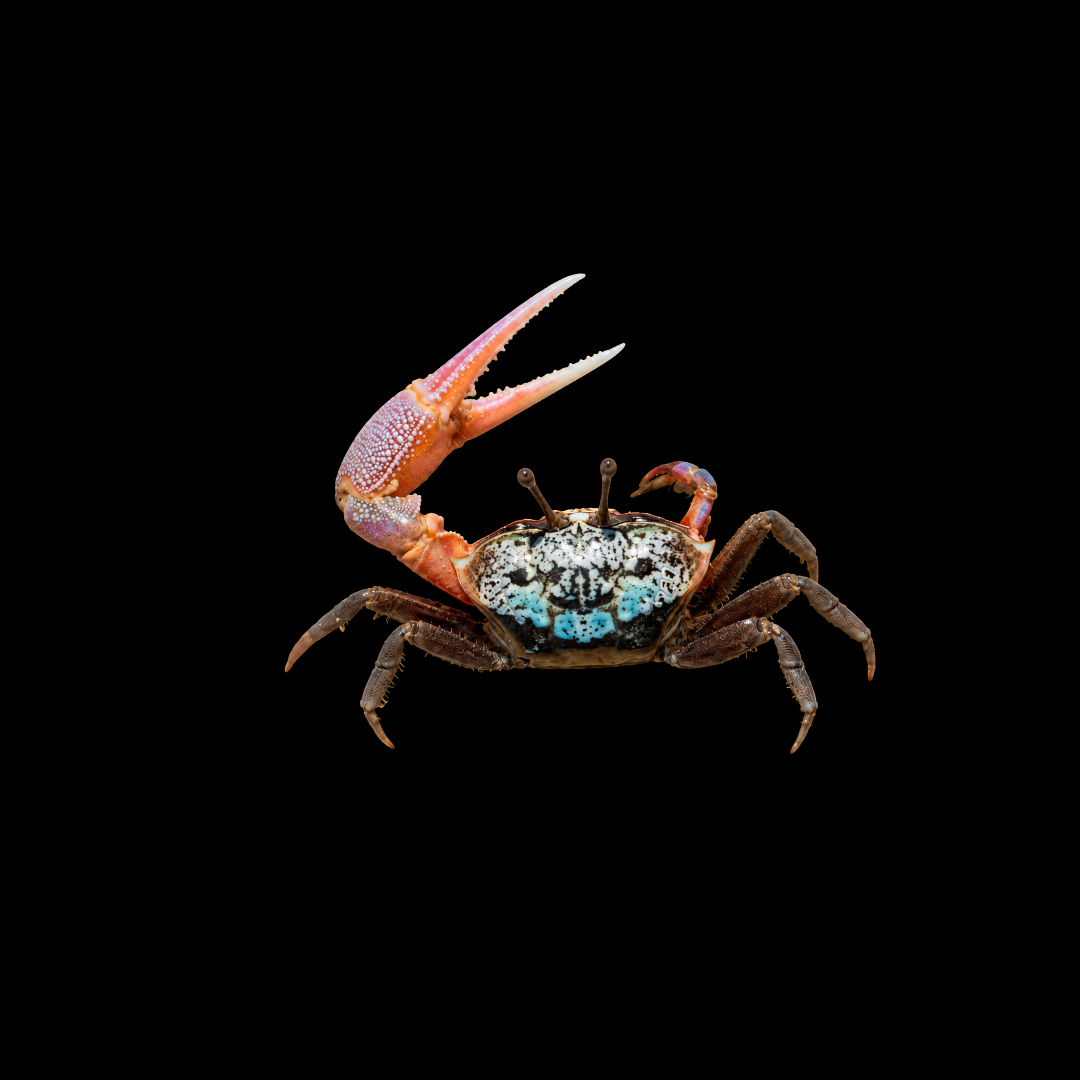
ルリマダラシオマネキは、青や青黒色を基調とした斑模様の甲羅を持つ、スナガニ科のカニです。体色には個体差があり、黄色や淡色が目立つ個体も見られます。オスは片方のハサミが大きく発達し、それを上下に動かす「ウェービング」を行います。大きなハサミを使った動作と、小さなハサミで餌を口へ運ぶ様子を見比べられるのも、観察の楽しみです。 The tetragonal fiddler crab belongs to the family Ocypodidae and has a mottled carapace often dominated by blue and blue-black tones. Color varies among individuals, with yellow or pale areas prominent in some. Males possess one greatly enlarged claw, which they move up and down in a display called waving. Comparing these displays with feeding movements made by the small claw is part of the appeal of observing this crab.
サンゴ礁に近い砂礫地や、岩のある潮間帯などに暮らし、底床の有機物に加えて岩に付着した藻類も利用します。水中だけで生活するカニではないため、飼育には陸地、巣穴を掘れる湿った底床、出入りしやすい塩水の水場を組み合わせたアクアテラリウムを用意します。 It inhabits sandy and gravelly areas near coral reefs and rocky intertidal habitats, feeding on organic material from the substrate as well as algae attached to rocks. It is not an exclusively aquatic crab. Its enclosure should combine land, moist substrate suitable for burrowing, and an accessible saltwater area.
基本情報 / Basic Information
| 学名 / Scientific Name | Gelasimus tetragonon (Herbst, 1790) 旧学名:Uca tetragononFormer combination: Uca tetragonon |
|---|---|
| 通称 / Common Name | ルリマダラシオマネキ。販売名だけでは近縁種と区別できない場合があるため、学名と個体の特徴も確認します。Tetragonal fiddler crab. Trade names may not distinguish it from related species, so also check the scientific name and identifying features. |
| 分類 / Family | 十脚目・短尾下目・スナガニ科・Gelasimus属。Order Decapoda, infraorder Brachyura, family Ocypodidae, genus Gelasimus. |
| 英名 / English Name | Tetragonal fiddler crab |
| 分布 / Distribution | 紅海、東アフリカ沿岸からインド洋、東南アジア、オーストラリア、太平洋の島々にかけてのインド太平洋域に広く分布します。日本では奄美群島や沖縄諸島などの南西諸島に見られます。Widely distributed in the Indo-Pacific, from the Red Sea and East African coast through the Indian Ocean and Southeast Asia to Australia and Pacific islands. In Japan, it occurs in the southwestern islands, including the Amami and Okinawa island groups. |
| 最大体長 / Max Size | 大型個体では甲幅約3.4cmの記録があります。カニの大きさは甲羅の左右幅で表すのが一般的で、この数値に脚やハサミは含みません。オスの大きなハサミは、甲幅を上回る長さになります。Large individuals have been recorded with a carapace width of approximately 3.4cm. Crab size is generally expressed as carapace width, excluding legs and claws. A male’s enlarged claw can exceed this width in length. |
| 寿命 / Lifespan | 本種の飼育下での寿命は、信頼できる目安を示せるだけの情報が十分にありません。入手時の年齢も分かりにくいため、飼育を始めてから生きた期間を、そのまま本種の寿命とは見なせません。There is insufficient information to give a reliable species-specific captive lifespan. Age at acquisition is also difficult to determine, so the time an individual survives after purchase should not be treated as its full lifespan. |
飼育環境 / Aquarium Environment
| 水槽サイズ / Tank Size | 単独飼育でも、陸地と水場を十分に分けられる底面積を確保します。設計例としては60cm規格水槽(60×30×36cm、満水時約60L級)、複数飼育では90cm規格水槽(90×45×45cm、満水時約180L級)などが考えられます。ただし、これらは本種の最低必要寸法として確立された数値ではありません。底床と陸地を設けるため、実際の水量は満水時より少なくなります。複数飼育ではそれぞれの巣穴と採餌場所を確保し、争いが続く場合は容器を分けます。Even for one crab, provide enough floor space to separate land and water adequately. Possible enclosure designs include a standard Japanese 60×30×36cm aquarium, approximately 60L when full, or a 90×45×45cm aquarium, approximately 180L when full, for several individuals. These dimensions are examples, not established minimum requirements for this species. Substrate and land reduce the actual water volume. When keeping several crabs, allow each its own burrow and feeding area, and separate individuals if conflict persists. |
|---|---|
| 水温 / Temperature | 熱帯・亜熱帯に暮らす種類ですが、本種の長期飼育に適した温度範囲は、十分な裏づけをもって示せません。入手先の管理温度を確認し、急な変更を避けてください。水場だけでなく陸地の温度も測り、冬季の冷え込みと、照明や保温器具による過熱を防ぎます。水中ヒーターだけでは陸地の温度を管理できないため、隠れ場所を含めた容器全体の温度を確認します。Although this species inhabits tropical and subtropical regions, a well-supported temperature range for long-term captive care cannot be given. Check the supplier’s management temperature and avoid abrupt changes. Measure temperatures on land as well as in water, preventing both winter chilling and overheating from lighting or heating equipment. A water heater alone does not control land temperature, so check conditions throughout the enclosure, including shelters. |
| 水質 / Water Quality | 海水用の人工海水塩を使い、入手時に管理されていた塩分を確認して水場を用意します。本種の飼育に適した塩分を一律の数値で断定せず、必要な変更は段階的に行ってください。淡水だけでの長期飼育は避けます。塩分は比重計や塩分計で確認し、蒸発した水は淡水で補って塩分の上昇を防ぎます。残餌の除去と換水で水質を保ち、アンモニアと亜硝酸が検出されない状態を維持します。淡水向けのTDS値やGH値を、そのまま塩水の管理基準には使いません。Use a marine aquarium salt mix and check the salinity used before acquisition when preparing the water area. Do not assume a single salinity value is an established optimum for this species; make necessary changes gradually. Avoid long-term freshwater-only keeping. Check salinity with a suitable hydrometer or salinity meter, and replace evaporation losses with freshwater to prevent salinity from rising. Maintain water quality through waste removal and water changes, keeping ammonia and nitrite undetectable. Freshwater TDS and GH targets should not be applied directly to saltwater management. |
| レイアウト / Layout | 陸地を主体にし、緩やかな斜面で出入りできる水場を設けます。底床には湿った砂を使い、個体が身を隠せる巣穴を掘れる厚さを確保してください。砂の粒度や締まり具合を調整し、掘った穴が崩れやすい状態は避けます。鋭い砂粒や水質を大きく変える素材は使わず、岩は下を掘られても倒れないよう固定します。藻類や微生物膜が付着した岩面は採餌の場になります。あわせて、日陰になる隠れ場所も用意します。Make land the main part of the enclosure and provide gentle slopes into the water. Use moist sand deep enough for the crab to dig a burrow in which it can shelter. Adjust grain composition and firmness to reduce collapse. Avoid sharp grains and materials that strongly alter water chemistry, and secure rocks against undermining. Rock surfaces with algae or microbial films provide foraging opportunities. Also provide shaded retreats. |
| 注意点 / Precautions | 水中に閉じ込めず、いつでも陸へ上がれる経路を確保します。通気性のあるふたで脱走を防ぎ、配線や配管の隙間も塞いでください。巣穴に隠れた個体を、確認のために掘り出すことは避けます。購入時には種類、産地、採集個体か人工繁殖個体かを確認し、由来が明らかな個体を選びます。野外採集や譲渡にあたっては、対象地域の条例や保護区域の規制を事前に確認してください。飼育個体は野外へ放さないでください。Never confine the crab underwater; keep a route onto land accessible at all times. Use a ventilated escape-proof lid and close gaps around cables and pipes. Avoid digging out a hidden crab merely to check on it. Before purchase, verify identification, origin, and whether the animal is wild-caught or captive-bred, choosing individuals with documented provenance. Before collection or transfer, check applicable local ordinances and protected-area restrictions. Never release captive animals into the wild. |
餌と給餌 / Feeding
| 餌の種類 / Diet | 自然下では、底床表面の有機物や微生物、岩に付着した藻類などを食べます。飼育下では甲殻類用の配合飼料を基本に、藻類を含む沈下性飼料や、少量の魚介類の細片などを組み合わせ、実際に食べているかを確認します。岩や砂の表面にできる微生物膜も利用できますが、それだけで十分な栄養を得られるとは限りません。In the wild, it feeds on organic material and microorganisms at the substrate surface, as well as algae attached to rocks. In captivity, use formulated crustacean food as a dietary base, supplemented with algae-containing sinking foods and small amounts of finely chopped seafood, checking that they are actually eaten. Microbial films on rocks and sand can also be used, but may not provide sufficient nutrition on their own. |
|---|---|
| 給餌のポイント / Feeding Tips | 活動している時間帯に、湿った陸地や水際へ少量ずつ置き、餌を口へ運ぶ様子を確認します。オスは小さい方のハサミで食べるため、大きなハサミの動きだけでは摂餌を判断できません。複数飼育では給餌場所を分散し、ほかの個体に追われる個体も食べられるようにします。傷みやすい残餌は早めに取り除き、脱皮前後に食欲が落ちたときは給餌量を減らしてください。藻類を育てるための照明は、陸地を過熱させない範囲で使用します。Offer small portions on moist land or at the water’s edge during active periods, and watch for food being carried to the mouth. Males feed with the small claw, so movement of the enlarged claw alone does not indicate feeding. Use several feeding locations so individuals displaced by others can still eat. Remove perishable leftovers promptly and reduce portions when appetite declines around molting. Lighting used to grow algae should not overheat the land. |
性格と混泳 / Temperament and Tank Mates
| 性格 / Temperament | 巣穴を生活の拠点とし、その周囲で採餌したり、ほかの個体とやり取りしたりします。自然下で集まって暮らしていても、争いが起こらないわけではありません。オス同士では大きなハサミを使った威嚇や押し合いが見られます。人が近づくと隠れることもあり、静かに距離を保って行動を観察する飼育に向いています。The crab uses its burrow as a home base, feeding and interacting with other individuals nearby. Living in aggregations does not prevent conflict. Males may threaten or push one another with their enlarged claws. Individuals may retreat when approached, making this species suited to quiet observation from a respectful distance. |
|---|---|
| 混泳の相性 / Compatibility | 単独飼育を基本とし、同種を複数飼う場合は十分な底面積を確保します。岩などで視線を遮り、それぞれが巣穴を持てるようにしても、争いを完全に防げるわけではありません。雌雄の組み合わせだけで安全を判断せず、脱皮中の個体や小型個体が攻撃される場合は分けてください。魚、エビ、貝、ほかのカニとの同居には、捕食や餌の競合、必要な環境の違いがあるため、安易な混泳は避けます。Keeping individuals alone is the basic approach. If housing several of the same species, provide ample floor space. Rocks that interrupt sight lines and space for separate burrows can help, but do not eliminate conflict. A particular sex combination does not guarantee safety; separate molting or smaller individuals if they are attacked. Fish, shrimp, snails, and other crabs may face predation, food competition, or incompatible environmental requirements, so avoid casual mixed-species housing. |
病気と対策 / Diseases and Prevention
| かかりやすい病気 / Common Diseases | 本種に特有の、飼育下でかかりやすい病気については情報が限られています。飼育上は、脱皮不全、乾燥や温度・塩分の急変による衰弱、水質悪化、争いによる外傷や脚・ハサミの欠損に注意します。殻の傷が広がる、活動低下が長く続くといった異常は、見た目だけで原因を特定できません。一方、脱皮前に隠れたり、一時的に食欲が落ちたりすることもあるため、それだけで病気とは判断しないでください。Information on diseases particularly common in captive individuals of this species is limited. Husbandry concerns include failed molts, weakness associated with drying or abrupt temperature and salinity changes, poor water quality, and injuries or loss of legs and claws during conflict. Expanding shell lesions or prolonged inactivity cannot be diagnosed by appearance alone. Hiding and temporary appetite loss may also occur before molting and do not, by themselves, establish illness. |
|---|---|
| 対策と予防 / Prevention | 温度と塩分を安定させ、湿った底床、清潔な水場、偏りの少ない餌を維持します。脱皮中は巣穴や隠れ場所を動かさず、殻が硬くなる前の個体には触れないでください。抜け殻は食べることがあるため、汚れていなければしばらく残せますが、腐敗や水質悪化の原因になる場合は取り除きます。銅を含む魚病薬などは甲殻類に有害となり得るため、自己判断で使わないでください。異常が続く場合は水質と管理条件を記録し、甲殻類の診療に対応する獣医師へ相談します。Maintain stable temperature and salinity, moist substrate, clean water, and a varied diet. Leave burrows and shelters undisturbed during molting, and do not touch an individual before its new shell hardens. A clean shed exoskeleton may be left temporarily because the crab may eat it, but remove it if it contributes to decay or poor water quality. Copper-containing fish medications can harm crustaceans and should not be used without appropriate advice. If abnormalities persist, record water quality and management conditions and consult a veterinarian who treats crustaceans. |
増やし方(繁殖) / Breeding
| 雌雄の判別 / Sexing | 成体のオスは片方のハサミが著しく大きく、もう片方は採餌用の小さなハサミです。メスは左右とも小さなハサミを持ちます。腹側では、メスの腹部は卵を抱えるために幅広く、オスの腹部は比較的細くなっています。ただし、幼体やハサミを失った個体は、外見だけでは判別が難しい場合があります。確認のために無理につかんだり、ひっくり返したりしないでください。Adult males have one greatly enlarged claw and one small feeding claw, while females have two small claws. The female abdomen is broad for carrying eggs, whereas the male abdomen is narrower. Juveniles and individuals missing claws may be difficult to sex visually. Avoid forceful handling or turning the crab over merely to identify its sex. |
|---|---|
| 繁殖形態 / Reproduction | 卵生で、メスが腹部の腹肢に卵を付けて保護します。オスは大きなハサミを動かして求愛し、交尾は地表でも巣穴内でも行われます。卵からは水中で暮らすゾエア幼生が孵化し、幼生期を経て稚ガニになります。親と同じ陸地中心の環境だけでは、幼生を育てられません。This species is oviparous, with females carrying eggs on the pleopods beneath the abdomen. Males court by waving their enlarged claws, and mating occurs both on the surface and inside burrows. Aquatic zoeal larvae hatch from the eggs and develop through the larval phase into juvenile crabs. The adults’ land-dominated enclosure alone is unsuitable for raising the larvae. |
| 繁殖のポイント / Breeding Tips | 抱卵を確認することと、孵化した幼生を稚ガニまで育てることは別の課題です。本種の家庭飼育に適用できる繁殖手順については、確かな情報が十分にありません。幼生の育成には親とは別の水中環境が必要で、塩分、通気、餌の種類と大きさなどを適切に管理する必要があります。ワムシやブラインシュリンプ幼生を使えば育つと一律に判断せず、本種での適合性を確認してください。卵数や発育日数も固定値として扱わず、孵化と成長の様子を記録します。Observing an egg-bearing female and successfully raising hatchlings to juvenile crabs are separate challenges. Reliable information on a breeding protocol suitable for home care of this species is insufficient. Larvae require an aquatic environment separate from the adults, with appropriate management of salinity, aeration, and food type and size. Do not assume rotifers or newly hatched brine shrimp will support development without confirming their suitability for this species. Record hatching and growth rather than treating egg numbers or developmental times as fixed values. |
雑学と豆知識 / Trivia and Fun Facts
| 1. 二つの学名が伝える分類の歴史 / 1. Two Names, One Taxonomic History | ルリマダラシオマネキは1790年に記載され、長くUca tetragononの名で知られてきました。その後、形態やDNAを比較する研究に基づいてシオマネキ類の分類が見直され、本種はGelasimus属に位置づけられています。古い文献や販売情報にUcaの名が残っていても、それだけで別種を指しているわけではありません。種小名の「tetragonon」は四角形を意味する語に由来します。甲羅の輪郭に目を向けると、名前と姿を結びつけて覚えられます。Described in 1790, this crab was long known as Uca tetragonon. Comparisons of morphology and DNA later informed a revision of fiddler-crab classification, placing it in Gelasimus. The name Uca in older literature or trade information therefore does not, by itself, indicate a different species. The epithet “tetragonon” derives from a word meaning quadrilateral. Looking at the carapace outline helps connect the name with the animal’s appearance. |
|---|---|
| 2. 大きなハサミより、小さなハサミが食事の主役 / 2. The Small Claw Does the Feeding | オスを見ると、まず大きなハサミに目を奪われます。しかし、毎日の食事を支えるのは反対側の小さなハサミです。本種の採餌用のハサミは先端が平たく、岩に付着した藻類をつまみ取る動作が観察されています。砂を扱うときには、口元の細かな毛を備えた器官で食べられる部分を選り分けます。つまり、小さなハサミで材料を集め、口元で処理するという役割分担があるのです。岩肌へ繰り返しハサミを伸ばす姿には、見栄えのする大きなハサミとは違う、暮らしを支える働きが表れています。The male’s enlarged claw attracts attention, but its small claw supports everyday feeding. This species has flat feeding-claw tips and has been observed picking algae from rocks. When processing sediment, bristled structures near the mouth help separate edible material. The small claw therefore collects material, while the mouth-associated structures process it. Repeatedly reaching toward a rock reveals an essential everyday function distinct from the displays of the enlarged claw. |
| 3. ウェービングは、仲間へ向けた動作 / 3. Waving Is a Social Display | 大きなハサミを持ち上げる姿は、人に手を振っているようにも見えますが、実際には求愛など、個体間のやり取りに関わる動作です。本種では、体を大きく持ち上げずにハサミを上下させる、比較的単純なウェービングが見られます。同じ場所に集まっていても、それぞれには生活の拠点となる巣穴があります。動作だけを切り取るよりも、周囲の個体との位置関係や巣穴への出入りを合わせて観察すると、どの相手に向けた行動なのかを捉えやすくなります。A raised claw may resemble a greeting to a person, but waving is associated with courtship and other interactions between crabs. This species shows a relatively simple vertical wave, moving the claw up and down without greatly raising its body. Even where individuals gather, each has a burrow as its home base. Observing their positions relative to one another and their movements around burrows helps reveal the context of a display. |
| 4. 巣穴は、姿が見えない間も暮らしを支える / 4. Burrows Support Life Out of Sight | 巣穴は外敵から身を隠す場所であり、地表の強い日差しや乾燥を避ける場所でもあります。脱皮の前後には、活発に動いていた個体が姿を見せなくなることがあります。確認しようと砂を掘り返すと、柔らかい体や巣穴を傷つけかねません。姿が見えない時間も、このカニの生活の一部です。隠れる前後の様子や巣穴の入口を観察しながら、環境を安定させて静かに見守ります。A burrow provides protection from predators and a retreat from strong sunlight and drying at the surface. A previously active crab may disappear around molting. Digging to check on it can damage its soft body or its burrow. Time spent out of sight is part of its life. Observe conditions before and after it retreats and monitor the entrance while maintaining a stable, undisturbed environment. |
| 5. 失った脚を取り戻す脱皮 / 5. Regeneration Through Molting | カニは強い刺激や争いによって、脚やハサミを自ら切り離すことがあります。これは「自切」と呼ばれる防御反応です。失った付属肢は脱皮を通じて再生しますが、一度の脱皮で元の大きさや形に戻るとは限りません。シオマネキ類では、再生した大きなハサミが元のものと形や力の面で異なる例も知られています。ただし、その知見をもとに、本種でも再生したハサミが求愛に有利だと決めつけることはできません。飼育では再生を期待して損傷を軽く考えず、争いや無理な扱いを防ぐことが大切です。Crabs may shed a leg or claw during severe disturbance or conflict. This defensive response is called autotomy. Lost appendages regenerate through molting, but their original size and shape may not return after a single molt. In fiddler crabs, regenerated enlarged claws can differ from the originals in form or strength. Such findings do not establish that a regenerated claw gives this species a courtship advantage. In captivity, regeneration should not be a reason to dismiss injury; preventing conflict and forceful handling remains essential. |
| 6. 美しい色だけでは、種類は見分けられない / 6. Color Alone Is Not Identification | 「ルリマダラ」という名前から鮮やかな青い甲羅を想像しがちですが、実際の色彩には幅があります。光の当たり方でも見え方が変わるため、青さだけで種類や健康状態を判断することはできません。近縁種との識別には、両眼の間の幅、甲羅の形、大小のハサミの構造などを組み合わせます。写真の華やかさだけで選ばず、学名と個体の特徴、由来を確かめることが、適切な飼育につながります。The Japanese name evokes a vividly blue, mottled carapace, yet coloration varies. Lighting also changes its appearance, so blueness alone cannot establish identity or health. Identification combines features such as the width between the eyes, carapace shape, and the structures of both claws. Checking the scientific name, identifying features, and provenance rather than choosing solely from an attractive photograph supports appropriate care. |
まとめ / Conclusion
ルリマダラシオマネキは、斑模様の甲羅と大きなハサミに加え、小さなハサミで餌を集める姿や、巣穴を拠点に暮らす行動も魅力的なカニです。湿った底床と出入りしやすい塩水の水場、落ち着いて隠れられる場所を整えることが、その暮らしを支えます。 The tetragonal fiddler crab is appealing not only for its mottled carapace and enlarged claw, but also for the way it gathers food with its small claw and lives around its burrow. Moist substrate, accessible saltwater, and undisturbed retreats support that way of life.
由来の確かな個体を迎え、環境の急変や個体間の争いを避け、脱皮や巣穴で過ごす時間を尊重してください。静かに観察を続けると、目を引くウェービングだけでなく、採餌や巣穴への出入りといった日々の動作にも、このカニらしさを感じられます。 Choose an individual of documented origin, avoid abrupt environmental changes and conflict, and respect molting and time spent underground. Quiet observation reveals its character not only in conspicuous waving displays, but also in everyday feeding and movement into and out of its burrow.

気になる道具や飼い方を見つけてみませんか?
 アイのアクアグッズ案内水草の肥料の選び方|底床用・液肥・メネデールの使い分け道具の特徴や使い方、選ぶときのポイントをアイが紹介します。記事はコチラ →
 アイのアクアグッズ案内水草トリミングの道具とやり方|ハサミ・ピンセットを水草に合わせて選ぼう伸びすぎた水草は切っていい? 有茎草の差し戻し、前景草の絨毯、流木のモスを整える場面から、水草用ハサミ・ピンセット・ゴミ取りネットの選び方と片付けを紹介します。記事はコチラ →
 アイのアクアグッズ案内水槽ライトの選び方|魚の見え方・水草・海水で選ぶおすすめ照明道具の特徴や使い方、選ぶときのポイントをアイが紹介します。記事はコチラ →
 アイのアクアグッズ案内水槽のエアーポンプの選び方|水深・音・泡で選ぶおすすめ用品道具の特徴や使い方、選ぶときのポイントをアイが紹介します。記事はコチラ →
さまざまな飼育テーマをご紹介。リンク先の記事には広告・商品紹介が含まれます。
案内・紹介記事一覧へ →分布マップ
ルリマダラシオマネキ(Gelasimus tetragonon)は、 紅海・東アフリカ沿岸からインド洋、東南アジア、オーストラリア、 太平洋の島々にかけて広く分布します。日本では南西諸島に見られます。
地図は分布地域の位置関係を示す概略表示です。日付変更線をまたぐ太平洋の島々も含めるため、 広い範囲を表示しています。表示範囲全体に生息することや、正確な分布境界を示すものではありません。 マーカーは代表地点として設定した北緯0度・東経130度の目安であり、実際の採集地点ではありません。
参考文献・公的資料
-
WoRMS Editorial Board. World Register of Marine Species:Uca tetragonon/Gelasimus tetragonon.
有効学名と旧学名の確認 -
Shih, H.-T. et al.(2016). Systematics of the family Ocypodidae Rafinesque, 1815 (Crustacea: Brachyura), based on phylogenetic relationships… Raffles Bulletin of Zoology, 64: 139–175.
スナガニ科の系統分類とシオマネキ類の属の再編 -
Shih, H.-T. et al.(2016). Species diversity of fiddler crabs, genus Uca Leach, 1814 (Crustacea: Ocypodidae), from Taiwan and adjacent islands… Zootaxa, 4083(1): 57–82. DOI: 10.11646/zootaxa.4083.1.3.
台湾・周辺島嶼と日本のシオマネキ類の分類・分布 -
Takeda, S., Poovachiranon, S. & Murai, M.(2004). Adaptations for feeding on rock surfaces and sandy sediment by the fiddler crabs (Brachyura: Ocypodidae) Uca tetragonon and Uca vocans. Hydrobiologia, 528: 87–97. DOI: 10.1007/s10750-004-1874-2.
岩場での採餌、付着藻類の利用、採餌用のハサミと口器の形態 -
Mégevand, L. et al.(2022). Diluted Seawater and Ammonia-N Tolerance of Two Mangrove Crab Species. New Insights to Understand the Vulnerability of Pristine Islands Ecosystems Organisms. Frontiers in Ecology and Evolution, 10: 839160. DOI: 10.3389/fevo.2022.839160.
本種の塩分変化とアンモニア曝露に対する生理的応答 -
Koga, T., Goshima, S., Murai, M. & Poovachiranon, S.(1995). Predation and cannibalism by the male fiddler crab Uca tetragonon. Journal of Ethology, 13: 181–183. DOI: 10.1007/BF02350110.
同種・他種のカニへの捕食と、複数飼育で考慮する個体間の危険 -
Koga, T., Murai, M., Goshima, S. & Poovachiranon, S.(2000). Underground mating in the fiddler crab Uca tetragonon: the association between female life history traits and male mating tactics. Journal of Experimental Marine Biology and Ecology, 248(1): 35–52. DOI: 10.1016/S0022-0981(00)00154-4.
巣穴内での交尾、抱卵中のメスの行動と繁殖生活史 -
Zhang, Y.-C. & Shih, H.-T.(2022). First Zoeal Stage of 15 Species of Fiddler Crabs (Crustacea: Brachyura: Ocypodidae) from Taiwan. Zoological Studies, 61: 71. DOI: 10.6620/ZS.2022.61-71.
本種を含むシオマネキ類の孵化直後のゾエア幼生 -
Lemos, D. & Weissman, D.(2021). Moulting in the grow-out of farmed shrimp: a review. Reviews in Aquaculture, 13(1): 5–17. DOI: 10.1111/raq.12461.
エビ類の脱皮に関する総説:脱皮と水質・栄養管理の関係 -
Yanong, R. P. E. University of Florida, IFAS Extension. Use of Copper in Marine Aquaculture and Aquarium Systems(FA165).
海水飼育系における銅の毒性と、無脊椎動物への薬剤使用上の注意 -
奄美市「希少野生動植物の保護と指定」。
希少野生動植物の指定と地域の捕獲・採取規制





コメント