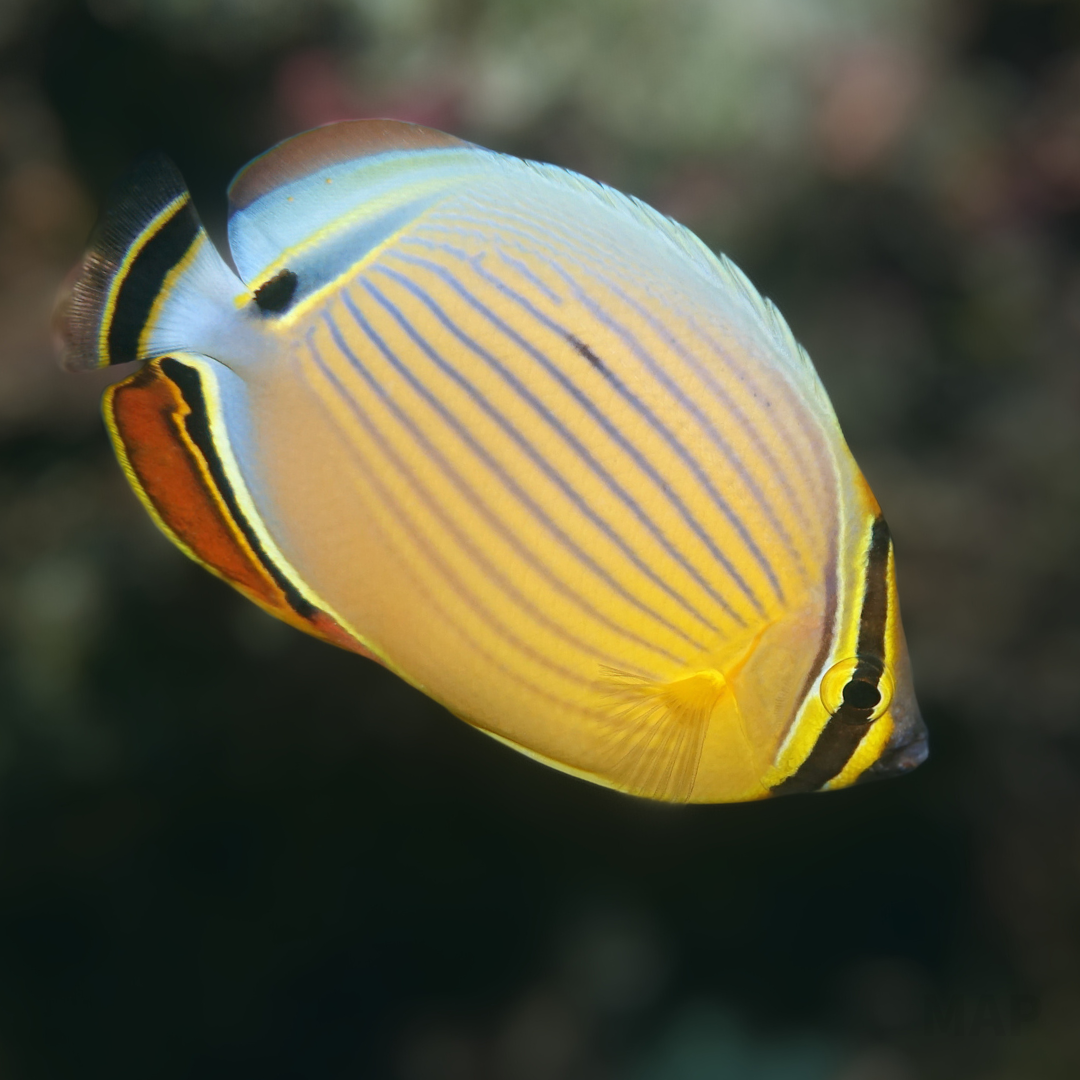
ミスジチョウチョウウオは、太平洋の熱帯・亜熱帯域に広がるサンゴ礁を代表する、極めて美しく優雅な魚です。黄色から背側のピンク、そして紫色の繊細な縞模様が織りなす色彩は、まさに海の芸術品と言えるでしょう。しかし、その美しさの裏には、生きている造礁サンゴのポリプのみを糧とする偏性サンゴ食という、極めて特殊な生態が隠されています。また、特定の相手と継続的なペア関係を築くことでも知られ、サンゴの枝間をペアで仲睦まじく泳ぐ姿は、多くのダイバーやアクアリストを魅了してやみません。The Pacific Pinstriped Butterflyfish is an exquisitely beautiful and graceful fish representing the coral reefs across the tropical and subtropical Pacific. Its coloration, a blend of yellow, dorsal pink, and delicate purple stripes, is a true masterpiece of the sea. Behind this beauty lies an extremely specialized ecology: they are obligate corallivores, feeding exclusively on live stony coral polyps. They are also known for forming enduring pair bonds, captivating divers and aquarists alike as they swim harmoniously through coral branches.
太平洋西部から中央部。北は日本の駿河湾以南から南はオーストラリア、東はハワイ諸島まで広く分布します。Western and Central Pacific. Widely distributed from Suruga Bay in Japan to Australia in the south and the Hawaiian Islands in the east.
最大体長 / Max Size
約15cm(全長。Fishes of Australiaの記載)About 15 cm total length, as reported by Fishes of Australia.
寿命 / Lifespan
約12年Approx. 12 years
飼育環境 / Aquarium Environment
水槽サイズ / Tank Size
大型で安定した水槽が前提ですが、本種は生きたサンゴに依存する食性のため、容量を増やすだけでは長期飼育は容易になりません。容量を計算する際は幅・奥行き・高さを確認してください。例えば120×60×60cmは容積約432Lで、実水量はさらに少なくなります。A large, stable aquarium is needed, but greater volume alone cannot overcome the difficulty of maintaining a fish dependent on live coral. Calculate volume from length, width and height: a 120 × 60 × 60 cm aquarium has a nominal volume of about 432 liters, with a lower working water volume.
水温 / Temperature
23℃〜28℃(急激な変化を避け、一定に保つことが重要です)23°C to 28°C (74-82°F). It is vital to maintain a stable temperature.
水質 / Water Quality
極めて清浄で安定した水質。サンゴを維持できるリーフタンクと同等の高度な管理が求められます。Pristine and stable water conditions. High-level management equivalent to a reef tank capable of sustaining corals is required.
レイアウト / Layout
豊富なライブロックを用い、隠れ家となる隙間を多く作ります。生きたミドリイシ等のサンゴが繁茂している環境が理想です。Use abundant live rock to create many hiding places. An environment with thriving live corals like Acropora is ideal.
注意点 / Precautions
環境の変化に極めて敏感で、水質の悪化は即座に健康状態の悪化に直結します。Extremely sensitive to environmental changes; water quality degradation directly impacts their health immediately.
餌と給餌 / Feeding
餌の種類 / Diet
野生下では生きたミドリイシ属やハナヤサイサンゴ属のポリプのみを摂食します。In the wild, they feed exclusively on polyps of live Acropora and Pocillopora corals.
給餌のポイント / Feeding Tips
人工飼料への餌付けは困難を極めます。アサリなどの二枚貝や、特製ペーストを用いた給餌が試みられますが、長期維持には生きたサンゴの提供が事実上不可欠です。Training them to accept prepared foods is extremely difficult. While clams or food pastes are often used as attempts, providing live corals is practically essential for long-term survival.
性格と混泳 / Temperament and Tank Mates
性格 / Temperament
他種に対しては温和ですが、同種のチョウチョウウオに対しては強い縄張り意識を持ちます。Peaceful toward other species but highly territorial toward other butterflyfish.
混泳の相性 / Compatibility
攻撃的な魚との混泳は避けてください。一夫一婦制のため、すでにペアとなっている個体同士であれば混泳可能です。Avoid housing with aggressive fish. Due to their monogamous nature, they can be kept in established pairs.
病気と対策 / Diseases and Prevention
かかりやすい病気 / Common Diseases
白点病、ウーディニウム症、および栄養失調による衰弱。Marine Ich, Amyloodinium, and wasting due to malnutrition.
対策と予防 / Prevention
ストレスを最小限に抑え、適切な栄養を摂取させることが予防の基本になります。病気になってからの薬浴には弱い傾向があります。Minimizing stress and ensuring proper nutrition are important parts of prevention. They tend to be sensitive to medicinal treatments once ill.
増やし方(繁殖) / Breeding
雌雄の判別 / Sexing
外見での判別はほぼ不可能ですが、常に寄り添って行動しているペアの観察から推測します。Distinguishing sexes by appearance is nearly impossible; it is inferred by observing pairs that consistently swim together.
繁殖形態 / Reproduction
浮遊産卵型。卵を海中に放出し、親による保護行動は行いません。Pelagic spawners. They release eggs into the water column and do not provide parental care.
繁殖のポイント / Breeding Tips
家庭用水槽での繁殖成功例は極めて稀です。浮遊期間の長い幼魚の育成が最大の難関となります。Successful breeding in home aquariums is extremely rare. The primary challenge is raising the larvae, which have a long pelagic stage.
雑学と豆知識 / Trivia and Fun Facts
1. インド洋の近縁種との歴史的な物語 / 1. Historical Tale of the Indian Ocean Relative
かつてミスジチョウチョウウオは、インド洋に生息するメロンチョウチョウウオと同一種と考えられていました。1995年、海洋生物学者の研究によって両者が明確に区別されるまで、長きにわたり名前が混同されていた歴史があります。太平洋のミスジチョウチョウウオは、尾鰭の付け根が白っぽく、背側がピンク色に染まるのが特徴で、インド洋の仲間とは一線を画す美しさを持っています。The Pacific Pinstriped Butterflyfish was once thought to be identical to the Indian Ocean’s Melon Butterflyfish. It wasn’t until 1995 that research by marine biologists clearly separated them. The Pacific species features a whitish tail base and pinkish dorsal hues, distinguishing its beauty from its Indian Ocean cousin.
2. サンゴを食べる魚と微生物の意外な関係 / 2. The Invisible Vectors Saving the Reef
サンゴを食べる魚と微生物の関係も研究されています。2023年の研究では、本種を含む複数の魚種の糞に含まれる細菌を比較し、サンゴと共生する細菌の割合などに違いが見られました。ただし、本種が泳ぎ回ればサンゴ礁全体が病気から守られると証明されたわけではありません。サンゴを食べる行動と微生物の移動には、まだ調べる余地があるのです。Researchers are investigating links between coral-feeding fishes and microbes. A 2023 study compared fecal bacteria across several fish species, including this butterflyfish, and found differences in the relative abundance of bacteria associated with corals. This does not demonstrate that the presence of this species protects an entire reef from disease. The relationship between coral feeding and microbial dispersal remains an active research topic.
3. 沖縄の言葉「カーサー」に込められた詩情 / 3. Poetic Resonance in the Okinawan Word “Kasa”
沖縄の伝統的な方言では、本種を含むチョウチョウウオの仲間を「カーサー(葉っぱ)」と呼びます。平たい体でサンゴの間をヒラヒラと舞い、波に揺られる姿が、風に舞う木の葉のように見えたのでしょう。西洋では「蝶(Butterfly)」に例えられた彼らが、日本では「木の葉」に見立てられたという、文化的な感性の違いを感じさせる風流なエピソードです。In traditional Okinawan dialect, butterflyfish are called “Kasa,” meaning “leaf.” Their flat bodies fluttering between corals reminded locals of leaves dancing in the wind or swaying on the waves. While the West saw them as “butterflies,” the people of Okinawa envisioned them as “leaves,” reflecting a beautiful cultural difference in perception.
4. ペアで暮らす魚の脳を調べる / 4. Studying the Brain of a Pair-Living Fish
2020年の研究では、本種のペアで暮らす個体と単独個体の間で、ドーパミンなどに関係する受容体の遺伝子発現に違いが見られました。性別や脳の部位によっても傾向は異なります。人間と同じ意味で「愛を記憶している」と分かったわけではなく、ペアで暮らす行動を支える仕組みを調べた研究です。A 2020 study found differences in expression of genes for dopamine and other receptors between pair-living and solitary individuals of this species. Patterns varied by sex and brain region. This research investigates mechanisms associated with social behavior; it does not establish that these fish remember love in the human sense.
まとめ / Conclusion
ミスジチョウチョウウオは、その類まれなる美しさと、パートナーと共に生きる深い社会性、そしてサンゴ礁生態系における重要な役割を持つ、まさに海の宝物のような存在です。しかし、その特殊すぎる食性は、閉鎖された水槽環境での長期飼育を極めて困難なものにしています。The Pacific Pinstriped Butterflyfish is a true treasure of the sea, possessing exceptional beauty, deep social bonds with its partner, and a vital role in the coral reef ecosystem. However, its highly specialized diet makes long-term care in a closed aquarium environment extremely challenging.
彼らの真の価値は、自然のサンゴ礁をペアで寄り添いながら、木の葉のように優雅に舞い泳ぐ姿にこそあります。私たちアクアリストは、彼らの生態を深く理解し、その命の重みを尊重しながら、海洋環境の保全についても共に考えていくことが大切です。Their true value lies in their natural habitat, elegantly fluttering like leaves alongside a partner. As aquarists, it is important to deeply understand their ecology, respect the weight of their lives, and reflect on the conservation of our marine environments.



 アイのアクアグッズ案内水草用ソイルの選び方|土・砂の違いとおすすめ商品道具の特徴や使い方、選ぶときのポイントをアイが紹介します。記事はコチラ →
 アイのアクアグッズ案内そのごはん、泳いでる! 卵から始めるブラインシュリンプの孵化と道具選び道具の特徴や使い方、選ぶときのポイントをアイが紹介します。記事はコチラ →



コメント