

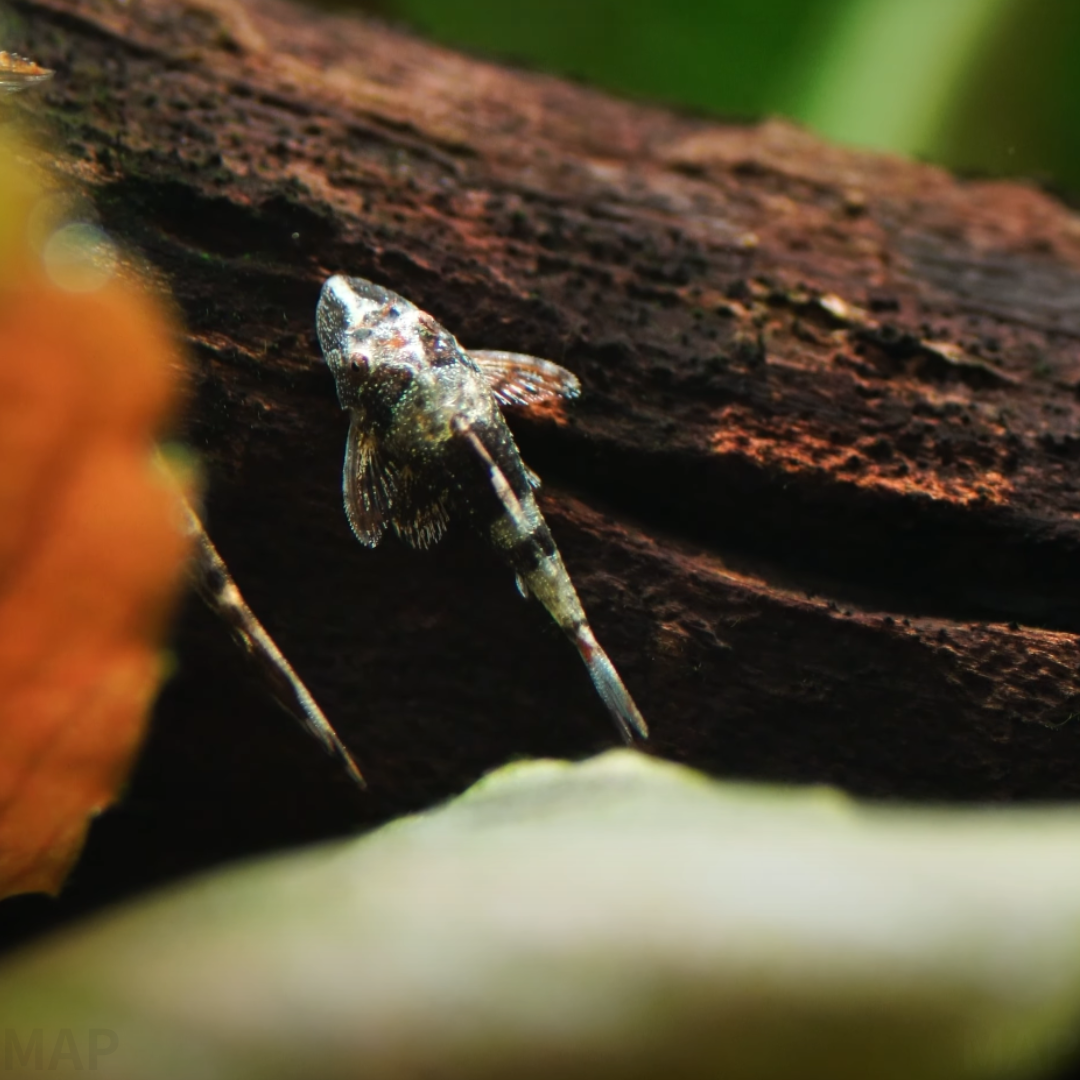
解説 / Description
バンブルビーオトシンクルスは、南米アマゾン川流域に生息するロリカリア科の超小型ナマズです。最大でも2センチメートルに満たないその小さな体躯と、ミツバチを思わせる黒と黄色の鮮やかな縞模様からその名が付けられました。2022年には最新の研究により「リノトキンクルス属」という新しいグループに分類され、学術的にも大きな注目を集めています。水草水槽の景観を損なわないサイズ感と、葉の表面を傷つけずにコケを掃除する能力から、ネイチャーアクアリウムを愛好する方々の間で非常に高い人気を誇ります。しかし、非常に繊細な性質を持っており、その真価を引き出すには高度な飼育技術が必要とされる、まさにアクアリストの腕が試される魚種と言えるでしょう。 The Bumblebee Otocinclus is an ultra-small catfish belonging to the Loricariidae family, native to the Amazon River basin in South America. Its name comes from its tiny body, reaching less than 2 cm, and its vibrant black and yellow stripes reminiscent of a bumblebee. In 2022, it was reclassified into the new genus Rhinotocinclus, attracting significant academic attention. Highly popular among nature aquarium enthusiasts for its size and ability to clean algae without damaging delicate plants, this species is known for its extreme sensitivity, requiring advanced husbandry skills to thrive.
基本情報 / Basic Information
| 学名 / Scientific Name | Rhinotocinclus isabelae |
|---|---|
| 通称 / Common Name | バンブルビーオトシンクルスBumblebee Otocinclus |
| 分類 / Family | ナマズ目ロリカリア科ヒポプトポマ亜科リノトキンクルス属Siluriformes, Loricariidae, Hypoptomatinae, Rhinotocinclus |
| 英名 / English Name | Bumblebee Otocinclus |
| 分布 / Distribution | ペルー(ナナイ川、ティグレ川流域)Peru (Rio Nanay and Rio Tigre basins) |
| 最大体長 / Max Size | 約1.5cmから1.9cmApprox. 1.5cm – 1.9cm |
| 寿命 / Lifespan | 約3年から4年(適切な飼育下において)Approx. 3 – 4 years (under optimal care) |
飼育環境 / Aquarium Environment
| 水槽サイズ / Tank Size | 45cmから60cm規格水槽(水量40L以上を推奨)45cm to 60cm standard aquarium (minimum 40L recommended) |
|---|---|
| 水温 / Temperature | 22度から26度(高水温には非常に弱いため夏場はクーラー必須) 22 to 26 degrees Celsius (highly sensitive to heat, chiller required in summer) |
| 水質 / Water Quality | 弱酸性から中性の軟水(pH 6.5から7.5)Soft water, slightly acidic to neutral (pH 6.5 – 7.5) |
| レイアウト / Layout | 豊富な流木と水草(アヌビアス等)を用いた落ち着いた環境Well-planted setup with abundant driftwood (e.g., Anubias) |
| 注意点 / Precautions | アンモニアや亜硝酸に極めて脆弱。ろ過の完全に効いた「熟成した水槽」への導入が不可欠です。Extremely vulnerable to ammonia and nitrite. Introduction into a fully cycled, “mature” aquarium is essential. |
餌と給餌 / Feeding
| 餌の種類 / Diet | バイオフィルム、珪藻(茶ゴケ)、ジェル状人工飼料、微生物添加剤Biofilm, diatoms, gel-based food, and microbial additives |
|---|---|
| 給餌のポイント / Feeding Tips | 餓死しやすい魚種です。水槽内のコケだけでは不足しがちなため、ジェル状飼料を流木に塗るなどの工夫や、微生物の発生を促す粉末餌の併用が強く推奨されます。Prone to starvation. Since natural algae can be insufficient, using gel-based food applied to driftwood and microbial powder stimulants is highly recommended. |
性格と混泳 / Temperament and Tank Mates
| 性格 / Temperament | 非常に臆病で穏やか。群れを好む社会性があります。Extremely shy and peaceful. Social and prefers being in groups. |
|---|---|
| 混泳の相性 / Compatibility | 攻撃性のない小型カラシンやエビ類(ミナミヌマエビ等)が最適。活発すぎる魚や餌を奪う種とは避けてください。Best with peaceful small tetras or dwarf shrimp. Avoid overly active fish or species that compete aggressively for food. |
病気と対策 / Diseases and Prevention
| かかりやすい病気 / Common Diseases | 削痩(餓死)、アンモニア中毒、ワイルド個体特有の寄生虫Emaciation (starvation), ammonia poisoning, and wild-caught specific parasites |
|---|---|
| 対策と予防 / Prevention | 導入時は点滴法による時間をかけた水合わせを行い、腹部の膨らみを毎日確認して栄養状態を把握することが重要です。Use slow drip acclimation during introduction and monitor abdominal roundness daily to ensure proper nutrition. |
増やし方(繁殖) / Breeding
| 雌雄の判別 / Sexing | メスは大きく腹部が丸い。オスは腹鰭に皮弁があり、吻部がメスより高く隆起します。Females are larger with round bellies. Males have skin flaps on pelvic fins and higher snouts. |
|---|---|
| 繁殖形態 / Reproduction | 粘着卵を水草の葉やガラス面に産み付けるタイプです。Adhesive egg layers; eggs are attached to plant leaves or glass surfaces. |
| 繁殖のポイント / Breeding Tips | スコールを模した少し低めの温度での換水が刺激となります。稚魚の育成には微細な微生物(インフゾリア等)が不可欠です。Spawning is triggered by water changes using slightly cooler water. Microscopic organisms (infusoria) are essential for raising fry. |
雑学と豆知識 / Trivia and Fun Facts
| 1. 2022年の大改革:新属リノトキンクルスの設立 / 1. The Great 2022 Reform: The New Genus Rhinotocinclus | バンブルビーオトシンクルスは長らくパロトキンクルス属の未記載種として扱われてきましたが、2022年、ついに新属リノトキンクルスの一員として正式に認められました。属名の由来はギリシャ語の「くちばし」と「オトシンクルス」を合わせたもので、その名の通りサイの角のように突出した独特の鼻先が特徴です。アクアリウムの歴史に新たなページが刻まれた瞬間でした。Long treated as an undescribed Parotocinclus species, it was officially moved to the new genus Rhinotocinclus in 2022. The name combines the Greek word for “beak” with Otocinclus, highlighting its unique rhino-like protruding snout. It was a significant moment in aquarium history. |
|---|---|
| 2. 種小名イザベラエに込められた愛 / 2. Love in the Specific Name “isabelae” | 本種の学名であるRhinotocinclus isabelaeには、心温まるエピソードがあります。この種を記載したロベルト・リース博士は、自然保護を熱心に支持する自身の愛娘「イザベラ」にちなんでこの名前を付けました。この愛らしい魚の学名には、博士の娘への愛情と、次世代への自然環境保護の願いが永遠に刻まれているのです。The scientific name Rhinotocinclus isabelae has a touching story. Dr. Roberto Reis named it after his daughter, Isabela, an avid supporter of nature conservation. The name forever honors both his love for his daughter and their shared passion for environmental protection. |
| 3. 脂鰭のミステリー:ある個体とない個体 / 3. The Mystery of the Adipose Fin | 通常、魚の分類において脂鰭(あぶらびれ)の有無は重要な指標となりますが、バンブルビーオトシンクルスはその常識を揺るがす存在です。リノトキンクルス属の他種には脂鰭がないことが多いのですが、本種には脂鰭を持つ個体と、完全に消失している個体が同じ種の中で混在しています。なぜこのような個体差が生じるのか、分類学上の興味深い謎として研究者を悩ませています。While the presence of an adipose fin is usually a key taxonomic trait, this species challenges that norm. Unlike most in its genus, some individuals possess an adipose fin while others completely lack it. This intraspecific variation remains a fascinating mystery for taxonomists. |
まとめ / Conclusion
バンブルビーオトシンクルスは、その圧倒的な可愛らしさと希少性で、多くの熱帯魚愛好家を魅了し続けています。しかし、その飼育は決して容易なものではなく、特に「栄養状態の維持」と「徹底した水質管理」という二つの高い壁が存在します。彼らの小さな体の中に宿る力強い生命を支えるのは、飼育者による日々の細やかな観察と、正しい知識に基づいた深い愛情に他なりません。 The Bumblebee Otocinclus continues to enchant hobbyists with its undeniable cuteness and rarity. However, keeping them is no small feat, presenting challenges in nutrition and water quality. Supporting the delicate life within these tiny bodies requires diligent daily observation and a deep affection rooted in sound knowledge.
もしあなたが、成熟した豊かな水草水槽をお持ちであれば、この宝石のような小さな住人を迎え入れる資格があるかもしれません。彼らが元気に水草の葉をハムハムと掃除する姿は、あなたのアクアリウムライフにこれまでにない癒やしと喜びをもたらしてくれることでしょう。持続可能な飼育を目指し、ぜひ彼らとの素晴らしい関係を築いてみてください。 If you possess a mature, well-planted aquarium, you may be ready to welcome these tiny jewels. Watching them busily clean your aquatic plants will bring a unique sense of peace and joy to your life. Aim for sustainable care and build a wonderful relationship with these extraordinary little fish.

気になる道具や飼い方を見つけてみませんか?
 アイのアクアグッズ案内コケを食べるコイの仲間に合わせる飼育用品|フライングフォックス・アルジイーター・ガラ道具の特徴や使い方、選ぶときのポイントをアイが紹介します。記事はコチラ →
 アイのアクアグッズ案内バルブの仲間に合わせる飼育用品|チェリーバルブ・スマトラ・中型種の水槽とろ過道具の特徴や使い方、選ぶときのポイントをアイが紹介します。記事はコチラ →
さまざまな飼育テーマをご紹介。リンク先の記事には広告・商品紹介が含まれます。
案内・紹介記事一覧へ →参考文献および典拠資料
1. 一次記載論文および分類学的レビュー
-
Reis, R. E., & Lehmann A., P. (2022). A new genus of the South American armored catfish subfamily Hypoptopomatinae (Siluriformes: Loricariidae), with descriptions of five new species. Neotropical Ichthyology, 20(2), e220002.
(本種の初記載、新属 Rhinotocinclus の設立、および種小名 isabelae の語源に関する一次資料。doi: 10.1590/1982-0224-2022-0002) -
Reis, R. E. (2004). Otocinclus cocama, a new uniquely colored loricariid catfish from Peru (Teleostei: Siluriformes), with comments on its phylogenetic relationships. Copeia, 2004(1), 109-115.
(近縁種ゼブラオトシンクルスの記載およびペルー産ロリカリア類の系統比較資料)
3. データベースおよび流通実態資料
-
PlanetCatfish.com. (2022). Rhinotocinclus isabelae Species Entry.
URL: https://www.planetcatfish.com/common/species.php?species_id=7302 (アクセス日:2024年4月。アクアリウムにおける流通名や飼育知見の補完資料) -
Museo de Historia Natural (MUSM), Lima, Peru. Ichthyology Collection Database.
(ナナイ川およびティグレ川におけるホロタイプ標本・パラタイプ標本の採取記録および収蔵データの典拠)
※本図鑑の情報は、記載論文(Reis & Lehmann, 2022)に記された形態計測データおよび生態的知見を基幹とし、日本国内の観賞魚流通実態(トリートメント技術、給餌プロトコル)を統合して構成されています。




コメント