

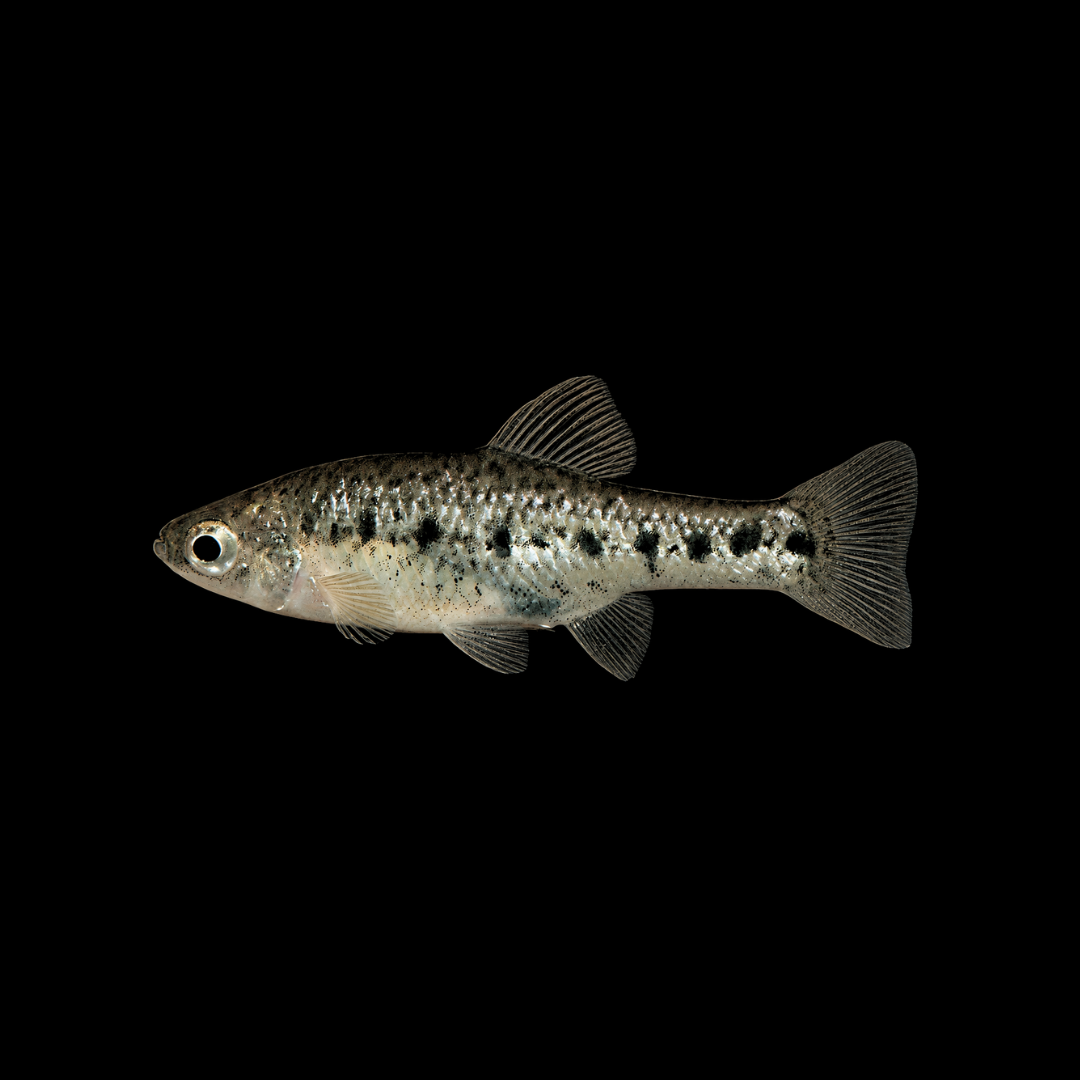
解説 / Description
チャパリクティス・エンカウストゥスは、メキシコ中央高原のレルマ・サンティアゴ水系に固有のグーデア科の淡水魚です。チャパラ湖を代表的な産地とし、銀灰色の体側に並ぶ不規則な暗色の縦帯が特徴です。この縦帯は、斑点模様を持つ近縁のチャパリクティス・パルダリスと見分けるうえでも重要な特徴になります。高地の湖沼や流れの緩い水路に生息し、飼育では長期間の高水温を避けた管理が向いています。 Chapalichthys encaustus is a freshwater goodeid endemic to the Lerma–Santiago drainage of Mexico’s central highlands, with Lake Chapala as one of its best-known localities. Its silver-gray flanks carry irregular dark vertical bars, an important feature that separates it from the spotted Chapalichthys pardalis. It inhabits lakes, ponds, and slow-flowing channels in the highlands, and aquarium care is best centered on avoiding prolonged high temperatures.
本種の大きな魅力は、外見だけでなく繁殖生態にもあります。雌は体内で胚を育て、胚は「トロフォテニア」と呼ばれる栄養吸収器官を通して母体由来の栄養を受け取ります。出産直前の胚が約1cmに達した記録があり、親魚による稚魚の食害も比較的少ないため、条件が整えば群れの中で世代をつなぎやすい魚です。一方、野生個体群は生息地の汚染や環境改変、外来種の影響を受けています。産地情報と系統を適切に管理しながら飼育下繁殖を続けることは、生息地外保全を支える一つの手段になります。 Its appeal extends beyond appearance. Females develop embryos internally, and the embryos absorb maternally supplied nutrients through specialized organs called trophotaeniae. Near-term embryos of about 1 cm have been recorded, and adults show relatively little fry predation, so a colony can maintain successive generations when conditions are suitable. Wild populations have been affected by pollution, habitat alteration, and introduced species. Captive breeding can contribute to ex-situ conservation when locality information and lineages are managed carefully.
基本情報 / Basic Information
| 学名 / Scientific Name | Chapalichthys encaustus (Jordan & Snyder, 1899) |
|---|---|
| 通称 / Common Name | チャパリクティス・エンカウストゥス、ピンティート・デ・オコトランBarred splitfin, Pintito de Ocotlán |
| 分類 / Family | カダヤシ目・グーデア科・グーデア亜科・チャパリクティス属Order Cyprinodontiformes, family Goodeidae, subfamily Goodeinae, genus Chapalichthys |
| 英名 / English Name | Barred splitfin |
| 分布 / Distribution | メキシコ中央西部のレルマ・サンティアゴ水系。歴史的にはレルマ川下流、サンティアゴ川上流、チャパラ湖と周辺の湖沼・支流に分布していましたが、主要河川の本流では汚染などによって姿を消した地域があります。現在もチャパラ湖、デュエロ川流域、カヒティトラン湖、ロス・ネグリトス湖などで記録されています。West-central Mexico in the Lerma–Santiago system. Historically it occurred in the lower Lerma, upper Santiago, Lake Chapala, and associated lakes and tributaries, but it has disappeared from parts of the main river channels because of pollution and other pressures. It is still recorded from Lake Chapala, the Duero drainage, Lake Cajititlán, Los Negritos, and other local waters. |
| 最大体長 / Max Size | 最大体長は測定法によって記録に差があります。全長では雄または性別不明で6cm、雌で8cmとする値がある一方、標準体長93mmの記録もあります。雌が雄より大型になる傾向は認められますが、単一の数値だけで最大サイズを示すのは難しい種です。Published size records differ depending on the measurement used. Values of 6 cm total length for males or unsexed fish and 8 cm for females are reported, while a maximum standard length of 93 mm has also been recorded. Females tend to attain a larger size, but a single maximum figure can therefore be misleading. |
| 寿命 / Lifespan | 本種の飼育下寿命を一律に何年と示せる十分な定量情報は限られています。長期維持では高温を避け、季節に応じて涼しい期間を設ける管理が適しています。Reliable species-specific data do not support a single fixed lifespan figure for captive fish. For long-term maintenance, prolonged heat should be avoided and a cooler seasonal period is appropriate. |
飼育環境 / Aquarium Environment
| 水槽サイズ / Tank Size | 成魚を群れで長期飼育する場合は、約250L以上、120cm規格水槽クラスを目安にします。高さよりも底面積と横方向の遊泳距離を重視し、広い開放水面を確保します。For long-term maintenance of an adult group, about 250 L or more, comparable to a standard 120 cm aquarium, is a suitable target. Floor area and horizontal swimming length are more important than height, and a broad open swimming zone should be retained. |
|---|---|
| 水温 / Temperature | 20~24℃前後を中心に、年間を通して高温を続けない管理が適しています。とくに24℃を超える状態の長期継続は避け、夏は必要に応じて冷却します。冬は20℃未満の期間を2~3か月設ける飼育法が用いられ、春に20~21℃へ上がると繁殖が始まりやすく、25℃前後では繁殖が止まることがあります。 A range around 20–24°C is suitable for routine care, with prolonged warm conditions best avoided. Long-term exposure above 24°C is not recommended in specialist husbandry practice, so summer cooling may be necessary. A winter period below 20°C for two to three months is commonly used; breeding tends to resume as temperatures rise to about 20–21°C and may stop again around 25°C. |
| 水質 / Water Quality | 中性~弱アルカリ性で、中硬水から硬水が適しています。目安はpH 7.0~7.8、GH 10~20 dGHです。極端な軟水化は避け、水質を大きく酸性側へ動かしにくい底床が扱いやすいでしょう。ろ過を十分に効かせ、週1回を基本に大きめの換水を行い、硝酸塩や有機物を蓄積させないことが重要です。Neutral to mildly alkaline, moderately hard to hard water is suitable, with a useful target of pH 7.0–7.8 and GH 10–20 dGH. Avoid substrates that strongly soften and acidify the water. Efficient filtration and substantial regular water changes are important so that nitrate and organic waste do not accumulate. |
| レイアウト / Layout | 広い遊泳空間を中心に取り、岩や流木で部分的に構造を作ります。自然の生息地では水草が少ない場所も多いため、全面を密植する必要はなく、水草を使う場合は側面や隅にまとまりを作る程度で十分です。水流は無~中程度にとどめ、酸素が不足しないようにします。Keep a broad swimming area open and use rocks or wood to provide some structure. Many natural habitats have sparse or no submerged vegetation, so a densely planted aquarium is not required; if plants are used, limited patches at the sides or corners are sufficient. Water movement should range from still to moderate, with good oxygen availability. |
| 注意点 / Precautions | 最大の注意点は、夏の高水温、水質悪化、狭い飼育空間です。高温と水質悪化が重なると体調を崩しやすくなるため、十分なろ過と換水、酸素供給を維持します。活発に泳ぐ魚なので、成魚の長期飼育では小型水槽を避けてください。The main concerns are summer overheating, deteriorating water quality, and inadequate swimming space. Heat combined with poor water quality can reduce condition, so efficient filtration, regular water changes, and good oxygenation are important. Because the fish is active, small aquaria are not suitable for long-term adult maintenance. |
餌と給餌 / Feeding
| 餌の種類 / Diet | 付着藻類をよく利用しつつ、水生昆虫なども食べる雑食性です。飼育下では植物質を多く含むフレーク、顆粒、タブレットなどを主食にし、藻類や付着生物を利用できる環境を整えるとよいでしょう。ブラインシュリンプなどの動物質は補助的に与えます。It is an omnivore that makes extensive use of algae and aufwuchs while also taking aquatic invertebrate prey. In captivity, plant-rich flakes, granules, and tablets make suitable staples, and access to natural algae or biofilm is useful. Animal foods such as brine shrimp are best used as supplements rather than the sole diet. |
|---|---|
| 給餌のポイント / Feeding Tips | 食べ残しが出ない量を与え、植物質を軸にしながら動物質を補助するバランスを保ちます。水槽内に付着藻類が育つ余地を残すことも、本来の採食行動を引き出す助けになります。稚魚は出生時から比較的大きく、細かい人工飼料やブラインシュリンプ幼生などを利用できます。Offer only what the fish will consume without leaving excess food, keeping plant-rich foods as the foundation and animal foods as supplements. Allowing some algae to develop in the aquarium also supports natural grazing behavior. The relatively large newborn fry can use finely crushed prepared foods and newly hatched brine shrimp. |
性格と混泳 / Temperament and Tank Mates
| 性格 / Temperament | 活発で物おじしにくく、複数個体での群れ飼育やコロニー維持に向く魚です。同種間の強い攻撃性は通常あまり見られませんが、同程度の大きさの雄同士で小競り合いが起こることがあります。Active and generally bold, this species is well suited to group or colony maintenance. Strong intraspecific aggression is usually uncommon, although similarly sized males may occasionally spar. |
|---|---|
| 混泳の相性 / Compatibility | 本種の混泳相性を種ごとに検証した情報は限られています。混泳する場合は、同程度の水温と中性~弱アルカリ性・中硬水に対応でき、活発な遊泳に耐えられる相手を選び、実際の行動を観察します。繁殖や系統維持を重視する場合は、十分な広さを確保した単独種水槽が最も管理しやすい方法です。Detailed species-by-species compatibility information is limited. If kept in a community, choose active tank mates that tolerate the same temperature and neutral to mildly alkaline, moderately hard water, and observe interactions closely. For breeding and lineage management, a spacious species-only aquarium remains the easiest arrangement to control. |
病気と対策 / Diseases and Prevention
| かかりやすい病気 / Common Diseases | 本種に特有の代表的な飼育病は確認されていません。一般的な淡水魚と同様に、環境が崩れれば感染症や体表トラブルを起こす可能性があります。とくに高温が長く続き、水質悪化が重なる状態は体調と抵抗力を落とす要因になるため注意が必要です。No characteristic aquarium disease specific to this species has been established. As with other freshwater fishes, infections and skin problems can occur when environmental conditions deteriorate. Prolonged warm conditions combined with poor water quality are particularly important stressors because they can reduce overall condition and resistance. |
|---|---|
| 対策と予防 / Prevention | 予防の基本は、適正水温、十分な酸素、安定した硬度、定期的な換水、過密回避です。新規導入個体は可能であれば別水槽で経過を観察し、急激な水温・pH・硬度変化を避けて水合わせします。異常が出た場合は、まず水温と水質を確認し、原因を切り分けてから症状に合った治療を行います。Prevention centers on suitable temperature, strong oxygenation, stable hardness, regular water changes, and avoiding overcrowding. When possible, observe new arrivals separately before introduction and acclimate them without abrupt changes in temperature, pH, or hardness. If symptoms appear, check environmental conditions first, identify likely causes, and then choose treatment appropriate to the condition. |
増やし方(繁殖) / Breeding
| 雌雄の判別 / Sexing | 雄は臀鰭前方の鰭条が短縮し、その後方に切れ込みを作るグーデア亜科特有のアンドロポディウムを持ちます。雄は雌より背鰭が大きく発達する傾向もあります。体色や体形には個体差があるため、雌雄判別では臀鰭の構造を見るのが最も確実です。Males possess the goodeine andropodium, formed by shortened anterior anal-fin rays separated from the remainder of the fin by a notch. They also tend to have a larger dorsal fin than females. Color and general body shape vary between individuals, so the anal-fin structure is the most reliable sexing character. |
|---|---|
| 繁殖形態 / Reproduction | 体内受精を行う胎生魚で、胚は卵黄だけに依存せず、トロフォテニアと呼ばれる栄養吸収器官を通して母体由来の栄養を受け取ります。本種では妊娠期間の定量的な記録が限られ、一律の週数で示すのは適切ではありません。歴史的な観察では、標準体長68mmの雌から、全長約10mmの出産直前胚21尾が確認されています。稚魚は約1cmと大きめの状態で生まれます。This is a viviparous fish with internal fertilization. Embryos do not rely on yolk alone but absorb maternally supplied nutrients through specialized trophotaeniae. Species-specific quantitative records are too limited to justify a single fixed gestation period. In a historical observation, a 68 mm standard-length female carried 21 near-term embryos approximately 10 mm long. The young are therefore born at a relatively large size of about 1 cm. |
| 繁殖のポイント / Breeding Tips | 親魚による稚魚の食害は比較的少なく、広い水槽と隠れ場所があれば親子を同居させるコロニー繁殖が可能です。春に水温が20~21℃前後へ上がると繁殖が始まりやすく、冬は20℃未満の涼しい期間を2~3か月設けて繁殖を休ませる方法が用いられます。稚魚は出生時から大きく、自力で泳いで細かい人工飼料やブラインシュリンプ幼生を利用できます。Adults show relatively little fry predation, so colony breeding is practical when the aquarium is spacious and offers cover. Breeding commonly resumes as temperatures rise to around 20–21°C, while a winter period below 20°C for two to three months is used to provide a seasonal reproductive pause. The relatively large newborn fry swim immediately and can use finely prepared foods and newly hatched brine shrimp. |
雑学と豆知識 / Trivia and Fun Facts
| 1. 「焼き付けられた魚」という名前 / 1. A Fish “Branded” With Bars | 属名Chapalichthysは1902年にセス・ユージーン・ミークが設けた名前で、命名理由そのものは明記されていませんが、一般には模式産地のチャパラ湖と、古代ギリシャ語で魚を意味するichthysを組み合わせたものと解釈されています。種小名encaustusは「焼き付けられた」「焼印を押された」といった意味を持ち、体側の縦帯を焼印のように見立てた名と考えられています。地名と模様の印象が重なり、この魚の学名には原産地と姿の両方が映し込まれています。The genus Chapalichthys was established by Seth Eugene Meek in 1902. Meek did not explicitly explain the name, but it is generally interpreted as combining Lake Chapala, the type locality of the species, with ichthys, the ancient Greek word for fish. The species epithet encaustus means burned in or branded and is understood to refer to the dark vertical bars on the flanks. In this way, the scientific name reflects both the fish’s homeland and its appearance. |
|---|---|
| 2. 魚類の「胎盤」に似たトロフォテニア / 2. Trophotaeniae: A Fish Analogue of Placental Nutrition | チャパリクティス・エンカウストゥスを含むグーデア亜科では、胚が後腸由来のトロフォテニアを発達させ、卵巣内の母体由来栄養を吸収します。哺乳類の胎盤と同じ器官ではありませんが、母体から胚へ栄養を渡すという役割の一部はよく似ています。なお、トロフォテニアが出産前後にプログラム細胞死を伴って退縮する仕組みや、母体由来のビテロジェニンを取り込む仕組みは、近縁のグーデア科魚類Xenotoca eiseniを用いた研究で詳しく実証されたものです。本種で同じ分子機構のすべてが直接確認されたという意味ではありませんが、グーデア科の胎生がどのように成り立つのかを理解する重要な手がかりになっています。In the viviparous goodeines, including Chapalichthys encaustus, embryos develop hindgut-derived trophotaeniae that absorb maternally supplied nutrients within the ovary. These structures are not homologous to the mammalian placenta, although part of their nutritional role is comparable. Detailed demonstrations of apoptotic trophotaenial regression and maternal vitellogenin uptake have been made in the related goodeid Xenotoca eiseni. Those studies illuminate the family-level reproductive strategy, but they should not be read as direct proof that every molecular detail has been demonstrated specifically in C. encaustus. |
| 3. かつてチャパラ湖の暮らしを支えた小魚 / 3. Once Part of Daily Life Around Lake Chapala | 現在は希少な観賞魚として語られることの多い本種ですが、かつてのチャパラ湖ではもっと身近な魚でした。大量に漁獲した個体を天日で乾燥させ、食用にしていた記録が残っています。現在の水槽で見る小さな縦縞の魚の背景には、観賞魚としての価値だけでなく、湖とともに暮らしてきた人々の食文化や漁業の記憶も重なっています。野生個体群の減少は、生物相の変化とともに、こうした地域と魚の関係が変わってきた歴史も映しています。Today this species is often discussed as a rare aquarium and conservation fish, but it was once far more familiar around Lake Chapala. Records describe the fish being caught in quantity, dried in the sun, and eaten. The barred fish seen in an aquarium therefore carries not only aquarium value but also a connection to the fishing and food traditions of lakeside communities. Its decline in the wild reflects both ecological change and a changing relationship between local people and the lake’s native fishes. |
| 4. 水槽での繁殖が持つ保全上の意味 / 4. Why Captive Breeding Matters | チャパリクティス・エンカウストゥスはIUCNで絶滅危惧II類(VU)と評価されており、生息地では水質汚染、環境改変、外来魚などの影響を受けてきました。一方、飼育下では親による稚魚の食害が比較的少なく、コロニー繁殖が可能です。産地情報と系統を混同せずに世代をつなぐ飼育は、生息地外で遺伝的な系統を残す助けになります。ただし、水槽内での繁殖は野生の生息環境を守ることの代わりではなく、両者は別の役割を持つ保全手段です。Chapalichthys encaustus is assessed as Vulnerable on the IUCN Red List and has been affected by pollution, habitat alteration, and introduced fishes. In captivity, relatively low fry predation makes colony breeding practical. Maintaining locality information and keeping distinct lineages from being mixed can help preserve genetic stocks outside the natural habitat. Captive breeding, however, does not replace protection of the wild habitat; the two approaches serve different conservation roles. |
| 5. 近縁種をめぐる分類学の変化 / 5. A Genus Reshaped by Modern Taxonomy | チャパリクティス属では、長くC. encaustus、C. pardalis、C. peraticusの3種が区別されてきました。2020年の属全体を対象とした再検討では、ミトコンドリアDNAと形態形質の比較からC. peraticusをC. pardalisの新参異名として扱い、有効種をC. encaustusとC. pardalisの2種とする結論が示されました。C. encaustusはレルマ・サンティアゴ水系の系統として明瞭に分かれ、体側の縦帯でも斑点型のC. pardalisと区別できます。一部のデータベースには旧来の3種表記が残っているため、名称を調べる際には分類体系の更新時期にも注意が必要です。The genus Chapalichthys was long treated as containing three species: C. encaustus, C. pardalis, and C. peraticus. A 2020 revision combining mitochondrial DNA with morphology recognized C. peraticus as a junior synonym of C. pardalis and concluded that the genus contains two valid species, C. encaustus and C. pardalis. Chapalichthys encaustus forms the distinct Lerma–Santiago lineage and can also be separated by its vertical bars rather than the spotted pattern of C. pardalis. Some databases still retain the older three-species treatment, so different names may appear depending on the taxonomic source and update date. |
まとめ / Conclusion
チャパリクティス・エンカウストゥスは、銀灰色の体に並ぶ縦帯と活発な泳ぎ、そしてトロフォテニアを介して胚を育てる独特の胎生繁殖をあわせ持つ魚です。高温を長く続けず、中硬水から硬水を保ち、広い遊泳空間と清浄な水を用意することが、健やかな群れを維持する基本になります。付着藻類を利用できる環境と植物質を軸にした給餌も、本来の採食特性に合った管理です。 Chapalichthys encaustus combines a silver-gray body marked by dark bars, active swimming behavior, and an unusual form of viviparity in which embryos receive maternal nutrition through trophotaeniae. Avoiding prolonged heat, maintaining moderately hard to hard water, and providing ample swimming space and clean water are the foundations of successful long-term care. A plant-rich diet and access to natural algae also suit its feeding ecology.
親魚が稚魚を食べにくく、群れの中で世代を重ねやすい性質は、本種の飼育と繁殖を大きな魅力にしています。野生では生息環境の変化にさらされているため、飼育下では産地や系統を大切にし、無理のない温度サイクルと安定した水質のもとで丁寧に維持していくことが重要です。縦帯の素朴な美しさと特異な繁殖生態を、群れの変化とともに長く観察できる魚です。 Relatively low fry predation and the ability to maintain successive generations within a colony make breeding one of the species’ major attractions. Because wild populations remain exposed to environmental pressures, captive fish are best maintained with careful attention to locality and lineage, stable water quality, and an appropriate seasonal temperature cycle. Its restrained barred pattern and unusual reproductive biology can then be appreciated through the changing generations of the group.

気になる道具や飼い方を見つけてみませんか?
 アイのアクアグッズ案内プレコ飼育に必要なもの|餌・流木・ろ過・隠れ家・掃除用品道具の特徴や使い方、選ぶときのポイントをアイが紹介します。記事はコチラ →
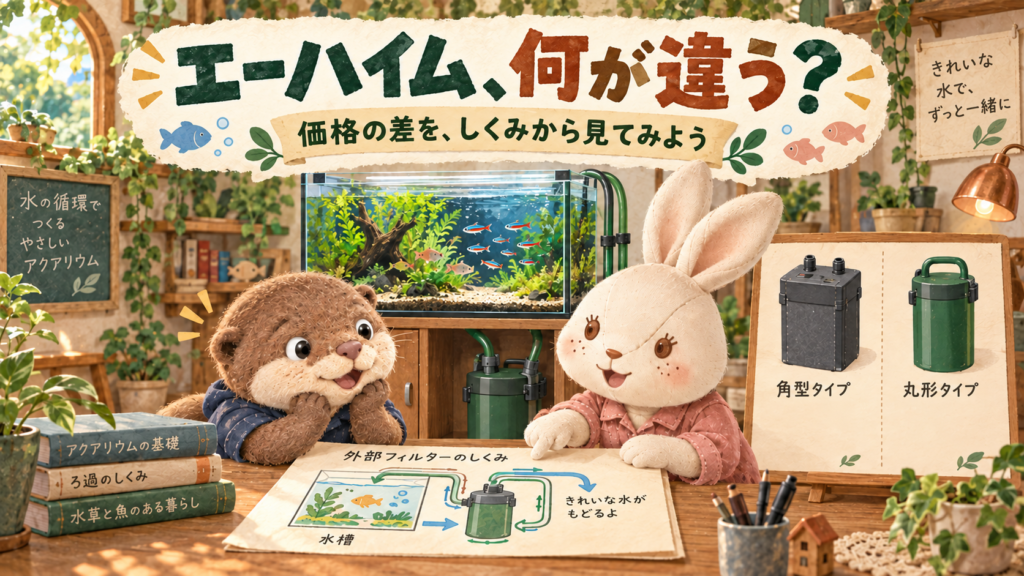 アイのアクアグッズ案内エーハイム、安いのと高いのは何が違う? コタロウと見比べる外部フィルター道具の特徴や使い方、選ぶときのポイントをアイが紹介します。記事はコチラ →
さまざまな飼育テーマをご紹介。リンク先の記事には広告・商品紹介が含まれます。
案内・紹介記事一覧へ →分布マップ
Chapalichthys encaustus は、メキシコ中央西部のレルマ・サンティアゴ水系に分布する固有の淡水魚です。歴史的にはレルマ川下流、サンティアゴ川上流、チャパラ湖とその周辺の湖沼・支流に分布し、現在もチャパラ湖、デュエロ川流域、カヒティトラン湖、ロス・ネグリトス湖などで記録されています。
※この地図は記事中の分布情報をもとに、レルマ・サンティアゴ水系の主要な分布地域が見えるよう設定した概略表示です。マーカーは分布域を把握するための代表地点としてチャパラ湖付近に置いたもので、実際の採集地点や個体の確認地点を示すものではありません。
参考文献
-
Piller, K. R., Bloom, D. D., Lyons, J. & Mercado-Silva, N. (2020). Systematics and Taxonomy of Chapalichthys (Cyprinodontiformes: Goodeidae), a Small Genus of Live-Bearers from Central Mexico. Copeia, 108(4), 1004–1011. https://doi.org/10.1643/CI2020044分類・近縁種との識別・属内の系統関係
-
Lyons, J., Piller, K. R., Artigas-Azas, J. M., Dominguez-Dominguez, O., Gesundheit, P., Köck, M., Medina-Nava, M., Mercado-Silva, N., García, A. R. & Findley, K. M. (2019). Distribution and current conservation status of the Mexican Goodeidae (Actinopterygii, Cyprinodontiformes). ZooKeys, 885, 115–158. https://doi.org/10.3897/zookeys.885.38152分布・個体群の減少・生息地の変化・保全状況
-
Froese, R. & Pauly, D. (eds.). FishBase. Chapalichthys encaustus (Jordan & Snyder, 1899). https://www.fishbase.se/summary/Chapalichthys-encaustus.html学名・分類・体長・pH・硬度・IUCN評価
-
Goodeid Working Group. Chapalichthys encaustus. https://www.goodeidworkinggroup.com/node/38生息環境・水槽サイズ・水温管理・水流・給餌・群れ飼育・繁殖管理
-
Hollenberg, F. & Wourms, J. P. (1995). Embryonic growth and maternal nutrient sources in goodeid fishes (Teleostei: Cyprinodontiformes). Journal of Experimental Zoology, 271(5), 379–394. https://doi.org/10.1002/jez.1402710508グーデア科の母体依存型栄養・トロフォテニア・胎生の基礎
-
Iida, A., Nishimaki, T. & Sehara-Fujisawa, A. (2015). Prenatal regression of the trophotaenial placenta in a viviparous fish, Xenotoca eiseni. Scientific Reports, 5, 7855. https://doi.org/10.1038/srep07855近縁グーデア科魚類におけるトロフォテニアの退縮とアポトーシス
-
Iida, A., Arai, H. N., Someya, Y., Inokuchi, M., Onuma, T. A., Yokoi, H., Suzuki, T., Hondo, E. & Sano, K. (2019). Mother-to-embryo vitellogenin transport in a viviparous teleost Xenotoca eiseni. Proceedings of the National Academy of Sciences of the United States of America, 116(44), 22359–22365. https://doi.org/10.1073/pnas.1913012116近縁グーデア科魚類における母体から胚への栄養輸送
-
Francis-Floyd, R. & Petty, B. D. Routine Health Care of Fish. Merck Veterinary Manual. https://www.merckvetmanual.com/all-other-pets/fish/routine-health-care-of-fish病気の予防・水質管理・衛生・新規導入魚の隔離





コメント