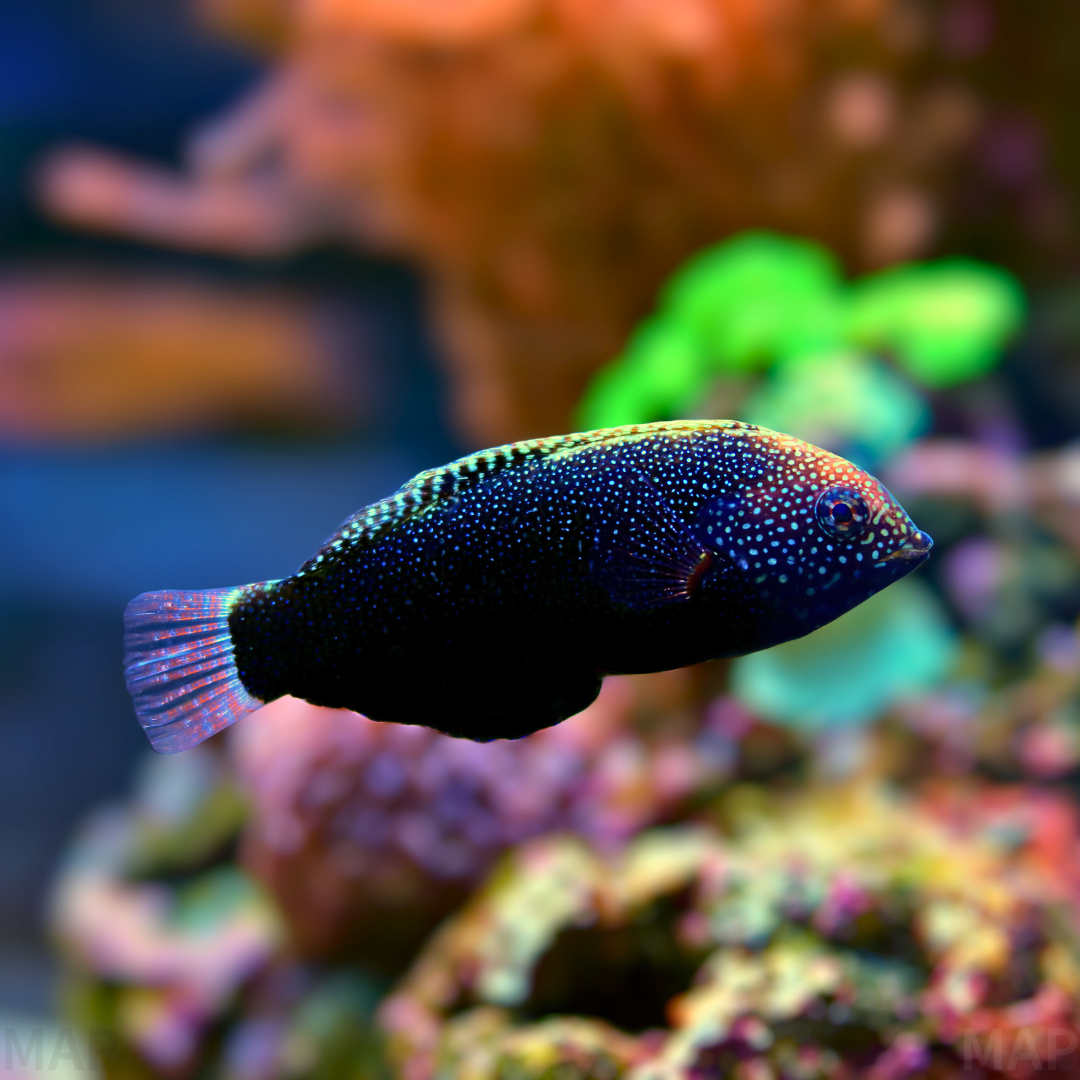
セジロノドグロベラは、ノドグロベラ属の中でも特に漆黒に近い体色と、そこに散りばめられた白い斑点のコントラストが非常に美しい海水魚です。その魅力は外見だけにとどまらず、幼魚期に見せる枯葉のような泳ぎや、夜間に砂の中へ完全に潜って眠るという、サンゴ礁での過酷な生存競争を勝ち抜くための驚異的な生態にあります。デリケートな性質を持ち、飼育には熟成した水槽環境と厚い砂床が必要ですが、ひとたび環境に馴染んだ個体が見せる優雅な姿は、多くの熱心なアクアリストを魅了してやみません。The Black Leopard Wrasse is a stunning marine fish known for its intense dark coloration contrasted with brilliant white spots. Beyond its visual appeal, its biological adaptations—such as mimicking a drifting leaf during its juvenile stage and burying itself in the sand at night—showcase an incredible survival strategy in the coral reef ecosystem. While they are delicate and require an established aquarium with a deep sand bed, a well-acclimated individual offers a graceful and rewarding sight for dedicated aquarists.
インド洋東部から西太平洋(日本では琉球列島や小笠原諸島に見られる)Eastern Indian Ocean to Western Pacific, including the Ryukyu and Ogasawara Islands.
最大体長 / Max Size
約12cmApprox. 12 cm
寿命 / Lifespan
3年から5年程度(環境による)Approx. 3 to 5 years depending on conditions.
飼育環境 / Aquarium Environment
水槽サイズ / Tank Size
280リットル以上推奨(90cm規格水槽または120cmスリム水槽以上)Recommended 280 liters (75 gallons) or more.
水温 / Temperature
24℃から28℃24°C – 28°C (72°F – 82°F)
水質 / Water Quality
pH 8.1から8.4、比重 1.020から1.025の清浄な海水Clean saltwater with pH 8.1-8.4 and specific gravity 1.020-1.025.
レイアウト / Layout
きめ細かいパウダー状のサンゴ砂を5cm以上敷き、隠れ家となるライブロックを配置At least 5 cm of fine aragonite sand with live rock structures for hiding.
注意点 / Precautions
砂がない環境ではストレスで衰弱します。また、驚くと飛び出すため蓋を徹底してください。They deteriorate without sand. Use a tight-fitting lid to prevent jumping.
餌と給餌 / Feeding
餌の種類 / Diet
イサザアミ(マイシス)やコペポーダなどの冷凍飼料、慣れれば人工飼料Frozen foods like mysis shrimp and copepods; can be weaned onto pellets.
給餌のポイント / Feeding Tips
代謝が激しいため、1日に複数回(3回から4回)に分けて少量を頻繁に与えるのが理想です。Due to high metabolism, small feedings 3-4 times a day are ideal.
性格と混泳 / Temperament and Tank Mates
性格 / Temperament
非常に温和で臆病な性格です。Very peaceful and shy.
混泳の相性 / Compatibility
攻撃的な魚との混泳は避け、温和な小型魚との組み合わせを推奨します。Avoid aggressive tank mates; compatible with other peaceful small fish.
病気と対策 / Diseases and Prevention
かかりやすい病気 / Common Diseases
白点病、ウーディニウム病、輸送時の吻端(口元)の擦り傷Ich (Cryptocaryon), Velvet (Amyloodinium), and mouth injuries from shipping.
対策と予防 / Prevention
殺菌灯の設置と、砂を用いた適切なトリートメントでストレスを軽減します。Use UV sterilizers and provide sand during quarantine to reduce stress.
増やし方(繁殖) / Breeding
雌雄の判別 / Sexing
雌(初期相)は黒地に白斑、雄(終期相)は鱗に緑の縁取りがあり尾鰭が青白くなります。Females (IP) have white spots on black; males (TP) have green-edged scales and bluish tails.
繁殖形態 / Reproduction
雌性先熟の性転換を行い、ハーレムを形成して産卵します。Protogynous hermaphrodites that form harems for spawning.
繁殖のポイント / Breeding Tips
水槽内での繁殖例は極めて稀ですが、大きな水槽で複数の雌を飼育すると性転換が見られます。Rare in captivity; sex change can be observed in large tanks with multiple females.
雑学と豆知識 / Trivia and Fun Facts
1. 学名の由来と「巨大な喉の歯」 / 1. Origin of Name and “Huge Pharyngeal Teeth”
属名であるマクロファリンゴドンは、ギリシャ語で「巨大な咽頭の歯」を意味します。これは、彼らがサンゴ礁で硬い殻を持つ巻貝などを噛み砕いて食べるために、喉の奥に強靭な歯を発達させたことに由来しています。見た目の繊細さとは裏腹に、解剖学的には非常にパワフルな破砕能力を秘めているのです。The genus name Macropharyngodon means “huge pharyngeal teeth” in Greek. This refers to the powerful teeth in their throat evolved to crush hard-shelled mollusks. Despite their delicate appearance, they possess impressive crushing power.
2. 幼魚が見せる「枯葉」への完璧な擬態 / 2. Juvenile Leaf Mimicry
着底直後の幼魚は、自身の尾鰭を透明に保つことで魚としての輪郭を消し、波に揺られる枯葉や海藻の断片のように不規則に泳ぎます。これは「隠蔽擬態」と呼ばれ、視覚に頼る捕食者の目を欺き、食べられない浮遊物として認識させるための高度な生存戦略です。Newly settled juveniles have transparent tails to break up their silhouette and swim erratically like drifting leaves. This “cryptic mimicry” tricks predators into seeing them as inedible debris.
3. 敵を惑わす予測不能な「上下運動」 / 3. The “Up and Down” Confusion Movement
成魚が外敵に接近された際、一直線に逃げるのではなく、その場で上下に激しくバウンドするように動くことがあります。これは捕食者の照準を狂わせ、攻撃のタイミングを逸らさせる効果があると考えられています。自然界における彼らの泳ぎは、常に計算された防衛行動の連続なのです。When threatened, adults may bounce up and down instead of swimming away. This unpredictable movement is thought to confuse predators and disrupt their strike timing.
4. 脳が支配する劇的な「性転換」システム / 4. Brain-Controlled Sex Change
セジロノドグロベラは、群れの優位な雄がいなくなると、最大サイズの雌がわずか数週間で雄へと変身します。この際、脳が状況を視覚的に認識し、アロマターゼ遺伝子の働きを抑制することで、女性ホルモンを遮断して一気に精巣を発達させるという、驚異的な遺伝子の再配線が行われています。If the dominant male disappears, the largest female transforms into a male within weeks. The brain perceives the social change and triggers a genetic rewiring that shuts down estrogen production to develop testes.
5. 輸送の難しさと「パニック」のリスク / 5. Shipping Difficulties and Panic Risks
本種は輸送ストレスに極めて弱く、袋の中で砂に潜ろうとして吻端を痛めてしまう事故が多発します。日本市場では比較的安価に流通していますが、本来は熟練者が時間をかけて環境を整え、丁寧にケアを施して初めて長期飼育が可能になる、非常に価値ある存在なのです。This species is sensitive to shipping stress, often injuring its snout trying to bury itself in the bag. While affordable in the Japanese market, they are actually high-maintenance fish that require expert care and preparation.
まとめ / Conclusion
セジロノドグロベラは、その美しい色彩と、枯葉擬態や性転換といった驚異的な生態を併せ持つ、まさにサンゴ礁の芸術品とも呼べる魚です。飼育の難易度は決して低くありませんが、彼らが安心して眠れる細かな砂と、豊富な微小生物が湧く熟成した環境を用意することができれば、その真の美しさを水槽内で観察することができるでしょう。The Black Leopard Wrasse is a masterpiece of the coral reef, combining beautiful coloration with fascinating behaviors like leaf mimicry and sex change. While not for beginners, providing fine sand and an established environment rich in micro-fauna will allow you to witness their true splendor in your aquarium.
この魚を迎え入れることは、単なる飼育を超えて、自然界の精巧な進化の仕組みを学ぶ旅でもあります。じっくりと時間をかけて環境を整え、彼らが水槽という新しい海で星のように輝く姿を、ぜひ大切に見守ってあげてください。Keeping this fish is more than a hobby; it is a journey into understanding the intricate mechanisms of evolution. Take your time to prepare the environment and cherish the sight of them shining like stars in their new aquatic home.
Herre, A. W. C. T. (1932). Five new Philippine fishes. Copeia, 1932(3), 139-142.(本種の原記載論文)
Randall, J. E. (1978). A revision of the fish genus Macropharyngodon (Labridae), with descriptions of five new species. Records of the Australian Museum, 31(13), 742-809.(ノドグロベラ属の系統分類学的再編)
Froese, R. and D. Pauly. Editors. (2024). FishBase. Macropharyngodon negrosensis (Herre, 1932).(魚類データベース:形態・分布データ)
The IUCN Red List of Threatened Species. Macropharyngodon negrosensis.(保全状況および生息環境データ)
Westneat, M. W., & Alfaro, M. E. (2005). Phylogenetic relationships and evolutionary history of the reef fish family Labridae. Molecular Phylogenetics and Evolution.(ベラ科の進化系統に関する研究)
Horiguchi, R., et al. (2010). Social control of sex change in labrid fishes: visual and endocrine mechanisms.(雌性先熟およびアロマターゼ遺伝子に関する知見)



 アイのアクアグッズ案内海水魚の底砂の選び方|サンゴ砂・ライブサンドとおすすめ商品道具の特徴や使い方、選ぶときのポイントをアイが紹介します。記事はコチラ →
 アイのアクアグッズ案内水槽の中に陸地がある!? コタロウと探るアクアテラリウムのメカニズム滝の水はどこから来るの? 白い霧の正体は? アイとコタロウが、水の循環、隠れたポンプ、霧の装置、陸上の植物と水草の葉の変化から、アクアテラリウムのメカニズムを探ります。記事はコチラ →



コメント