

解説 / Description
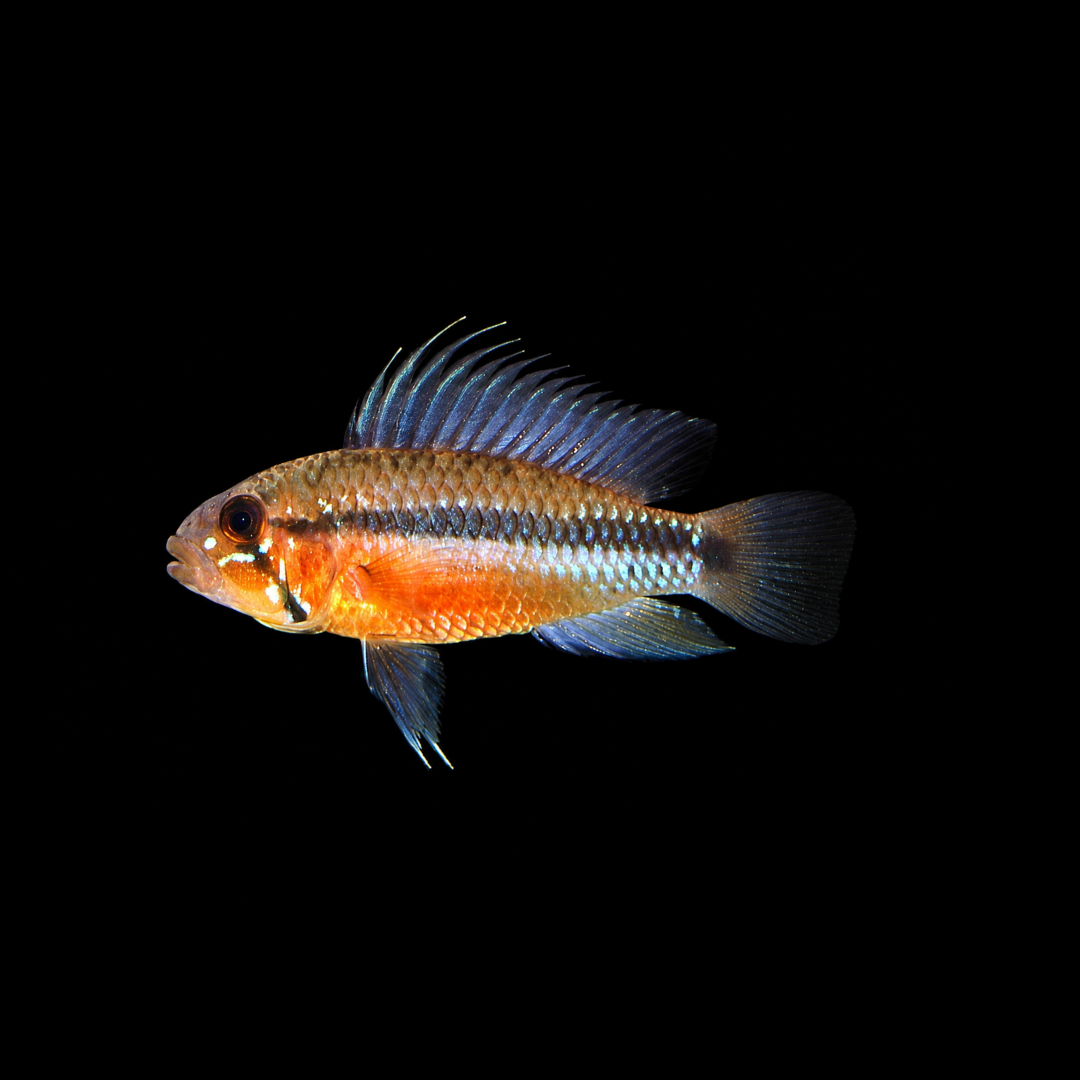
アピストグラマ・アタフアルパは、ペルー北東部のイキトス南西部に分布するドワーフシクリッドです。正式記載以前から観賞魚の世界で「サンセット」と呼ばれ、成熟したオスの力強い体つきと発色、繁殖・育児期のメスが見せる鮮やかな黄色が大きな魅力です。アピストグラマ属の中では大柄で縄張り性も強いため、飼育では水質の数値だけでなく、落ち葉や流木、シェルターで視線と縄張りを分けることが重要です。自然下では森林に覆われた小水域を中心に生息し、低pHの環境が確認されています。水槽では、軟水寄りの清潔な水を急変させずに維持し、十分な隠れ家を用意することが安定飼育につながります。 Apistogramma atahualpa is a dwarf cichlid from southwest of Iquitos in northeastern Peru. It was known in the aquarium trade as “Sunset” before its formal scientific description. Mature males develop a robust appearance and attractive coloration, while females turn striking yellow during spawning and brood care. Because it is relatively large and territorial for the genus, successful husbandry depends not only on water chemistry but also on breaking lines of sight with leaf litter, wood, and shelters. In nature it occurs mainly in small forest waters where low pH has been recorded. In the aquarium, stable, clean, relatively soft water and abundant cover are more important than forcing extreme values.
基本情報 / Basic Information
| 学名 / Scientific Name | Apistogramma atahualpa Römer, 1997 |
|---|---|
| 通称 / Common Name | アタフアルパ、アピストグラマsp.「サンセット」、A175Atahualpa Apistogramma, Apistogramma sp. “Sunset,” A175 |
| 分類 / Family | シクリッド目(Cichliformes)・シクリッド科(Cichlidae)・ゲオファグス亜科(Geophaginae)・アピストグラマ属(Apistogramma)Order Cichliformes, family Cichlidae, subfamily Geophaginae, genus Apistogramma |
| 英名 / English Name | Sunset Dwarf Cichlid |
| 分布 / Distribution | ペルー・ロレト州、イキトス南西約20kmのアルパウアヨ・ミシャナ国立保護区とその周辺。2011〜2012年の現地調査では13地点で確認され、そのうち11地点がブラックウォーターの小河川、2地点がクリアウォーターでした。近接する多くの小河川は、ナナイ川へ流入する支流系に属します。Loreto, Peru, about 20 km southwest of Iquitos in and around the Allpahuayo-Mishana National Reserve. Field surveys in 2011–2012 recorded the species at 13 sites: 11 blackwater streams and two clearwater sites. Many of the nearby streams drain through a tributary system toward the Río Nanay. |
| 最大体長 / Max Size | 学術資料では最大4.2cmの標準体長(SL)が記録されています。一方、飼育分野では大型のオスが全長8〜10cm級になる例も紹介されています。標準体長と全長は測定法が異なるため、数値をそのまま比較することはできません。メスはオスより小型です。Scientific references record a maximum of 4.2 cm standard length (SL). Aquarium literature also reports large males in the 8–10 cm total-length range. Standard length and total length are different measurements and should not be compared directly. Females remain smaller than males. |
| 寿命 / Lifespan | 本種に限定した信頼できる寿命データは十分に確認されていません。飼育下での寿命は、個体の状態や水質、給餌、繁殖負荷などによって変わります。Reliable species-specific lifespan data are not sufficiently established. Longevity in captivity varies with individual condition, water quality, diet, and reproductive stress. |
飼育環境 / Aquarium Environment
| 水槽サイズ / Tank Size | ペア飼育の最低ラインとして45cm規格水槽を目安とし、安定した長期飼育には60cm規格水槽(約55〜60L)以上を推奨します。繁殖時の攻撃性が強いため、スペースだけでなく逃げ場の数と視線を切る構造が重要です。A standard 45 cm aquarium can be considered a minimum for a pair, while a standard 60 cm tank of roughly 55–60 L or larger is recommended for stable long-term maintenance. Because breeding aggression can be intense, the number of refuges and visual barriers is as important as tank volume. |
|---|---|
| 水温 / Temperature | 24〜28℃を基本とし、通常の維持では25〜26℃前後が扱いやすい範囲です。自然下では日中に大きな変動が観測されていますが、水槽内では急変を避け、安定させることを優先します。 Maintain 24–28°C, with about 25–26°C being a practical range for routine care. Although substantial daytime variation has been recorded in the wild, stability and avoidance of sudden changes are preferable in the aquarium. |
| 水質 / Water Quality | 弱酸性〜酸性の軟水寄りの水を基本とし、飼育ではpH5.0〜6.5程度をひとつの目安にします。2011〜2012年の現地調査ではpH3.5〜4.6が記録されましたが、導電率は年や地点によって変動しており、自然値をそのまま水槽へ当てはめる必要はありません。RO水を利用する場合もpHだけを急に下げず、導電率やTDSを確認しながら段階的に調整します。Relatively soft, acidic water is appropriate, with pH 5.0–6.5 serving as a practical aquarium guideline. Field surveys in 2011–2012 recorded pH 3.5–4.6, but conductivity varied by year and site, so wild values should not be copied mechanically in captivity. When using RO water, lower mineral content and pH gradually while monitoring conductivity or TDS as well as pH. |
| レイアウト / Layout | 細かな砂を基本に、流木、落ち葉、枝、丈夫な陰性水草を組み合わせて視線が一直線に通らない環境を作ります。ココナッツシェル、素焼き鉢、産卵用シェルターなど、入口の狭い隠れ家を複数用意するとメスが産卵場所を選びやすくなります。照明はやや控えめにし、浮き草を利用して陰影を作る方法も有効です。Use fine sand with driftwood, leaf litter, twigs, and hardy shade-tolerant plants to break long lines of sight. Provide several narrow-entrance caves such as coconut shells, terracotta shelters, or dedicated spawning caves so the female can choose a secure site. Moderately subdued lighting and floating plants can add useful shade. |
| 注意点 / Precautions | 最大の注意点は縄張り性とペア間の攻撃です。特に産卵後のメスはオスを激しく追うことがあり、逃げ場の少ない水槽では短期間で大きなダメージにつながります。隔離用の水槽やセパレーターをあらかじめ用意しておくと安全です。水質の急変や有機物の蓄積も避け、定期的な換水と掃除で安定した状態を維持します。The main concern is territorial and pair-related aggression. After spawning, females may drive males relentlessly, and serious injury can occur quickly if the tank lacks escape routes. Keeping a spare tank or divider ready is prudent. Avoid abrupt water-chemistry changes and the accumulation of organic waste, and maintain stability through regular water changes and cleaning. |
餌と給餌 / Feeding
| 餌の種類 / Diet | 冷凍赤虫、冷凍ブラインシュリンプ、ミジンコ、イトミミズ類、孵化直後のブラインシュリンプ幼生などの動物質を好みます。良質な小粒ペレットや顆粒餌にも慣れるため、生餌・冷凍餌だけに偏らず複数の餌を組み合わせると栄養を安定させやすくなります。They readily take meaty foods such as frozen bloodworms, frozen brine shrimp, daphnia, tubificid worms, and newly hatched brine shrimp nauplii. Most individuals can also learn to accept quality small pellets or granules, so a varied diet is preferable to relying entirely on live or frozen foods. |
|---|---|
| 給餌のポイント / Feeding Tips | 1日1〜2回、短時間で食べ切れる量を基本にします。繁殖前はブラインシュリンプやミジンコなどを組み合わせて親魚のコンディションを整えますが、過剰給餌による肥満や水質悪化は避けます。底近くで餌を探すため、浮上性の餌だけでなく沈下性の餌も取り入れると食べ残しを減らしやすくなります。Feed once or twice daily in amounts consumed within a short period. Before breeding, conditioning with foods such as brine shrimp and daphnia can help, but overfeeding should be avoided because it promotes obesity and water-quality decline. Since the fish forage close to the substrate, include sinking foods rather than relying only on floating diets. |
性格と混泳 / Temperament and Tank Mates
| 性格 / Temperament | アピストグラマ属の中でも強気で、成熟個体は明確な縄張りを持ちます。平常時には落ち着いて見えても、繁殖期には雌雄とも攻撃性が一段と高くなります。特に育児中のメスは、自分より大きな相手にも果敢に向かうことがあります。This is one of the more assertive Apistogramma species, and mature fish establish clear territories. They may appear calm outside the breeding period, but both sexes become more aggressive during reproduction, with brood-guarding females often challenging fish larger than themselves. |
|---|---|
| 混泳の相性 / Compatibility | ペア単独飼育が最も管理しやすい方法です。混泳させる場合は、水質条件が合い、底層の縄張りを強く競合しない小型魚を選びます。ペンシルフィッシュ類などの表〜中層性の小型魚は警戒心を和らげる存在として利用されることがあります。小型コリドラスなど底層を常時動き回る魚は、産卵床への接近によって攻撃を受けやすいため、繁殖水槽では避けたほうが安全です。A species-only pair setup is the easiest to manage. If tank mates are used, choose small fishes that tolerate the same water and do not strongly compete for bottom territories. Small surface- to midwater fishes such as pencilfish are often used to reduce shyness. Constantly foraging bottom dwellers, including small Corydoras, can be attacked when they approach spawning sites and are best avoided in breeding tanks. |
病気と対策 / Diseases and Prevention
| かかりやすい病気 / Common Diseases | 本種だけに特有の疾病が知られているわけではありません。輸送ストレスや水質悪化、けんかによる外傷をきっかけに、白点病や鰭・体表の二次的な細菌感染など、一般的な観賞魚の不調が起こることがあります。No disease unique to this species is well established. Shipping stress, deteriorating water quality, or injuries from aggression can be followed by common aquarium problems such as ich or secondary bacterial infections of damaged fins and skin. |
|---|---|
| 対策と予防 / Prevention | 予防の中心は、清潔で急変の少ない水を維持することです。新規導入魚は可能であれば別水槽で状態を確認し、食欲、呼吸、体表、ヒレの変化を観察します。不調が出たときは見た目だけで原因を決めつけず、まず水温、pH、アンモニアや亜硝酸などを確認し、薬剤を使用する場合は製品の対象魚種と用量を守ります。Prevention centers on clean, stable water without abrupt changes. When possible, observe new fish separately and monitor appetite, respiration, skin, and fins. If problems appear, check temperature, pH, ammonia, and nitrite before assuming a diagnosis, and follow the product label carefully if medication is used. |
増やし方(繁殖) / Breeding
| 雌雄の判別 / Sexing | 成熟したオスはメスより明らかに大型で、頭部と口が大きく、背鰭前方の棘条や軟条が伸びて力強いシルエットになります。体側には青〜緑の光沢や赤褐色の発色が重なります。メスは小型で、非繁殖時は灰褐色を基調としますが、産卵・育児期には全身が強い黄色へ変化し、黒い体側斑とのコントラストが際立ちます。Mature males are clearly larger, with a deeper head, larger mouth, and more strongly extended anterior dorsal-fin elements. Their flanks may develop layered blue-green iridescence and reddish-brown tones. Females remain smaller and are gray-brown outside breeding condition, but turn intensely yellow during spawning and brood care, with strongly contrasting black markings. |
|---|---|
| 繁殖形態 / Reproduction | 典型的な洞窟産卵型です。メスが狭いシェルターの内壁や天井に産卵し、その後は卵、仔魚、自由遊泳を始めた稚魚を中心になって保護します。オスは縄張り防衛に関与することがありますが、狭い水槽では産卵後にメスから激しく追われる場合があります。It is a typical cave-spawning cichlid. The female deposits eggs on the inner wall or roof of a narrow shelter and then becomes the principal guardian of eggs, larvae, and free-swimming fry. The male may help defend the wider territory, but in confined aquaria he can be attacked intensely by the female after spawning. |
| 繁殖のポイント / Breeding Tips | 低硬度で酸性寄りの水を安定させ、産卵用シェルターを複数用意します。産卵後にメスの攻撃が強くなった場合は、オスを速やかに隔離できる準備をしておきます。稚魚が自由遊泳を始めたら、孵化直後のブラインシュリンプ幼生やマイクロワームを少量ずつ確実に与えます。アピストグラマ属では、受精後の初期育成期間に経験する水温やpHが性比に影響することが研究されています。アタフアルパでも29℃でオスが多く、23℃で少なくなる予備実験が報告されていますが、著者は統計的な評価には追加データが必要としています。そのため25〜26℃前後は「必ず雌雄同数になる温度」ではなく、繁殖中に不必要な高温を長く続けないための実用的な管理目安として考えるのが適切です。Provide stable, low-hardness, acidic water and several spawning caves. Be prepared to remove the male promptly if the female becomes highly aggressive after spawning. Once fry are free-swimming, feed small portions of newly hatched brine shrimp nauplii or microworms. Research on Apistogramma shows that temperature and pH during early development can influence sex ratios. Preliminary experiments with A. atahualpa found more males at 29°C and fewer at 23°C, but the authors noted that more data are required for statistical evaluation. Therefore, about 25–26°C should be treated as a practical way to avoid prolonged excessive heat during breeding, not as a temperature guaranteed to produce a 1:1 sex ratio. |
雑学と豆知識 / Trivia and Fun Facts
| 1. 「サンセット」から正式な学名へ / 1. From “Sunset” to a Scientific Name | アタフアルパは、1997年にウヴェ・レーマーによって正式記載される以前から、観賞魚の世界ではアピストグラマsp.「サンセット」として知られていました。まだ学名のない魚が先に愛好家の水槽へ届き、後から分類学がその正体を追いかけるという流れは、南米産ドワーフシクリッドの歴史では決して珍しくありません。本種はその代表例のひとつで、流通名と学術研究の距離が近かった時代の空気を今に伝えています。Before Uwe Römer formally described the species in 1997, aquarists already knew it as Apistogramma sp. “Sunset.” In the history of South American dwarf cichlids, it is not unusual for an undescribed fish to enter the hobby before taxonomy catches up. A. atahualpa is a classic example of that close relationship between aquarium circulation and scientific discovery. |
|---|---|
| 2. 学名に刻まれたインカ帝国の落日 / 2. The Fall of the Inca Empire in Its Name | 種小名atahualpaは、インカ帝国最後の支配者として知られるアタワルパに捧げられたものです。アタワルパはスペイン人征服者フランシスコ・ピサロの勢力に捕らえられ、1533年に処刑されました。命名者レーマーは、この歴史を南米先住民文化とその環境が近代社会によって損なわれ続ける状況への象徴として重ねています。「サンセット」という古い流通名と、インカ帝国の落日を想起させる学名が偶然以上の響きを持つところに、本種ならではの物語性があります。The specific name atahualpa honors Atahualpa, remembered as the last ruling Inca, who was captured by the forces of the Spanish conquistador Francisco Pizarro and executed in 1533. Römer explicitly connected the name with the continuing destruction of indigenous South American cultures and their environment. The older trade name “Sunset” therefore resonates in a striking way with the historical fall of the Inca state. |
| 3. 兄弟の名を持つ近縁種フアスカル / 3. A Close Relative Named Huascar | 近縁種のアピストグラマ・フアスカルは、アタワルパと帝位を争った兄弟ワスカルにちなみ命名されました。魚同士も外見がよく似ており、歴史上の兄弟の名前が近縁種に並ぶという珍しい組み合わせになっています。フアスカルは成熟オスの尾鰭がより伸長する傾向を示すなど識別点がありますが、特にメス同士の判別は容易ではなく、産地情報や複数の形態特徴を合わせて見る必要があります。The closely related Apistogramma huascar was named after Huáscar, Atahualpa’s brother and rival for the Inca throne. The fishes themselves are also strikingly similar, creating the unusual situation of two closely related species carrying the names of historical brothers. Mature male A. huascar tends to show a more elongated caudal-fin form, but females can be difficult to separate, so locality and several morphological traits should be considered together. |
| 4. A175という識別番号 / 4. The A-number A175 | 愛好家向けの資料では、アピストグラマの種や未記載型を整理する識別番号としてAナンバーが使われることがあり、アタフアルパはA175です。ただし、Aナンバーや「アタフアルパ・コンプレックス」といった呼び方は正式な分類階級ではありません。2017年の分子系統研究では、アタフアルパはsteindachneri系統に含まれる種群とまとまる結果が得られています。愛好家向けのグループ名は識別の補助として便利ですが、分子系統そのものと同一視しないことが大切です。In specialist aquarium literature, A-numbers are sometimes used as identification aids for described and undescribed Apistogramma forms, and A. atahualpa is A175. These numbers and names such as the “atahualpa complex” are not formal taxonomic ranks. A 2017 molecular phylogeny clustered A. atahualpa with species of the steindachneri lineage. Hobby group names remain useful for identification, but they should not be treated as identical to molecular phylogeny. |
| 5. 森の木陰が水温を守っている / 5. Forest Shade Regulates the Water | イキトス南西部の生息地を調べた研究では、森林に覆われた場所と伐採されて開けた場所で水温の動きが大きく異なりました。森林内の地点は平均約25.7℃で日中も比較的安定していた一方、開放された地点では日射とともに水温が上がり、全測定では35.7℃まで記録されています。つまり樹冠は単に暗がりを作るだけでなく、直射日光を遮って小さな水域の急激な昇温を抑える役割を果たしています。Field research southwest of Iquitos found very different temperature patterns between forested and cleared sites. Forested waters averaged about 25.7°C and remained comparatively stable through the day, whereas exposed sites warmed with direct sunlight and the overall survey recorded temperatures as high as 35.7°C. In practical terms, the canopy does more than create shade: it helps prevent rapid heating of these small water bodies. |
| 6. 性比と水温をめぐる重要な研究テーマ / 6. Temperature and Sex Ratio as a Conservation Question | アピストグラマ属では、初期育成期の水温やpHが性比に影響することが実験的に示されています。アタフアルパは過去の大規模な比較実験には含まれていませんでしたが、後の予備実験では高温側でオスが増える傾向が報告されました。生息地研究では、伐採地の水温データを既存の実験結果に当てはめると、性比がオス寄りになる可能性が示されています。ただし、これは野外個体群の性比を直接測定した結果ではありません。重要なのは「すでに野生個体の大半がオスになった」という結論ではなく、森林伐採による水温変化が繁殖集団の構成を変え得る、というリスクが示された点です。Experiments on Apistogramma have shown that temperature and pH during early development can influence sex ratios. A. atahualpa was not included in the earlier large comparative experiment, but later preliminary trials reported a tendency toward more males at higher temperatures. Habitat research then applied existing experimental relationships to temperatures measured in cleared sites and found the potential for a male-biased ratio. This was a model-based inference, not a direct measurement of sex ratios in wild populations. The key concern is therefore that deforestation-driven warming could alter breeding population structure, not that wild populations have already been shown to be overwhelmingly male. |
| 7. ブラックウォーターは「汚れた水」ではない / 7. Blackwater Does Not Mean Dirty Water | 茶褐色のブラックウォーターは、落ち葉や木質から溶け出した成分によって色づいているため、見た目が茶色いこと自体は「汚れた水」を意味しません。アタフアルパの生息地調査では低いpHが安定して記録された一方、導電率は年や場所によって変動し、腐植物質が濃くなったことで高くなった可能性も論じられています。つまり、水槽でブラックウォーターを再現する際も、単に水を茶色くすることが目的ではありません。落ち葉や流木による隠れ場所と落ち着いた環境を作りながら、換水や掃除で水そのものを清潔に保つことが大切です。Blackwater is brown because substances from leaves and wood dissolve into the water, so the color itself does not mean that the water is dirty. Field surveys of A. atahualpa habitats consistently recorded low pH, while conductivity varied by year and site; the researchers even discussed concentrated humic substances as one reason for higher conductivity in some samples. In the aquarium, reproducing blackwater therefore means more than tinting the water. Leaf litter and wood should provide cover and a calm setting, while regular maintenance keeps the water itself clean. |
| 8. 日本では「サンセット」の名でも出会える / 8. Still Seen as “Sunset” in Japan | 日本国内の流通では、正式学名のアピストグラマ・アタフアルパに加えて、古くからの流通名「サンセット」が商品名として使われることがあります。ワイルド個体のペアが専門店や通販で販売される例も見られますが、入荷状況は時期によって変わります。購入時は価格だけでなく、ヒレや体表、痩せ、呼吸の状態を確認し、導入後に落ち着かせられる環境をあらかじめ用意しておくと安心です。In Japan, the older trade name “Sunset” is still sometimes used in product listings alongside the scientific name Apistogramma atahualpa. Wild pairs also appear through specialist shops and online retailers, although availability varies with import timing. When purchasing, check the fins, skin, body condition, and respiration rather than judging by price alone, and prepare a quiet acclimation setup in advance. |
まとめ / Conclusion
アピストグラマ・アタフアルパは、成熟したオスの力強い姿と、繁殖・育児期のメスが見せる鮮やかな黄色という、雌雄で異なる魅力を持つドワーフシクリッドです。自然下の低pH環境を意識しながらも、極端な数値を追うより、清潔で急変の少ない水と、落ち葉や流木、シェルターによる十分な隠れ場所を安定して保つことが飼育の基本になります。 Apistogramma atahualpa has two distinct forms of appeal: the powerful appearance of a mature male and the brilliant yellow coloration of a female during spawning and brood care. Its naturally low-pH habitat should guide husbandry, but long-term success depends less on chasing extreme values than on maintaining clean, stable water and abundant cover made from leaf litter, wood, and shelters.
強い縄張り性とペア間の攻撃に備え、逃げ場や隔離手段を用意して丁寧に付き合えば、求愛、洞窟産卵、親による育児というアピストグラマらしい行動を間近で観察できます。水質やレイアウト、繁殖段階によって行動や体色がはっきり変わるため、その変化を読み取りながら環境を整えていくことが、アタフアルパを飼う大きな楽しみのひとつです。 With escape routes and a plan for separating a pair when necessary, the aquarist can observe classic Apistogramma behavior such as courtship, cave spawning, and parental care. Because behavior and coloration change noticeably with water conditions, layout, and breeding stage, learning to read those changes and adjust the environment is one of the most rewarding aspects of keeping A. atahualpa.

気になる道具や飼い方を見つけてみませんか?
 アイのアクアグッズ案内水槽フィルターの選び方|外掛け・外部・上部から小型オーバーフローまで道具の特徴や使い方、選ぶときのポイントをアイが紹介します。記事はコチラ →
 アイのアクアグッズ案内水草用ライトの選び方|緑の絨毯と赤い水草を楽しむ照明・植栽用品道具の特徴や使い方、選ぶときのポイントをアイが紹介します。記事はコチラ →
 アイのアクアグッズ案内水槽の底砂の選び方|砂・砂利の違いとおすすめ商品道具の特徴や使い方、選ぶときのポイントをアイが紹介します。記事はコチラ →
 アイのアクアグッズ案内海水魚の底砂の選び方|サンゴ砂・ライブサンドとおすすめ商品道具の特徴や使い方、選ぶときのポイントをアイが紹介します。記事はコチラ →
さまざまな飼育テーマをご紹介。リンク先の記事には広告・商品紹介が含まれます。
案内・紹介記事一覧へ →分布マップ
アピストグラマ・アタフアルパ(Apistogramma atahualpa)は、ペルー北東部ロレト州のイキトス南西約20km、アルパウアヨ・ミシャナ国立保護区とその周辺の小河川に分布します。周辺の多くの水系はナナイ川へ流入する支流系に属します。
※この地図は、記事に記載された分布地域をもとにした概略表示です。マーカーは分布域を把握しやすくするための代表地点であり、実際の採集地点・確認地点を示すものではありません。
参考文献
-
分類・原記載
Römer, U. (1997). “Diagnoses of two new dwarf cichlids (Teleostei; Perciformes) from Peru, Apistogramma atahualpa and Apistogramma panduro n. spp.” Buntbarsche Bulletin, No. 182, pp. 9–14. Eschmeyer’s Catalog of Fishes 書誌レコード -
分類・学名の有効性
Fricke, R., Eschmeyer, W. N. & Van der Laan, R. (eds.). Eschmeyer’s Catalog of Fishes. California Academy of Sciences. Apistogramma atahualpa Römer, 1997 species record. California Academy of Sciences -
系統分類
Tougard, C., García Dávila, C. R., Römer, U., Duponchelle, F., Cerqueira, F., Paradis, E., Guinand, B., Angulo Chávez, C., Salas, V. & Quérouil, S. (2017). “Tempo and rates of diversification in the South American cichlid genus Apistogramma (Teleostei: Perciformes: Cichlidae).” PLoS ONE, 12(9): e0182618. DOI -
分布・生息環境・水質・繁殖生態
Beninde, J., Römer, U., Vela Díaz, A. & Duponchelle, F. (2020). “Changes of water temperature caused by deforestation are of major concern for the future of many species of Apistogramma (Regan, 1913) (Teleostei, Perciformes, Cichlidae, Geophaginae).” Bulletin of Fish Biology, 19: 1–25. 論文PDF -
繁殖・水温と性比
Römer, U. & Beisenherz, W. (1996). “Environmental determination of sex in Apistogramma (Cichlidae) and two other freshwater fishes (Teleostei).” Journal of Fish Biology, 48(4): 714–725. DOI -
飼育条件・行動・繁殖
Römer, U. (2000). Cichlid Atlas Volume 1: Natural History of South American Dwarf Cichlids. Mergus Publishers, Melle, Germany. 1311 pp. -
病気・水質管理・導入時の注意
Petty, B. D., Francis-Floyd, R. & Yanong, R. P. E. “Management of Aquarium Fish.” MSD Veterinary Manual, Professional Version. Full review May 2022; updated September 2024. MSD Veterinary Manual -
白点病・寄生虫
Petty, B. D., Francis-Floyd, R. & Yanong, R. P. E. “Parasitic Diseases of Fish.” MSD Veterinary Manual, Professional Version. Full review May 2022; updated September 2024. MSD Veterinary Manual




コメント