
解説 / Description
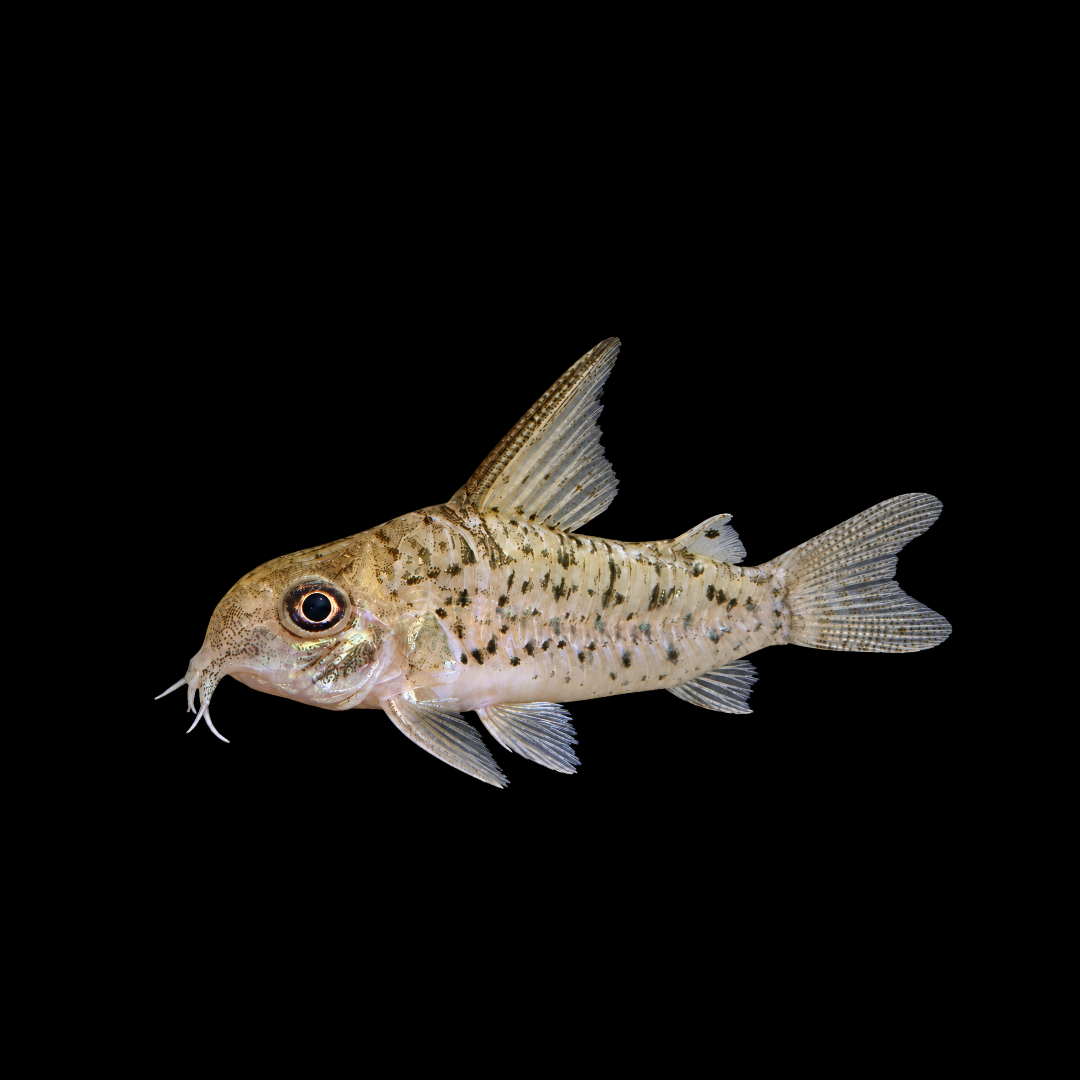
コリドラス・オガワエは、ブラジルとボリビアの国境付近を流れるアブナ川(マデイラ川水系の上流域)から輸入される中型のコリドラスです。最大の魅力は、体高と同じくらいまで高く伸びる背鰭と、丸みのある体つき、そして全身に散りばめられた細かなスポット模様にあります。「オガワエ」は正式な学名ではなく流通上の名前で、現在はペルーのフジャガ川流域を基準産地とするアルマータス(Hoplisoma armatum、旧学名Corydoras armatus)と同種として扱われています。未記載種などを区別するための識別番号CW086も与えられています。ペルー産のアルマータスとは見た目での区別がほとんどつかないものの、スポットがやや粗いことが違いとして挙げられています。採集地が限られて輸入量が少なく、入荷も安定しないため、日本では高価格帯で取引される希少種として愛好家の憧れの的となっています。性格は温和で、細かな砂をひげで探りながら餌を探す愛らしい姿を見せてくれますが、水質の悪化や底床の汚れには敏感です。また、強いストレスを受けると毒性のある分泌物を出す性質があるため、導入時や移動時には特別な配慮が必要です。 The Ogawae Cory is a medium-sized corydoras imported from the Rio Abuna, part of the upper Rio Madeira system, which flows near the border between Brazil and Bolivia. Its greatest appeal lies in a dorsal fin that grows about as tall as its body depth, its rounded body, and the fine spots scattered across its body. “Ogawae” is not a scientific name but a trade name; the fish is currently treated as the same species as Hoplisoma armatum (formerly Corydoras armatus), whose type locality is the Rio Huallaga basin in Peru. It has also been given the identification code CW086, a number used to distinguish undescribed and similar forms. Although it is almost impossible to tell apart from Peruvian armatum by appearance, its somewhat coarser spots are cited as a difference. Because its collecting area is limited and imports are small and irregular, it is traded at a premium in Japan and is coveted by enthusiasts. It is peaceful and charming as it probes fine sand with its barbels for food, but it is sensitive to deteriorating water quality and a dirty substrate. It also releases a toxic secretion when severely stressed, so special care is needed when introducing or moving it.
基本情報 / Basic Information
| 学名 / Scientific Name | Hoplisoma armatum (Günther, 1868) |
|---|---|
| 通称 / Common Name | コリドラス・オガワエ、コリドラス sp. オガワエ、コリドラス・ドルサリス(いずれも流通名)。識別番号はCW086。旧学名はCorydoras armatusOgawae Cory, Corydoras sp. “Ogawae,” Corydoras “Dorsalis” (all trade names). Identification code CW086. Formerly Corydoras armatus |
| 分類 / Family | ナマズ目 カリクティス科 コリドラス亜科 ホプリソマ属Siluriformes, Callichthyidae, Corydoradinae, genus Hoplisoma |
| 英名 / English Name | Armatus Cory, Ogawae Cory |
| 分布 / Distribution | 南米アマゾン川流域。オガワエとして流通する個体は、ブラジルとボリビアの国境地帯を流れるアブナ川(マデイラ川水系)で採集されます。種としてのアルマータスは、ペルーのフジャガ川をはじめとするアマゾン上流域に分布しています。The Amazon basin of South America. Fish sold as “Ogawae” are collected from the Rio Abuna (Rio Madeira system) in the border region between Brazil and Bolivia. The species armatum as a whole is distributed in the upper Amazon, including the Rio Huallaga in Peru. |
| 最大体長 / Max Size | 標準体長で約6.5cm。体高があり、コリドラスの中でも存在感のある体型に成長します。About 6.5 cm in standard length. It grows into a deep-bodied fish with a strong presence among corydoras. |
| 寿命 / Lifespan | コリドラスの仲間は長生きすることで知られ、適切な環境であれば10年前後生きることもあると考えられています。Corydoras are known to be long-lived, and under proper conditions this fish is thought to live for around 10 years. |
飼育環境 / Aquarium Environment
| 水槽サイズ / Tank Size | 2〜3匹程度であれば45cm規格水槽(45×30×30cm、約35L)から飼育できます。群れで過ごす姿を楽しみたい場合や、繁殖を視野に入れて6匹以上を飼う場合は、60cm規格水槽(60×30×36cm、約57L)以上がおすすめです。底を生活の場とする魚なので底面積の広さが大切で、過密飼育は底床の汚れと病気のリスクを大きく高めます。Two or three fish can be kept in a standard 45 cm tank (45×30×30 cm, about 35 L). To enjoy them as a group, or to keep six or more with breeding in mind, a standard 60 cm tank (60×30×36 cm, about 57 L) or larger is recommended. As a bottom-dwelling fish, it needs plenty of floor space, and overcrowding greatly increases substrate fouling and the risk of disease. |
|---|---|
| 水温 / Temperature | 22〜26℃。高水温が続くと体調を崩しやすいとされるため、夏場は冷却ファンや水槽用クーラーで水温の上昇を抑えると安心です。 22–26°C. Prolonged high temperatures are said to weaken the fish, so using a cooling fan or aquarium chiller in summer is reassuring. |
| 水質 / Water Quality | pH6.0〜7.5の弱酸性から中性、軟水から中程度の硬度までが適しています。日本の水道水で問題なく飼育できますが、硝酸塩や水に溶け込んだ有機物が溜まると調子を崩しやすいため、定期的な換水で水をきれいに保つことが大切です。マジックリーフなどで弱酸性のブラックウォーターにするのも効果的です。Slightly acidic to neutral water, pH 6.0–7.5, from soft to moderately hard, is suitable. Japanese tap water works well, but because the fish is prone to decline when nitrate and dissolved organics accumulate, keeping the water clean with regular changes is important. Making slightly acidic blackwater with Indian almond leaves is also effective. |
| レイアウト / Layout | 底床には、田砂や川砂など粒が細かく角の取れた砂が欠かせません。砂ごと口に含んで餌を探す習性があるため、大磯砂のような角のある砂利ではひげや腹部が傷つき、そこから感染症にかかる原因となります。砂は5mm〜1cm程度の薄敷きにして、酸素の届かない汚れた層ができるのを防ぎます。濾過には酸素を水中に保ちやすい外部式フィルターが向いており、中層から底層に緩やかな水流をつくると状態の維持に役立ちます。複雑な石組みや置物は汚れが溜まりやすいので避け、底との接地面が少ない枝状の流木に、アヌビアス・ナナ、ミクロソリウム、ウィローモスなど弱い光でも育つ水草を活着させたシンプルなレイアウトがおすすめです。照明は控えめにし、タイマーで1日6.5〜8時間程度点灯させます。Fine, rounded sand such as Tasuna sand or river sand is essential. Because the fish takes sand into its mouth while searching for food, angular gravel such as Oiso gravel can injure its barbels and belly and lead to infection. Keep the sand thin, about 5 mm to 1 cm, to prevent stagnant, oxygen-poor layers. An external canister filter, which helps keep the water well oxygenated, is ideal, and a gentle current in the middle and lower layers helps maintain good condition. Avoid complex rockwork and ornaments that trap debris, and choose a simple layout of branchy driftwood with little contact with the bottom, carrying low-light plants such as Anubias nana, Microsorum, and Java moss. Keep lighting moderate and on a timer for about 6.5–8 hours a day. |
| 注意点 / Precautions | 強いストレスを受けると胸鰭の付け根から毒性のある分泌物を出すため、輸送袋の水は水槽に入れないでください。導入時は、袋を15〜30分ほど水槽に浮かべて水温を合わせてからバケツに移し、エアチューブと一方コックを使って1秒に2〜3滴のペースで水槽の水を滴下する「点滴法」で、1〜2時間かけてゆっくり水質を合わせます。移すときは網を使わず、カップなどで水ごとすくうと、鋭い棘が網に絡まる事故や、驚いて毒を出すのを防げます。底床は週に一度、プロホースなどの掃除用具で汚れを吸い出しましょう。Because the fish releases a toxic secretion from the base of its pectoral fins when severely stressed, do not add shipping-bag water to the aquarium. When introducing it, float the bag in the tank for about 15–30 minutes to match the temperature, transfer the fish to a bucket, and use the drip method, dripping tank water in at 2–3 drops per second through airline tubing and a valve, to acclimate it slowly over 1–2 hours. Move the fish with a cup rather than a net to prevent its sharp spines from snagging and to keep it from releasing toxin in panic. Vacuum the substrate about once a week with a gravel cleaner. |
餌と給餌 / Feeding
| 餌の種類 / Diet | 雑食性です。沈下性のコリドラス用人工飼料を主食とし、冷凍アカムシ、冷凍ブラインシュリンプ、活イトメなどの動物性の餌を組み合わせると、良い状態を保てます。Omnivorous. Use sinking corydoras food as a staple and combine it with animal foods such as frozen bloodworms, frozen brine shrimp, and live tubifex to keep the fish in good condition. |
|---|---|
| 給餌のポイント / Feeding Tips | 1日1〜2回、数分で食べきれる量を与えます。底で餌を探す魚なので、上層を泳ぐ魚と混泳している場合は、オガワエのところまで餌が届いているか確認しましょう。食べ残しはそのまま底床の汚れになるため、こまめに取り除くことが大切です。消灯の前後に与えると、落ち着いて食べやすいことがあります。Feed once or twice a day, an amount eaten within a few minutes. Because it searches for food on the bottom, make sure food actually reaches it when kept with fish that swim higher up. Leftovers quickly become dirt in the substrate, so remove them promptly. Feeding around lights-out can help it eat calmly. |
性格と混泳 / Temperament and Tank Mates
| 性格 / Temperament | とても温和で、他の魚に危害を加えることはほとんどありません。群れで暮らす魚なので、6匹程度以上で飼うと落ち着きやすく、自然な姿を観察できます。Very peaceful and rarely harms other fish. As a schooling fish, it settles more easily and shows natural behavior when kept in a group of about six or more. |
|---|---|
| 混泳の相性 / Compatibility | 同じく温和なカラシン類、ラスボラ類、小型のペンシルフィッシュ、他のコリドラスなどとの混泳に向いています。口に入る大きさの魚を食べてしまう大型魚や、底で縄張りを主張する気の強い魚とは一緒にしないようにしましょう。鰭をかじる魚と混泳させると、自慢の背鰭が傷んでしまう恐れがあります。Suitable with peaceful tetras, rasboras, small pencilfish, and other corydoras. Avoid large fish that may eat it and aggressive bottom-dwellers that defend territory. Fin nippers may damage its prized dorsal fin. |
病気と対策 / Diseases and Prevention
| かかりやすい病気 / Common Diseases | カラムナリス病(尾腐れ病・ヒレ腐れ病・口腐れ病)は、水質の悪化や底床の汚れによるストレスで発症しやすい病気です。鰭の先が白く濁って溶けるように欠けていき、進行するとひげまで溶けてなくなります。進行が早く、短期間で他の個体に広がる恐れもあるため、早期発見が重要です。エロモナス感染症(赤斑病、ポップアイ、松かさ病)は、厚く敷いた底砂に生じる汚れた層や長期的な水質悪化がきっかけとなり、体表の充血、眼球の突出、腹部の膨らみなどの症状が現れます。Columnaris disease (tail rot, fin rot, mouth rot) tends to develop under stress from poor water quality or a dirty substrate. The fin tips turn cloudy white and erode away, and in advanced cases even the barbels are lost. It progresses quickly and may spread to other fish within a short time, so early detection is crucial. Aeromonas infections (red spot, pop-eye, dropsy) are triggered by fouled layers in thick substrate or long-term water deterioration, causing reddened skin, protruding eyes, and a swollen abdomen. |
|---|---|
| 対策と予防 / Prevention | 予防の基本は、薄敷きの底床と週一回の底床掃除、適切な飼育数、そして定期的な換水です。発症した場合は別の水槽に隔離して薬浴を行い、エルバージュエース、観パラD、グリーンFゴールド顆粒などの抗菌剤を使います。鱗を持たないナマズの仲間は薬の影響を受けやすいため、規定量の1/3〜1/2程度の濃度から始め、呼吸や泳ぎ方を観察しながら慎重に治療するのが一般的です。塩水浴は本種にとって負担になりやすいため、治療目的でも0.5%を上限とし、粘膜を傷める恐れがあるので長期間続けるのは避けましょう。明らかな細菌感染が見られる場合は塩水浴に頼らず、早めに抗菌剤による薬浴に切り替えることが大切です。The basics of prevention are a thin substrate, weekly substrate cleaning, appropriate stocking, and regular water changes. If disease appears, isolate the fish in a separate tank and treat it with antibacterial medications such as Elbagage Ace, Kanpara D, or Green F Gold granules. Because scaleless catfish are sensitive to medication, it is common practice to start at about one-third to one-half of the labeled dose and proceed carefully while watching breathing and swimming. Salt baths tend to burden this species, so even for treatment keep salinity at 0.5% or below, and avoid long baths, which may damage the protective slime coat. When a clear bacterial infection is visible, it is important to switch promptly to antibacterial treatment rather than relying on salt. |
増やし方(繁殖) / Breeding
| 雌雄の判別 / Sexing | 真上から見ると見分けやすくなります。成熟したメスは卵を持つと、胸鰭の後ろから腹部にかけて横に大きく膨らみ、体の幅が広くなります。オスはメスより一回り小さく、腹部が膨らまないすっきりとした体型です。Sexing is easiest from above. A mature female carrying eggs becomes noticeably broad from behind the pectoral fins to the abdomen. Males are slightly smaller and slender, without a swollen belly. |
|---|---|
| 繁殖形態 / Reproduction | 卵生で、粘着性のある卵を産みます。メスがオスの腹部に口を当てる「Tポジション」と呼ばれる独特の姿勢で受精が行われ、メスは腹鰭で抱えた卵を、口できれいにしたガラス面や水草の葉の裏などに一粒ずつ産み付けます。これを繰り返し、数十個から百個程度の卵を産むとされています。Egg-laying, producing adhesive eggs. Fertilization takes place in a distinctive posture called the “T-position,” in which the female presses her mouth to the male’s belly. The female then carries the eggs in her pelvic fins and attaches them one by one to glass or the undersides of plant leaves that she has cleaned with her mouth. Repeating this, she is said to lay several dozen to about a hundred eggs. |
| 繁殖のポイント / Breeding Tips | メス1匹に対してオス2〜3匹の割合で、5〜6匹以上の群れを用意するのが理想です。産卵を狙う1〜2週間前から冷凍アカムシや活イトメなど栄養価の高い餌を増やし、メスが卵を十分に持てるようにします。準備が整ったら、飼育水より2〜3℃低い水で50〜70%を換水し、雨季に冷たい雨水が川へ流れ込む状況を再現します。水温差は3℃以内、下限は22℃前後を目安にしましょう。低気圧が近づく雨の日に合わせて行うと産卵しやすくなるとも言われ、シャワーパイプで水面を叩くように注水するのも効果的です。卵はそのままにしておくと食べられてしまうため、指の腹などで優しく剥がし、外掛け式の産卵飼育ボックスに移します。エアレーションとごく少量のメチレンブルーで水カビを防ぎ、白く濁った無精卵は早めに取り除きます。水温25℃前後なら3〜5日ほどで孵化し、稚魚がお腹の栄養袋(ヨークサック)を吸収し終えたら、沸かしたてのブラインシュリンプ幼生を1日2〜4回与えます。食べ残しはスポイトでこまめに取り除き、毎日10〜20%ずつ少しずつ換水して水質を保つことが、稚魚を無事に育てる鍵です。Ideally, prepare a group of at least five or six with two or three males per female. One to two weeks before spawning attempts, increase nutritious foods such as frozen bloodworms and live tubifex so the females can develop plenty of eggs. When ready, change 50–70% of the water with water 2–3°C cooler than the tank, recreating cold rainwater flowing into the river in the rainy season. Keep the temperature drop within 3°C, with a lower limit of around 22°C. Doing this on a rainy day as a low-pressure system approaches is said to encourage spawning, and pouring water through a spray bar so it splashes on the surface is also effective. Eggs left in place will be eaten, so gently remove them with a fingertip and move them to a hang-on breeding box. Prevent fungus with aeration and a very small amount of methylene blue, and promptly remove cloudy white infertile eggs. At around 25°C they hatch in about 3–5 days; once the fry have absorbed their yolk sacs, feed freshly hatched brine shrimp nauplii two to four times a day. Removing leftovers frequently with a pipette and changing a small 10–20% of the water daily are the keys to raising the fry successfully. |
雑学と豆知識 / Trivia and Fun Facts
| 1. 「オガワエ」という名前の由来 / 1. Origin of the Name “Ogawae” | 「オガワエ」は、国際動物命名規約に基づく正式な学名ではなく、観賞魚の流通の中で生まれた商品名です。海外の輸入業者からも、学術的な意味を持たない自由につけられた名前だと説明されており、「ドルサリス(dorsalis)」という別の流通名も使われてきました。日本では、本種を輸出していた日系ブラジル人の小川氏にちなむ名前だと伝えられています。ラテン語の学名のような響きを持つこの名前は、正式な記載を待たずに魅力的な魚を世に送り出そうとした観賞魚業界の熱気を、今に伝えているのかもしれません。“Ogawae” is not a valid scientific name under the International Code of Zoological Nomenclature but a trade name born in the aquarium market. Importers abroad also describe it as a freely invented name with no scientific meaning, and another trade name, “dorsalis,” has been used as well. In Japan, the name is said to honor Mr. Ogawa, a Japanese-Brazilian exporter who shipped this fish. With its Latin-sounding ring, the name may preserve something of the enthusiasm of an aquarium trade eager to bring attractive fish to the world without waiting for formal description. |
|---|---|
| 2. 「武装した」という意味の学名 / 2. A Name Meaning “Armed” | 本種は1868年、動物学者アルベルト・ギュンターによってCallichthys armatusとして記載され、その後は長くコリドラス属に置かれてきました。種小名のarmatumはラテン語で「武装した」という意味です。記載者本人は由来を明記していませんが、体を覆う硬い骨板や、体高ほどにも伸びる背鰭の棘、そして強靭な胸鰭の棘を指していると考えられています。優雅にたなびく背鰭からは想像しにくいかもしれませんが、その名前には、アマゾンの捕食者と渡り合うための鎧と武器を身にまとった魚という一面が表れているのです。This species was described by zoologist Albert Günther in 1868 as Callichthys armatus and was long placed in the genus Corydoras. The species name armatum means “armed” in Latin. Günther did not state its origin, but it is thought to refer to the hard bony plates covering the body, the dorsal spine that grows nearly as tall as the body, and the sturdy pectoral spines. It may be hard to imagine from its gracefully flowing dorsal fin, but the name reflects its nature as a fish clad in armor and weapons for facing Amazonian predators. |
| 3. 2024年の分類再編とホプリソマ属 / 3. The 2024 Reclassification and Hoplisoma | 150種を超える仲間を抱えていたコリドラス属は、実は一つの祖先から分かれた自然なまとまりではないのではないかと、長年指摘されてきました。2024年、Diasらは学術誌『Zoological Journal of the Linnean Society』で、DNAの解析と体の構造の比較をもとにコリドラス亜科を7つの属に整理し直す研究を発表しました。つまり、これまで「コリドラス」とひとまとめにされていた魚たちを、本当の血縁関係に沿って7つのグループに分け直したということです。この再編で、アルマータスは1846年にアガシーが名付けていたホプリソマ属へと移され、現在はHoplisoma armatumと表記されます。ホプリソマ属は、愛好家の間で「ショートノーズ」や「ラウンドノーズ」と呼ばれる口先の短いタイプを中心とする、コリドラス亜科で最も種数の多いグループです。Hoplisomaという属名はギリシャ語の「鎧」と「体」に由来するとされ、「武装した」という意味の種小名と組み合わさったことで、まさに名前の上でも鎧をまとった魚となりました。It had long been suggested that the genus Corydoras, with over 150 species, did not actually form a natural group descended from a single ancestor. In 2024, Dias and colleagues published a study in the Zoological Journal of the Linnean Society that reorganized the subfamily Corydoradinae into seven genera based on DNA analysis and comparisons of body structure. In other words, fish long lumped together as “Corydoras” were regrouped into seven genera according to their true relationships. Through this revision, armatum was moved to Hoplisoma, a genus named by Agassiz in 1846, and the species is now written Hoplisoma armatum. Hoplisoma is the most species-rich genus in the subfamily, centered on the short-snouted types that hobbyists call “short-nose” or “round-nose” corydoras. The genus name is said to come from Greek words for “armor” and “body,” and combined with a species name meaning “armed,” the fish has become armor-clad even in name. |
| 4. 2,500km離れた「同種」の謎 / 4. The Mystery of a “Same Species” 2,500 km Apart | アルマータスの基準産地であるペルーのフジャガ川と、オガワエが採集されるアブナ川の間は、直線距離にしておよそ2,500kmも離れています。見た目では両者をほとんど区別できず、スポットがやや粗い点がわずかな違いとして挙げられる程度です。そのため現在は同種として扱われていますが、これほど離れた地域の魚が本当に同じ種なのかについては疑問の声もあり、近縁の別種である可能性を指摘する見方もあります。オガワエに学名とは別にCW086という識別番号が与えられているのも、こうした扱いの難しさを反映しているといえるでしょう。The Rio Huallaga in Peru, the type locality of armatum, and the Rio Abuna, where the Ogawae is collected, are about 2,500 km apart in a straight line. The two are almost indistinguishable by appearance, with slightly coarser spots cited as the only small difference. They are therefore currently treated as the same species, but some question whether fish from such distant regions truly belong to one species, and there is a view that the Ogawae may be a closely related separate species. The fact that it carries the identification code CW086 in addition to its scientific name reflects this difficulty in classification. |
| 5. 胸鰭の毒と「自家中毒」 / 5. Pectoral Toxin and “Self-Poisoning” | コリドラスの仲間は、骨板と棘による物理的な守りに加えて、化学的な守りも備えています。胸鰭の付け根、第一棘条の下には「腋窩腺(えきかせん)」と呼ばれる分泌腺があり、強いストレスを受けるとそこから毒性のある分泌物を水中に放出します。研究によれば、この分泌物には細菌を殺す作用と、他の魚に対する毒性の両方があると報告されています。つまり、捕食者に飲み込まれそうになったとき、棘の痛みと毒の刺激で吐き出させる効果があると考えられているのです。さらに、同じ地域に暮らす模様のよく似たコリドラスたちが、互いに姿を似せることで「食べると危険な獲物」という警告を共有している可能性も示唆されています。しかし、自然界では頼もしいこの武器も、狭い輸送袋の中では自分を苦しめる原因になります。放出された毒が袋の中に溜まり、本人や同じ袋の仲間を弱らせてしまうことがあり、これが「自家中毒」と呼ばれる現象です。そのためオガワエのような中型種は、1匹ずつ個別に、厚手の袋を重ねて梱包して輸送するのが一般的です。Corydoras rely not only on physical defenses such as bony plates and spines but also on chemical ones. Beneath the first pectoral spine at the base of the fin lies a secretory organ called the axillary gland, which releases a toxic secretion into the water when the fish is severely stressed. Research has reported that this secretion is both antibacterial and toxic to other fish. In other words, when a predator tries to swallow the fish, the pain of the spines and the irritation of the toxin are thought to make it spit the fish out. It has further been suggested that similarly patterned corydoras living in the same area may share the warning “dangerous prey” by resembling one another. Yet this reliable weapon in nature can harm the fish itself in a cramped shipping bag. The toxin builds up in the bag and can weaken the fish or its bagmates, a phenomenon called “self-poisoning.” For this reason, medium-sized species like the Ogawae are typically shipped individually in several layers of thick bags. |
| 6. アマゾンの季節が決める入荷時期 / 6. Amazon Seasons Determine Import Timing | アマゾン川流域では、雨季と乾季で川の水位が数メートルから十メートル以上も変化します。雨季には森が水に沈み、魚が広い範囲に散らばってしまうため、採集は難しくなります。野生の魚が採りやすくなるのは、雨季が明けて水位が下がり、魚が限られた水路に集まる乾季です。日本の水槽にオガワエが届くタイミングの裏には、遠く離れた南米の季節のめぐりが息づいているのです。In the Amazon basin, river levels change by several meters to more than ten meters between the rainy and dry seasons. During the rains, the forest floods and fish scatter over a wide area, making collection difficult. Wild fish become easier to catch in the dry season, when water levels fall and fish gather in limited channels. Behind the timing of the Ogawae’s arrival in Japanese aquariums lies the seasonal cycle of distant South America. |
| 7. 精子を飲み込む不思議な受精 / 7. A Curious Fertilization by Drinking Sperm | コリドラスの「Tポジション」には、驚くべき仕組みが隠されていると考えられています。近縁のコリドラスを対象にした研究では、メスがオスの精子を口から取り込み、それが腸を素早く通り抜けて排出され、腹鰭で抱えた卵に届くことで受精が起こることが示唆されています。精子を水中にばらまくよりも、確実に卵へ届けられる方法だと考えられており、魚の繁殖の中でも極めて珍しい例として知られています。水槽の中で何気なく見られる、寄り添うような愛らしい姿は、実は進化が生み出した巧妙な繁殖の瞬間なのです。The corydoras “T-position” is thought to hide a remarkable mechanism. Studies of related corydoras suggest that the female takes the male’s sperm into her mouth, it passes rapidly through her intestine, and it is released to reach the eggs held in her pelvic fins. This is considered a more reliable way to deliver sperm to the eggs than scattering it in the water, and it is known as an extremely unusual example of fish reproduction. The charming moment of the pair nestled together in the aquarium is actually an ingenious act of reproduction shaped by evolution. |
まとめ / Conclusion
コリドラス・オガワエは、高く伸びる背鰭と細かなスポット模様をまとい、ブラジルとボリビアの国境を流れるアブナ川からやってくる希少なコリドラスです。水質の悪化や底床の汚れには敏感ですが、細かな砂を薄く敷いた清潔な環境では温和で丈夫な一面を見せ、長く付き合える存在となってくれます。 The Ogawae Cory is a rare corydoras from the Rio Abuna on the border of Brazil and Bolivia, adorned with a tall dorsal fin and fine spots. It is sensitive to poor water quality and a dirty substrate, but in a clean tank with a thin layer of fine sand it shows a peaceful, hardy side and becomes a companion for many years.
薄く敷いた砂の上で仲間と寄り添い、ひげを動かしながら餌を探す姿や、雨季を模した換水に応えて産卵を始める姿からは、南米の自然のリズムが水槽の中にも息づいていることが感じられます。丁寧な水づくりに応えるように背鰭をなびかせるオガワエは、手をかけるほどに愛着の深まる一匹となるでしょう。 Watching it huddle with companions on thin sand, searching for food with its barbels, or beginning to spawn in response to rainy-season water changes, one can sense the rhythms of South American nature living on inside the aquarium. Waving its dorsal fin as if in response to careful water management, the Ogawae becomes a fish whose bond with its keeper deepens with every bit of care.
気になる道具や飼い方を見つけてみませんか?
 アイのアクアグッズ案内ローチの仲間に合わせる飼育用品|クーリー・流水性・ボーシャの水槽と底砂道具の特徴や使い方、選ぶときのポイントをアイが紹介します。記事はコチラ →
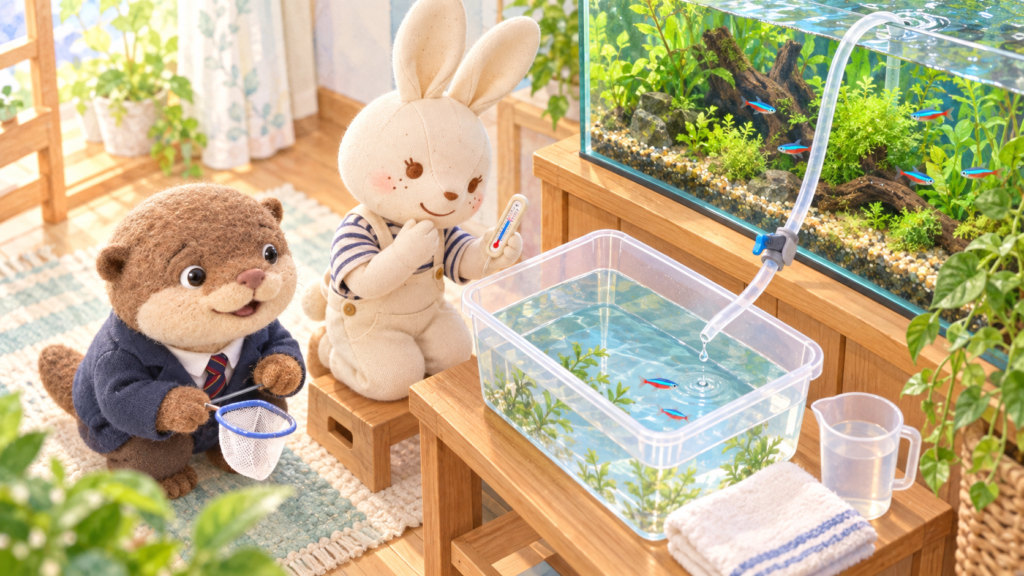 アイのアクアグッズ案内水合わせの道具とやり方|魚を迎える前にそろえたい容器・点滴キット・ネット買ってきた魚はすぐ水槽に入れていい? 水温合わせと水合わせの違いから、透明ケース・点滴キット・ネットの選び方、時間をかけすぎない注意点まで、アイとコタロウが紹介します。記事はコチラ →
さまざまな飼育テーマをご紹介。リンク先の記事には広告・商品紹介が含まれます。
案内・紹介記事一覧へ →分布マップ
Hoplisoma armatumは南米アマゾン川流域に分布し、種としてはペルーのフジャガ川をはじめとするアマゾン上流域に見られます。コリドラス・オガワエとして流通する個体は、ブラジルとボリビアの国境地帯を流れるアブナ川(マデイラ川水系)で採集されます。
※地図は分布域のおおよその範囲を示す概略表示です。表示範囲はペルーのフジャガ川流域からブラジル・ボリビア国境のアブナ川流域までを含むよう設定しています。マーカーはアブナ川流域付近に置いた代表地点であり、実際の採集地点を示すものではありません。
参考文献
- Dias, A. C., Tencatt, L. F. C., Roxo, F. F., Costa Silva, G. de S. da, Santos, S. A., Britto, M. R., Taylor, M. I., & Oliveira, C. (2024). Phylogenomic analyses in the complex Neotropical subfamily Corydoradinae (Siluriformes: Callichthyidae) with a new classification based on morphological and molecular data. Zoological Journal of the Linnean Society, zlae053. https://doi.org/10.1093/zoolinnean/zlae053
- Fricke, R., Eschmeyer, W. N., & Van der Laan, R. (Eds.). Eschmeyer’s Catalog of Fishes: Genera, Species, References. California Academy of Sciences. https://researcharchive.calacademy.org/research/ichthyology/catalog/fishcatmain.asp
- Fuller, I. A. M., & Evers, H.-G. (2005). Identifying Corydoradinae Catfish: Aspidoras, Brochis, Corydoras, Scleromystax & C-numbers. Ian Fuller Enterprises / A.C.S. GmbH (Aqualog).
- Kohda, M., Tanimura, M., Kikue-Nakamura, M., & Yamagishi, S. (1995). Sperm drinking by female catfishes: a novel mode of insemination. Environmental Biology of Fishes, 42, 1–6. https://doi.org/10.1007/BF00002344
- Wright, J. J. (2009). Diversity, phylogenetic distribution, and origins of venomous catfishes. BMC Evolutionary Biology, 9, 282. https://doi.org/10.1186/1471-2148-9-282
- Alexandrou, M. A., Oliveira, C., Maillard, M., McGill, R. A. R., Newton, J., Creer, S., & Taylor, M. I. (2011). Competition and phylogeny determine community structure in Müllerian co-mimics. Nature, 469, 84–88. https://doi.org/10.1038/nature09660
- Junk, W. J., Bayley, P. B., & Sparks, R. E. (1989). The flood pulse concept in river-floodplain systems. Canadian Special Publication of Fisheries and Aquatic Sciences, 106, 110–127.
- Declercq, A. M., Haesebrouck, F., Van den Broeck, W., Bossier, P., & Decostere, A. (2013). Columnaris disease in fish: a review with emphasis on bacterium-host interactions. Veterinary Research, 44, 27. https://doi.org/10.1186/1297-9716-44-27
- Janda, J. M., & Abbott, S. L. (2010). The genus Aeromonas: taxonomy, pathogenicity, and infection. Clinical Microbiology Reviews, 23(1), 35–73. https://doi.org/10.1128/CMR.00039-09
- Seriously Fish. Corydoras armatus species profile. https://www.seriouslyfish.com/species/corydoras-armatus



コメント