
解説 / Description
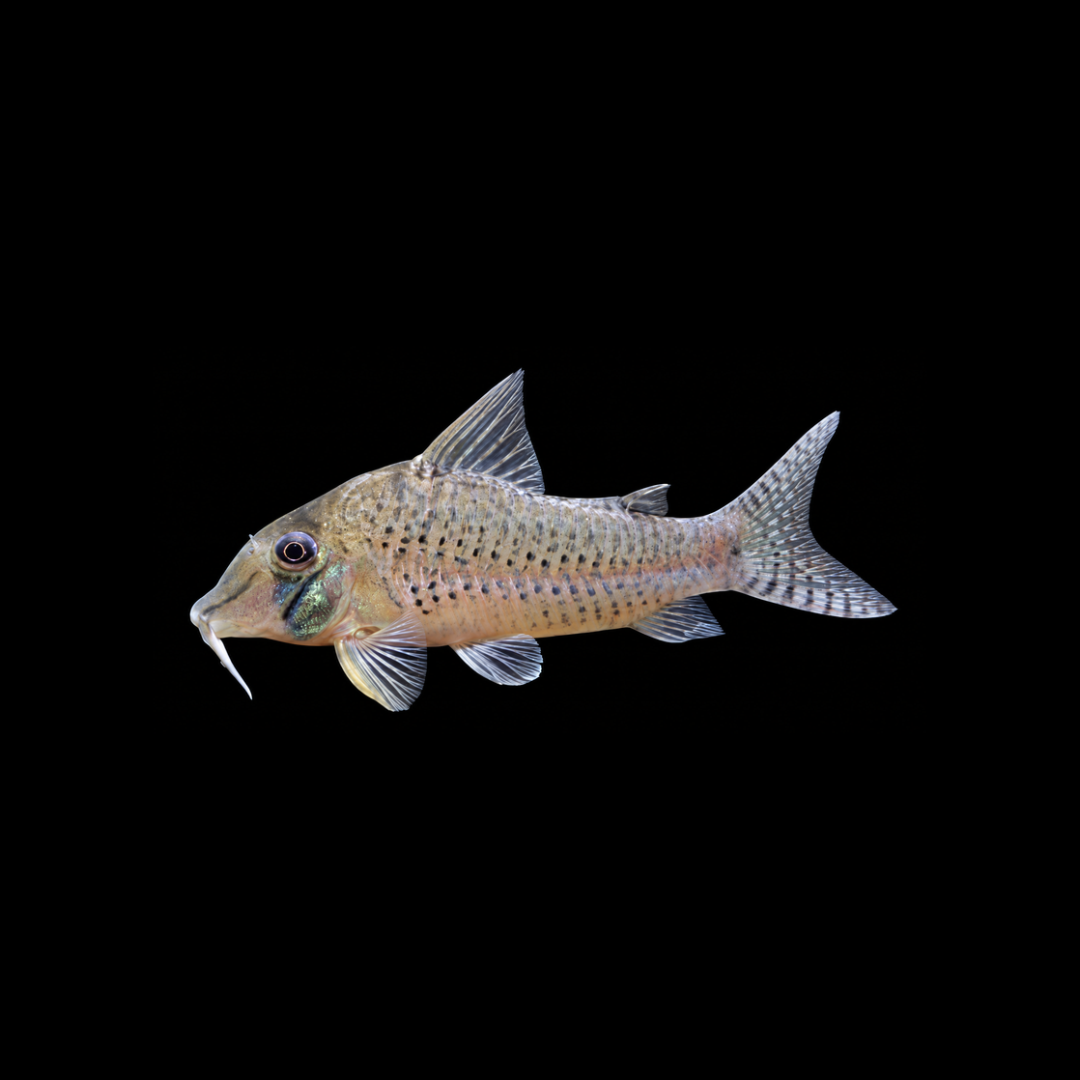
コリドラス・ロングノーズシクリは、南米ペルー北東部のナナイ川とイタヤ川の流域に暮らすコリドラスです。白い地肌に細かな黒いスポットが散り、眼を横切るように黒いアイバンド(マスク模様)が入るモノトーンの色彩に、長く伸びた吻(ふん)と、頭部から背にかけて大きく窪む独特の横顔が組み合わさり、真正ロングノーズ、あるいはサドルノーズとも呼ばれてきました。長い間、学名のない未記載種として「C053」の番号で流通してきましたが、2024年に新種Corydoras iiap(コリドラス・イアプ)として正式に記載されています。名前に「シクリ」とあるのは、同じ川にすむよく似た模様のシクリ(現在はブロキス属のBrochis sychri)に姿が似ているためで、両者は属の異なる別の魚です。流通の中心は野生採集個体(ワイルド個体)で、入荷量が少なく高価なうえ、高水温や水質の悪化に敏感なため飼育難易度もやや高めです。それでも、群れで細かな砂に長い吻を差し込みながら水底を探る姿には、ロングノーズ系ならではの気品と魅力があります。 The Longnose Sychri Cory is a Corydoras species living in the Nanay and Itaya river basins of northeastern Peru. Its monochrome coloration, with fine black spots scattered over a white body and a black eye band (mask) running across the eye, is combined with an elongated snout and a distinctive profile that dips deeply from the head to the back, which is why it has also been called the true longnose or saddle-nose sychri. For a long time it was traded as an undescribed species under the code “C053”, but in 2024 it was formally described as the new species Corydoras iiap. The “sychri” in its name comes from its resemblance to sychri (now Brochis sychri), a similarly patterned fish living in the same river, but the two are different fish belonging to different genera. Most specimens available are wild-caught; they arrive in small numbers, are expensive, and are sensitive to high temperatures and declining water quality, making them somewhat challenging to keep. Even so, the sight of a group probing fine sand with their long snouts as they search the bottom has an elegance and charm unique to the longnose types.
基本情報 / Basic Information
| 学名 / Scientific Name | Corydoras iiap Tencatt, Ruiz-Tafur & Chuctaya, 2024 |
|---|---|
| 通称 / Common Name | コリドラス・ロングノーズシクリ、真正ロングノーズシクリ、サドルノーズシクリ、コリドラス・イアプ、C053Longnose Sychri Cory, True Longnose Sychri, Saddle-nose Sychri, Corydoras iiap, C053 |
| 分類 / Family | ナマズ目 カリクティス科 コリドラス亜科 コリドラス属Siluriformes, Callichthyidae, Corydoradinae, genus Corydoras |
| 英名 / English Name | Longnose Sychri Cory, Sychri-Longnose, C053 |
| 分布 / Distribution | 南米ペルー北東部ロレト県、アマゾン川上流の支流であるナナイ川およびイタヤ川の流域。茶褐色に染まったブラックウォーターのほか、濁った水や両者が混じり合う小河川で見つかっており、細かな砂泥と枯れ葉が積もった薄暗い水底で暮らす。Nanay and Itaya river basins, upper Amazon tributaries in the Loreto Region of northeastern Peru. It has been found in small streams of tea-colored blackwater as well as muddy or mixed waters, living on dim bottoms covered with fine silty sand and fallen leaves. |
| 最大体長 / Max Size | 全長約6〜6.5cm(メス約6.5cm、オス約6.0cm)Total length approx. 6 to 6.5 cm (females approx. 6.5 cm, males approx. 6.0 cm) |
| 寿命 / Lifespan | 5年前後が目安とされ、良好な環境ではさらに長く生きることもあると考えられている。ワイルド個体が中心のため、導入直後の管理が長期飼育の成否を大きく左右する。Generally around 5 years, and they are thought to live longer in good conditions. Because most are wild-caught, care during the first weeks after introduction greatly influences long-term success. |
飼育環境 / Aquarium Environment
| 水槽サイズ / Tank Size | 4〜6匹以上の群れで飼うのが基本のため、60cm規格水槽(約57L)以上がおすすめ。底面積が広いほど落ち着いて餌を探せるため、より大きな群れで飼うなら90cm規格水槽(約157L)も適している。繁殖には45〜60cm水槽が使われる。Since they are best kept in groups of at least 4 to 6, a 60 cm standard tank (approx. 57 L) or larger is recommended. A larger bottom area lets them forage calmly, so a 90 cm standard tank (approx. 157 L) is also suitable for a bigger group. A 45 to 60 cm tank is used for breeding. |
|---|---|
| 水温 / Temperature | 22〜26℃(上限は27℃程度)。高水温に非常に弱く、28℃を超えると急激に体力を消耗して細菌感染症にかかりやすくなるため、日本の夏には水槽用クーラーや冷却ファンが欠かせない。 22 to 26°C (upper limit around 27°C). They are very vulnerable to heat; above 28°C they rapidly lose stamina and become prone to bacterial infections, so an aquarium chiller or cooling fan is essential during Japanese summers. |
| 水質 / Water Quality | pH6.0〜7.5の弱酸性〜中性。弱アルカリ性に傾かなければ、pHの多少の変動には耐えられる。一方で、アンモニアや亜硝酸への耐性はほとんどなく、硝酸塩の蓄積にも敏感なため、硝酸塩は20mg/L以下を目安に保つ。生物濾過能力の高い外部式フィルターを使い、週1回、全水量の20〜30%程度の換水を底床掃除とあわせて行うのが基本となる。Slightly acidic to neutral, pH 6.0 to 7.5. They can tolerate some pH fluctuation as long as the water does not turn alkaline. However, they have almost no tolerance for ammonia or nitrite and are sensitive to nitrate buildup, so keep nitrate below about 20 mg/L. The basics are a canister filter with strong biological filtration and a weekly change of 20 to 30% of the water combined with substrate cleaning. |
| レイアウト / Layout | 長い吻を砂に深く差し込んで餌を探し、口に含んだ砂をエラ蓋から吐き出す習性があるため、角のない細かなパウダー状の砂(ボトムサンドや細かい珪砂など)を敷くことが大前提となる。大磯砂のような角張った砂利は、ヒゲや腹部を傷つけるため避ける。流木や陰を作る水草、マジックリーフなどの枯れ葉を配して薄暗い隠れ場所を作ると、原産地のブラックウォーターに近い落ち着いた環境になる。また、底層の水が淀まないよう、エアレーションや小型の水流ポンプで適度な水流と溶存酸素を確保する。Because they push their long snouts deep into the sand to search for food and expel the sand through their gill covers, a fine, rounded powder-type sand (such as bottom sand or fine silica sand) is essential. Avoid angular gravel such as Oiso sand, which damages barbels and bellies. Driftwood, shade-giving plants, and leaf litter such as catappa leaves create dim hiding places and a calm environment close to their native blackwater. Also use aeration or a small circulation pump to provide moderate flow and dissolved oxygen so that the bottom water does not stagnate. |
| 注意点 / Precautions | ワイルド個体は長時間の輸送で弱っていることが多く、pHや浸透圧の急変にも弱いため、導入時は点滴法による水合わせを徹底する。まず袋ごと30分〜1時間浮かべて水温を合わせ、袋の水ごとバケツなどに移したら、エアチューブで水槽の水を1秒に2〜3滴のペースで滴下する。30分〜1時間かけ、水量が元の2〜3倍になるまでゆっくりと水質をなじませる。輸送水にはスネールやヒドラ、病原菌が含まれているおそれがあるため、水槽には生体だけを移す。また、背鰭と胸鰭の第一条は鋭い棘になっており、網に絡まりやすい。無理に外すと致命傷につながるため、すくう際はプラケースなどの硬い容器を使うと安全。水面に急浮上して空気を吸う行動(腸呼吸)が数分おきに繰り返される場合は、酸欠や水質悪化のサインと考えて早めに対処する。Wild-caught fish are often weakened by long transport and are vulnerable to sudden changes in pH and osmotic pressure, so thorough drip acclimation is essential. First float the bag for 30 minutes to 1 hour to match temperatures, then transfer the fish together with the bag water to a bucket and drip tank water in through an airline at 2 to 3 drops per second. Over 30 minutes to 1 hour, slowly adjust the water until the volume is 2 to 3 times the original. Since shipping water may contain snails, hydra, or pathogens, move only the fish into the tank. In addition, the first rays of the dorsal and pectoral fins are sharp spines that easily tangle in nets, and forcing them free can cause fatal injuries, so using a rigid container such as a plastic case is the safe way to catch them. If they repeatedly dash to the surface to gulp air (intestinal breathing) every few minutes, treat it as a sign of oxygen shortage or poor water quality and act promptly. |
餌と給餌 / Feeding
| 餌の種類 / Diet | 野生では砂泥の中にいる小さなミミズ類や甲殻類、水生昆虫の幼虫などを食べる、動物食寄りの雑食性。飼育下では沈下性の人工飼料に加え、冷凍赤虫や冷凍ブラインシュリンプ、活イトメなど動物性タンパク質の豊富な餌を週に数回与えると、痩せを防ぎ、状態の向上にもつながる。In the wild they are omnivores leaning toward animal food, eating small worms, crustaceans, and aquatic insect larvae hidden in the sand. In aquariums, in addition to sinking prepared foods, offering protein-rich foods such as frozen bloodworms, frozen brine shrimp, and live tubifex several times a week helps prevent weight loss and improves their condition. |
|---|---|
| 給餌のポイント / Feeding Tips | ロングノーズ系は餌を食べるのがやや下手で、食も細い傾向がある。そのため、大きなタブレットよりも、一口で吸い込みやすい顆粒タイプの沈下性飼料が向いている。薄暗い時間帯に活発になるので、消灯前や照明を落としたタイミングで与えると、ほかの魚に奪われずに確実に食べさせられる。食べ残しは水質悪化に直結するため、量は控えめにし、残った餌はこまめに取り除く。Longnose types tend to be clumsy, light eaters. For this reason, sinking granules that can be inhaled in one bite suit them better than large tablets. As they become active in dim light, feeding just before lights-out or after lowering the lighting ensures they eat without losing food to other fish. Leftovers directly degrade water quality, so feed modestly and remove uneaten food promptly. |
性格と混泳 / Temperament and Tank Mates
| 性格 / Temperament | 基本的には温和。底床の一角を縄張りのように主張し、同種や他種に対してやや気の強い一面を見せることもあるが、深刻な争いになることはまれ。本来は群れで暮らす社会性の強い魚なので、4〜6匹以上で飼うとストレスが減り、本来の活発な探索行動が見られるようになる。Generally peaceful. They may claim a corner of the substrate as territory and show a slightly assertive side toward their own or other species, but serious fights are rare. As naturally social shoaling fish, keeping 4 to 6 or more reduces stress and brings out their active foraging behavior. |
|---|---|
| 混泳の相性 / Compatibility | カージナルテトラなどの小型カラシン、ラスボラ、アピストグラマのような温和なドワーフシクリッドなど、泳ぐ層が重ならず、高水温を必要としない魚とは相性がよい。原産地で一緒に暮らすシクリやアトロペルソナータスと同じ水槽で泳がせれば、自然の擬態の関係を再現する楽しみ方もできる。オスカーなどの大型シクリッドや、大型プレコ、ボティアといった気の荒い底生魚とは、餌の奪い合いや、棘が刺さる事故が起こるおそれがあるため混泳を避ける。They get along well with fish that use different swimming levels and do not require high temperatures, such as small characins like cardinal tetras, rasboras, and peaceful dwarf cichlids like Apistogramma. Keeping them with sychri or atropersonatus, which share their native waters, also lets you enjoy recreating their natural mimicry relationship. Avoid keeping them with large cichlids such as oscars or aggressive bottom dwellers such as large plecos and loaches, as competition for food and injuries from the spines may occur. |
病気と対策 / Diseases and Prevention
| かかりやすい病気 / Common Diseases | 体表が骨板で覆われているため、白点病には比較的かかりにくい。一方で、細菌性の病気には注意が必要である。代表的なものは、角張った砂や底床内での細菌の増殖によるヒゲの欠損・溶け、ヒレが白く濁って溶けていくカラムナリス症(尾腐れ・ヒレ溶け)、眼球突出や体表の内出血、松かさ状の症状を引き起こすエロモナス感染症など。いずれも、高水温や水質の悪化、底床の汚れによって免疫力が落ちたときに発症しやすい。Their bony plates make them relatively resistant to white spot disease. On the other hand, bacterial diseases require caution. Typical problems include barbel erosion caused by sharp sand or bacterial growth in the substrate, columnaris disease (fin and tail rot) in which fins turn cloudy white and dissolve, and Aeromonas infections that cause pop-eye, internal bleeding, or dropsy-like symptoms. All of these tend to occur when immunity is lowered by high temperatures, poor water quality, or dirty substrate. |
|---|---|
| 対策と予防 / Prevention | 何より大切なのは予防である。細かな砂を薄めに敷いて底床内の通水性を保ち、定期的な換水と底床掃除、夏場の水温管理を徹底する。一度失われたヒゲは、完全には再生しにくいとされる。カラムナリス症にはエルバージュエースや観パラDなどによる薬浴が用いられるが、コリドラスは薬に敏感なため、規定量の1/3〜1/2から慎重に始める。エロモナス感染症は進行が早いため、早期発見を心がけ、見つけたらすぐに大規模な換水と抗菌剤による薬浴を行う。Prevention matters most. Lay a thin layer of fine sand to keep water flowing through the substrate, and keep up regular water changes, substrate cleaning, and summer temperature control. Barbels, once lost, are said to be difficult to regenerate fully. Columnaris is treated with medicated baths using products such as Elbagen Ace or Kanpara D, but Corydoras are sensitive to medication, so start carefully at one-third to one-half of the standard dose. Aeromonas infections progress quickly, so aim for early detection and, once found, immediately perform a large water change followed by an antibacterial bath. |
増やし方(繁殖) / Breeding
| 雌雄の判別 / Sexing | 成熟した個体は、背中側から見ると見分けやすい。メスはオスより一回り大きく、卵を持つとお腹が横に張り出して丸みを帯びる。オスは全体にスレンダーで、胸鰭の棘がメスより長く伸び、その後ろ側の縁に細かなギザギザが発達するとされる。Mature fish are easiest to sex when viewed from above. Females grow noticeably larger, and when carrying eggs their bellies bulge outward and become rounded. Males are slimmer overall, and their pectoral spines are said to grow longer than in females and develop fine serrations along their rear edge. |
|---|---|
| 繁殖形態 / Reproduction | 卵生で、コリドラスの仲間に特有の「Tポジション」と呼ばれる姿勢で産卵する。オスがメスの吻の前でお腹を直角に密着させると、メスは腹鰭をすぼめてかご状にし、そこに2〜4個ほどの卵を産んで受精させる。その後メスは、ガラス面や水草の葉、フィルターのパイプなど、水流の当たる滑らかな場所に粘着性の強い卵を押し付けて産み付ける。これを繰り返し、数十個から多いときで100個ほどを産卵する。親が卵を守ることはなく、むしろ卵を食べてしまう。They are egg layers and spawn in the “T-position” characteristic of corydoras. When the male presses his belly at a right angle in front of the female’s snout, she cups her pelvic fins into a basket, lays about 2 to 4 eggs into it, and fertilizes them. She then presses the very sticky eggs onto smooth surfaces in the current, such as the glass, plant leaves, or filter pipes. Repeating this, she lays from several dozen up to around 100 eggs. The parents do not guard the eggs and will actually eat them. |
| 繁殖のポイント / Breeding Tips | ショートノーズ系の入門種と比べると難易度は高く、国内での成功例も多くはないが、アマゾンの雨季を再現することで産卵に導けるとされる。オス2〜3匹と卵を持ったメス1匹を繁殖用水槽に入れ、冷凍赤虫やイトメなどの高タンパクな餌で親魚の状態を仕上げる。台風や低気圧が近づく日を狙い、飼育水より2〜3℃低い軟水(pH6.5前後、GH0〜2)で50〜70%を換水し、シャワーパイプで水面を叩くように注水して雨を演出する。この刺激を数日繰り返すと、産卵行動が起こりやすくなる。卵は見つけ次第、指やカードでそっと剥がして別の容器に移し、約25℃で弱くエアレーションしながら管理する。メチレンブルーを数滴加えるか、アルダーコーンを入れると水カビの予防になる。白く濁った卵は、周りにカビが広がる前にスポイトで取り除く。卵は3〜5日ほどで孵化し、稚魚がお腹の栄養袋(ヨークサック)を吸収して泳ぎ始めたら、孵化したてのブラインシュリンプやマイクロワームを1日3〜4回、少量ずつ与える。稚魚は水質の悪化に非常に弱いため、残り餌や糞を毎日取り除いて少量の換水を続ける。また、何も敷かない水槽よりも、ごく薄く細かい砂を敷いた方が生存率が高まるとされている。They are harder to breed than beginner short-nosed species and successes in Japan are few, but recreating the Amazonian rainy season is said to induce spawning. Place 2 to 3 males with one female carrying eggs in a breeding tank and condition the parents with protein-rich foods such as frozen bloodworms and tubifex. On a day when a typhoon or low-pressure system approaches, change 50 to 70% of the water with soft water (around pH 6.5, GH 0 to 2) that is 2 to 3°C cooler than the tank water, pouring it through a spray bar so it beats on the surface like rain. Repeating this stimulus for several days makes spawning more likely. Gently peel off the eggs with a finger or card as soon as you find them, move them to a separate container, and keep them at about 25°C with gentle aeration. Adding a few drops of methylene blue or an alder cone helps prevent fungus. Remove cloudy white eggs with a pipette before fungus spreads to others. The eggs hatch in about 3 to 5 days, and once the fry have absorbed their yolk sacs and begin swimming, feed newly hatched brine shrimp or microworms in small amounts 3 to 4 times a day. Fry are extremely sensitive to poor water quality, so remove leftover food and waste every day and keep up small water changes. A very thin layer of fine sand is also said to improve survival compared with a bare tank. |
雑学と豆知識 / Trivia and Fun Facts
| 1. 「C053」から「iiap」へ。長い名無しの時代 / 1. From “C053” to “iiap”: A Long Time Without a Name | アマゾン流域からは、学名の決まっていないコリドラスが次々と輸入されてきます。こうした未記載種を見分けるために、ドイツのハンス・ゲオルク・エバース氏らが考案したのが「Cナンバー」です。本種もこの仕組みの中で「C053」と呼ばれ、アクアリストの間では古くから知られた存在でした。それが2024年、ブラジルのルイス・テンカット氏と、ペルー・アマゾン研究所(IIAP)のモルガン・ルイス=タフル氏、ジュニオール・チュクタヤ氏によって、ようやく新種Corydoras iiapとして記載されました。種小名の「iiap」は、40年以上にわたりペルー・アマゾンの生物多様性研究を担ってきた同研究所への献名です。愛好家の水槽で長く親しまれてきた魚が、地元の研究者の手によって正式な名前を得たという経緯は、この魚の物語に特別な味わいを添えています。Corydoras without scientific names keep arriving from the Amazon basin. The “C-number” system was devised by Hans-Georg Evers of Germany and others to tell these undescribed species apart. Within this system the species was called “C053” and had long been familiar to aquarists. Then, in 2024, it was finally described as the new species Corydoras iiap by Luiz Tencatt of Brazil together with Morgan Ruiz-Tafur and Junior Chuctaya of the Research Institute of the Peruvian Amazon (IIAP). The species name “iiap” honors the institute, which has led biodiversity research in the Peruvian Amazon for more than four decades. The fact that a fish long enjoyed in hobbyists’ aquariums received its formal name through the work of local researchers adds a special flavor to its story. |
|---|---|
| 2. 名前に残る「シクリ」との関係 / 2. The “Sychri” Left in Its Name | 本種の通称に「シクリ」の名が入っているのは、同じナナイ川にすむシクリ(旧学名Corydoras sychri、現在はBrochis sychri)にそっくりな模様をしているためです。シクリは1960年に記載された種で、その名はアメリカのアクアリスト、アル・シクル氏に由来します。白地に黒い斑点とアイバンドという共通の模様から、本種は「吻の長いシクリ」として扱われ、ロングノーズシクリやサドルノーズシクリの名で流通してきました。しかし実際には、両者は属のレベルで異なる別の魚です。見分ける手がかりは横顔で、本種は吻がより長く鋭く、頭から背にかけての輪郭が大きく窪むのが特徴とされます。購入の際は、Cナンバーや学名が添えられているかを確かめると安心です。The word “sychri” appears in this species’ common name because its pattern closely resembles that of sychri (formerly Corydoras sychri, now Brochis sychri), which lives in the same Rio Nanay. Sychri was described in 1960, and its name comes from Al Sychr, an American aquarist. Because of their shared pattern of a white body, black spots, and an eye band, this species was treated as a “long-snouted sychri” and traded under names such as Longnose Sychri or Saddle-nose Sychri. In reality, however, the two are different fish at the genus level. The key to telling them apart is the profile: this species is said to have a longer, sharper snout and an outline that dips deeply from the head to the back. When buying, it is reassuring to check whether a C-number or scientific name is given. |
| 3. 2024年の大再編と「本家」コリドラス / 3. The 2024 Revision and the “Original” Corydoras | コリドラスの仲間は長い間、ほとんどの種がCorydoras属にまとめられてきました。しかし2011年の遺伝子解析で、実際にはいくつもの系統に分かれることが示されていました。これをさらに進めたのが2024年のDiasらの研究で、ゲノムの広い範囲を比べる解析と形態の特徴を組み合わせ、コリドラス亜科全体を7つの属に整理し直しました。その結果、多くの種がブロキス属やホプリソマ属などへ移りましたが、本種が属する長吻のグループ(第1系統)は、従来どおりのコリドラス属にとどまりました。このグループにはコリドラス属の基準となる種も含まれており、いわば本家のコリドラスです。一方、模様のよく似たシクリはブロキス属、アトロペルソナータスはホプリソマ属となり、見た目がほとんど同じ三種が、三つの異なる属に分かれることになりました。For a long time, almost all members of this group were lumped into the genus Corydoras. A 2011 genetic study, however, had already shown that they actually split into several lineages. Dias and colleagues took this further in 2024, combining analyses that compare wide regions of the genome with morphological features to reorganize the whole subfamily into seven genera. As a result, many species moved to genera such as Brochis and Hoplisoma, but the long-snouted group to which this species belongs (Lineage 1) remained in Corydoras. This group includes the type species of the genus, making it, so to speak, the original Corydoras. Meanwhile, the similarly patterned sychri became Brochis and atropersonatus became Hoplisoma, so three species that look almost identical ended up in three different genera. |
| 4. 同じ服を着て身を守る「ミューラー型擬態」 / 4. Wearing the Same Outfit for Protection: Müllerian Mimicry | なぜ系統の離れた三種が、白地に黒いスポットとアイバンドという同じ模様をしているのでしょうか。2011年の研究は、同じ場所に暮らす系統の異なるコリドラスどうしが互いに模様を似せ、捕食者から身を守る「ミューラー型擬態」の関係にあることを示しました。コリドラスの仲間は硬い骨板と鋭い棘を備えているうえ、毒性のある分泌物も持つため、鳥や大型魚にとって食べにくい獲物です。食べにくい魚どうしが同じ模様を共有すれば、捕食者は「この模様には手を出さない方がいい」と、より早く学習するようになります。一方で、吻の長さが種ごとに違うのは、同じ川底でも餌を探す深さや餌の種類を分け合い、競争を和らげるためだと考えられています。三種の中でもひときわ長い本種の吻は、より深い砂の中の獲物を探るための形と見ることができます。Why do three distantly related species share the same pattern of a white body, black spots, and an eye band? A 2011 study showed that corydoras of different lineages living in the same place resemble one another in a relationship called Müllerian mimicry, which protects them from predators. Corydoras have hard bony plates and sharp spines and also produce toxic secretions, making them unpleasant prey for birds and large fish. When unpalatable fish share the same pattern, predators learn more quickly that this pattern is best left alone. On the other hand, the differences in snout length among the species are thought to let them divide feeding depths and food types on the same riverbed, easing competition. This species’ snout, the longest of the three, can be seen as a shape suited to probing for prey deeper in the sand. |
| 5. 対等な仲間か、便乗者か。擬態をめぐる議論 / 5. Equal Partners or Free Riders? The Debate Over Their Mimicry | 擬態には大きく二つのタイプがあります。どちらも守りの固い者どうしが模様を共有する「ミューラー型」と、守りの弱い者が強い者の姿を借りる「ベイツ型」です。じつは本種が属する長吻のグループは、この議論の中心にいます。2017年には、胸鰭の棘の形の違いから、第1系統のコリドラスはほかの属の種に便乗するベイツ型の擬態者ではないかという仮説が出されました。一方、2026年に公表された査読前の研究では、胸鰭の付け根にある「腋窩腺(えきかせん)」の分泌物をコリドラス属とホプリソマ属で比べたところ、どちらにも毒性があり、強さに目立った差は見られませんでした。つまり、少なくともこの分泌物については、両者は対等に守りを分け合うミューラー型の関係だと考えられる結果です。ただし、この研究で調べられたのはナナイ川の種ではなく、棘のギザギザや背鰭の毒腺など、ほかの防御の仕組みに差がある可能性も指摘されています。本種が対等な仲間なのか、それとも便乗者なのか。その答えはまだ研究の途上にあります。Mimicry comes in two broad types: Müllerian mimicry, in which well-defended species share a pattern, and Batesian mimicry, in which a poorly defended species borrows the appearance of a well-defended one. In fact, the long-snouted group to which this species belongs is at the center of this debate. In 2017, based on differences in pectoral spine shape, a hypothesis was proposed that Lineage 1 corydoras might be Batesian mimics free-riding on species of other genera. On the other hand, a not-yet-peer-reviewed study published in 2026 compared secretions from the axillary gland at the base of the pectoral fin in Corydoras and Hoplisoma, and found both to be toxic with no notable difference in strength. In other words, at least for this secretion, the results suggest the two share their defense equally in a Müllerian relationship. However, the species examined were not those of the Rio Nanay, and the study notes that other defenses, such as spine serrations or the dorsal venom gland, may still differ. Whether this species is an equal partner or a free rider remains an open research question. |
| 6. お腹で息をする「腸呼吸」 / 6. Breathing Through the Gut: Intestinal Respiration | コリドラスがときどき水面までさっと泳ぎ上がり、空気を吸い込んでまた底へ戻っていく姿を見たことはないでしょうか。これは「腸呼吸」と呼ばれる特殊な呼吸法で、乾季に川の水位が下がり、水中の酸素が乏しくなるアマゾンの環境への適応と考えられています。飲み込んだ空気から、毛細血管が細かく張り巡らされた腸の後半部分で酸素を取り込み、残った気体は肛門から排出します。ときどき見られる程度なら健康な証拠ですが、数分おきに繰り返すようなら、酸素不足や水質悪化のサインです。また、体の表面は鱗ではなく、硬い板状の骨(骨板)が上下2列に並んで覆っており、英語で「装甲ナマズ(Armoured catfish)」と呼ばれるのはこのためです。小さな体に、アマゾンを生き抜くための工夫がいくつも詰まっています。Have you ever seen a corydoras dash up to the surface, gulp air, and return to the bottom? This is a special breathing method called intestinal respiration, thought to be an adaptation to the Amazon environment, where river levels drop and oxygen becomes scarce in the dry season. Oxygen is absorbed from the swallowed air in the rear part of the intestine, which is densely lined with capillaries, and the remaining gas is expelled through the vent. Occasional surfacing is a sign of health, but if it happens every few minutes, it signals a lack of oxygen or poor water quality. Their bodies are covered not with scales but with two rows of hard bony plates, which is why they are called “armoured catfish” in English. Their small bodies are packed with adaptations for surviving in the Amazon. |
| 7. 「見かけたときが買いどき」の稀少種 / 7. A Rare Fish: “Buy It When You See It” | 国内に入ってくる本種のほとんどは、ペルーのイキトスなどを拠点とする輸出業者から空輸される野生採集個体です。まとまった入荷は乾季にあたる夏から秋に多い傾向がありますが、現地の川の水位や輸出業者の事情に左右されるため、繁殖個体のように一年中安定して手に入るわけではありません。よく似たシクリと比べても採集地が限られ、入荷量はきわめて少なく、価格も一段高くなるのが一般的です。愛好家の間で「見かけたときが買いどき」といわれるのはそのためで、出会えたときの喜びもまた、この魚を迎える楽しみの一つになっています。Nearly all specimens arriving in Japan are wild-caught fish airfreighted from exporters based in places such as Iquitos, Peru. Larger shipments tend to arrive from summer to autumn during the dry season, but because supply depends on local river levels and exporters’ circumstances, they are not available year-round like captive-bred fish. Compared even with the similar-looking sychri, its collecting range is limited, it arrives in very small numbers, and it generally commands a noticeably higher price. That is why enthusiasts say “buy it when you see it,” and the joy of finally encountering one is part of the pleasure of welcoming this fish. |
まとめ / Conclusion
コリドラス・ロングノーズシクリは、白と黒の端正な模様と、深く窪んだ横顔に長く伸びた吻を持つ、真正ロングノーズの名にふさわしいコリドラスです。シクリやアトロペルソナータスと同じ模様をまといながら、属の異なる道を歩んできたその姿には、ナナイ川で似た者どうしが寄り添って生きてきた歴史が刻まれています。 The Longnose Sychri Cory, with its elegant black-and-white pattern, deeply dipped profile, and long snout, is a corydoras truly worthy of the name true longnose. Wearing the same pattern as sychri and atropersonatus while following a path in a different genus, it carries in its appearance the history of look-alikes living side by side in the Rio Nanay.
夏の高水温を避ける温度管理、きれいな水を保つ濾過と換水、そして繊細なヒゲを守る細かな砂。手間はかかりますが、丁寧に迎え入れられて調子を上げた群れが、長い吻を砂に差し込みながらゆっくりと水底を探る姿は、静かな感動を与えてくれます。気品に満ちたその白と黒は、時間をかけて向き合う飼育者にこそ、いちばん美しい表情を見せてくれるはずです。 Temperature control to avoid summer heat, filtration and water changes to keep the water clean, and fine sand to protect their delicate barbels all take effort. Yet a carefully welcomed group in good condition, slowly searching the bottom with their long snouts buried in the sand, offers a quiet sense of wonder. Their graceful black and white will surely show its most beautiful side to the keeper who takes the time to truly care for them.
気になる道具や飼い方を見つけてみませんか?
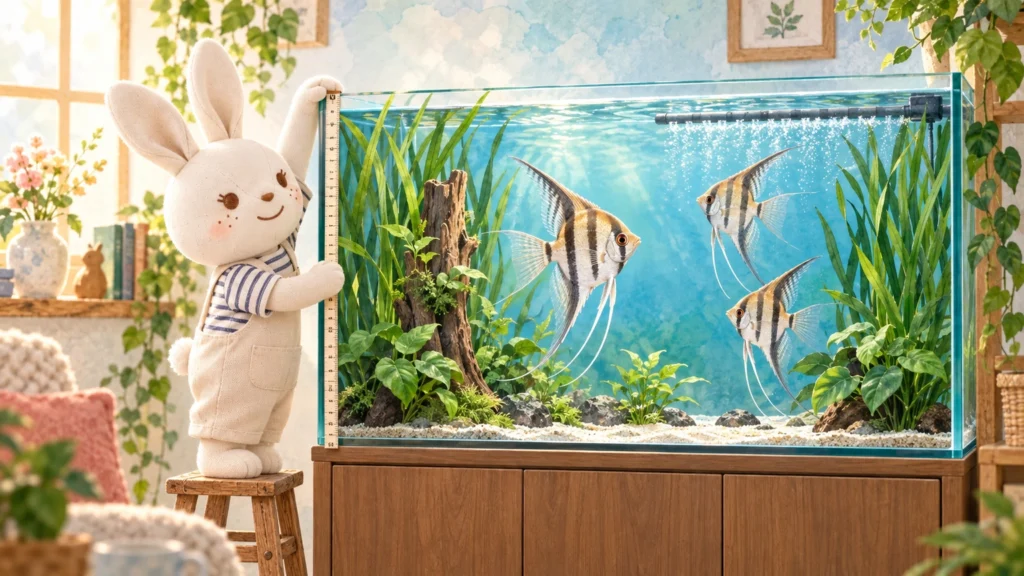 アイのアクアグッズ案内エンゼルフィッシュの飼育用品|高さのある水槽・ろ過・水草・餌の選び方道具の特徴や使い方、選ぶときのポイントをアイが紹介します。記事はコチラ →
 アイのアクアグッズ案内コードもホースもないのに酸素が出る? アイとコタロウのオキシデーター探訪道具の特徴や使い方、選ぶときのポイントをアイが紹介します。記事はコチラ →
さまざまな飼育テーマをご紹介。リンク先の記事には広告・商品紹介が含まれます。
案内・紹介記事一覧へ →分布マップ / Distribution Map
南米ペルー北東部ロレト県の、ナナイ川とイタヤ川の流域に分布します。どちらもアマゾン川上流の支流で、河口付近の都市イキトスを挟むように北西側にナナイ川、南側にイタヤ川の水系が広がっています。 Found in the Nanay and Itaya river basins in the Loreto Region of northeastern Peru. Both are upper Amazon tributaries, with the Nanay system spreading to the northwest and the Itaya system to the south of the city of Iquitos near their mouths.
地図は分布域の位置関係を示す概略表示です。マーカーはナナイ川とイタヤ川の流域の間に置いた代表地点であり、実際の採集地点や生息地点を示すものではありません。 This map is an approximate view showing the general location of the range. The marker is a representative point placed between the Nanay and Itaya basins and does not indicate an actual collecting site or habitat location.
参考文献 / References
分類・記載・分布 / Taxonomy, Description and Distribution
- Tencatt, L. F. C., Ruiz-Tafur, M. & Chuctaya, J. (2024). A new masked Corydoras (Siluriformes: Callichthyidae) from the Itaya and Nanay river basins, Peruvian Amazon. Neotropical Ichthyology, 22(2): e240016. doi:10.1590/1982-0224-2024-0016
- Dias, A. C., Tencatt, L. F. C., Roxo, F. F., da Costa Silva, G. S., Santos, S. A., Britto, M. R., Taylor, M. I. & Oliveira, C. (2024). Phylogenomic analyses in the complex Neotropical subfamily Corydoradinae (Siluriformes: Callichthyidae) with a new classification based on morphological and molecular data. Zoological Journal of the Linnean Society, 203(3). doi:10.1093/zoolinnean/zlae053
- Weitzman, S. H. (1960). Figures and descriptions of four South American catfishes of the genus Corydoras, including two new species. Stanford Ichthyological Bulletin, 7(4).
- Froese, R. & Pauly, D. (eds.). FishBase: Corydoras iiap. fishbase.se/summary/71476
- Fuller, I. A. M. & Evers, H.-G. (2005). Identifying Corydoradinae Catfish: Aspidoras, Brochis, Corydoras, Scleromystax & C-numbers. Ian Fuller Enterprises / A.C.S. GmbH (Aqualog).
擬態と防御 / Mimicry and Defense
- Alexandrou, M. A., Oliveira, C., Maillard, M., McGill, R. A. R., Newton, J., Creer, S. & Taylor, M. I. (2011). Competition and phylogeny determine community structure in Müllerian co-mimics. Nature, 469: 84–88. doi:10.1038/nature09660
- Lima, F. C. T. & Sazima, I. (2017). Corydoras desana, a new plated catfish from the upper rio Negro, Brazil, with comments on mimicry within Corydoradinae (Ostariophysi: Siluriformes: Callichthyidae). aqua, International Journal of Ichthyology, 23(1): 19–32.
- Phelps, E. (2024). Genomics of Mimicry in Neotropical Corydoradinae Catfishes. Doctoral thesis, University of East Anglia. ueaeprints.uea.ac.uk/id/eprint/98868
- Axillary gland gene expression and potency reveal the nature of mimetic relationships in Corydoradinae catfishes. (2026). bioRxiv (preprint). doi:10.64898/2026.01.27.701968
生理・病気 / Physiology and Diseases
- Kramer, D. L. & McClure, M. (1980). Aerial respiration in the catfish, Corydoras aeneus (Callichthyidae). Canadian Journal of Zoology, 58(11): 1984–1991.
- Declercq, A. M., Haesebrouck, F., Van den Broeck, W., Bossier, P. & Decostere, A. (2013). Columnaris disease in fish: a review with emphasis on bacterium-host interactions. Veterinary Research, 44: 27. doi:10.1186/1297-9716-44-27



コメント