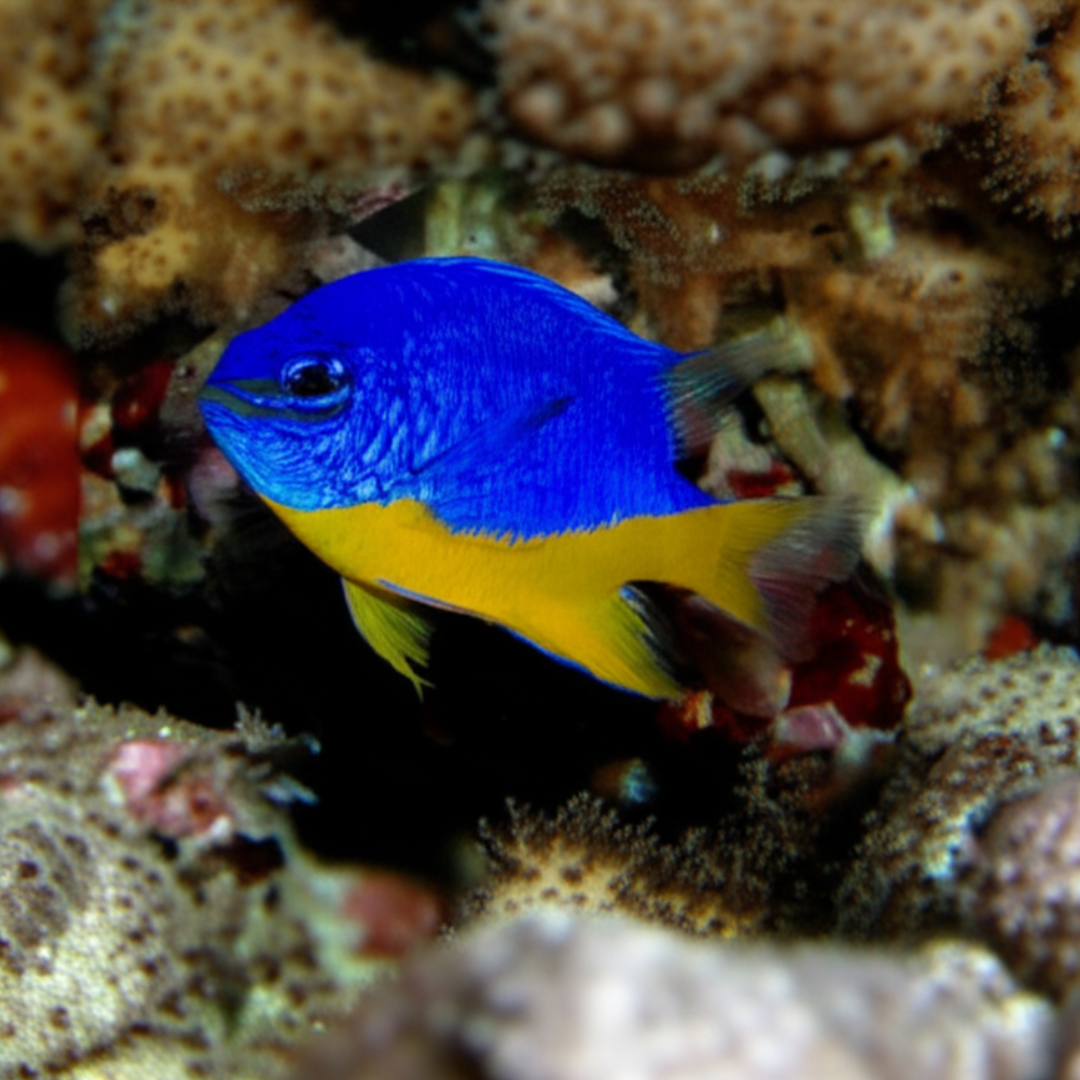
ロイヤルダムセルは、サンゴ礁を彩る宝石のような美しさを持つスズメダイの仲間です。頭部から背中にかけての鮮烈なエレクトリックブルーと、腹部から尾にかけて広がる鮮やかな黄色のコントラストが最大の特徴です。この鮮明な色彩は、複雑なサンゴの枝間において自身の輪郭を曖昧にするカモフラージュの効果があると考えられています。非常に丈夫で環境適応能力が高いため、海水魚飼育の入門種として世界中で広く愛されています。野生下では枝状サンゴを拠点とし、プランクトンを捕食しながらサンゴ礁の生態系の一部として静かに、しかし力強く暮らしています。The Royal Damselfish is a jewel of the coral reefs, belonging to the Pomacentridae family. Its most striking feature is the dramatic contrast between the electric blue on its head and upper body and the vibrant yellow covering its belly and tail. This vivid coloration is believed to contribute to camouflage by breaking up the fish’s outline among intricate coral branches. Renowned as a hardy beginner species in the marine aquarium hobby, this fish lives as part of the coral reef ecosystem, dwelling among branching corals and feeding on plankton.
雑食性:人工飼料(フレーク、ペレット)、冷凍イサザアミ、ブラインシュリンプOmnivore: Flakes, pellets, frozen mysis shrimp, and brine shrimp.
給餌のポイント / Feeding Tips
人工飼料によく餌付きます。1日2回程度、食べ残しのないよう少量ずつ与えてください。Easily accepts dry food. Feed small amounts twice daily to avoid leftovers.
性格と混泳 / Temperament and Tank Mates
性格 / Temperament
やや気が強い面もありますが、スズメダイの中では比較的混泳させやすい種です。Can be assertive, but relatively easy to house with other fish compared to other damsels.
混泳の相性 / Compatibility
同種間では争うことがあるため、複数飼育には広いスペースが必要です。他種とは混泳しやすいですが、本種を水槽の最後に導入するとトラブルを避けやすくなります。May squabble with conspecifics unless in a large space. Generally compatible with other species; best added as the last fish to the tank.
病気と対策 / Diseases and Prevention
かかりやすい病気 / Common Diseases
白点病、ウーディニウム病(海水性ベルベット病)Marine Ich (Cryptocaryon irritans), Marine Velvet (Amyloodinium ocellatum).
対策と予防 / Prevention
水質の安定と過密飼育の回避が予防に繋がります。発症時は隔離水槽での銅イオン薬浴などが一般的です。サンゴ水槽への薬注は厳禁です。Stable water quality and avoiding overstocking are key. Treatment in a quarantine tank is common; never dose medications in a reef tank.
増やし方(繁殖) / Breeding
雌雄の判別 / Sexing
外見での判別は困難ですが、オスは繁殖期に激しい求愛行動(フィンスレアリング)を行います。Difficult to distinguish visually; males perform intense courtship displays during breeding seasons.
繁殖形態 / Reproduction
卵生。基質に粘着性の卵を産み付け、オスがふ化まで卵を保護し、新鮮な水を送る世話をします。Oviparous. They lay sticky eggs on substrates, and the male guards and fans them until they hatch.
繁殖のポイント / Breeding Tips
現在では人工繁殖(キャプティブブリード)個体も流通しており、野生個体に比べてさらに環境変化に強い傾向があります。Captive-bred (CB) individuals are now available and tend to be even hardier than wild-caught ones.
雑学と豆知識 / Trivia and Fun Facts
1. 学名の由来と「半分の青」1. Etymology and “Half-Blue”
学名の種小名である hemicyanea は、古代ギリシャ語で「半分」を意味する hemi と「青色」を意味する cyanea から成ります。文字通り、体の前半分が鮮やかな青色であることを端的に表現した名前です。1913年にシボガ探検隊によって発見された際、そのあまりに明確な色彩の分断が研究者の目を引いたことが伺えます。The species name “hemicyanea” comes from the Greek “hemi” (half) and “cyanea” (blue). It literally means “half-blue,” accurately describing its distinct color pattern. Discovered during the Siboga Expedition in 1913, this striking bipartite coloration fascinated researchers from the start.
2. サンゴ礁の環境変化と影響2. Environmental Changes in Coral Reefs
ロイヤルダムセルはIUCN(国際自然保護連合)において深刻な絶滅の危機には指定されていませんが、彼らの生活基盤であるサンゴ礁の減少には大きな影響を受けます。枝状サンゴの白化や喪失は、本種の隠れ家を奪うことに直結するため、サンゴ礁保護の重要性を伝える象徴的な存在の一種と言えるでしょう。While the Royal Damselfish is not currently listed as a threatened species by the IUCN, it is significantly affected by the decline of coral reefs. The bleaching and loss of branching corals directly result in the loss of their natural habitats, making them a symbolic presence for coral conservation.
3. サンゴ上空での採餌行動3. Feeding Behavior Above Corals
自然界での彼らは、サンゴのすぐ上の水中でホバリングしながら流下してくるプランクトンを捕食しています。この行動は、エサを効率よく確保しつつ、外敵の接近を感じたらすぐにサンゴの隙間へ逃げ込める、理にかなった生存戦略です。飼育下でも複雑な岩組みを作ることで、この自然な振る舞いを観察しやすくなります。In the wild, they hover in the water column just above coral heads to feed on drifting plankton. This behavior allows them to efficiently catch food while remaining close enough to dart into coral crevices for safety—a practical survival strategy. Providing intricate structures in the aquarium encourages this natural behavior.
4. 観賞魚放流による外来化のリスク4. Risks of Invasive Species Through Aquarium Releases
ダムセル類を含む一部の海水魚が、本来の生息域ではない海域で確認される事例が世界各地で報告されています。これらは観賞魚として飼育されていた個体が意図的に放流された結果である可能性が指摘されています。たとえ美しい魚であっても、本来の生態系を乱す恐れがあるため、最後まで責任を持って飼育し、絶対に自然界へ放さないことがアクアリストの義務です。Cases of damselfishes being spotted outside their native ranges have been reported globally, often suspected to be the result of aquarium releases. Even beautiful fish can disrupt local ecosystems; therefore, it is an aquarist’s duty to care for them until the end and never release them into the wild.
まとめ / Conclusion
ロイヤルダムセルは、その卓越した美しさと頑健さで、100年以上もの間、世界中の人々を魅了し続けてきました。初心者の方にとっては、海水魚飼育の楽しさを教えてくれる最高のパートナーとなり、サンゴ水槽を好むアクアリストにとっても、水槽内に彩りと活気を与えてくれる素晴らしい存在です。The Royal Damselfish has captivated people for over a century with its exceptional beauty and resilience. For beginners, it is an ideal partner for learning the joys of marine fishkeeping, while for reef enthusiasts, it remains a fantastic species that brings color and energy to the tank.
この「半分の青」を持つ小さな魚を通じて、彼らが住む広大な西太平洋の海とサンゴ礁の環境に思いを馳せてみてはいかがでしょうか。適切な環境を整え、責任を持ってその一生を共にする喜びを、ぜひあなたのアクアリウムで体験してください。Through this small “half-blue” fish, we invite you to reflect on the vast Western Pacific and the coral reef environments they call home. We hope you enjoy the rewarding experience of providing a proper environment and sharing a life with these remarkable creatures in your own aquarium.




 ポチップ
ポチップ





コメント