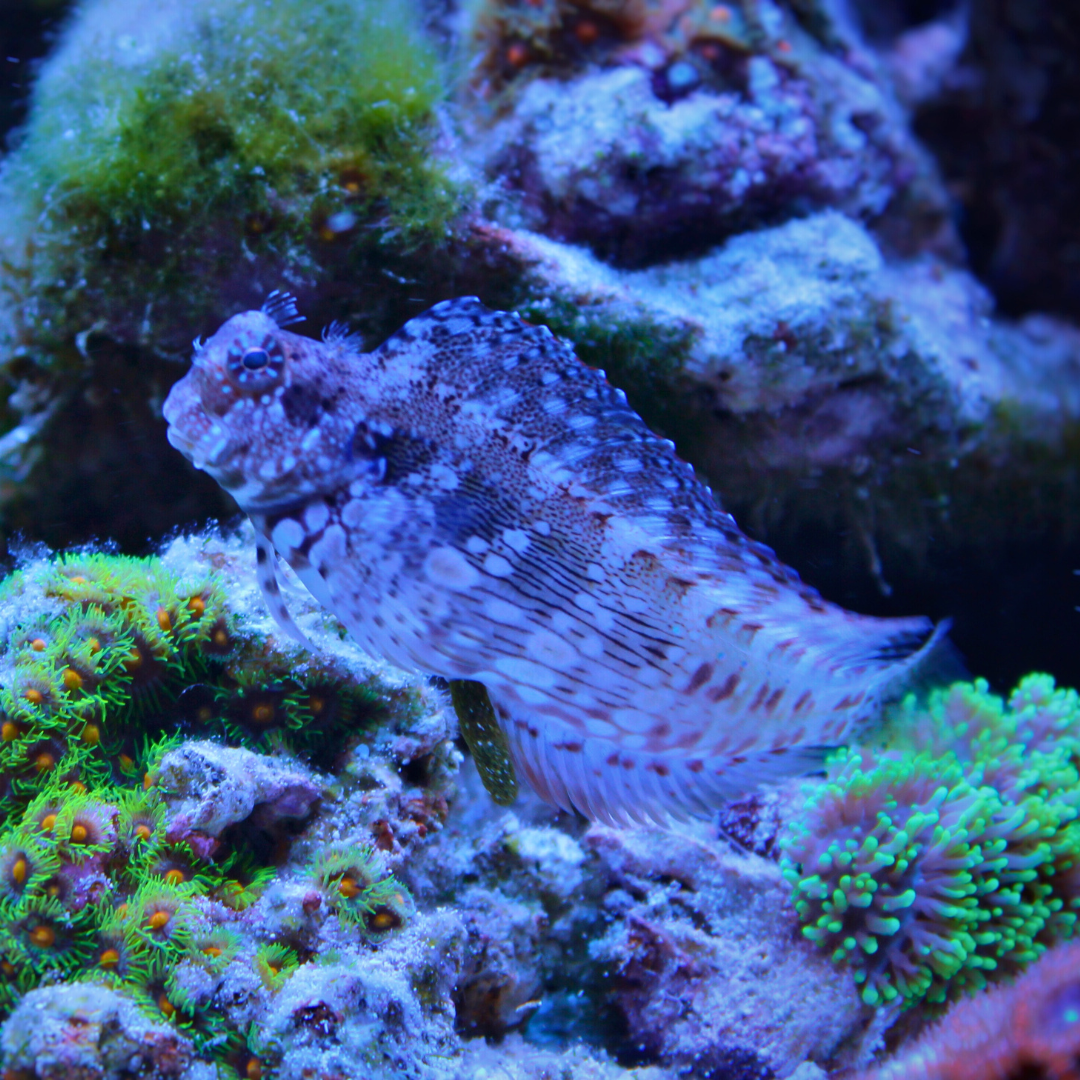
ヤエヤマギンポは、海水水槽では「コケ取り」としてよく知られるイソギンポ科の底生魚です。岩やガラス面をついばむ姿が愛らしく、リーフタンクでも比較的扱いやすい一方で、長期飼育では「水槽内のコケだけに頼らない」ことがとても大切です。自然下では藻類だけでなく、岩肌に付着したデトリタス、バイオフィルム、微小生物などを削り取るように食べているとされます。そのため、十分に成熟したライブロック環境と、植物質を含む補助給餌を組み合わせることで、本種らしい行動を楽しみながら健康を維持しやすくなります。Salarias fasciatus is a benthic blenny widely known in marine aquariums as an algae-grazing helper. Its habit of perching on rocks and scraping surfaces makes it both useful and charming, but long-term care should not rely on aquarium algae alone. In nature, it is understood to graze not only algae but also detritus, biofilm, and small organisms attached to hard surfaces. A mature live-rock system, together with supplemental foods that include vegetable matter, helps maintain its health while allowing its natural grazing behavior to be observed.
ギンポ目または旧分類でスズキ目、イソギンポ科、カエルウオ亜科、ヤエヤマギンポ属Order Blenniiformes, family Blenniidae, subfamily Salariinae, genus Salarias
英名 / English Name
Jewelled blenny, Lawnmower blenny
分布 / Distribution
紅海・東アフリカからサモア方面、北は琉球列島、南はグレートバリアリーフやニューカレドニアにかけてのインド太平洋。浅い礁原、ラグーン、岩礁、サンゴ・砂・瓦礫が混じる場所で見られます。Indo-Pacific: from the Red Sea and East Africa to Samoa, north to the Ryukyu Islands, and south to the Great Barrier Reef and New Caledonia. It is found on shallow reef flats, lagoons, rocky reefs, and mixed coral, sand, and rubble areas.
最大体長 / Max Size
全長約14cm。飼育下では個体差があり、流通個体はこれより小さいことが多いです。About 14 cm total length. Aquarium specimens are often smaller, depending on age and condition.
寿命 / Lifespan
明確な定説は限られますが、適切な環境と給餌が維持できれば数年単位の飼育が期待できます。A precise, universally accepted lifespan is limited in the literature, but with suitable conditions and feeding it can be expected to live for several years in captivity.
飼育環境 / Aquarium Environment
水槽サイズ / Tank Size
最低目安は60cm規格水槽以上。体そのものは大きく泳ぎ回るタイプではありませんが、餌場となる岩肌の表面積が重要です。より安定した長期飼育を狙うなら90cm規格水槽以上、ライブロックを十分に組める水量が安心です。A standard 60 cm aquarium is a practical minimum. The fish is not a strong open-water swimmer, but it needs plenty of hard surface area for grazing. For more stable long-term care, a 90 cm aquarium or larger system with ample live rock is preferable.
水温 / Temperature
24〜27℃前後。急変を避け、できるだけ安定させます。Around 24-27°C. Avoid sudden changes and keep the temperature stable.
水質 / Water Quality
一般的な熱帯性海水魚向けの水質を維持します。比重は1.023〜1.026前後、pHは8.0〜8.4程度を目安にし、硝酸塩やリン酸塩は過度に蓄積させないよう換水とろ過で管理します。Maintain standard tropical marine-fish conditions. A specific gravity of about 1.023-1.026 and pH around 8.0-8.4 are good targets. Use filtration and water changes to prevent excessive nitrate and phosphate accumulation.
レイアウト / Layout
ライブロックやサンゴ岩を多めに配置し、隠れ家と採餌面を確保します。平たい岩や見晴らしのよい場所があると、胸びれで体を支えて休む本種らしい姿を観察しやすくなります。底砂は必須ではありませんが、細かめのサンゴ砂を敷くと自然な雰囲気になり、デトリタスや微小生物の発生場所にもなります。Provide plenty of live rock or coral rock for shelter and grazing surfaces. Flat rocks and lookout points allow the fish to perch naturally on its pectoral fins. Sand is not strictly required, but fine coral sand can create a natural appearance and provide areas where detritus and microfauna can accumulate.
注意点 / Precautions
導入直後はよくコケを食べていても、水槽内の自然餌が減ると急に痩せることがあります。腹部がへこんでいないか定期的に確認してください。また、驚いた時に飛び出すことがあるため、フタやネットで隙間をふさぐ対策が安全です。Even if it grazes actively after introduction, it may lose weight once natural food in the aquarium declines. Check the belly condition regularly. It may jump when startled, so a tight-fitting lid or mesh cover is strongly recommended.
餌と給餌 / Feeding
餌の種類 / Diet
水槽内の茶ゴケ、初期の藻類、岩肌のバイオフィルムやデトリタスをついばみます。補助餌としては、スピルリナや海藻成分を含む草食魚用フード、植物質を含む沈下性ペレット、無添加の乾燥海苔などが使いやすいです。動物性の餌だけに偏らせないようにします。It grazes diatoms, early algal growth, biofilm, and detritus on hard surfaces. Good supplemental foods include herbivore formulas with spirulina or marine algae, sinking pellets containing vegetable matter, and plain dried nori. Avoid relying only on animal-based foods.
給餌のポイント / Feeding Tips
水面に浮く餌をすぐに食べない個体もいます。餌付け初期は、ふやかしたフードを岩の上や目の前にスポイトでそっと置くと、削り取る行動につながりやすくなります。乾燥海苔はクリップで固定するか、小さな石に巻きつけて沈めると認識しやすくなります。痩せやすい個体では、少量を1日2回程度に分けると管理しやすいです。Some individuals do not readily take floating food. During weaning, place softened food gently on a rock or near the fish with a pipette to encourage scraping behavior. Nori can be clipped to the glass or wrapped around a small stone and sunk. For individuals prone to losing weight, small feedings once or twice daily are easier to manage.
性格と混泳 / Temperament and Tank Mates
性格 / Temperament
他種に対してはおおむね穏やかですが、同種や体型・生活場所が似た底生魚には縄張り意識を示すことがあります。岩の上で周囲を見渡すように休む行動が多く、常に中層を泳ぎ続ける魚ではありません。It is generally peaceful toward different species, but it can become territorial toward its own kind or bottom-dwelling fishes with a similar body shape and lifestyle. It often rests on rocks and surveys its surroundings rather than swimming continuously in open water.
混泳の相性 / Compatibility
カクレクマノミ、小型ヤッコ、ハナダイ、デバスズメダイなど、遊泳層が異なる魚とは合わせやすいです。サンゴのポリプを積極的に食べる魚ではないため、一般にリーフタンク向きとされます。ただし、同種複数飼育、近縁のギンポ類、底生ハゼ類、強いハギ類などとは、縄張りや餌の競合に注意が必要です。小型から中型水槽では原則1匹飼育が無難です。It usually mixes well with fishes that use different swimming zones, such as clownfish, small angelfish, anthias, and chromis. It is generally considered reef-safe because it does not actively feed on coral polyps. However, multiple conspecifics, similar blennies, bottom-dwelling gobies, and assertive tangs require caution because of territorial or food competition. In small to medium aquariums, keeping one individual is the safer rule.
病気と対策 / Diseases and Prevention
かかりやすい病気 / Common Diseases
丈夫な部類ですが、導入時のストレスや水温変動で白点病が出ることがあります。また、岩肌をついばむ生活のため、体表やヒレの小さなスレから細菌感染が起こることもあります。病気と見間違えやすい問題として、餌不足による痩せがあります。It is relatively hardy, but marine ich can appear after introduction stress or temperature instability. Small abrasions from grazing or minor disputes may also lead to secondary bacterial issues. A common problem that can be mistaken for disease is weight loss caused by insufficient food.
対策と予防 / Prevention
水温と比重を安定させ、導入時は急な環境変化を避けます。混泳魚から追われ続けていないか、腹部がへこんでいないかを日常的に観察してください。痩せが見える場合は、薬浴を急ぐ前に餌不足の可能性を確認し、隔離ケースなどで落ち着いて補助給餌できる環境を作ると回復につながる場合があります。Keep temperature and salinity stable and avoid sudden environmental changes during introduction. Watch for harassment by tank mates and check whether the belly is becoming sunken. If weight loss appears, consider insufficient feeding before rushing to medication; a calm feeding space such as an acclimation or isolation box may help the fish recover.
増やし方(繁殖) / Breeding
雌雄の判別 / Sexing
外見だけでの判別は難しい魚です。成熟したオスでは臀びれ前方の軟条が伸びるとされますが、販売サイズや個体状態によっては確認しにくいことがあります。Sexing by appearance is difficult. Mature males are reported to have elongated anterior anal-fin rays, but this can be hard to confirm in shop-sized or stressed individuals.
繁殖形態 / Reproduction
卵生で、卵は基質に付着する沈性卵です。孵化後の仔魚はプランクトンとして浮遊する段階を持つとされています。It is oviparous. The eggs are demersal and adhesive, attaching to the substrate. After hatching, the larvae enter a planktonic stage.
繁殖のポイント / Breeding Tips
一般家庭での繁殖はかなり難しい魚です。産卵まで進んだとしても、極小の浮遊仔魚に適切な初期餌を長期間安定供給する必要があり、通常の観賞用水槽では成功しにくいと考えられます。流通個体は現在も野生採集個体が中心と考えられるため、購入時の状態確認と長期飼育の工夫が重要です。Breeding in a home aquarium is very difficult. Even if spawning occurs, the tiny planktonic larvae require suitable first foods over an extended period, which is challenging in ordinary display aquariums. The aquarium trade is still considered to rely mainly on wild-collected individuals, so careful selection and long-term husbandry are important.
雑学と豆知識 / Trivia and Fun Facts
1. 「芝刈り機」という英名の落とし穴 / 1. The catch behind the name “lawnmower blenny”
英名のLawnmower blennyは、岩やガラスの表面をせっせと削る行動から生まれた、たいへん分かりやすい呼び名です。ただし、この名前から「藻類だけを食べる魚」と考えると飼育では失敗しやすくなります。実際には、自然下で岩肌に積もる有機物や微生物の膜も重要な餌資源とされます。水槽をあまりに清潔にしすぎると、本種にとっては食卓そのものが消えてしまうことがあるのです。The common name “lawnmower blenny” comes from its obvious habit of scraping surfaces, but it can be misleading if interpreted as meaning that the fish eats only algae. In nature, organic particles and microbial films on hard surfaces are also considered important food resources. An aquarium that is kept too sterile can unintentionally remove the very “dining table” this fish depends on.
2. 学名に残る18世紀の博物学 / 2. Eighteenth-century natural history in its scientific name
本種は1786年にブロッホによってBlennius fasciatusとして記載され、その後Salarias属に置かれるようになりました。種小名fasciatusは「帯のある」という意味で、体側の暗色帯を連想させる名前です。現在使われるSalarias fasciatusという学名には、18世紀から続く魚類分類の歴史が静かに刻まれています。This species was described by Bloch in 1786 as Blennius fasciatus and was later placed in the genus Salarias. The specific name fasciatus means “banded,” referring to the dark bars on the body. The current scientific name Salarias fasciatus quietly preserves a piece of eighteenth-century fish taxonomy.
3. 泳ぎ回るより、岩の上で見張る魚 / 3. A fish that watches from the rocks rather than cruising
ヤエヤマギンポは中層を優雅に泳ぎ続けるタイプではなく、岩にとまるように休みながら周囲を観察します。この姿はアクアリウムではユーモラスに見えますが、浅いサンゴ礁や岩礁で餌場と安全を確かめながら暮らすための合理的な行動です。顔つきの愛嬌と、どこか考え込んでいるような仕草が、本種の大きな魅力になっています。Salarias fasciatus is not a graceful midwater cruiser; it often rests on rocks and watches its surroundings. This looks humorous in an aquarium, but it is a practical behavior for a fish living on shallow reefs and rocky surfaces where it must find food and monitor danger. Its expressive face and thoughtful-looking posture are a major part of its charm.
4. 「お掃除役」ではなく、食べ続ける生活者 / 4. Not just a cleaner, but a continuous grazer
本種は水槽のコケを減らしてくれる便利な存在ですが、生き物としては一日を通して少しずつ餌を探す生活者です。導入直後にコケを一気に減らしたあと、餌不足に転じることがあります。飼育者にとって大切なのは、水槽をきれいにしてもらうことだけでなく、ヤエヤマギンポ自身が食べ続けられる環境を残すことです。This species is useful because it can reduce algae, but biologically it is a continuous grazer that searches for small amounts of food throughout the day. After it quickly reduces visible algae, the aquarium may become food-poor for the fish. The keeper’s goal should be not only to have a cleaner tank, but also to preserve an environment where the blenny itself can keep feeding.
まとめ / Conclusion
ヤエヤマギンポは、コケ取り能力と愛嬌のある行動で人気の高い海水魚です。しかし、長期飼育の鍵は「コケを食べる魚」と単純に考えないことにあります。成熟したライブロック、十分な採餌面、安定した水質、飛び出し防止、そして早めの補助給餌がそろうほど、健康を維持しやすくなります。Salarias fasciatus is popular for both its algae-grazing ability and its charming behavior. The key to long-term care, however, is not to treat it simply as an algae eater. Mature live rock, ample grazing surface, stable water quality, jump prevention, and early supplemental feeding all make it much easier to keep this fish healthy.
小型から中型の水槽では1匹飼育を基本にし、腹部の痩せを日常的に観察しましょう。水槽の見た目を整えるための「掃除係」としてだけでなく、浅いサンゴ礁で岩肌をついばみながら暮らす底生魚として扱うことが、ヤエヤマギンポの魅力を長く楽しむためのいちばん確かな方法です。In small to medium aquariums, keeping a single individual is the safest approach, and the belly condition should be checked routinely. Rather than viewing it only as a cleaner for the aquarium, treating it as a benthic reef fish that lives by grazing hard surfaces is the most reliable way to enjoy its character for the long term.
Randall, J.E., Allen, G.R. & Steene, R.C. 1990. Fishes of the Great Barrier Reef and Coral Sea. University of Hawaii Press. インド太平洋域のサンゴ礁魚類としての分布、生息環境、形態情報の補強資料として参照。
Spotte, S. 1992. Captive Seawater Fishes: Science and Technology. Wiley-Interscience. 海水魚飼育における水質安定、塩分、pH、ろ過、閉鎖環境での管理を考えるための基礎資料として参照。


 ポチップ
ポチップ




コメント