

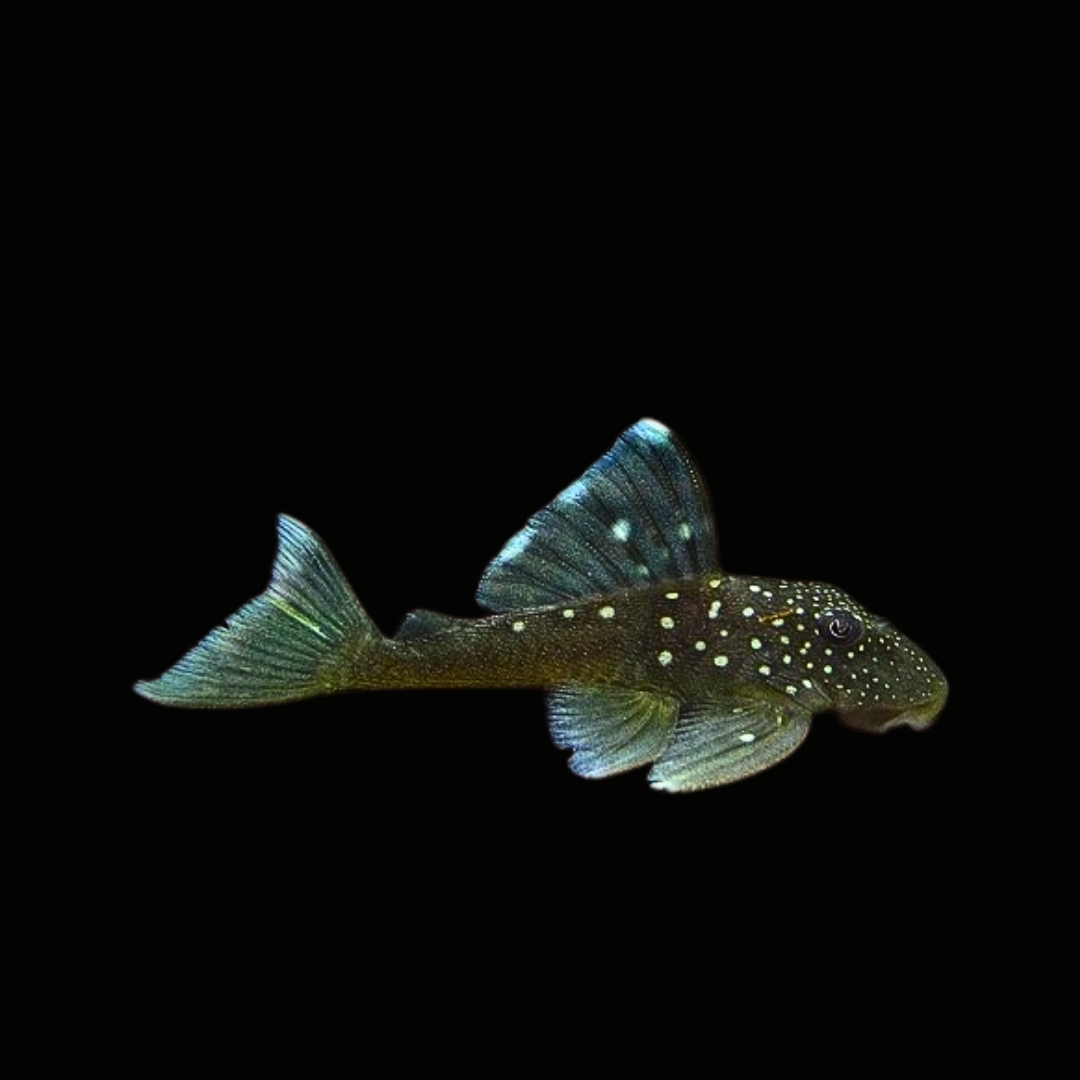
解説 / Description
ブルーフィンペッコルティア(L128)は、南米オリノコ川水系に由来するロリカリア科のプレコで、海外では「Blue Phantom Pleco」と呼ばれます。青灰色から暗いオリーブグレーの体に、淡い青白色のスポットが散る姿が魅力で、落ち着いた光の下では名前の通り幻のような青みを見せます。日本では「ペッコルティア」の名で親しまれていますが、分類上は Peckoltia 属ではなく、一般に Hemiancistrus sp. L128 として扱われる未記載または暫定的な位置づけの魚です。美しい一方で、強い水流、高い溶存酸素、清浄な水、十分な給餌を必要とするため、単なるコケ取り役ではなく、主役級の中型プレコとして丁寧に管理したい種類です。 The Bluefin Peckoltia (L128), widely known as the Blue Phantom Pleco, is a loricariid catfish associated with the Orinoco River drainage in South America. Its slate-blue to dark olive-gray body, scattered with pale bluish-white spots, gives it a mysterious, phantom-like beauty under subdued lighting. Although it is commonly sold in Japan under a name that includes “Peckoltia,” it is generally treated as Hemiancistrus sp. L128 rather than a true Peckoltia species. This is not merely a cleanup fish: it is a centerpiece-grade medium pleco that requires strong current, highly oxygenated clean water, and deliberate feeding.
基本情報 / Basic Information
| 学名 / Scientific Name | Hemiancistrus sp. L128 |
|---|---|
| 通称 / Common Name | ブルーフィンペッコルティア、ブルーファントムプレコ、L128Blue Phantom Pleco, L128 |
| 分類 / Family | ナマズ目 ロリカリア科 ヒポストムス亜科 アンキストルス族周辺のプレコ類。属の扱いは暫定的で、Hemiancistrus 属として流通・記載されることが多いです。Order Siluriformes, family Loricariidae, subfamily Hypostominae, around the Ancistrini group. Its generic placement is provisional and it is most often traded and listed as Hemiancistrus sp. |
| 英名 / English Name | Blue Phantom Pleco |
| 分布 / Distribution | 南米のオリノコ川水系。主にベネズエラからコロンビアにかけての、岩場が多く流れのある水域に由来するとされます。流通情報では採集地や便名が混在することがあるため、産地を厳密に扱う場合は入荷ルートの確認が必要です。The Orinoco River drainage of South America, especially rocky, flowing habitats associated with Venezuela and Colombia. Collection localities and export routes may be mixed in trade, so locality data should be confirmed when maintaining locality-specific breeding groups. |
| 最大体長 / Max Size | およそ20〜25cm。資料によっては25cmを超える記述もありますが、水槽内では20cm前後で成長が緩やかになる個体も多いです。Approximately 20–25 cm. Some sources report larger sizes, but many aquarium specimens slow down around the 20 cm range. |
| 寿命 / Lifespan | 適切な環境では10年前後、良好な長期飼育ではそれ以上も期待できます。正確な上限は飼育条件や導入時の状態に大きく左右されます。Around 10 years under suitable care, with the potential for longer life in stable long-term setups. Actual lifespan depends strongly on water quality, diet, and condition at import. |
飼育環境 / Aquarium Environment
| 水槽サイズ / Tank Size | 単独飼育でも90cm規格水槽以上を推奨します。成魚や複数飼育では90cmワイド水槽、120cm規格水槽以上が安心です。底面を使う魚なので、水量だけでなく奥行きと隠れ家の数が重要です。A standard 90 cm aquarium or larger is recommended even for a single specimen. For adults or groups, a 90 cm wide tank or a standard 120 cm tank is safer. Floor space and the number of shelters matter as much as total water volume. |
|---|---|
| 水温 / Temperature | 25〜29℃前後を目安にします。高水温にも耐える報告はありますが、水温が上がるほど溶存酸素が下がりやすいため、強いエアレーションと水流を併用します。長期管理では急激な変動を避けることが大切です。 Aim for around 25–29°C. Although warm-water tolerance is often reported, higher temperatures reduce dissolved oxygen, so strong aeration and current are important. Avoid sudden temperature swings in long-term care. |
| 水質 / Water Quality | 弱酸性から中性付近、目安としてpH 6.0〜7.5、軟水から中硬水程度が扱いやすい範囲です。アンモニアと亜硝酸は検出されない状態を維持し、硝酸塩もため込まないよう、強力なろ過と定期的な換水を行います。Slightly acidic to near-neutral water is suitable; as a practical range, pH 6.0–7.5 and soft to moderately hard water are manageable. Ammonia and nitrite should remain undetectable, and nitrate should be kept low through powerful filtration and regular water changes. |
| レイアウト / Layout | 丸石、平たい石、流木、プレコ用シェルターを組み合わせ、岩の隙間や洞窟状の隠れ家を複数作ります。底床は細かい砂や角の丸い砂利が適します。水流ポンプや外部式フィルターで、底面にも新鮮な水が回る構造にすると状態を保ちやすくなります。Use rounded stones, flat rocks, driftwood, and pleco caves to create multiple crevices and cave-like shelters. Fine sand or smooth rounded gravel is preferable. Powerheads and canister filters should move fresh, oxygenated water across the bottom area. |
| 注意点 / Precautions | 輸入直後や導入直後の痩せに注意します。腹がへこんだ個体、目が落ちくぼんだ個体、呼吸が荒い個体は回復が難しい場合があります。また、プレコは排泄量が多いため、見た目がきれいでもろ過槽や底床に汚れが蓄積しやすい点に注意してください。Watch carefully for emaciation after import or introduction. Specimens with sunken bellies, sunken eyes, or labored breathing may be difficult to recover. Plecos also produce substantial waste, so debris may accumulate in the filter and substrate even when the display looks clean. |
餌と給餌 / Feeding
| 餌の種類 / Diet | 雑食性です。プレコ用沈下性タブレット、スピルリナ配合フード、植物質を含む沈下性ペレットを基礎にし、冷凍アカムシ、イサザアミ、ブラインシュリンプ、細かくしたエビ類などの動物質も適度に与えます。ゆでたズッキーニ、キュウリ、サツマイモなどは補助的に利用できます。This is an omnivorous species. Use sinking pleco tablets, spirulina-based foods, and vegetable-rich sinking pellets as staples, supplemented with frozen bloodworms, mysis, brine shrimp, and finely chopped shrimp. Blanched zucchini, cucumber, and sweet potato can be offered as supplementary foods. |
|---|---|
| 給餌のポイント / Feeding Tips | 「水槽のコケだけで足りる」と考えないことが最重要です。夜行性が強いため、消灯後に沈下性の餌を入れると食べやすくなります。混泳魚に先に食べられる場合は、複数箇所に餌を落とし、翌朝に食べ残しを回収します。痩せやすい導入初期は、食べているかを腹部の丸みで確認してください。The most important point is not to assume aquarium algae alone is enough. Because it is largely nocturnal, sinking foods are often best offered after lights-out. If tank mates outcompete it, place food in several spots and remove leftovers the next morning. During the acclimation period, monitor the belly profile to confirm it is feeding. |
性格と混泳 / Temperament and Tank Mates
| 性格 / Temperament | 基本的には臆病で、日中は隠れ家に入ることが多いプレコです。ただし、成長したオスや隠れ家を確保した個体は、底面の縄張りを主張することがあります。Generally shy and often hidden during the day. However, mature males or settled individuals may defend bottom territories. |
|---|---|
| 混泳の相性 / Compatibility | 中層から上層を泳ぐ温和なカラシン、レインボーフィッシュ、穏やかなシクリッドなどとは比較的相性がよいです。同じ底面を使うプレコ類や大型の底棲魚とは、隠れ家と底面積が不足すると争いが起こりやすくなります。エビ類はサイズ差や個体差により捕食・接触リスクがあるため、観賞用の混泳では慎重に判断してください。It generally mixes well with peaceful mid- to upper-water fish such as characins, rainbowfish, and calm cichlids. Conflicts are more likely with other plecos or large bottom dwellers if floor space and shelters are insufficient. Shrimp compatibility should be judged cautiously because size differences and individual behavior can create predation or harassment risks. |
病気と対策 / Diseases and Prevention
| かかりやすい病気 / Common Diseases | 白点病、細菌性のヒレや皮膚のトラブル、導入初期の衰弱、餓死、酸欠による呼吸不全に注意します。特に輸入直後の個体では、外見上の病気よりも、長期絶食による消化機能の低下や体力不足が問題になりやすいです。Watch for ich, bacterial fin or skin problems, weakness after introduction, starvation, and respiratory stress caused by low oxygen. In newly imported specimens, reduced digestive function and poor body condition from prolonged fasting can be more serious than visible disease. |
|---|---|
| 対策と予防 / Prevention | 購入時は腹部がふっくらし、目が落ちくぼんでおらず、吸盤でしっかり張り付ける個体を選びます。導入時は急な水質変化を避け、十分な酸素供給を行います。薬品にはナマズ類として敏感な面があるため、治療時はプレコに使用可能な薬剤かを確認し、規定量を守って慎重に行います。Choose individuals with a rounded belly, normal eyes, and a strong ability to cling to surfaces. Avoid abrupt water changes during introduction and maintain high oxygen levels. As catfish can be sensitive to some medications, confirm that any treatment is suitable for plecos and dose carefully according to instructions. |
増やし方(繁殖) / Breeding
| 雌雄の判別 / Sexing | 若い個体では判別が難しいです。成熟したオスは頬や胸ビレ周辺のオドントードが発達しやすく、頭部から肩にかけてがやや幅広く見えることがあります。メスは抱卵時に腹部が丸く膨らみ、上から見たときに体側がふっくらします。Sexing juveniles is difficult. Mature males often develop stronger odontodes around the cheeks and pectoral-fin area and may appear broader around the head and shoulders. Gravid females become noticeably fuller in the abdomen, especially when viewed from above. |
|---|---|
| 繁殖形態 / Reproduction | 洞窟や筒状の隠れ家を利用するケーブスポウナーと考えられます。メスが産卵した後、オスが卵を守り、ヒレで新鮮な水を送りながら管理するタイプです。It is considered a cave-spawning pleco. After the female lays eggs, the male guards the clutch and fans fresh water over the eggs. |
| 繁殖のポイント / Breeding Tips | 飼育下繁殖の情報は限られており、難易度は高い部類です。健康な若魚を複数育成し、成長後に自然なペア形成を待つ方法が現実的です。水流の当たる場所に太さや奥行きの異なる産卵筒を複数置き、清浄な軟水寄りの水質、栄養価の高い餌、雨季を模した換水などが誘発要素になる可能性があります。ただし、近縁種や経験則からの推定を含むため、確実な手順として断定しない方が安全です。Captive-breeding information is limited, and the species should be considered difficult to breed. A practical approach is to raise a healthy group of juveniles and allow pairs to form naturally. Several caves of different diameters and depths should be placed in current. Clean, relatively soft water, rich conditioning foods, and water changes that simulate the rainy season may help trigger spawning. However, some guidance is inferred from related plecos and aquarist experience, so it should not be treated as a guaranteed formula. |
雑学と豆知識 / Trivia and Fun Facts
| 1. 「ペッコルティア」という名前の落とし穴 / 1. The trap hidden in the name “Peckoltia” | 日本名のブルーフィンペッコルティアはとても定着した呼び名ですが、分類上の Peckoltia 属そのものを意味するわけではありません。プレコの流通では、未記載種や分類が確定していない美しい中小型種に、便宜的な名前が付くことが珍しくありません。L128もその代表例で、現在は Hemiancistrus sp. L128 として扱う表記が一般的です。つまり、この魚の名前には、アクアリウムの流通史と分類学の揺らぎがそのまま刻まれているのです。The Japanese name Bluefin Peckoltia is well established in the aquarium trade, but it does not mean that the fish is a true member of the genus Peckoltia. In pleco trade, attractive undescribed or taxonomically uncertain species often receive practical trade names. L128 is a classic example and is most commonly treated as Hemiancistrus sp. L128. Its name therefore preserves both aquarium-trade history and the unresolved nature of pleco taxonomy. |
|---|---|
| 2. Lナンバーは「仮の名札」 / 2. The L-number as a temporary name tag | L128の「L」は、学名がまだ整理されていないロリカリア科の魚を区別するために広まった番号体系に由来します。南米から魅力的なプレコが次々に輸入された時代、正式な学名だけでは流通や情報交換が追いつきませんでした。そこで番号が、愛好家、輸入業者、研究者をつなぐ実用的な共通語になりました。L128という番号は単なる商品記号ではなく、この魚が未解明の多様性の中から見いだされた証でもあります。The “L” in L128 comes from a numbering system used to distinguish loricariid catfishes whose scientific names were unresolved. When many striking plecos began entering the hobby from South America, formal taxonomy could not keep up with trade and communication. These numbers became a practical shared language among hobbyists, importers, and researchers. L128 is therefore not merely a stock code, but a record of a fish discovered within a still-unresolved diversity. |
| 3. L200との関係は断定しすぎない / 3. Its relationship with L200 should not be overstated | ブルーフィンペッコルティア(L128)は、グリーン系の「L200」と似た雰囲気を持つため、比較されることが多い魚です。体形や生息環境、色彩の連続性から近縁である可能性は高い一方、L128を単純にL200の色違いと断定するのは慎重であるべきです。趣味の飼育では、見た目が似ていても産地や系統の違いを尊重し、繁殖目的で安易に混ぜないことが大切です。L128 is often compared with the greener “L200” because of its similar overall impression. Their body shape, habitat, and color variation suggest a close relationship, but it is safer not to state simply that L128 is only a color form of L200. In aquarium breeding, locality and lineage should be respected, and similar-looking fish should not be mixed casually for breeding purposes. |
| 4. 青さは環境で見え方が変わる / 4. Its blue appearance changes with conditions | L128の青は、ネオンテトラのように常に強く発光する青ではありません。体色は青灰色、暗いオリーブ、黒緑色のように見えることがあり、照明の角度、底床の色、背景、個体の状態によって印象が変わります。落ち着いた環境で餌をしっかり食べ、岩陰からゆっくり姿を見せたときに浮かぶ淡い青こそ、このプレコの上品な魅力です。The blue of L128 is not a constant bright glow like that of a neon tetra. Its body may appear slate-blue, dark olive, or greenish-black depending on lighting angle, substrate color, background, and condition. Its refined beauty is best seen when a settled, well-fed specimen slowly emerges from the rocks and shows a soft blue sheen. |
| 5. 「掃除屋」ではなく急流の住人 / 5. Not a janitor, but a river-current specialist | プレコというとコケ取りを連想しがちですが、L128をその役割だけで飼うと失敗しやすくなります。自然下では岩に付着した藻類、微生物、デトリタス、小さな無脊椎動物などが混ざった複合的な食物を削り取っていると考えられます。水槽では、コケ取り役ではなく、酸素の多い流れの中で暮らす専門性の高いナマズとして扱うと、本来の美しさを引き出しやすくなります。Plecos are often imagined as algae cleaners, but keeping L128 only for that role often leads to failure. In nature it likely grazes on a complex layer of algae, microbes, detritus, and tiny invertebrates attached to rocks. In the aquarium, it should be treated not as a janitor, but as a specialized catfish from oxygen-rich flowing water. |
まとめ / Conclusion
ブルーフィンペッコルティア(L128)は、青みを帯びた体色と水色のスポットが美しい、オリノコ川水系由来の中型プレコです。流通名には「ペッコルティア」と入りますが、学名は暫定的に Hemiancistrus sp. L128 と表記されます。分類や近縁種との関係には、まだ整理されていない部分があります。 The Bluefin Peckoltia (L128), or Blue Phantom Pleco, is a beautiful medium-sized pleco from the Orinoco drainage, admired for its bluish body and pale blue spots. Although its Japanese trade name includes “Peckoltia,” it is provisionally identified as Hemiancistrus sp. L128. Its taxonomy and relationship to close relatives remain partly unresolved.
飼育では、90cm規格水槽以上の広さ、強い水流、高い溶存酸素、清浄な水、複数の隠れ家、そして植物質と動物質を組み合わせた計画的な給餌が重要です。導入初期の痩せや餓死を防ぐことが長期飼育の第一歩となります。環境を整えて落ち着かせれば、派手すぎない青の美しさと、岩陰に潜む急流性プレコらしい存在感をじっくり楽しめる一種です。 Successful care depends on a spacious aquarium of at least standard 90 cm size, strong current, high dissolved oxygen, clean water, multiple shelters, and planned feeding with both plant-based and animal-based foods. Preventing emaciation and starvation during the acclimation period is the first step toward long-term success. Once settled, this species rewards the keeper with understated blue beauty and the quiet presence of a true river-current pleco.

気になる道具や飼い方を見つけてみませんか?
 アイのアクアグッズ案内水換え・底砂掃除の道具の選び方|砂利・砂・ソイルに合うクリーナーとポンプ道具の特徴や使い方、選ぶときのポイントをアイが紹介します。記事はコチラ →
 アイのアクアグッズ案内金魚を長く楽しむ飼育用品|水槽・フィルター・エアレーション・水換え道具の特徴や使い方、選ぶときのポイントをアイが紹介します。記事はコチラ →
さまざまな飼育テーマをご紹介。リンク先の記事には広告・商品紹介が含まれます。
案内・紹介記事一覧へ →本記事では、ブルーフィンペッコルティア(L128)が正式記載前の流通名・Lナンバー個体群である点を考慮し、L128そのものの種別情報に加えて、近縁種、ロリカリア科の分類・生態、観賞魚の疾病管理に関する信頼性の高い資料を参照しました。店舗、通販ページ、個人ブログ、一般的なまとめサイトは参考文献から除外しています。
Baryancistrus demantoides and Hemiancistrus subviridis, two new uniquely colored species of catfishes from Venezuela (Siluriformes: Loricariidae). Neotropical Ichthyology, 3(4), 533–542.
主な裏付け:近縁種 Hemiancistrus subviridis と Baryancistrus demantoides の記載、オリノコ川水系産ロリカリア類の分類、L200系統との比較、岩場・流水環境に関する背景。
GBIF Secretariat. Hemiancistrus subviridis Werneke, Sabaj Pérez, Lujan & Armbruster, 2005.
主な裏付け:L128と比較される近縁種 H. subviridis の分類階級、ロリカリア科・Hemiancistrus 属としての基礎分類、学名と記載文献の確認。
Seriously Fish species profile for Hemiancistrus sp. L128.
主な裏付け:L128の流通名、北部オリノコ川水系という分布、岩場の流水環境、成魚サイズ、水温・pHなどの飼育条件、混泳・給餌・繁殖情報の補助確認。
Three new species of saddled loricariid catfishes, and a review of Hemiancistrus, Peckoltia and allied genera. ZooKeys.
主な裏付け:Hemiancistrus や Peckoltia 周辺の分類が複雑であること、商業名と分類学上の属名が必ずしも一致しない可能性、属レベルの扱いに慎重さが必要である点。
Trophic diversity in the evolution and community assembly of loricariid catfishes. BMC Evolutionary Biology, 12, 124.
主な裏付け:ロリカリア科の食性が藻類、デトリタス、付着生物などの基礎資源に大きく依存すること。L128の給餌説明で「コケ取りだけに依存させず、植物質と動物質を含む沈下性飼料を与える」とした判断の背景。
Petty, B. D., Francis-Floyd, R. & Yanong, R. P. E. Bacterial Diseases of Fish. Merck Veterinary Manual.
主な裏付け:魚類の細菌性疾患が、過密、悪い水質、有機物の蓄積、輸送・導入ストレス、低酸素などと関連しやすいこと。導入直後の観察、清浄な水、十分な酸素、過密回避を重視する根拠。
Francis-Floyd, R., Yanong, R. P. E. & Pouder, D. B. Ichthyophthirius multifiliis (White Spot) Infections in Fish. UF/IFAS Extension.
主な裏付け:白点病の原因、導入経路、隔離・検疫、早期対応の重要性。新規導入魚を直接本水槽へ入れないこと、異常時に早期隔離・観察することの根拠。
Arthur, J. R., Bondad-Reantaso, M. G. & Subasinghe, R. P. Procedures for the quarantine of live aquatic animals: a manual. FAO Fisheries Technical Paper.
主な裏付け:輸入・移動を伴う水生生物では、病原体の持ち込みを防ぐための検疫・観察期間が重要であること。ワイルド個体や輸入直後個体を慎重に導入する説明の背景。
補足:L128は未記載種として流通し、Hemiancistrus sp. L128と表記されます。近縁プレコ類の繁殖情報が、L128でもそのまま再現できるとは限りません。




コメント