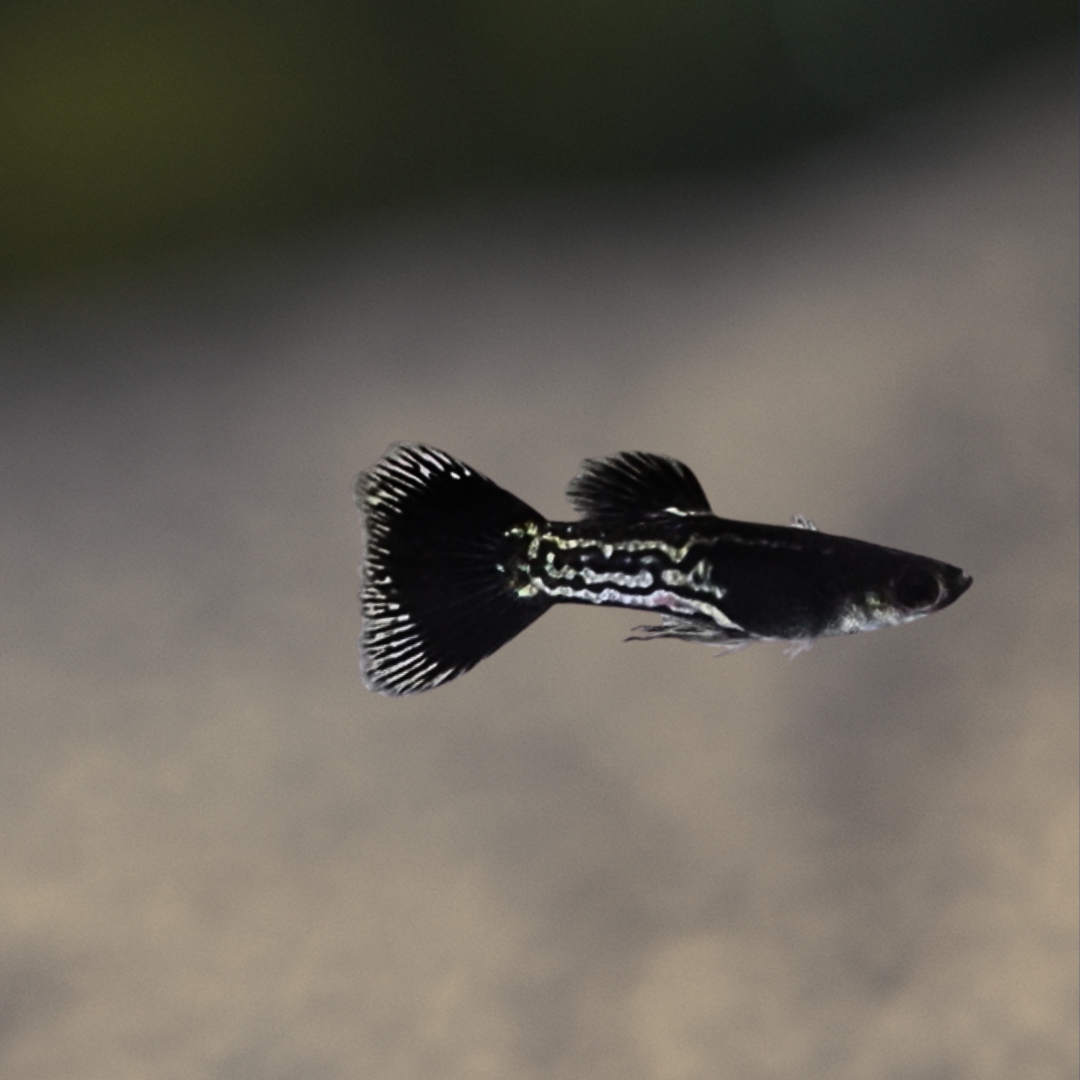
ブラックメタルレースグッピーは、グッピーの改良品種の一つで、黒を基調とした引き締まった体色、頭部から体前半にかけて見られる金属的な光沢、体側やヒレに入る細かなレース状の模様が見どころです。一般的なグッピーと同じく卵胎生で繁殖しやすい魚ですが、品種としての美しさを保つには、体格、尾びれの形、黒の濃さ、メタル感、レース模様のバランスを見ながら丁寧に選別していく必要があります。The Black Metal Lace Guppy is a selectively bred guppy strain admired for its dark body tone, metallic sheen on the head and front body, and fine lace-like patterns on the body and fins. Like other guppies, it is a livebearing fish that can breed readily, but maintaining the strain’s beauty requires careful selection for body condition, tail shape, black coloration, metallic expression, and lace pattern balance.
基本情報 / Basic Information
学名 / Scientific Name
Poecilia reticulata
通称 / Common Name
ブラックメタルレースグッピー、ブラックメタルレース、メタルレースグッピーBlack Metal Lace Guppy, Metal Lace Guppy
分類 / Family
カダヤシ目 カダヤシ科 グッピー属Order Cyprinodontiformes, family Poeciliidae, genus Poecilia
英名 / English Name
Black Metal Lace Guppy
分布 / Distribution
原種のグッピーは南米北部からカリブ海周辺に自然分布し、ベネズエラ、トリニダード、ガイアナ、ブラジル北部などが原産域として知られます。本品種は観賞魚として作出・維持されている改良品種で、日本国内では国産ブリード個体や海外ブリード個体が流通します。Wild guppies are native to northern South America and parts of the Caribbean, including areas such as Venezuela, Trinidad, Guyana, and northern Brazil. This strain is a selectively bred ornamental form, and both domestically bred and imported lines may be available in Japan.
最大体長 / Max Size
オス約3〜4cm、メス約5〜6cm。メスの方が体格が大きくなりやすい傾向があります。Males reach about 3–4 cm, while females may reach about 5–6 cm. Females usually grow larger and more robust than males.
寿命 / Lifespan
およそ1〜3年。高水温で代謝が上がりすぎると寿命が短くなりやすいため、極端な高温を避け、安定した水温で飼育することが大切です。Usually around 1–3 years. Very warm conditions can speed up metabolism and may shorten lifespan, so avoiding extreme heat and keeping the temperature stable is important.
飼育環境 / Aquarium Environment
水槽サイズ / Tank Size
ペア飼育なら30cmキューブ水槽以上でも飼育できますが、尾びれをきれいに育て、繁殖や選別まで考える場合は45cm規格水槽以上、できれば60cm規格水槽が扱いやすいです。複数ラインを維持する場合は、親魚用、稚魚用、選別用に水槽を分けると安心です。A pair can be kept in a tank from around a 30 cm cube, but a 45 cm standard tank or larger is preferable for good fin development and breeding. A 60 cm standard tank is easier to manage, especially if fry rearing and selection are planned.
水温 / Temperature
23〜27℃前後が目安です。低温や急激な水温変化は体調不良につながりやすく、冬はヒーター、夏は冷却ファンなどで極端な変動を避けることが重要です。A range of about 23–27°C is suitable. Low temperatures and sudden temperature swings can weaken the fish, so heaters in winter and cooling measures in summer are important.
水質 / Water Quality
弱酸性〜弱アルカリ性まで適応しますが、pH6.8〜7.8前後の安定した中性付近が扱いやすいです。古い水で硝酸塩が蓄積しすぎたり、急にpHが変動したりするとヒレの傷みや体調不良につながるため、少量をこまめに換水する管理が向いています。This strain can adapt from slightly acidic to slightly alkaline water, but stable water around pH 6.8–7.8 is easiest to manage. Excessively aged water, nitrate buildup, or sudden pH changes can lead to fin damage and poor condition, so regular partial water changes are recommended.
レイアウト / Layout
遊泳スペースを残しつつ、マツモ、アナカリス、ウィローモス類などの水草を入れると、メスや稚魚の隠れ場所になります。尾びれが大きい個体は硬い流木や角のある石でヒレを傷めることがあるため、レイアウト素材は丸みのあるものを選ぶと安心です。Provide open swimming space along with plants such as hornwort, Egeria, or mosses to give females and fry places to hide. Fish with large fins may damage their tails on sharp rocks or rough wood, so smooth materials are safer.
注意点 / Precautions
ブラックメタルレースグッピーは、一般的なグッピーとしての飼いやすさを持つ一方、鑑賞価値の中心である尾びれは水質悪化やストレスの影響を受けやすい部分です。過密飼育、急な水合わせ、強い水流、攻撃的な魚との混泳は避け、ヒレの白濁や欠けを早めに見つけることが大切です。Although guppies are generally manageable, the decorative fins of this strain are sensitive to poor water quality and stress. Avoid overcrowding, abrupt acclimation, strong currents, and aggressive tank mates, and check the fins regularly for whitening or fraying.
餌と給餌 / Feeding
餌の種類 / Diet
小型熱帯魚用のフレークフードや顆粒フードを主食にできます。発色や繁殖を意識する場合は、冷凍赤虫、冷凍ミジンコ、ブラインシュリンプ、スピルリナ配合飼料などを補助的に使うと、栄養の偏りを抑えやすくなります。High-quality flakes or small granules for tropical fish can be used as the staple diet. Frozen bloodworms, frozen daphnia, brine shrimp, and spirulina-based foods can be offered as supplements for conditioning, coloration, and breeding.
給餌のポイント / Feeding Tips
一度に多く与えるより、数分で食べきれる量を1日1〜2回与える方が水を汚しにくいです。繁殖中や稚魚育成中は栄養価の高い餌が役立ちますが、食べ残しは水質悪化と尾びれの傷みにつながるため、こまめな観察が必要です。Feed small amounts once or twice daily, only as much as the fish can finish within a few minutes. Rich foods are useful during breeding and fry rearing, but leftovers can quickly degrade water quality and damage fin condition.
性格と混泳 / Temperament and Tank Mates
性格 / Temperament
基本的には温和で、人にも慣れやすい魚です。ただしオスはメスを追いかけることが多いため、メスに負担がかかる場合は水草や隠れ場所を増やす、雌雄比を調整する、別水槽に分けるなどの工夫が必要です。It is generally peaceful and easy to observe. Males often chase females, so if females appear stressed, provide more plants, adjust the sex ratio, or separate individuals as needed.
混泳の相性 / Compatibility
同じく温和な小型魚や小型コリドラス、オトシンクルスなどとは比較的合わせやすいです。ただし、スマトラのようにヒレをかじりやすい魚、大型魚、気性の強い魚との混泳は避けた方が無難です。品種維持を目的とする場合は、他品種のグッピーとは混泳させず、単独系統で管理することが重要です。It can be kept with other peaceful small fish, small Corydoras, and Otocinclus. Avoid fin-nipping fish, large fish, or aggressive species. If strain maintenance is the goal, keep it separate from other guppy strains to prevent unwanted crosses.
病気と対策 / Diseases and Prevention
かかりやすい病気 / Common Diseases
白点病、尾ぐされ病、カラムナリス症、導入直後のストレス性の体調不良に注意が必要です。特にブラックメタルレースグッピーは尾びれの美しさが重要な品種のため、ヒレ先の白濁、裂け、欠け、泳ぎの鈍さは早めに確認したいサインです。Watch for ich, fin rot, columnaris-like infections, and stress-related problems after introduction. Because this strain’s appeal depends heavily on fin quality, whitening, fraying, splitting, or sluggish swimming should be checked promptly.
対策と予防 / Prevention
予防の基本は、安定した水温、過密を避けた飼育、定期的な換水、導入時の丁寧な水合わせです。尾ぐされ病が疑われる場合は、早めに隔離し、観賞魚用の抗菌薬や塩水浴を状況に応じて用います。薬浴の判断は症状や水槽環境によって変わるため、説明書の用法を守り、軽症のうちに対応することが重要です。Prevention depends on stable temperature, avoiding overcrowding, regular water changes, and careful acclimation. If fin rot is suspected, isolate the affected fish early and use appropriate antibacterial medication or salt treatment when suitable. Always follow product instructions and treat problems before they progress.
増やし方(繁殖) / Breeding
雌雄の判別 / Sexing
オスは体が小さめで色彩や模様が強く、尻びれが交接器に変化しています。メスは体格が大きく、腹部がふっくらしやすく、妊娠が進むと腹部後方の妊娠斑が目立つことがあります。Males are smaller, more colorful, and have a gonopodium. Females are larger and fuller-bodied, and a gravid spot may become visible near the rear of the abdomen when pregnant.
繁殖形態 / Reproduction
卵胎生です。メスの体内で卵が発生し、稚魚の形で産み出されます。状態が整えば繁殖自体は容易ですが、親魚が稚魚を食べることがあるため、稚魚を残したい場合は水草を多めに入れるか、産仔前後に隔離する管理が向いています。It is a livebearer. Eggs develop inside the female, and free-swimming fry are born. Breeding is usually easy under good conditions, but adults may eat fry, so dense plants or separation are useful when fry survival is desired.
繁殖のポイント / Breeding Tips
本品種で大切なのは、繁殖させることよりも、どの個体を次世代に残すかです。同じブラックメタルレース同士を交配しても、黒い体色、メタル表現、レース模様、尾びれの形が常に均一にそろうとは限りません。そのため、黒の濃さ、メタル表現、レース模様、尾びれの開き、体格、泳ぎの強さを総合的に見て、次世代に残す個体を選ぶことが重要です。可能であれば複数のラインを維持し、体力が落ちてきたと感じる場合は、表現の近い同系統との交配を検討すると、品種の特徴と健全性を両立しやすくなります。For this strain, the key is not simply producing fry but choosing which individuals to keep for the next generation. Even when Black Metal Lace Guppies are bred together, black coloration, metallic expression, lace patterning, and tail shape may not appear uniformly in every offspring. Select individuals by assessing black intensity, metallic expression, lace pattern, tail spread, body size, and vigor as a whole. If possible, maintain multiple lines and consider crossing with a closely related compatible line when vitality appears to decline.
雑学と豆知識 / Trivia and Fun Facts
1. 名前に込められた三つの要素 / 1. Three Elements in the Name
ブラックメタルレースグッピーという名前は、品種の見どころをそのまま表しています。「ブラック」は体全体を引き締める暗色の印象、「メタル」は頭部から体前半にかけて現れる金属的な光沢、「レース」は体側やヒレに広がる細かな網目状の模様を指します。この三つがそろうことで、単なる黒いグッピーではなく、光の角度によって表情が変わる奥行きのある品種として楽しめます。The name Black Metal Lace Guppy describes the strain’s main visual elements: black for the dark overall impression, metal for the metallic sheen on the head and front body, and lace for the fine net-like pattern on the body and fins. Together, these traits create a fish with depth and changing expression under different angles of light.
2. 作出背景として見るブラックメタルレース / 2. The Breeding Background of Black Metal Lace
ブラックメタルレースグッピーは、黒い体色、金属のような光沢、レース状の細かな模様を組み合わせた改良グッピーです。黒の濃さだけでなく、光沢と模様がどのように重なって見えるかも見どころになります。同じ販売名でも系統や個体によって表現が異なるため、名前だけで交配の経緯まで判断せず、実際の魚の色柄を見て選びましょう。The Black Metal Lace Guppy combines dark coloration, a metallic sheen, and fine lace-like markings. Its appeal lies in the balance of these features rather than darkness alone. Expression varies among lines and individuals sold under the same name, so a trade name does not establish a precise breeding pedigree. Examine the actual fish when choosing a specimen.
3. グッピーは観賞魚であり、遺伝を観察しやすい魚でもある / 3. A Decorative Fish and an Easy Fish for Observing Inheritance
グッピーは古くから観賞魚として親しまれてきましたが、同時に体色や模様がどのように受け継がれるかを観察しやすい魚でもあります。オスに多彩な模様が現れ、世代交代が早く、交配結果が比較的見えやすいことから、愛好家の品種改良と研究的な視点が重なり合って発展してきました。ブラックメタルレースのような品種を見ると、アクアリウムの美しさの裏側に、長い選別と遺伝の積み重ねがあることを実感できます。Guppies have long been kept as ornamental fish, but they are also useful for observing how body colors and patterns are inherited. Their colorful males, short generation time, and visible breeding results have allowed hobby breeding and genetic observation to develop side by side. A strain like the Black Metal Lace Guppy reflects this long history of selection and inheritance.
4. メタル表現とレース模様のバランス / 4. The Balance Between Metal and Lace
ブラックメタルレースグッピーの魅力は、黒、メタル、レース模様が同じ個体の中でまとまる点にあります。ただし、実際の累代では、メタル感が強い個体、レース模様が目立つ個体、尾びれの開きがよい個体、逆に一部の表現が弱く出る個体など、さまざまな表現が出ることがあります。つまり、同じ品種名の親同士から生まれた子であっても、すべてが親と同じ見た目になるわけではありません。どの要素を重視するかによって選別の方向が変わるため、この品種は「完成形を買って終わり」ではなく、育てながら系統の個性を見ていく面白さがあります。The appeal of the Black Metal Lace Guppy lies in the combination of black coloration, metallic expression, and lace-like patterning. In actual breeding, however, individuals may vary: some show stronger metallic sheen, some show clearer lace patterns, some have better tail spread, and others may show weaker expression of certain traits. In other words, even offspring from parents of the same strain do not always look identical to their parents. Because selection direction changes depending on which traits are prioritized, this strain is especially rewarding to observe across generations.
5. 国産ブリード個体を見るときの考え方 / 5. How to Think About Domestically Bred Individuals
日本国内で累代されたグッピーは、日本の水道水や飼育環境に慣れている場合が多く、導入後の立ち上がりが安定しやすい傾向があります。ただし、国産であれば必ず強いという意味ではなく、管理状態や系統の体力によって差があります。ブラックメタルレースのようにヒレや発色の状態が鑑賞価値に直結する品種では、見た目の美しさだけでなく、泳ぎ方、体格、ヒレの張り、飼育されてきた環境まで含めて見ることが大切です。Guppies bred for generations in Japan are often accustomed to local tap water and common aquarium conditions, which can make introduction smoother. However, being domestically bred does not automatically guarantee hardiness; condition, line vitality, and husbandry still matter. For a strain whose value depends on fin condition and coloration, it is important to assess not only appearance but also swimming, body shape, fin tension, and the environment in which the fish were raised.
まとめ / Conclusion
ブラックメタルレースグッピーは、黒い体色、メタルの輝き、レース模様が重なった、非常に見応えのある改良グッピーです。飼育そのものは一般的なグッピーに近く、安定した水温と清潔な水を保てば楽しみやすい魚ですが、美しい尾びれを維持するには水質悪化やストレスを避ける管理が欠かせません。The Black Metal Lace Guppy is a striking selectively bred guppy that combines dark coloration, metallic sheen, and lace-like patterning. Its basic care is similar to that of other guppies, but maintaining beautiful fins requires clean water, stable temperatures, and low-stress conditions.
繁殖を楽しむ場合は、単に数を増やすだけでなく、体格、発色、模様、尾びれの形を見ながら次世代に残す個体を選ぶことが大切です。観賞魚としての華やかさと、品種維持の奥深さをあわせ持つため、グッピーの改良品種に一歩踏み込んで楽しみたい方に向いた品種です。When breeding this strain, it is important not only to produce fry but also to select the next generation based on body size, coloration, pattern, and tail shape. It is a rewarding strain for aquarists who want to go beyond simply keeping guppies and explore the deeper appeal of strain maintenance.
Paris, J. R., et al. (2022). “A large and diverse autosomal haplotype is associated with sex-linked colour polymorphism in the guppy.” Nature Communications, 13, 1421. https://www.nature.com/articles/s41467-022-28895-4
グッピー雄の色彩パターンが多様で、性選択や遺伝的連鎖と関係すること、色彩形質が単純な一要素だけでは説明しにくいことの参考として使用。
Fraser, B. A., et al. (2020). “Improved Reference Genome Uncovers Novel Sex-Linked Regions in the Guppy (Poecilia reticulata).” Genome Biology and Evolution, 12(10), 1789–1805. https://academic.oup.com/gbe/article/12/10/1789/5898193
グッピーの性染色体、雄の色彩パターン、性連鎖形質に関する研究背景の参考として使用。
Kottler, V. A., et al. (2013). “Pigment Pattern Formation in the Guppy, Poecilia reticulata, Involves the Kita and Csf1ra Receptor Tyrosine Kinases.” Genetics, 194(3), 631–646. https://pmc.ncbi.nlm.nih.gov/articles/PMC3697969/
グッピーの色素パターン形成、体色に関わる遺伝的要素、改良品種の体色理解の参考として使用。
Declercq, A. M., Haesebrouck, F., Van den Broeck, W., Bossier, P. and Decostere, A. (2013). “Columnaris disease in fish: a review with emphasis on bacterium-host interactions.” Veterinary Research, 44, 27. https://pmc.ncbi.nlm.nih.gov/articles/PMC3648355/
カラムナリス症の原因菌、淡水魚における発症、宿主との関係を確認するために使用。



 アイのアクアグッズ案内水槽のろ材の選び方|ウール・リング・活性炭の違いとおすすめ商品フィルターの中の綿や石は何をしている? アイとコタロウが、ウール・スポンジ・セラミック・焼結ガラス・活性炭・ゼオライトを比較。機種との相性、入れ方、洗い方と交換まで商品とともに紹介します。記事はコチラ →
 アイのアクアグッズ案内エビのおうち、食べちゃっていいの!? コタロウと探る、不思議なエビのごはん道具の特徴や使い方、選ぶときのポイントをアイが紹介します。記事はコチラ →



コメント