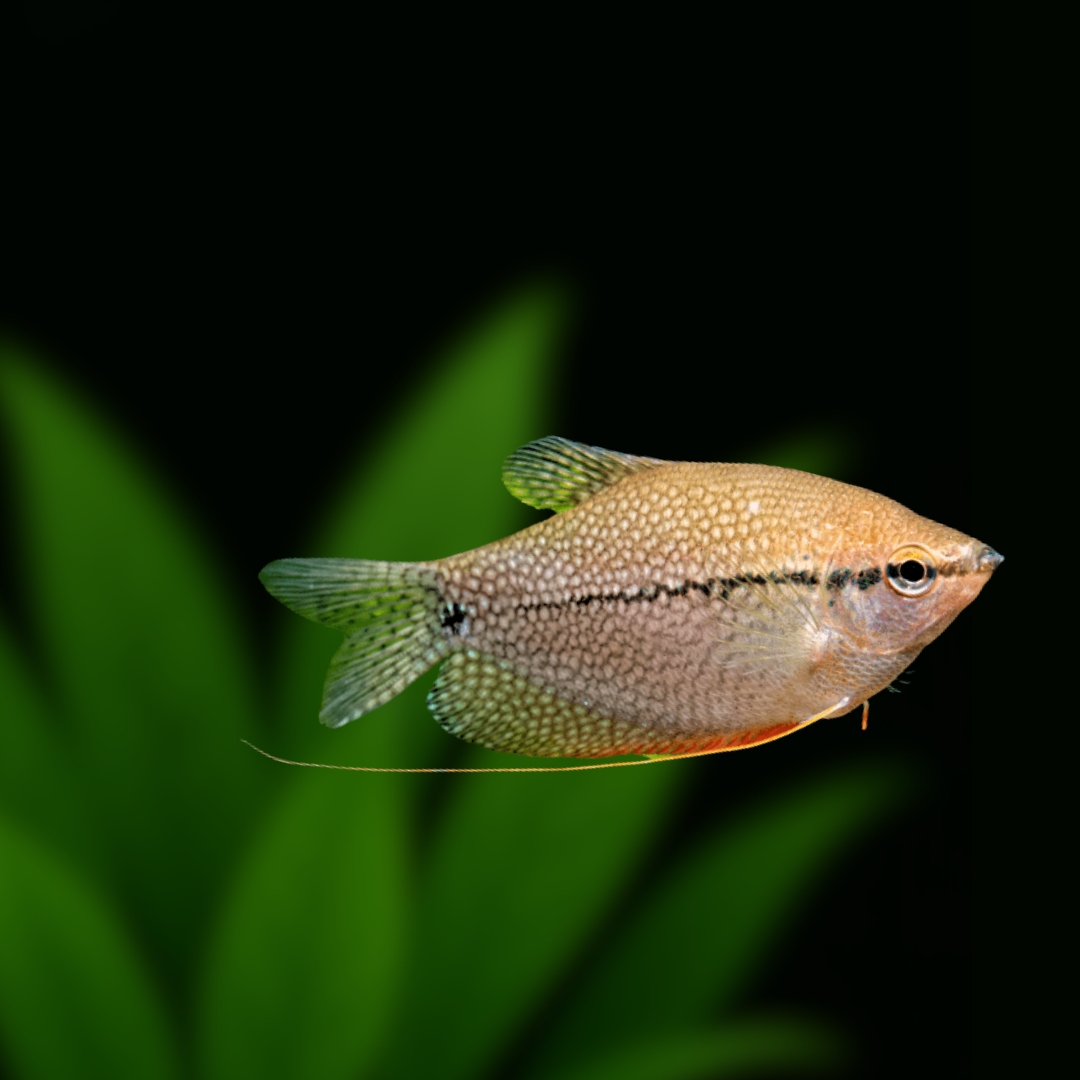
パールグラミーは、東南アジアの低地湿地や水草の多い緩やかな水域に生息する、上品で温和なグラミーの仲間です。銀褐色の体に真珠を散らしたような白い斑点が入り、吻端から尾柄部へ黒い縦帯が走ります。成熟したオスは喉元から胸部にかけて赤橙色を帯び、レースのような模様とあいまって、落ち着いた水草水槽で特に美しく映える魚です。ラビリンス器官によって水面から空気を取り込める一方、強い水流や荒い混泳相手は苦手なため、静かで安定した環境づくりが飼育の大切なポイントになります。The pearl gourami is an elegant and peaceful gourami native to lowland wetlands and slow, vegetated waters of Southeast Asia. Its silvery-brown body is covered with pearly white spots, with a dark stripe running from the snout to the caudal peduncle. Mature males develop reddish-orange coloration around the throat and chest, creating a refined appearance in calm planted aquariums. Although its labyrinth organ allows it to breathe atmospheric air from the surface, it dislikes strong current and rough tank mates, so a quiet and stable environment is essential.
キノボリウオ目 オスフロネムス科 トリコポドゥス属。亜科の扱いは文献により差があり、FishBaseではTrichogastrinaeとして掲載されています。Order Anabantiformes, family Osphronemidae, genus Trichopodus. Subfamily placement may vary by reference; FishBase lists it under Trichogastrinae.
英名 / English Name
Pearl Gourami
分布 / Distribution
タイ、マレー半島、インドネシアのスマトラ島・ボルネオ島などの東南アジア。低地の湿地、植生の多い小川、酸性寄りの水域で知られます。Southeast Asia, including Thailand, the Malay Peninsula, Sumatra, and Borneo. It is known from lowland swamps, vegetated streams, and acidic waters.
最大体長 / Max Size
最大で約12cm前後。資料により全長または標準体長の扱いが異なるため、飼育上は10〜12cm程度になる中型魚として考えると安全です。Around 12 cm at maximum. Because references differ in whether they report total or standard length, it is safest to treat it as a medium-sized fish that may reach about 10 to 12 cm in aquariums.
寿命 / Lifespan
一般的には4〜6年ほどが目安です。良好な環境ではそれ以上長く飼育されることもありますが、個体差や導入時の状態に左右されます。Typically about 4 to 6 years. Some individuals may live longer under excellent care, but lifespan depends on individual condition and husbandry.
飼育環境 / Aquarium Environment
水槽サイズ / Tank Size
単独からペア飼育なら60cm規格水槽を最低ラインとし、複数飼育や混泳では90cm規格水槽以上が扱いやすいです。最大体長を考えると、30cmキューブなどの小型水槽での長期飼育はおすすめしません。A standard 60 cm aquarium is a practical minimum for a single fish or a pair, while a standard 90 cm aquarium or larger is better for groups and community setups. Given its adult size, small tanks such as 30 cm cubes are not recommended for long-term care.
水温 / Temperature
24〜28℃を中心に管理します。短期的にはやや高めの水温にも耐えますが、長期飼育では急変を避け、ヒーターで安定させることが重要です。Keep mainly at 24 to 28°C. It can tolerate somewhat warmer conditions for short periods, but long-term care should prioritize stability with an aquarium heater.
水質 / Water Quality
弱酸性〜中性を中心に、pH 6.0〜8.0程度まで適応します。本来の環境に寄せるなら、流木やマジックリーフを使った弱酸性の軟水が向きます。ただし、数値を急に動かすより、安定した清潔な水を維持することが大切です。It adapts mainly to mildly acidic to neutral water, roughly pH 6.0 to 8.0. Mildly acidic soft water with driftwood or catappa leaves suits its natural preferences, but stable, clean water is more important than rapid adjustment of values.
レイアウト / Layout
有茎草、陰性水草、浮き草、流木を使い、視線を遮れる落ち着いたレイアウトにします。水面の浮き草は安心感を与え、繁殖時には泡巣の支えにもなります。フィルターの排水はガラス面や流木へ向け、強い直線的な水流を避けてください。Use stem plants, shade-tolerant plants, floating plants, and driftwood to create a calm layout with visual barriers. Floating plants provide security and may support bubble nests during breeding. Direct filter outflow toward glass or hardscape and avoid strong linear current.
注意点 / Precautions
ラビリンス器官で空気呼吸をするため、水面に上がれる空間を確保します。フタは飛び出し防止と保温に有効ですが、水面を完全に覆って空気呼吸を妨げないようにします。導入直後は輸送ストレスがあるため、照明を弱め、混泳魚に追われない環境で慣らすと安心です。Because it breathes atmospheric air with its labyrinth organ, it must have access to the water surface. A lid helps prevent jumping and retains warmth, but it should not prevent air breathing. Newly introduced fish may be stressed from transport, so subdued lighting and peaceful conditions help them settle.
餌と給餌 / Feeding
餌の種類 / Diet
雑食性で、フレーク、顆粒、乾燥赤虫、冷凍赤虫、ブラインシュリンプ、ミジンコ類などを食べます。主食は品質のよい人工飼料で十分ですが、冷凍餌を時々加えるとコンディション維持や発色に役立ちます。Omnivorous. It accepts flakes, granules, dried bloodworms, frozen bloodworms, brine shrimp, daphnia, and similar foods. A good prepared food is sufficient as the staple, while occasional frozen foods help maintain condition and coloration.
給餌のポイント / Feeding Tips
1日1〜2回、数分で食べ切る量を与えます。活発な魚に餌を取られやすい場合は、複数箇所に分けて与えます。ヒドラをついばむことはありますが、必ず駆除できるわけではないため、ヒドラ対策として導入する場合も過信は禁物です。Feed once or twice daily, only as much as can be eaten within a few minutes. If faster fish outcompete it, distribute food in several areas. It may pick at hydra, but it should not be relied upon as a guaranteed hydra control method.
性格と混泳 / Temperament and Tank Mates
性格 / Temperament
グラミー類の中では温和で、ゆったり泳ぐ落ち着いた魚です。成熟したオス同士では縄張り的な小競り合いが起こることがありますが、水量、隠れ場所、メスの数に余裕があれば深刻化しにくい傾向があります。It is peaceful for a gourami and swims in a calm, graceful manner. Mature males may show territorial sparring, but problems are less likely when there is enough water volume, cover, and an appropriate number of females.
混泳の相性 / Compatibility
中小型テトラ、ラスボラ、コリドラス、温和なローチ類などと相性がよいです。口に入るほど小さな魚や稚エビは捕食される可能性があります。スマトラのようなヒレをかじりやすい魚、非常に活発で攻撃的な魚、大型肉食魚との混泳は避けます。繁殖や安定した群れを狙う場合は、オス1匹に対してメス2〜3匹の比率が扱いやすいです。Suitable tank mates include small to medium tetras, rasboras, Corydoras, and peaceful loaches. Tiny fish and baby shrimp may be eaten. Avoid fin-nipping species such as tiger barbs, highly aggressive fish, and large predators. For breeding or stable grouping, one male with two or three females is often practical.
病気と対策 / Diseases and Prevention
かかりやすい病気 / Common Diseases
白点病、尾ぐされ病、カラムナリス症、エロモナス症など、一般的な熱帯魚の病気に注意します。ドワーフグラミーで問題視されるイリドウイルス病はグラミー類全体を考えるうえで重要な話題ですが、パールグラミーで一般的に多発する代表病として断定するのは避けるべきです。いずれにしても、流通魚では新規導入時の隔離観察が有効です。Watch for common tropical fish diseases such as ich, fin rot, columnaris, and Aeromonas-related infections. Dwarf gourami iridovirus is an important issue when discussing gouramis, but it should not be stated as a typical common disease of pearl gouramis without qualification. Quarantine and observation of new fish remain valuable.
対策と予防 / Prevention
購入後は可能であれば1〜2週間ほど隔離し、食欲、呼吸、体表、ヒレの状態を確認します。水温の急変、過密、強すぎる水流、底床の汚れを避け、週1回を目安に20〜30%程度の換水を行います。薬浴が必要な場合は、製品の用法を守り、酸欠と急変に注意しながら慎重に行います。If possible, quarantine new arrivals for one to two weeks and observe appetite, breathing, body surface, and fins. Avoid sudden temperature changes, overcrowding, excessive current, and accumulated waste, and change about 20 to 30% of the water weekly as a guideline. If medication is needed, follow product instructions carefully and watch for oxygen stress and abrupt changes.
増やし方(繁殖) / Breeding
雌雄の判別 / Sexing
成熟したオスは背鰭が長く尖り、尻鰭の軟条が伸び、喉元から胸部にかけて赤橙色が強く出ます。メスは体型がやや丸く、腹部にふくらみが出やすく、ヒレの伸長や赤みは控えめです。若魚では判別が難しいため、繁殖を狙う場合は成長した個体を選ぶと確実です。Mature males have a longer, pointed dorsal fin, elongated anal-fin rays, and stronger reddish-orange coloration around the throat and chest. Females are rounder, often fuller in the abdomen, and show less fin extension and redness. Juveniles can be difficult to sex, so well-grown fish are best for breeding.
繁殖形態 / Reproduction
オスが水面に泡巣を作るバブルネストビルダーです。泡巣の下でオスがメスを抱き込むようにして産卵し、オスが卵を集めて泡巣に戻し、ふ化まで保護します。It is a bubble-nest builder. The male constructs a nest at the surface, embraces the female beneath it, gathers the eggs, returns them to the nest, and guards them until hatching.
繁殖のポイント / Breeding Tips
繁殖水槽は水深15〜20cmほどの浅めにし、浮き草を多めに入れ、水流を極力弱くします。産卵後はオスがメスを追うことがあるため、メスを取り出します。稚魚が自由遊泳を始めたらオスも取り出します。初期の稚魚は非常に小さく、孵化直後のブラインシュリンプでも大きすぎることがあるため、インフゾリアやゾウリムシなどの微細な初期飼料を準備しておくと成功率が上がります。Use a shallow breeding tank with about 15 to 20 cm of water, plenty of floating plants, and very gentle flow. After spawning, remove the female because the male may chase her. Once the fry become free-swimming, remove the male as well. Newly free-swimming fry are very small and may not be able to eat newly hatched brine shrimp at first, so prepare infusoria or paramecia to improve success.
雑学と豆知識 / Trivia and Fun Facts
1. 学名に残る19世紀の魚類研究 / 1. Nineteenth-century ichthyology preserved in the name
パールグラミーは1852年、オランダの医師で魚類学者でもあったピーテル・ブリーカーによって記載されました。古い文献ではTrichopus leeriiやTrichogaster leeriiという名が見られることがありますが、現在の観賞魚・魚類データベースではTrichopodus leeriiとして扱われるのが一般的です。種小名leeriiは、採集に関わった人物への献名とされ、ひとつの学名の中に、東南アジアの魚類相が欧州の研究者によって記録されていった時代背景が残されています。The pearl gourami was described in 1852 by the Dutch physician and ichthyologist Pieter Bleeker. Older literature may show names such as Trichopus leerii or Trichogaster leerii, but modern aquarium and fish databases generally treat it as Trichopodus leerii. The specific name leerii is considered an honorific name connected with the collector, preserving a glimpse of the period when Southeast Asian fishes were being documented by European researchers.
2. 真珠模様はブラックウォーターに映える装い / 2. Pearly markings suited to blackwater
水槽の照明下では宝石のように輝く白い斑点も、もともとは落ち葉や流木由来のタンニンで茶色く染まった湿地環境の中にあります。暗く、植物が密生し、視界が限られる水辺では、黒い縦帯と細かな斑点が体の輪郭をやわらげ、同時に仲間同士の認識にも役立っている可能性があります。レースグラミー、モザイクグラミーという別名は、単なる美しさだけでなく、この魚が暮らす静かな湿地の光景まで思い出させてくれます。Under aquarium lighting, the white spots shine like jewels, yet in nature they appear in tannin-stained swamp habitats filled with leaves and wood. In dim, densely vegetated water with limited visibility, the dark stripe and fine spotting may soften the outline of the body and may also help individuals recognize each other. The names lace gourami and mosaic gourami evoke not only its beauty but also the quiet wetland scenery where it evolved.
3. 糸状の腹鰭は飾りではない / 3. Thread-like pelvic fins are not just decoration
グラミー類の腹鰭は細い糸のように変化しており、パールグラミーもこの腹鰭を使って周囲を探るように泳ぎます。濁りや暗さのある水域では、目だけで環境を読むより、触覚や化学感覚に近い情報を組み合わせることが重要になります。水草や流木、仲間の体にそっと触れるような動きは、見た目の優雅さだけでなく、湿地の中で生きるために磨かれてきた感覚の使い方でもあります。The pelvic fins of gouramis have become thin, thread-like structures, and pearl gouramis use them while investigating their surroundings. In turbid or dim water, relying only on vision is not enough, so tactile and chemical information become important. The gentle way they touch plants, wood, or other fish is not only graceful but also a reflection of sensory behavior shaped by life in wetlands.
4. 静かな魚にも「音」の研究がある / 4. Even quiet fish have an acoustic side
近縁のクローキンググラミーは発音行動で知られていますが、パールグラミーについても、餌を咥え直す行動に伴う微小なクリック音が報告されています。ただし、その仕組みや役割については、すべてが確定しているわけではありません。餌の質を確かめる過程、口や咽頭部の動き、周囲への情報伝達など、いくつかの可能性が考えられます。水槽の中では静かに見える魚でも、実際には人が気づきにくい感覚世界の中で生きているのです。The related croaking gourami is well known for sound production, and tiny clicking sounds associated with food-handling behavior have also been reported in pearl gouramis. However, the exact mechanism and role are not fully settled. Possible links include food assessment, movements of the mouth or pharyngeal structures, and information exchange. Even fish that appear quiet in aquariums may live in a sensory world that humans rarely notice.
5. 身近な観賞魚だからこそ、野生環境にも目を向けたい / 5. A familiar aquarium fish with a vulnerable habitat
パールグラミーは日本のショップで比較的入手しやすい魚ですが、原産地の泥炭湿地や低地湿地は開発、排水、農地化の影響を受けやすい環境です。国際的な評価では準絶滅危惧に置かれており、水槽内での流通量の多さが、そのまま野生での安心材料になるわけではありません。ブリード個体を大切に長期飼育し、無責任な放流を避けることは、アクアリストができる現実的で小さな保全意識の一歩です。Pearl gouramis are relatively easy to obtain in Japanese shops, but their native peat swamps and lowland wetlands are vulnerable to development, drainage, and conversion to farmland. International assessments list the species as Near Threatened, and abundance in the aquarium trade does not automatically mean security in the wild. Caring well for captive-bred fish and never releasing aquarium fish are practical conservation-minded steps aquarists can take.
まとめ / Conclusion
パールグラミーは、真珠模様の美しさと温和な性格を兼ね備えた、中型コミュニティ水槽の主役候補です。丈夫な印象のある魚ですが、強い水流、荒い混泳相手、小さすぎる水槽は苦手です。60cm規格水槽を最低ラインに、できれば90cm規格水槽で、水草や浮き草を使った落ち着いた環境を整えると、本来の優雅な泳ぎと発色を楽しみやすくなります。The pearl gourami is a strong candidate for the centerpiece of a medium-sized community aquarium, combining pearly beauty with a peaceful temperament. Although hardy, it dislikes strong current, rough tank mates, and undersized aquariums. A standard 60 cm tank should be considered the practical minimum, while a standard 90 cm tank with plants and floating cover makes it easier to enjoy its natural grace and coloration.
繁殖では泡巣づくりやオスの卵保護を観察でき、稚魚育成ではインフゾリアなどの微細な初期飼料が重要になります。分類や病気、野生個体群の状況には文献差や未確定要素もあるため、断定しすぎず最新情報を確認する姿勢も大切です。美しいだけでなく、ラビリンス器官、糸状腹鰭、湿地への適応など、知るほどに奥行きのある魚として、長く付き合う価値のある一種です。Breeding allows observation of bubble-nest construction and male egg care, while fry rearing depends on tiny first foods such as infusoria. Because taxonomy, disease risks, and wild population status include reference differences and some uncertainty, it is important not to overstate claims and to keep information updated. Beyond its beauty, its labyrinth organ, thread-like pelvic fins, and wetland adaptations make it a species with real depth and long-term appeal.
Froese, R. and D. Pauly. Editors. FishBase. Trichopodus leerii, Pearl gourami. World Wide Web electronic publication.
https://www.fishbase.se/summary/Trichopodus-leerii 分類、最大体長、分布、生息環境、空気呼吸、泡巣保護、IUCN評価の確認に使用。
Vinogradskaya, M. I., Mikhailova, E. S., and Kasumyan, A. O. 2017. Taste preferences, orosensory food testing, and sound production during feeding by the pearl gourami Trichopodus leerii (Osphronemidae). Journal of Ichthyology, 57, 445–457.
https://link.springer.com/article/10.1134/S0032945217030122 口周感覚テスト、味覚嗜好、餌を咥える際のクリック音に関する雑学部分の根拠として使用。
Sudthongkong, C., Miyata, M., and Miyazaki, T. 2002. Iridovirus disease in two ornamental tropical freshwater fishes: African lampeye and dwarf gourami. Diseases of Aquatic Organisms, 48, 163–173.
https://pubmed.ncbi.nlm.nih.gov/12033703/ ドワーフグラミー等で報告されたイリドウイルス病について、病気項目の注意書きを慎重に扱うための参考資料として使用。



 ポチップ
ポチップ





コメント