

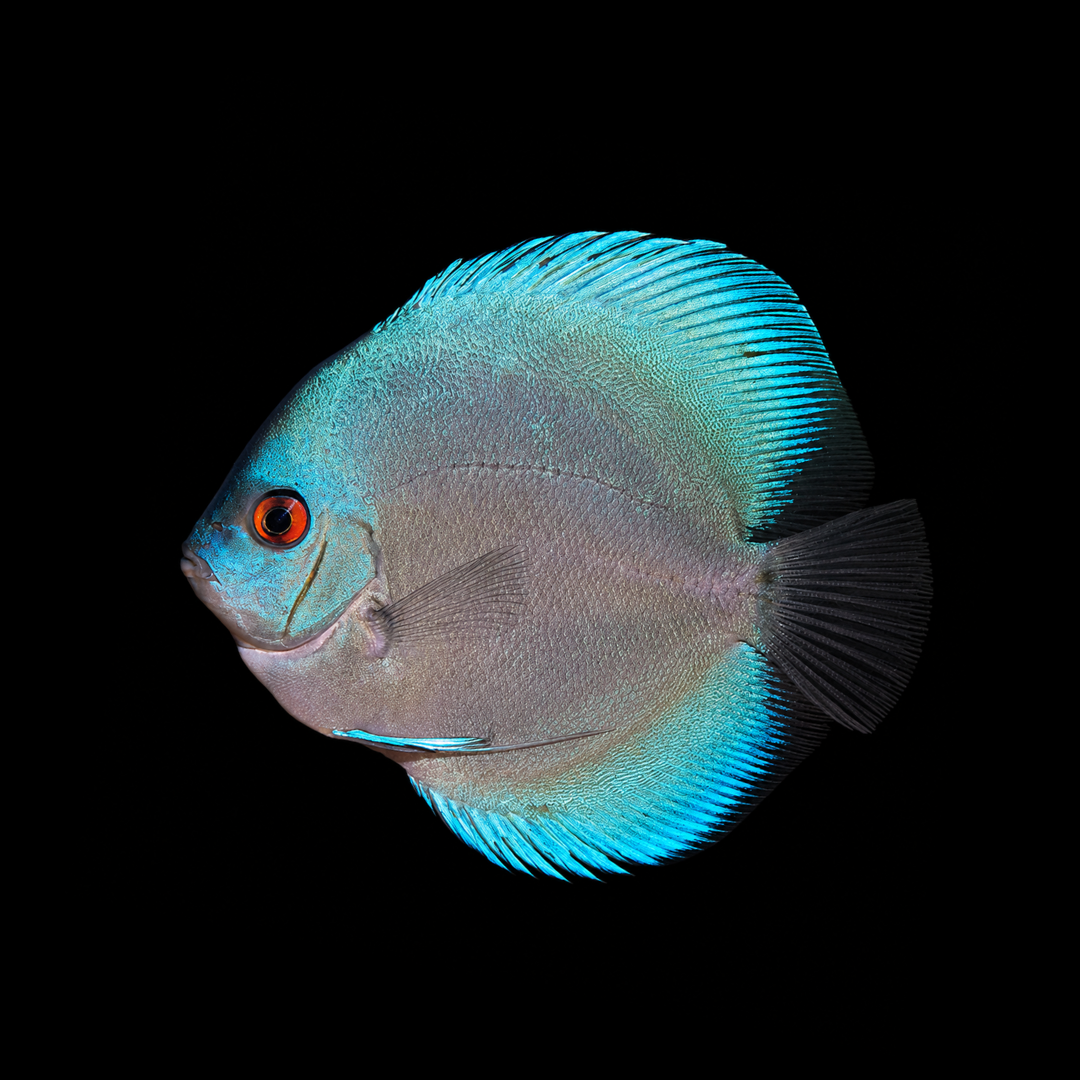
解説 / Description
ブルーダイヤモンドディスカスは、全身を均一なパウダーブルーからコバルトブルーに染める、ディスカスを代表する青系改良品種です。円盤のように側扁した体型とゆったりした泳ぎに加え、一般的なディスカスで見られる黒い縦縞のストレスバーが目立たない、あるいはほぼ現れない「バーレス」の外観が大きな特徴です。模様で華やかさを見せる品種とは対照的に、体色の均一さ、体型の丸み、ヒレの張り、目の印象といった魚そのものの完成度が観賞価値に直結します。高水温と清浄で安定した水を好み、群れの社会関係にも配慮が必要なため、丁寧な観察と水質管理を楽しめる飼育者に向く魚です。 Blue Diamond Discus is one of the classic blue domestic strains of discus, displaying an even powder-blue to cobalt-blue body color. In addition to the characteristic disc-shaped, laterally compressed body and graceful swimming style of discus, it is especially valued for its “barless” appearance, in which the dark vertical stress bars typical of many discus are absent or greatly reduced. Unlike patterned strains, its beauty depends strongly on the uniformity of the blue coloration, round body shape, well-held fins, and overall balance. It prefers warm, exceptionally clean and stable water, and its social hierarchy requires careful observation, making it best suited to aquarists who enjoy attentive husbandry.
基本情報 / Basic Information
| 学名 / Scientific Name | Symphysodon spp.(改良品種 / domestic strain) |
|---|---|
| 通称 / Common Name | ブルーダイヤモンド、ブルーダイヤモンドディスカスBlue Diamond Discus, Blue Diamond |
| 分類 / Family | シクリッド科(Cichlidae)シンフォソドン属(Symphysodon)Family Cichlidae, genus Symphysodon |
| 英名 / English Name | Blue Diamond Discus |
| 分布 / Distribution | 野生の原種群は南米アマゾン川流域に分布します。ブルーダイヤモンドは自然分布する野生型ではなく、主に東南アジアを中心としたディスカスの選抜育種から成立し、現在は世界各地で繁殖・流通しています。Wild members of the genus occur in the Amazon River basin of South America. Blue Diamond is not a naturally occurring wild form; it was established through selective breeding of discus, especially in Asian breeding programs, and is now propagated and traded worldwide. |
| 最大体長 / Max Size | 全長約15〜20cm。体長だけでなく体高も大きくなるため、成魚では見た目以上の水量と遊泳空間が必要です。Approximately 15–20 cm total length. Because adults are also very deep-bodied, they require more water volume and swimming space than their length alone may suggest. |
| 寿命 / Lifespan | 目安として10年前後。飼育環境や個体差の影響が大きく、良好な条件では10年以上飼育される例もあります。Around 10 years is a useful general guide. Lifespan varies considerably with husbandry and the individual, and well-kept discus may live for more than 10 years. |
飼育環境 / Aquarium Environment
| 水槽サイズ / Tank Size | 成魚の群れを長期飼育するなら、120cm規格水槽(約240L)以上を基本の目安とします。90cm規格水槽(約180L)は育成途中などでは使われますが、成魚を複数で長期維持するには余裕が少なくなります。60cmワイド水槽(約120L)は若魚の育成や繁殖ペアの管理には使えますが、成魚の群泳用には適しません。For long-term maintenance of an adult group, a 120 cm standard aquarium of about 240 L or larger is a sound baseline. A 90 cm standard aquarium of about 180 L may be used during grow-out, but provides limited room for keeping several adults long term. A 60 cm wide aquarium of about 120 L can be useful for juveniles or a breeding pair, but is not suitable for an adult group. |
|---|---|
| 水温 / Temperature | 28〜30℃を基本に安定させます。急な温度変化は食欲低下や体調不良につながるため、水換え時も新旧の水温差を小さくします。 Maintain a stable 28–30°C. Sudden temperature changes can suppress appetite and condition, so replacement water should be closely matched in temperature during water changes. |
| 水質 / Water Quality | 弱酸性〜中性の軟水を基本とし、pH 6.0〜7.0前後、GH 3〜8程度を目安にします。数値を無理に追い込むより、アンモニアと亜硝酸を検出させず、硝酸塩や溶存有機物の蓄積を抑え、pHを急変させないことが重要です。日本の水道水は軟水傾向の地域が多いものの地域差があるため、実際の水質を確認して管理します。Soft, slightly acidic to neutral water is suitable, with roughly pH 6.0–7.0 and GH around 3–8 as useful targets. Stability is more important than forcing exact numbers: ammonia and nitrite should remain undetectable, nitrate and dissolved waste should be controlled, and sudden pH shifts should be avoided. Tap water in many parts of Japan is relatively soft, but local variation should always be checked. |
| レイアウト / Layout | 育成や繁殖では、残餌と排泄物をすぐ除去できるベアタンクが扱いやすい方法です。観賞水槽では大きな流木や丈夫な水草を使い、中央に十分な遊泳空間を確保します。背景は黒や濃紺にすると青い体色が映えやすい一方、底面まで極端に暗くすると体色が沈む個体もいるため、魚の反応を見ながら調整します。強い直線的な水流は避け、吐出口を壁面へ向けるなどして穏やかに拡散させます。Bare-bottom tanks are convenient for grow-out and breeding because uneaten food and waste can be removed quickly. Display aquariums can use large driftwood and robust plants while preserving generous open swimming space. Dark blue or black backgrounds often enhance the blue body color, although overly dark surroundings can cause some fish to appear duller. Avoid strong linear currents and diffuse filter outflow gently. |
| 注意点 / Precautions | 最大のポイントは「高温」そのものではなく、清浄で安定した水を維持することです。食べ残しが多い餌を使う場合は特に水質悪化が速いため、こまめな底掃除と定期的な換水を行います。群れでは順位争いが起きるため、一匹だけが隅へ追い込まれていないか、呼吸が速くないか、ヒレを閉じていないかを毎日確認します。新しい魚は本水槽へ入れる前に隔離観察するのが安全です。The key is not simply high temperature, but consistently clean and stable water. Rich foods can foul water quickly, so siphoning waste and performing regular water changes are essential. Social ranking can lead to bullying; check daily for fish isolated in corners, rapid breathing, clamped fins, or reduced feeding. New fish are safest when quarantined and observed before entering the main aquarium. |
餌と給餌 / Feeding
| 餌の種類 / Diet | 主食には高品質なディスカス用グラニュールや沈下性ペレットを使い、冷凍アカムシ、ブラインシュリンプ、イサザアミ類、クリルなどを組み合わせます。ディスカスハンバーグは成長期の補助食として利用できますが、牛ハツなど哺乳類由来原料は脂肪や筋を十分に除き、単一の餌へ偏らないようにします。Use high-quality discus granules or sinking pellets as staples, supplemented with foods such as frozen bloodworms, brine shrimp, mysid-type shrimp, and krill. Beef-heart-based discus mixes can be used as a supplementary growth food, but mammalian fat and connective tissue should be carefully trimmed and the diet should not rely on a single food type. |
|---|---|
| 給餌のポイント / Feeding Tips | 若魚は少量を1日3〜4回、成魚は1日2回程度を目安にし、数分で食べ切れる量を与えます。ディスカスハンバーグや冷凍餌は細かな残餌が出やすいため、給餌後に底を確認して速やかに除去します。食欲の強弱は体調と順位関係の重要なサインなので、群れ全体ではなく個体ごとに食べられているかを見ることが大切です。Feed juveniles small portions about three to four times daily and adults about twice daily, offering only what can be consumed within a few minutes. Rich frozen foods and discus mixes can leave fine residues, so inspect and clean the bottom after feeding. Appetite is an important indicator of both health and social status, so confirm that each individual is actually obtaining food. |
性格と混泳 / Temperament and Tank Mates
| 性格 / Temperament | 基本的には穏やかで落ち着いたシクリッドですが、同種間では明確な順位関係を作り、繁殖期には縄張り意識も強くなります。単独より複数飼育の方が自然な社会行動を見せやすい一方、少数飼育では攻撃が特定個体へ集中することがあるため、群れのバランスを観察します。Generally calm and composed for a cichlid, but discus establish clear social hierarchies and become more territorial during breeding. Groups allow more natural social behavior, yet in small groups aggression may become concentrated on one subordinate fish, so the balance of the group must be watched carefully. |
|---|---|
| 混泳の相性 / Compatibility | 高水温を好み、攻撃性が低く、餌を奪い過ぎない魚が候補です。カージナルテトラなどの温暖な水を好む小型カラシン類、コリドラス・ステルバイなど高めの水温に比較的適応しやすい底生魚が選ばれることがあります。ただし、ディスカスの給餌量や高水温に耐えられることが前提です。活発すぎる魚、ヒレをかじる魚、大型で攻撃的なシクリッドとの混泳は避けます。Suitable tank mates should tolerate warm water, remain non-aggressive, and not outcompete discus at feeding time. Warm-water characins such as cardinal tetras and relatively heat-tolerant bottom dwellers such as Sterba’s corydoras are sometimes kept with them. Compatibility still depends on the feeding regime and sustained high temperature. Avoid overly boisterous fish, fin nippers, and large aggressive cichlids. |
病気と対策 / Diseases and Prevention
| かかりやすい病気 / Common Diseases | 水質悪化や導入ストレスをきっかけに、白点病などの外部寄生虫症、エラに関わる寄生虫症、細菌性の体表・ヒレの異常、消化管の不調や原虫性疾患が問題になることがあります。白い糞、食欲低下、痩せ、呼吸促迫、片エラ呼吸、体色の暗化、ヒレを閉じる行動は、原因を絞り込むための重要な観察ポイントです。Stress and deteriorating water quality can predispose discus to problems including white spot and other external parasites, gill parasites, bacterial skin or fin infections, and digestive or intestinal protozoal disorders. White feces, loss of appetite, weight loss, rapid or one-sided gill movement, darkened coloration, and clamped fins are useful warning signs that help narrow the cause. |
|---|---|
| 対策と予防 / Prevention | 予防の基本は、新規個体の隔離観察、過密を避けること、フィルターを安定稼働させること、残餌を残さないこと、定期換水で有機物をためないことです。発病時はまず隔離し、水温・溶存酸素・アンモニア・亜硝酸・pHを確認します。高水温処置や薬浴は原因となる病原体によって有効性と危険性が変わるため、症状だけで一律に行わず、観賞魚用として適切な薬剤の表示や獣医師・専門家の診断に従います。Prevention centers on quarantining new fish, avoiding overcrowding, keeping filtration mature and stable, removing uneaten food, and using regular water changes to prevent organic waste accumulation. When illness occurs, isolate the fish and first check temperature, dissolved oxygen, ammonia, nitrite, and pH. Heat treatment and medications vary in effectiveness and risk depending on the actual pathogen, so they should not be applied automatically from symptoms alone; follow labeled aquarium treatments or professional veterinary guidance. |
増やし方(繁殖) / Breeding
| 雌雄の判別 / Sexing | 外見だけでの確実な判別は難しく、若魚では特に困難です。成熟したオスはやや大型になる傾向がありますが個体差が大きく、実用上は6〜8匹ほどを育てて自然に形成されたペアを見つける方法が確実です。産卵直前には生殖突起の形状が判別材料になります。Reliable sexing by appearance alone is difficult, especially in juveniles. Mature males may become somewhat larger, but individual variation is substantial. In practice, raising a group of about six to eight fish and allowing natural pairs to form is the most dependable method. The shape of the genital papilla becomes more informative immediately before spawning. |
|---|---|
| 繁殖形態 / Reproduction | 基質産卵型で、ペアが産卵筒や垂直面を清掃した後、メスが多数の粘着卵を産み、オスが受精させます。孵化後は両親が仔魚を保護し、自由遊泳を始めた稚魚は親魚の体表から分泌される栄養性の粘液、いわゆる「ディスカスミルク」をついばんで成長します。両親がそろって栄養を与える、魚類では非常に特徴的な子育てです。Discus are substrate spawners. A pair cleans a spawning cone or other vertical surface, after which the female lays adhesive eggs and the male fertilizes them. Both parents guard the offspring, and once the fry become free-swimming they graze on nutrient-rich epidermal mucus secreted by the parents, commonly called “discus milk.” This biparental nutritional care is highly distinctive among fishes. |
| 繁殖のポイント / Breeding Tips | 自然に成立したペアを60cm規格〜60cmワイド程度の繁殖水槽へ移し、スポンジフィルターで穏やかな水流を作り、産卵筒を用意します。水温28〜30℃前後の安定した清浄水を維持し、産卵後は不用意に環境を変えません。孵化から数日後に自由遊泳へ移行した稚魚は親魚へ体着するため、その時期は親子を分離しません。成長に合わせて孵化直後のブラインシュリンプなどを併用し、徐々に独立給餌へ移行します。Move a naturally formed pair to a breeding aquarium around 60 cm standard to 60 cm wide size, provide a spawning cone, and use a sponge filter for gentle circulation. Maintain very clean, stable water at about 28–30°C and avoid unnecessary changes after spawning. Fry become free-swimming several days after hatching and attach to the parents to feed, so the family should not be separated at that stage. Newly hatched brine shrimp can be introduced as the fry grow, followed by a gradual transition to independent feeding. |
雑学と豆知識 / Trivia and Fun Facts
| 1. 1990年代のアジア育種を象徴する青 / 1. A Blue Icon of Asian Discus Breeding | ブルーダイヤモンドが広く知られるようになったのは、ディスカスの生産と品種改良がアジアで急速に発展した1990年前後の時期と重なります。青系統の選抜交配の中から、従来のターコイズ系やコバルト系とは異なる、模様やストレスバーがほとんど見えず、青一色に見える個体が注目されました。複雑な模様を増やすのではなく、模様を抑えて青そのものを際立たせる方向性を定着させたことが、この品種の大きな特徴です。Blue Diamond became widely known around the period when discus breeding and production expanded rapidly in Asia around 1990. Through selection within blue lines, breeders focused on fish that differed from traditional turquoise and cobalt types by showing little visible patterning or stress bars and appearing almost uniformly blue. Rather than increasing pattern complexity, the strain established an aesthetic that suppresses pattern and emphasizes the blue color itself. |
|---|---|
| 2. ストレスバーが見えないからこそ観察したいこと / 2. Reading Stress Without Stress Bars | 多くのディスカスでは、緊張や体調の変化に伴って黒い縦縞が濃く見えることがあります。ブルーダイヤモンドではこの変化を外見から読み取りにくいため、水槽の隅に長く留まる、ヒレを閉じる、餌場へ出てこない、呼吸が速い、全身の青が灰色がかって沈むといった別の変化を丁寧に観察することが大切です。模様の少ない魚だからこそ、行動や姿勢の小さな違いが健康状態を知る手がかりになります。In many discus, dark vertical bars can become more conspicuous with changes in stress or condition. Because this change is difficult to read in Blue Diamond, the keeper should pay closer attention to other signs such as lingering in a corner, clamped fins, failure to join feeding, rapid respiration, or a shift from bright blue toward a dull gray-blue. In a fish with so little visible pattern, small changes in behavior and posture become especially useful clues to health. |
| 3. 青は「色素」だけでは作れない / 3. Blue Is More Than Pigment | ディスカスの青い輝きには、赤や黄の色素による発色とは異なり、皮膚の虹色素胞に含まれるプリン系物質による光学的な反射、いわゆる構造色が深く関わっています。2021年に報告された単色ディスカスの比較研究では、青色個体でアデニン、キサンチン、ヒポキサンチンが多く検出され、青い構造色との関連が示唆されました。つまり、ディスカスの青は単純な「青い色素」の量だけで説明できるものではなく、皮膚の微細な光学的性質によって生まれる輝きでもあります。The blue sheen of discus differs from many red or yellow pigment colors because structural coloration plays an important role. Optical reflection associated with purine compounds in iridophores contributes to this effect. In a 2021 comparative study of single-color discus, adenine, xanthine, and hypoxanthine were more abundant in blue fish and were suggested to be associated with blue structural coloration. In other words, discus blue cannot be explained simply by the amount of a “blue pigment”; it also depends on the optical properties of the skin. |
| 4. 「ディスカスミルク」は本当の子育て用の栄養 / 4. “Discus Milk” Is Genuine Parental Nutrition | 自由遊泳を始めた稚魚が親魚の体表へ群がる姿は、ディスカス飼育で最も印象的な場面のひとつです。これは単に体表をついばんでいるのではなく、両親が繁殖期に分泌する粘液を栄養源として利用しています。研究では、繁殖期の親魚で皮膚粘液の性質が変化し、プロラクチン系のシグナルが粘液産生と関係する可能性も示されています。父親と母親の双方が自分の体を「餌場」に変えるという生態は、シクリッドの高度な親保護の中でも特にユニークです。One of the most striking sights in discus breeding is a cloud of free-swimming fry gathering against the parents’ bodies. They are not merely picking at the skin; they are feeding on specialized epidermal mucus produced during the parental phase. Research has shown changes in parental mucus and has also linked prolactin-related signaling with mucus production. Both mother and father effectively turn their own bodies into a feeding surface for their offspring, making discus one of the most remarkable examples of nutritional parental care among fishes. |
| 5. 属名 Symphysodon に隠れた「歯」の由来 / 5. The “Teeth” Hidden in the Name Symphysodon | ディスカスの属名 Symphysodon は、ギリシャ語で「一緒に成長した、癒合した」という意味につながる語と、「歯」を意味する語に由来するとされています。ブルーダイヤモンドという品種名は鮮やかな青を表したものですが、その属名には観賞魚としての色彩とはまったく異なる、魚類学的な命名の歴史が残されています。現代の改良品種を眺めながら、19世紀に始まるディスカスの分類学へと目を向けられるのも、この魚の興味深いところです。The genus name Symphysodon is derived from Greek roots meaning “grown together” or “fused” and “teeth.” While the strain name Blue Diamond refers to its striking blue appearance, the genus name preserves a very different part of the fish’s scientific naming history. A modern domestic strain can therefore also serve as a link back to the taxonomy of discus that began in the nineteenth century. |
まとめ / Conclusion
ブルーダイヤモンドディスカスは、複雑な模様を競うのではなく、澄んだ青と端正なラウンドフォルムそのものを楽しむ品種です。健康な個体ほど体表の輝きが素直に現れるため、安定した高水温、清潔な水、偏りのない食事、そして群れの中で一匹ずつを観察する姿勢が、その美しさを長く保つ鍵になります。 Blue Diamond Discus is a strain appreciated not for complex patterning, but for the clarity of its blue color and the elegance of a balanced round body. Because healthy fish display their sheen most naturally, stable warm water, excellent cleanliness, a varied diet, and attention to each individual within the group are the keys to preserving its beauty over the long term.
成魚がゆっくりと水槽を横切る姿には、派手さとは違う静かな存在感があります。日々の小さな変化を読み取りながら育て、やがてペアが成立し、親魚の周囲を稚魚が取り巻く光景まで見られたとき、ブルーダイヤモンドディスカスは単なる「青い観賞魚」ではなく、飼育者と長い時間を共有する特別な存在になっていきます。 An adult gliding slowly across the aquarium has a quiet presence quite different from simple flashiness. As the keeper learns to notice subtle daily changes, and perhaps eventually watches a bonded pair surrounded by fry feeding from their parents, Blue Diamond Discus becomes far more than a blue ornamental fish—it becomes a long-term companion shaped by careful observation and shared time.

気になる道具や飼い方を見つけてみませんか?
 アイのアクアグッズ案内マジックリーフ物語|一枚の葉がアクアリウム用品になるまで道具の特徴や使い方、選ぶときのポイントをアイが紹介します。記事はコチラ →
 アイのアクアグッズ案内ローチの仲間に合わせる飼育用品|クーリー・流水性・ボーシャの水槽と底砂道具の特徴や使い方、選ぶときのポイントをアイが紹介します。記事はコチラ →
 アイのアクアグッズ案内テトラミンって、こんなにあるの? アイとコタロウのごはん探究旅道具の特徴や使い方、選ぶときのポイントをアイが紹介します。記事はコチラ →
 アイのアクアグッズ案内ダニオの仲間に合わせる飼育用品|ゼブラダニオから超小型種まで水槽・ろ過・餌を選ぶ道具の特徴や使い方、選ぶときのポイントをアイが紹介します。記事はコチラ →
さまざまな飼育テーマをご紹介。リンク先の記事には広告・商品紹介が含まれます。
案内・紹介記事一覧へ →分布マップ
ブルーダイヤモンドディスカスは自然分布する野生型ではなく、選抜育種によって成立した改良品種です。下の地図では、学名欄の属 Symphysodon の野生原種群が分布する南米アマゾン川流域を概略表示しています。改良品種自体は現在、世界各地で繁殖・流通しています。
※この地図は記事の分布情報をもとに、アマゾン川流域全体が見えるよう設定した概略表示です。マーカーは分布域を把握しやすくするために設定した代表地点であり、実際の採集地点・生息確認地点を示すものではありません。
参考文献
- Fricke, R., Eschmeyer, W. N. & Van der Laan, R. (eds.). Eschmeyer’s Catalog of Fishes: Genera, Species, References. California Academy of Sciences. Online version, updated 7 July 2026. [分類・学名]
- Froese, R. & Pauly, D. (eds.). FishBase: Symphysodon aequifasciatus (Pellegrin, 1904). FishBase. Accessed 21 August 2026. [分類・分布・生息環境・水温・水質・群れ・縄張り行動・飼育水槽サイズ]
- Froese, R. & Pauly, D. (eds.). FishBase: Symphysodon discus Heckel, 1840. FishBase. Accessed 21 August 2026. [分布・生息環境・食性・産卵・親魚による保護・皮膚粘液を利用する仔魚の摂餌]
- Buckley, J., Maunder, R. J., Foey, A., Pearce, J., Val, A. L. & Sloman, K. A. (2010). Biparental mucus feeding: a unique example of parental care in an Amazonian cichlid. Journal of Experimental Biology, 213, 3787–3795. DOI: 10.1242/jeb.042929. [繁殖・両親による皮膚粘液給餌・仔魚の育成]
- Khong, H.-K., Kuah, M.-K., Jaya-Ram, A. & Chong Shu-Chien, A. (2009). Prolactin receptor mRNA is upregulated in discus fish (Symphysodon aequifasciata) skin during parental phase. Comparative Biochemistry and Physiology Part B: Biochemistry and Molecular Biology, 153(1), 18–28. DOI: 10.1016/j.cbpb.2009.01.005. [繁殖期の皮膚粘液産生とプロラクチン系の関係]
- Petty, B. D., Francis-Floyd, R. & Yanong, R. P. E. Management of Aquarium Fish. MSD Veterinary Manual. Updated June 2026. [隔離観察・バイオセキュリティ・水質確認・新規個体導入時の注意点]
- Petty, B. D., Francis-Floyd, R. & Yanong, R. P. E. Parasitic Diseases of Fish. MSD Veterinary Manual. Updated June 2026. [白点病・外部寄生虫・鰓寄生虫・内部寄生性原虫・診断と治療上の注意]
- Petty, B. D., Francis-Floyd, R. & Yanong, R. P. E. Bacterial Diseases of Fish. MSD Veterinary Manual. Updated September 2024. [細菌性感染症・水質悪化・有機物負荷・過密・温度変化・ストレスとの関係]





コメント