

解説 / Description
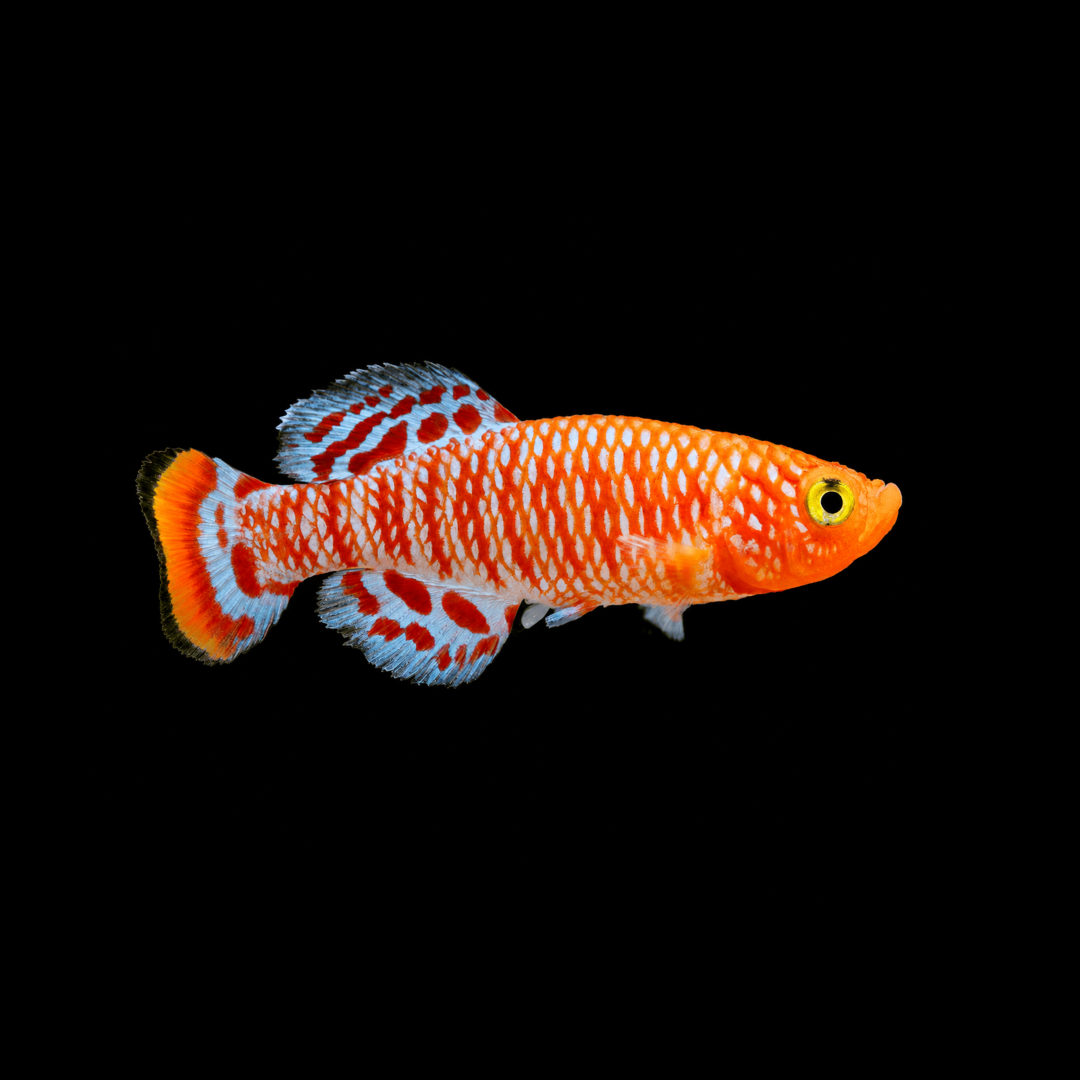
ノソブランキウス・ラコビーは、モザンビーク東部の季節的な湿地や一時的な水たまりに暮らす年魚です。オスは明るいブルーとオレンジレッドが体側からヒレにかけて交互に入り、頭部は赤橙色、尾ビレにはオレンジ色の帯と黒い縁取りが現れます。メスはオリーブがかった灰褐色を基調とし、体側の鱗には淡い青色から銀色の反射が見られます。雨季に孵化した魚は急速に成長・成熟して産卵し、乾季には泥の中に残された卵が次の雨季まで生き残ります。成魚ではなく卵の段階で乾燥期を越すことが、この魚の生活史を理解するうえで最も重要な特徴です。飼育では鮮烈な色彩に加え、ピートモスへ産卵させ、卵を一定期間保管し、再び水に戻して次世代を孵化させる繁殖過程にも独特の魅力があります。 Nothobranchius rachovii is an annual killifish from seasonal wetlands and temporary pools in eastern Mozambique. Males display alternating bright blue and orange-red bars across the body and fins, an orange-red head, and an orange subterminal band with a black terminal margin on the caudal fin. Females are much more subdued, with an olive grey-brown body and pale blue to silvery reflections on the flank scales. Fish hatch during the rainy season, grow and mature rapidly, and reproduce before the habitat dries. The next generation survives the dry season as embryos buried in the substrate. This shift from an aquatic adult phase to a drought-resistant embryonic phase is the key to understanding the species’ annual life cycle. In captivity, its appeal lies not only in the brilliant male coloration but also in the breeding process of spawning into peat, storing the eggs for a period, and wetting the substrate again to hatch the next generation.
基本情報 / Basic Information
| 学名 / Scientific Name | Nothobranchius rachovii Ahl, 1926 |
|---|---|
| 通称 / Common Name | ノソブランキウス・ラコビー、ラコビーRachow’s Nothobranch, Bluefin Notho |
| 分類 / Family | カダヤシ目 ノソブランキウス科 ノソブランキウス属Order Cyprinodontiformes, Family Nothobranchiidae, Genus Nothobranchius |
| 英名 / English Name | Bluefin Notho / Rachow’s Nothobranch |
| 分布 / Distribution | モザンビーク東部。主にプングウェ川下流域からザンベジ川下流域の間に広がる低地氾濫原の一時的な水たまり、湿地、冠水地に分布します。Eastern Mozambique, mainly in temporary pools, swamps, and seasonally flooded depressions of the lowland floodplains between the lower Pungwe and lower Zambezi river systems. |
| 最大体長 / Max Size | 最大約6cm(全長)です。Up to about 6 cm in total length. |
| 寿命 / Lifespan | 自然下では、成魚として過ごせるのは生息地が乾燥するまでの数か月です。飼育下では系統や温度、給餌、飼育密度などによって差が大きく、1年近く生存する系統があり、1年を超える例も報告されています。In nature, adults generally live only for the few months during which their temporary habitat holds water. In captivity, longevity varies substantially with strain, temperature, diet, and stocking density; some strains survive for close to a year, and survival beyond one year has also been reported. |
飼育環境 / Aquarium Environment
| 水槽サイズ / Tank Size | 繁殖を目的に単独から1オス2メス程度までを管理するなら、10〜20L前後、30cm規格水槽がひとつの目安です。水質の安定性を優先する場合や複数個体を飼う場合は、25〜35L前後の45cm規格水槽の方が管理しやすくなります。小容量では水質が変化しやすいため、こまめな観察と換水が必要です。For breeding-oriented maintenance of a single fish through to a trio of one male and two females, about 10–20 L, roughly equivalent to a Japanese 30 cm standard aquarium, is a practical starting point. For greater water stability or a larger group, around 25–35 L, comparable to a Japanese 45 cm standard aquarium, is easier to manage. Smaller volumes change more quickly and therefore require closer observation and regular water changes. |
|---|---|
| 水温 / Temperature | 20〜24℃を目安とし、急激な変化を避けて安定させます。高温側では代謝が上がり、水質悪化の影響も受けやすくなるため、長期間の過度な高温飼育は避けます。 Aim for 20–24°C and keep the temperature stable, avoiding abrupt changes. At higher temperatures metabolism increases and the fish may be affected more quickly by deteriorating water quality, so prolonged excessive heat is best avoided. |
| 水質 / Water Quality | 弱酸性〜中性の軟水が基本で、pH 6.0〜7.0、硬度はおおむね4〜6 dGHが目安です。強い水流は好まないため、スポンジフィルターなどで穏やかにろ過し、アンモニアや亜硝酸を検出させない清浄な水を維持します。Soft, slightly acidic to neutral water is suitable, with a target pH of 6.0–7.0 and roughly 4–6 dGH as a useful reference. Strong current is unnecessary; gentle filtration such as a sponge filter is appropriate, while ammonia and nitrite should remain undetectable. |
| レイアウト / Layout | 繁殖管理では掃除と採卵をしやすいベアタンクにし、ピートモスを入れた小容器を産卵床として沈める方法が実用的です。観賞を重視する場合は、弱めの照明、水草や浮草、流木などで隠れ場所を作ると落ち着きやすくなります。泳ぎを妨げない範囲で植栽し、水流は弱く保ちます。飛び出し防止のためフタも用意します。For controlled breeding, a bare-bottom tank is practical because it simplifies cleaning and egg collection; a small container of peat moss can be placed inside as the spawning substrate. For a display aquarium, subdued lighting, aquatic plants, floating plants, and wood can provide security. Keep the current gentle, leave open swimming space, and use a secure lid because killifish may jump. |
| 注意点 / Precautions | 代謝が速くよく食べるため、残餌や排泄物による水質悪化に注意します。導入時の急激な水温、pH、硬度の変化は負担になりやすいので、購入時の水と飼育水の差が大きい場合は時間をかけて段階的に水合わせします。成魚、とくに長距離輸送後の個体は消耗していることがあるため、導入直後は給餌量を抑えつつ呼吸、体表、ヒレの状態をよく観察します。Because this species has a fast metabolism and feeds eagerly, uneaten food and waste can quickly degrade water quality. Abrupt changes in temperature, pH, or hardness can be stressful, so acclimate gradually when the source water differs substantially from the aquarium. Adults, especially after long transport, may arrive weakened; during the first days, feed cautiously and watch breathing, skin condition, and fins closely. |
餌と給餌 / Feeding
| 餌の種類 / Diet | 小型の動物質餌を中心に与えます。ブラインシュリンプ、ミジンコ、イトミミズ類、冷凍赤虫などが適します。人工飼料を食べる個体もいますが、乾燥飼料を積極的に受け付けないこともあるため、活餌や冷凍餌を中心に組み合わせます。Offer a diet centered on small animal-based foods such as Artemia, Daphnia, aquatic worms, and frozen chironomid larvae. Some individuals accept prepared foods, but dry foods may be refused, so live and frozen foods should form the core of a dependable feeding routine. |
|---|---|
| 給餌のポイント / Feeding Tips | 一度に大量に与えるより、短時間で食べ切れる量を少量ずつ複数回に分けると、水質を保ちながら成長と繁殖を支えやすくなります。腹部の張りや食いつきを見て量を調整し、残餌は早めに除去します。孵化した稚魚は小さいものの、孵化直後からブラインシュリンプの幼生を食べられるため、初期給餌を遅らせないことが重要です。Rather than offering a large meal at once, give small portions several times so that the fish finish the food quickly and water quality remains stable. Adjust the amount according to appetite and abdominal fullness, and remove uneaten food promptly. Newly hatched fry are small but can take newly hatched Artemia nauplii from the start, so first feeding should not be delayed. |
性格と混泳 / Temperament and Tank Mates
| 性格 / Temperament | 活発で餌への反応がよい一方、オス同士には縄張り意識が見られ、狭い水槽では追い回しが激しくなることがあります。繁殖期のオスはメスにも積極的に求愛するため、メスが1匹だけだと負担が集中しやすくなります。1オス2メス程度にして隠れ場所を確保すると、追尾の圧力を分散しやすくなります。They are active and enthusiastic feeders, but males can be territorial toward one another, especially in confined aquaria. Breeding males also court females persistently, so a single female may receive excessive attention. Keeping one male with two females and providing cover can help distribute courtship pressure. |
|---|---|
| 混泳の相性 / Compatibility | 繁殖や系統維持を考えるなら、単種飼育が最も確実です。混泳例はありますが、ラコビーは同種間でも追い回しが見られるため、混泳を前提とする魚とは考えない方が安全です。どうしても混泳させる場合は、同程度の水質を好む小型で温和な魚に限り、ヒレをかじる魚、大型魚、強い縄張り性を持つ魚は避けます。同属・近縁種との混泳は、交雑や系統混同を避けるため推奨しません。A species-only aquarium is the most reliable choice when breeding or preserving a known strain. Community keeping is possible in some circumstances, but this species can show persistent chasing even among its own kind, so it is better not to regard it as a typical community fish. If tank mates are attempted, restrict them to small, peaceful fishes with similar water requirements and avoid fin-nippers, large fishes, and strongly territorial species. Mixing with other Nothobranchius or closely related annual killifish is not recommended because of the risk of hybridization or strain confusion. |
病気と対策 / Diseases and Prevention
| かかりやすい病気 / Common Diseases | 特に注意したいのが、淡水魚では主にPiscinoodinium属の渦鞭毛虫によって起こるウーディニウム症で、ベルベット病やコショウ病とも呼ばれます。古い資料ではOodiniumの名で扱われることがあります。体表に細かな金色から黄褐色の粉をまぶしたように見えることがあり、進行すると体を物にこすりつける、ヒレをたたむ、呼吸が速くなる、食欲が落ちるなどの症状が現れます。ノソブランキウス属はこの病気に注意が必要で、水質悪化や輸送などのストレスが重なると発症しやすくなります。One of the most important diseases to watch for is freshwater velvet, caused mainly by dinoflagellates of the genus Piscinoodinium; older aquarium literature often refers to these parasites as Oodinium. A fine gold to yellow-brown dusting may appear on the skin, and affected fish may flash against objects, clamp their fins, breathe rapidly, or lose appetite. Nothobranchius are regarded as particularly susceptible, and outbreaks are more likely when poor water quality or transport-related stress weakens the fish. |
|---|---|
| 対策と予防 / Prevention | 予防の基本は、急変の少ない清浄な水を保ち、過密と過剰給餌を避け、新規個体をよく観察することです。コショウ病が疑われる場合は早めに隔離し、観賞魚用の適切な抗寄生虫薬を製品表示どおりに使用します。照明を落とす方法が補助的に用いられることはありますが、遮光だけで治療できるわけではありません。塩分添加や昇温も、魚種や薬剤、同居生体によって安全域が変わるため一律には行わず、使用する治療薬の説明を優先します。治療中もアンモニアと亜硝酸の上昇を防ぎ、十分な酸素を確保します。Prevention begins with clean, stable water, avoiding overcrowding and overfeeding, and observing new fish carefully. If velvet is suspected, isolate the fish promptly and use an appropriate aquarium antiparasitic medication exactly according to the product label. Reduced lighting is sometimes used as a supportive measure, but darkness alone should not be regarded as a treatment. Salt or increased temperature should likewise not be applied automatically because safe limits vary with the fish, medication, and other livestock. During treatment, maintain oxygenation and prevent any rise in ammonia or nitrite. |
増やし方(繁殖) / Breeding
| 雌雄の判別 / Sexing | 成魚では非常に明瞭です。オスは体側とヒレに明るいブルーとオレンジレッドの帯が入り、頭部も赤橙色に発色します。メスはオリーブがかった灰褐色を基調とし、体側の鱗に淡い青色から銀色の反射が見られます。成熟するにつれて雌雄の色彩差がはっきりします。Sexing adults is straightforward. Males develop vivid alternating blue and orange-red coloration on the body and fins, with an orange-red head. Females have an olive grey-brown body with pale blue to silvery reflections on the flank scales. The color difference between the sexes becomes increasingly obvious with maturity. |
|---|---|
| 繁殖形態 / Reproduction | 卵生の年魚で、オスがメスを底床へ誘導し、泥やピートモスの中に卵を産み込みます。成魚が暮らす水域は乾季に消失しますが、卵は湿った土中で発生を遅らせたり休止したりしながら次の雨季を待ちます。年魚の胚発生では、発生時期に応じて休眠I、II、IIIという区分が使われますが、すべての種や胚が同じ段階を同じように経るわけではなく、休眠の現れ方や期間は種や環境条件によって異なります。This is an egg-laying annual killifish. The male guides the female into the bottom substrate, where eggs are deposited into mud or peat. Adult habitats disappear during the dry season, while embryos remain in damp substrate and delay or pause development until favorable conditions return. Annual-killifish research commonly distinguishes diapause I, II, and III according to developmental stage, but not every species or embryo follows all three stages in the same way; the expression and duration of diapause vary with species and environmental conditions. |
| 繁殖のポイント / Breeding Tips | 繁殖には1オス2メス程度の組み合わせが扱いやすく、十分に水洗いして水に沈む状態にした無調整ピートモスを小容器に入れ、産卵床として使います。一定期間産卵させた後は、卵を含むピートモスを取り出して余分な水分を絞り、しっとりした状態で密閉袋に入れ、20〜24℃程度を目安に暗所で保管します。ラコビーの保管期間はおおむね5〜7か月がひとつの目安ですが、温度、系統、基質の湿り具合などによって大きく前後します。そのため日数だけで孵化時期を決めず、卵内に稚魚の目がはっきり確認できる発眼状態を見て判断します。孵化時はピートモスを浅い飼育水に戻し、孵化した稚魚にはすぐにブラインシュリンプの幼生などを与えます。採集地コードが分かる系統は別系統と混ぜず、由来の記録を維持することが重要です。A trio of one male and two females is practical for breeding. Thoroughly rinse untreated peat moss and use the waterlogged portion in a small container as the spawning medium. After a spawning period, remove the peat containing the eggs, squeeze out excess water, and store it slightly damp in a sealed bag in a dark place at roughly 20–24°C. For N. rachovii, roughly five to seven months is a useful general incubation guide, but the actual period can vary widely with temperature, strain, and substrate moisture. Do not rely on calendar time alone; inspect the eggs and look for clearly developed eyes before wetting. Return the peat to shallow aquarium water for hatching and offer Artemia nauplii promptly to the fry. If a strain has a known collection locality code, keep it separate from other strains and preserve that provenance accurately. |
雑学と豆知識 / Trivia and Fun Facts
| 1. 「ラコビー」はアクアリストの名前 / 1. Rachovii commemorates an aquarist | ノソブランキウス・ラコビーは1926年、ドイツの魚類学者エルンスト・アールによって記載されました。種小名のrachoviiは、ベルリンの博物館へ多数の魚類標本を寄贈したドイツのアクアリスト、アルトゥール・ラコウに献名されたものです。この名前には、研究者だけでなく、魚を飼い、標本や知識を蓄積してきたアクアリストの歴史も残されています。Nothobranchius rachovii was described by the German ichthyologist Ernst Ahl in 1926. The species name rachovii honors Arthur Rachow, a German aquarist who donated numerous fish specimens to the museum in Berlin. The name therefore preserves not only taxonomic history but also a direct connection to the long tradition of aquarists contributing specimens and knowledge. |
|---|---|
| 2. 2010年に「ラコビー」の範囲が狭くなった / 2. The meaning of “rachovii” became narrower in 2010 | かつて南アフリカからモザンビークにかけて広く「ラコビー」と呼ばれていた個体群は、色彩、形態、染色体、ミトコンドリアDNAの研究によって見直されました。2010年にはNothobranchius rachoviiが再診断され、N. krysanoviとN. pienaariが新たに別種として記載されました。とくに、以前「ラコビー・ブラック」と呼ばれていた南部の個体群は現在N. pienaariとして扱われます。古い飼育資料の名称と現在の分類を照らし合わせる際には、この変更を知っておくと混乱を避けやすくなります。Populations once broadly treated as N. rachovii across Mozambique and South Africa were reassessed using coloration, morphology, chromosome data, and mitochondrial DNA. In 2010 Nothobranchius rachovii was rediagnosed and N. krysanovi and N. pienaari were described as separate species. In particular, southern populations formerly known in the hobby as “black rachovii” are now treated as N. pienaari. Knowing this revision helps avoid confusion when comparing older aquarium literature with current taxonomy. |
| 3. 染色体数が語る種分化 / 3. Chromosome numbers tell an evolutionary story | ラコビー種群の再整理で興味深いのが染色体数です。狭義のN. rachoviiは二倍体染色体数2n=16、N. krysanoviは2n=18、N. pienaariは2n=34とされます。見た目が似ていても、染色体レベルでは大きな違いがあることが、単なる色彩変異ではなく別々の進化的系統として扱う重要な手掛かりになりました。愛好家が採集地や系統名を細かく記録することには、観賞上のこだわりだけでなく、分類上異なるものや由来の異なる系統を混同しないという意味があります。Chromosome numbers are one of the most striking clues behind the revision of the rachovii species group. N. rachovii sensu stricto has been reported with a diploid chromosome number of 2n=16, N. krysanovi with 2n=18, and N. pienaari with 2n=34. These substantial cytogenetic differences helped show that superficially similar forms represent distinct evolutionary lineages rather than merely color variants. Careful recording of locality and strain information therefore helps prevent distinct taxa and lineages of different origin from being mixed. |
| 4. 魚が消えても、世代は泥の中に残る / 4. The fish disappear, but the generation remains in the mud | 乾季になると生息地そのものが干上がり、親魚は水とともに姿を消します。しかし次世代まで失われるわけではありません。受精卵は土中に残り、発生速度を大きく落とす休眠によって雨を待ちます。魚が水のない季節を成魚として耐えるのではなく、「卵の時間」を長く引き伸ばすことで季節を越えるという発想は、年魚という生活史の核心です。飼育者がピートモスを乾季の土に見立てて保存し、数か月後に再び水へ戻す繁殖法は、この自然の周期を水槽内で再現する作業でもあります。When the dry season arrives, the habitat itself vanishes and the adults disappear with the water. Yet the next generation remains hidden underground. Fertilized eggs persist in the substrate and greatly slow or pause development while waiting for the rains. Rather than surviving the dry season as adult fish, annual killifish survive by stretching the embryonic phase across the waterless months. Storing eggs in peat and later wetting them again is therefore more than a breeding technique; it recreates the essential seasonal rhythm of their natural life cycle. |
| 5. 休眠は単なる「停止」ではない / 5. Diapause is more than simply stopping development | 年魚の胚発生では、分散期、体節形成期、孵化前という異なる時期の発生停止が、古典的に休眠I、II、IIIと区別されています。ただし、これはすべての年魚が三段階を必ず同じように通過するという意味ではありません。ノソブランキウス属の研究では、休眠中に細胞周期や代謝が大きく調整されることが示されており、休眠は単に成長が止まるだけではなく、厳しい季節を胚の状態で生き延びるための生理的な仕組みとして理解されています。In annual-killifish embryology, developmental arrest at the dispersed phase, during somitogenesis, and near hatching has traditionally been distinguished as diapause I, II, and III. This does not mean that every annual killifish necessarily passes through all three stages in the same way. Studies of Nothobranchius show major regulation of the cell cycle and metabolism during diapause, so it is better understood not as development simply stopping, but as a physiological strategy that allows embryos to survive an unfavorable season. |
| 6. 約12週間で成熟できる「時間の短い魚」 / 6. A fish adapted to a very short timetable | 雨季の水たまりには次の乾季までという明確な期限があります。そのためラコビーは急速に成長し、報告ではおよそ12週間で成熟に達します。短い成魚期は、限られた期間のうちに繁殖を進める生活史への適応と考えられます。成熟後に繰り返し産卵し、卵を泥の中へ残すことで、次の雨季へ世代をつなぎます。Temporary rainy-season pools impose a clear deadline: the water will eventually disappear. N. rachovii therefore grows rapidly and has been reported to reach maturity at around twelve weeks. The short adult phase reflects adaptation to completing reproduction within a narrow seasonal window. Repeated spawning leaves embryos in the substrate, carrying the lineage forward to the next rainy season. |
| 7. 「Beira 98」のようなコードは血統名ではなく履歴書 / 7. Locality codes are biological records, not decorative strain names | キリーフィッシュの世界では「Beira 98」のような採集地コードが大切に扱われます。これは単なる商品名ではなく、どこで、いつ採集された系統に由来するかをたどるための記録です。近縁種や地域個体群が多いノソブランキウスでは、異なる系統を交配すると、その由来を後から正確にたどれなくなります。採集地情報を付けたまま世代をつなぐことは、系統の来歴を失わないための実務上重要な管理方法です。In the killifish hobby, locality codes such as “Beira 98” are treated with great care. They are not merely commercial strain names; they record the geographic and historical origin of a captive lineage. Because Nothobranchius includes many closely related species and local populations, crossing different strains can make their provenance impossible to reconstruct accurately later. Preserving locality information across generations is therefore an important practical method of lineage management. |
| 8. アルビノも「別種」ではない / 8. Albino rachovii are not a separate species | 市場ではアルビノ系統のラコビーも見られます。黒色色素が乏しいため、通常体色の個体とは異なり、明るい地色に赤や青が柔らかく見える独特の印象になります。ただし、これは飼育下で維持されている色彩変異であり、分類上の別種ではありません。通常体色の系統と同様に、由来が分かる場合は系統情報を保ったまま繁殖させることが大切です。Albino strains of N. rachovii also appear in the aquarium trade. Because dark pigmentation is greatly reduced, the red and blue tones appear softer against a pale background than in normally pigmented fish. This is a captive color variant, not a separate species. As with normally pigmented strains, any known lineage or locality information should be maintained carefully during breeding. |
まとめ / Conclusion
ノソブランキウス・ラコビーは、鮮烈な色彩と、乾季を卵で越える年魚ならではの生活史を併せ持つキリーフィッシュです。比較的小さな水槽でも飼育できますが、代謝が速く、水質悪化や急な環境変化の影響を受けやすいため、日々の観察と安定した管理が欠かせません。ピートモスに残された卵を保管し、発眼を確かめてから再び水へ戻し、次世代が孵化するまでを見届けることで、この魚が季節の変化に適応してきた仕組みを身近に感じられます。 Nothobranchius rachovii combines striking coloration with the annual life history of surviving the dry season as embryos. It can be maintained in a relatively small aquarium, but its fast metabolism and sensitivity to deteriorating or rapidly changing conditions make careful observation and stable husbandry important. Storing eggs in peat, checking their development, and then wetting the substrate to hatch the next generation offers a direct view of how this fish is adapted to seasonal habitats.
成魚の美しさだけでなく、親魚の状態を整え、卵を適切に保管し、次の世代へつなぐところまで含めて向き合うことで、ラコビー飼育の面白さはより深まります。採集地コードのある系統ではその情報も大切に扱いながら、雨季を泳ぐ成魚と乾季を越す卵という二つの姿を理解して管理することが、長く系統を維持していくための基本になります。 The appeal of keeping rachovii extends beyond the beauty of the adults. Conditioning the breeders, storing the eggs appropriately, and carrying the lineage into the next generation reveal more of the species’ biology. When a strain has a locality code, preserving that information is equally important. Understanding both phases of its life cycle—the adults of the wet season and the embryos that bridge the dry season—is central to maintaining the lineage over time.

気になる道具や飼い方を見つけてみませんか?
 アイのアクアグッズ案内プレコ飼育に必要なもの|餌・流木・ろ過・隠れ家・掃除用品道具の特徴や使い方、選ぶときのポイントをアイが紹介します。記事はコチラ →
 アイのアクアグッズ案内旅行中、お魚のごはんはどうする? 自動給餌器・使える餌・スマート水槽の選び方旅行中の魚の餌やりを助ける自動給餌器を、アイとコタロウが紹介。時間指定、おかわり給餌、対応するフレークや顆粒、設置台、スマホ管理、一体型水槽、留守番フードまで、使いどころと選び方を案内します。記事はコチラ →
 アイのアクアグッズ案内お魚を撮ったのに、ボクが写ってる! スマホで楽しむ水槽撮影と便利な道具道具の特徴や使い方、選ぶときのポイントをアイが紹介します。記事はコチラ →
 アイのアクアグッズ案内海水魚初心者の必需品|水槽・人工海水・比重計・水質検査道具の特徴や使い方、選ぶときのポイントをアイが紹介します。記事はコチラ →
さまざまな飼育テーマをご紹介。リンク先の記事には広告・商品紹介が含まれます。
案内・紹介記事一覧へ →分布マップ
ノソブランキウス・ラコビー(Nothobranchius rachovii)は、モザンビーク東部のプングウェ川下流域からザンベジ川下流域にかけての低地氾濫原に分布し、一時的な水たまり、湿地、季節的な冠水地などに生息します。
※この地図は記事中の分布記述をもとに、プングウェ川下流域からザンベジ川下流域までが見渡せるよう設定した概略表示です。マーカーは分布域を把握しやすくするための代表地点であり、実際の採集地点や正確な生息地点を示すものではありません。
参考文献
-
Fricke, R., Eschmeyer, W. N. & Van der Laan, R. (eds.). Eschmeyer’s Catalog of Fishes: Genera, Species, References. California Academy of Sciences. “Nothobranchius rachovii Ahl, 1926”.
California Academy of Sciences -
Shidlovskiy, K. M., Watters, B. R. & Wildekamp, R. H. (2010). “Notes on the annual killifish species Nothobranchius rachovii (Cyprinodontiformes; Nothobranchiidae) with the description of two new species.” Zootaxa, 2724(1), 37–57. DOI: 10.11646/zootaxa.2724.1.3.
Zootaxa / DOI -
Froese, R. & Pauly, D. (eds.). FishBase. “Nothobranchius rachovii Ahl, 1926”. 分布、生息環境、最大体長、水温・pH・硬度および成熟に関する種情報。
FishBase -
Terzibasi Tozzini, E. & Cellerino, A. (2020). “Nothobranchius annual killifishes.” EvoDevo, 11, 25. DOI: 10.1186/s13227-020-00170-x.
EvoDevo / DOI -
Martin, K. L. M. & Podrabsky, J. E. (2017). “Hit pause: Developmental arrest in annual killifishes and their close relatives.” Developmental Dynamics, 246(11), 858–866. DOI: 10.1002/dvdy.24507.
Developmental Dynamics / DOI -
American Killifish Association. “The Genus Nothobranchius.” ノソブランキウス属の飼育、ピートモスを用いた採卵・保管・孵化、稚魚管理、およびN. rachoviiの卵保管期間の実務資料。
American Killifish Association -
Pouder, D. B., Curtis, E. W. & Yanong, R. P. E. “Common Freshwater Fish Parasites Pictorial Guide: Dinoflagellates, Coccidia, Microsporidians, & Myxozoans.” UF/IFAS Extension, FA110. Piscinoodiniumの寄生部位、形態および生活環に関する資料。
University of Florida IFAS Extension -
Larcombe, E., Alexander, M. E., Snellgrove, D., Henriquez, F. L. & Sloman, K. A. (2025). “Current disease treatments for the ornamental pet fish trade and their associated problems.” Reviews in Aquaculture, 17(1), e12948. DOI: 10.1111/raq.12948.
Reviews in Aquaculture / DOI





コメント