


解説 / Description
コリドラス・コンコロールは、南米のベネズエラとコロンビアにまたがるオリノコ川水系に暮らす小型のナマズです。種小名の「concolor」はラテン語で「一様な色の」という意味で、体側に目立つ斑点や縞模様がないことに由来します。とはいえ実際の姿は決して地味ではありません。体はスレートブルー(暗い青灰色)を基調に、光の加減でオリーブがかった褐色にも見え、オレンジから赤褐色に色づくヒレがよく映えます。成熟したオスは背ビレが長く伸びた「ハイフィン」になり、その堂々とした姿も多くの愛好家を惹きつけてきました。長くコリドラス属(Corydoras)に分類されてきましたが、2024年の大規模な分類の見直しによって、現在はホプリソマ属(Hoplisoma)に移されています。丸みのある顔つき、口で砂をもふもふと探る仕草、仲間と寄り添って過ごす群れの姿など、底物ならではの魅力がたっぷり詰まった魚です。 The Concolor Cory is a small catfish native to the Orinoco River basin, which spans Venezuela and Colombia in South America. Its species name, “concolor,” is Latin for “uniformly colored,” referring to the absence of conspicuous spots or stripes on its flanks. Yet it is anything but plain. Its body is based on slate blue, a dark bluish gray, that can look olive-brown depending on the light, set off nicely by fins tinted orange to rusty red. Mature males develop long dorsal fins known as “high fins,” and that impressive look has drawn many hobbyists to the species. Long classified in the genus Corydoras, it was moved to the genus Hoplisoma following a major taxonomic revision in 2024. With its rounded face, its habit of sifting through sand with its mouth, and the way it stays close to its companions, it is packed with the charm unique to bottom dwellers.
基本情報 / Basic Information
| 学名 / Scientific Name | Hoplisoma concolor (Weitzman, 1961) 旧学名:Former name: Corydoras concolor |
|---|---|
| 通称 / Common Name | コリドラス・コンコロール、ホプリソマ・コンコロール、コンコロールConcolor Cory, Slate Cory |
| 分類 / Family | ナマズ目 カリクティス科 コリドラス亜科 ホプリソマ属Order Siluriformes, Family Callichthyidae, Subfamily Corydoradinae, Genus Hoplisoma |
| 英名 / English Name | Slate Cory, Concolor Cory |
| 分布 / Distribution | 南米北部のオリノコ川水系(ベネズエラ、コロンビア)。流れの緩やかな浅い森の小川に生息し、細かい砂底に落ち葉や流木が積もった、水草の少ない環境を好むとされています。The Orinoco River basin in northern South America (Venezuela and Colombia). It is said to inhabit shallow, slow-flowing forest streams with fine sandy bottoms covered in leaf litter and driftwood, where aquatic plants are scarce. |
| 最大体長 / Max Size | 約5〜6cm。メスのほうがオスより一回り大きくなります。About 5–6 cm. Females grow somewhat larger than males. |
| 寿命 / Lifespan | 5年以上。飼育環境が良ければ8年前後生きることもあります。Five years or more. In good conditions, it may live around eight years. |
飼育環境 / Aquarium Environment
| 水槽サイズ / Tank Size | 6匹程度の群れなら60cm規格水槽(約57L)以上が目安です。底で暮らす魚なので、水量よりも底面積の広さを重視しましょう。10匹以上の群れで楽しみたい場合は、60cmワイド水槽や90cm規格水槽(約157L)を用意すると、群れがのびのびと動く様子を観察できます。For a group of about six, a standard 60 cm tank (approx. 57 L) or larger is a good guideline. Because it lives on the bottom, floor area matters more than water volume. To keep a group of ten or more, a 60 cm wide tank or a standard 90 cm tank (approx. 157 L) lets you watch the group move about freely. |
|---|---|
| 水温 / Temperature | 23〜26℃。高水温になると水に溶け込む酸素が減りやすく、28℃を超えると体調を崩す原因になります。日本の夏場は冷却ファンや水槽用クーラーで水温の上昇を抑えましょう。 23–26°C. Higher temperatures reduce the amount of dissolved oxygen, and going above 28°C can make the fish unwell. During Japanese summers, use a cooling fan or aquarium chiller to keep the temperature down. |
| 水質 / Water Quality | 弱酸性〜中性(pH6.0〜7.5程度)の軟水。日本の水道水は、カルキを抜けばおおむねそのまま使える水質です。原産地はミネラル分の少ない弱酸性の水とされ、マジックリーフ(モモタマナの葉)などを入れて水をやや茶色がかったブラックウォーター寄りにすると、魚が落ち着き、発色も良くなりやすい傾向があります。Soft water, slightly acidic to neutral (about pH 6.0–7.5). Japanese tap water can generally be used as is once dechlorinated. Its native waters are described as slightly acidic and low in minerals, and adding Indian almond leaves to tint the water toward brownish blackwater tends to help the fish settle and show better color. |
| レイアウト / Layout | 底床には、粒が細かく角の丸い砂を敷くことが欠かせません。前景には広い砂地を残し、後景に流木や落ち葉、陰性水草などで隠れ家を作ると、原産地の雰囲気に近づきます。やや暗い色の砂を選ぶと、スレートブルーとオレンジのコントラストがいっそう引き立ちます。水草は植えすぎず、群れで砂をつつき回れるスペースを確保しましょう。A substrate of fine, rounded sand is essential. Leave a wide sandy area in the foreground and create hiding places in the background with driftwood, leaf litter, and shade-tolerant plants to evoke its native habitat. Choosing slightly darker sand makes the contrast between slate blue and orange stand out even more. Don’t overplant; leave enough room for the group to forage through the sand. |
| 注意点 / Precautions | 大磯砂や溶岩石のような角の鋭い底床は、口元のヒゲを傷つけ、細菌感染のきっかけになるため避けてください。群れで暮らす魚なので、1匹だけで飼うとおびえて物陰から出てこなくなることがあります。最低でも4〜6匹、できれば8匹以上で飼育するのがおすすめです。また、網で追い回すなどして強いストレスを与えると、胸ビレの付け根から毒性のある分泌物を出すことがあり、狭い容器の中では自分自身や同居魚を危険にさらします。導入時は袋の水が白く濁っていないか、刺激臭がしないかを確認し、異常があればその水を水槽に入れないようにしましょう。水合わせは点滴法で30分〜1時間程度を目安にし、時間をかけすぎないことも大切です。Avoid sharp-edged substrates such as Oiso gravel or lava rock, as they damage the barbels around the mouth and can lead to bacterial infections. As a schooling fish, a lone individual may become fearful and stay hidden. Keeping at least four to six, and ideally eight or more, is recommended. In addition, when highly stressed, for example by being chased with a net, it may release a toxic secretion from the base of its pectoral fins, which in a small container endangers both itself and its tankmates. On arrival, check whether the bag water is cloudy or smells pungent, and if so, keep that water out of the aquarium. Acclimate with the drip method for about 30 minutes to an hour, taking care not to drag it out too long. |
餌と給餌 / Feeding
| 餌の種類 / Diet | 雑食性です。主食にはコリドラス用の沈下性タブレットやペレットが適しています。冷凍アカムシ、冷凍ブラインシュリンプ、イトメ、ミジンコなどの動物性の餌を週に数回補助的に与えると、体色や体力の維持に役立ちます。Omnivorous. Sinking tablets or pellets made for Corydoras are suitable as a staple. Supplementing a few times a week with animal-based foods such as frozen bloodworms, frozen brine shrimp, tubifex worms, and daphnia helps maintain color and stamina. |
|---|---|
| 給餌のポイント / Feeding Tips | ほかの魚の食べ残しだけに頼ると、栄養が不足しがちです。底まで確実に届く専用の餌を、1日1〜2回、数分で食べきれる量を目安に与えましょう。泳ぎ回る魚と混泳している場合は、消灯直後に与えるとコンコロールにも餌が行き渡りやすくなります。なお、コケを食べる習性はほとんどないため、コケ取り役は期待できません。Relying only on leftovers from other fish tends to leave it undernourished. Give dedicated foods that reliably reach the bottom once or twice a day, in amounts that are eaten within a few minutes. When kept with active mid-water swimmers, feeding just after lights-out helps ensure the Concolor Cory gets its share. Note that it rarely eats algae, so it cannot be relied on as an algae cleaner. |
性格と混泳 / Temperament and Tank Mates
| 性格 / Temperament | 非常に温和で、ほかの魚を攻撃することはまずありません。仲間と寄り添って行動する社会性の高い魚で、群れの数が多いほど落ち着き、水槽の前面に出てくる機会も増えます。Very peaceful, it almost never attacks other fish. It is a highly social fish that moves together with its companions, and the larger the group, the calmer it becomes and the more often it comes out to the front of the tank. |
|---|---|
| 混泳の相性 / Compatibility | 同じくらいの大きさで温和な魚となら、問題なく混泳できます。原産地ではアピストグラマ、ペンシルフィッシュ、ハチェットフィッシュ、オトシンクルス、小型カラシンなどと同じ水域で見つかった記録があり、こうした南米の小型魚と組み合わせたコミュニティ水槽は特におすすめです。ほかのコリドラス類とも仲良く暮らせます。一方で、本種を丸のみできる大型魚、ヒレをかじる魚、底で強く縄張りを主張する魚との組み合わせは避けましょう。It gets along well with peaceful fish of similar size. In the wild it has been recorded in the same waters as Apistogramma, pencilfish, hatchetfish, Otocinclus, and small characins, so a community tank with such small South American fish is especially recommended. It also lives happily with other cory species. On the other hand, avoid large fish that could swallow it whole, fin-nippers, and fish that aggressively defend territories on the bottom. |
病気と対策 / Diseases and Prevention
| かかりやすい病気 / Common Diseases | もっとも多いのは、粗い底床や汚れた底砂によってヒゲがすり減る症状(いわゆるヒゲの溶け)と、そこから起こるエロモナス菌などの細菌感染です。導入直後や水温が大きく変わったときは白点病にも注意しましょう。そのほか、高水温や過密による酸欠、輸送時のストレスによる自己中毒も、本種を含むコリドラスの仲間に特有の注意点です。The most common problems are worn-down barbels caused by coarse or dirty substrate, and bacterial infections such as Aeromonas that can follow. Watch for white spot disease (ich) right after introduction or when the temperature changes sharply. Oxygen shortage from high temperatures or overcrowding, and self-poisoning caused by stress during transport, are also concerns particular to this group of catfish. |
|---|---|
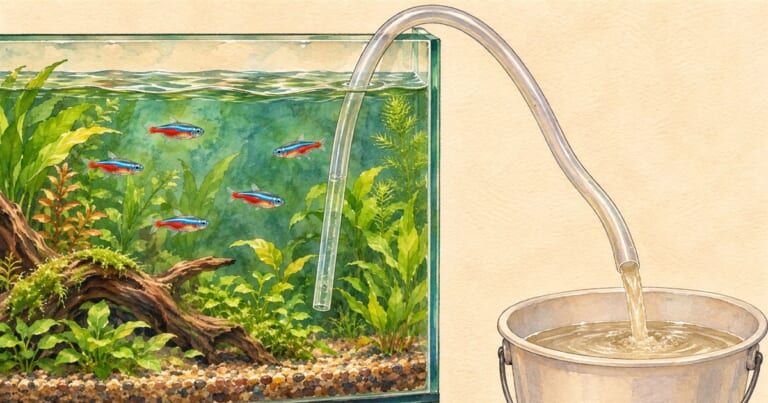
| 対策と予防 / Prevention | 細かく角の丸い砂を使い、週1回、全体の3割程度を目安に、プロホースなどで底砂の汚れを吸い出しながら換水しましょう。エアレーションやスポンジフィルターで酸素を十分に供給することも大切です。新しく迎えた個体は、しばらく別の水槽で様子を見てから本水槽に入れると安心です。ヒゲを失った個体も、細かい砂の清潔な環境に移せば、時間はかかるものの再生することが多いため、早めに環境を見直すことが回復への近道になります。Use fine, rounded sand and change about 30% of the water once a week, siphoning debris from the substrate with a gravel cleaner. Supplying plenty of oxygen through aeration or a sponge filter is also important. It is safest to keep newly acquired fish in a separate tank for a while before adding them to the main aquarium. Fish that have lost their barbels often regrow them, although it takes time, once moved to a clean tank with fine sand, so reviewing the environment early is the quickest path to recovery. |
増やし方(繁殖) / Breeding
| 雌雄の判別 / Sexing | 成熟するとオスとメスの違いがはっきりしてきます。オスはやや小柄で、上から見ると細身でまっすぐな体型をしており、背ビレが長く伸びます。メスはオスより大きく、上から見ると横幅が広く丸みを帯び、卵を持つとお腹がふっくらと膨らみます。メスの背ビレはオスほど長くなりません。The differences become clear at maturity. Males are slightly smaller, look slender and straight-bodied from above, and grow long dorsal fins. Females are larger, broader and rounder when viewed from above, and their bellies swell noticeably when carrying eggs. Their dorsal fins do not grow as long as those of males. |
|---|---|
| 繁殖形態 / Reproduction | 卵生で、粘着性のある卵を産みます。オスがメスを追いかけたあと、オスが体の側面をメスの口元に押し当てる「Tポジション」と呼ばれるコリドラス特有の姿勢をとり、受精が行われます。メスは腹ビレを籠のように合わせて数粒の卵を抱え、ガラス面や水草の葉、流木などに一粒ずつこすりつけるように産み付けます。この行動を数時間かけて繰り返し、一度の産卵で数十粒から100粒前後の卵を産みます。An egg-layer that produces adhesive eggs. After the male chases the female, the pair takes up the “T-position” typical of cory catfish, with the male pressing the side of his body against the female’s mouth, and fertilization takes place. The female holds a few eggs in her pelvic fins, cupped together like a basket, and presses them one at a time onto the glass, plant leaves, or driftwood. This is repeated over several hours, producing anywhere from a few dozen to around 100 eggs per spawning. |
| 繁殖のポイント / Breeding Tips | コリドラスの仲間としては、水槽内での繁殖に比較的取り組みやすい種類とされています。まず冷凍アカムシやイトメなど栄養価の高い餌を2週間ほどしっかり与え、メスのお腹が丸くなるまで親魚の状態を整えます。そのうえで、飼育水の半分ほどを2〜3℃低い新しい水に入れ替え、雨季が来たような変化を再現すると、産卵のきっかけになりやすいとされています。低気圧が近づくタイミングに合わせて換水すると効果的だという経験則も、愛好家の間で知られています。産み付けられた卵は親魚や同居魚に食べられてしまうため、指などで優しく剥がし、エアレーションをした別の容器に移しましょう。メチレンブルーを少量加えるとカビを防げます。白く濁った卵は早めに取り除いてください。水温24〜25℃なら3〜5日ほどで孵化し、お腹のヨークサック(栄養の袋)を吸収し終えるまでの2日ほどは餌を与える必要はありません。その後はインフゾリアや孵化したてのブラインシュリンプを1日に数回与え、成長に合わせて細かく砕いたタブレットへ切り替えていきます。稚魚の時期は少量の換水をこまめに行い、水を清潔に保つことが生存率を高める鍵になります。Among cory catfish, this species is considered relatively approachable to breed in an aquarium. First, condition the adults for about two weeks with nutritious foods such as frozen bloodworms and tubifex worms until the females’ bellies become rounded. Then, replacing about half the water with fresh water 2–3°C cooler to mimic the arrival of the rainy season is said to help trigger spawning. Hobbyists also share the rule of thumb that timing these water changes with an approaching low-pressure system makes them more effective. Because the parents and tankmates will eat the eggs, gently peel them off with a finger and move them to a separate aerated container. Adding a little methylene blue helps prevent fungus, and any eggs that turn white should be removed promptly. At 24–25°C the eggs hatch in about three to five days, and the fry need no food for roughly two days while they absorb their yolk sacs. After that, feed infusoria or freshly hatched brine shrimp several times a day, switching to finely crushed tablets as they grow. During the fry stage, frequent small water changes that keep the water clean are the key to higher survival rates. |
雑学と豆知識 / Trivia and Fun Facts
| 1. 「一様な色」の名を持つ、色の移ろいが美しい魚 / 1. A Fish Named “Uniformly Colored” with Beautifully Shifting Hues | コンコロールは、1961年にアメリカの魚類学者スタンレー・H・ワイツマンによって新種として記載されました。種小名の「concolor」は「一様な色の」という意味です。同じ仲間の多くが体側に斑点や黒い帯、網目模様を持つなかで、本種にはそうした目立つ模様がないことから、この名が付けられました。ところが、水槽で暮らす姿を眺めると、名前から受ける印象とはずいぶん違って見えます。青みがかった灰色の体は光の当たり方によってオリーブ色や褐色にも見え、ヒレはオレンジ色に染まります。英語圏で「Slate Cory」と呼ばれるのも、屋根材などに使われる粘板岩(スレート)のような、落ち着いた青灰色が印象的だからでしょう。模様がないからこそ、色そのもののグラデーションをじっくり味わえる。それがこの魚ならではの美しさです。The Concolor Cory was described as a new species in 1961 by the American ichthyologist Stanley H. Weitzman. Its species name, “concolor,” means “uniformly colored.” Whereas many of its relatives bear spots, dark bands, or reticulated patterns on their flanks, this species lacks such conspicuous markings, hence the name. Yet when you watch it in an aquarium, it looks quite different from what the name suggests. Its bluish-gray body can appear olive or brown depending on the light, and its fins are washed with orange. Its English name, “Slate Cory,” likely comes from that calm blue-gray resembling slate, the stone used for roofing. Precisely because it has no pattern, you can take your time savoring the gradations of color itself, and that is this fish’s distinctive beauty. |
|---|---|
| 2. 2024年の分類改訂と、よみがえった属名「ホプリソマ」 / 2. The 2024 Revision and the Revived Genus “Hoplisoma” | 以前のコリドラス属は150種を超える大きなグループで、2011年頃からのDNAを使った研究によって、実は系統の異なるいくつものグループが一つの属にまとめられていることが示されていました。つまり、見た目が似ていても、進化の道筋の上では別々の枝に属する魚たちが同じ名前で呼ばれていたのです。そして2024年、ディアスらの研究チームがゲノム規模のデータを用いた解析結果を発表し、コリドラス亜科はコリドラス、アスピドラス、スクレロミスタックス、ガストロデルムス、オステオガスター、ブロキス、ホプリソマの7属に整理されました。コンコロールをはじめ、パンダやジュリーなど丸い顔つきの「ラウンドノーズ」と呼ばれる仲間の多くが移されたのが、ホプリソマ属です。この属名は1838年に提唱されたものの、長くコリドラス属にまとめられて使われていなかった古い名前で、今回の改訂で約90種を含む亜科最大の属として復活しました。ただし観賞魚の世界では今も「コリドラス・コンコロール」の呼び名が広く親しまれており、新旧の名前はしばらく併用されていくと考えられています。The former genus Corydoras was a large group of more than 150 species, and DNA-based studies from around 2011 onward had shown that it actually lumped together several lineages of different evolutionary origin. In other words, fish that looked alike but sat on separate branches of the evolutionary tree were being called by the same genus name. Then, in 2024, a research team led by Dias published analyses using genome-scale data and reorganized the subfamily Corydoradinae into seven genera: Corydoras, Aspidoras, Scleromystax, Gastrodermus, Osteogaster, Brochis, and Hoplisoma. Hoplisoma is the genus into which many round-faced “round-nose” species, including the Concolor, Panda, and Julii corys, were moved. The name was first proposed in 1838 but had long gone unused after being merged into Corydoras; with this revision it returned as the largest genus in the subfamily, containing about 90 species. In the aquarium hobby, however, the name “Corydoras concolor” is still widely familiar, and the old and new names are expected to be used side by side for some time. |
| 3. 胸ビレに隠された防御のしくみと「自己中毒」 / 3. The Defensive System in the Pectoral Fin and “Self-Poisoning” | コリドラスの仲間の胸ビレの最初の一本は、硬く骨のようになった鋭いトゲです。危険を感じるとこのトゲを外側に張り出して固定し、捕食者に飲み込まれにくくします。さらに、胸ビレの付け根には「腋窩腺(えきかせん)」と呼ばれる分泌腺があり、強いストレスを受けると毒性のある分泌物を出すことが研究で報告されています。自然界では、捕食者の口の中でこの分泌物を出し、獲物を吐き出させる役割があると考えられています。広い川ならすぐに薄まる分泌物も、輸送用の袋や小さな容器のような閉ざされた空間では濃くなり、コリドラス自身のエラを傷つけてしまうことがあります。これがいわゆる「自己中毒」です。販売店によっては本種を1匹ずつ別の袋に分けて梱包するのも、この性質に備えるためです。袋の水が白く濁り、独特の刺激臭がする場合は分泌物が出たサインとされるため、その水は水槽に入れないようにしましょう。The first ray of the pectoral fin in cory catfish is a hard, bone-like, sharp spine. When threatened, the fish locks this spine outward, making itself hard for predators to swallow. In addition, at the base of the pectoral fin lies a secretory organ called the axillary gland, and studies have reported that it releases a toxic secretion under severe stress. In the wild, the secretion is thought to be released inside a predator’s mouth to make it spit the prey out. A secretion that would quickly dilute in a wide river becomes concentrated in an enclosed space such as a shipping bag or a small container, where it can damage the cory’s own gills. This is the so-called “self-poisoning.” It is also why some shops pack this species one fish per bag. Cloudy bag water with a distinctive pungent smell is considered a sign that the secretion has been released, so keep that water out of the aquarium. |
| 4. 水面へのダッシュは「腸で呼吸」しているしるし / 4. Dashing to the Surface Is a Sign of “Breathing Through the Gut” | 底でくつろいでいたコンコロールが、突然すっと水面まで泳ぎ上がり、すぐにまた底へ戻っていく。そんな光景を見かけることがあります。これはコリドラスの仲間が持つ「腸呼吸」と呼ばれる能力によるもので、水面で空気を吸い込み、腸の壁から酸素を取り込んでいるのです。酸素の少ない淀んだ水の中でも生き延びるための適応と考えられています。ときどき見られる程度なら自然な行動ですが、頻繁に水面へ上がるようになったら、水中の酸素不足や水質悪化のサインかもしれません。底物であっても、水面での様子に目を配ることが、体調を読み取る手がかりになります。You may see a Concolor Cory resting on the bottom suddenly dart up to the surface and then quickly return. This comes from an ability of cory catfish known as intestinal respiration: they gulp air at the surface and absorb oxygen through the walls of the gut. It is thought to be an adaptation for surviving in stagnant, oxygen-poor water. Occasional trips are normal, but frequent visits to the surface may signal low oxygen or declining water quality. Even for a bottom dweller, watching how it behaves at the surface offers a clue to its condition. |
| 5. 水草の少ない、澄んだ森の小川 / 5. Clear Forest Streams with Few Aquatic Plants | コンコロールが暮らすオリノコ川水系の小川は、「水草が茂る南米の川」という一般的なイメージとは少し趣が異なります。生息地は流れの穏やかな浅い森の小川で、細かい砂の上に落ち葉や流木が積もり、水草はほとんど見られないとされています。水は弱酸性で、ミネラル分の少ない軟らかい水です。そうした環境で、アピストグラマやペンシルフィッシュ、ハチェットフィッシュ、小型のカラシンといった魚たちと同じ流れを分け合って暮らしています。砂と落ち葉、流木を主体にしたシンプルなレイアウトにこうした魚たちを組み合わせれば、オリノコの森の小川を切り取ったような、本種がもっとも自然体でいられる水景が生まれます。The streams of the Orinoco basin where the Concolor Cory lives differ somewhat from the common image of “plant-filled South American rivers.” Its habitat consists of shallow, gently flowing forest streams where leaf litter and driftwood pile up on fine sand, and aquatic plants are said to be scarcely seen. The water is slightly acidic and soft, with few minerals. In these surroundings it shares the same waters with fish such as Apistogramma, pencilfish, hatchetfish, and small characins. Combining these fish with a simple layout of sand, leaf litter, and driftwood creates a scene like a slice of an Orinoco forest stream, where this species can be at its most natural. |
| 6. ハイフィンと、ワイルド個体・ブリード個体の楽しみ方 / 6. High Fins, and Enjoying Wild and Captive-Bred Fish | 成熟したオスの長く伸びた背ビレは、コンコロールの大きな見どころです。この伸び方は生まれ持った性質によるものですが、愛好家の間では、水槽内に適度な水流を作って飼育すると背ビレがよく伸びるとも言われています。日本国内では、南米で採集されたワイルド個体と、東南アジアや国内で繁殖されたブリード個体の両方が流通しています。ワイルド個体はすでに大きく育った状態で入荷することが多く、体格や色合い、ヒレの伸び方に一匹ごとの個性があるのが魅力です。一方のブリード個体は、水槽の環境や人工飼料に慣れていて丈夫で、比較的手頃な価格で複数匹そろえやすいのが利点です。どちらを選ぶかによって楽しみ方が変わることも、この魚が長く愛され続けている理由のひとつといえるでしょう。The long dorsal fin of a mature male is one of the Concolor Cory’s major highlights. How long it grows depends on inborn traits, but among hobbyists it is also said that keeping the fish with moderate water flow encourages the fin to grow longer. In Japan, both wild-caught fish collected in South America and captive-bred fish raised in Southeast Asia or domestically are available. Wild fish often arrive already well grown, and their appeal lies in the individuality each shows in build, coloration, and fin length. Captive-bred fish, on the other hand, are accustomed to aquarium conditions and prepared foods, making them hardy and relatively affordable to buy in groups. The fact that the way you enjoy this fish changes with your choice is surely one reason it has been loved for so long. |
まとめ / Conclusion
コリドラス・コンコロールは、「一様な色」という名前からは想像しにくいほど奥行きのある色合いと、オスのハイフィンが生む風格をあわせ持つ小さなナマズです。細かい砂、清潔な水、そして一緒に過ごす仲間たち。この基本さえ整えてあげれば、丈夫で長く付き合える頼もしい存在になってくれます。 The Concolor Cory is a small catfish that combines colors far richer than its “uniformly colored” name suggests with the dignity of the male’s high fin. Fine sand, clean water, and companions to share its days with: as long as these basics are in place, it becomes a hardy and dependable presence that will stay with you for years.
群れで砂地をもふもふと探り、ときおり水面へ息継ぎに上がっては、また底へと戻っていく。そんな穏やかな暮らしぶりを眺めていると、水槽の底にオリノコの森の小川が静かに息づいているように感じられるはずです。スレートブルーとオレンジの落ち着いた彩りは、日々の世話のなかで少しずつ見慣れた景色となり、やがて水槽になくてはならない存在になっていくことでしょう。 Watching them sift through the sand as a group, occasionally rising to the surface for a breath before returning to the bottom, you will surely feel as though an Orinoco forest stream were quietly alive at the bottom of your tank. Through daily care, their calm slate blue and orange hues gradually become a familiar sight, until one day they feel like an indispensable part of the aquarium.

困りごとの解決から、用品えらび、水槽づくり、生き物えらびまで。飼育に役立つ案内です。
分布マップ
コリドラス・コンコロール(Hoplisoma concolor)は、南米北部のオリノコ川水系(ベネズエラ、コロンビア)に分布します。流れの緩やかな浅い森の小川に生息し、細かい砂底に落ち葉や流木が積もった、水草の少ない環境を好むとされています。
※地図はオリノコ川水系(ベネズエラ、コロンビア)全体を示した概略表示です。実際の生息範囲を正確に示すものではありません。マーカーは分布域のおおよその中心付近に置いた代表地点で、実際の採集地点ではありません。
参考文献
- Weitzman, S. H. (1961). A new catfish, Corydoras concolor (Callichthyidae) from Venezuela. Proceedings of the Biological Society of Washington, 74, 105–110.
https://www.biodiversitylibrary.org/part/44742 - Dias, A. C., Tencatt, L. F. C., Roxo, F. F., Silva, G. S. C., Santos, S. A., Britto, M. R., Taylor, M. I., & Oliveira, C. (2024). Phylogenomic analyses in the complex Neotropical subfamily Corydoradinae (Siluriformes: Callichthyidae) with a new classification based on morphological and molecular data. Zoological Journal of the Linnean Society, zlae053.
https://doi.org/10.1093/zoolinnean/zlae053 - Alexandrou, M. A., Oliveira, C., Maillard, M., McGill, R. A. R., Newton, J., Creer, S., & Taylor, M. I. (2011). Competition and phylogeny determine community structure in Müllerian co-mimics. Nature, 469, 84–88.
https://doi.org/10.1038/nature09660 - Fricke, R., Eschmeyer, W. N., & Van der Laan, R. (Eds.). Eschmeyer’s Catalog of Fishes: Genera, Species, References. California Academy of Sciences. Hoplisoma concolor (Weitzman 1961).
https://research.calacademy.org/research/ichthyology/catalog/fishcatget.asp?spid=4841 - Froese, R., & Pauly, D. (Eds.). FishBase. Corydoras concolor Weitzman, 1961.
https://www.fishbase.se/summary/SpeciesSummary.php?genusname=Corydoras&speciesname=concolor - Fuller, I. A. M., & Evers, H.-G. (2005). Identifying Corydoradinae Catfish: Aspidoras, Brochis, Corydoras, Scleromystax & C-numbers. Ian Fuller Enterprises / A.C.S. GmbH (Aqualog).
- Wright, J. J. (2009). Diversity, phylogenetic distribution, and origins of venomous catfishes. BMC Evolutionary Biology, 9, 282.
https://doi.org/10.1186/1471-2148-9-282 - Pineda, M., Aragao, I., McKenzie, D. J., & Killen, S. S. (2020). Social dynamics obscure the effect of temperature on air breathing in Corydoras catfish. Journal of Experimental Biology, 223(21), jeb222133.
https://doi.org/10.1242/jeb.222133 - Kohda, M., Tanimura, M., Kikue-Nakamura, M., & Yamagishi, S. (1995). Sperm drinking by female catfishes: a novel mode of insemination. Environmental Biology of Fishes, 42, 1–6.





コメント