

解説 / Description
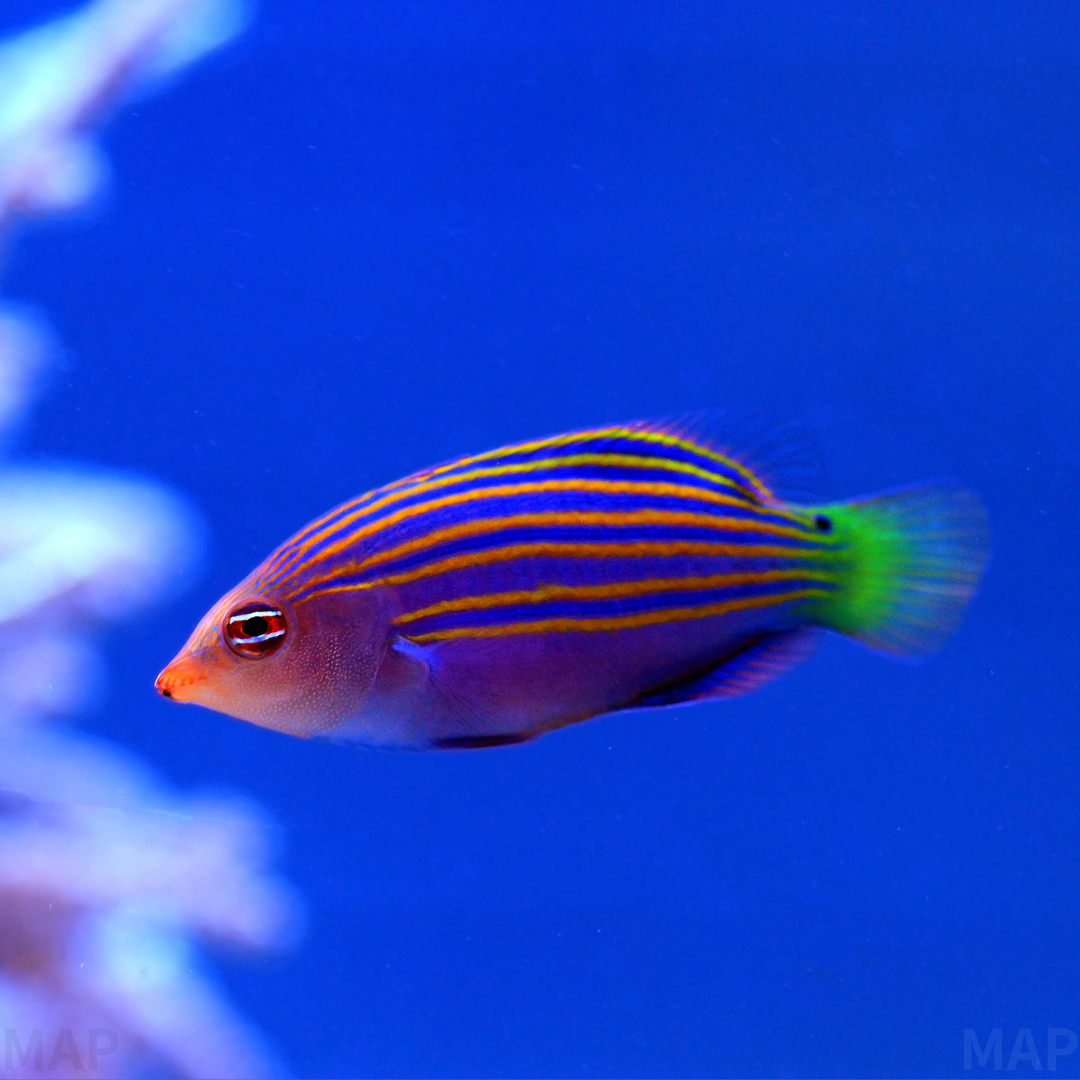
ニセモチノウオは、鮮やかなピンクパープルの体色に6本の美しいオレンジラインが入る、海水アクアリウムで極めて人気の高い小型のベラです。サンゴ礁の隙間を機敏に泳ぎ回るその姿は非常に愛らしく、観賞価値が高いだけでなく、サンゴに害を及ぼすヒラムシやウミケムシ、ピラミッドスネールなどを捕食してくれるため、リーフタンクの「生物兵器」としても重宝されています。非常に丈夫で人工飼料にも餌付きやすいため、海水魚飼育の入門種としても適していますが、性格が強く、他の小型魚との混泳には一定の配慮が必要です。 The Sixline Wrasse (Pseudocheilinus hexataenia) is an extremely popular small wrasse in saltwater aquariums, characterized by its vibrant pink-purple body and six striking orange lines. Beyond its visual appeal, it is highly valued as a biological control agent in reef tanks, actively preying on pests like flatworms, bristleworms, and pyramidellid snails. While it is hardy and easy to feed, its assertive temperament requires careful consideration when choosing tank mates.
基本情報 / Basic Information
| 学名 / Scientific Name | Pseudocheilinus hexataenia |
|---|---|
| 通称 / Common Name | ニセモチノウオSixline Wrasse, Sixstripe Wrasse |
| 分類 / Family | スズキ目ベラ亜目ベラ科ニセモチノウオ属Labridae: Pseudocheilinus |
| 英名 / English Name | Sixline wrasse |
| 分布 / Distribution | インド太平洋(紅海からポリネシア)。国内では伊豆諸島、高知県柏島、琉球列島など。Indo-Pacific: Red Sea to French Polynesia, including southern Japan. |
| 最大体長 / Max Size | 約10cm(メスは7cm程度とやや小型)Up to 10 cm (Females are slightly smaller, around 7 cm). |
| 寿命 / Lifespan | 約3年〜5年以上(飼育下)Approximately 3 to 5+ years in captivity. |
飼育環境 / Aquarium Environment
| 水槽サイズ / Tank Size | 40リットル(45cm規格水槽)以上。推奨は110リットル(60cmワイド水槽や90cmスリム水槽)以上。Minimum 40 liters (approx. 10 gallons), but 110 liters (approx. 30 gallons) or more is recommended for behavioral management. |
|---|---|
| 水温 / Temperature | 24℃ 〜 27℃前後。急激な変化を避けることが重要です。 24°C – 27°C (75°F – 80°F). Stable temperatures are essential. |
| 水質 / Water Quality | pH 8.1 〜 8.4、比重 1.020 〜 1.025。硝酸塩の少ない清潔な水を好みます。pH 8.1 – 8.4, Specific Gravity 1.020 – 1.025. Prefers clean water with low nitrate levels. |
| レイアウト / Layout | ライブロックを複雑に組み、多くの隠れ家とパトロール経路を作ってください。Provide plenty of live rock with caves and crevices for hiding and foraging. |
| 注意点 / Precautions | 非常に驚きやすく、わずかな隙間からも飛び出します。水槽のフタは必須です。They are prone to jumping when startled; a tight-fitting lid or mesh cover is mandatory. |
餌と給餌 / Feeding
| 餌の種類 / Diet | 肉食性。イサザアミ、ブラインシュリンプ、海水魚用の人工飼料(粒・フレーク)。Carnivorous. Accepts mysis shrimp, brine shrimp, and high-quality flake or pellet foods. |
|---|---|
| 給餌のポイント / Feeding Tips | 代謝が激しいため、1日に2〜3回、少量を分けて与えるのが理想的です。With a high metabolism, it is best to feed small amounts 2-3 times per day. |
性格と混泳 / Temperament and Tank Mates
| 性格 / Temperament | 活発で非常に気が強く、強い縄張り意識を持ちます。Active and bold. They can be quite territorial and assertive. |
|---|---|
| 混泳の相性 / Compatibility | 他種のベラや後から入る小型魚には攻撃的になるため、本種を最後に導入するのがコツです。Aggressive towards other wrasses and new additions; adding them last to the tank is a proven strategy. |
病気と対策 / Diseases and Prevention
| かかりやすい病気 / Common Diseases | 白点病、ウーディニウム病。輸送直後のストレスによる発症に注意。Marine Ich (Cryptocaryon irritans) and Marine Velvet. Monitor closely after shipping. |
|---|---|
| 対策と予防 / Prevention | 導入前の検疫(トリートメント)を行い、安定した水温と清潔な環境を維持してください。Quarantine before introduction and maintain stable water parameters and high hygiene. |
増やし方(繁殖) / Breeding
| 雌雄の判別 / Sexing | オスはメスより大きく、発情期には色彩がより鮮やかになります。Males are generally larger and show more intense coloration during courtship. |
|---|---|
| 繁殖形態 / Reproduction | 雌性先熟の雌雄同体。浮遊性産卵を行い、卵は海流に乗って運ばれます。Protogynous hermaphrodites. They are pelagic spawners, releasing eggs into the water column. |
| 繁殖のポイント / Breeding Tips | 家庭用水槽での繁殖・稚魚の育成は、餌の供給面から極めて困難とされています。Captive breeding is extremely difficult due to the tiny size of the larvae and their specific dietary needs. |
雑学と豆知識 / Trivia and Fun Facts
| 1. 学名の由来:正確に描かれた6本のライン / 1. Origin of the Name: The Precise Six Lines | 学名の種小名である hexataenia は、ギリシャ語で「6本(hexa)」の「帯(tainia)」を意味しています。その名の通り、体側には驚くほど正確に並んだ6本のオレンジ色のラインが走っています。属名の Pseudocheilinus は、大型のモチノウオ属(Cheilinus)に似ているものの、系統が異なる「偽の(pseudes)」モチノウオであることを示しており、小さな体に似合わぬ学術的な背景を持っています。The specific epithet “hexataenia” comes from the Greek words for “six” (hexa) and “band/stripe” (tainia), accurately describing its most prominent feature. The genus name “Pseudocheilinus” suggests it is a “false” (pseudes) Cheilinus, referencing its resemblance to the larger wrasse genus while belonging to a distinct lineage. |
|---|---|
| 2. 睡眠時の防衛:不思議な「粘液の繭」 / 2. Nocturnal Defense: The Mysterious Mucus Cocoon | 夜になると、ニセモチノウオは岩の隙間で自ら透明な粘液を分泌し、身体を包み込む「繭(まゆ)」を作り出します。これは物理的なバリアというよりも、自らの匂いを遮断してウツボなどの夜行性捕食者から身を隠す「化学的なステルス機能」として働きます。さらに驚くべきことに、朝起きると彼らはこの繭を食べてエネルギーを再利用します。サンゴ礁での厳しい生存競争が生んだ、非常に合理的な知恵といえるでしょう。At night, the Sixline Wrasse secretes a transparent mucus cocoon around itself while resting in rock crevices. This acts as a chemical stealth device, masking its scent from nocturnal predators like moray eels. Fascinatingly, they consume the cocoon upon waking to recycle the energy, a remarkable adaptation for survival in the nutrient-limited reef environment. |
| 3. 巧妙な囮:敵を欺く「偽の目」 / 3. Deceptive Decoy: The False Eye Spot | ニセモチノウオの本当の目は赤く、その上を白いラインが横切ることで、捕食者から視認されにくいようになっています。その一方で、尾鰭の付け根付近には小さな黒い「眼状紋(偽の目)」が存在します。これは、捕食者の攻撃を致命傷になりやすい頭部から、比較的再生の容易な尾の方へと逸らすための囮の役割を果たしています。美しさの中に、生き残るための緻密な計算が隠されているのです。The true eye of the wrasse is red and crossed by white stripes to disrupt its silhouette. Conversely, it possesses a small black eye-spot (ocellus) near the tail. This decoy lures predators to strike the non-vital tail area instead of the head, significantly increasing the fish’s chances of survival. |
| 4. 社会的な性転換:群れの主権を守るオス / 4. Social Sex Change: The Dominant Male | この魚はすべてメスとして生まれ、群れの中で最も優位な個体がオスへと性転換する「雌性先熟」という特性を持っています。一度オスになった個体は二度とメスに戻ることはありません。水槽内で複数の個体を入れると激しく争うのは、この「誰がオス(リーダー)になるか」という社会的なヒエラルキーが強く影響しています。小さな体で水槽内をパトロールする姿は、まさに自分の縄張りを守る騎士のようです。These fish are protogynous hermaphrodites, meaning all are born female and the most dominant individual changes into a male. This transition is irreversible. The aggressive interactions often seen in aquariums are typically due to this strict social hierarchy and the struggle for dominance. |
まとめ / Conclusion
ニセモチノウオは、その鮮烈な色彩と、サンゴの害虫を駆除してくれる実用性から、海水アクアリウムにおいて他に代えがたい魅力を持つ存在です。飼育自体は非常に容易ですが、性格の強さと「飛び出し」という二つのポイントさえ押さえれば、長きにわたって水槽の主役、あるいは名脇役として活躍してくれるでしょう。 The Sixline Wrasse is an irreplaceable addition to the saltwater hobby, combining vibrant aesthetics with practical pest control. While they are easy to care for, managing their assertive temperament and ensuring a secure lid are the keys to long-term success.
ライブロックの隙間からこちらを覗き込み、時に素早く、時に優雅に泳ぐその姿は、私たちの日常にサンゴ礁のダイナミズムを運んできてくれます。ぜひ、あなたのリーフタンクの頼もしい番人として、ニセモチノウオを迎え入れてみてください。 Peering through the crevices of live rock and darting gracefully across the reef, this fish brings the dynamism of the ocean into our homes. We highly recommend welcoming the Sixline Wrasse as a dependable guardian of your reef tank.

気になる道具や飼い方を見つけてみませんか?
 アイのアクアグッズ案内エビのおうち、食べちゃっていいの!? コタロウと探る、不思議なエビのごはん道具の特徴や使い方、選ぶときのポイントをアイが紹介します。記事はコチラ →
 アイのアクアグッズ案内水草用ライトの選び方|緑の絨毯と赤い水草を楽しむ照明・植栽用品道具の特徴や使い方、選ぶときのポイントをアイが紹介します。記事はコチラ →
さまざまな飼育テーマをご紹介。リンク先の記事には広告・商品紹介が含まれます。
案内・紹介記事一覧へ →参考文献および引用データ
本図鑑記事の作成にあたり、以下の学術文献、データベース、および博物館資料を参照・引用いたしました。
- ・Bleeker, P. (1857). “Bijdrage tot de kennis der ichthyologische fauna van de eiland Amboina”. Acta Societatis Scientiarum Indo-Neerlandicae, vol. 2, no. 7, pp. 1-139.(ニセモチノウオの原記載文献)
- ・Kner, R., & Steindachner, F. (1867). “Neue Fische aus dem Museum Godeffroy in Hamburg”. Sitzungsberichte der Kaiserlichen Akademie der Wissenschaften. Mathematisch-Naturwissenschaftliche Classe.(シノニム Pseudocheilinus psittaculus に関する記述)
- ・Guichenot, A. (1869). “Notice sur quelques poissons inédits de Madagascar”. Nouvelles Archives du Muséum d’Histoire Naturelle.(シノニム Cossyphus echis に関する記述)
- ・IUCN (2010). “Pseudocheilinus hexataenia. The IUCN Red List of Threatened Species”. evaluation 2009.(保全状況および個体群に関する評価データ)
- ・鹿児島大学総合研究博物館 (KAUM-I). 標本データベース(奄美群島、屋久島、琉球列島における採集記録および標本番号:146544, 30541, 30612 等)
- ・神奈川県立生命の星・地球博物館 (KPM-NR). 魚類写真資料データベース(日本国内における分布および生態記録)
- ・Froese, R. and D. Pauly. Editors. (2024). FishBase. World Wide Web electronic publication. www.fishbase.org.(分類階層、最大体長、分布域の統計データ)
※本データは公開時点の学術的知見に基づいています。分類学上の再編により情報が更新される場合があります。




コメント