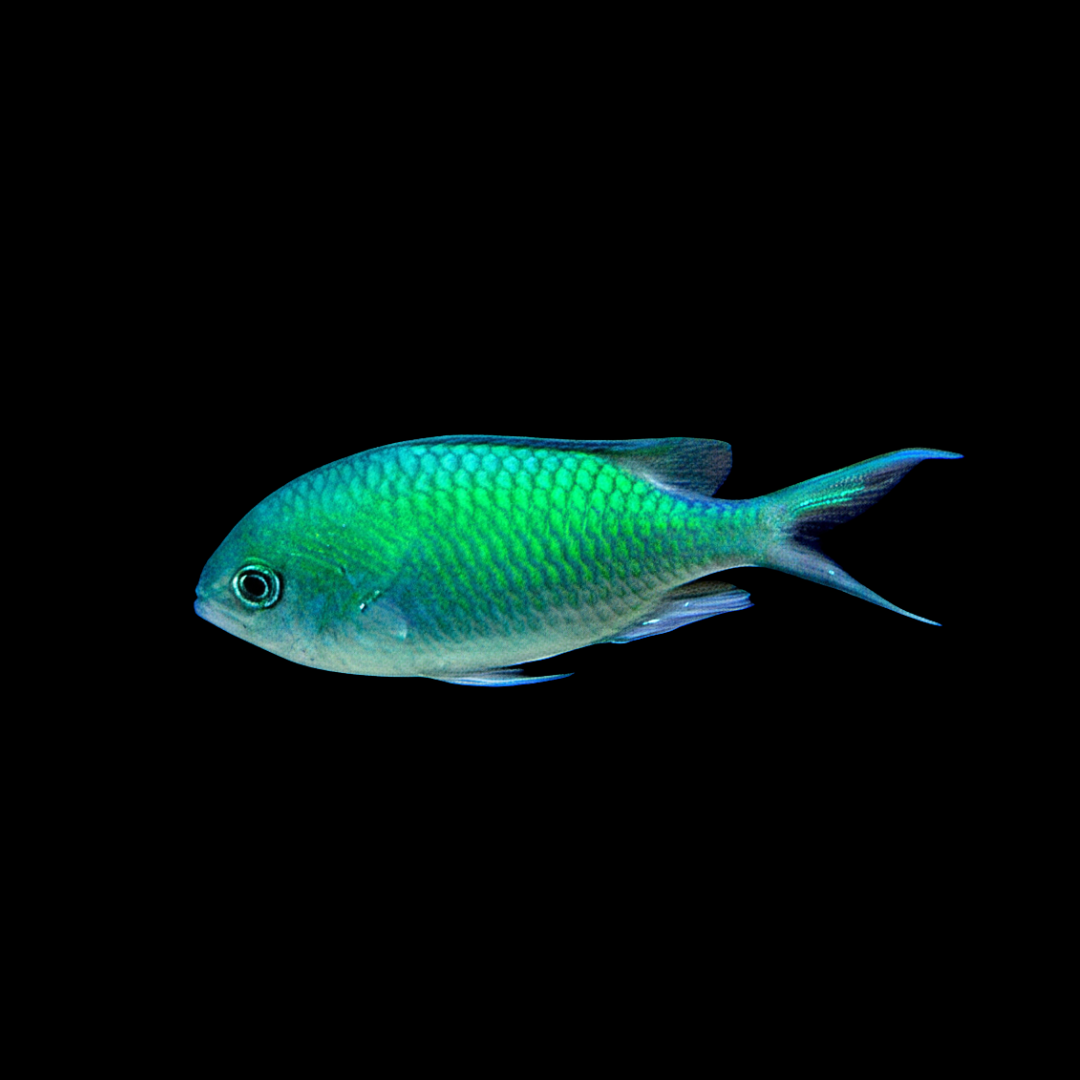
デバスズメダイは、熱帯のサンゴ礁を象徴する、エメラルドグリーンの輝きが美しい小型の海水魚です。光の当たり方によって青から緑へと変化するその体色は、まさに「生きた宝石」と呼ぶにふさわしい魅力を放っています。自然界では枝状のミドリイシ類を住処とし、数百から数千という圧倒的な規模の群れを作ることで知られています。アクアリウムの世界でも、その丈夫さと穏やかな性格、そして水槽内を彩る群泳の美しさから、初心者から熟練者まで幅広く愛されている基幹種です。The Blue Green Damselfish (Chromis viridis) is a iconic small marine fish known for its stunning emerald-green radiance. Its body color shifts between blue and green depending on the light, earning it the reputation of a living jewel. In nature, they inhabit branching Acropora corals and are famous for forming massive shoals of hundreds or thousands of individuals. In the aquarium world, they are a staple species loved by both beginners and experts for their hardiness, peaceful temperament, and the beautiful schooling behavior that adds life to any reef tank.
基本情報 / Basic Information
学名 / Scientific Name
Chromis viridis
通称 / Common Name
デバスズメダイBlue Green Chromis, Blue Green Damselfish
分類 / Family
スズメダイ科スズメダイ属Pomacentridae, Chromis
英名 / English Name
Blue Green Damselfish
分布 / Distribution
インド・太平洋(琉球列島、小笠原諸島を含む)Indo-Pacific region, including the Ryukyu and Ogasawara Islands.
最大体長 / Max Size
約8cmから10cm程度Approximately 8cm to 10cm.
寿命 / Lifespan
約5年から8年(飼育下)Approximately 5 to 8 years in captivity.
飼育環境 / Aquarium Environment
水槽サイズ / Tank Size
45cmから60cm規格水槽(約30Lから60L以上)を推奨。多頭飼育の場合は90cm規格水槽以上が望ましい。Recommended for 45cm to 60cm standard tanks (approx. 30L to 60L). For group housing, a 90cm or larger tank is preferred.
水温 / Temperature
24度から26度24 to 26 degrees Celsius.
水質 / Water Quality
pH 8.1から8.4、比重 1.020から1.024の清浄な海水。Clean seawater with pH 8.1 to 8.4 and specific gravity of 1.020 to 1.024.
レイアウト / Layout
枝状サンゴやライブロックを配置し、隠れ家と遊泳空間を両立させる。Provide branching corals or live rock to balance hiding spots with open swimming space.
注意点 / Precautions
高密度でパッキングされた輸入直後はストレスにより病気を発症しやすいため、導入時の丁寧な検疫が必要です。New arrivals after high-density shipping are prone to disease due to stress, requiring careful quarantine upon introduction.
代謝が高いため、少量を1日2回から3回に分けて与えることが、群れ全体の健康維持と闘争緩和につながります。Due to their high metabolism, feeding small amounts 2-3 times a day helps maintain health and reduces aggression within the group.
性格と混泳 / Temperament and Tank Mates
性格 / Temperament
基本的に平和的ですが、水槽内では厳格な順位付けが行われる傾向があります。Generally peaceful, but they tend to establish a strict social hierarchy within the aquarium.
混泳の相性 / Compatibility
多くの海水魚と混泳可能ですが、同種間では弱い個体が攻撃され、数が減っていく現象に注意が必要です。Compatible with many marine species, but be cautious of intra-species aggression where weaker individuals may be bullied.
病気と対策 / Diseases and Prevention
かかりやすい病気 / Common Diseases
白点病のほか、輸入直後に発生しやすいスクーチカ症(ウロネマ感染症)が特に脅威となります。In addition to Ich (Cryptocaryon), Scuticociliatosis (Uronema) is a significant threat, especially following importation.
対策と予防 / Prevention
異常を感じたら直ちに隔離し、必要に応じてホルマリン浴や殺菌剤による治療を行います。清潔な水質の維持が最大の予防です。Isolate immediately if symptoms appear and treat with formalin baths or antibiotics as needed. Maintaining clean water is the best prevention.
増やし方(繁殖) / Breeding
雌雄の判別 / Sexing
外見での判別は困難ですが、繁殖期にはオスが婚姻色として黄色味を帯びるようになります。Difficult to distinguish by appearance, but males develop a yellowish nuptial coloration during the breeding season.
繁殖形態 / Reproduction
基質産卵型。オスが産卵床を準備し、メスを誘い込んで受精させます。Substrate spawner. The male prepares a nesting site and invites females to spawn.
繁殖のポイント / Breeding Tips
孵化後の仔魚は口が極めて小さいため、初期飼料として微細なカイアシ類の幼生などを用意する必要があります。Since newly hatched larvae have extremely small mouths, microscopic copepod nauplii must be provided as an initial food source.
雑学と豆知識 / Trivia and Fun Facts
1. 学名の混乱を乗り越えた歴史 / 1. A History of Taxonomic Confusion
デバスズメダイは1830年にキュヴィエによって記載されましたが、長年にわたり近縁種と混同され、Chromis caeruleaという誤った学名で呼ばれ続けてきました。1989年に国際動物命名規約による裁定が下されるまで、この分類学的混乱は続きました。今日では、かつての混乱を整理し、Chromis viridisが正当な学名として世界中で使用されています。Although described by Cuvier in 1830, this species was confused with closely related relatives for many years and was incorrectly referred to as Chromis caerulea. This taxonomic confusion persisted until a ruling by the ICZN in 1989. Today, Chromis viridis is recognized as the valid scientific name worldwide.
2. サンゴを救う「睡眠遊泳」 / 2. “Sleep-swimming” That Saves Corals
夜間、枝状サンゴの隙間で眠るデバスズメダイは、無意識のうちにヒレを動かし続ける「睡眠遊泳」を行います。この行動によってサンゴの内部に新鮮な海水が送り込まれ、夜間の酸欠からサンゴを守っていることが近年の研究で明らかになりました。単なる隠れ家として利用するだけでなく、サンゴの成長を助ける環境エンジニアとしての顔も持っているのです。Recent studies have revealed that while sleeping within the branches of corals at night, these fish engage in “sleep-swimming,” constantly moving their fins. This behavior circulates fresh seawater into the coral’s interior, protecting it from nocturnal oxygen depletion. They act as environmental engineers, supporting coral growth while using them as shelter.
3. 「出歯」に隠された捕食の知恵 / 3. The Wisdom Behind the “Protruding Teeth”
和名「デバスズメダイ」の由来である、わずかに前方に突き出した下顎。これは単なる特徴ではなく、水中のプランクトンを効率よく捕らえるための適応の結果です。ラム・ジョーイングと呼ばれるこの捕食形態は、泳ぎながら獲物をひったくるように口に収めるのに適しており、サンゴ礁の中層で生き抜くための高度な進化の形と言えるでしょう。The Japanese name “Deba-suzumedai” (protruding teeth damselfish) comes from its slightly jutting lower jaw. This is not just a cosmetic feature but an evolutionary adaptation for efficient plankton capture. This “ram jawing” method allows them to snatch prey while swimming, a sophisticated adaptation for life in the water column of the reef.
まとめ / Conclusion
デバスズメダイは、その美しさと飼育のしやすさから、海水アクアリウムの入り口として最適な魚です。しかし、水槽という閉鎖環境では、彼ら独自の社会性が「順位争い」という形で現れることも忘れてはなりません。適切な水槽サイズと、個体数を考慮した導入、そして丁寧な給餌を行うことで、彼らの持つ真の魅力を長期間にわたって楽しむことができるでしょう。The Blue Green Damselfish is an ideal entry-level fish for marine aquariums due to its beauty and hardiness. However, it is crucial to remember that their unique social nature can manifest as territorial disputes in a confined environment. By providing an appropriate tank size, carefully selecting the number of individuals, and ensuring attentive feeding, you can enjoy their true charm for a long time.
サンゴとの深い絆や、歴史に彩られた学名の背景を知ることで、目の前を泳ぐ小さな魚が、より大きな海洋生態系の一部であることを感じられるはずです。このエメラルドグリーンの輝きが、あなたのアクアリウムをより豊かで知的好奇心に満ちたものにしてくれることを願っています。Understanding their deep bond with corals and the historical context of their scientific name allows you to feel that the small fish swimming before you is a vital part of a larger marine ecosystem. We hope this emerald brilliance enriches your aquarium experience and satisfies your intellectual curiosity.
Cuvier, G. and Valenciennes, A. (1830). Histoire naturelle des poissons. Tome cinquième. Paris: F.G. Levrault. (デバスズメダイの原記載)
ICZN (1989). Opinion 1563. Chromis viridis (Cuvier, 1830) (Osteichthyes, Perciformes): specific name conserved. Bulletin of Zoological Nomenclature 46(3).
Fiedler, K., et al. (2008). Molecular phylogeny and cryptic lineages in the Blue-green Damselfish Chromis viridis. Marine Biology.
Goldshmid, R., Holzman, R., Weihs, D., & Genin, A. (2004). Aeration of corals by sleep-swimming fish. Limnology and Oceanography, 49(5), 1832–1839. DOI: 10.4319/lo.2004.49.5.1832.
University of Florida, Rising Tide Conservation. (n.d.). Species Profile: Blue Green Chromis (Chromis viridis) Aquaculture Research.
Pádua, S. B., et al. (2013). Scuticociliatosis caused by Uronema sp. in ornamental Blue-green Damselfish Chromis viridis imported to Brazil. Revista Brasileira de Parasitologia Veterinária.
Tang, K. L., et al. (2021). Fitting the pieces together: The evolutionary history of damselfishes (Pomacentridae). Molecular Phylogenetics and Evolution.
IUCN Red List of Threatened Species. (2018). Chromis viridis. (International Union for Conservation of Nature).



 アイのアクアグッズ案内グッピー・プラティ・モーリーを親子で楽しむ飼育用品|水槽・稚魚保護・ろ過・餌・水草道具の特徴や使い方、選ぶときのポイントをアイが紹介します。記事はコチラ →
 アイのアクアグッズ案内コリドラスのもふもふ時間を楽しむ|餌・底砂・お掃除用品の選び方コリドラスのもふもふする食事風景を楽しむために。沈む餌2種類の違い、口元に配慮した底砂、食べ残しを回収する道具を、アクアグッズナビゲーターのアイが紹介します。記事はコチラ →



コメント