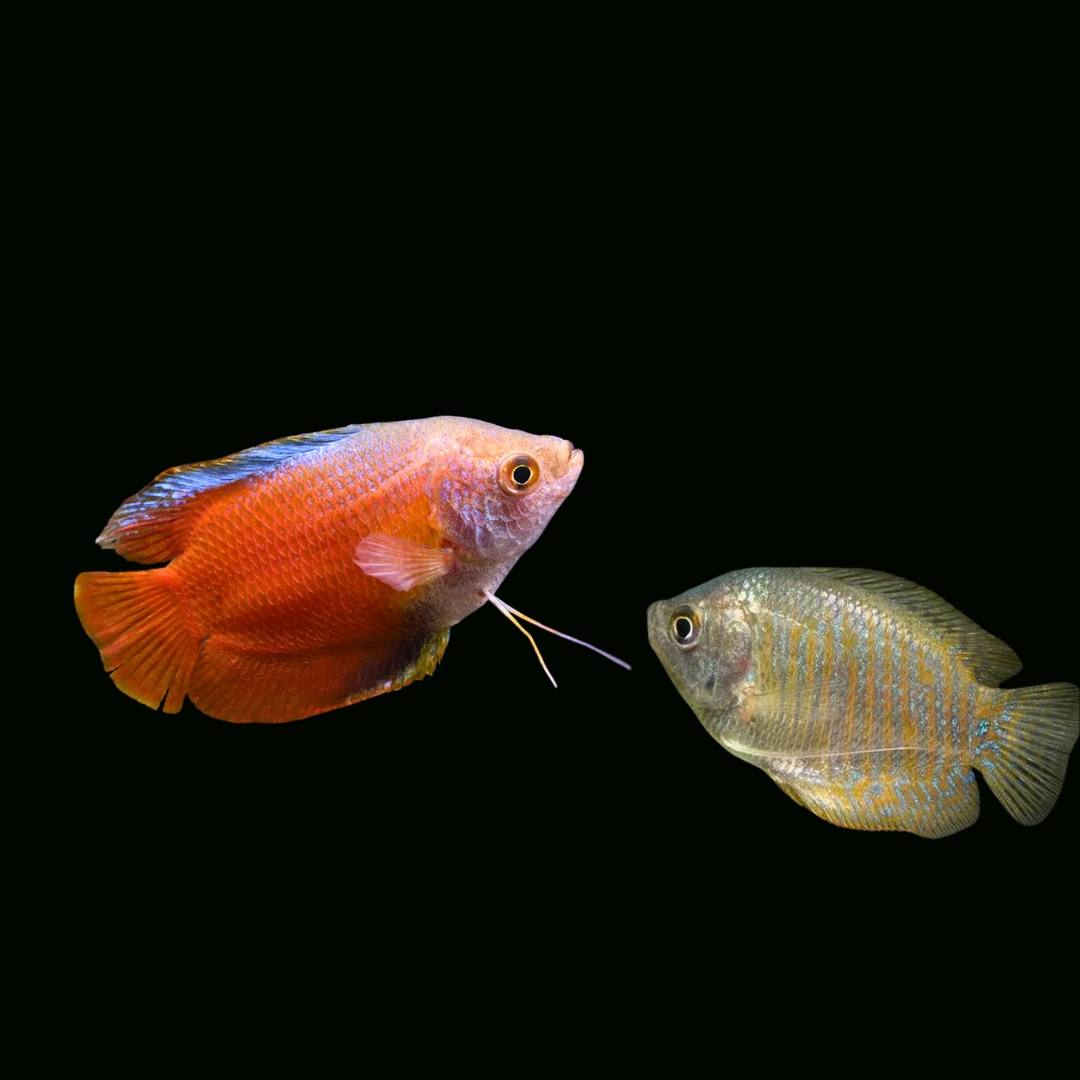
サンセットドワーフグラミーは、ドワーフグラミーの改良品種として流通する小型のラビリンスフィッシュです。夕焼けを思わせる赤橙色の体色が魅力で、水草水槽の緑とよく調和します。原種のドワーフグラミーは南アジアの流れの緩やかな水域や水草の多い場所に生息し、空気呼吸を助けるラビリンス器官を持つことで知られています。飼育は難しすぎる魚ではありませんが、強い水流や急な水質変化を嫌い、近年はドワーフグラミー・イリドウイルス病への注意も必要です。健康な個体を選び、落ち着いた環境で丁寧に管理することで、本種らしい穏やかな泳ぎと鮮やかな発色を楽しめます。The Sunset Dwarf Gourami is a small labyrinth fish traded as a selectively bred form of the Dwarf Gourami. Its reddish-orange coloration, reminiscent of a sunset, contrasts beautifully with aquatic plants. The wild Dwarf Gourami is native to slow-moving, vegetated waters in South Asia and is known for its labyrinth organ, which helps it breathe atmospheric air. It is not an exceptionally difficult fish to keep, but it dislikes strong current and sudden water-quality changes. Dwarf Gourami Iridovirus Disease is also an important concern, so careful selection and quarantine of new fish are strongly recommended.
基本情報 / Basic Information
学名 / Scientific Name
Trichogaster lalius var. 通称としては旧学名のThe older trade name Colisa laliaも見られます。 is also encountered in aquarium literature.
スズキ目系統のアナバス類として扱われる小型グラミー類。現在は一般にオスフロネムス科・Trichogaster属として扱われます。A small gourami belonging to the anabantoid group, generally placed in the family Osphronemidae and genus Trichogaster.
英名 / English Name
Sunset Dwarf Gourami
分布 / Distribution
原種の主な自然分布はインド、バングラデシュ、パキスタン周辺の南アジアで、ガンジス川・ブラマプトラ川流域などの流れの緩やかな水域に生息します。ネパール周辺からの記録に触れられることもありますが、流通個体の多くは東南アジアなどの養殖由来です。The wild form is mainly native to South Asia, including India, Bangladesh, and Pakistan, especially slow-moving waters of the Ganges and Brahmaputra systems. Nepal is sometimes mentioned in broader range accounts, while most aquarium specimens are farm-bred, often in Southeast Asia.
最大体長 / Max Size
文献上は原種で全長9cm前後に達する記録がありますが、観賞魚として流通・飼育されるサンセット品種では約5〜7.5cm程度に収まることが多いです。Published records for the wild form can reach around 9 cm total length, but aquarium Sunset varieties are commonly about 5 to 7.5 cm.
寿命 / Lifespan
一般的には約3〜5年が目安です。個体の由来、導入時の健康状態、水温、水質、病原体の有無によって大きく変わります。Usually around 3 to 5 years, depending on source, health at purchase, temperature, water quality, and disease status.
飼育環境 / Aquarium Environment
水槽サイズ / Tank Size
単独飼育や落ち着いたペア飼育なら45cm規格水槽、約35〜40L以上から検討できます。ただし、余裕を持って飼うなら60cm規格水槽、約57L以上がより安定します。複数匹飼育や混泳では、隠れ場所を増やし、オス同士の視線が切れるレイアウトにしてください。For a single fish or a calm pair, a standard 45 cm tank of about 35 to 40 L or larger can be considered. A standard 60 cm tank of about 57 L or larger provides more stable conditions. For groups or community tanks, add hiding places and visual barriers, especially between males.
水温 / Temperature
22〜27℃が扱いやすい範囲です。繁殖を狙う場合は一時的に26〜27℃前後が有効ですが、28℃以上を長期間維持すると体力を消耗しやすいため注意します。日本の夏は冷却ファンなどで高温を避け、冬はヒーターで安定させます。A practical range is 22 to 27°C. For breeding, temporarily maintaining around 26 to 27°C can be useful, but prolonged temperatures above 28°C may be stressful. In Japanese summers, cooling fans may be needed, while in winter a heater should keep the temperature stable.
水質 / Water Quality
弱酸性から中性、pH6.0〜7.5程度を目安にします。養殖個体は適応幅がありますが、急激な水質変化は避けてください。ラビリンス器官で空気呼吸できる魚でも、アンモニアや亜硝酸には耐えられません。立ち上がったろ過、過密回避、定期的な換水が基本です。Slightly acidic to neutral water, around pH 6.0 to 7.5, is suitable. Farmed fish are adaptable, but sudden changes should be avoided. Air breathing does not protect them from ammonia or nitrite, so mature filtration, avoiding overcrowding, and regular water changes are essential.
レイアウト / Layout
水草が多く、水流の弱い環境を好みます。流木、陰性水草、有茎草、浮草を組み合わせ、明るすぎる照明をやわらげると落ち着きます。浮草は隠れ場所になるだけでなく、繁殖時には泡巣の支えにもなります。フィルターの吐出口は壁面や流木に向け、直接強い流れが当たらないようにします。It prefers a planted aquarium with gentle flow. Driftwood, shade-tolerant plants, stem plants, and floating plants help create a secure environment. Floating plants also support bubble nest construction. Aim filter outlets toward glass or driftwood to diffuse the current.
注意点 / Precautions
強い水流、過密、急な水温変化、導入直後の混泳ストレスに注意します。購入時は、痩せ、体色の極端な黒ずみや褪色、潰瘍、腹部膨満、呼吸の荒さ、底で動かない個体がいないか確認してください。可能であれば2〜4週間の検疫期間を設けると安心です。Watch for strong flow, overcrowding, sudden temperature changes, and stress immediately after introduction. When buying, avoid fish showing emaciation, extreme darkening or fading, ulcers, abdominal swelling, labored breathing, or immobility on the bottom. A 2 to 4 week quarantine period is recommended when possible.
餌と給餌 / Feeding
餌の種類 / Diet
良質なフレークフードや小型顆粒フードを主食にできます。補助的に冷凍アカムシ、ブラインシュリンプ、イトメなどを与えると、コンディション維持に役立ちます。自然下では昆虫やその幼虫、小型甲殻類、微小な無脊椎動物などを食べる雑食性です。High-quality flakes and small granules can be used as staple foods. Frozen bloodworms, brine shrimp, and tubifex-type foods can be offered as supplements. In nature, the species is omnivorous, feeding on insects, larvae, small crustaceans, and tiny invertebrates.
給餌のポイント / Feeding Tips
1日1〜2回、数分で食べ切れる量を与えます。動きの速い魚と混泳している場合は餌を奪われやすいため、複数箇所に分散して与えます。食べ残しは水質悪化につながるため、過給餌は避けてください。Feed once or twice daily, only as much as can be eaten within a few minutes. In community tanks with fast feeders, distribute food in several places. Avoid overfeeding because leftovers quickly degrade water quality.
性格と混泳 / Temperament and Tank Mates
性格 / Temperament
基本的には温和で、ゆったり泳ぐ魚です。ただし、オスは繁殖期に縄張り意識が強まり、泡巣の周囲から他魚やメスを追い払うことがあります。同種のオス同士は争うことがあるため、小型水槽では複数オスの同居を避けるのが安全です。It is generally peaceful and slow-moving. However, males can become territorial during breeding and may drive other fish or females away from the bubble nest. Multiple males may fight, so keeping more than one male in a small tank is risky.
混泳の相性 / Compatibility
ラスボラ類、小型テトラ、コリドラス、オトシンクルス、クーリーローチなど、穏やかな小型魚と相性がよいです。ヤマトヌマエビやミナミヌマエビも隠れ場所が十分なら共存しやすいですが、稚エビは食べられることがあります。スマトラなどのヒレをかじる魚、ベタ、気の強いアナバス類、大型シクリッドとの混泳は避けます。Suitable tank mates include peaceful small fish such as rasboras, small tetras, Corydoras, Otocinclus, and kuhli loaches. Amano shrimp and Neocaridina shrimp can coexist if hiding places are abundant, although tiny shrimplets may be eaten. Avoid fin-nipping fish such as tiger barbs, bettas, aggressive anabantoids, and large cichlids.
病気と対策 / Diseases and Prevention
かかりやすい病気 / Common Diseases
白点病、尾ぐされ病、細菌性の皮膚炎など、一般的な熱帯魚の病気にかかることがあります。また、ドワーフグラミーではメガロサイトウイルスに関連するドワーフグラミー・イリドウイルス病が問題として知られています。症状として、体色の黒化や褪色、食欲不振、痩せ、潰瘍、出血斑、腹部膨満、無気力、異常遊泳などが見られることがありますが、外見だけで確定診断することはできません。It can suffer from common aquarium diseases such as ich, fin rot, and bacterial skin infections. Dwarf Gouramis are also associated with megalocytivirus-related Dwarf Gourami Iridovirus Disease. Possible signs include darkening or fading color, loss of appetite, emaciation, ulcers, hemorrhagic spots, abdominal swelling, lethargy, and abnormal swimming, but a definitive diagnosis cannot be made from appearance alone.
対策と予防 / Prevention
予防の中心は、病原体を持ち込まないことです。購入時の観察、導入前の検疫、器具の共有を避けること、清潔で安定した水質を維持することが基本です。イリドウイルス病が疑われる場合、一般家庭で確立した治療法はなく、他の生体への拡散防止を優先します。二次感染が疑われる場合でも、薬剤の使用は症状と水質を確認しながら慎重に判断します。Prevention focuses on keeping pathogens out. Careful inspection at purchase, quarantine before introduction, avoiding shared equipment, and maintaining clean, stable water are fundamental. If iridovirus disease is suspected, there is no established home-aquarium treatment, so preventing spread should be the priority. If secondary infection is suspected, medication should be considered carefully after checking symptoms and water quality.
増やし方(繁殖) / Breeding
雌雄の判別 / Sexing
オスは赤橙色の発色が強く、背ビレや尻ビレが伸び、背ビレ後端が尖りやすいです。メスは銀色から淡い灰色で、体色が控えめです。サンセット品種ではオスの鑑賞価値が高いため、店頭ではオス中心に販売されることがあります。Males are more intensely reddish-orange, with more extended dorsal and anal fins and a more pointed dorsal fin. Females are silvery to pale gray and less colorful. Because males have higher display value in the Sunset variety, shops may mainly stock males.
繁殖形態 / Reproduction
泡巣を作るバブルネストビルダーです。オスが水面に泡巣を作り、求愛後にメスを抱え込むようにして産卵・放精します。卵は水面へ浮かび、オスが口で拾って泡巣へ戻しながら保護します。It is a bubble nest builder. The male builds a nest at the surface, courts the female, and wraps around her during spawning. The eggs float upward, and the male collects and guards them in the nest.
繁殖のポイント / Breeding Tips
水流を弱め、浮草を入れ、水温を26〜27℃前後に安定させると繁殖行動が出やすくなります。産卵後はオスがメスを追うことがあるため、メスを隔離します。卵は条件がよければおよそ1日から1日半ほどで孵化し、稚魚が泳ぎ出す3〜4日目ごろにはオスも隔離します。初期の稚魚は非常に小さく、インフゾリアなどの微細な餌を準備してから繁殖に臨むと成功率が上がります。Very gentle flow, floating plants, and a stable temperature around 26 to 27°C encourage breeding. After spawning, the male may chase the female, so she should be removed. Eggs may hatch in about 24 to 36 hours under good conditions, and the male should be removed when fry become free-swimming around day 3 to 4. The fry are extremely small, so preparing infusoria or other microscopic foods in advance improves the chances of success.
雑学と豆知識 / Trivia and Fun Facts
1. 学名に残る古い名前と新しい整理 / 1. Old Names and Modern Arrangement
ドワーフグラミーは古くから観賞魚として親しまれてきたため、図鑑や販売名には複数の学名が残っています。現在はTrichogaster laliusとして扱われることが多い一方、旧名のColisa laliaも今なお流通名や古い文献で見かけます。さらに分類学上は、近年の見直しでTrichogaster fasciataとの関係が議論されることもあります。ただし、観賞魚の記事としては、読者が店頭や国内流通で迷わないよう、一般的に通じやすいTrichogaster lalius var.を主表記にし、旧名を補足する形が実用的です。Because the Dwarf Gourami has been popular for a long time, several scientific names remain in books and the aquarium trade. Today it is commonly treated as Trichogaster lalius, while the older name Colisa lalia still appears in older literature and trade usage. Recent taxonomic discussions have also raised questions about its relationship with Trichogaster fasciata. For aquarium readers, using Trichogaster lalius var. as the main name and noting the older name is the most practical approach.
2. 夕焼け色は選抜の積み重ね / 2. Sunset Color Built Through Selection
原種のオスは赤橙色と青い縞模様を持ちますが、サンセット品種では赤やオレンジが強く見える個体を選び、世代を重ねることで現在のような温かな体色が作られてきたと考えられます。水草の緑を背景にしたときの美しさは、この品種が長く愛される理由です。一方で、色彩を固定するための強い選抜は遺伝的な幅を狭める可能性があり、病気への弱さや個体差の少なさといった課題につながることもあります。美しい魚を楽しむことと、丈夫な個体を選ぶことは、どちらも大切な視点です。Wild males have reddish-orange and blue striping, while the Sunset variety is thought to have been developed by selecting fish with stronger red and orange expression over many generations. Its beauty against green aquatic plants is a major reason for its popularity. At the same time, strong selection for color can reduce genetic diversity and may contribute to health concerns. Enjoying beauty and choosing robust specimens are both important perspectives.
3. 空気を吸う能力は万能ではない / 3. Air Breathing Is Not a Cure-All
ラビリンス器官は、酸素の少ない水域で生きるために発達したすばらしい仕組みです。サンセットドワーフグラミーが水面に上がって空気を吸う姿は、この進化の名残を水槽内で見せてくれる瞬間です。しかし、この能力は「汚れた水でも平気」という意味ではありません。アンモニア、亜硝酸、急なpH変動は体に負担をかけます。空気を吸える魚だからこそ、水面へ安全に上がれる静かな環境と、体を傷めない清潔な水の両方を整えてあげたい魚です。The labyrinth organ is an impressive adaptation for life in oxygen-poor water. When a Sunset Dwarf Gourami rises to the surface to gulp air, it shows this evolutionary heritage right in the aquarium. However, this does not mean it tolerates dirty water. Ammonia, nitrite, and sudden pH changes still cause stress and damage. Because it is an air-breathing fish, it deserves both safe access to the surface and clean, stable water.
4. 糸状の腹ビレは小さな探知機 / 4. Threadlike Pelvic Fins as Tiny Detectors
本種の腹ビレは細く長く伸び、周囲を探るアンテナのように動きます。水草が密生した環境や濁りのある水では、視覚だけに頼るより、触覚に近い感覚で周囲を確かめるほうが有利です。水槽内で他の魚や流木にそっと腹ビレを向ける姿は、かわいらしい仕草であると同時に、野生で身につけた探索行動の表れでもあります。Its pelvic fins are long and threadlike, moving like antennae to investigate the surroundings. In dense vegetation or turbid water, sensing the environment through touch-like perception is useful. In the aquarium, when it gently directs these fins toward other fish or driftwood, the behavior is both charming and rooted in its natural ecology.
5. 泡巣に表れる父親の役割 / 5. Paternal Care in the Bubble Nest
繁殖期のオスは水面に泡巣を作り、卵を集め、孵化まで守ります。浮草の根や水草の切れ端があると泡巣が安定しやすく、静かな水面は繁殖成功の大切な条件になります。普段は穏やかな魚でも、巣を守る時期には急に縄張り意識が強くなります。その変化は、グラミー類の繁殖行動の見どころであると同時に、ペア飼育ではメスの避難場所を用意する必要がある理由でもあります。During breeding, the male builds a bubble nest at the surface, gathers eggs, and guards them until hatching. Floating plant roots and plant fragments can stabilize the nest, and calm surface water is important for success. Even a normally peaceful male may become territorial while guarding the nest. This is one of the most fascinating behaviors of gouramis, and it also explains why females need safe retreats in breeding setups.
まとめ / Conclusion
サンセットドワーフグラミーは、鮮やかな赤橙色と穏やかな泳ぎで小型水槽の主役になれる魅力的な魚です。45cm規格水槽以上、余裕を持つなら60cm規格水槽を目安に、弱い水流、豊富な水草、安定した水温を用意すると落ち着いて飼育できます。The Sunset Dwarf Gourami is an appealing centerpiece fish for small aquariums, combining vivid reddish-orange color with gentle movement. A standard 45 cm tank or larger can work, while a standard 60 cm tank offers more stability. Gentle flow, abundant plants, and stable temperature help it settle well.
長く楽しむためには、購入時の個体選びと導入前の検疫がとても重要です。特にドワーフグラミー・イリドウイルス病は外見だけで判断しにくく、確立した家庭向け治療法もないため、信頼できる店で状態のよい個体を選び、清潔な水質と低ストレス環境を維持することが最大の予防になります。For long-term success, careful selection at purchase and quarantine before introduction are very important. Dwarf Gourami Iridovirus Disease is difficult to confirm by appearance alone and has no established home treatment, so choosing healthy specimens from reliable sources and maintaining clean, low-stress conditions are the best preventive measures.
Froese, R. and Pauly, D. Editors. FishBase. “Trichogaster lalius, Dwarf gourami: fisheries, aquarium.”
https://www.fishbase.se/summary/4774分布、最大体長、水質範囲、水温、淡水性、空気呼吸、60cm水槽目安、保全状況の確認に使用。
Knight, J. D. M., Nallathambi, M. and Balaji, V. 2022. “On the identity of the banded gourami Trichogaster fasciata with notes on the taxonomic status of Trichopodus bejeus (Teleostei: Perciformes: Osphronemidae).” Journal of Fish Biology.
https://pubmed.ncbi.nlm.nih.gov/35942535/Trichogaster lalius と Trichogaster fasciata をめぐる近年の分類学的議論の確認に使用。
Rimmer, A. E., Becker, J. A., Tweedie, A. and Whittington, R. J. 2015. “Detection of dwarf gourami iridovirus in imported ornamental fish prior to and after quarantine in Australia.” Preventive Veterinary Medicine, 122(1-2), 155-164.
https://pubmed.ncbi.nlm.nih.gov/26452601/輸入観賞魚におけるメガロサイトウイルス検出、検疫前後の検出率、DGIVリスクの説明に使用。
Go, J. and Whittington, R. 2006. “Experimental transmission and virulence of a Megalocytivirus (Family Iridoviridae) of dwarf gourami Colisa lalia from Asia in Murray cod Maccullochella peelii peelii in Australia.” Aquaculture, 258(1-4), 140-149.
https://www.sciencedirect.com/science/article/abs/pii/S0044848606002948DGIVに近縁なメガロサイトウイルスの病原性、異種魚への伝播、バイオセキュリティ上の重要性の確認に使用。


 ポチップ
ポチップ




コメント