

解説 / Description
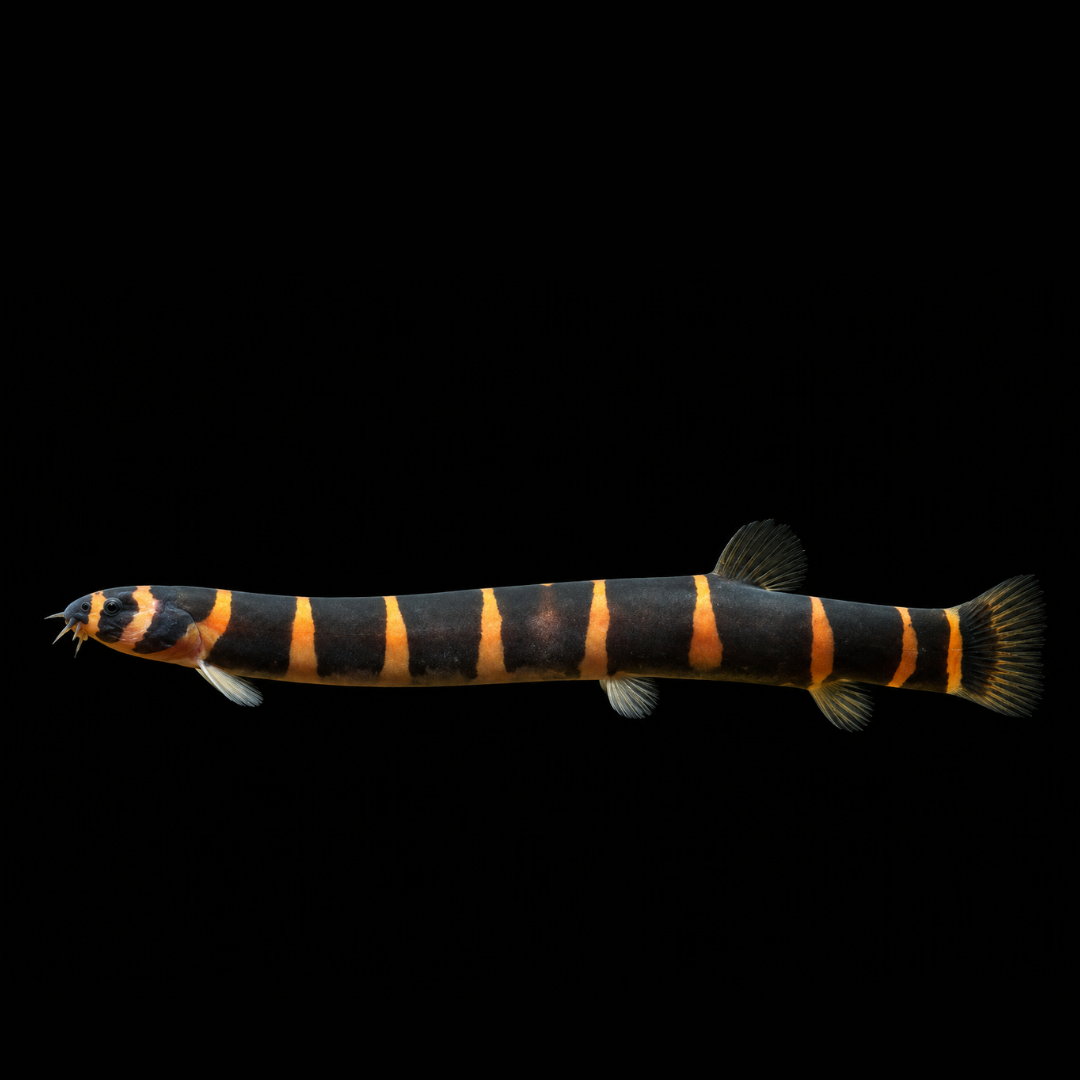
ジャイアントクーリーローチは、東南アジアのメコン川流域やタイ南東部に分布するとされるパンギオ属のドジョウです。現在の主要な生物データベースでは Pangio myersi が有効名として扱われ、オレンジ色の地色に幅広く整った黒色バンドを持つ種として知られます。昼間は流木や落ち葉、細かな底砂の中に潜むことも多い一方、落ち着いた環境と十分な同種の仲間がそろうと、底層をゆっくり探る愛らしい姿を見せてくれます。温和で混泳向きですが、細かな底砂、隠れ家、飛び出し対策、フィルター吸い込み対策を丁寧に整えることで、本来の落ち着きと長期飼育のしやすさを引き出せます。 The Giant Kuhli Loach is a Pangio loach reported from the Mekong basin and southeastern Thailand. Major biodiversity databases currently treat Pangio myersi as a valid name, and the species is known for broad, regular black bands over an orange background. It may spend the daytime hidden among driftwood, leaf litter, or fine sand, yet in a calm aquarium with enough companions of its own kind, it often becomes a charming bottom-dweller that gently explores the substrate. It is peaceful and suitable for community aquariums, but long-term success depends on fine rounded sand, secure hiding places, a tight lid, and protection against filter-intake accidents.
基本情報 / Basic Information
| 学名 / Scientific Name | Pangio myersi (Harry, 1949) |
|---|---|
| 通称 / Common Name | ジャイアントクーリーローチ、マイヤーズクーリーローチ、パンギオ・マイヤーズGiant Kuhli Loach, Myers’ Loach, Myers’ Kuhli Loach |
| 分類 / Family | コイ目 ドジョウ科 パンギオ属Order Cypriniformes, family Cobitidae, genus Pangio |
| 英名 / English Name | Giant Kuhli Loach, Myers’ Loach, Myers’ Kuhli Loach |
| 分布 / Distribution | 東南アジアのメコン川流域およびタイ南東部。低地の小川や泥炭湿地など、流れが緩やかで落ち葉や植物の陰が多い水域に見られるとされています。Southeast Asia, mainly the Mekong basin and southeastern Thailand. It is reported from lowland streams and peat habitats, especially calm waters with leaf litter, vegetation, and shaded margins. |
| 最大体長 / Max Size | 約10cm。公開データベースでは標準体長10.0cmが最大値として示されます。全長だけでなく体の太さと体高にボリュームが出るため、同程度の長さのクーリーローチより存在感があります。About 10 cm. Public databases list a maximum of 10.0 cm standard length. Its impressive appearance comes not only from length, but also from its thicker and deeper body compared with many other kuhli-type loaches. |
| 寿命 / Lifespan | 飼育下では5〜10年ほどが目安として語られますが、本種単独の寿命データは限られます。安定した水質、細かな底砂、十分な隠れ家、落ち着いた混泳環境が整えば、長期飼育を目指しやすい魚です。In aquariums, 5 to 10 years is often used as a practical guide, although species-specific lifespan data are limited. Stable water, fine sand, ample cover, and peaceful tank mates make long-term care much more realistic. |
飼育環境 / Aquarium Environment
| 水槽サイズ / Tank Size | 少数飼育でも60cm規格水槽、約57〜65L以上を目安にします。同種を5〜6匹以上でゆったり飼うなら、60cmワイド水槽、約100L前後、または90cm規格水槽、約160〜180L前後がより安心です。底面積が広いほど行動範囲と隠れ家を確保しやすくなります。A 60 cm standard aquarium of roughly 57 to 65 L or larger is a practical minimum for a small group. For a relaxed group of five to six or more, a 60 cm wide tank of around 100 L or a 90 cm standard tank of roughly 160 to 180 L is preferable. More floor area makes it easier to provide feeding space and hiding places. |
|---|---|
| 水温 / Temperature | 24〜28℃を目安にし、25〜26℃前後で安定させると管理しやすいです。日本の冬はヒーターが必須で、夏は30℃を大きく超えないよう冷却ファンや水槽用クーラーの使用を検討します。 Aim for 24 to 28°C, with around 25 to 26°C being easy to manage. A heater is necessary during Japanese winters, while fans or an aquarium chiller may be needed in summer to prevent temperatures from rising well above 30°C. |
| 水質 / Water Quality | 弱酸性〜中性の軟水を基本に考えます。目安はpH5.5〜7.5、GH1〜10程度ですが、数値を追い込みすぎるより急変を避けることが重要です。日本の一般的な水道水でも、カルキ抜きと温度合わせを丁寧に行えば飼育できます。流木、マジックリーフ、ヤシャブシの実などで軽くブラックウォーター寄りにすると、落ち着きやすく体色も引き立ちます。Use soft, slightly acidic to neutral water as a basic target. Roughly pH 5.5 to 7.5 and GH 1 to 10 are useful guides, but avoiding sudden changes is more important than forcing exact numbers. Dechlorinated Japanese tap water is usually suitable when temperature and water changes are managed carefully. Driftwood, Indian almond leaves, and alder cones can create a mild blackwater effect that helps the fish feel secure and enhances its coloration. |
| レイアウト / Layout | 角のない細かな砂を3〜5cmほど敷き、流木、丸みのある石、落ち葉、土管、シェルターで複数の隠れ家を作ります。田砂、ボトムサンド、水作の川砂など、口髭や体表を傷つけにくい底砂が向いています。クリプトコリネ、ミクロソリウム、アヌビアスなどの陰性水草とも相性がよく、薄暗い場所を残すと安心して行動します。Use 3 to 5 cm of fine, rounded sand and provide multiple hiding places with driftwood, smooth stones, leaf litter, caves, and shelters. Fine sands used for loaches and corydoras are ideal because they are gentle on the barbels and skin. Shade-tolerant plants such as Cryptocoryne, Microsorum, and Anubias work well, especially when dim areas are left available. |
| 注意点 / Precautions | 飛び出し、フィルターへの侵入、ヒーターカバーの隙間への入り込みに注意します。フタは隙間なく設置し、吸水口にはストレーナースポンジを付け、安全性の高いヒーターを選びます。目の下には鋭い眼下棘があるため、移動時は網ではなくプラケースやカップで水ごとすくうと、魚体への負担を抑えられます。Watch carefully for jumping, entry into filter intakes, and accidents involving gaps in heater covers. Use a tight lid, fit filter intakes with sponge prefilters, and choose a safer heater design. Because the fish has sharp sub-ocular spines beneath the eyes, moving it in a cup or plastic container with water is safer than using a net. |
餌と給餌 / Feeding
| 餌の種類 / Diet | 雑食性ですが、底砂の中の小型底生生物を探す微小捕食者としての性質が強く、動物質を含む餌を好みます。沈下性タブレット、コリドラス用フード、エビ用ペレット、アルジーウェーハ、小粒の沈下性ペレットを主食にし、冷凍アカムシ、イトミミズ、ブラインシュリンプ、ミジンコなどを補助的に与えるとよいです。It is omnivorous, but it strongly behaves like a micro-predator that searches the substrate for small benthic animals, so it appreciates animal-based foods. Sinking tablets, corydoras foods, shrimp pellets, algae wafers, and small sinking pellets make good staples, while frozen bloodworms, tubifex, brine shrimp, and daphnia are useful supplements. |
|---|---|
| 給餌のポイント / Feeding Tips | 他魚の食べ残しだけに頼らず、本種の分を意識して沈下性の餌を落とします。夜行性が強いため、照明が消える直前または消灯後に少量を与えると、競争に負けにくくなります。痩せやすい個体もいるため、腹部が極端にへこんでいないか、群れの全個体が餌にありつけているかを観察します。Do not rely only on leftovers from other fish; provide sinking food specifically for this species. Because it is strongly nocturnal, feeding shortly before or after lights-out helps prevent it from losing out to faster tank mates. Watch for sunken bellies and make sure every individual in the group is getting food. |
性格と混泳 / Temperament and Tank Mates
| 性格 / Temperament | 非常に温和で臆病です。他魚を攻撃することはほとんどなく、底層を静かに探るタイプの魚です。同種同士で寄り添うように隠れる姿が見られ、単独よりも5〜6匹以上、可能であれば8匹以上で飼うと安心して前に出やすくなります。It is very peaceful and shy, rarely bothering other fish. It quietly explores the bottom rather than behaving aggressively. Individuals often rest together with their own kind, so a group of five to six or more, preferably eight or more, helps them feel secure and become more visible. |
|---|---|
| 混泳の相性 / Compatibility | ネオンテトラ、グリーンネオンテトラ、ラスボラ類、ハニーグーラミィ、オトシンクルス、温和なコリドラスなど、穏やかで口に入らないサイズの魚と相性がよいです。ヤマトヌマエビや成長したチェリーシュリンプとはおおむね混泳できますが、稚エビは食べられる可能性があります。オスカーなどの大型シクリッド、気性の荒いバーブ類、底層魚をしつこく追う魚とは避けます。Good tank mates include peaceful fish that are too large to be eaten, such as neon tetras, green neon tetras, rasboras, honey gouramis, otocinclus, and gentle corydoras. Amano shrimp and adult cherry shrimp are usually suitable, but tiny shrimp fry may be eaten. Avoid large cichlids such as oscars, aggressive barbs, and fish that harass bottom dwellers. |
病気と対策 / Diseases and Prevention
| かかりやすい病気 / Common Diseases | 白点病、水温急変による体調不良、粗い底砂による口髭や体表の傷、そこから起こる細菌感染に注意します。輸入直後や痩せた個体では、内部寄生虫や餌付き不良が疑われることもあります。体表の鱗は小さく粘液層への依存が大きいため、薬品や塩分への反応が強く出る場合があります。Watch for ich, stress caused by temperature swings, injuries to the barbels or skin from rough substrate, and secondary bacterial infections. Newly imported or very thin individuals may also suffer from internal parasites or poor feeding response. Because the body has tiny scales and relies heavily on its mucus layer, it can be sensitive to medications and salt. |
|---|---|
| 対策と予防 / Prevention | 急な温度変化を避け、底砂を清潔に保ち、細かく丸い砂を使うことが最も大切です。導入時は可能なら隔離水槽で状態を見て、痩せ、白点、ヒレの溶け、体表の白濁を確認します。治療が必要な場合は、ドジョウ類に使える薬かどうかを確認し、製品表示に従って慎重に投薬します。銅を含む薬品や高濃度の塩分は負担になることがあるため、自己判断で強い処置をしないことが安全です。The best prevention is stable temperature, clean substrate, and fine rounded sand. Quarantine new fish if possible and check for thinness, white spots, fin damage, and cloudy skin. If treatment becomes necessary, confirm that the medication is safe for loaches and follow the product instructions carefully. Copper-based medications and strong salt treatments may be stressful, so avoid harsh treatment by guesswork. |
増やし方(繁殖) / Breeding
| 雌雄の判別 / Sexing | 成熟したメスは腹部がふっくらし、抱卵時には緑がかった卵が透けて見えることがあります。オスは比較的スリムで、成熟すると胸鰭の第1条がやや太く発達する傾向があるとされます。ただし、若魚や痩せた個体では判別が難しく、外見だけでの確実な判断はできません。Mature females become fuller in the belly, and greenish eggs may be visible through the body wall when gravid. Males are often described as slimmer and may develop a somewhat thicker first pectoral-fin ray when mature. However, sexing young or thin fish is difficult, and appearance alone is not always reliable. |
|---|---|
| 繁殖形態 / Reproduction | 卵生です。パンギオ属の近縁種や飼育例では、親が卵や稚魚を守らないばらまき型の産卵が知られます。本種でも同様の繁殖様式と考えられますが、家庭水槽での確実な再現例は多くありません。雨季の到来を思わせる水質変化、水温変化、豊富な水草や浮草の根などが産卵のきっかけになる可能性があります。It is oviparous. In related Pangio species and aquarium reports, spawning is generally described as egg scattering without parental care. This species is considered likely to follow a similar pattern, but reliably documented home-aquarium breeding is uncommon. Changes resembling the rainy season, such as shifts in water chemistry, temperature, and dense plants or floating-plant roots, may help trigger spawning. |
| 繁殖のポイント / Breeding Tips | 家庭水槽で狙って繁殖させる難易度は非常に高く、確立された一般向けの方法はほとんどありません。長期維持した成熟個体群、弱酸性寄りの軟水、豊富な隠れ家、密生した水草、質のよい冷凍餌や生餌でのコンディション作りが基本になります。偶発的に産卵した場合、親魚が卵を食べる可能性があるため、卵や親魚の隔離を検討します。稚魚には初期飼料としてインフゾリア、微細なブラインシュリンプ、マイクロワームなどが候補になります。Intentional breeding in home aquariums is extremely difficult, and no broadly reliable hobbyist method is established. A long-maintained mature group, soft water leaning slightly acidic, abundant cover, dense plants, and conditioning with high-quality frozen or live foods are the basic requirements. If spawning occurs, eggs may be eaten by the adults, so separating the eggs or adults should be considered. Fry may require tiny first foods such as infusoria, very small brine shrimp, and microworms. |
雑学と豆知識 / Trivia and Fun Facts
| 1. 名前に残る魚類学の歴史 / 1. A Name with Ichthyological History | 本種は1949年にロバート・リーズ・ハリーによって、Acanthophthalmus myersi として記載されました。現在は Pangio myersi として扱われ、Acanthophthalmus myersi はシノニムとして整理されています。種小名 myersi は、インド・マレー地域の魚類研究で知られるジョージ・スプラーグ・マイヤーズ博士への献名です。水槽の底で静かに暮らす小さな魚の名前にも、記載当時の研究史と、その後の分類整理の歩みが刻まれています。This species was described in 1949 by Robert Rees Harry as Acanthophthalmus myersi. It is now treated as Pangio myersi, with Acanthophthalmus myersi placed as a synonym. The specific name myersi honors Dr. George Sprague Myers, an ichthyologist known for work on Indo-Malayan fishes. Even the name of this quiet bottom-dweller carries a record of the species’ original description and later taxonomic revision. |
|---|---|
| 2. 「ジャイアント」は長さよりも迫力のこと / 2. Giant Means Presence More Than Length | ジャイアントクーリーローチという名前から、とても長くなる魚を想像するかもしれません。しかし本種の魅力は、単に全長が伸びることよりも、体の太さ、体高、そして幅広く四角い黒色バンドが生み出す重厚感にあります。公開されている形態情報でも、オレンジ色の地に8〜11本の幅広く規則的な黒帯を持つことが特徴として示されています。水槽の底をゆっくり横切る姿には、細長い魚でありながら不思議な存在感があります。The name Giant Kuhli Loach may suggest a fish that becomes dramatically longer than other kuhli loaches, but its appeal lies more in body depth, thickness, and broad quadrangular black bands. Published identification notes describe 8 to 11 broad, regular black bars over an orange background. When it slowly crosses the aquarium floor, it has a surprisingly strong presence for such an eel-like fish. |
| 3. 目の下にしまわれた小さな盾 / 3. A Tiny Shield Beneath the Eye | 普段はほとんど見えませんが、目の下には鋭い眼下棘があります。捕食者に飲み込まれそうになったとき、この棘が展開して相手の口の中に引っかかることで、防御器官として働くと考えられています。アクアリウムでは、この棘が網に絡むことがあります。クーリーローチの仲間をすくうときにプラケースを使うという習慣は、単なる慎重さではなく、彼らの体の仕組みに寄り添った扱い方です。A sharp sub-ocular spine lies beneath the eye, although it is usually hidden. When a predator attempts to swallow the fish, the spine can be deployed and may catch inside the predator’s mouth, acting as a defensive device. In aquariums, this same spine can become tangled in nets. Using a plastic container instead of a net is not just cautious handling; it is handling that respects the fish’s anatomy. |
| 4. 水面への急浮上は腸呼吸のサイン / 4. A Sudden Dash to the Surface | パンギオ属では、補助的に空気を利用できる性質が知られています。低酸素になりやすい湿地や落ち葉の多い水域に暮らす魚にとって、水面へ上がって空気を取り込む行動は重要な適応の一つです。水槽内で突然水面へ走るように泳ぎ上がる姿は、驚きだけでなく、この生理的な行動と関係していることがあります。ただし、群れ全体が頻繁に水面へ上がる場合は、溶存酸素不足や水質悪化の合図かもしれません。エアレーション、ろ過、水温、底床の汚れを見直すきっかけになります。The genus Pangio is known to include facultative air-breathing ability. For fish living in wetlands and leaf-litter habitats where oxygen can become low, surfacing to take in air is an important adaptation. A sudden dash to the surface may therefore be related not only to fright, but also to normal physiology. However, if the whole group repeatedly rushes to the surface, it may indicate low oxygen or poor water quality, and aeration, filtration, temperature, and substrate cleanliness should be checked. |
| 5. ブラックウォーターは背景ではなく暮らしの一部 / 5. Blackwater Is Part of Its Way of Life | 野生下の本種は、低地の小川や泥炭湿地、落ち葉が厚く積もった薄暗い水域と深く結びついています。落ち葉や倒木から溶け出すタンニンや有機酸は水を茶色く染め、光をやわらげます。水槽では極端な強酸性を再現する必要はありませんが、流木やマジックリーフを使って少しだけ自然の気配を取り入れると、隠れてばかりの個体が落ち着き、バンド模様のコントラストも美しく見えやすくなります。大切なのは数値を急に動かすことではなく、薄暗さ、隠れ家、清潔な底床を安定して保つことです。In nature, this species is closely tied to lowland streams, peat areas, and dim waters rich in leaf litter. Tannins and organic acids released from leaves and wood stain the water brown and soften the light. There is no need to recreate extremely acidic water in the aquarium, but a gentle blackwater touch from driftwood and Indian almond leaves can help shy fish settle and make the banded pattern appear richer. The key is not to shift water values abruptly, but to keep dimness, cover, and a clean substrate stable. |
| 6. 小さな底層魚から見えるメコンの風景 / 6. A Small Fish Connected to the Mekong Landscape | ジャイアントクーリーローチは、現時点では低懸念として扱われており、直ちに絶滅が差し迫った魚とはされていません。それでも、メコン流域や東南アジアの湿地環境は、開発、土地利用の変化、水質悪化などの影響を受けやすい場所です。水槽の中で砂をくぐり、落ち葉の間から顔を出す姿は、遠い地域の水辺が持つ複雑さをそっと思い出させてくれます。長く大切に飼うことは、単に珍しい魚を所有することではなく、その背景にある湿地の生態系へ関心を向けるきっかけにもなります。The Giant Kuhli Loach is currently treated as Least Concern, so it is not considered to be facing immediate extinction. Even so, the Mekong basin and Southeast Asian wetland habitats are vulnerable to development, land-use change, and water-quality degradation. When it slips through sand or peeks out from leaf litter in an aquarium, it quietly evokes the complexity of distant waterside habitats. Keeping it carefully over the long term is not only about owning an unusual fish; it can also become a doorway to caring about the wetland ecosystems behind it. |
まとめ / Conclusion
ジャイアントクーリーローチは、幅広く整った黒色バンドとふっくらした体つきで、底層に静かな存在感を添えてくれる魚です。性格は穏やかで混泳しやすい一方、安心して暮らすには、細かな底砂、豊富な隠れ家、複数匹での飼育、飛び出しや吸い込み事故への対策が欠かせません。 The Giant Kuhli Loach brings a quiet but distinctive presence to the bottom of the aquarium with its broad regular black bands and robust body. It is peaceful and well suited to community tanks, but it needs fine sand, abundant cover, a group of its own kind, and careful protection against jumping and filter-intake accidents.
落ち葉の下を思わせる薄暗いレイアウトの中で、仲間と寄り添いながら砂を探る姿には、派手な遊泳魚とは違う深い魅力があります。時間をかけて環境になじんだ個体ほど、ふとした瞬間に自然な行動を見せるようになり、水槽の底に小さな東南アジアの湿地の気配を運んでくれます。 In a dim layout reminiscent of leaf-litter habitats, its habit of searching the sand beside its companions offers a quieter kind of beauty than flashy midwater fish. As individuals settle over time, they gradually reveal natural behavior in small moments, bringing a subtle trace of Southeast Asian wetlands to the aquarium floor.

気になる道具や飼い方を見つけてみませんか?
 アイのアクアグッズ案内水槽の流木の選び方|枝・マングローブ・アク抜きとおすすめ商品水槽に小さな森を作る流木。枝流木やマングローブという名前の違いから、魚の隠れ家、水草の取り付け、浮く・水が茶色くなるときの準備まで、アイとコタロウが商品とともに案内します。記事はコチラ →
 アイのアクアグッズ案内水槽ライトの選び方|魚の見え方・水草・海水で選ぶおすすめ照明道具の特徴や使い方、選ぶときのポイントをアイが紹介します。記事はコチラ →
 アイのアクアグッズ案内ラスボラ・ボララスの群泳を楽しむ飼育用品|水槽・ろ過・ヒーター・餌・水草道具の特徴や使い方、選ぶときのポイントをアイが紹介します。記事はコチラ →
 アイのアクアグッズ案内水草トリミングの道具とやり方|ハサミ・ピンセットを水草に合わせて選ぼう伸びすぎた水草は切っていい? 有茎草の差し戻し、前景草の絨毯、流木のモスを整える場面から、水草用ハサミ・ピンセット・ゴミ取りネットの選び方と片付けを紹介します。記事はコチラ →
さまざまな飼育テーマをご紹介。リンク先の記事には広告・商品紹介が含まれます。
案内・紹介記事一覧へ →分布マップ
ジャイアントクーリーローチは、東南アジアのメコン川流域およびタイ南東部に分布するとされています。この地図では、分布イメージを把握しやすいように概略代表地点と広域イメージを表示しています。
注記:この地図は記事内の「分布」欄をもとにした概略プロットです。実際の採集地点や厳密な生息範囲を示すものではありません。
参考文献・主要資料
この記事では、分類、分布、生息環境、飼育条件、繁殖、病気や注意点の根拠として、分類データベース、魚類学の文献、獣医学・水産学系の資料を中心に参照しました。店舗、通販ページ、個人ブログ、まとめサイトは参考文献から除外しています。
-
Fricke, R., Eschmeyer, W. N. & Van der Laan, R. eds. Eschmeyer's Catalog of Fishes: Pangio myersi.
California Academy of Sciences. 学名の有効性、原記載名 Acanthophthalmus myersi、記載者、模式産地、現在の分類上の扱い、東南アジア・メコン川流域を中心とする分布確認に使用。
https://researcharchive.calacademy.org/research/ichthyology/catalog/fishcatget.asp?spid=33361 -
GBIF Backbone Taxonomy. Pangio myersi (Harry, 1949).
GBIF. コイ目、ドジョウ科、パンギオ属という分類階層、および Acanthophthalmus myersi をシノニムとして扱う点の確認に使用。
https://www.gbif.org/species/2367949 -
Froese, R. & Pauly, D. eds. FishBase: Pangio myersi.
FishBase. 分布、淡水・底生性、最大標準体長10.0cm、8〜11本の幅広く規則的な黒帯、低地の小川や泥炭湿地に見られる点、パンギオ属における補助的空気呼吸、IUCN低懸念評価、観賞魚としての利用状況の確認に使用。
https://fishbase.se/summary/Pangio-myersi -
Kottelat, M. 2012. Conspectus cobitidum: an inventory of the loaches of the world (Teleostei: Cypriniformes: Cobitoidei).
The Raffles Bulletin of Zoology, Supplement 26: 1-199. ドジョウ上科全体の分類・命名整理、および Pangio myersi と原記載情報の確認に使用。
https://lkcnhm.nus.edu.sg/app/uploads/2017/06/Conspectus_cobitidum.pdf -
Kottelat, M. 2013. The fishes of the inland waters of Southeast Asia: a catalogue and core bibliography of the fishes known to occur in freshwaters, mangroves and estuaries.
The Raffles Bulletin of Zoology, Supplement 27: 1-663. 東南アジア内陸水域の魚類相、パンギオ属の掲載、Pangio myersi の原記載名と模式産地の確認に使用。
https://lkcnhm.nus.edu.sg/app/uploads/2017/04/rbz_S27.pdf -
Kottelat, M. & Lim, K. K. P. 1993. A review of the eel-loaches of the genus Pangio (Teleostei: Cobitidae) from the Malay Peninsula, with descriptions of six new species.
Raffles Bulletin of Zoology 41(2): 203-249. パンギオ属の形態比較、種群整理、クーリーローチ類の同定上の背景を支える資料として使用。
https://lkcnhm.nus.edu.sg/rbz/a-review-of-the-eel-loaches-of-the-genus-pangio-teleostei-cobitidae-from-the-malay-peninsula-with-descriptions-of-six-new-species/ -
Bohlen, J., Šlechtová, V., Tan, H. H. & Britz, R. 2011. Phylogeny of the Southeast Asian freshwater fish genus Pangio (Cypriniformes; Cobitidae).
Molecular Phylogenetics and Evolution 61(3): 854-865. パンギオ属の分子系統、主要系統群、未記載種を含む可能性がある多様性の説明を支える資料として使用。
https://doi.org/10.1016/j.ympev.2011.08.003 -
MSD Veterinary Manual. Parasitic Diseases of Fish.
MSD/Merck Veterinary Manual. 白点病の原因となる Ichthyophthirius multifiliis、淡水魚全般への感染性、網などを介した水平伝播の説明を支える資料として使用。
https://www.msdvetmanual.com/exotic-and-laboratory-animals/aquarium-fish/parasitic-diseases-of-fish -
Francis-Floyd, R. & Floyd, M. R. Ichthyophthirius multifiliis (White Spot) Infections in Fish.
University of Florida IFAS Extension, FA006. 白点病の生活環、温度による進行速度の違い、治療を継続する必要性、二次的な細菌感染への注意を支える資料として使用。
https://ask.ifas.ufl.edu/publication/FA006 -
Watson, C. & Yanong, R. P. E. Use of Copper in Freshwater Aquaculture and Farm Ponds.
University of Florida IFAS Extension, FA008. 銅系薬剤を扱う際に水のアルカリ度や水質条件を確認すべきこと、低アルカリ度では魚へのリスクが高くなることの補足資料として使用。ドジョウ類専用の薬浴資料ではないため、記事内では「製品表示に従い慎重に扱う」という注意喚起の根拠に限定。
https://ask.ifas.ufl.edu/publication/FA008
補足:家庭水槽での繁殖方法、寿命、水槽サイズ、同種の飼育数については、本種単独の研究データが限られています。紹介した条件は、パンギオ属の生態、飼育経験、魚類の一般的な健康管理に基づく目安です。




コメント