

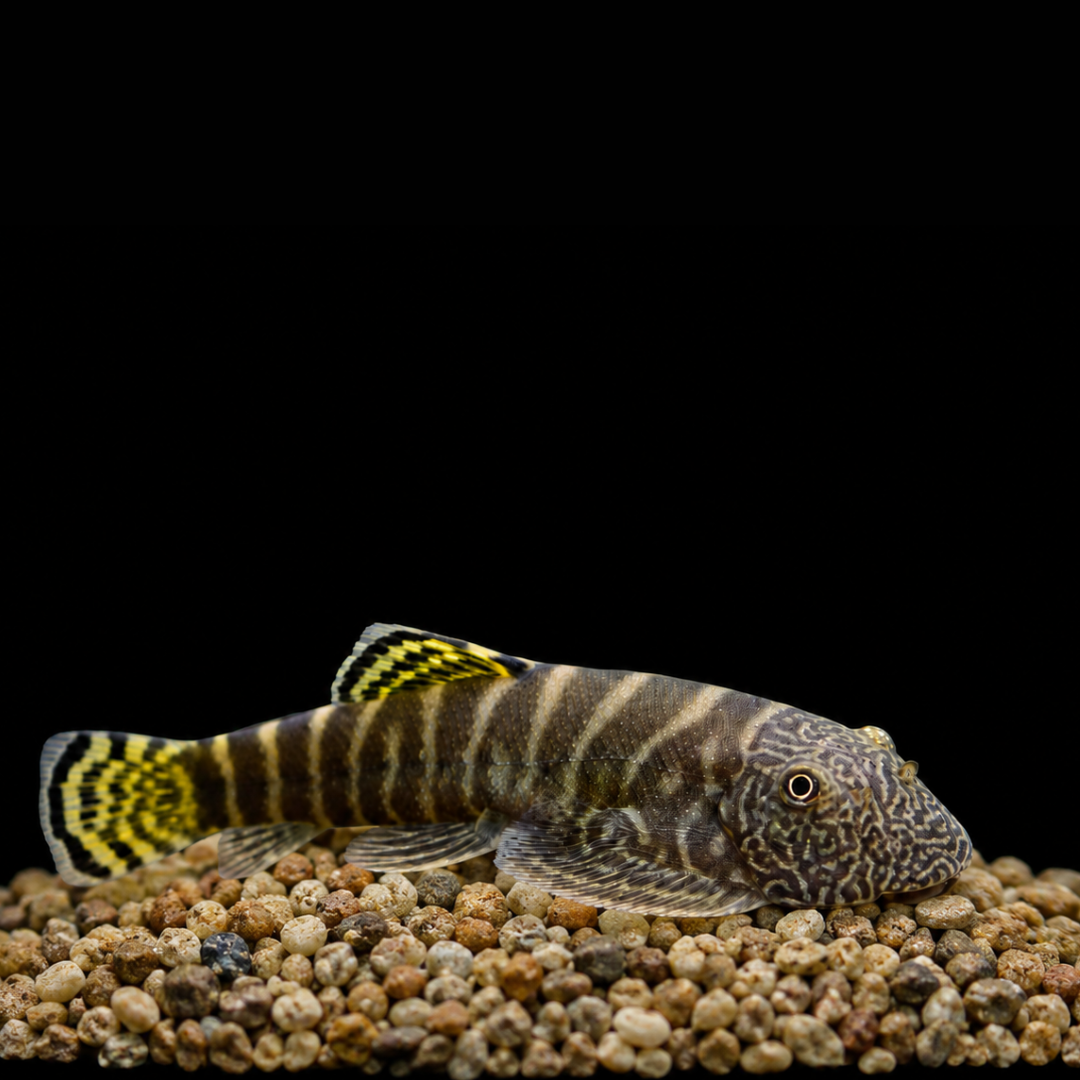
解説 / Description
タイガーストライプボルネオプレコは、ボルネオ島の限られた急流域から知られる小型のヒルストリームローチです。日本では「プレコ」と呼ばれますが、南米産プレコの仲間ではなく、分類上はコイ目のタニノボリ類に近い魚として扱われます。黒っぽい体に細いクリーム色の縞が入る姿はとても印象的で、岩肌にぴたりと張りつきながら薄い藻類やバイオフィルムを削り取る動きも見どころです。ただし、一般的な熱帯魚のような止水寄りの水槽には向きません。高い溶存酸素、よく動く水流、清浄な水、そして日本の夏でも上がりすぎない水温をそろえてこそ、本来の魅力を長く楽しめる魚です。 The Tiger Stripe Borneo Pleco is a small hillstream loach known from a restricted torrent habitat on Borneo. Although it is sold in Japan as a “pleco,” it is not a South American loricariid catfish; taxonomically, it belongs among cypriniform hillstream loaches. Its dark body with narrow cream-colored bars is striking, and its habit of clinging tightly to rock surfaces while grazing thin algae and biofilm is fascinating to watch. However, it is not suited to a calm, general tropical community setup. High dissolved oxygen, lively current, clean water, and temperatures that do not climb too high during Japanese summers are the conditions that allow its natural appeal to last.
基本情報 / Basic Information
| 学名 / Scientific Name | Gastromyzon zebrinus Tan, 2006 |
|---|---|
| 通称 / Common Name | タイガーストライプボルネオプレコ、ゼブラボルネオサッカー、ボルネオプレコ、ヒルストリームローチTiger Stripe Borneo Pleco, Zebra Borneo Sucker, Borneo Sucker, Hillstream Loach |
| 分類 / Family | コイ目 ガストロミゾン科 Gastromyzontidae。古い文献や一部の流通情報では、タニノボリ科 Balitoridae として扱われる場合もあります。Order Cypriniformes, family Gastromyzontidae. Older references and some trade information may treat it under Balitoridae. |
| 英名 / English Name | Zebra Borneo Sucker, Tiger Stripe Borneo Pleco, Borneo Sucker |
| 分布 / Distribution | インドネシア領ボルネオ島、西カリマンタン州ベンカヤン近郊のサンバス川上流域から知られています。広くボルネオ全域に分布する魚ではなく、既知の産地はかなり限られます。Known from the upper Sambas River basin near Bengkayang, West Kalimantan, Indonesian Borneo. It should not be treated as a fish distributed broadly across all of Borneo; its documented range is quite restricted. |
| 最大体長 / Max Size | 標準体長で約6.1cm。観賞魚として見かける個体は、全長3〜6cm前後の若魚から成魚が中心です。About 6.1 cm standard length. Specimens seen in the aquarium trade are usually juveniles to adults around 3–6 cm total length. |
| 寿命 / Lifespan | 本種単独の確実な寿命データは多くありません。適切な水温・高酸素・成熟した餌場を維持できた場合、飼育下ではおおむね3〜5年前後をひとつの目安として考えられます。Reliable species-specific lifespan data are limited. In aquaria, around 3–5 years can be used as a practical guideline when suitable temperature, high oxygen, and mature grazing surfaces are maintained. |
飼育環境 / Aquarium Environment
| 水槽サイズ / Tank Size | 底面積を重視し、最低でも60cm規格水槽、できれば75cm規格水槽以上が安心です。4〜5匹以上のグループで自然な行動を観察するなら、90cm規格水槽以上にすると水流と水質を安定させやすくなります。Prioritize floor space. A standard 60 cm tank is the practical minimum, while a 75 cm tank or larger is safer. For a natural group of four to five or more, a standard 90 cm tank or larger makes current and water quality easier to stabilize. |
|---|---|
| 水温 / Temperature | 20〜24℃を中心に管理します。本種は熱帯域の淡水魚として記録されていますが、急流性で高酸素環境に適応しているため、高水温が続く飼育は避けます。日本の夏は水温が上がりやすく、28℃以上が続く環境では酸欠や体力低下の危険が高まるため、水槽用クーラーの使用を強く推奨します。 Manage it mainly around 20–24°C. Although the species is recorded as a tropical freshwater fish, it is adapted to oxygen-rich torrents, so prolonged high temperatures should be avoided. During Japanese summers, aquarium temperatures can rise easily; if temperatures remain above 28°C, the risk of oxygen stress and weakening increases, so an aquarium chiller is strongly recommended. |
| 水質 / Water Quality | 弱酸性〜中性の清浄な水を好みます。目安はpH6.0〜7.5、GH2〜15程度です。数値だけを追うよりも、アンモニアと亜硝酸が検出されない成熟したろ過、定期的な換水、常時高い溶存酸素を維持することが重要です。It prefers clean, slightly acidic to neutral water. A practical range is pH 6.0–7.5 and around GH 2–15. Rather than chasing numbers alone, focus on mature filtration with no detectable ammonia or nitrite, regular water changes, and consistently high dissolved oxygen. |
| レイアウト / Layout | 角のない川砂や細かな砂利を敷き、平たい石や丸石を多めに配置して、コケやバイオフィルムが育つ採餌面を広く作ります。外部式フィルターに加えて水流ポンプを使い、岩の上を水がしっかり流れる渓流型のレイアウトにします。水草を使う場合は、強い流れでも扱いやすいアヌビアスやミクロソリウムなどの活着性水草が向いています。Use smooth river sand or fine rounded gravel, and place many flat stones and rounded cobbles to create broad grazing surfaces for algae and biofilm. In addition to an external filter, use a powerhead to build a stream-style layout where water moves strongly over the rocks. If plants are used, hardy attached plants such as Anubias and Microsorum are suitable for stronger current. |
| 注意点 / Precautions | 最重要ポイントは、高酸素・強めの水流・低めに安定した水温です。エアレーションは常時行い、水面をしっかり動かします。新規立ち上げ直後の水槽やコケのない水槽では痩せやすいため、導入前にろ過と藻類の育成を十分に進めてください。また、ガラス面やパイプを伝って水面付近まで上がることがあるため、フタの隙間はできるだけなくします。The most important points are high oxygen, a fairly strong current, and a stable temperature on the cooler side. Run aeration continuously and keep the surface well agitated. Newly set up tanks or tanks without established algae can lead to weight loss, so mature the filtration and grow algae before introduction. This fish may climb near the water surface using glass or pipes, so cover gaps in the lid as much as possible. |
餌と給餌 / Feeding
| 餌の種類 / Diet | 主食は石の表面に育つバイオフィルム、珪藻、柔らかい緑藻です。飼育下では、スピルリナ入りの沈下性タブレット、コケ取り魚用フード、植物質の多いジェルフード、茹でたズッキーニやホウレンソウなどを補助的に与えます。冷凍赤虫やブラインシュリンプも食べることがありますが、動物性の餌は少量の補助にとどめます。Its main foods are biofilm, diatoms, and soft green algae growing on rock surfaces. In aquaria, supplement with spirulina-rich sinking tablets, algae-grazer foods, vegetable-rich gel foods, and blanched zucchini or spinach. It may also take frozen bloodworms or brine shrimp, but animal-based foods should be offered only in small supplemental amounts. |
|---|---|
| 給餌のポイント / Feeding Tips | 餌を一度にたくさん与えるより、常に削り取れる薄い藻類とバイオフィルムを維持することが大切です。輸入直後の個体は痩せていることが多いため、競争相手の少ない環境で、コケ付きの石や植物質の餌を切らさないようにします。屋外のバケツやプランターで日光を当ててコケ付きの石を作り、定期的に水槽内の石と交換する方法は、日本の家庭でも実践しやすい回復サポートになります。Rather than feeding large meals at once, maintain a constant supply of thin algae and biofilm that the fish can graze. Newly imported specimens are often thin, so provide algae-covered stones and plant-based foods in a low-competition environment. Growing algae-covered stones outdoors in a bucket or planter under sunlight and rotating them into the aquarium is a practical recovery-support method for home aquarists in Japan. |
性格と混泳 / Temperament and Tank Mates
| 性格 / Temperament | 基本的には温和で、他魚を追い回して傷つけるタイプではありません。同種間では良い餌場や落ち着く場所を巡って、相手の上に乗るような小競り合いを見せることがありますが、通常は大きなけがにつながるほど激しくはありません。単独よりも複数匹で飼うと、自然な位置取りや張り付き行動を観察しやすくなります。It is generally peaceful and does not chase or injure other fish. Among its own kind, it may show small disputes over good grazing or resting spots, sometimes pressing over another individual, but these interactions are usually not damaging. Keeping several together makes it easier to observe natural positioning and clinging behavior. |
|---|---|
| 混泳の相性 / Compatibility | 混泳相手は、本種に合わせた低めの水温・強い水流・高酸素に耐えられる種類に限ります。アカヒレ、ダニオ類、遊泳力のある小型ラスボラ類、ボウズハゼ類などが候補になります。小型エビや石巻貝・フネアマ貝との同居もおおむね安全ですが、貝類を多く入れすぎると本種の餌となる薄い藻類まで減りすぎることがあるため、餌場の残り具合を観察してください。Tank mates should be limited to species that can tolerate the cooler, strongly flowing, oxygen-rich conditions chosen for this fish. White Cloud Mountain Minnows, danios, active small rasboras, and Stiphodon-type gobies are possible candidates. Small shrimps and nerite-type snails are generally safe, but too many snails can reduce the thin algae layer this fish depends on, so watch the remaining grazing surfaces carefully. |
病気と対策 / Diseases and Prevention
| かかりやすい病気 / Common Diseases | 本種だけに特有の病気が広く知られているわけではありません。実際の飼育では、高水温や酸欠による衰弱、輸送後の痩せ、慢性的な餌不足、水質悪化や擦れ傷からの細菌性トラブルに注意します。白点病など一般的な淡水魚の病気にかかる可能性もありますが、発端として環境ストレスが関わることが多い魚です。No disease unique to this species is widely recognized in aquarium practice. The main concerns are weakening from high temperature or oxygen shortage, post-transport emaciation, chronic underfeeding, and bacterial problems following poor water quality or abrasions. It can also contract general freshwater fish diseases such as white spot, but environmental stress is often the trigger. |
|---|---|
| 対策と予防 / Prevention | 予防の基本は、冷涼寄りで酸素の多い清浄な水を安定させることです。導入前に水槽を十分に成熟させ、アンモニアと亜硝酸が検出されない状態を確認します。新着個体は観察しやすい隔離水槽で休ませ、コケ付きの石と植物質の餌で体力を戻すと安全です。投薬が必要な場合も、まず酸素供給・水温・水質を整え、薬量は慎重に扱います。Prevention begins with stable, clean, oxygen-rich water on the cooler side. Before introduction, ensure the aquarium is fully mature and that ammonia and nitrite are undetectable. New arrivals are safer when rested in an easy-to-observe quarantine tank with algae-covered stones and plant-based foods. If medication becomes necessary, first correct oxygen, temperature, and water quality, then dose carefully. |
増やし方(繁殖) / Breeding
| 雌雄の判別 / Sexing | 成熟したメスはオスよりも体幅が広く、上から見るとふっくらして見える傾向があります。ただし、栄養状態や個体差の影響が大きく、若い個体や痩せた個体では確実な判別は難しいです。Mature females tend to be broader and plumper than males when viewed from above. However, body condition and individual variation have a large effect, so reliable sexing is difficult in young or thin specimens. |
|---|---|
| 繁殖形態 / Reproduction | 本種について、家庭水槽で再現性の高い繁殖法はまだ一般化していません。近縁のヒルストリームローチ類の情報からは、親が卵や稚魚を守らない散卵型で、小さな卵が砂利や石の隙間に落ちるタイプと考えて扱うのが安全です。A highly repeatable home-aquarium breeding method for this species is not yet widely established. Based on information from related hillstream loaches, it is safest to treat it as an egg-scattering fish with no parental care, producing small eggs that fall among gravel or rock crevices. |
| 繁殖のポイント / Breeding Tips | 繁殖を狙う場合は、複数匹を長期飼育し、成熟した強水流水槽でよく太らせることが前提になります。植物質を中心に安定して与え、短期間だけ動物性の餌を補うことで抱卵を促す方法が候補になります。その後、冷たい清浄な水でやや大きめの換水を行い、雨季の始まりのような変化を与える方法が考えられます。卵や稚魚を確認できた場合は、同じ水質で水流を弱めた別容器を用意し、微細なバイオフィルムやインフゾリアを切らさないことが大きな課題になります。To attempt breeding, keep a group long term and condition them well in a mature high-flow aquarium. Stable vegetable-based feeding, with small amounts of animal-based food for a short period, may help females develop eggs. A somewhat larger water change with cooler, clean water may simulate the onset of the rainy season. If eggs or fry are observed, prepare a separate container with the same water quality but much gentler flow, and keep microscopic biofilm and infusoria continuously available. |
雑学と豆知識 / Trivia and Fun Facts
| 1. 名前に刻まれた「腹で吸う魚」 / 1. A name that points to a belly-sucking fish | 属名のGastromyzonは、腹部を意味する語と吸うことを意味する語に由来すると説明されています。まさにその名の通り、本種は胸ビレと腹ビレを大きく広げ、腹側全体で岩肌に密着するように暮らします。南米産プレコに似て見えるのは、近い仲間だからではなく、急流の中で流されずに生きるという同じ課題に対して、別々の魚たちが似た形へたどり着いたためです。水槽の石にぴたりと止まる姿には、収斂進化という大きな物語が小さく詰まっています。The genus name Gastromyzon is explained as referring to the belly and the act of sucking. True to that meaning, this fish spreads its pectoral and pelvic fins and lives pressed closely against rock surfaces using much of its underside. It resembles South American plecos not because they are close relatives, but because different fishes faced the same problem of holding position in fast water and arrived at similar shapes. Its quiet grip on an aquarium stone carries a small but vivid story of convergent evolution. |
|---|---|
| 2. 種小名zebrinusと縞模様 / 2. The species name zebrinus and its stripes | 種小名zebrinusは、縞模様を持つシマウマを思わせる体色にちなむ名前として説明されています。本種の識別では、黒い体に11〜13本の細いクリーム色の縞が入り、頭部には細かなクリーム色の斑点が散ることが重要な特徴です。観賞魚として見ても美しい模様ですが、分類学の世界では、よく似たボルネオ産タニノボリ類を見分けるための手がかりにもなります。The species name zebrinus is explained as referring to the zebra-like barred pattern. In identification, this species is characterized by a dark body with 11–13 narrow cream-colored bars and many fine cream spots on the head. The pattern is attractive in the aquarium, but in taxonomy it also provides clues for separating this fish from similar Bornean hillstream loaches. |
| 3. ボルネオ島の水系が育てた細かな多様性 / 3. Diversity shaped by Borneo’s river systems | Gastromyzon属はボルネオ島に固有のタニノボリ類で、現在の主要データベースでは36種が掲載されています。ボルネオ島の川は山地や流域ごとに細かく分かれ、似た姿の魚がそれぞれの水系で独自に分化してきました。かつて流通や趣味の世界で大まかにまとめられていた個体群も、研究が進むにつれて別種として整理されてきました。タイガーストライプボルネオプレコとして販売されるロットでも、近縁種や未同定に近い個体が混じる可能性はあり、ヒレの青や黄色を強調した流通名は単なる色変わりとは限りません。The genus Gastromyzon is endemic to Borneo, and major databases currently list 36 species. Borneo’s rivers are divided by mountains and drainage systems, allowing similar-looking fishes to diversify within their own watersheds. Populations once grouped broadly in the aquarium trade or hobby literature have gradually been separated by taxonomic work. Even in shipments sold as Tiger Stripe Borneo Plecos, related species or near-unidentified forms may be mixed in, and trade names emphasizing blue or yellow fins do not necessarily indicate mere color variants. |
| 4. 近危急種として見たい「小さな渓流の住人」 / 4. A small stream-dweller to view with conservation in mind | 本種はIUCNレッドリストで近危急種として評価されています。観賞魚としての流通量だけを見ていると珍しさを実感しにくいかもしれませんが、既知の分布はサンバス川上流域に限られます。日本で流通する個体は、現時点では野生採集由来が中心と考えるのが安全です。だからこそ、導入した一匹を長く大切に飼うことは、飼育者の楽しみであると同時に、無駄な消耗を減らすという意味でも大切です。This species is assessed as Near Threatened on the IUCN Red List. Its rarity may be hard to sense from occasional aquarium availability, but its documented range is limited to the upper Sambas River basin. At present, it is safest to assume that fish in the Japanese trade are mainly wild-caught. Keeping each individual carefully and for a long time is therefore not only rewarding for the aquarist, but also helps reduce unnecessary loss. |
| 5. 「コケ取り役」よりも「コケを育てて迎える魚」 / 5. More a fish to prepare algae for than a simple algae remover | 本種は藻類やバイオフィルムを食べますが、水槽内のコケを何でもきれいに片づける万能なお掃除役の魚ではありません。好むのは、石の表面に育つ薄い生物膜や柔らかい藻類です。硬い黒髭苔のようなコケを期待通りに食べてくれる魚ではなく、むしろ飼育者側が本種のために食べられるコケを維持する必要があります。コケを消したいから入れる魚ではなく、コケのある成熟した渓流環境を用意して迎える魚と考えると、飼育の方向性が分かりやすくなります。This species eats algae and biofilm, but it is not a universal clean-up fish that removes every kind of algae from an aquarium. It prefers thin biofilm and soft algae growing on rock surfaces. It should not be expected to reliably eat tough algae such as black beard algae; instead, the keeper needs to maintain edible algae for it. It is better understood not as a fish added to erase algae, but as a fish welcomed into a mature stream aquarium where suitable biofilm already exists. |
| 6. 日本の夏が最大の関門 / 6. Japanese summers are the greatest hurdle | タイガーストライプボルネオプレコの飼育で最も大きな壁になりやすいのは、珍しい餌や特別な薬ではなく、夏の水温と酸素管理です。水温が上がるほど水に溶け込める酸素は少なくなり、急流に適応した本種には大きな負担になります。室内がそれほど暑く感じられなくても、小型水槽では日中に水温が大きく上がることがあります。クーラー、強いエアレーション、水面を動かす水流はぜいたくな設備ではなく、本種を安心して迎えるための土台です。The biggest hurdle with the Tiger Stripe Borneo Pleco is often not a rare food or special medication, but summer temperature and oxygen management. As water warms, it holds less dissolved oxygen, placing heavy stress on a fish adapted to fast, oxygen-rich water. Even if a room does not feel extremely hot, a small aquarium can heat up sharply during the day. A chiller, strong aeration, and surface-moving current are not luxuries; they are the foundation for keeping this species safely. |
まとめ / Conclusion
タイガーストライプボルネオプレコは、縞模様の美しさだけでなく、急流に寄り添って生きる姿そのものに魅力がある魚です。石に張りつき、流れに向かい、少しずつバイオフィルムを削る日常の動きからは、小さな体に宿る渓流魚らしい力強さが伝わってきます。 The Tiger Stripe Borneo Pleco is attractive not only for its striped pattern, but also for the way it lives in close connection with fast water. As it clings to stones, faces the current, and slowly grazes biofilm, its small body reveals the quiet strength of a true torrent fish.
涼しく清らかな水、よく動く水面、コケの育った石をそろえて迎えると、本種は水槽の中に小さなボルネオの渓流を思わせる存在感を見せてくれます。手軽なコケ取り役としてではなく、環境ごと大切に整えて向き合う魚として接するほど、その控えめで奥深い魅力が毎日の観察の中で静かに深まっていきます。 When welcomed with cool clean water, an active surface, and algae-covered stones, this species brings the presence of a small Bornean stream into the aquarium. The more it is treated not as a casual algae remover but as a fish whose whole environment deserves careful preparation, the more its quiet and subtle appeal deepens through everyday observation.

気になる道具や飼い方を見つけてみませんか?
 アイのアクアグッズ案内水草の肥料の選び方|底床用・液肥・メネデールの使い分け道具の特徴や使い方、選ぶときのポイントをアイが紹介します。記事はコチラ →
 アイのアクアグッズ案内ダニオの仲間に合わせる飼育用品|ゼブラダニオから超小型種まで水槽・ろ過・餌を選ぶ道具の特徴や使い方、選ぶときのポイントをアイが紹介します。記事はコチラ →
 アイのアクアグッズ案内水槽用浄水器の選び方|水換えを楽にするタイプとROの違い道具の特徴や使い方、選ぶときのポイントをアイが紹介します。記事はコチラ →
 アイのアクアグッズ案内水草用ソイルの選び方|土・砂の違いとおすすめ商品道具の特徴や使い方、選ぶときのポイントをアイが紹介します。記事はコチラ →
さまざまな飼育テーマをご紹介。リンク先の記事には広告・商品紹介が含まれます。
案内・紹介記事一覧へ →分布マップ
タイガーストライプボルネオプレコは、インドネシア領ボルネオ島の西カリマンタン州、ベンカヤン近郊のサンバス川上流域から知られています。この地図では、分布イメージをつかむための概略代表地点を示しています。
Google Earthで開くこのプロットは、分布欄の記述をもとにした概略代表地点です。実際の採集地点や厳密な生息範囲を示すものではありません。
参考文献・根拠資料
分類、分布、生息環境、飼育条件、繁殖、病気や注意点の根拠として、原記載に近い資料、魚類学データベース、獣医・水質分野の専門資料を中心に選定しています。店舗販売ページ、通販ページ、個人ブログ、匿名性の高いまとめサイトは採用していません。飼育条件と繁殖については、Gastromyzon zebrinus単独の学術的飼育データが限られるため、種固有の分類情報と、ヒルストリームローチ類全般に共通する生理・水質管理の資料を組み合わせています。
-
Tan, H. H. 2006. The Borneo Suckers: Revision of the torrent loaches of Borneo (Balitoridae: Gastromyzon, Neogastromyzon).
Natural History Publications (Borneo), in association with the Raffles Museum of Biodiversity Research, Kota Kinabalu, vii + 245 pp.
原記載・形態識別・タイプ産地・ボルネオ産タニノボリ類の分類史を支える中心資料です。 -
Fricke, R., Eschmeyer, W. N. & Van der Laan, R. (eds.). Eschmeyer’s Catalog of Fishes: Gastromyzon zebrinus Tan 2006.
California Academy of Sciencesの該当ページを開く
有効学名、著者年、タイプ産地、標本情報、現行分類の確認に使用しています。 -
Froese, R. & Pauly, D. (eds.). 2026. FishBase: Gastromyzon zebrinus, Zebra Borneo sucker.
FishBaseの該当ページを開く
分類、学名の語源、淡水・底生性、上流サンバス川流域の分布、最大標準体長、IUCN評価、形態識別点の確認に使用しています。 -
Kottelat, M. 2013. The fishes of the inland waters of Southeast Asia: a catalogue and core bibliography of the fishes known to occur in freshwaters, mangroves and estuaries.
The Raffles Bulletin of Zoology, Supplement 27: 1–663.
Raffles Bulletin of ZoologyのPDFを開く
東南アジア内水面魚類の分類・命名・地域魚類相の整理を確認するための基礎資料です。 -
IUCN Red List. 2019. Gastromyzon zebrinus. The IUCN Red List of Threatened Species.
IUCN Red Listで種名検索を開く
保全状況を「近危急種」とする根拠資料です。FishBase上でも、IUCN Red List StatusとしてNear Threatened、評価日2019年1月11日、基準B1ab(iii)+2ab(iii)が示されています。 -
Seriously Fish. Gastromyzon zebrinus species profile.
Seriously Fishの該当ページを開く
水槽サイズ、水流、酸素要求、藻類・バイオフィルムを中心とする食性、混泳、繁殖情報が限られる点など、飼育実務の補助資料として使用しています。 -
Thoene, M. 2007. Hillstream Loaches – The Specialists at Life In The Fast Lane.
Loaches Onlineの専門記事を開く
急流性ローチ類の高酸素要求、強い水流、岩面採餌、低酸素に弱い性質など、飼育上の注意点を理解するための補助資料です。 -
U.S. Environmental Protection Agency. Dissolved Oxygen.
EPAのDissolved Oxygen解説を開く
高水温で水中の溶存酸素保持量が下がるという水質管理上の基本原理を支える資料です。夏季高温への注意、強いエアレーション、水面攪拌の必要性を説明する根拠になります。 -
Merck Veterinary Manual. Environmental Diseases of Aquatic Animals in Aquatic Systems; Routine Health Care of Fish.
水質由来の疾患解説を開く
魚類の隔離・健康管理解説を開く
低溶存酸素、高アンモニア、導入時の隔離、既存水槽への病原体持ち込み予防など、病気と注意点の記述を支える獣医系資料です。




コメント