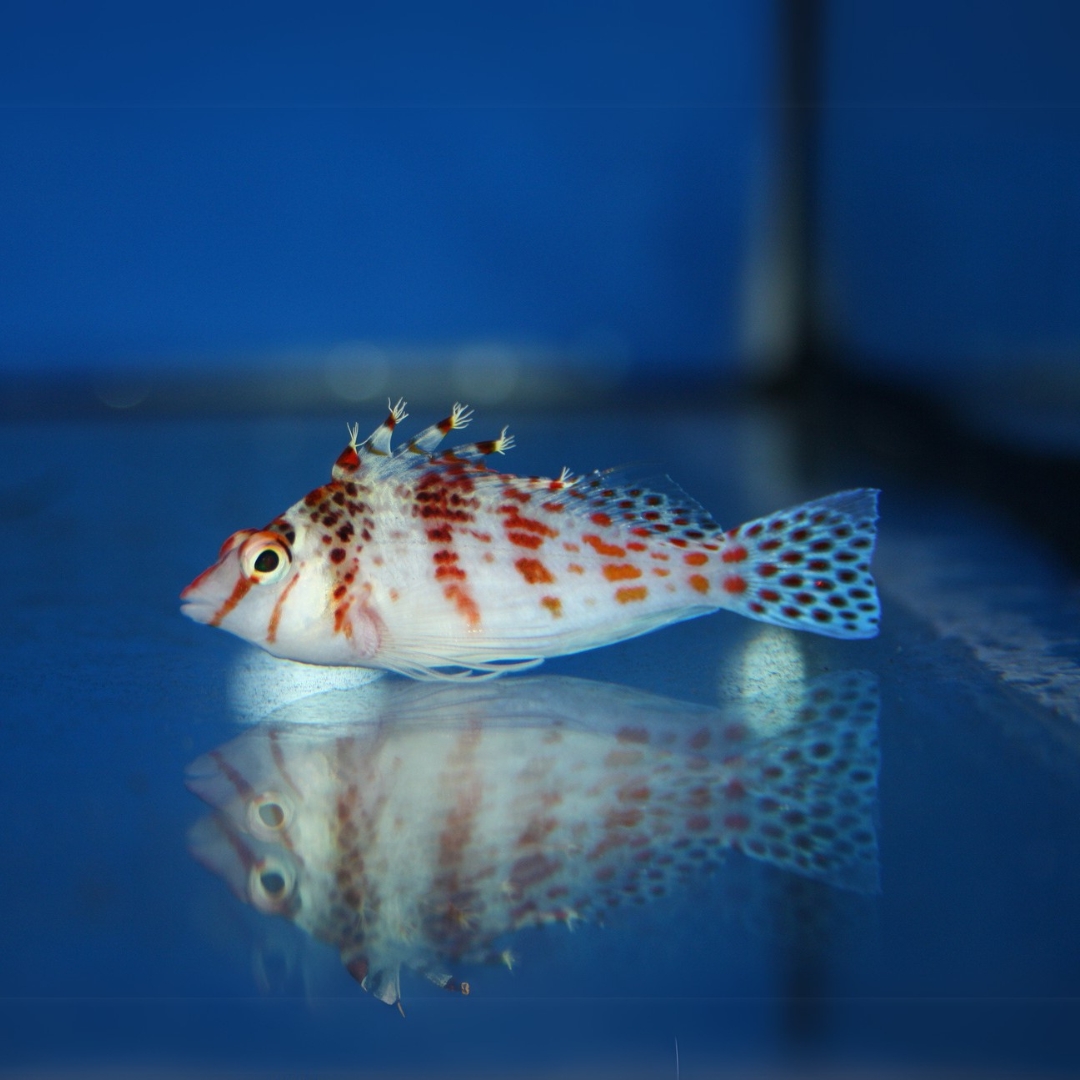
サラサゴンベは、白地に赤褐色の斑が入る更紗模様と、岩やサンゴの上にちょこんと止まる姿が魅力の小型海水魚です。ゴンベ科らしく発達した胸ビレを支えにして見晴らしのよい場所に定位し、近くを通る小動物を素早く狙う待ち伏せ型の肉食魚です。丈夫で餌付きやすく、サンゴをつつきにくいためリーフタンクにも向きますが、エビやごく小さな魚は捕食対象になり得るため、混泳相手の選定には注意が必要です。The Dwarf Hawkfish is a small marine fish admired for its whitish body with reddish-brown markings and its habit of perching neatly on rocks or coral. Like other hawkfishes, it uses thickened lower pectoral rays as supports and waits from elevated perches to ambush small prey. It is hardy, usually accepts prepared foods readily, and is generally suitable for reef aquariums because it does not typically nip corals. However, shrimp and very small fish may be treated as prey, so tank mate selection requires care.
条鰭綱、ゴンベ科、オキゴンベ属。目の扱いは資料により異なり、FishBaseなどではセントラルキフォルメス目、Fishes of Australiaなどではスズキ目として扱われています。Class Actinopterygii, family Cirrhitidae, genus Cirrhitichthys. The order differs among references: FishBase treats it under Centrarchiformes, while sources such as Fishes of Australia retain Perciformes.
英名 / English Name
Dwarf Hawkfish
分布 / Distribution
インド太平洋。モルディブからサモア方面、北は琉球列島や日本周辺、南はグレートバリアリーフ南部やニューカレドニアにかけて記録されています。Indo-Pacific. Recorded from the Maldives eastward toward Samoa, north to the Ryukyu Islands and Japan, and south to the southern Great Barrier Reef and New Caledonia.
最大体長 / Max Size
全長約8cm。小型のホークフィッシュです。About 8 cm total length. It is a small hawkfish.
寿命 / Lifespan
本種単独の確実な寿命データは限られます。安定した海水環境では数年単位の長期飼育を目標にできます。Reliable species-specific lifespan data are limited. In stable marine aquarium conditions, keeping it for several years is a reasonable husbandry goal.
飼育環境 / Aquarium Environment
水槽サイズ / Tank Size
単独なら45cm規格水槽でも飼育可能ですが、水質の安定と混泳を考えるなら60cm規格水槽以上が扱いやすいです。遊泳距離よりも、岩組みの面積と止まり場の多さが重要です。A 45 cm standard tank can house a single specimen, but a 60 cm standard tank or larger is easier for stable water quality and community setups. Available perching surfaces and rockwork complexity matter more than long swimming space.
水温 / Temperature
24〜26℃を目安に安定させます。自然分布域の情報では24〜28℃程度の範囲が示されますが、飼育では急変を避けることが最優先です。Maintain around 24–26°C. Natural-range data indicate roughly 24–28°C, but in aquariums avoiding sudden swings is the priority.
水質 / Water Quality
海水魚標準の比重1.023〜1.025、pH8.1〜8.4を目安にします。ろ過はしっかり効かせ、可能であればプロテインスキマーを併用すると安定しやすくなります。Use standard marine conditions: specific gravity around 1.023–1.025 and pH 8.1–8.4. Strong biological filtration is important, and a protein skimmer helps keep the system stable.
レイアウト / Layout
ライブロックや人工ライブロックで高低差を作り、複数の見張り台を用意します。本種は水中を泳ぎ続けるより、岩やサンゴの上に止まって周囲を観察する時間が長いため、落ち着ける止まり場があるほど本来の行動を見せやすくなります。Create height and structure with live rock or artificial live rock, providing several lookout perches. This species spends more time watching from rocks or corals than continuously swimming, so secure perches encourage natural behavior.
注意点 / Precautions
飛び出し事故を防ぐため、フタやメッシュカバーを使うと安心です。同種や近縁のゴンベ類とは縄張りが重なりやすく、小型水槽では争いが起きやすいため、基本は1水槽1匹で考えます。Use a lid or mesh cover to reduce jumping accidents. Conspecifics and closely related hawkfishes often compete for the same perches and territories, so one individual per home aquarium is the safest default.
餌と給餌 / Feeding
餌の種類 / Diet
肉食性です。人工飼料の小粒タイプ、冷凍ブラインシュリンプ、イサザアミ、ホワイトシュリンプなどを与えます。状態のよい個体は人工飼料にも比較的早く慣れることが多いです。Carnivorous. Offer small marine pellets or granules, frozen brine shrimp, mysid-type foods, and other meaty frozen foods. Healthy specimens often adapt to prepared foods fairly quickly.
給餌のポイント / Feeding Tips
食欲が強く、餌に向かって素早く飛び出します。混泳水槽では他の魚の餌を横取りしやすいため、複数箇所に分散して与えると全体に行き渡りやすくなります。拒食や飽きを防ぐため、人工飼料だけに偏らず、冷凍餌も組み合わせてローテーションします。It has a strong feeding response and darts quickly toward food. In community tanks it may steal food from slower fish, so feeding several spots helps distribute food more evenly. Rotate prepared and frozen foods to maintain interest and reduce the risk of picky feeding.
性格と混泳 / Temperament and Tank Mates
性格 / Temperament
普段は岩の上で落ち着いている時間が長く、飼育者を観察するような仕草も見せます。一方で、止まり場への縄張り意識と小動物への捕食本能ははっきりしています。温和そうに見えても、同じ生活圏を使う相手には強く出ることがあります。It often appears calm while perched on rocks and may seem to watch the aquarist. However, it has clear territorial instincts around perches and a strong predatory response toward small animals. Despite its gentle appearance, it can be assertive toward animals using the same space.
混泳の相性 / Compatibility
サンゴへの食害は基本的に見られず、リーフタンクとの相性は良好です。クマノミ類、スズメダイ類、ハナダイ類、小型ヤッコ、ベラ類など、同等以上の体格で遊泳層が異なる魚とは比較的合わせやすいです。一方、観賞用エビ、クリーナーシュリンプ、小型のカニ、極小ハゼなどは捕食される可能性があります。大型エビでも脱皮直後は特に危険なため、エビ類との長期混泳は避けるのが無難です。It is generally reef-safe with corals and works well in reef aquariums. It is usually compatible with similarly sized or larger fish that occupy different levels, such as clownfish, damselfish, anthias, small angelfish, and wrasses. Ornamental shrimp, cleaner shrimp, small crabs, and tiny gobies may be eaten. Even larger shrimp are especially vulnerable after molting, so long-term shrimp compatibility is not recommended.
病気と対策 / Diseases and Prevention
かかりやすい病気 / Common Diseases
比較的丈夫な魚ですが、導入直後のストレス、水温の急変、水質悪化、いじめによる消耗が重なると、海水魚の白点病などを発症することがあります。体表やヒレの白い点、呼吸の荒さ、体を岩や砂にこすりつける行動に注意します。It is generally hardy, but stress after introduction, sudden temperature changes, poor water quality, or bullying can lead to marine ich and other stress-related problems. Watch for white spots on the body or fins, rapid breathing, and rubbing against rocks or sand.
対策と予防 / Prevention
予防の基本は、水温、比重、pHを安定させ、過密を避け、導入時に丁寧な水合わせと観察期間を設けることです。治療が必要な場合は、サンゴや無脊椎動物のいない隔離水槽で行います。銅治療や低比重療法は有効な選択肢になることがありますが、薬剤感受性や同居生物への影響が大きいため、必ず治療用水槽で慎重に実施します。Prevention depends on stable temperature, salinity, and pH, avoiding overcrowding, and careful acclimation with an observation period. If treatment is needed, use a separate hospital tank without corals or invertebrates. Copper medication or hyposalinity may be options, but they must be used carefully in a dedicated treatment system because they can harm sensitive animals.
増やし方(繁殖) / Breeding
雌雄の判別 / Sexing
外見だけでの雌雄判別は難しい魚です。自然界では雌性先熟の性質を持ち、社会的な状況や体格差に応じてメスからオスへ変わることがあります。本種では、限られた条件下でオスからメスへ戻る双方向性転換も報告されています。Sexing by appearance is difficult. In nature it is protogynous, and a female may change to male depending on social conditions and body size. Bidirectional sex change, including male-to-female reversal under limited conditions, has also been reported for this species.
繁殖形態 / Reproduction
自然界ではハレム型の社会構造を作り、夜間に水中へ短く上昇して産卵する浮性卵産卵型です。野外観察では、1匹のオスが複数のメスを含む小さな群れを持つことが知られています。In the wild it forms haremic social groups and is a pelagic spawner, making short upward spawning ascents in the water column at night. Field observations show that a single male may dominate a small group of females.
繁殖のポイント / Breeding Tips
家庭水槽での繁殖は非常に難しい部類です。産卵行動を誘発するだけでなく、浮遊仔魚を育てるための専用水槽、微小な初期餌料、安定した水質、親魚やろ過への吸い込み対策が必要になります。一般的な飼育では、繁殖よりも健康な個体の長期維持を目標にするのが現実的です。Breeding in home aquariums is very difficult. Beyond inducing spawning, it requires dedicated larval systems, tiny first foods, stable water quality, and measures to keep larvae from being eaten or filtered out. For most aquarists, long-term maintenance of a healthy individual is the realistic goal.
雑学と豆知識 / Trivia and Fun Facts
1. 「更紗」と「ゴンベ」の名前 / 1. The name Sarasa-gonbe
和名の「サラサ」は、白地に赤褐色の斑が並ぶ体模様を染織品の更紗に重ねたものです。「ゴンベ」はゴンベ科魚類に共通する呼び名で、背ビレの棘の先端にある細かな糸状突起が、昔の子どもの髪型を連想させることに由来すると説明されることがあります。水槽の岩の上で背ビレを立てる姿を見ると、名前が単なる記号ではなく、観察から生まれた呼び名であることが感じられます。The Japanese name “sarasa” refers to the reddish-brown pattern on a pale body, reminiscent of patterned sarasa textiles. “Gonbe” is the Japanese group name for hawkfishes and is often explained as referring to the fine filaments at the tips of the dorsal spines, which reminded observers of an old children’s hairstyle. When the fish raises its dorsal fin while perched on a rock, the name feels rooted in careful observation rather than being just a label.
2. 学名の falco は「ハヤブサ」 / 2. The specific name falco means falcon
種小名の falco はラテン語で「ハヤブサ」や「タカ」を意味します。ホークフィッシュという英名が示すように、見晴らしのよい場所から獲物を見つけ、短距離を鋭く飛び出して捕える行動は、まさに小さな猛禽のようです。普段は動かず、必要な瞬間だけ一気に動くという省エネルギーな暮らし方が、この魚の魅力的な個性を作っています。The specific name falco comes from Latin and means falcon or hawk. As the English name “hawkfish” suggests, the fish spots prey from a vantage point and darts out over a short distance, much like a tiny raptor. Its habit of staying still until the exact moment to strike creates the distinctive personality aquarists enjoy.
3. 双方向性転換は「いつでも自由に変わる」という意味ではない / 3. Bidirectional sex change is conditional, not casual
サラサゴンベは、メスからオスへ変わる雌性先熟だけでなく、特定の社会状況ではオスからメスへ戻ることが報告された魚です。ただし、これは水槽内で簡単に観察できる現象ではなく、低密度の野外個体群や隣接個体との力関係など、条件がそろったときに起こる繁殖戦略として理解するのが適切です。「性を自由に入れ替える魚」というより、厳しい環境の中で繁殖機会を最大化するために、社会状況を反映して性が変化し得る魚と考えると正確です。The Dwarf Hawkfish is known not only for protogynous sex change from female to male, but also for reported male-to-female reversal under particular social conditions. This is not something easily observed in a home aquarium. It is better understood as a reproductive strategy seen when factors such as low population density and dominance relationships align. Rather than “changing sex freely,” the fish can adjust its sex in response to social circumstances that affect reproductive opportunity.
4. サンゴにはやさしく、エビには厳しい / 4. Gentle on corals, risky for shrimp
サラサゴンベはサンゴのポリプを食べる魚ではないため、リーフタンクでは扱いやすい存在です。その一方で、自然界では小型甲殻類を含む動物質の餌を狙う肉食魚です。水槽ではこの二面性が混泳事故につながります。サンゴの上に止まる姿は非常に自然で美しいのですが、同じ水槽にエビを入れると、観賞用であってもクリーナー役であっても、魚側から見れば「動く餌」に見えてしまう可能性があります。The species is reef-friendly because it does not feed on coral polyps. At the same time, it is a carnivore that naturally targets animal prey, including small crustaceans. In aquariums, this contrast can cause compatibility problems. Perching on corals looks natural and beautiful, but shrimp placed in the same tank may look like moving food from the fish’s perspective, regardless of the aquarist’s intention.
5. 保全状況と流通 / 5. Conservation status and aquarium trade
国際的なデータベースでは、サラサゴンベは観賞魚として商業的に扱われる種とされています。IUCNレッドリストでは低懸念と評価されていますが、これは「無限に採集してよい」という意味ではありません。状態のよい個体を選び、適切な水槽で長く飼うことは、アクアリストができる最も基本的な責任ある楽しみ方です。International databases note the species as commercially present in the aquarium trade. It is listed as Least Concern on the IUCN Red List, but that does not mean unlimited collection is harmless. Choosing a healthy specimen and keeping it well for the long term is one of the most basic responsible practices for aquarists.
まとめ / Conclusion
サラサゴンベは、小型で丈夫、餌付きやすく、サンゴ水槽にも合わせやすい魅力的な海水魚です。岩やサンゴの上で周囲を見渡す姿は独特で、泳ぎ回る魚とは違った「止まって観察する」楽しさを水槽にもたらしてくれます。The Dwarf Hawkfish is a small, hardy, usually easy-feeding marine fish that works well in many reef aquariums. Its habit of watching the surroundings from rocks or corals adds a different kind of appeal from constantly swimming fish.
一方で、見た目のかわいらしさに反して、捕食者としての性質はしっかり残っています。エビ類や極小魚との混泳を避け、止まり場の多い岩組みと安定した水質を用意すれば、サラサゴンベらしい行動を長く楽しめます。リーフタンクの小さな見張り役として、とても存在感のある一匹です。At the same time, its cute appearance should not hide its predatory nature. Avoid shrimp and very small fish, provide stable water quality and plenty of perches, and you can enjoy its characteristic behavior for a long time. It is a small but memorable lookout for a reef aquarium.
Kadota, T., Sakai, Y., Hashimoto, H. and Kuwamura, T. 2012. Reversed Sex Change in the Haremic Protogynous Hawkfish Cirrhitichthys falco in Natural Conditions. Ethology. 雌性先熟、ハレム構造、自然条件下での双方向性転換を慎重に記述するための主要な査読論文として使用。 https://onlinelibrary.wiley.com/doi/10.1111/j.1439-0310.2011.02005.x
Chiu, P.-S. and Leu, M.-Y. 2021. Captive spawning, early development and larviculture of the dwarf hawkfish, Cirrhitichthys falco (Randall, 1963) with experimental evaluation of the effects of temperature, salinity and initial prey on hatching success and first feeding. Aquaculture 542: 736866. 飼育下での産卵、初期発生、仔魚飼育、温度・塩分・初期餌料が繁殖に及ぼす影響を支える資料として使用。 https://doi.org/10.1016/j.aquaculture.2021.736866
Yanong, R.P.E. University of Florida IFAS Extension. Cryptocaryon irritans Infections (Marine White Spot Disease) in Fish. 海水魚の白点病、症状、生活環、銅治療・低比重などの管理上の注意を確認するために使用。 https://ask.ifas.ufl.edu/publication/FA164



 アイのアクアグッズ案内水合わせの道具とやり方|魚を迎える前にそろえたい容器・点滴キット・ネット買ってきた魚はすぐ水槽に入れていい? 水温合わせと水合わせの違いから、透明ケース・点滴キット・ネットの選び方、時間をかけすぎない注意点まで、アイとコタロウが紹介します。記事はコチラ →
 アイのアクアグッズ案内水草用ソイルの選び方|土・砂の違いとおすすめ商品道具の特徴や使い方、選ぶときのポイントをアイが紹介します。記事はコチラ →



コメント