


解説 / Description
グローライトテトラは、南米ガイアナのエセキボ川水系に由来するとされる小型カラシンです。半透明の体に、口先から尾びれの付け根までまっすぐ走るオレンジから赤色のラインが入り、落ち着いた照明の水槽では細い光の帯が群れの中を流れるように見えます。丈夫で温和なため日本国内でも入門魚として親しまれていますが、暗めの底床、穏やかな水流、複数匹での群泳、繁殖時の軟水管理などを意識すると、本種本来の魅力をより深く楽しめます。 The Glowlight Tetra is a small characin associated with the Essequibo River system in Guyana, South America. Its translucent body is marked by an orange to red stripe running from the snout to the base of the tail, and under subdued aquarium lighting the stripe can look like a narrow band of light moving through the shoal. It is hardy and peaceful, making it a familiar beginner fish in Japan, but its real appeal becomes clearer when dark substrate, gentle flow, group keeping, and soft-water breeding conditions are taken into account.
基本情報 / Basic Information
| 学名 / Scientific Name | Hemigrammus erythrozonus |
|---|---|
| 通称 / Common Name | グローライトテトラ、グローライトGlowlight Tetra |
| 分類 / Family | カラシン目、アセストロラムフス科、ヘミグラムス属。従来の観賞魚資料ではカラシン科として表記されることが多い魚ですが、近年の分子系統解析では、旧来の広いカラシン科を複数の科に再編し、本種を含むグループをAcestrorhamphidaeとして扱う体系が提案されています。流通名や古い書籍では、現在もカラシン科表記が見られます。Order Characiformes, family Acestrorhamphidae, genus Hemigrammus. Many aquarium references still list it under Characidae, but recent molecular phylogenetic work has proposed dividing the former broad Characidae into several families, with this group treated as Acestrorhamphidae. The older Characidae usage is still common in trade names and older books. |
| 英名 / English Name | Glowlight Tetra |
| 分布 / Distribution | 南米ガイアナのエセキボ川水系が主要な原産地として扱われます。古い流通情報や二次資料では周辺地域も含めて紹介されることがあり、分布範囲の記述には資料による違いがあります。自然下では、落ち葉や倒木が多く、水がタンニンで色づく穏やかな小河川や支流に見られるとされています。The Essequibo River system in Guyana is generally treated as the main native range. Some older trade or secondary sources include a broader surrounding area, so descriptions of its range vary between sources. In nature, it is associated with calm creeks and tributaries containing leaf litter, submerged wood, and tannin-stained water. |
| 最大体長 / Max Size | 一般的には約3〜4cm。資料によって差がありますが、観賞魚としては4cm前後を目安にすると扱いやすいです。Generally about 3 to 4 cm. Reported figures vary by source, but around 4 cm is a practical guideline for aquarium keeping. |
| 寿命 / Lifespan | 一般的には2〜4年ほど。良好な水質と低ストレスの環境では、3〜5年程度を目安に語られることもあります。Typically around 2 to 4 years. In good water quality and low-stress conditions, some aquarium references describe a range closer to 3 to 5 years. |
飼育環境 / Aquarium Environment
| 水槽サイズ / Tank Size | 少数なら30cmキューブ水槽でも飼育は可能ですが、群泳と安定した水質を考えると45cm規格水槽以上が扱いやすいです。横方向によく泳ぐため、理想は60cm規格水槽、約60L前後です。5〜6匹以上、できれば8〜10匹以上で飼うと落ち着きやすく、自然なまとまりも見られます。A 30 cm cube tank can work for a small group, but a standard 45 cm tank or larger is easier for stable water quality and shoaling. Because the fish swims actively in a horizontal direction, a standard 60 cm aquarium of about 60 L is ideal. Keep at least 5 to 6 individuals, and preferably 8 to 10 or more, for calmer behavior and a more natural shoal. |
|---|---|
| 水温 / Temperature | 24〜28℃前後が一般的な目安です。日常飼育では25〜27℃前後が安定しやすく、日本の冬はヒーター、夏は冷却ファンや水槽用クーラーで急変を避けると安心です。 Around 24 to 28°C is a common guideline. For everyday care, about 25 to 27°C is stable and suitable. In Japan, use a heater in winter and a cooling fan or aquarium chiller in summer to avoid sudden temperature swings. |
| 水質 / Water Quality | 弱酸性から中性の軟水を好みます。ブリード個体はpH6.0〜7.5程度の範囲に比較的よく適応し、日本の多くの地域の水道水でもカルキ抜きと温度合わせを行えば飼育しやすい魚です。繁殖やワイルド個体を意識する場合は、より軟水で、タンニンを含むブラックウォーター寄りの環境が向きます。It prefers soft, slightly acidic to neutral water. Captive-bred individuals usually adapt well to around pH 6.0 to 7.5 and are generally easy to keep in dechlorinated tap water in many parts of Japan. Breeding setups and wild-type care benefit from softer, more tannin-rich blackwater-like conditions. |
| レイアウト / Layout | 暗めのソイルや黒系の底砂、流木、マジックリーフ、ミクロソリウムやウィローモスなどの陰性水草がよく合います。明るすぎる白砂や強い照明では体色が淡く見えやすいため、浮草や流木で光を和らげ、木漏れ日のような落ち着いた環境を作ると赤いラインが映えます。Dark soil or blackish substrate, driftwood, Indian almond leaves, and low-light plants such as Java fern and moss suit this species well. Bright white sand and overly intense lighting can make the fish appear washed out, so floating plants and driftwood can soften the light and create a calm, dappled environment that enhances the red stripe. |
| 注意点 / Precautions | 強すぎる水流、急な水質変化、単独または少数すぎる飼育はストレスの原因になります。驚いたときに跳ねることがあるため、フタを用意すると安全です。小型魚としては丈夫ですが、硝酸塩の蓄積や汚れた底床には弱くなるため、週1回を目安に水量の4分の1から3分の1程度を換水すると状態を維持しやすくなります。Avoid excessive current, sudden water-quality changes, and keeping the species alone or in too small a group. A lid is recommended because startled fish may jump. Although hardy for a small fish, it can suffer when nitrate and debris build up, so changing about one quarter to one third of the water weekly helps maintain good condition. |
餌と給餌 / Feeding
| 餌の種類 / Diet | 小型カラシン用の細かいフレークフードやマイクロペレットを主食にできます。自然下では小さな無脊椎動物や植物質を含む有機物をついばむとされ、飼育下では雑食性として扱えます。状態を上げたいときは、冷凍アカムシ、孵化させたブラインシュリンプ、ミジンコなどを補助的に与えるとよいでしょう。赤みを保つにはカロテノイドを含む色揚げ飼料も役立ちます。Finely crushed flakes and micro pellets for small characins can be used as staple foods. In nature it is reported to feed on small invertebrates and some plant matter, and in aquariums it can be treated as an omnivore. Frozen bloodworms, newly hatched brine shrimp, and daphnia can be offered as supplementary foods. Color-enhancing foods containing carotenoids may help maintain the reddish stripe. |
|---|---|
| 給餌のポイント / Feeding Tips | 1日1〜2回、数分で食べ切れる量を与えます。口が小さいため、大粒の餌は指で砕いてから与えると食べやすくなります。食べ残しは水質悪化の原因になるため、特に小型水槽では少量をこまめに与える方法が安全です。Feed once or twice a day, offering only what the fish can finish within a few minutes. Because the mouth is small, larger foods should be crushed before feeding. Uneaten food quickly worsens water quality, so small, controlled portions are especially important in smaller aquariums. |
性格と混泳 / Temperament and Tank Mates
| 性格 / Temperament | 非常に温和で、同種同士で群れを作って中層を泳ぐ魚です。攻撃性はほとんどありませんが、臆病な面があるため、十分な匹数と隠れ家、落ち着いた照明があると安心して泳ぎます。This is a very peaceful shoaling fish that swims mainly in the middle layers of the aquarium. It is rarely aggressive, but it can be timid, so adequate group size, hiding places, and subdued lighting help it feel secure. |
|---|---|
| 混泳の相性 / Compatibility | ネオンテトラ、カージナルテトラ、小型ラスボラ、ペンシルフィッシュ、ハチェットフィッシュ、コリドラス、オトシンクルス、小型の平和的なドワーフシクリッドなどと相性がよいです。ヒレをかじる魚、遊泳が荒い魚、口に入るサイズの小魚を捕食する中大型魚との混泳は避けます。エンゼルフィッシュは幼魚のうちは同居できる場合もありますが、成長後は小型テトラを捕食する可能性があるため、積極的にはおすすめしません。Suitable tank mates include neon tetras, cardinal tetras, small rasboras, pencilfish, hatchetfish, corydoras, otocinclus, and small peaceful dwarf cichlids. Avoid fin-nipping species, very boisterous fish, and medium to large fish capable of swallowing small tetras. Angelfish may coexist when young, but adults can prey on small tetras, so they are not strongly recommended as tank mates. |
病気と対策 / Diseases and Prevention
| かかりやすい病気 / Common Diseases | 白点病、尾ぐされ病、カラムナリス症、輸送直後の体力低下による二次感染などに注意します。極端に水質が悪化した環境や、急な温度変化、過密飼育では発症リスクが高まります。繁殖期の卵では水カビも問題になります。Watch for ich, fin rot, columnaris-like infections, and secondary infections following transport stress. Poor water quality, sudden temperature changes, and overcrowding increase disease risk. During breeding, fungal growth on eggs can also become a problem. |
|---|---|
| 対策と予防 / Prevention | 購入直後は水合わせを丁寧に行い、可能であれば隔離観察をします。普段は定期的な換水、過密を避けること、食べ残しを出さない給餌、急なpHや水温変化を避けることが基本です。繁殖水槽では卵を暗く保ち、必要に応じてごく少量のメチレンブルーを使う方法もありますが、使用量と生体への影響には十分注意します。Acclimate newly purchased fish carefully and quarantine them when possible. Routine prevention is based on regular water changes, avoiding overcrowding, preventing uneaten food from accumulating, and avoiding sudden changes in pH or temperature. In breeding tanks, eggs should be kept dark, and some breeders use very small amounts of methylene blue, while paying close attention to dosage and possible effects on livestock. |
増やし方(繁殖) / Breeding
| 雌雄の判別 / Sexing | 幼魚では判別が難しいですが、成熟するとメスはやや大きく、抱卵期には腹部が丸くふくらみます。オスは比較的スリムで直線的な体型を保つ傾向があります。色そのものだけで雌雄を断定するのは難しいため、体型と繁殖期の腹部の丸みを総合して判断します。Sexing juveniles is difficult. Mature females are usually slightly larger and become noticeably rounded when carrying eggs. Males tend to remain slimmer and more streamlined. Color alone is not a reliable way to determine sex, so body shape and the female’s rounded belly during breeding condition should be considered together. |
|---|---|
| 繁殖形態 / Reproduction | 水草や産卵モップに卵を散らす、ばら撒き型の産卵を行います。親魚は卵や稚魚を保護せず、むしろ食べてしまうことがあるため、繁殖を狙う場合は産卵専用水槽と卵を守る仕組みが必要です。It is an egg-scattering species that deposits eggs among fine plants or spawning mops. The parents do not guard the eggs or fry and may eat them, so a dedicated spawning tank and egg-protection measures are needed for intentional breeding. |
| 繁殖のポイント / Breeding Tips | 繁殖は飼育よりやや難しく、軟らかい弱酸性から中性寄りの水が成功しやすいとされます。目安としてpH5.5〜7.0前後、硬度は低めに保ち、ピートモスやマジックリーフでタンニンを含む水を用意するとよいでしょう。水温は26〜28℃前後にし、産卵床にはウィローモス、マツモ、人工産卵モップなどを使います。卵が親魚に食べられないようメッシュを敷くと成功率が上がります。卵は光に弱いとされるため、産卵水槽は直射日光を避け、暗幕などで暗く保ちます。孵化はおよそ1日前後から36時間程度が目安で、稚魚が泳ぎ始めたらインフゾリアやワムシなどの微細な初期飼料から始め、成長に合わせて孵化したブラインシュリンプへ移行します。Breeding is somewhat more difficult than general care and is usually more successful in soft, slightly acidic to near-neutral water. As a guideline, keep the pH around 5.5 to 7.0 and hardness low, using peat moss or Indian almond leaves to create tannin-rich water. Set the temperature around 26 to 28°C, and use Java moss, hornwort, or artificial spawning mops as spawning media. A mesh barrier helps prevent the parents from eating the eggs. The eggs are considered light-sensitive, so the spawning tank should be kept away from direct sunlight and darkened with a cover if needed. Hatching usually occurs in about one day to 36 hours. Once the fry become free-swimming, start with tiny foods such as infusoria or rotifers, then gradually transition to newly hatched brine shrimp. |
雑学と豆知識 / Trivia and Fun Facts
| 1. 名前に刻まれた赤い帯 / 1. The Red Band Written into Its Name | グローライトテトラの種小名 erythrozonus は、赤を意味する語と帯を意味する語に由来するとされ、体側を走る赤いラインをそのまま表した名前です。1909年に記載されたこの魚は、1930年代には観賞魚として広く知られるようになり、以来、長く世界中の水槽で親しまれてきました。小さく手頃な魚でありながら、その名前には発見者たちが最初に目を奪われた特徴が今も残っています。The species name erythrozonus is understood to derive from words meaning red and band, directly referring to the red stripe along the body. Described in 1909 and widely known in the aquarium trade by the 1930s, this small and accessible fish has remained familiar in aquariums for many decades. Its name still preserves the feature that first caught the attention of early observers. |
|---|---|
| 2. 光っているようで、実は発光していない / 2. It Looks Luminous, but It Does Not Produce Light | グローライトテトラのラインは、深海魚のように自ら光を作っているわけではありません。体表の光を反射する仕組みによって、見る角度や照明の当たり方で明るく浮かび上がります。薄暗いブラックウォーター風の水槽では、この細い光のような線が仲間の位置を知る目印になり、群れ全体がまとまって泳ぐ助けになっている可能性があります。The glowing stripe of the Glowlight Tetra is not true biological light production like that of some deep-sea animals. It appears bright because the body surface reflects light, and the effect changes with viewing angle and illumination. In dim blackwater-style aquariums, this narrow luminous-looking line may help individuals keep track of one another and maintain a cohesive shoal. |
| 3. グローフィッシュとは別物 / 3. Not the Same as GloFish | 英名に Glow という言葉が入るため、グローライトテトラを遺伝子組み換え蛍光魚のグローフィッシュと混同することがあります。しかし両者はまったく別の存在です。グローライトテトラの輝きは自然に備わった体色と光の反射によるもので、遺伝子操作や人工的な色素注入によるものではありません。水槽で見えるその赤い線は、南米の暗い水の中で存在感を示す、自然由来の美しさなのです。Because the English name contains the word Glow, this species is sometimes confused with genetically modified fluorescent fish sold as GloFish. They are completely different. The Glowlight Tetra’s shine comes from natural coloration and reflected light, not from genetic modification or artificial dye injection. The red line seen in the aquarium is a natural beauty shaped by life in the darker waters of South America. |
| 4. 似た雰囲気を持つアジアの小型魚 / 4. Asian Small Fish with a Similar Impression | 東南アジアには、グローライトラスボラやヘンゲリィ・ラスボラのように、半透明の体に光るようなラインや斑紋を持つ小型魚がいます。グローライトテトラとは分類上遠い魚たちですが、暗めの水域や群れでの生活に適応した結果、アクアリウムではどこか似た印象を与えることがあります。こうした似姿を眺めると、違う大陸の魚であっても、水の色、光の量、捕食者との関係が、体色の見え方に大きく影響することを感じさせてくれます。Southeast Asia has small fishes such as glowlight rasboras and hengeli rasboras, which also show luminous-looking markings on translucent bodies. They are not close relatives of the Glowlight Tetra, but their adaptation to subdued habitats and group living can give them a somewhat similar aquarium impression. Comparing these fishes reminds us that water color, light level, and predator pressure can strongly influence how body patterns appear, even across different continents. |
| 5. 入門魚であり、学びの入口でもある / 5. A Beginner Fish and a Gateway to Deeper Learning | 日本国内で流通するグローライトテトラの多くは養殖個体で、価格も比較的手頃なため、初心者向けの小型魚として広く販売されています。一方で、分類体系の見直し、原産地のブラックウォーター環境、繁殖時の光に弱い卵、稚魚に合わせた微細な餌など、掘り下げるほど学びの多い魚でもあります。最初は丈夫で飼いやすい魚として迎え、やがて水質、光、群泳、進化の話へ興味が広がっていく。グローライトテトラは、そんなアクアリウムの楽しみ方を自然に教えてくれる存在です。Many Glowlight Tetras sold in Japan are captive-bred, relatively affordable, and widely recommended as beginner fish. At the same time, this species offers many deeper topics, including revised classification, blackwater habitats, light-sensitive eggs during breeding, and microscopic foods for fry. It can first be enjoyed as a hardy, easy fish, then gradually lead the aquarist toward water chemistry, lighting, shoaling, and evolution. In that sense, the Glowlight Tetra is a gentle gateway into the wider world of aquarium knowledge. |
まとめ / Conclusion
グローライトテトラは、温和で丈夫、群泳が美しく、60cm規格水槽のような一般的な水草水槽にもよくなじむ小型熱帯魚です。暗めの底床、流木、マジックリーフ、弱めの照明を組み合わせると、ブラックウォーターを思わせる落ち着いた雰囲気が生まれ、赤いラインの美しさも引き立ちます。 The Glowlight Tetra is a peaceful, hardy, and beautifully shoaling small tropical fish that fits well into common planted aquariums such as a standard 60 cm setup. Dark substrate, driftwood, Indian almond leaves, and subdued lighting help create a calm blackwater-inspired atmosphere and bring out the beauty of its red stripe.
初心者にも飼いやすい一方で、原産地、分類、繁殖、体色の見え方など、知れば知るほど奥行きのある魚でもあります。まずは複数匹で落ち着いた環境を整え、群れの中に流れる小さな光の帯をじっくり楽しんでみてください。 While it is easy enough for beginners, it also has depth in its origin, classification, breeding, and the way its coloration appears under different conditions. Start by keeping a proper group in a calm environment, then enjoy the small bands of light moving gently through the shoal.

気になる道具や飼い方を見つけてみませんか?
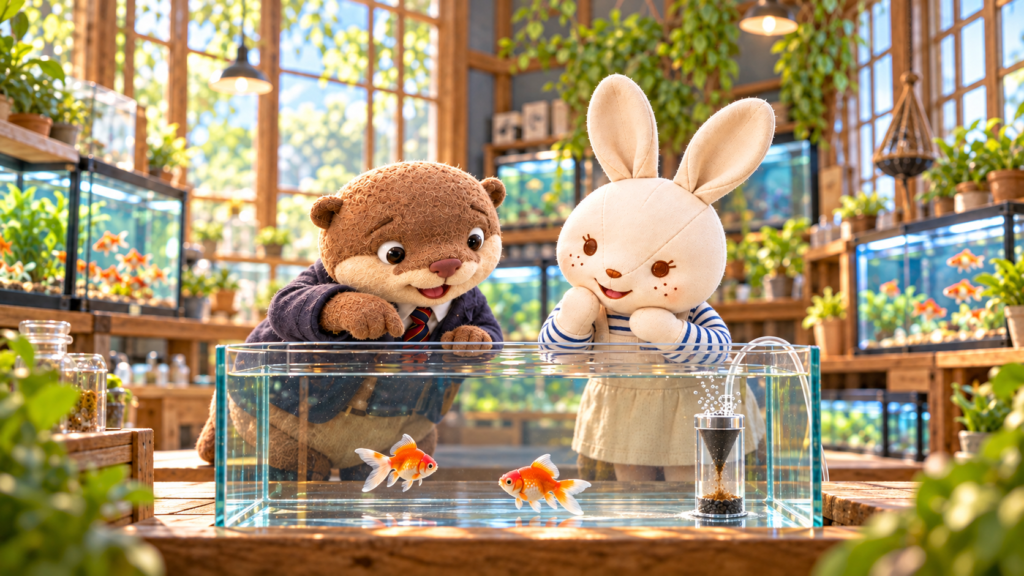 アイのアクアグッズ案内水槽の中に掃除機がある!? コタロウと探る、フィッシュレットの仕掛け道具の特徴や使い方、選ぶときのポイントをアイが紹介します。記事はコチラ →
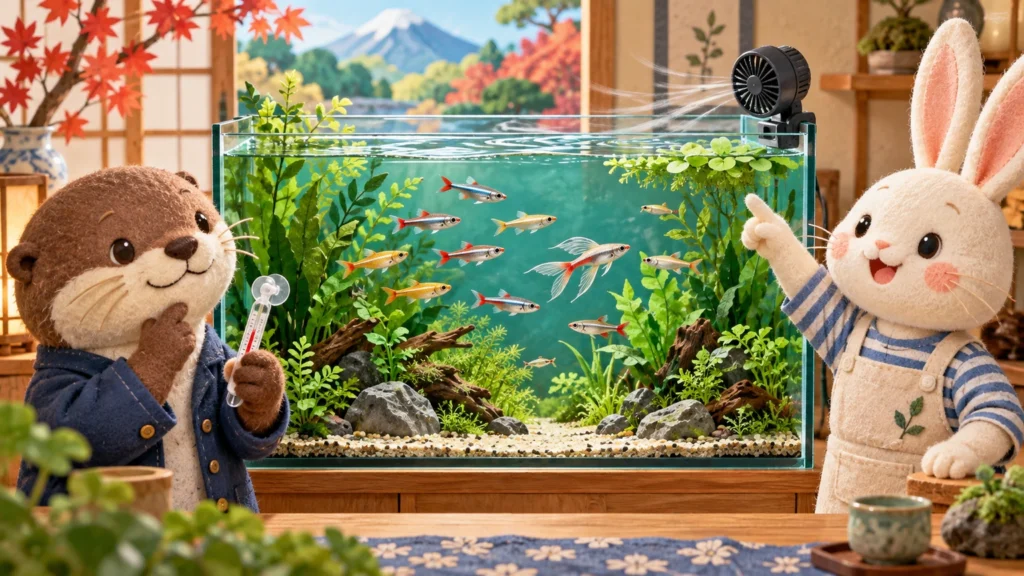 アイのアクアグッズ案内アカヒレの仲間に合わせる飼育用品|無加温・混泳・繁殖の水槽とろ過道具の特徴や使い方、選ぶときのポイントをアイが紹介します。記事はコチラ →
さまざまな飼育テーマをご紹介。リンク先の記事には広告・商品紹介が含まれます。
案内・紹介記事一覧へ →▶ 記事の生体をAMAZONで買う ▶ 記事の生体をYahooで買う
参考文献・参照資料
本記事では、学名・分類・分布・最大体長などの基礎情報は魚類データベースおよび分類学文献を優先し、飼育・繁殖に関する実用情報は非店舗系の専門飼育資料で補足しました。
- FishBase. Hemigrammus erythrozonus, Glowlight tetra. 分布、最大体長、食性、群れでの飼育、推奨水槽サイズ、水温・pHなどの基礎データ確認に使用。
- Fricke, R., Eschmeyer, W. N. & van der Laan, R. Eschmeyer’s Catalog of Fishes. California Academy of Sciences. 学名、記載者、シノニム、分類学上の名称確認に使用。
- GBIF Secretariat. Hemigrammus erythrozonus Durbin, 1909. 記載年、記載者、原記載文献への手がかり、および分類データの照合に使用。
- Melo, B. F. et al. 2024. Phylogenomics of Characidae, a hyper-diverse Neotropical freshwater fish lineage, with a phylogenetic classification including four families. Zoological Journal of the Linnean Society. 旧来の広いカラシン科を再編し、Acestrorhamphidaeを含む体系を扱う分類学的背景の確認に使用。
- Seriously Fish. Hemigrammus erythrozonus. 飼育水槽、レイアウト、混泳、性格、分布に関する観賞魚向け情報の補助確認に使用。
- Tropical Fish Hobbyist Magazine. Glowlight Tetra Species Profile. 体型、赤いライン、観賞魚としての特徴、コミュニティタンクでの扱いに関する補助資料として使用。
- The Spruce Pets. Glowlight Tetra: Fish Species Characteristics and Care. 水温、寿命、群泳、暗めの底床、繁殖時の低光量管理、初期飼料などの実用的飼育情報の補助確認に使用。
- Knight, J. 2003. GloFish casts light on murky policing of transgenic animals. Nature 426, 372. グローライトテトラの自然な体色と、遺伝子組み換え蛍光魚であるGloFishを区別するための背景資料として使用。




コメント