

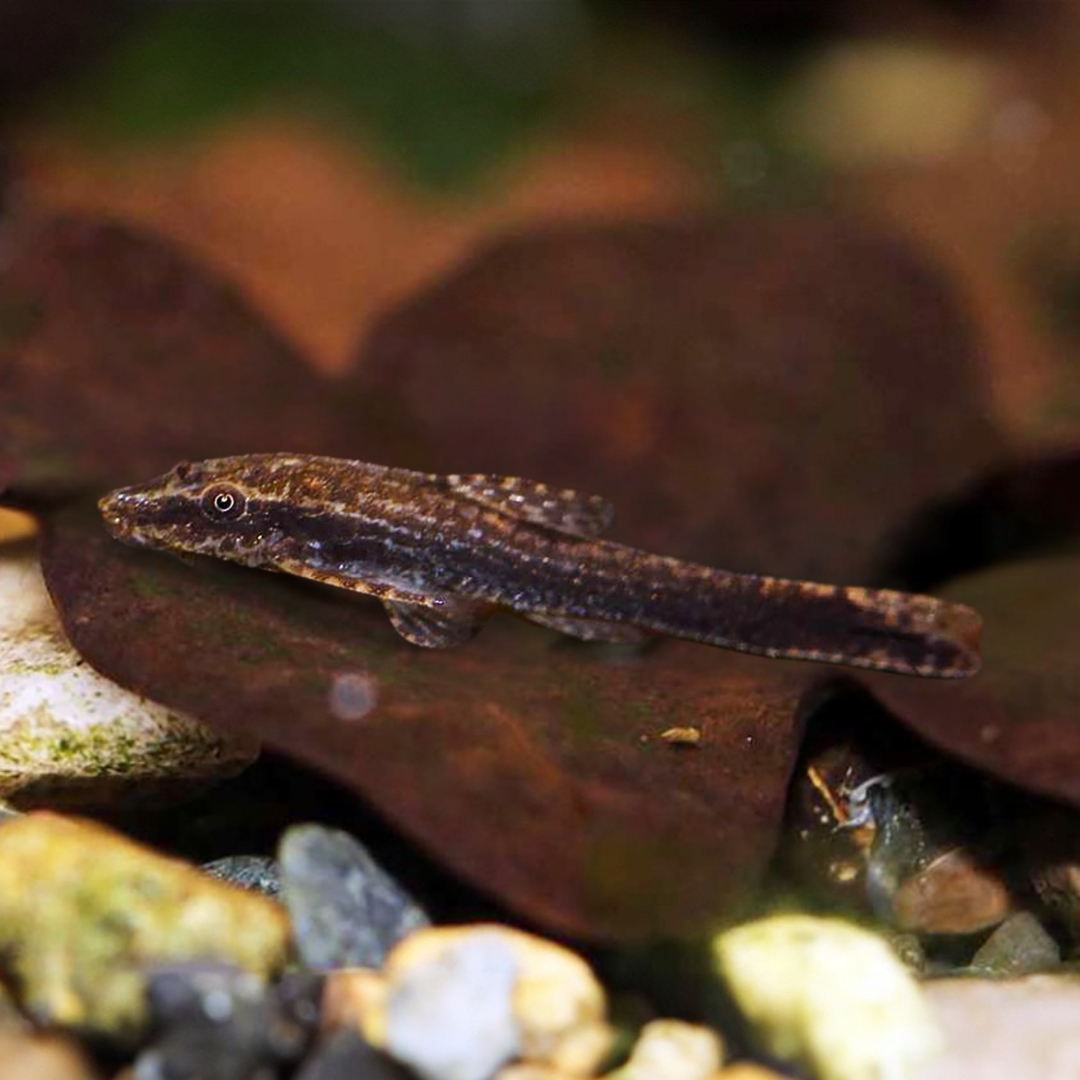
解説 / Description
オトシンネグロは、日本の水草水槽で「茶ゴケをよく食べる小型のお掃除役」として親しまれているロリカリア科の小型ナマズです。一般的なオトシンクルス類に比べて丈夫で、状態よく飼い込めば家庭水槽でも繁殖を狙いやすい点が大きな魅力です。一方で、名前や学名には長い混同の歴史があり、現在日本国内で流通する暗褐色の個体の多くは、従来よく使われた Hisonotus leucofrenatus ではなく、Otothyropsis piribebuy と考えるのが妥当です。導入直後の水質変化と餌切れには弱いため、慎重な水合わせと、茶ゴケだけに頼らない給餌が長期飼育の鍵になります。 The Black Oto is a small loricariid catfish widely appreciated in Japanese planted aquariums as an effective cleaner of brown diatom algae. Compared with many common Otocinclus species, it is hardy once established and is one of the few oto-like catfishes that can realistically be bred in home aquariums. However, its trade name and scientific identity have a history of confusion; many dark brown individuals sold in Japan are best treated as Otothyropsis piribebuy rather than the older name Hisonotus leucofrenatus. Careful acclimation and regular supplemental feeding, rather than relying on algae alone, are essential for long-term success.
基本情報 / Basic Information
| 学名 / Scientific Name | Otothyropsis piribebuy.国内流通や古い資料では. Older aquarium references and some trade listings may still use Hisonotus leucofrenatusとされることもあります。. |
|---|---|
| 通称 / Common Name | オトシンネグロ、ネグロオトシン、ブラックオト、レッドテールオトシンクルスBlack Oto, Redtail Otocinclus, LG2 |
| 分類 / Family | ナマズ目 ロリカリア科 ヒポプトポマ亜科Order Siluriformes, Family Loricariidae, Subfamily Hypoptopomatinae |
| 英名 / English Name | Black Oto / Redtail Otocinclus |
| 分布 / Distribution | 主にパラグアイ川流域。パラグアイのピリベブイ川周辺や、ブラジルのマットグロッソ州などから知られます。名前の印象とは異なり、アマゾン川支流のネグロ川原産ではありません。Mainly the Paraguay River drainage, including areas around the Piribebuy River in Paraguay and Mato Grosso in Brazil. Despite the Japanese name, it is not native to the Rio Negro of the Amazon basin. |
| 最大体長 / Max Size | 約4.5cm。オスは2.5〜3.0cm前後で細身、メスは3.5〜4.5cmほどまで大きくなりやすいです。About 4.5 cm. Males usually remain slimmer at around 2.5–3.0 cm, while females may reach about 3.5–4.5 cm. |
| 寿命 / Lifespan | 一般的には3〜5年ほど。安定した水質、十分な餌、導入時のストレス低減ができれば、さらに長く飼育できる可能性があります。Generally around 3–5 years. With stable water, adequate feeding, and low stress during introduction, some individuals may live longer. |
飼育環境 / Aquarium Environment
| 水槽サイズ / Tank Size | 単独または少数なら30cmキューブ水槽程度から飼育可能ですが、餌場と隠れ家を安定させるなら45cm規格水槽以上が扱いやすいです。繁殖や複数匹飼育を考える場合は、30cmキューブ水槽から60cm規格水槽を目安にすると管理しやすくなります。A single fish or a small group can be kept from a 30 cm cube aquarium, but a 45 cm standard tank or larger is easier for stable feeding areas and hiding places. For breeding groups, a 30 cm cube to 60 cm standard aquarium is practical. |
|---|---|
| 水温 / Temperature | 22〜26℃が理想です。一般的な熱帯魚水槽の26〜28℃にも適応できますが、20℃以下が長く続く環境は避けます。夏場の一時的な高水温には比較的耐えますが、酸欠を防ぐために通水とエアレーションを意識してください。 22–26°C is ideal. It can adapt to typical tropical community temperatures of 26–28°C, but prolonged exposure below 20°C should be avoided. During warm periods, ensure good water movement and aeration. |
| 水質 / Water Quality | 弱酸性〜中性の軟水、pH 6.0〜7.0前後が最も無難です。生理的な許容幅は広い魚ですが、急激なpH変化や浸透圧変化には弱いため、安定性を重視します。流木や落ち葉を使った、ややブラックウォーター寄りの環境とも相性がよいです。Soft, slightly acidic to neutral water around pH 6.0–7.0 is safest. Although the species can tolerate a broad range of conditions, sudden changes in pH or osmotic pressure are risky. Driftwood and leaf litter that create a mild blackwater-like environment can be beneficial. |
| レイアウト / Layout | 流木、石、水草を多めに入れ、体を隠せる陰を作ると落ち着きます。ガラス面だけでなく、水草の葉や流木表面を細かくついばむため、表面積の多いレイアウトが向いています。強い水流だけの水槽よりも、ゆるやかな流れと止水気味の避難場所がある環境が適しています。Provide driftwood, stones, and plants to create shaded hiding places. A layout with plenty of surface area is ideal because the fish grazes not only on glass but also on leaves and wood. Moderate flow with calm refuge areas is better than a tank dominated by strong current. |
| 注意点 / Precautions | 購入直後の48時間が最も重要です。袋を浮かべる温度合わせだけで済ませず、エアチューブとコックを使った点滴法で1〜2時間かけて水合わせすると安全性が高まります。また、茶ゴケを食べ尽くした後は餌不足になりやすいため、導入初期から人工飼料に慣らしてください。The first 48 hours after purchase are critical. Do not rely only on temperature matching; drip acclimation over 1–2 hours with airline tubing and a valve greatly reduces risk. Once brown algae are depleted, starvation can occur, so begin training the fish to prepared foods early. |
餌と給餌 / Feeding
| 餌の種類 / Diet | 茶ゴケ、バイオフィルム、微生物群、沈下性タブレット、プレコ用フード、コリドラス用フード、細かい顆粒餌、専用の練り餌、ゆでたホウレンソウなどを利用できます。実際には植物質だけでなく動物性タンパク質も重要な雑食性で、茶ゴケだけでは長期維持に不足します。It will graze on brown diatom algae, biofilm, and microorganisms, and can be fed sinking tablets, pleco foods, Corydoras foods, fine granules, prepared paste foods, and blanched spinach. It is not a strict herbivore; animal protein is also important, and algae alone is not enough for long-term maintenance. |
|---|---|
| 給餌のポイント / Feeding Tips | 消灯前など、他魚の活動が落ちる時間帯に沈下性の餌を少量与えると食べやすくなります。冷凍アカムシは非常に好みますが、連続して多給すると消化不良や腸閉塞のリスクが高まるため、常用せず少量にとどめます。エビが多い水槽では餌を奪われやすいので、スポイトや餌皿で狙って給餌すると安心です。Offer small amounts of sinking food after lights out or when tank mates are less active. Frozen bloodworms are eagerly eaten, but frequent heavy feeding may cause digestive problems, so they should be used sparingly. In shrimp-heavy tanks, target feeding with a pipette or feeding dish helps prevent food competition. |
性格と混泳 / Temperament and Tank Mates
| 性格 / Temperament | 非常に温和で、他魚を攻撃することはほとんどありません。群泳魚ではありませんが、複数で飼育すると導入初期の不安がやわらぎ、繁殖の可能性も高まります。普段は流木や水草の陰でじっとしていることが多く、慣れるほど「木化け」するように背景へ溶け込みます。It is very peaceful and rarely bothers other fish. It is not a schooling fish, but keeping several individuals can reduce introduction stress and improve breeding chances. Once settled, it often rests quietly on wood or among plants, blending into the background with remarkable camouflage. |
|---|---|
| 混泳の相性 / Compatibility | 小型カラシン、ラスボラ、メダカ類、小型コリドラス、小型アピストグラマなど、口に入らない穏やかな魚と相性がよいです。エンゼルフィッシュや中大型シクリッド、ポリプテルスなど、飲み込もうとする魚との混泳は避けます。オトシンネグロは捕食されそうになると硬い棘を広げるため、捕食者側も本種側も命に関わる事故になり得ます。It is compatible with peaceful fish too small to prey on it, such as small tetras, rasboras, ricefish, small Corydoras, and dwarf cichlids. Avoid angelfish, medium to large cichlids, bichirs, or any fish that may try to swallow it. When threatened, the fish can lock its hard fin spines, which may fatally injure both predator and prey. |
病気と対策 / Diseases and Prevention
| かかりやすい病気 / Common Diseases | 導入直後のpHショック、浸透圧ショック、輸送ストレスによる衰弱、餌不足による痩せ、過剰な冷凍アカムシ摂取に伴う消化不良や腹部膨満が主なリスクです。一般的な白点病や細菌感染も、水温変動や水質悪化が重なると発生しやすくなります。Main risks include pH shock, osmotic shock, transport-related weakness, starvation after algae depletion, and digestive issues or abdominal bloating from excessive frozen bloodworms. Common problems such as white spot disease or bacterial infections may occur when temperature swings and poor water quality overlap. |
|---|---|
| 対策と予防 / Prevention | 点滴法による丁寧な水合わせ、導入前に十分に立ち上がった水槽を用意すること、定期的な少量換水、残餌の除去、安定した水温管理が基本です。痩せを防ぐため、茶ゴケがある水槽でも人工飼料を併用します。薬剤には敏感な場合があるため、治療時はロリカリア科の小型ナマズであることを考慮し、用量と酸欠に注意します。Prevention is based on careful drip acclimation, using a mature aquarium, regular small water changes, removal of uneaten food, and stable temperature. Prepared foods should be offered even in algae-rich tanks to prevent weight loss. Because small loricariid catfish may be sensitive to medications, use treatments carefully and maintain strong aeration. |
増やし方(繁殖) / Breeding
| 雌雄の判別 / Sexing | オスは小さめで細身、体色が濃く、尾びれ下部に赤褐色が出やすい傾向があります。メスは一回り大きく、十分に成熟すると背びれの両側から腰周りがふっくら張り出します。この腹部の膨らみは抱卵の重要なサインです。Males tend to be smaller, slimmer, darker, and may show reddish brown coloration on the lower part of the caudal fin. Females become larger and fuller, with a noticeably rounded body around the sides of the dorsal-fin area when gravid. This swelling is an important sign of egg development. |
|---|---|
| 繁殖形態 / Reproduction | 特定のペアを固定するタイプではなく、複数個体で繁殖しやすい卵生魚です。産卵時にはコリドラスに似たTポジション、またはUポジションのような姿勢をとり、水草、ガラス面、流木、器具などに卵を点々と産み付けます。親は卵を保護せず、食卵することもあります。It is an egg-laying species that breeds more readily in groups rather than in fixed pairs. During spawning, it forms a posture similar to the Corydoras T-position, sometimes described as a U-position, and scatters adhesive eggs on plants, glass, wood, and equipment. The parents do not guard the eggs and may eat them. |
| 繁殖のポイント / Breeding Tips | 4〜6匹以上を目安に、複数のオスとメスを同居させると成功率が上がります。十分な給餌でメスを抱卵させ、水換えによる新鮮な水、1〜2℃ほどの軽い水温低下、低気圧などが産卵スイッチになることがあります。卵を見つけたら親を移動するか、卵の付いた水草などを隔離します。25〜26℃では約2日前後で孵化し、ヨークサック吸収後は生きたブラインシュリンプを朝と夜に与えると育成しやすいです。Breeding chances improve when keeping a group of at least 4–6 fish with multiple males and females. Condition the females with sufficient food, then fresh water from water changes, a slight 1–2°C temperature drop, or falling air pressure may trigger spawning. Once eggs are found, remove the adults or isolate the egg-bearing plant or object. At 25–26°C, eggs hatch in about two days, and after the yolk sac is absorbed, live baby brine shrimp given morning and evening is highly effective. |
雑学と豆知識 / Trivia and Fun Facts
| 1. 「ネグロ」は産地ではなく色の名前 / 1. “Negro” refers to color, not origin | オトシンネグロという名前を聞くと、アマゾン川の有名な支流であるネグロ川を思い浮かべる方も多いかもしれません。しかし、本種の分布は主にパラグアイ川水系で、ネグロ川原産ではありません。「ネグロ」はラテン語系の言語で黒を意味する言葉に由来し、暗褐色から黒褐色の体色を表した流通名です。名前の響きだけで生息地を判断すると、飼育環境のイメージまでずれてしまう点が面白くもあり、注意したいところです。The Japanese name may make aquarists think of the famous Rio Negro in the Amazon basin, but this fish is mainly associated with the Paraguay River drainage, not the Rio Negro. The word “negro” comes from Romance-language words for black and refers to its dark brown to blackish body color. This is a useful reminder that trade names can be memorable yet misleading. |
|---|---|
| 2. 学名の混乱が長く続いた魚 / 2. A fish with a long taxonomic mix-up | 日本の販売名や古い飼育情報では、オトシンネグロに Hisonotus leucofrenatus という学名が添えられることが多くありました。ところが、観賞魚として流通してきた暗褐色の個体は、2011年に新種記載された Otothyropsis piribebuy に該当すると考えるのが現在は自然です。見た目が似た小型ロリカリア類は分類が難しく、アクアリウムで親しまれている魚の名前にも、研究史の積み重ねが反映されています。Older Japanese aquarium references often attached the name Hisonotus leucofrenatus to the Black Oto. Today, many of the dark brown fish sold in the hobby are more appropriately treated as Otothyropsis piribebuy, described in 2011. Small loricariid catfishes can be difficult to identify, and this familiar aquarium fish carries a surprisingly rich taxonomic history. |
| 3. 茶ゴケには強いが万能なコケ取りではない / 3. Excellent for brown algae, not a universal algae eater | オトシンネグロは茶ゴケに対してとても頼れる存在です。細い水草の葉についた茶色い膜まで丁寧に削り取る姿は、水草水槽ではありがたいものです。ただし、黒ヒゲゴケ、アオミドロ、硬い緑色のスポット状コケ、藍藻などにはほとんど効果が期待できません。茶ゴケを片付けたあとの水槽は、彼らにとって餌の少ない環境になりやすいため、お掃除役として迎えたあとこそ、飼い主がきちんと食事を用意してあげる必要があります。The Black Oto is very useful against brown diatom algae and can gently graze even the surfaces of fine aquatic plant leaves. However, it is not effective against black beard algae, hair algae, hard green spot algae, or cyanobacteria. Once the brown algae are gone, the aquarium may become a food-poor environment, so the keeper must provide supplemental food. |
| 4. 家庭繁殖を狙える珍しいオトシン系 / 4. One of the more breedable oto-like catfishes | 一般的なオトシンクルス類は、家庭水槽での繁殖が難しい魚として知られます。その中でオトシンネグロは、十分に成熟した複数個体、安定した水質、豊富な餌、産卵後の卵の隔離、そして稚魚へのブラインシュリンプ給餌がそろえば、計画的な繁殖を狙える数少ない存在です。小さな体で、コリドラスを思わせるような産卵姿勢を見せる点も、観察する楽しみのひとつです。Most common Otocinclus species are considered difficult to breed in home aquariums. The Black Oto is one of the few oto-like catfishes that can be bred deliberately when mature groups, stable water, abundant food, egg isolation, and baby brine shrimp for fry are all provided. Its small body and Corydoras-like spawning posture make it especially fascinating to observe. |
| 5. 「丈夫」でも「雑に扱ってよい」魚ではない / 5. Hardy does not mean careless care | オトシンネグロは定着後の環境適応力が高く、pHの許容幅も広い魚とされています。しかし、購入直後の急な水質差には弱く、ここで失敗すると本来の丈夫さを発揮する前に落ちてしまいます。つまり本種の飼育は、導入時は慎重に、落ち着いてからは餌を切らさず安定管理する、というメリハリが大切です。そこを押さえると、小さな体で長く水槽を支えてくれる心強い相棒になります。Once established, the Black Oto is adaptable and can tolerate a relatively broad range of water conditions. Yet it is vulnerable to sudden water differences immediately after purchase, and poor acclimation can cause losses before its hardiness becomes apparent. The key is to be very careful during introduction, then maintain stable conditions and regular feeding after it settles. |
まとめ / Conclusion
オトシンネグロは、茶ゴケ対策として頼れるだけでなく、分類の物語や家庭繁殖の楽しさまで持つ、奥行きのある小型ナマズです。水草を傷めにくく、温和で混泳もしやすいため、落ち着いた小型魚水槽や水草水槽にとてもよく合います。 The Black Oto is more than a useful brown-algae grazer; it is a small catfish with taxonomic intrigue and the rewarding possibility of home breeding. Because it is peaceful, plant-friendly, and suitable for community aquariums, it fits beautifully into planted tanks and calm small-fish setups.
成功のポイントは、購入直後の点滴式水合わせ、茶ゴケだけに頼らない給餌、捕食されない混泳相手の選択、そして安定した弱酸性〜中性の水質管理です。小さな体の中に、南米の環境に適応してきたしたたかさと、アクアリウムで観察する楽しさを詰め込んだ魅力的な一種といえるでしょう。 Success depends on drip acclimation after purchase, supplemental feeding beyond algae, choosing tank mates that cannot swallow it, and maintaining stable slightly acidic to neutral water. This tiny fish combines South American adaptability with many rewarding behaviors for aquarists to observe.

気になる道具や飼い方を見つけてみませんか?
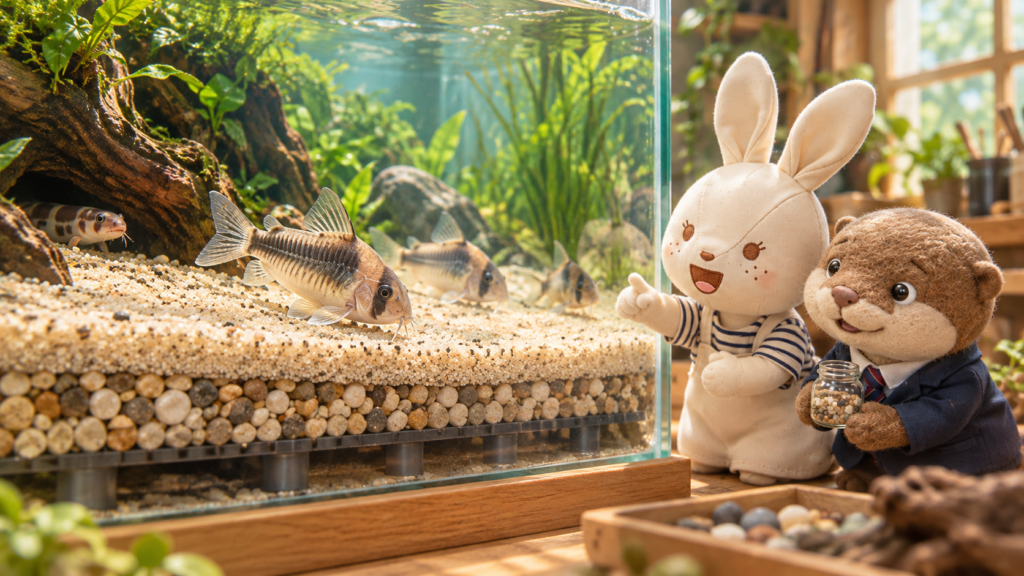 アイのアクアグッズ案内水槽の底砂の選び方|砂・砂利の違いとおすすめ商品道具の特徴や使い方、選ぶときのポイントをアイが紹介します。記事はコチラ →
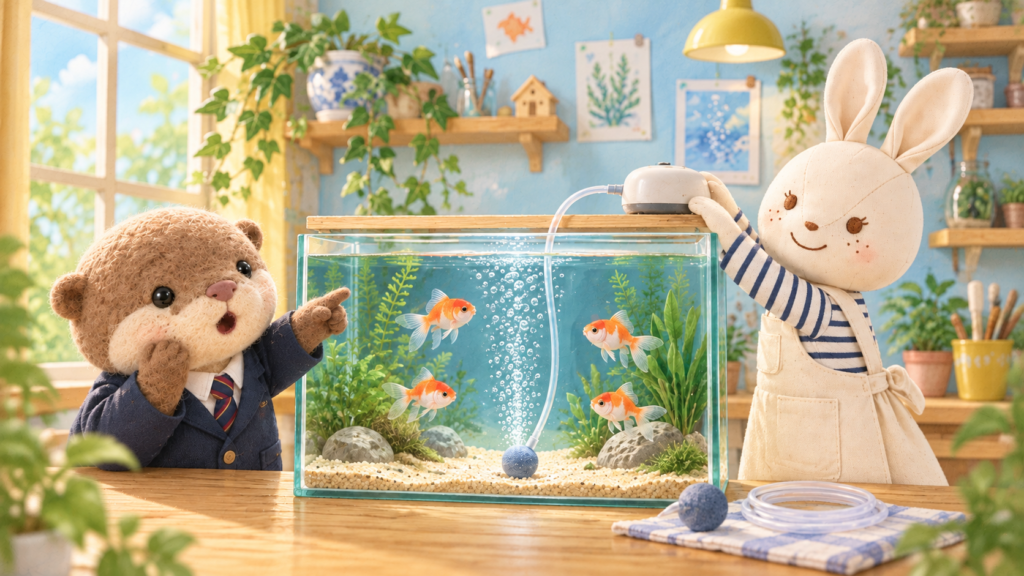 アイのアクアグッズ案内水槽のエアーポンプの選び方|水深・音・泡で選ぶおすすめ用品道具の特徴や使い方、選ぶときのポイントをアイが紹介します。記事はコチラ →
さまざまな飼育テーマをご紹介。リンク先の記事には広告・商品紹介が含まれます。
案内・紹介記事一覧へ →参考文献・根拠資料
本記事は、オトシンネグロとして流通する個体を主に Otothyropsis piribebuy として扱うため、分類・分布・形態・生息環境については、種の原記載論文、分類データベース、分布拡張に関する査読論文を中心に参照しました。飼育条件、導入時の注意、病気予防については、店舗・通販・個人ブログ・まとめサイトを除外し、魚類の水質管理・検疫・健康管理に関する獣医学系資料を補助資料として選定しています。
注記:家庭水槽での繁殖手順や給餌の細部には、アクアリストの経験知に由来する要素も含まれます。そのため、ここでは「種そのものの分類・自然史を支える資料」と「水槽管理上の一般原則を支える資料」を分けて掲載しています。
-
Calegari, B. B., Lehmann A., P., & Reis, R. E. (2011). A new species of Otothyropsis (Siluriformes: Loricariidae) from the rio Paraguay basin, Paraguay. Neotropical Ichthyology, 9(2), 253–260.
https://doi.org/10.1590/S1679-62252011000200002
支える内容:Otothyropsis piribebuy の原記載、分類上の位置づけ、パラグアイ川水系における分布、形態的特徴、性的二型、生息環境の基礎情報。 -
Hocama, G. S., Martins, F. O., & Severo-Neto, F. (2020). First record and extended distribution of Otothyropsis piribebuy (Loricariidae: Hypoptopomatinae) in Brazil. Papéis Avulsos de Zoologia, 60, e20206021.
https://doi.org/10.11606/1807-0205/2020.60.21
支える内容:ブラジル側を含む可能性のある分布拡張、パラグアイ産標本との形態比較、分布記述を断定しすぎないための補強資料。 -
Fricke, R., Eschmeyer, W. N., & Van der Laan, R. (eds.). Eschmeyer’s Catalog of Fishes: Genera, Species, References. California Academy of Sciences.
https://www.calacademy.org/scientists/projects/eschmeyers-catalog-of-fishes
支える内容:魚類学名の有効性、著者名、記載年、分類名の確認。流通名ではなく学名ベースで記事を整理するための基礎資料。 -
Froese, R. & Pauly, D. (eds.). FishBase: Otothyropsis piribebuy.
https://www.fishbase.se/summary/Otothyropsis-piribebuy.html
支える内容:分類階級、最大標準体長、淡水・底生性、分布、生息環境、IUCN評価などの確認。記事内の基本情報表のファクトチェックに使用。 -
Schaefer, S. A. (1997). The Neotropical cascudinhos: Systematics and biogeography of the Otocinclus catfishes (Siluriformes: Loricariidae). Proceedings of the Academy of Natural Sciences of Philadelphia, 148, 1–120.
https://doi.org/10.2307/4065046
支える内容:ヒポプトポマ亜科およびオトシン類周辺の分類・生物地理の背景。流通名「オトシン」と分類学上の位置づけを区別するための補助資料。 -
MSD Veterinary Manual. Management of Aquarium Fish.
https://www.msdvetmanual.com/exotic-and-laboratory-animals/aquarium-fish/management-of-aquarium-fish
支える内容:水槽魚の検疫、バイオセキュリティ、薬剤使用時の注意、導入・治療時に水質と生体負担を考慮する必要性。オトシンネグロ固有ではなく、観賞魚管理の一般原則として参照。 -
Merck Veterinary Manual. Environmental Diseases of Aquatic Animals in Aquatic Systems.
https://www.merckvetmanual.com/exotic-and-laboratory-animals/aquatic-systems/environmental-diseases-of-aquatic-animals-in-aquatic-systems
支える内容:アンモニア、亜硝酸、溶存酸素、pH、温度などの水質管理が魚の健康に直結すること。水換え、濾過、過密回避、導入初期の水質変化リスクに関する一般根拠。 -
Merck Veterinary Manual. Disorders and Diseases of Fish.
https://www.merckvetmanual.com/all-other-pets/fish/disorders-and-diseases-of-fish
支える内容:ストレス、不適切な水質、過密、検疫不足が魚病の大きな誘因になるという説明。白点病、細菌感染、寄生虫、衰弱などを「病名単独」ではなく飼育環境と結びつけて扱うための補助資料。 -
FAO. Procedures for the quarantine of live aquatic animals: a manual.
https://openknowledge.fao.org/server/api/core/bitstreams/ec3204f1-dd76-43a7-a29f-ff5dd7b02785/content
支える内容:生きた水生生物の移動・導入に伴う検疫の考え方。ワイルド個体や輸入個体の導入リスク、隔離観察の重要性を説明するための一般資料。




コメント