

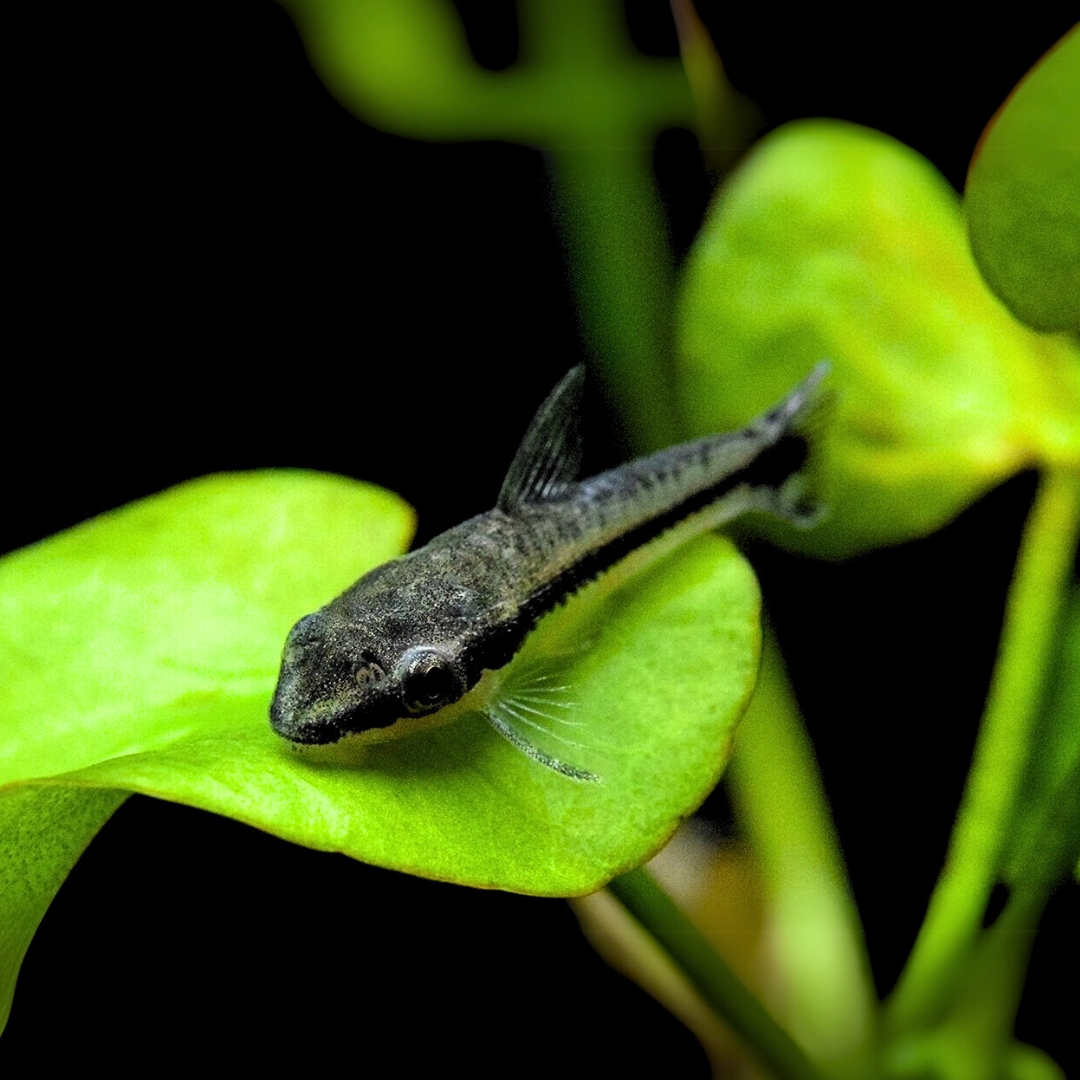
解説 / Description
オトシンクルスは、南米原産の小型ロリカリア科ナマズの仲間です。吸盤状の口でガラス面、流木、石、水草の葉に付着した柔らかい藻類やバイオフィルムをなめ取るように食べるため、日本の水草水槽では「茶ゴケ対策のお掃除役の魚」として広く親しまれています。一方で、流通名の「オトシンクルス」は複数種を含むことが多く、店頭名だけで正確な種まで判断するのは難しい魚でもあります。 Otocinclus are small loricariid catfish from South America. They are valued in planted aquariums because they graze on soft algae and biofilm from glass, driftwood, stones, and plant leaves. In Japan, they are widely known as useful algae-grazing fish, especially against brown diatom films. However, the aquarium trade name “Otocinclus” often includes several similar species, so identifying them to species level from a shop label alone is difficult.
見た目は控えめで性格も穏やかですが、長距離輸送後の絶食、導入時の水質変化、人工飼料への餌付きにくさが重なると、初心者向けと言い切れない面があります。長期飼育では「コケ取りをしてくれる魚」ではなく、バイオフィルムと植物質の餌を絶えず必要とする小さな草食寄りのナマズとして扱うことが大切です。 They are modest-looking and peaceful, but they are not always as easy as their “cleaner fish” reputation suggests. After long transport, fasting, water-quality changes, and poor acceptance of prepared foods can all cause problems. For long-term care, they should be treated not as disposable algae removers, but as small, mostly herbivorous catfish that need a continuous supply of biofilm and plant-based foods.
基本情報 / Basic Information
| 学名 / Scientific Name | Otocinclus spp.。日本で「並オトシン」として流通する個体には、Otocinclus macrospilus、O. vittatus、O. vestitusなどが含まれる可能性があります。従来「O. affinis」の名で扱われた例もありますが、店頭名だけで一般流通個体にこの学名を当てるのは避けた方が安全です。Otocinclus spp. Fish sold in Japan as common Otocinclus may include species such as Otocinclus macrospilus, O. vittatus, and O. vestitus. The name O. affinis has also appeared in the hobby, but it should not be assigned to ordinary trade fish from a shop name alone. |
|---|---|
| 通称 / Common Name | オトシンクルス、並オトシン、オトシン、オトシンクルス・キャットOtocinclus, Oto, Dwarf Suckermouth Catfish, Oto Catfish |
| 分類 / Family | ナマズ目 ロリカリア科 ヒポプトポマ亜科Order Siluriformes, family Loricariidae, subfamily Hypoptopomatinae |
| 英名 / English Name | Otocinclus Catfish, Oto Catfish, Dwarf Suckermouth Catfish |
| 分布 / Distribution | 南米。種によりアマゾン川、オリノコ川、パラナ・パラグアイ川、トカンチンス川、シングー川などの水系に分布する。日本の店頭に並ぶ個体は、ペルー、コロンビア、ブラジルなど南米産のワイルド個体が中心とされる。South America. Depending on the species, they occur in systems such as the Amazon, Orinoco, Paraná-Paraguay, Tocantins, and Xingu basins. In the Japanese trade, many individuals are considered wild-caught fish exported from South American countries such as Peru, Colombia, and Brazil. |
| 最大体長 / Max Size | およそ3〜5.5cm。流通する一般的なオトシンは3〜4cm前後で扱われることが多い。About 3–5.5 cm. The common trade forms are often around 3–4 cm. |
| 寿命 / Lifespan | 適切に餌付けでき、安定した水質を維持できれば2〜5年程度が目安。導入初期の状態に大きく左右される。Typically around 2–5 years when properly acclimated, fed, and kept in stable water. Early post-import condition strongly affects survival. |
飼育環境 / Aquarium Environment
| 水槽サイズ / Tank Size | 小型魚ですが、水質の安定と餌場の確保を考えると45cm規格水槽以上が扱いやすく、群れでの長期飼育には60cm規格水槽、約57L以上を推奨します。30cm水槽でも飼育例はありますが、導入直後の水質変化と餌不足に注意が必要です。Although small, they are easier to keep in tanks of 45 cm or larger because stable water and grazing surfaces are important. For groups, a standard 60 cm tank of about 57 L or more is recommended. They can be kept in smaller tanks, but water swings and food shortage become more serious risks. |
|---|---|
| 水温 / Temperature | 22〜28℃前後。高水温と酸欠が重なる環境は避け、夏場は十分な通水とエアレーションを確保します。 Around 22–28°C. Avoid high temperatures combined with low oxygen, and provide good circulation and aeration in summer. |
| 水質 / Water Quality | 弱酸性から中性付近、目安はpH6.0〜7.5。軟水から中程度の硬度が向きます。アンモニアと亜硝酸は検出されない状態を維持し、硝酸塩も蓄積させないよう定期的に換水します。導入時は点滴法などでゆっくり水合わせを行うと安全です。Slightly acidic to near-neutral water is preferred, roughly pH 6.0–7.5. Soft to moderately hard water is suitable. Keep ammonia and nitrite at undetectable levels and prevent nitrate buildup with regular water changes. Slow drip acclimation is recommended when introducing them. |
| レイアウト / Layout | 水草、流木、石を入れ、表面にバイオフィルムが育つ落ち着いた水槽が向いています。導入直後に隠れられる場所を用意し、強すぎる水流で常に押し流されるような環境は避けます。水草水槽との相性は良く、柔らかい葉面の茶ゴケをなめ取るように食べます。A mature aquarium with plants, driftwood, and stones is ideal because these surfaces support biofilm. Provide hiding places after introduction and avoid currents so strong that the fish are constantly pushed around. They work well in planted aquariums and graze soft diatom films from plant leaves. |
| 注意点 / Precautions | 新規立ち上げ直後の水槽や、コケがまったくない清潔すぎる水槽では餌不足になりやすいです。また、捕食できるサイズのシクリッドや大型魚との混泳は避けます。オトシンクルスは硬い棘条と装甲板を持つため、飲み込まれた際に捕食魚の口や喉に引っかかり、双方に危険が及ぶことがあります。A newly set up tank or an overly clean tank with no algae or biofilm can lead to starvation. Avoid keeping them with cichlids or larger fish that could swallow them. Their hard fin spines and armored plates may lodge in a predator’s mouth or throat, endangering both fish. |
餌と給餌 / Feeding
| 餌の種類 / Diet | 主食は柔らかい茶ゴケ、微細藻類、バイオフィルムです。長期飼育では、スピルリナ入りのプレコ用タブレット、アルジーウェハー、植物質主体の沈下性飼料、ゆでたズッキーニやキュウリ、ほうれん草、海苔などを補助的に与えます。冷凍アカムシなど高タンパクな動物質餌は、少量なら食べることがありますが常用は避けます。Their main foods are soft brown algae, microalgae, and biofilm. For long-term care, supplement with spirulina-based pleco tablets, algae wafers, plant-based sinking foods, blanched zucchini, cucumber, spinach, and nori. They may take small amounts of animal-based foods such as frozen bloodworms, but these should not be used as a staple. |
|---|---|
| 給餌のポイント / Feeding Tips | 最重要ポイントは、茶ゴケを食べ尽くした後の餓死を防ぐことです。消灯前にタブレットを入れる、流木や石の近くに餌を置く、エビや他魚が持ち去れないよう複数箇所に分けるなど、オトシンが餌に触れる機会を増やします。餌付け期間だけやや多めに入れ、数時間後に残餌を回収する方法も有効です。腹部がふっくらし、透明から緑褐色の糞が確認できれば、摂食できている目安になります。The key is preventing starvation after the visible diatom film is gone. Offer tablets after lights out, place food near driftwood or stones, and use several feeding spots so shrimp and other fish cannot remove everything at once. During food-training, temporarily offering a little more food and removing leftovers after a few hours can help. A rounded belly and clear to greenish-brown feces are useful signs that the fish are feeding. |
性格と混泳 / Temperament and Tank Mates
| 性格 / Temperament | 非常に温和で、他魚を追い回したり攻撃したりすることはほとんどありません。自然下では群れで見られるため、単独よりも複数匹での飼育が向きます。少なくとも3匹以上、可能なら5〜6匹以上で導入すると落ち着きやすいです。They are very peaceful and rarely chase or attack tank mates. Because they are naturally gregarious, they are better kept in groups than alone. A group of at least three is preferable, and five to six or more is even better when the tank size allows. |
|---|---|
| 混泳の相性 / Compatibility | 小型カラシン、ラスボラ、メダカ類、小型コリドラス、ドワーフシュリンプ、ヤマトヌマエビなど、穏やかな小型種と好相性です。ただし、餌付け中はエビや底物が餌を先に食べてしまうため、オトシン専用の餌場を意識します。大型魚、気性の荒い魚、肉食性の強い魚との混泳は避けてください。They are compatible with peaceful small fish such as tetras, rasboras, ricefish, small Corydoras, dwarf shrimp, and Amano shrimp. During food-training, shrimp and bottom dwellers may eat the food first, so create feeding opportunities specifically for the Otocinclus. Avoid large, aggressive, or strongly predatory fish. |
病気と対策 / Diseases and Prevention
| かかりやすい病気 / Common Diseases | 導入初期の拒食、痩せ、腹部のへこみ、白点病、水質悪化による体調不良、外傷、内部寄生虫が疑われる白い糸状の糞などに注意します。流通直後の個体は長距離輸送と絶食の影響を受けていることがあるため、購入時の腹部の状態確認が重要です。Watch for refusal to feed, emaciation, sunken belly, ich, stress from poor water quality, injuries, and white stringy feces that may suggest internal problems. Newly imported fish may be weakened by long transport and fasting, so checking the belly condition before purchase is very important. |
|---|---|
| 対策と予防 / Prevention | 購入時は、腹が極端にへこんでいない個体、ガラス面や流木にしっかり吸着している個体を選びます。導入は点滴法でゆっくり行い、可能なら2〜4週間の隔離飼育で餌付けと観察を済ませてから本水槽へ移します。薬に敏感な場合があるため、治療が必要なときはナマズ類に使える薬剤かどうかを必ず確認し、規定量を守ります。Choose fish with no severe sunken belly and with a firm grip on glass or wood. Acclimate slowly, and if possible quarantine for two to four weeks to observe and food-train them before moving them to the display tank. They can be sensitive to some medications, so confirm that any treatment is safe for catfish and follow the stated dosage. |
増やし方(繁殖) / Breeding
| 雌雄の判別 / Sexing | 成熟個体では、メスの方がやや大きく、腹部が丸みを帯びやすい傾向があります。オスは比較的小さく細身です。ただし、未成熟個体や痩せた個体では判断が難しく、外見だけで確実に見分けるのは困難です。Mature females tend to be slightly larger and rounder-bellied, while males are usually smaller and slimmer. However, immature or thin fish are difficult to sex, and visual identification is not always reliable. |
|---|---|
| 繁殖形態 / Reproduction | 卵生です。状態が整うと、ガラス面、フィルターパイプ、水草の葉裏などに粘着性の卵を少数ずつ産み付けるとされます。コリドラスに似たTポジションのような行動が報告されることがありますが、一般的な並オトシンの水槽内繁殖はまだ偶発的な成功例が中心です。They are egg layers. When conditions are suitable, they may deposit adhesive eggs on glass, filter pipes, or the undersides of plant leaves. Behaviors resembling the Corydoras-style T-position have been reported, but breeding the common trade Otocinclus in aquaria remains mostly based on occasional successes. |
| 繁殖のポイント / Breeding Tips | まず、複数匹を長期間健康に維持し、十分に太らせることが前提です。大きめの換水、やや低めの新水、雨季を思わせる水質変化、低気圧や季節変化がきっかけになったと考えられる報告があります。ただし再現性は高くありません。卵を見つけた場合は、食卵を避けるために卵または親魚を隔離し、稚魚には微細な藻類、インフゾリア、ブラインシュリンプ幼生、細かくした植物性飼料などを段階的に与えます。The first requirement is keeping a group healthy for a long period and bringing them into good condition. Large water changes, slightly cooler fresh water, changes resembling the rainy season, and seasonal or barometric shifts have been suggested as possible triggers, but results are not highly reproducible. If eggs are found, separate either the eggs or the adults to reduce egg predation. Fry should be offered microalgae, infusoria, newly hatched brine shrimp, and finely powdered plant-based foods as they grow. |
雑学と豆知識 / Trivia and Fun Facts
| 1. 学名が複数出てくる理由 / 1. Why Several Scientific Names Appear | 日本で「並オトシン」や「オトシンクルス」として販売される個体は、南米で野生採集されたワイルド個体が中心とされます。現地では小型でよく似たオトシンクルス類がまとめて採集・輸出されることがあり、流通の段階では細かな分類形質まで確認されず、全体の体型、体側ライン、尾筒の斑紋など、見た目の大まかな特徴から「オトシンクルス」として扱われる場合があります。そのため、店頭名が同じでも、実際にはO. macrospilus、O. vittatus、O. vestitusなど複数の近似種が混在している可能性があります。さらに、かつて広く使われた「O. affinis」という名前も、趣味の世界では一般名のように使われてきた経緯があり、文献やデータベースによって扱いに差が見られます。種まで確実に同定できない個体では、「Otocinclus spp.」や「オトシンクルス類」のように、属またはグループ名で示されることがあります。Fish sold in Japan as common Otocinclus are generally regarded as wild-caught South American imports. In the exporting process, several small, very similar Otocinclus-type fish may be collected and shipped together, and trade sorting does not always check the fine characters needed for species-level identification. Instead, fish are often handled as “Otocinclus” based on broad visual traits such as body shape, the lateral stripe, and markings on the caudal peduncle. As a result, fish with the same shop name may include similar species such as O. macrospilus, O. vittatus, and O. vestitus. The name O. affinis has also been used loosely in the hobby, almost like a common name, and different references or databases may treat it differently. When a trade animal cannot be identified to species level with confidence, it may be written as Otocinclus spp. or described more generally as an Otocinclus-type fish. |
|---|---|
| 2. 茶ゴケには強いが、万能のコケ取りではない / 2. Excellent Against Diatoms, Not a Universal Algae Eater | オトシンクルスが得意なのは、立ち上げ初期のガラス面や水草の葉に出やすい柔らかな茶ゴケです。いっぽう、黒ひげゴケ、硬い緑のスポット状コケ、長く伸びた糸状ゴケ、藍藻をきれいに食べ尽くす魚ではありません。つまり、オトシンは「水槽の問題をすべて解決する魚」ではなく、柔らかい付着藻類を日々少しずつ削り取る、繊細な専門職のような存在です。Otocinclus are best at grazing soft brown diatoms, especially on glass and plant leaves in young aquariums. They are not reliable removers of black beard algae, hard green spot algae, long filamentous algae, or cyanobacteria. In other words, they are not fish that solve every algae problem; they are delicate specialists that steadily graze soft surface growth. |
| 3. 低酸素に対応する補助的な空気呼吸 / 3. Supplemental Air Breathing in Low Oxygen | オトシンクルス類には、低酸素時に水面で空気を取り込む行動や、胃・憩室周辺を利用した補助的な空気呼吸に関する研究があります。EGFRという受容体の発現が胃や憩室で調べられ、上皮の変化との関係が示唆されています。ただし、飼育下で酸欠に強いという意味ではありません。水槽では高水温、過密、ろ過不足を避け、十分な酸素を保つことが基本です。Studies on Otocinclus-type catfish have examined air-gulping behavior in low oxygen and the possible use of the stomach and diverticulum as supplemental respiratory surfaces. EGFR expression has been investigated in these tissues and may be related to epithelial remodeling. This does not mean they tolerate poor aquarium conditions. In captivity, avoiding high temperatures, overcrowding, weak filtration, and low oxygen remains essential. |
| 4. 水草水槽で重宝される理由 / 4. Why They Became Popular in Planted Aquariums | 水草レイアウトでは、強い照明と二酸化炭素添加により植物の成長を促す一方、葉面やガラス面に藻類が出やすくなります。オトシンクルスは小型で、水草を大きく傷めにくく、葉の表面を丁寧になめるように摂食するため、水草水槽と相性の良いお掃除役として広まりました。ただし、茶ゴケがなくなるほど働いた後こそ、飼育者が餌を用意する必要があります。Planted aquariums often use strong lighting and added carbon dioxide to promote plant growth, but these same conditions can encourage algae on leaves and glass. Otocinclus became popular because they are small, usually gentle on plants, and graze leaf surfaces carefully. However, once they have done their job and the diatom film is gone, the aquarist must provide alternative foods. |
| 5. 輸入魚としての弱点 / 5. The Vulnerability of Imported Fish | 日本で流通するオトシンクルスは、南米産の野生採集個体が中心とされます。輸送中は水質悪化を防ぐため給餌が制限されることが多く、到着時には痩せている個体もいます。そのため、購入後すぐに水槽へ入れて「コケを食べていれば大丈夫」と考えるのではなく、最初の数週間で人工飼料や野菜類に慣らせることが長期飼育の分かれ道になります。Most Otocinclus in the Japanese trade are considered wild-caught South American imports. Feeding is often restricted during transport to protect water quality, and some fish arrive underweight. For this reason, it is risky to assume they will survive just because they graze algae after purchase. The first few weeks, when they must learn to accept prepared foods or vegetables, often determine long-term success. |
| 6. 近縁の「オトシンネグロ」は別属として扱われる / 6. “Oto Negro” Belongs to a Different Genus | 日本で「オトシンネグロ」と呼ばれる魚は、一般的なOtocinclus属とは別属として扱われることがあります。見た目や水槽内での役割は似ていますが、丈夫さ、餌付きやすさ、繁殖しやすさには違いがあります。そのため、本記事で扱う「並オトシン」とは分けて考える必要があります。The fish sold in Japan as “Oto Negro” may be treated as belonging to a genus different from the common Otocinclus. Although its appearance and role in the aquarium are similar, it can differ in hardiness, feeding response, and breeding behavior. For that reason, it should be considered separately from the common Otocinclus discussed in this article. |
まとめ / Conclusion
オトシンクルスは、水草水槽の茶ゴケ対策として非常に頼りになる小型ナマズです。穏やかで水草を傷めにくく、群れでガラスや葉の表面をなめる姿には、機能魚としてだけでない可愛らしさがあります。しかし、流通名には複数種が含まれる可能性があり、分類や学名は店頭名だけで断定しない方が安全です。 Otocinclus are highly useful small catfish for controlling soft brown diatoms in planted aquariums. They are peaceful, usually gentle on plants, and charming as they graze in groups on glass and leaves. However, trade names may cover several similar species, so scientific identification should not be assumed from a shop label alone.
長期飼育の鍵は、導入直後の水合わせ、安定した水質、そして餓死を防ぐための餌付けです。コケがなくなった後も、植物質の補助餌やバイオフィルムを用意し、腹部の状態を観察しながら管理しましょう。正しく扱えば、オトシンクルスは単なるコケ取り役を超えて、水槽の中で南米小型ナマズの奥深い生態を見せてくれる魅力的な存在になります。 The keys to long-term success are careful acclimation, stable water, and food-training to prevent starvation. After visible algae are gone, provide plant-based supplementary foods and biofilm, and monitor belly condition regularly. With proper care, Otocinclus become more than algae-control fish; they reveal the fascinating ecology of small South American catfish in the aquarium.
気になる道具や飼い方を見つけてみませんか?
 アイのアクアグッズ案内水槽のろ材の選び方|ウール・リング・活性炭の違いとおすすめ商品フィルターの中の綿や石は何をしている? アイとコタロウが、ウール・スポンジ・セラミック・焼結ガラス・活性炭・ゼオライトを比較。機種との相性、入れ方、洗い方と交換まで商品とともに紹介します。記事はコチラ →
 アイのアクアグッズ案内あい先生のアクアグッズ深堀り!|泡で汚れを取り出す? プロテインスキマーの歴史と仕組み道具の特徴や使い方、選ぶときのポイントをアイが紹介します。記事はコチラ →
さまざまな飼育テーマをご紹介。リンク先の記事には広告・商品紹介が含まれます。
案内・紹介記事一覧へ →参考文献・参照資料
本記事では、店舗・通販サイト・個人ブログ・まとめサイトを参考文献から除外し、分類、分布、生息環境、飼育条件、繁殖、病気や注意点の確認に使える学術論文、公的・準公的データベース、獣医学・水産分野の資料を中心に参照しています。
-
Schaefer, S. A. 1997. The Neotropical cascudinhos: Systematics and biogeography of the Otocinclus catfishes (Siluriformes: Loricariidae). Proceedings of the Academy of Natural Sciences of Philadelphia, 148: 1-120.
オトシンクルス属の分類、形態比較、生物地理を確認するための基礎文献として参照。 JSTORで確認する -
Fricke, R., Eschmeyer, W. N. & Van der Laan, R. (eds.). Eschmeyer’s Catalog of Fishes: Genera, Species, References. California Academy of Sciences.
学名、記載者、分類上の扱い、シノニム確認のために参照。O. affinis など、資料によって扱いが分かれやすい名称を確認する際の基準資料。 Catalog of Fishesを確認する -
Lehmann A., P., Mayer, F. & Reis, R. E. 2010. Re-validation of Otocinclus arnoldi Regan and reappraisal of Otocinclus phylogeny (Siluriformes: Loricariidae). Neotropical Ichthyology, 8(1): 57-68.
Otocinclus属内の系統関係、近縁種の再評価、分類が単純でないことを支える資料として参照。 SciELOで確認する -
FishBase. Otocinclus vittatus Regan, 1904.
O. vittatus の分類、最大体長、南米における分布、水質範囲などを確認するために参照。 FishBaseで確認する -
FishBase. Otocinclus macrospilus Eigenmann & Allen, 1942.
O. macrospilus の分布、最大体長、淡水底生魚としての基本情報を確認するために参照。 FishBaseで確認する -
FishBase. Otocinclus vestitus Cope, 1872.
流通名だけで種を断定しにくいオトシンクルス類の候補種確認、および属名の語源確認に参照。 FishBaseで確認する -
FishBase. Macrotocinclus affinis (Steindachner, 1877).
O. affinis として流通・記述されてきた名称の扱い、藻類食、群れでの飼育、60cm水槽以上といった飼育上の目安を確認するために参照。 FishBaseで確認する -
Satora, L. et al. 2019. Differential expression of epidermal growth factor receptor (EGFR) in stomach and diverticulum of Otocinclus affinis as a potential element of the epithelium remodeling mechanism. Acta Histochemica.
低酸素時の空気呼吸、胃・憩室、EGFR発現に関する記述を確認するために参照。 ScienceDirectで確認する -
Sauder, L. A., Engel, K., Stearns, J. C., Masella, A. P., Pawliszyn, R. & Neufeld, J. D. 2011. Aquarium nitrification revisited: Thaumarchaeota are the dominant ammonia oxidizers in freshwater aquarium biofilters. PLOS ONE, 6(8): e23281.
水槽内のアンモニア処理、硝化、ろ過バクテリアに関する基礎資料として参照。 PubMed Centralで確認する -
Merck Veterinary Manual. Environmental Diseases of Aquatic Animals in Aquatic Systems.
アンモニア、低酸素、水質悪化が魚の健康に与える影響を確認するために参照。 Merck Veterinary Manualで確認する -
Merck Veterinary Manual. Bacterial Diseases of Fish.
輸送、ハンドリング、水質悪化、低酸素、急な温度変化などのストレスが細菌性疾患の誘因になり得る点を確認するために参照。 Merck Veterinary Manualで確認する -
Yanong, R. P. E. Fish Health Management Considerations in Recirculating Aquaculture Systems. University of Florida IFAS Extension.
新規導入魚の隔離、衛生管理、病原体の持ち込み防止といった予防的管理の考え方を確認するために参照。 UF/IFAS Extensionで確認する




コメント