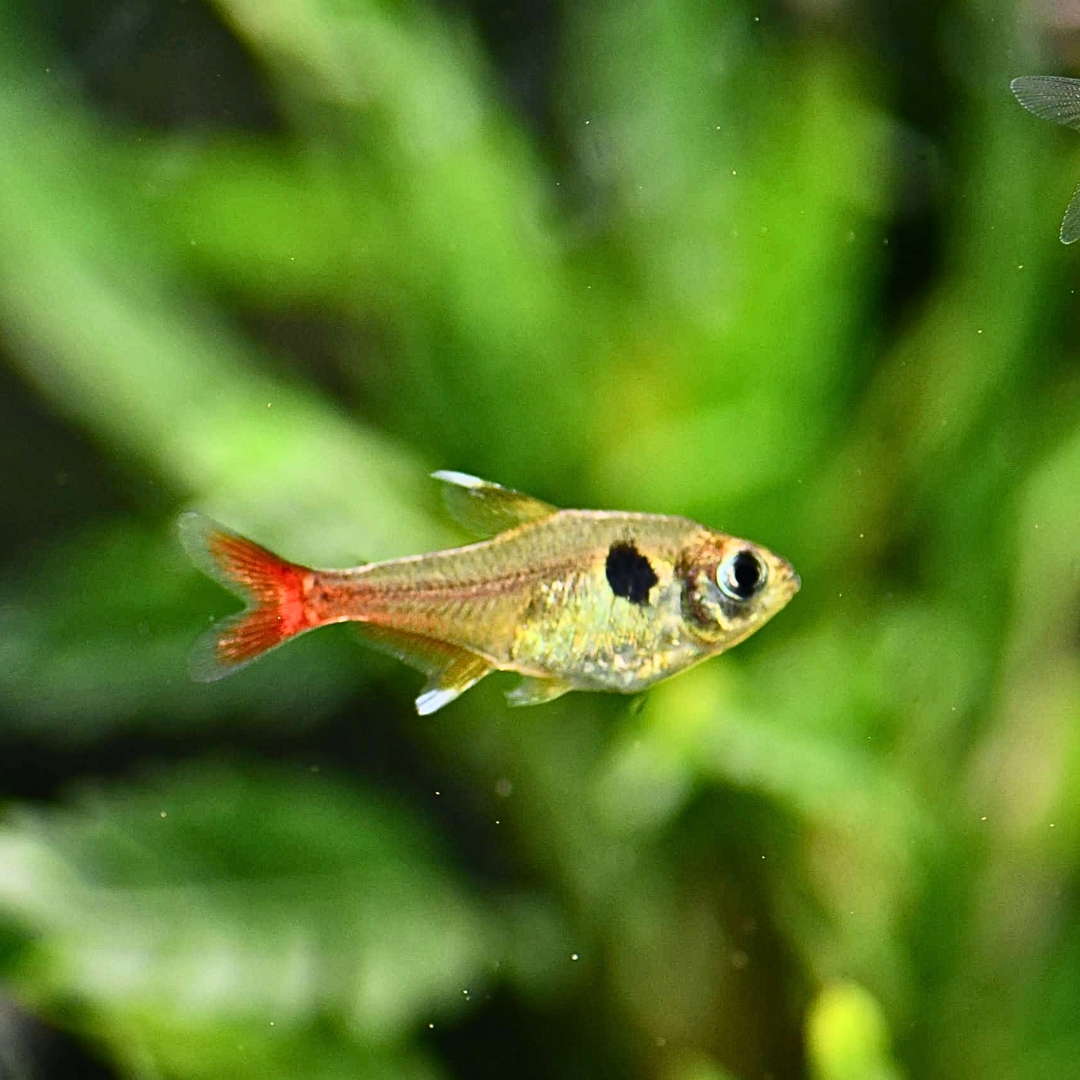
イエローファントムテトラは、透明感のある黄色から黄金色の体色、黒い肩斑、赤みを帯びたヒレが魅力の小型カラシンです。水草水槽では緑の背景に明るい光を添えるように泳ぎ、群れでまとまったときの見栄えがとても良い魚として親しまれています。日本国内では、現行の学術名である Hyphessobrycon roseus として紹介される個体のほか、レッドテール・イエローファントムテトラと呼ばれる近縁タイプが流通名として扱われることがあります。近年の分子系統研究ではMegalamphodus属を再評価する分類案も示されており、資料によって表記が分かれる点に注意が必要です。The Yellow Phantom Tetra is a small characin admired for its translucent yellow to golden body, dark humeral spot, and reddish fins. In planted aquariums, it adds a warm flash of light against green foliage and looks especially attractive when kept in a cohesive group. In Japan, fish may be introduced under the currently accepted scientific name Hyphessobrycon roseus, while a related trade form called the Red-tail Yellow Phantom Tetra is also encountered. Recent phylogenomic work has proposed renewed recognition of the genus Megalamphodus, so aquarists should be aware that naming may differ among sources.
基本情報 / Basic Information
学名 / Scientific Name
Hyphessobrycon roseus (Géry, 1960)。2026年時点の主要な魚類カタログではこの学名が有効名として扱われています。一方、2024年の分子系統研究に基づく分類案では Megalamphodus roseus とする扱いも提案されています。国内で多く見られるレッドテール型は、販売上はイエローファントムとして扱われても、Hyphessobrycon sp. などの近縁タイプとして紹介される場合があります。Hyphessobrycon roseus (Géry, 1960). Major fish catalogs in 2026 treat this as the valid name. A 2024 phylogenomic classification, however, proposed treatment as Megalamphodus roseus. The Red-tail form commonly seen in the Japanese trade may be sold as a Yellow Phantom but is sometimes presented as a related Hyphessobrycon sp. trade type.
カラシン目、Acestrorhamphidae科、Hyphessobryconinae亜科、Hyphessobrycon属として扱うのが現行カタログ上は安全です。なお、2024年の分類案ではAcestrorhamphidae科、Megalamphodinae亜科、Megalamphodus属に再配置する見解が示されています。For current catalog usage, it is safest to treat the fish as order Characiformes, family Acestrorhamphidae, subfamily Hyphessobryconinae, genus Hyphessobrycon. A 2024 classification proposal places it in Acestrorhamphidae, subfamily Megalamphodinae, genus Megalamphodus.
英名 / English Name
Yellow Phantom Tetra, Golden Phantom Tetra, Red-tail Yellow Phantom Tetra
分布 / Distribution
H. roseus は南米北東部のフランス領ギアナおよびスリナムの淡水域から記録されています。観賞魚流通では、ギアナ楯状地周辺に由来する近縁タイプや、東南アジアで養殖されたレッドテール型が同じ流通名に近い形で扱われることがあるため、産地やタイプ表記を確認すると安心です。H. roseus is recorded from freshwater habitats in French Guiana and Suriname in northeastern South America. In the aquarium trade, related Guiana Shield forms and Southeast Asian captive-bred Red-tail types may appear under similar trade names, so checking locality and type labels is advisable.
最大体長 / Max Size
一般的には全長約3cm前後の小型種です。余裕のある水槽で状態良く育つと、3.5cmほどに見える個体もいます。Generally a small species of around 3 cm total length. Well-kept individuals in spacious aquaria may appear close to about 3.5 cm.
寿命 / Lifespan
目安は3〜5年ほどです。水質を急変させず、十分な群れと栄養バランスのよい餌を維持すると、より長く健康に楽しめることがあります。A typical lifespan is about 3 to 5 years. Stable water, a proper group, and balanced feeding can help individuals remain healthy for longer.
飼育環境 / Aquarium Environment
水槽サイズ / Tank Size
少数なら45cm規格水槽でも飼育できますが、本種らしい群泳と落ち着いた行動を引き出すには60cm規格水槽、約57〜60L以上が扱いやすいです。15〜20匹以上のまとまった群れで見せたい場合は、90cm規格水槽以上にすると泳ぐ余白が生まれ、群れの動きがより美しく見えます。A small group can be kept in a 45 cm standard aquarium, but a 60 cm standard tank of about 57 to 60 L or larger is easier for showing natural schooling and calm behavior. For a larger display group of 15 to 20 or more fish, a 90 cm standard tank or larger provides better swimming space and a more impressive school.
水温 / Temperature
23〜27℃を目安に管理します。短期間であれば20〜28℃程度にも耐えますが、急な水温変化は白点病や体調不良の原因になりやすいため避けてください。Maintain the temperature around 23 to 27°C. The fish may tolerate roughly 20 to 28°C for short periods, but sudden changes can trigger ich or general stress and should be avoided.
水質 / Water Quality
弱酸性〜中性、pH6.0〜7.0前後、軟水寄りが理想です。ブリード個体は日本の一般的な水道水にも順応しやすい傾向がありますが、発色や落ち着きを重視するなら、ソイル、流木、マジックリーフ、ヤシャブシの実などで水を穏やかに弱酸性へ寄せるとよいでしょう。ワイルド個体は導入初期に水質変化へ敏感なことがあるため、販売店の管理水質に合わせて慎重に水合わせします。Slightly acidic to neutral water around pH 6.0 to 7.0, preferably on the soft side, is ideal. Captive-bred fish often adapt to ordinary Japanese tap water, but coloration and calm behavior are improved by gently shifting the water toward slightly acidic conditions with aquarium soil, driftwood, catappa leaves, alder cones, or similar materials. Wild fish can be sensitive during acclimation, so match the shop’s water conditions as closely as possible and acclimate slowly.
レイアウト / Layout
水草を多めに植え、流木や落ち葉で隠れ場所を作ると落ち着きます。前景から中景に泳ぐ空間を残し、後景や左右に有茎草、陰性水草、流木を配置すると、群泳と発色が引き立ちます。現地風を意識するなら、細かい砂、流木、落ち葉を使ったブラックウォーター寄りのレイアウトもよく似合います。Dense planting with driftwood and leaf litter helps the fish feel secure. Leave open swimming space in the foreground to midground, and place stem plants, shade plants, and wood toward the background or sides to highlight both schooling and coloration. For a habitat-inspired display, fine sand, driftwood, and leaf litter in gently tinted blackwater are especially suitable.
注意点 / Precautions
強すぎる水流は小さな体に負担をかけるため、出水は壁面や水面に当てて分散させます。臆病さを抑えるため、最低5匹、できれば8〜10匹以上で飼育します。入荷直後の個体やワイルド個体は痩せやすいことがあるため、導入後しばらくは少量の餌をこまめに与え、食べ残しを出さないよう観察してください。Very strong current can burden these small fish, so diffuse the outflow against the wall or surface. Keep at least five individuals, preferably eight to ten or more, to reduce shyness. Newly imported or wild fish may lose condition easily, so offer small meals frequently at first and watch carefully to avoid uneaten food.
餌と給餌 / Feeding
餌の種類 / Diet
雑食性です。主食には小型魚用のフレーク、細粒の顆粒飼料、マイクロペレットが向きます。副食として冷凍アカムシ、冷凍ブラインシュリンプ、ミジンコ、ブラインシュリンプベビーなどを与えると、コンディション維持と発色の助けになります。It is omnivorous. Fine flakes, small granules, and micro pellets for small fish work well as staple foods. Frozen bloodworms, frozen brine shrimp, daphnia, and newly hatched brine shrimp are useful supplements for condition and coloration.
給餌のポイント / Feeding Tips
口が小さいため、餌は細かくして与えます。1回に大量に入れるより、1〜2分で食べ切れる量を1日1〜2回与える方が水を汚しにくく安全です。導入直後やワイルド個体が人工飼料に反応しにくい場合は、冷凍餌やブラインシュリンプをきっかけにして少しずつ人工飼料へ慣らします。Because the mouth is small, offer finely sized foods. Instead of feeding a large amount at once, give only what the fish can finish in one to two minutes, once or twice daily, to reduce water pollution. If new or wild fish hesitate to take dry foods, use frozen foods or brine shrimp as a bridge and gradually introduce prepared foods.
性格と混泳 / Temperament and Tank Mates
性格 / Temperament
温和で、同種同士の群れを作って中層を中心に泳ぎます。少数飼育では物陰に隠れやすく、体色も控えめになりがちです。十分な数で飼うと安心して前面に出やすくなり、フィンスプレッドや小さな追いかけ合いも観察できますが、通常は大きなけんかには発展しません。It is peaceful and tends to form groups in the midwater. When kept in too small a number, it may hide and show duller coloration. In a proper group, it becomes bolder, and fin displays or brief chases may be observed, but serious fighting is uncommon.
混泳の相性 / Compatibility
ネオンテトラ、ラミーノーズテトラ、小型ラスボラ、小型コリドラス、オトシンクルス、小型の温和なアピストグラマなどと相性が良いです。ヤマトヌマエビのような大きめのエビとは混泳しやすい一方、稚エビや極小のエビは捕食されることがあります。大型魚、気性の荒いシクリッド、ヒレをかじる魚、攻撃的な大型甲殻類との混泳は避けます。Good tank mates include neon tetras, rummy-nose tetras, small rasboras, small Corydoras, Otocinclus, and peaceful dwarf cichlids such as some Apistogramma. Larger shrimp such as Amano shrimp are usually suitable, but tiny shrimp and shrimplets may be eaten. Avoid large predatory fish, aggressive cichlids, fin nippers, and aggressive large crustaceans.
病気と対策 / Diseases and Prevention
かかりやすい病気 / Common Diseases
急な水温低下や輸送ストレスの後は白点病に注意します。水質悪化が続くと尾ぐされ病、細菌性のただれ、痩せ、食欲不振が起こることがあります。ワイルド個体や入荷直後の個体では、外部寄生虫や消化器系の不調が見られる場合もあります。Ich can appear after sudden temperature drops or transport stress. Poor water quality may lead to fin rot, bacterial sores, weight loss, or loss of appetite. Wild or newly imported fish may also show external parasites or digestive problems.
対策と予防 / Prevention
新規導入時は温度合わせと水合わせを丁寧に行い、可能であれば別水槽で観察期間を設けます。アンモニアと亜硝酸が検出されない状態を保ち、週1回を目安に20〜30%程度の換水を行います。症状が出た場合は早めに隔離し、病状に合った薬浴を行います。小型カラシンは急な薬剤濃度の変化に弱いことがあるため、規定量を守り、水草やエビ類への影響も確認してください。During introduction, match temperature and water chemistry carefully, and use a separate observation tank if possible. Keep ammonia and nitrite undetectable, and change about 20 to 30% of the water weekly. If symptoms appear, isolate affected fish early and treat according to the disease. Small characins may be sensitive to sudden medication changes, so follow dosage instructions and check effects on plants and shrimp.
増やし方(繁殖) / Breeding
雌雄の判別 / Sexing
成熟したオスはややスレンダーで、発色やヒレの赤みが強く見える傾向があります。メスは抱卵すると腹部が丸くふくらみ、同じ年齢のオスよりふっくら見えることがあります。個体差があるため、複数個体を見比べると判別しやすくなります。Mature males tend to be slightly slimmer and may show stronger coloration and redder fins. Females become rounder in the abdomen when carrying eggs and may look fuller than males of the same age. Comparing several individuals makes sexing easier.
繁殖形態 / Reproduction
ばら撒き型の産卵魚で、親魚は卵や稚魚を保護しません。混泳水槽でも産卵行動が見られることはありますが、卵や仔魚は親魚や他魚に食べられやすいため、計画的に増やすには専用の繁殖水槽を使います。It is an egg-scattering species and provides no parental care. Spawning behavior may occur in a community tank, but eggs and larvae are easily eaten by the parents or other fish, so a dedicated breeding tank is needed for planned breeding.
繁殖のポイント / Breeding Tips
繁殖水槽は弱酸性、極軟水寄り、26〜28℃、薄暗い環境を目安にします。底に鉢底ネットや粗めのメッシュを浮かせて敷き、卵が親魚の口の届かない場所へ落ちるようにすると食卵を防ぎやすくなります。ジャバモスなどの細かい水草も産卵床として有効です。産卵後は親を速やかに戻し、卵は条件が良ければおおむね1〜2日で孵化します。遊泳を始めた直後の稚魚は非常に小さいため、最初はインフゾリアや稚魚用リキッドフードを使い、成長に合わせてブラインシュリンプベビーへ切り替えます。Use a dim breeding tank with slightly acidic, very soft water and a temperature of 26 to 28°C. A raised mesh or coarse grid on the bottom lets eggs fall out of reach of the adults and helps reduce egg predation. Fine plants such as Java moss are also useful spawning media. Remove the adults soon after spawning. Under good conditions, eggs hatch in roughly one to two days. Newly free-swimming fry are extremely small, so begin with infusoria or liquid fry food, then shift to newly hatched brine shrimp as they grow.
雑学と豆知識 / Trivia and Fun Facts
1. 学名が揺れて見える理由 / 1. Why the scientific name may look unstable
イエローファントムテトラを調べると、Hyphessobrycon roseus と Megalamphodus roseus の両方に出会うことがあります。これは単純な間違いというより、小型カラシン類の分類が研究の進展によって見直され続けているためです。2024年の大規模な分子系統研究では、従来のカラシン科に含まれていた多くのグループが再整理され、ロージーテトラ類に近い仲間をMegalamphodus属として扱う分類案が示されました。ただし、主要な魚類カタログでは2026年時点で Hyphessobrycon roseus が有効名として扱われています。名前が異なる資料を読むときは、発行年と、どの分類体系に基づいているかを確認すると違いを理解しやすくなります。When researching the Yellow Phantom Tetra, one may encounter both Hyphessobrycon roseus and Megalamphodus roseus. This is not simply an error; it reflects ongoing revision of small characin taxonomy as research advances. A large 2024 phylogenomic study reorganized many groups formerly placed in Characidae and proposed treating rosy tetra relatives in Megalamphodus. However, major fish catalogs in 2026 still list Hyphessobrycon roseus as the valid name. When sources use different names, checking their publication dates and classification systems can help explain the difference.
2. 「roseus」なのに黄色い魚 / 2. A yellow fish with a rose-colored name
種小名の「roseus」は、ラテン語で「バラ色の」という意味を持ちます。ところが、水槽で見るイエローファントムテトラは、黄色から黄金色の印象が強い魚です。このずれは、記載時に見られた色調、保存標本の状態、地域差、近縁タイプとの流通上の混同など、いくつかの要素が重なって生まれた可能性があります。赤い尾をもつレッドテール型を見ると、「バラ色」という名が完全に遠いものではなく、この仲間が持つ赤系色素の一面を静かに示しているようにも感じられます。The species epithet “roseus” means rose-colored in Latin. Yet the fish aquarists usually see gives a yellow to golden impression. This mismatch may reflect several factors, including the coloration observed at description, the condition of preserved specimens, geographic variation, or trade confusion with related forms. When viewing the Red-tail type, the rose-colored name no longer feels entirely distant; it seems to hint at the red pigments that can appear within this group.
3. レッドテール型は、飼いやすさで選ばれてきた流通タイプ / 3. The Red-tail form as a hardy trade type
日本でよく見かけるレッドテール・イエローファントムテトラは、東南アジアで養殖されたブリード個体として流通することが多く、一般的な水道水環境にもなじみやすい点が評価されています。学術的に H. roseus そのものかどうかは販売名だけでは判断しにくい場合がありますが、観賞魚としては丈夫で群泳させやすく、水草水槽の主役にも脇役にもなれる実用性の高い魚です。産地やタイプにこだわる場合は、販売名だけでなく「ワイルド」「ブリード」「レッドテール型」などの表記を確認すると、期待とのずれを避けやすくなります。The Red-tail Yellow Phantom Tetra commonly seen in Japan is often distributed as a Southeast Asian captive-bred form and is valued for its ability to adapt to ordinary tap-water aquaria. It can be difficult to judge from the trade name alone whether a fish is taxonomically identical to H. roseus, but as an aquarium fish it is hardy, easy to keep in groups, and useful as either a focal or supporting species in planted tanks. If locality or type matters, check labels such as wild, captive-bred, or Red-tail form rather than relying only on the common name.
4. ブラックウォーターは「汚れた水」ではない / 4. Blackwater is not dirty water
南米の森を流れる細流では、落ち葉や枝がゆっくり分解され、フミン酸やフルボ酸を含む腐植物質が水に溶け出します。その結果、水は紅茶のような色を帯びますが、これは単なる汚れではありません。ミネラル分が少なく、酸性に傾いた落ち着いた環境として、多くの小型カラシンが適応してきた水です。水槽でマジックリーフやヤシャブシの実を使うと、見た目の雰囲気だけでなく、魚が落ち着きやすい化学的な背景も少し再現できます。In forest streams of South America, fallen leaves and branches slowly decompose and release humic and fulvic substances into the water. The water may turn the color of tea, but this is not simply dirty water. It is a calm, mineral-poor, acidic environment to which many small characins have adapted. In aquaria, catappa leaves and alder cones can recreate not only the visual mood of blackwater but also part of the chemical background that helps these fish settle.
5. 水草水槽で「明るい幻影」になる理由 / 5. Why it becomes a bright phantom in planted tanks
ファントムテトラという名からは、黒く静かな影のような魚を想像するかもしれません。しかし、イエローファントムテトラは、むしろ水景に明るさを加える魚です。緑の水草、暗いソイル、褐色の流木の前を黄色い体と赤いヒレが通り過ぎると、小さな光の粒が水中を流れていくように見えます。群れが同じ方向へそろって泳ぐ瞬間には、水槽全体に奥行きと動きが生まれます。この魚の魅力は、単体の美しさだけでなく、水景の中で景色を完成させる力にあります。The name phantom tetra might suggest a dark, quiet shadow of a fish. The Yellow Phantom Tetra does the opposite by adding brightness to the aquascape. When its yellow body and red fins pass in front of green plants, dark soil, and brown driftwood, it can look like a small particle of light moving through the water. When the group turns and swims in the same direction, the entire aquarium gains depth and motion. Its appeal lies not only in individual beauty, but also in its ability to complete the scenery.
まとめ / Conclusion
イエローファントムテトラは、温和で群泳性があり、水草水槽に非常によく映える小型カラシンです。60cm規格水槽以上で8〜10匹以上の群れを作り、弱酸性寄りの安定した水質、穏やかな水流、細かな餌を意識すれば、黄色い体色と赤いヒレの魅力をしっかり楽しめます。The Yellow Phantom Tetra is a peaceful, schooling small characin that looks excellent in planted aquariums. In a 60 cm standard tank or larger, a group of eight to ten or more fish, stable slightly acidic water, gentle flow, and fine foods will bring out its yellow body and reddish fins beautifully.
一方で、この魚は単なる入門向けテトラではありません。学名と流通名のずれ、ブリード個体とワイルド個体の違い、ブラックウォーターへの適応、そして水草水槽での視覚的な役割など、知れば知るほど奥行きがあります。現在のカタログ名を尊重しつつ、新しい分類研究の流れも見守りながら楽しみたい、知的好奇心を刺激してくれる一種です。At the same time, this fish is more than a beginner-friendly tetra. The gap between scientific and trade names, the difference between captive-bred and wild fish, its relationship with blackwater, and its visual role in aquascaping all give it remarkable depth. It is a species to enjoy while respecting the current catalog name and watching how future taxonomic research develops.
分類・シノニム・模式産地:Fricke, R., Eschmeyer, W. N. & Van der Laan, R. eds. Eschmeyer’s Catalog of Fishes. California Academy of Sciences. “Hyphessobrycon roseus (Géry, 1960).” Current status, synonymy, type locality and distribution. 閲覧日: 2026年5月29日. 参照ページ
原記載:Géry, J. 1960. Contributions to the study of the characoid fishes, No. 6. New Cheirodontinae from French Guiana. Senckenbergiana Biologica 41(1/2): 15–39, Pl. 2. 本記事では、Megalamphodus roseus の原記載、記載年、タイプ産地の確認に用いました。
ロージーテトラ・クレードと分類史:Weitzman, S. H. & Palmer, L. 1997. A new species of Hyphessobrycon (Teleostei: Characidae) from the Neblina region of Venezuela and Brazil, with comments on the putative “rosy tetra clade”. Ichthyological Exploration of Freshwaters 7(3): 209–242. 本記事では、Megalamphodus と Hyphessobrycon の扱い、ロージーテトラ系統群の説明に用いました。
近年の分子系統分類:Melo, B. F. et al. 2024. Phylogenomics of Characidae, a hyper-diverse Neotropical freshwater fish lineage, with a phylogenetic classification including four families (Teleostei: Characiformes). Zoological Journal of the Linnean Society 202(1): zlae101. 本記事では、Acestrorhamphidae、Megalamphodinae、Megalamphodus 再評価の説明に用いました。 DOI
分子系統研究のデータセット:Melo, B. F. et al. 2024. Data from: Phylogenomics of Characidae, a hyper-diverse Neotropical freshwater fish lineage, with a phylogenetic classification including four families. Dryad Digital Repository. UCE解析の標本数、遺伝子座数、解析概要の確認に用いました。 DOI
水質・サイズ・分布・保全評価:Froese, R. & Pauly, D. eds. FishBase. “Hyphessobrycon roseus.” Species summary. 本記事では、水温、pH、分布、最大標準体長、IUCN Red List評価の確認に用いました。 閲覧日: 2026年5月29日. 参照ページ



 アイのアクアグッズ案内水草用ソイルの選び方|土・砂の違いとおすすめ商品道具の特徴や使い方、選ぶときのポイントをアイが紹介します。記事はコチラ →
 アイのアクアグッズ案内ショップで見かけるカラフルなバケツ。いったい何が入ってる?道具の特徴や使い方、選ぶときのポイントをアイが紹介します。記事はコチラ →




コメント