

▶ 記事の生体をAMAZONで買う ▶ 記事の生体をYahooで買う
解説 / Description
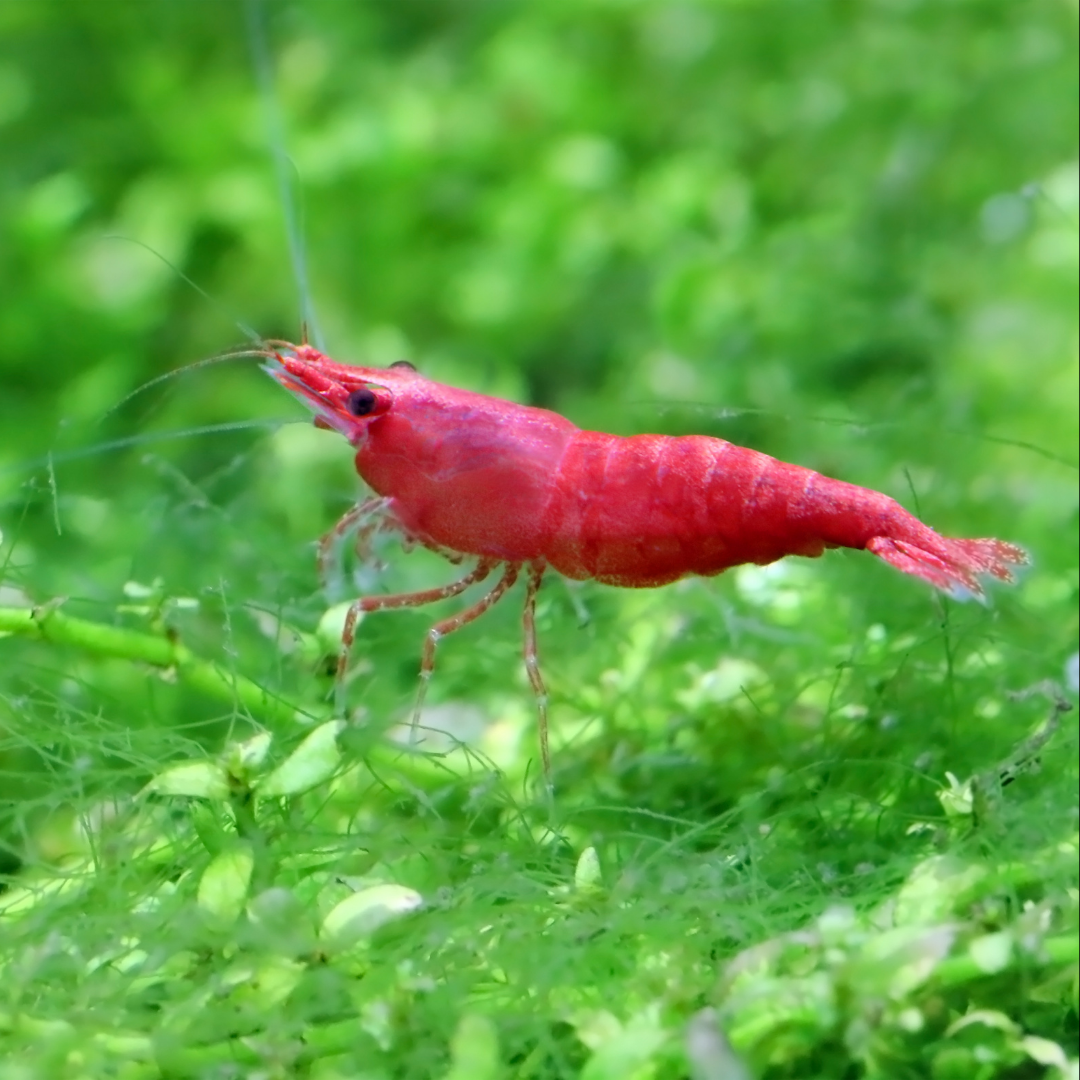
スーパーレッドチェリーシュリンプは、台湾で選抜交配によって作り出されたカワリヌマエビ属(Neocaridina)の改良品種です。全身がペンキを塗ったような濃厚な赤色に染まる姿は、水草の緑色と見事なコントラストを描き、観賞価値が極めて高いことで知られています。単なる「お掃除役」としての実用性だけでなく、その美しさを追求するコレクション性の高さも魅力の一つです。野生個体の地味な褐色からは想像もつかない鮮やかさですが、飼育自体は比較的容易であり、初心者から上級者まで幅広く愛されています。 The Super Red Cherry Shrimp is an ornamental variety of the Neocaridina genus, developed through selective breeding in Taiwan. Known for its intense, opaque red coloration that looks as if it were painted, it creates a stunning contrast with green aquatic plants. Beyond its practical role as a “cleaning crew,” it is highly prized for its aesthetic beauty and collectibility. While its vibrant appearance is a far cry from the dull brownish colors of its wild ancestors, it is relatively easy to care for, making it a favorite among both beginners and advanced aquarists.
基本情報 / Basic Information
| 学名 / Scientific Name | Neocaridina davidi |
|---|---|
| 通称 / Common Name | スーパーレッドチェリーシュリンプ、極火蝦(ゴクヒエビ)Super Red Cherry Shrimp, Fire Red Shrimp |
| 分類 / Family | 十脚目ヌマエビ科カワリヌマエビ属Decapoda, Atyidae, Neocaridina |
| 英名 / English Name | Super Red Cherry Shrimp / Painted Fire Red Shrimp |
| 分布 / Distribution | 改良品種(原種は台湾、中国、朝鮮半島、ベトナム周辺など)Selective breed (Original species from Taiwan, China, Korea, Vietnam, etc.) |
| 最大体長 / Max Size | 約3cm〜4cmApprox. 3cm – 4cm |
| 寿命 / Lifespan | 1年〜2年1 – 2 years |
飼育環境 / Aquarium Environment
| 水槽サイズ / Tank Size | 30cm規格水槽(約12L)以上。安定した管理には45cm〜60cm規格水槽が推奨されます。30cm standard tank (approx. 12L) or larger. A 45cm to 60cm standard tank is recommended for stable management. |
|---|---|
| 水温 / Temperature | 20℃〜25℃(極端な高温には弱いため、夏場は冷却対策が必要です。) 20°C – 25°C (Vulnerable to extreme high temperatures; cooling measures are necessary in summer.) |
| 水質 / Water Quality | 多くの地域の日本の水道水で飼育可能(pH6.5〜8.0付近)ですが、必ずカルキ抜きを行い、地域によってはミネラル調整が必要です。Keepable in tap water in many Japanese regions (around pH 6.5 – 8.0), but dechlorination is mandatory, and mineral adjustment may be required depending on the region. |
| レイアウト / Layout | ウィローモスなどの水草を配し、底床には暗色のソイルや砂利を使用すると、保護色反応により体色が濃く見えやすくなる傾向があります。Providing aquatic plants like Willow Moss and using dark substrate will make their body color tend to appear darker due to protective coloration. |
| 注意点 / Precautions | 農薬の付着した水草には極めて敏感です。また、脱皮不全を防ぐため適度なミネラル分(硬度)が必要です。Extremely sensitive to pesticides on aquatic plants. Adequate mineral content (hardness) is required to prevent molting failures. |
餌と給餌 / Feeding
| 餌の種類 / Diet | 人工飼料(エビ専用フード)、茹でたほうれん草、イサザアミ、バイオフィルム、藻類。Artificial feed (shrimp-specific pellets), blanched spinach, small crustaceans, biofilm, and algae. |
|---|---|
| 給餌のポイント / Feeding Tips | 赤色の発色維持を助けるために、アスタキサンチンを含む餌を与えることが有効と考えられています。Providing food containing astaxanthin is considered helpful for supporting and maintaining their vibrant red color. |
性格と混泳 / Temperament and Tank Mates
| 性格 / Temperament | 極めて温和で、他の生体を攻撃することはありません。Extremely peaceful; they will not attack other tank mates. |
|---|---|
| 混泳の相性 / Compatibility | 小型のテトラやラスボラ等とは可能ですが、大きな魚や肉食魚には捕食されるため避けてください。Can be kept with small tetras or rasboras, but avoid large or predatory fish as they will be preyed upon. |
病気と対策 / Diseases and Prevention
| かかりやすい病気 / Common Diseases | ツリガネムシの寄生、ヒルミミズの付着、脱皮不全、水質急変によるショック。Vorticella parasites, Scutariella japonica, molting failure, and shock from sudden water quality changes. |
|---|---|
| 対策と予防 / Prevention | 導入前の検疫(塩水浴など)を徹底し、定期的な換水とミネラル添加で環境を安定させます。Thoroughly quarantine (such as salt baths) before introduction, and stabilize the environment with regular water changes and mineral supplements. |
増やし方(繁殖) / Breeding
| 雌雄の判別 / Sexing | メスはオスよりも大きく、腹部が丸みを帯び、発色がより濃厚です。背中に卵巣(サドル)が見えることもあります。Females are larger than males, have a rounder abdomen, and exhibit more intense coloration. A saddle (ovaries) may be visible on the back. |
|---|---|
| 繁殖形態 / Reproduction | 直接発生型。ゾエア期を経ず、親と同じ姿の稚エビが卵から孵化します。Direct development. Young hatch as miniature versions of the adults, skipping the zoeal larval stage. |
| 繁殖のポイント / Breeding Tips | 純淡水で容易に繁殖します。稚エビが吸い込まれないよう、フィルターの吸水口にスポンジを設置してください。Breeds easily in pure freshwater. Place a sponge over the filter intake to prevent shrimplets from being sucked in. |
雑学と豆知識 / Trivia and Fun Facts
| 1. ペインテッド・ファイヤー・レッドとブラッディ・マリーの違い1. Difference between Painted Fire Red and Bloody Mary | どちらも最高峰の赤さを誇りますが、発色の仕組みが異なります。ペインテッド・ファイヤー・レッドは外殻(殻自体)が赤いのに対し、ブラッディ・マリーは内部組織(身)が赤く、殻は透明で艶があります。交配により色彩が不安定化する場合があり、系統の純度を維持したい場合は別々に管理するのが推奨されます。While both boast top-tier redness, their coloring mechanisms differ. Painted Fire Red has pigmented shells, whereas Bloody Mary has pigmented internal tissue visible through a clear, glossy shell. Breeding them together may cause coloration to become unstable, so separate management is recommended for maintaining lineage. |
|---|---|
| 2. 赤色を引き出す環境の仕組み2. The Mechanism of Enhancing Red Coloration | エビは周囲の環境に合わせて体色を変える背景適応(保護色)機能を備えています。暗い底床(ソイルなど)を使用することで、エビの色素胞が拡張し、体色がより濃く鮮やかに見えるようになります。また、抗酸化物質であるアスタキサンチンを摂取させることで、健康を維持しながら本来の鮮やかな発色をサポートできると考えられています。Shrimp possess a background adaptation mechanism to match their surroundings. Using dark substrates causes their chromatophores to expand, resulting in deeper, more vibrant colors. Additionally, consuming astaxanthin—a powerful antioxidant—is thought to support their health and natural vibrant coloration. |
| 3. 歴史の一説:1989年から始まった物語3. A Story Starting in 1989 (One Theory) | 一説によれば、現在世界中で見られる鮮やかなチェリーシュリンプの系統は、1980年代後半から1990年代にかけて台湾で進められた選抜交配に由来するとされています。ある趣味家が野生個体の中にわずかにピンク色の個体を見つけ、根気強く掛け合わせた結果、最初のチェリーレッドが誕生したというエピソードは、今日でもアクアリストの間でロマンを持って語り継がれています。According to one theory, the vibrant cherry shrimp lineages we see today originated from selective breeding conducted in Taiwan during the late 1980s and 1990s. The story of a hobbyist finding a slightly pink individual among wild stock and painstakingly line-breeding it is still told with great passion among aquarists today. |
| 4. 日本の水道水での飼育4. Keeping in Japanese Tap Water | 多くの日本の地域では、水道水が中性付近のpHに保たれているため、スーパーレッドチェリーシュリンプにとって比較的飼育しやすい環境です。ただし、脱皮の際には水中のミネラル(カルシウムやマグネシウム)が必要になるため、極端な軟水地域ではミネラル添加剤を併用することで、脱皮不全によるトラブルを減らし、安定した育成が期待できます。Many regions in Japan maintain a near-neutral pH in tap water, making it a relatively easy environment for keeping these shrimp. However, since they need minerals like calcium and magnesium for molting, using mineral supplements in very soft-water areas can help prevent molting issues and ensure stable growth. |
まとめ / Conclusion
スーパーレッドチェリーシュリンプは、その燃えるような赤色で水槽内を鮮やかに彩るだけでなく、コケや残餌を掃除してくれる頼もしい存在です。適切な給餌と暗い底床、そして安定した水質を維持することで、その美しさはさらに際立ちます。 The Super Red Cherry Shrimp not only brightens up an aquarium with its fiery red color but is also a reliable companion that cleans up algae and leftover food. By maintaining proper feeding, dark substrates, and stable water quality, its beauty can be further enhanced.
小さな稚エビが誕生する様子を観察できるのも、本種を飼育する大きな喜びです。地域の水質を確認し、個体や稚エビの状態を観察しながら管理します。 One of the greatest joys of keeping this species is watching the tiny shrimplets being born. Check local water conditions and observe the adults and shrimplets as part of routine care.

気になる道具や飼い方を見つけてみませんか?
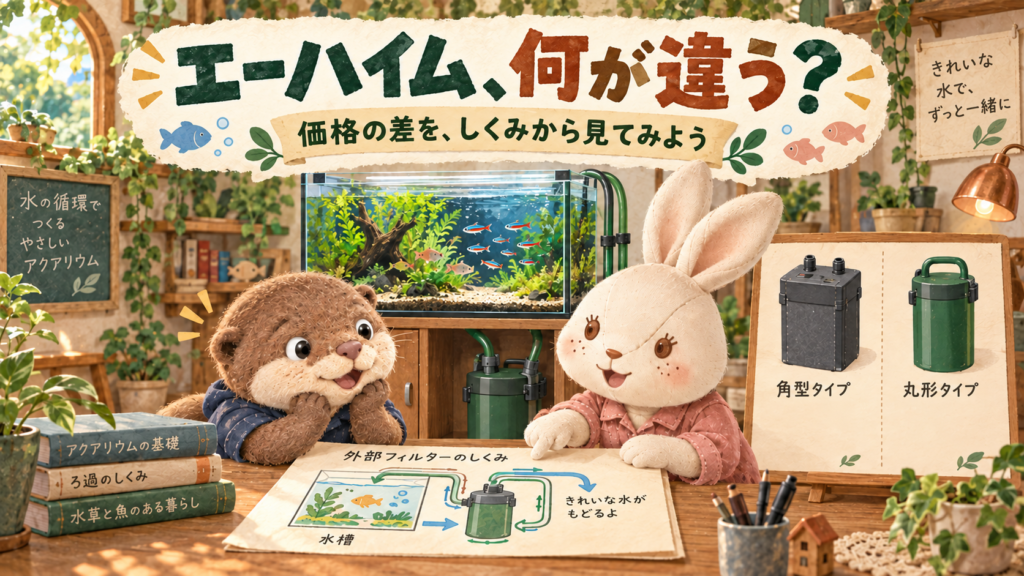 アイのアクアグッズ案内エーハイム、安いのと高いのは何が違う? コタロウと見比べる外部フィルター道具の特徴や使い方、選ぶときのポイントをアイが紹介します。記事はコチラ →
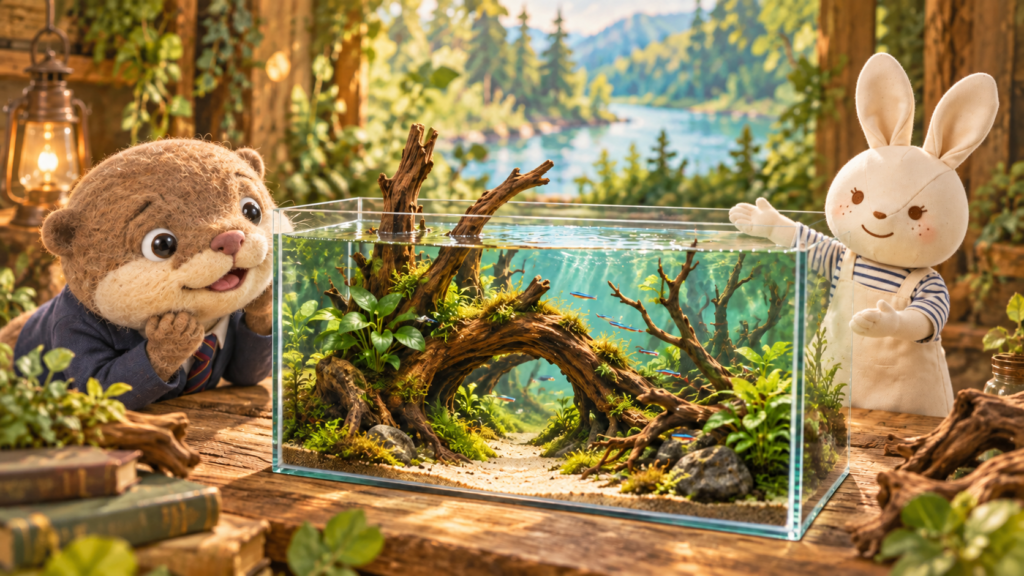 アイのアクアグッズ案内水槽の流木の選び方|枝・マングローブ・アク抜きとおすすめ商品水槽に小さな森を作る流木。枝流木やマングローブという名前の違いから、魚の隠れ家、水草の取り付け、浮く・水が茶色くなるときの準備まで、アイとコタロウが商品とともに案内します。記事はコチラ →
さまざまな飼育テーマをご紹介。リンク先の記事には広告・商品紹介が含まれます。
案内・紹介記事一覧へ →▶ 記事の生体をAMAZONで買う ▶ 記事の生体をYahooで買う
参考文献・出典一覧 References & Sources
- Wikipedia contributors. “Neocaridina davidi.” Wikipedia, The Free Encyclopedia. (分類学上の学名およびシノニム、原産地域の確認に使用) Wikipedia contributors. “Neocaridina davidi.” Wikipedia, The Free Encyclopedia. (Used for verifying scientific names, synonyms, and native distribution)
- Bouvier, E. L. (1904). “Crevettes de la famille des Atyidés; espèces qui font partie des collections du Muséum d’Histoire naturelle.” (本種の原記載およびヌマエビ科の初期の分類史に関する一次資料) Bouvier, E. L. (1904). “Crevettes de la famille des Atyidés; espèces qui font partie des collections du Muséum d’Histoire naturelle.” (Primary source for the original description of this species and early atyid taxonomy)
- Kasetsart University Research Repository. “Effect of dietary astaxanthin and background color on the skin color of red cherry shrimp.” (アスタキサンチン摂取と背景色の違いによる色彩発現への影響に関する研究論文) Kasetsart University Research Repository. “Effect of dietary astaxanthin and background color on the skin color of red cherry shrimp.” (Research paper on the effects of astaxanthin intake and background color on pigmentation)
- Chris Lukhaup. “Shrimps of the World.” (台湾における選抜交配の歴史、カラーバリエーションの作出経緯に関する専門資料) Chris Lukhaup. “Shrimps of the World.” (Professional reference regarding the history of selective breeding and color variation development in Taiwan)
- 国立環境研究所 侵入生物データベース. “カワリヌマエビ属の一種.” (日本国内における定着事例および、在来種への生態学的リスクに関する情報の参照) National Institute for Environmental Studies. “Invasive Species Database: Neocaridina spp.” (Reference for establishment cases in Japan and ecological risks to native species)




コメント