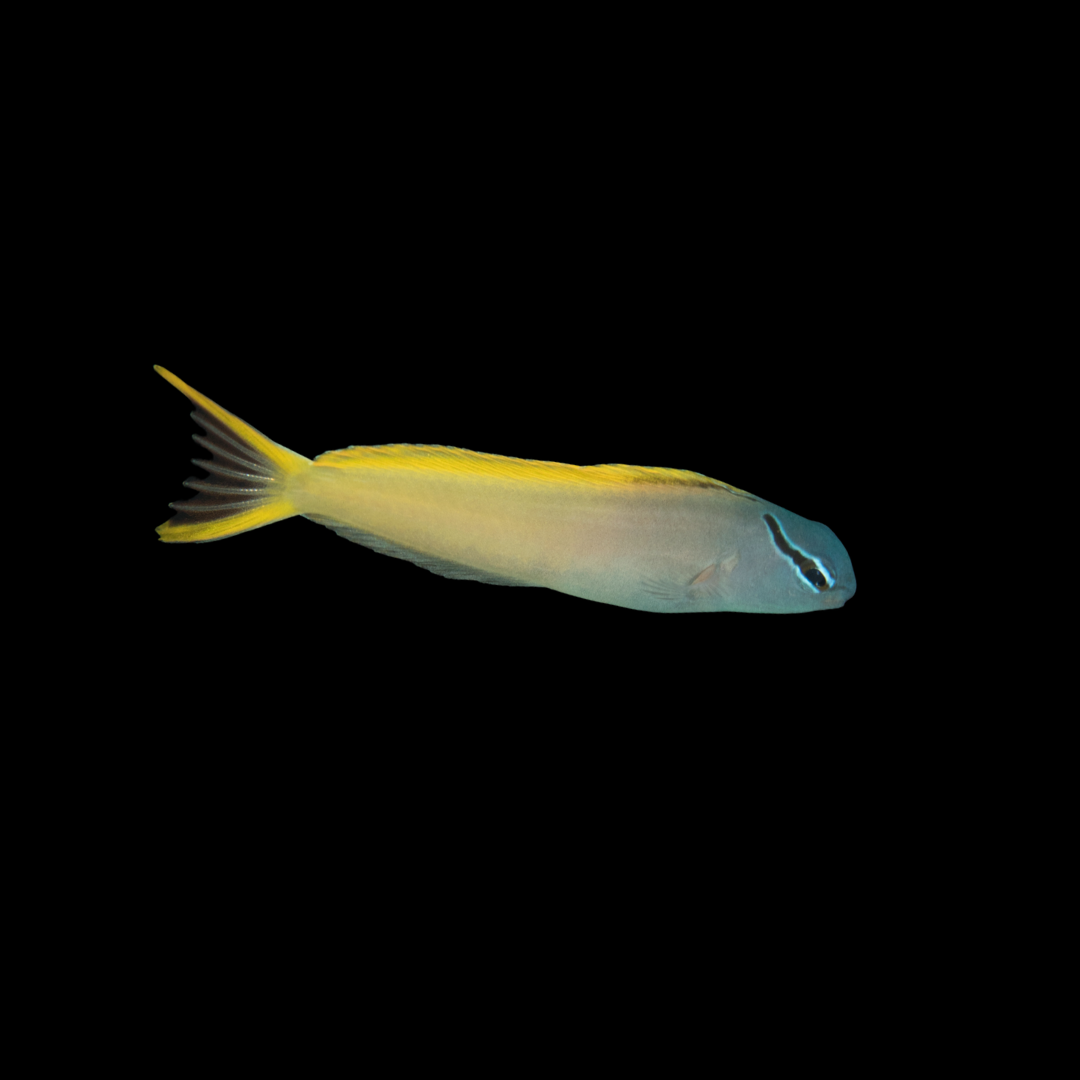
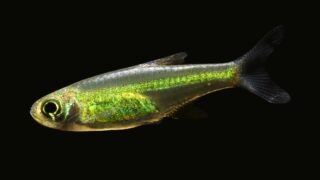
オウゴンニジギンポは、青灰色がかった前半部から黄色い後半部と尾びれへ移る体色、目を通る斜めの暗色ライン、そして二股に伸びる尾びれが印象的な海水性のギンポです。水槽内では岩穴に身を寄せるだけでなく、中層へ出て軽やかに泳ぐ姿も見せるため、小型海水魚の中でもよく目立ちます。ヒゲニジギンポ属らしく下顎に防御用の毒牙を持つ点も大きな特徴ですが、飼育ではむやみに怖がるよりも、飛び出し対策、隠れ家、餌の行き渡りを丁寧に整えることが大切です。The Forktail Blenny is a marine blenny with a greyish-blue front half that grades into a yellow rear body and tail, a dark diagonal line through the eye, and a distinctive forked tail. In aquariums it does not only hide in rockwork; it also swims lightly in the midwater, making it a lively and visible small marine fish. As a member of the fangblenny genus Meiacanthus, it has defensive venomous lower canines, but successful care is less about fear and more about providing a secure lid, safe hiding places, and reliable feeding opportunities.
ギンポ目、イソギンポ科、ヒゲニジギンポ属。分類体系によってはスズキ目の中で扱われる場合もあります。Order Blenniiformes, family Blenniidae, genus Meiacanthus. Some classification systems also place blennies within Perciformes.
英名 / English Name
Forktail Blenny
分布 / Distribution
西太平洋に広く分布し、バリ島・フィリピン周辺からサモア方面、北は琉球列島、南はオーストラリア北西部からグレートバリアリーフ南部、ニューカレドニア、ミクロネシア周辺にかけて記録されています。国内では琉球列島周辺の浅いサンゴ礁斜面や岩礁域で知られます。It is widely distributed in the western Pacific, from Bali and the Philippines eastward toward Samoa, north to the Ryukyu Islands, and south to northwestern Australia, the southern Great Barrier Reef, New Caledonia, and Micronesia. In Japan it is known from the Ryukyu region, especially shallow coral reef slopes and rocky reef areas.
最大体長 / Max Size
約11cm。成魚では尾びれの上下葉が糸状に伸びることがあります。About 11 cm. Adults may develop filament-like extensions on the upper and lower lobes of the caudal fin.
寿命 / Lifespan
野外での寿命データは限られますが、飼育下では状態よく維持できれば数年単位で楽しめる魚です。目安として3〜5年ほどを想定し、導入時の健康状態と日々の給餌管理を重視します。Field lifespan data are limited, but in aquariums it can be enjoyed for several years when well maintained. A practical expectation is around 3 to 5 years, with initial health and daily feeding management being especially important.
飼育環境 / Aquarium Environment
水槽サイズ / Tank Size
単独飼育でも30ガロン前後、約110L以上が安心です。日本の規格では60cmワイド水槽以上、余裕を持たせるなら90cm規格水槽が扱いやすく、泳ぐ空間とライブロックの隠れ家を両立しやすくなります。For a single specimen, around 30 gallons or roughly 110 liters or more is a comfortable guideline. In Japanese aquarium sizes, a 60 cm wide tank or larger is recommended, while a standard 90 cm tank offers an easier balance of swimming room and live-rock shelters.
水温 / Temperature
24〜27℃を目安に安定させます。短期的な幅にはある程度耐えますが、急な上下は避けてください。Maintain a stable temperature of about 24 to 27°C. It can tolerate some short-term variation, but sudden swings should be avoided.
水質 / Water Quality
比重1.023〜1.025、pH8.1〜8.4を目安にします。プランクトン食性を意識した少量複数回の給餌になりやすいため、プロテインスキマー、十分なろ過、定期的な換水で硝酸塩の蓄積を抑えると安定します。Aim for a specific gravity of 1.023 to 1.025 and a pH of 8.1 to 8.4. Because small, frequent feedings are often useful for this planktivore, efficient filtration, a protein skimmer, and regular water changes help keep nitrate accumulation under control.
レイアウト / Layout
ライブロックで小さな穴や割れ目を複数作り、前面や中層には泳ぐための空間を残します。自然下では潮通しのよい浅場、サンゴ礁斜面、岩礁域などで見られるため、緩やかに餌が流れる程度の水流があると行動を引き出しやすくなります。Use live rock to create several small holes and crevices while leaving open swimming space at the front and in the midwater. In nature it occurs in relatively shallow, well-flushed coral reef slopes and rocky areas, so moderate flow that carries food gently through the water column helps encourage natural behavior.
注意点 / Precautions
最重要ポイントは飛び出し防止です。ガラスフタや目の細かいメッシュフタを使い、配管まわりの小さな隙間もふさぎます。毒牙は主に防御のための器官なので、普段の観賞で過度に心配する必要はありませんが、手で追い回したり、素手でつかんだりせず、移動時は容器や網を使って落ち着いて扱います。Jump prevention is the most important precaution. Use a glass lid or fine mesh cover and close small gaps around pipes and equipment. Its venomous fangs are primarily defensive, so they need not be over-feared during normal viewing, but avoid chasing or grabbing the fish by hand and use a container or net calmly when moving it.
餌と給餌 / Feeding
餌の種類 / Diet
自然界では動物プランクトンと小型の底生無脊椎動物を食べます。飼育下では冷凍コペポーダ、冷凍イサザアミ、ブラインシュリンプ、細かく刻んだ海産魚介、海水魚用フレーク、小粒ペレットなどを組み合わせます。藻類成分やスピルリナを含む配合飼料も、栄養の幅を広げる補助として使えます。In nature it feeds on zooplankton and small benthic invertebrates. In aquariums, offer a varied diet of frozen copepods, mysid shrimp, brine shrimp, finely chopped marine seafood, marine flakes, and small pellets. Prepared foods containing algae or spirulina can also be used as supplements to broaden the nutritional profile.
給餌のポイント / Feeding Tips
導入直後に人工飼料へ反応しない場合は、隔離ボックスで落ち着かせ、冷凍コペポーダや活きたブラインシュリンプなど動きや匂いのある餌から始めると餌付きやすくなります。慣れてきたら細かく砕いた人工飼料を混ぜ、食べる勢いを利用して移行します。混泳水槽では水流ポンプを一時停止し、スポイトで目の前に餌を流すターゲットフィーディングが有効です。If a newly introduced fish ignores prepared foods, place it in an acclimation or breeder box and begin with foods that provide movement or scent, such as frozen copepods or live brine shrimp. Once it feeds actively, mix in finely crushed prepared food and use its feeding response to transition it. In community aquariums, temporarily stop pumps and target feed with a pipette so the blenny receives food before faster tank mates consume it.
性格と混泳 / Temperament and Tank Mates
性格 / Temperament
基本的には温和で、岩穴を拠点にしながら中層を泳ぐ活発な魚です。一方で、同属や体型の似たギンポ類には縄張り意識を見せることがあるため、一般的な家庭水槽では単独飼育が無難です。It is generally peaceful and active, often using rock holes as a base while swimming in the midwater. However, it can show territorial behavior toward members of the same genus or similarly shaped blennies, so keeping a single specimen is usually the safest choice in home aquariums.
混泳の相性 / Compatibility
カクレクマノミ、小型ハゼ、小型ベラ、温和なスズメダイ類などとは比較的合わせやすい魚です。サンゴをつつく性質は強くないため、リーフタンクにも向きます。ただし、非常に貪食なハギ類やアイゴ類、攻撃的な魚と混泳させると、給餌競争に負けて痩せることがあります。混泳時は、食べているか、腹部が痩せていないかを必ず観察してください。It usually pairs well with clownfish, small gobies, small wrasses, and relatively peaceful damselfishes. It is generally suitable for reef aquariums because it is not known as a coral nipper. However, vigorous feeders such as tangs and rabbitfish, or aggressive fish, may outcompete it and cause weight loss. In community tanks, always check that it is eating and that the belly is not becoming pinched.
病気と対策 / Diseases and Prevention
かかりやすい病気 / Common Diseases
本種だけに特有の病気が広く知られているわけではありませんが、海水魚に一般的な白点病、ウーディニウム病、外部寄生虫、輸送ストレスによる拒食や痩せには注意します。導入直後は呼吸の速さ、体表の白点や曇り、ヒレの傷み、餌への反応をよく確認します。No widely recognized disease is unique to this species, but watch for common marine fish problems such as marine ich, velvet disease, external parasites, and stress-related refusal of food or weight loss. After introduction, check breathing rate, white spots or cloudiness on the body, fin damage, and feeding response.
対策と予防 / Prevention
可能であれば導入前に隔離飼育を行い、餌付けと健康確認を済ませてから本水槽へ入れます。水温や比重を急変させず、過密飼育を避け、十分な隠れ家を用意することが予防の基本です。購入時は、痩せが少なく、ヒレが裂けておらず、餌に反応する個体を選ぶと成功率が上がります。Whenever possible, quarantine new arrivals and confirm feeding and health before adding them to the display tank. Avoid sudden changes in temperature or salinity, prevent overcrowding, and provide ample shelters. When purchasing, choose a specimen with a full body, intact fins, and a clear feeding response.
増やし方(繁殖) / Breeding
雌雄の判別 / Sexing
一般的な観賞魚店での雌雄判別は簡単ではありません。成熟個体では体格、縄張り行動、求愛行動などに差が見られる場合がありますが、外見だけで確実に判別するのは難しい魚です。Sexing is not easy in the aquarium trade. Mature fish may show differences in size, territorial behavior, or courtship behavior, but reliable sexing by appearance alone is difficult.
繁殖形態 / Reproduction
基質や穴の内側に粘着性のある沈性卵を産みつけ、オスが卵の世話を行うタイプです。ふ化後の仔魚は浮遊生活に入り、ワムシやブラインシュリンプ幼生など、段階に応じた微小餌料を必要とします。It lays adhesive demersal eggs on a substrate or inside a cavity, and the male cares for the eggs. After hatching, the larvae enter a planktonic stage and require stage-appropriate microfoods such as rotifers and Artemia nauplii.
繁殖のポイント / Breeding Tips
研究レベルでは飼育下繁殖の報告があり、単一入口の細い筒状シェルターが産卵場所として使われた例もあります。ただし家庭水槽では、産卵の確認よりも仔魚の回収、微小餌料の培養、水質と光量の管理が大きな壁になります。人工繁殖個体が入手できる場合は、人工飼料に慣れていることが多く、環境適応の面でも扱いやすい選択肢です。Captive breeding has been reported under research conditions, including the use of narrow single-entrance tube shelters as spawning sites. In home aquariums, the main challenge is not only observing spawning but also collecting larvae, culturing microfoods, and controlling water quality and light. When captive-bred specimens are available, they are often already accustomed to prepared foods and can be easier to acclimate.
雑学と豆知識 / Trivia and Fun Facts
1. 名前の印象よりも繊細な色合い / 1. More nuanced than its “golden” impression
和名の「オウゴン」から全身が一様な黄金色の魚を想像しがちですが、実際には頭部から体の前半に青灰色や淡い色が入り、後半から尾びれにかけて黄色が強く出る個体が多く見られます。目を通る斜めの暗色ラインと背びれ基部の黒い帯は、似た魚と見分ける大切な手がかりです。水槽では照明や個体の状態で見え方が変わるため、単に「黄色い魚」としてではなく、前後で変化するグラデーションを観察すると魅力がより伝わります。The Japanese name suggests a uniformly golden fish, but many individuals show a greyish-blue or pale front half that becomes more yellow toward the rear body and tail. The dark diagonal line through the eye and the dark band near the base of the dorsal fin are important identification clues. Under aquarium lighting the impression can change with condition and angle, so it is best appreciated not merely as a yellow fish but as a blenny with a subtle front-to-back gradient.
2. 毒牙は攻撃よりも防御のため / 2. Venomous fangs for defense, not hunting
ヒゲニジギンポ属の特徴である下顎の毒牙は、餌を捕まえるためというより、捕食者に飲み込まれそうになった時の防御に使われます。背びれの棘で刺すミノカサゴ類とは違い、口の中の牙で噛みつくという仕組みが独特です。この防御力があるため、自然下では比較的開けた水中で餌を取る行動がしやすくなっていると考えられています。The venomous lower canines that characterize Meiacanthus blennies are used more for defense than for capturing food. Unlike lionfish, which use venomous fin spines, fangblennies deliver venom through teeth inside the mouth. This defensive ability is thought to help them forage more confidently in relatively open water.
3. まねされるほど目立つ防御モデル / 3. A defended model worth mimicking
サンゴ礁では、毒や防御力を持つ生物に似せることで捕食を避ける「擬態」がよく見られます。オウゴンニジギンポは、イナセギンポなどに姿をまねられる魚として知られています。まねる側にとっては、捕食者に「この形の魚は避けたほうがよい」と思わせることが利益になります。小さなギンポの姿にも、サンゴ礁の食べる・食べられる関係が刻まれているのです。On coral reefs, mimicry can help fishes avoid predation by resembling species that are venomous or otherwise defended. The Forktail Blenny is known as a model mimicked by fishes such as Plagiotremus laudandus. For the mimic, resembling a fish that predators learn to avoid can be advantageous. Even the appearance of a small blenny reflects the predator-prey relationships of the reef.
4. ハナダイギンポとは別種 / 4. Different from the Midas Blenny
市場では、同じく黄色味があり人気の高いハナダイギンポと混同されることがあります。ハナダイギンポはニラミギンポ属の別種で、英名はMidas Blennyです。オウゴンニジギンポは二股に分かれる尾びれ、目を通る斜めのライン、ヒゲニジギンポ属らしい毒牙が見分けのポイントです。見た目の印象だけでなく、分類や行動の違いを知っておくと、購入時の取り違えを防ぎやすくなります。In the aquarium trade it can be confused with the similarly yellowish and popular Midas Blenny, Ecsenius midas. The Midas Blenny belongs to a different genus. The Forktail Blenny is identified by its forked tail, diagonal eye line, and the venomous fangs typical of Meiacanthus. Knowing the differences in taxonomy and behavior helps prevent confusion when purchasing.
5. 小さな寝床が安心感をつくる / 5. A small sleeping hole creates security
ライブロックに小さな穴を用意すると、オウゴンニジギンポはそこを寝床や避難場所として使うことがあります。夜に穴から顔だけをのぞかせる姿は、ギンポ類ならではの愛嬌です。十分な隠れ家がある魚ほど、日中はかえって大胆に泳ぐことも多く、隠れ家は「見えなくするための場所」ではなく「安心して見せてくれるようにする場所」と考えるとよいでしょう。If small holes are provided in live rock, the Forktail Blenny may use one as a sleeping place or refuge. Seeing only its face peeking out at night is part of the charm of blennies. Fish with secure shelters often become bolder during the day, so hiding places should be viewed not as spaces that make the fish disappear, but as spaces that help it feel safe enough to show itself.
6. 人工繁殖個体は今後の有力な選択肢 / 6. Captive-bred fish are a promising choice
オウゴンニジギンポは研究レベルで繁殖や仔魚育成が扱われてきた種で、人工繁殖個体を扱う海外の養殖業者も見られます。人工繁殖個体は人工飼料に慣れていることが多く、導入時の餌付けでつまずきにくい点が魅力です。野生採集個体の美しさにも価値はありますが、将来的に国内で人工繁殖個体の選択肢が広がれば、飼育のしやすさとサンゴ礁への配慮を両立しやすくなります。The Forktail Blenny has been studied for captive breeding and larval rearing, and some overseas hatcheries offer tank-bred specimens. Captive-bred fish are often accustomed to prepared diets, reducing the risk of early feeding problems. Wild-collected fish still have value, but wider availability of captive-bred specimens could make it easier to combine successful aquarium care with consideration for reef ecosystems.
まとめ / Conclusion
オウゴンニジギンポは、黄色い尾びれの華やかさ、目元の斜線がつくる表情、中層を泳ぐ軽快さ、そして毒牙を備えた生態的な個性をあわせ持つ、海水魚図鑑の中でも印象に残りやすい一種です。小型で比較的丈夫な魚として紹介されることがありますが、長く楽しむためには、フタによる飛び出し防止、落ち着ける岩穴、少量複数回の給餌、混泳魚との餌の競合管理が欠かせません。The Forktail Blenny is a memorable species in the marine aquarium world, combining the brightness of a yellow tail, the expressive diagonal mark through the eye, lively midwater swimming, and the ecological individuality of venomous fangs. Although it is often regarded as a relatively hardy small fish, long-term success depends on a secure lid, comfortable rock holes, small frequent feedings, and careful management of feeding competition in community tanks.
この魚の魅力は、単に色がきれいなことだけではありません。岩穴から顔を出す仕草、流れの中でプランクトンを探すように泳ぐ姿、そして擬態や防御にまつわるサンゴ礁の物語まで含めて、ひとつの水槽に小さな海のドラマを連れてきてくれます。正しい名前と特徴を確認し、落ち着いた環境を整えて迎えれば、オウゴンニジギンポは水槽の中で長く観察したくなる存在になってくれるでしょう。Its appeal is not limited to attractive color. The way it peeks from a rock hole, swims through the current as if searching for plankton, and carries the reef story of mimicry and defense all bring a small piece of ocean drama into the aquarium. By confirming its name and key features and providing a calm, well-prepared environment, the Forktail Blenny can become a fish that aquarists will want to observe for years.


 アイのアクアグッズ案内水槽の流木の選び方|枝・マングローブ・アク抜きとおすすめ商品水槽に小さな森を作る流木。枝流木やマングローブという名前の違いから、魚の隠れ家、水草の取り付け、浮く・水が茶色くなるときの準備まで、アイとコタロウが商品とともに案内します。記事はコチラ →
 アイのアクアグッズ案内おとひめ物語|養殖生まれの餌を、わが家の魚に合う一粒へ道具の特徴や使い方、選ぶときのポイントをアイが紹介します。記事はコチラ →



コメント