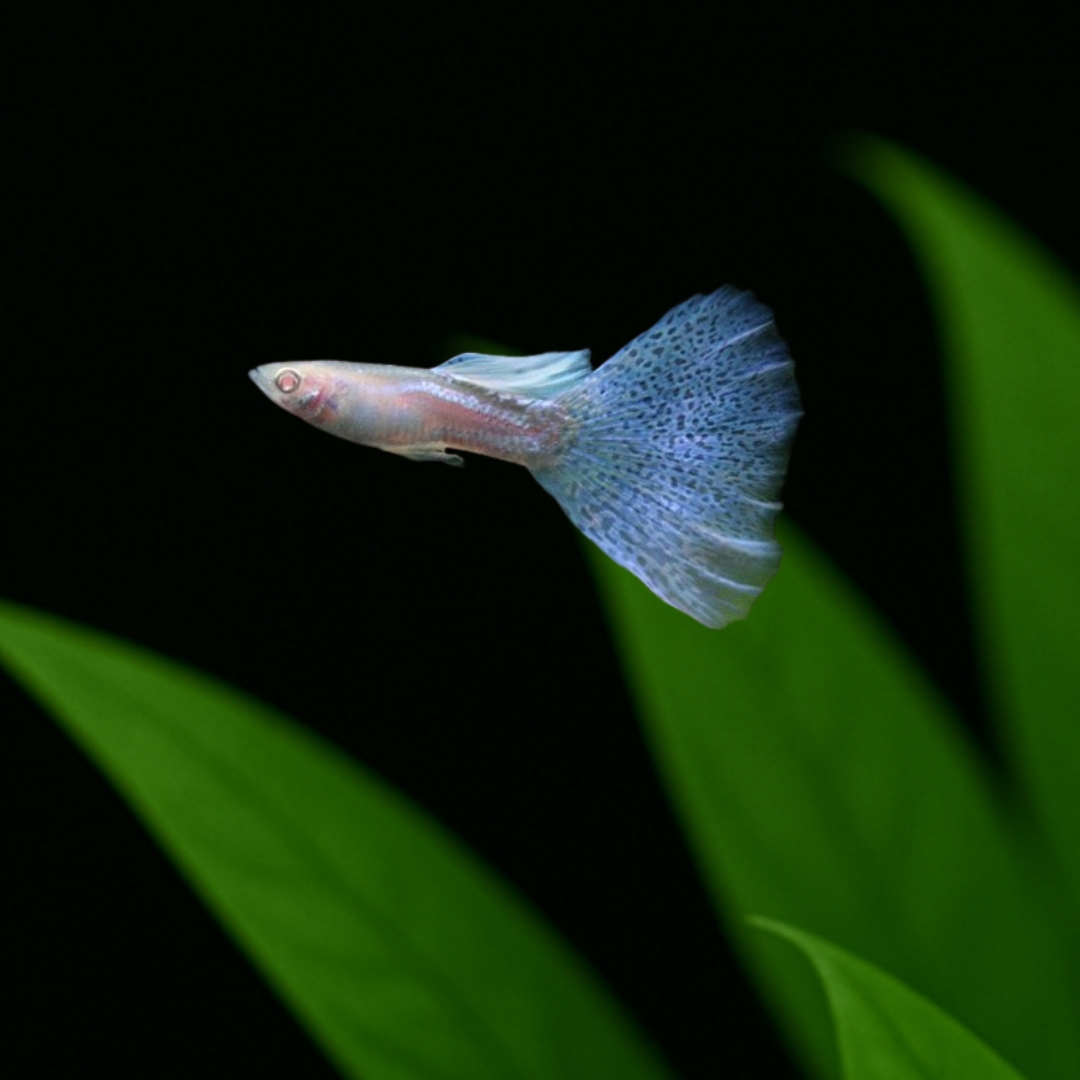
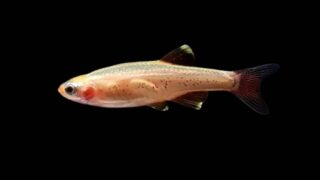
RREAブルーグラスグッピーは、ブルーグラス系グッピーにリアルレッドアイアルビノ、いわゆるRREAの特徴を組み合わせた改良品種です。赤い瞳とメラニンの少ない淡い体色、そして尾ビレに広がる繊細なグラス模様が大きな魅力で、通常のブルーグラスよりもやわらかく、透明感のある印象を楽しめます。グッピーとしては比較的飼育しやすい一方で、RREA個体は、ノーマル体色の個体よりも視覚面や体質面でデリケートに扱われることが多いため、水質の急変を避け、落ち着いた環境で丁寧に育てることが大切です。The RREA Blue Grass Guppy is a selectively bred guppy strain that combines the Blue Grass pattern with Real Red Eye Albino traits. Its red eyes, pale albino body, and delicate glass-like pattern on the caudal fin create a soft, translucent beauty that differs from the darker appearance of normal Blue Grass guppies. Although it remains a guppy and is generally manageable in aquaria, RREA individuals are often treated as more delicate than normal-colored guppies in terms of vision and overall constitution, so stable water conditions and a calm environment are important.
基本情報 / Basic Information
学名 / Scientific Name
Poecilia reticulata
通称 / Common Name
RREAブルーグラスグッピー、RREAブルーグラス、リアルレッドアイアルビノ・ブルーグラスRREA Blue Grass Guppy, Real Red Eye Albino Blue Grass Guppy
分類 / Family
カダヤシ目カダヤシ科グッピー属Family Poeciliidae, order Cyprinodontiformes, genus Poecilia
英名 / English Name
RREA Blue Grass Guppy
分布 / Distribution
原種のグッピーは南米北部、特にベネズエラからギアナ周辺を中心に自然分布する魚です。本品種はそのグッピーから作出・維持されている観賞魚の改良品種で、流通個体は主に国内外のブリーダーや養殖場で繁殖されたものです。The wild guppy is native mainly to northern South America, especially the region from Venezuela to the Guianas. This strain is a selectively bred aquarium variety derived from the guppy, and specimens in the trade are mainly captive-bred by domestic and overseas breeders or farms.
最大体長 / Max Size
オス約3〜4cm、メス約4〜5cm程度。改良品種では系統や飼育環境により体格差があり、よく育ったメスではやや大きく見えることもあります。Males about 3–4 cm, females about 4–5 cm. Size varies depending on strain quality and husbandry conditions, and well-grown females may appear somewhat larger.
寿命 / Lifespan
一般的には1〜2年程度です。低めで安定した水温と過度な繁殖負荷を避けた管理では、より長く維持できる場合があります。Usually around 1–2 years. With stable, moderately cool water and reduced breeding stress, some individuals may live longer.
飼育環境 / Aquarium Environment
水槽サイズ / Tank Size
ペアやトリオの維持だけなら30cm規格水槽でも可能ですが、水質の安定と繁殖を考えるなら45cm規格水槽以上が扱いやすいです。複数ペアを維持する場合は60cm規格水槽を用意すると、選別や稚魚育成にも余裕が出ます。A 30 cm standard tank can maintain a pair or trio, but a 45 cm standard tank or larger is easier for stable water quality and breeding. For multiple pairs, a 60 cm standard tank provides more room for selection and fry raising.
水温 / Temperature
23〜26℃前後が目安です。高水温では成長や繁殖は早まりますが、代謝が上がりやすいため、長期維持では24〜25℃前後で安定させると安心です。Around 23–26°C is suitable. Higher temperatures may accelerate growth and breeding, but for long-term care, keeping the water stable around 24–25°C is safer.
水質 / Water Quality
中性から弱アルカリ性、pH6.8〜7.8前後を目安にします。日本の水道水は地域によって軟水寄りになりやすいため、pHが下がりやすい環境ではカキ殻や少量のサンゴ砂をろ材として使い、急激な酸性化を防ぐと安定しやすいです。Neutral to slightly alkaline water, around pH 6.8–7.8, is recommended. In soft-water areas, oyster shell or a small amount of coral sand in the filter can help prevent rapid acidification.
レイアウト / Layout
強い水流を避け、スポンジフィルターなどで穏やかにろ過するレイアウトが向いています。ウィローモス、マツモ、アナカリス、浮草などを入れると、視力が弱い個体の落ち着き場所や稚魚の隠れ家になります。A gentle layout with mild filtration, such as a sponge filter, is ideal. Java moss, hornwort, anacharis, and floating plants provide cover for visually sensitive adults and hiding places for fry.
注意点 / Precautions
RREA個体はノーマル体色のグッピーよりもデリケートに扱うのが無難です。急な水温変化、古い水、強すぎる照明、過密飼育は避けます。また、系統維持を目的にする場合は、他系統のグッピーと混ぜない専用水槽で管理することが重要です。RREA individuals should be treated as more delicate than normal-colored guppies. Avoid sudden temperature changes, deteriorated water, overly strong lighting, and overcrowding. If maintaining the strain, keep them in a dedicated tank without other guppy strains.
餌と給餌 / Feeding
餌の種類 / Diet
細かな人工飼料を主食に、ブラインシュリンプ、冷凍赤虫、イトメ、ミジンコなどを補助的に与えます。消化を助けるため、スピルリナ配合飼料など植物質を含む餌も組み合わせるとバランスを取りやすいです。Use fine prepared foods as a staple, supplemented with brine shrimp, frozen bloodworms, tubifex, and daphnia. Foods containing plant matter, such as spirulina-based diets, help maintain digestive balance.
給餌のポイント / Feeding Tips
1日1〜2回、短時間で食べきれる量を与えます。RREA個体は餌を見つけるのが遅れることがあるため、給餌リングを使ったり、水流の弱い場所に餌を落としたりすると食べ残しを減らせます。稚魚には孵化直後のブラインシュリンプや稚魚用パウダーフードを少量ずつ複数回与えると成長が安定しやすいです。Feed once or twice daily, only as much as they can finish quickly. Because RREA fish may take longer to find food, a feeding ring or low-flow feeding spot can reduce leftovers. Fry grow more steadily when given newly hatched brine shrimp or powdered fry food in small, frequent meals.
性格と混泳 / Temperament and Tank Mates
性格 / Temperament
基本的には温和で、上層から中層をよく泳ぐグッピーらしい性格です。ただし、オス同士ではメスを巡る追尾が見られることがあり、体力の弱い個体が追われ続けないよう、隠れ場所と水量を確保しておくと安心です。It is generally peaceful and active in the upper to middle water layers. Males may chase females or each other, so providing space and cover helps prevent weaker fish from being stressed.
混泳の相性 / Compatibility
観賞目的であれば、小型で温和な魚との混泳も可能です。ただし、ヒレをかじる魚、動きの速い魚、餌を奪いやすい魚は避けます。繁殖や品種固定を目的とする場合は、交雑を防ぐためRREAブルーグラスのみの単独飼育が適しています。For display, it can be kept with small peaceful fish, but avoid fin-nippers, fast feeders, and boisterous species. For breeding or strain maintenance, keeping only RREA Blue Grass guppies is recommended to prevent unwanted crosses.
病気と対策 / Diseases and Prevention
かかりやすい病気 / Common Diseases
白点病、尾腐れ病、カラムナリス症、エロモナス症、吸虫類の寄生などに注意します。RREA個体は体調悪化が表に出てから進行が早いことがあるため、ヒレの閉じ、体表の白濁、呼吸の荒さ、餌食いの低下を早めに見つけることが重要です。Watch for ich, fin rot, columnaris, Aeromonas infections, and fluke infestations. RREA individuals may decline quickly once symptoms appear, so early signs such as clamped fins, cloudy skin, rapid breathing, and reduced appetite should be addressed promptly.
対策と予防 / Prevention
予防の基本は、水温と水質を急変させないことです。新しく迎えた個体はすぐに本水槽へ入れず、可能であればトリートメント水槽で様子を見ます。細菌性の症状では水質改善と塩水浴、必要に応じた魚病薬の使用を検討します。白点病では水温管理と薬浴が基本ですが、RREA個体は薬剤や急な環境変化にも弱い場合があるため、規定量を守りながら慎重に対応することが必要です。Prevention begins with avoiding sudden changes in temperature and water quality. New fish should ideally be observed in a quarantine tank before introduction. For bacterial symptoms, improve water quality and consider salt treatment or suitable medication. Ich treatment usually involves temperature management and medication, but RREA fish may be sensitive to both drugs and rapid changes, so dosing should be careful and within the label instructions.
増やし方(繁殖) / Breeding
雌雄の判別 / Sexing
オスは体が小さめで色彩が強く、尻ビレが交接器であるゴノポディウムに変化します。メスは体が大きく腹部に丸みがあり、尾ビレの発色はオスより控えめです。繁殖用のメスは体格、尾筒の太さ、背曲がりの有無を重視して選ぶと、次世代の安定につながります。Males are smaller, more colorful, and have a gonopodium formed from the anal fin. Females are larger with a rounded abdomen and usually less intense fin coloration. For breeding, females should be selected for body size, a strong caudal peduncle, and a straight spine.
繁殖形態 / Reproduction
卵胎生です。メスの体内で卵が発生し、稚魚の形で産まれます。条件が整うとおよそ3〜4週間間隔で出産することがあります。It is a livebearer. Embryos develop inside the female, and she gives birth to free-swimming fry. Under suitable conditions, births may occur roughly every 3–4 weeks.
繁殖のポイント / Breeding Tips
RREA表現を安定して維持するには、RREA個体同士で交配させるのが基本です。ブルーグラスでは、愛好家の間でブラオ系の遺伝が関わると説明されることがあり、同腹からレッドグラス、ブルーグラス、ブラオ系の表現が分かれて出る場合があります。そのため、毎世代の選別が重要です。近親交配を重ねすぎると体格低下や背曲がりが出やすくなるため、複数ラインを分けて管理し、必要に応じて近い系統間で戻すような計画的な系統維持が望まれます。To maintain the RREA expression consistently, breeding RREA individuals together is the standard approach. Among guppy hobbyists, Blue Grass expression is often explained in relation to blau-type genetics, and red grass, blue grass, and blau-like phenotypes may appear among siblings. For this reason, selection each generation is important. Excessive inbreeding can lead to smaller size and spinal deformities, so maintaining multiple lines and planned line management is recommended.
雑学と豆知識 / Trivia and Fun Facts
1. RREAが生む赤い瞳と淡い体色 / 1. Red eyes and pale coloration produced by RREA
RREAはReal Red Eye Albinoの略で、黒色色素であるメラニンが強く抑えられることで赤い瞳に見えるアルビノ表現です。目そのものが赤く発光しているわけではなく、メラニンが少ないために内部の血管色が透けて見えることで、透明感のある赤い印象になります。この性質は尾ビレの模様にも影響し、通常のブルーグラスで黒く見える細かな斑点が淡く抜け、白く霞んだようなゴースト模様として見えることがあります。RREA stands for Real Red Eye Albino, an albino expression in which melanin is strongly reduced. The eyes do not glow red; rather, the red color comes from blood vessels showing through the reduced pigmentation. This also affects the caudal pattern, causing the dark speckles seen in normal Blue Grass guppies to appear softer, pale, and sometimes ghost-like.
2. ブルーグラスは固定しきれない面白さを持つ品種 / 2. Blue Grass is a strain with an intentionally variable nature
ブルーグラスは、青い個体だけを選んでいけば常に青だけが生まれる、という単純な品種ではありません。青色表現にはブラオ系の遺伝が関わると説明されることがあり、ブルーグラス同士の交配でもレッドグラスやブラオ系の個体が分かれて出る場合があります。これは欠点というより、グッピーの遺伝の奥深さを示す特徴です。毎世代、どの個体を次の親に残すかを見極める作業が、ブルーグラス系統を育てる大きな楽しみになります。Blue Grass is not a simple strain in which blue parents always produce only blue offspring. Blau-related genetics are often used to explain the blue expression, and even Blue Grass pairings may produce red grass or blau-like individuals. Rather than being merely a flaw, this shows the depth of guppy genetics. Choosing which individuals to keep as the next generation is one of the major attractions of maintaining this strain.
3. グッピーという名前と学名の由来 / 3. Origin of the name guppy and the scientific name
グッピーという名前は、19世紀に本種の標本を大英博物館へ送ったロバート・ジョン・レッチメア・グッピーに由来するとされています。学名の種小名reticulataは「網目状の」という意味を持ち、原種の体表に見られる細かな模様を連想させる言葉です。現在では無数の改良品種が存在しますが、その出発点には、南米北部周辺に分布する小さな卵胎生魚の自然な模様と多様性があります。The common name guppy is associated with Robert John Lechmere Guppy, who sent specimens of this fish to the British Museum in the 19th century. The specific name reticulata means net-like or reticulated, referring to the fine patterning associated with the wild form. Although countless fancy strains exist today, they all trace back to the natural diversity of a small livebearing fish from northern South America and nearby regions.
4. 美しさと育成難度が隣り合う品種 / 4. A strain where beauty and difficulty coexist
RREAブルーグラスグッピーの魅力は、赤い目、淡い体色、青白い尾ビレ模様が重なって生まれる儚げな美しさにあります。一方で、その美しさはメラニンの少なさや複数の形質を維持する育種の難しさとも隣り合わせです。よく食べ、よく泳ぎ、背骨がまっすぐで、尾筒が太い個体を残していく地道な選別こそが、次世代の美しさを支えます。水槽の中の一匹一匹を見る目が、そのまま品種の未来につながる魚です。The appeal of the RREA Blue Grass Guppy lies in the fragile beauty created by red eyes, pale body coloration, and bluish-white caudal patterning. At the same time, this beauty is closely tied to reduced melanin and the difficulty of maintaining multiple traits through breeding. Careful selection of fish that eat well, swim strongly, have straight spines, and possess thick caudal peduncles supports the beauty of future generations. Each individual chosen in the aquarium shapes the future of the strain.
まとめ / Conclusion
RREAブルーグラスグッピーは、ブルーグラスの繊細な尾ビレ模様と、RREA特有の赤い瞳、透明感のある体色を同時に楽しめる美しい改良グッピーです。見た目は華やかですが、体質はやや繊細な面があるため、急な水質変化を避け、穏やかな水流と安定した水温で管理することが大切です。The RREA Blue Grass Guppy is a beautiful fancy guppy that combines the delicate Blue Grass caudal pattern with the red eyes and translucent body color of RREA. Although visually striking, it can be somewhat delicate, so stable water quality, gentle flow, and steady temperature are important.
繁殖を楽しむ場合は、RREA表現の維持、ブルーグラスの分離、近交弱勢の回避を意識する必要があります。単に増やすだけでなく、健康な体格と美しい尾ビレを持つ個体を選び続けることで、この品種ならではの幻想的な魅力を長く楽しめるようになります。When breeding this strain, it is important to consider maintaining the RREA expression, selecting the Blue Grass phenotype, and avoiding excessive inbreeding. By breeding not only for quantity but also for healthy structure and beautiful fins, aquarists can enjoy the unique, ethereal charm of this strain over the long term.
Fricke, R., Eschmeyer, W. N. and Van der Laan, R. (eds.). Eschmeyer’s Catalog of Fishes, California Academy of Sciences. “Poecilia reticulata Peters, 1859.” 原記載名、シノニム、学名の妥当性確認に使用。
Kottler, V. A., et al. (2014). “Multiple Pigment Cell Types Contribute to the Black, Blue, and Orange Ornaments of Male Guppies (Poecilia reticulata).” PLOS ONE, 9(1), e85647. DOI: 10.1371/journal.pone.0085647. グッピー雄の色彩表現と色素細胞に関する学術的背景の確認に使用。
Sato, A., et al. (2021). “Male coloration affects female gestation period and timing of fertilization in the guppy Poecilia reticulata.” PLOS ONE. グッピーの卵胎生、妊娠・出産周期に関する学術的背景の確認に使用。
U.S. Fish and Wildlife Service. “Ecological Risk Screening Summary: Guppy (Poecilia reticulata).” 生息環境、食性、温暖な水域への適応、外来魚としての生態的情報の補助確認に使用。
National Organization for Albinism and Hypopigmentation. “What is Albinism?” アルビノ表現におけるメラニン低下と眼の色に関する一般的な理解の補助資料として使用。


 アイのアクアグッズ案内バルブの仲間に合わせる飼育用品|チェリーバルブ・スマトラ・中型種の水槽とろ過道具の特徴や使い方、選ぶときのポイントをアイが紹介します。記事はコチラ →
 アイのアクアグッズ案内水草水槽のCO₂添加|3つの方式の選び方とおすすめ用品道具の特徴や使い方、選ぶときのポイントをアイが紹介します。記事はコチラ →



コメント