

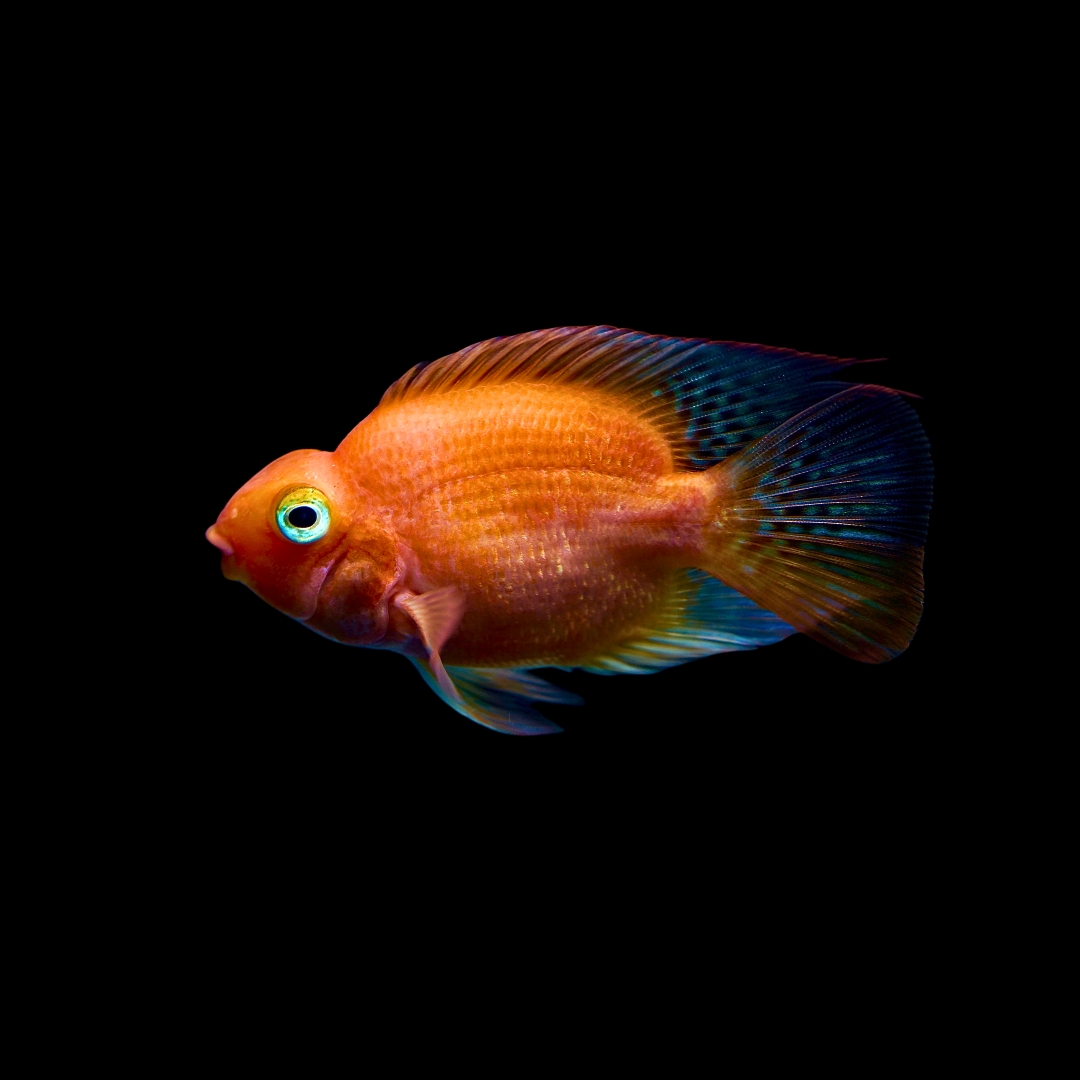
解説 / Description
パープルパロットは、ブラッドパロット系統から派生して流通する人工交雑シクリッドです。自然界に分布する独立種ではなく、台湾を中心とした観賞魚養殖の歴史の中で作出された改良系統として扱われます。丸みのある体型、鳥のくちばしを思わせる小さな口元、そして水槽内で目を引く赤紫から紫がかった色彩が魅力です。シクリッドらしい縄張り意識はありますが、口の構造上、強く噛みついて相手を傷つけにくいため、十分な水槽サイズと相手選びを守れば、中型以上の魚との混泳も楽しみやすい魚です。 The Purple Parrot is an artificial hybrid cichlid distributed as a derivative of Blood Parrot lines. It is not an independent wild species, but a selectively produced ornamental strain associated with aquarium breeding, especially in Taiwan. Its rounded body, small parrot-like mouth, and reddish-purple to purple-tinged coloration make it stand out in the aquarium. Although it retains territorial behavior typical of cichlids, its mouth structure makes it less able to inflict serious bite damage. With enough space and carefully chosen tank mates, it can often be kept with suitably sized medium fish.
基本情報 / Basic Information
| 学名 / Scientific Name | 正式な学名なし。流通上はAmphilophus属やVieja属などを背景に持つ人工交雑シクリッドとして扱われます。No valid scientific name. In the aquarium trade, it is treated as an artificial hybrid cichlid with ancestry commonly attributed to lineages such as Amphilophus and Vieja. |
|---|---|
| 通称 / Common Name | パープルパロット、パープルパロットファイヤー、パープルブラッドパロットPurple Parrot, Purple Parrot Fire, Purple Blood Parrot |
| 分類 / Family | シクリッド目シクリッド科。旧分類ではスズキ目に含められることもあります。分類学上の正式な種ではなく、複数の中南米産シクリッドを背景に持つ人工交雑系統です。Order Cichliformes, family Cichlidae. In older classifications it may be placed within Perciformes. It is not a formally recognized species, but an artificial hybrid line derived from Central and South American cichlid backgrounds. |
| 英名 / English Name | Purple Parrot Cichlid, Purple Blood Parrot Cichlid |
| 分布 / Distribution | 自然分布はありません。主に台湾や東南アジアなどの観賞魚養殖場で生産され、日本では輸入個体または国内で流通した個体として販売されます。It has no natural distribution. It is produced mainly in ornamental fish farms in regions such as Taiwan and Southeast Asia, and in Japan it is sold as imported or domestically distributed stock. |
| 最大体長 / Max Size | 一般的には15〜20cm前後です。個体差や系統差があり、飼育環境がよいほど体高と厚みが出やすくなります。Generally around 15–20 cm. Size varies by individual and line, and well-kept specimens often develop a deeper, heavier body. |
| 寿命 / Lifespan | 適切な環境では10年前後、良好な管理下では10年以上生きることもあります。人工染色個体は体への負担が残る可能性があるため、購入時の状態確認が大切です。Around 10 years under suitable care, and sometimes more than 10 years in excellent conditions. Artificially dyed individuals may carry additional physical stress, so careful condition checks at purchase are important. |
飼育環境 / Aquarium Environment
| 水槽サイズ / Tank Size | 単独飼育でも60cm規格水槽以上を推奨します。ただし、成長後の体格と排泄量を考えると、余裕を持つなら90cm規格水槽以上が安心です。混泳では90cm規格水槽以上を基本にし、複数匹や中大型魚と合わせる場合は120cm水槽も検討します。A standard 60 cm tank or larger is recommended even for a single fish. Considering its adult size and waste production, a standard 90 cm tank or larger is more comfortable. For community setups, start from a 90 cm tank, and consider a 120 cm tank when keeping several individuals or medium to large tank mates. |
|---|---|
| 水温 / Temperature | 日常管理では24〜28℃前後を目安にします。色つやと免疫を安定させるには急な低温を避け、日本の冬場はヒーターとサーモスタットで水温を一定に保ちます。 For daily care, aim for about 24–28°C. To support coloration and immunity, avoid sudden drops in temperature and use a heater with a thermostat during Japanese winters. |
| 水質 / Water Quality | 中性付近を中心に、pH6.5〜7.5前後を目安にします。ある程度の適応力はありますが、急変には弱いため、大量換水で一気に変えるよりも、定期的な部分換水で安定を保つ管理が向いています。Aim for water near neutral, around pH 6.5–7.5. Although it has some adaptability, sudden changes can be stressful, so regular partial water changes are preferable to large abrupt changes. |
| レイアウト / Layout | 清掃しやすいベアタンク、または薄く敷いた底砂に、流木、大きめの石、土管などのシェルターを組み合わせると管理しやすくなります。底砂を掘り返すことがあるため、水草を直植えする繊細なレイアウトにはあまり向きません。遊泳スペースと隠れ場所の両方を確保すると落ち着きやすくなります。A bare-bottom tank, or a tank with a thin layer of substrate and sturdy shelters such as driftwood, large stones, and ceramic caves, is easy to maintain. Because it may dig in the substrate, delicate planted layouts with rooted plants are generally unsuitable. Provide both open swimming space and hiding places to help the fish settle. |
| 注意点 / Precautions | 食べこぼしが多く、水を汚しやすい魚です。上部式や外部式など、余裕のある物理ろ過と生物ろ過を用意し、週1回を目安に底面の汚れを吸い出します。鮮やかすぎる紫色の個体には人工染色の可能性もあるため、購入時は色だけでなく、体形、泳ぎ、ヒレ、呼吸、餌への反応を確認します。This fish tends to scatter food and produce a heavy bioload. Use strong mechanical and biological filtration such as an overhead or external filter, and siphon debris from the bottom about once a week. Very bright purple individuals may have been artificially dyed, so at purchase check not only color but also body shape, swimming posture, fins, breathing, and feeding response. |
餌と給餌 / Feeding
| 餌の種類 / Diet | パロットシクリッド用の小粒ペレット、沈下性ペレット、シクリッド用人工飼料を中心に与えます。赤紫系の色を保ちたい場合は、アスタキサンチンやカロテノイドを含む色揚げフードを補助的に使います。冷凍アカムシ、クリル、エビ系フードなども使えますが、動物性の餌だけに偏らせないようにします。Use small pellets for parrot cichlids, sinking pellets, and prepared cichlid foods as staples. To help maintain reddish-purple coloration, color-enhancing foods containing astaxanthin or other carotenoids can be used as supplements. Frozen bloodworms, krill, and shrimp-based foods may also be offered, but avoid relying only on animal-based foods. |
|---|---|
| 給餌のポイント / Feeding Tips | 口が完全に閉じにくいため、大きすぎる餌や薄く平たい餌は食べにくいことがあります。飲み込みやすいサイズを少量ずつ与え、数分で食べきれる量に調整します。食べ残しは水質悪化の原因になるため、こまめに取り除きます。混泳水槽では、口の大きい魚に餌を奪われないよう、給餌位置を分けると安心です。Because the mouth does not close normally, food that is too large or too flat may be difficult to eat. Offer small, easy-to-swallow portions and adjust the amount so it is finished within a few minutes. Remove leftovers promptly to prevent water deterioration. In community tanks, feed in separate areas so larger-mouthed fish do not outcompete it. |
性格と混泳 / Temperament and Tank Mates
| 性格 / Temperament | 性格はやや気が強く、縄張りを主張することがあります。ただし、口の構造上、強く噛みついて相手を傷つける力は一般的な大型シクリッドほど強くありません。臆病な面もあるため、隠れ場所を用意すると落ち着きやすくなります。It is semi-aggressive and may claim territory. However, because of its mouth structure, it usually cannot bite and injure other fish as severely as many large cichlids. It can also be shy, so providing hiding places helps it settle. |
|---|---|
| 混泳の相性 / Compatibility | 体格が近く、極端に攻撃的ではない中型魚や、生活圏が重なりにくい底生魚と相性がよい傾向があります。候補にはセベラム、ゲオファーガス、コンゴテトラ、大型化するバルブ類、プレコ、シノドンティス、ポリプテルスなどがあります。一方、ネオンテトラやグッピーのような小型魚、ミナミヌマエビなどの小型甲殻類は、口に入るサイズであれば捕食される可能性があります。逆に、非常に攻撃的な大型シクリッドとの同居では、パープルパロット側が餌や縄張り争いで不利になることがあります。It often does well with similarly sized medium fish that are not extremely aggressive, or bottom dwellers that use a different area of the tank. Possible tank mates include severums, Geophagus species, Congo tetras, larger barbs, plecos, Synodontis catfish, and bichirs. Very small fish such as neon tetras and guppies, as well as small shrimp, may be swallowed if they fit in its mouth. Conversely, very aggressive large cichlids may outcompete or bully Purple Parrots during feeding and territorial disputes. |
病気と対策 / Diseases and Prevention
| かかりやすい病気 / Common Diseases | 白点病、尾ぐされ病や口ぐされ病などの細菌性感染症、水質悪化に伴うエラの不調、浮袋のトラブルが見られることがあります。人工染色個体では、体表粘膜や免疫への負担が残り、輸入後や購入直後に体調を崩すことがあります。Possible problems include ich, bacterial infections such as fin rot and mouth rot, gill irritation from poor water quality, and swim bladder issues. Artificially dyed individuals may carry stress to the slime coat and immune system, and can become weak after import or purchase. |
|---|---|
| 対策と予防 / Prevention | 予防の基本は、水温と水質を安定させることです。強いろ過、定期的な部分換水、底床清掃、過密飼育の回避を徹底します。新規導入時は、可能であればトリートメント水槽で数日から数週間観察し、痩せ、呼吸の荒さ、白点、ヒレの裂け、餌への反応を確認してから本水槽へ移します。The foundation of prevention is stable temperature and water quality. Provide strong filtration, regular partial water changes, substrate cleaning, and avoid overcrowding. When introducing new fish, observe them in a quarantine or treatment tank for several days to a few weeks if possible, checking for weight loss, heavy breathing, white spots, damaged fins, and feeding response before moving them to the main tank. |
増やし方(繁殖) / Breeding
| 雌雄の判別 / Sexing | 外見だけでの判別は難しい魚です。成熟するとオスはやや大きく、頭部の盛り上がりが出やすいことがありますが、確実ではありません。産卵期にはメスの産卵管、オスの生殖突起が見えることで判断しやすくなります。Sexing by appearance is difficult. Mature males may become slightly larger and may develop a more pronounced head, but this is not reliable. During spawning periods, the female’s ovipositor and the male’s breeding tube may make identification easier. |
|---|---|
| 繁殖形態 / Reproduction | 平らな石やガラス面に産卵する基質産卵型です。ペアで卵を守るシクリッドらしい行動を見せますが、パープルパロットを含むブラッドパロット系統ではオスに不稔傾向が強いとされ、同系統同士では卵が白濁して発生しないことが一般的です。It is a substrate spawner that lays eggs on flat stones or glass surfaces. Pairs may guard eggs in typical cichlid fashion, but males in Blood Parrot lines, including Purple Parrots, are widely reported to be prone to infertility. As a result, eggs from same-line pairs commonly turn white and fail to develop. |
| 繁殖のポイント / Breeding Tips | 一般家庭で同系統同士を繁殖させるのは非常に難しいと考えてください。メスは近縁の別種シクリッドのオスと交雑する場合がありますが、得られる稚魚の形質は安定せず、親と同じ姿になるとは限りません。繁殖を狙うより、健康維持と長期飼育を重視するのがおすすめです。Breeding the same line in a home aquarium should be considered very difficult. Females may hybridize with males of related cichlid species, but the offspring are unpredictable and may not resemble the parent Purple Parrot. For most keepers, long-term health and stable care are more realistic goals than breeding. |
雑学と豆知識 / Trivia and Fun Facts
| 1. 人工交雑が生んだ独特の姿 / 1. A distinctive form created by hybridization | パープルパロットの丸い体や閉じにくい口は、野生魚が自然環境で獲得した形ではなく、人工交雑の過程で現れ、観賞魚として受け入れられてきた形質です。本来であれば摂食や競争で不利になりやすい特徴ですが、水槽という守られた環境では、むしろ愛嬌のある表情として親しまれるようになりました。その一方で、この魚は観賞価値と動物福祉を同時に考えさせてくれる存在でもあります。The rounded body and permanently open-looking mouth of the Purple Parrot are not traits shaped for survival in the wild, but features that appeared through artificial hybridization and became accepted in the aquarium trade. In nature, such features could make feeding and competition more difficult. In aquariums, however, they have become part of the fish’s charming expression. At the same time, this fish invites us to consider both ornamental value and animal welfare. |
|---|---|
| 2. 紫色には見分けたい背景がある / 2. The purple color deserves careful interpretation | 市場で見られる非常に鮮やかな紫の個体には、人工染色によって色を入れられたものが含まれるとされています。このような色は退色しやすく、処理そのものが魚体へ負担をかける点も問題視されています。一方で、色揚げ飼料や育成管理によって赤紫やワインレッドに近い深い色を引き出した個体もいます。購入時は、蛍光色のように不自然な色だけを追うのではなく、自然な発色、体の厚み、呼吸の落ち着き、餌への反応を合わせて見ることが大切です。Some extremely vivid purple individuals in the trade are reported to be artificially dyed. Such color may fade, and the treatment itself is also criticized for stressing the fish. On the other hand, some fish show deeper reddish-purple or wine-red tones through diet and husbandry, especially with color-enhancing foods. When choosing a fish, it is better to look beyond fluorescent-looking color and consider natural coloration, body condition, calm breathing, and feeding response together. |
| 3. アジアの観賞魚文化と縁起のよさ / 3. Asian aquarium culture and auspicious imagery | ブラッドパロットやその派生品種は、台湾、中国、シンガポールなどの観賞魚文化の中で、丸い体型や明るい体色が縁起のよい魚として受け止められてきました。丸みのある姿が富を象徴する伝統的な金塊を連想させると語られることもあり、商業施設やオフィスの水槽で好まれる背景があります。日本では風水的な意味合いよりも、明るい色彩と人なつこい雰囲気を楽しむ魚として親しまれる傾向があります。Blood Parrots and related strains have been appreciated in the aquarium cultures of Taiwan, China, Singapore, and other regions as auspicious fish because of their rounded bodies and bright colors. Their shape is sometimes associated with traditional gold ingots symbolizing wealth, which helps explain their popularity in shop and office aquariums. In Japan, they are more often enjoyed for their bright coloration and friendly presence than for feng shui symbolism. |
| 4. 同じ名前のチューリップに注意 / 4. Beware of the tulip with the same name | 「パープルパロット」という名前は、観賞魚だけでなく、フリル状の花弁を持つパーロット咲きチューリップの品種名としても使われています。ネット検索や通販では、熱帯魚と球根が同じ名前で表示されることがあるため、図鑑やECサイトではカテゴリーを明確に分けることが大切です。The name “Purple Parrot” is also used for a parrot-type tulip with frilled petals. In web searches and online stores, aquarium fish and flower bulbs may appear under the same name, so encyclopedias and e-commerce listings should clearly separate the aquarium and gardening categories. |
まとめ / Conclusion
パープルパロットは、自然界の魚をそのまま持ち込んだ存在ではなく、人の手による交雑と観賞魚文化の中で生まれた、個性の強い中型シクリッドです。丸い体、愛嬌のある口元、赤紫に染まる体色は水槽の中でよく映えますが、その魅力は健康な状態で飼い込んでこそ長く楽しめます。十分な水槽サイズ、強いろ過、安定した水温と水質、そして食べやすい餌を用意することが、長期飼育の基本です。 The Purple Parrot is not a fish taken directly from nature, but a distinctive medium-sized cichlid born through human-made hybridization and aquarium culture. Its rounded body, charming mouth, and reddish-purple coloration stand out beautifully in the aquarium, but its appeal can be enjoyed for many years only when the fish is kept in good health. Adequate tank size, strong filtration, stable temperature and water quality, and easy-to-eat foods are the foundations of long-term care.
この魚を迎えるときは、鮮やかな色だけで判断せず、人工染色の可能性や体調を慎重に見極めることが大切です。自然な色揚げと落ち着いた環境づくりを心がければ、パープルパロットは派手さだけではなく、ゆったり泳ぐ姿や個体ごとの表情を楽しませてくれる、水槽のよき主役になります。観賞魚としての美しさと、生き物としての健やかさ。その両方を大切にすることが、この魚と長く付き合うためのいちばんの近道です。 When bringing this fish home, do not judge it by vivid color alone. It is important to consider the possibility of artificial dyeing and carefully assess its condition. With natural color support and a calm, well-maintained environment, the Purple Parrot can become not just a colorful centerpiece, but a fish whose slow swimming style and individual expressions bring lasting enjoyment. Valuing both its beauty as an ornamental fish and its health as a living animal is the best way to build a long relationship with this fish.

気になる道具や飼い方を見つけてみませんか?
 アイのアクアグッズ案内水槽のコケ掃除|道具の選び方とお掃除生体の得意・不得意道具の特徴や使い方、選ぶときのポイントをアイが紹介します。記事はコチラ →
 アイのアクアグッズ案内バルブの仲間に合わせる飼育用品|チェリーバルブ・スマトラ・中型種の水槽とろ過道具の特徴や使い方、選ぶときのポイントをアイが紹介します。記事はコチラ →
 アイのアクアグッズ案内水槽ライトの選び方|魚の見え方・水草・海水で選ぶおすすめ照明道具の特徴や使い方、選ぶときのポイントをアイが紹介します。記事はコチラ →
 アイのアクアグッズ案内ラスボラ・ボララスの群泳を楽しむ飼育用品|水槽・ろ過・ヒーター・餌・水草道具の特徴や使い方、選ぶときのポイントをアイが紹介します。記事はコチラ →
さまざまな飼育テーマをご紹介。リンク先の記事には広告・商品紹介が含まれます。
案内・紹介記事一覧へ →参考文献・根拠資料
この記事では、パープルパロットを「正式な野生種」ではなく、ブラッドパロット系の人工交雑シクリッドとして扱っています。参考文献は、分類、親種候補の分布と生息環境、飼育条件、繁殖、病気や注意点を支える資料に絞り、店舗、通販、個人ブログ、まとめサイトは除外しました。
採用理由:ブラッドパロットを人工的に作出されたハイブリッドとして扱い、親種候補、観賞魚由来の非在来記録、自然環境下での定着可能性への注意を確認するため。支える項目:分類、分布の扱い、生息環境の注意、繁殖、放流リスク。
採用理由:ブラッドパロットの塩分耐性と繁殖試験に関する近年の研究。ペアは産卵行動を示しても自然受精が確認されず、雄の不稔傾向と雌の交雑可能性が示唆されているため、繁殖欄の慎重な記述を支える資料として採用。
3.Froese, R. & Pauly, D. (eds.). FishBase: Amphilophus citrinellus, Midas cichlid.
採用理由:親種候補として扱われるミダスシクリッドの分類、中央アメリカでの分布、淡水性、湖沼や緩流域の環境、食性、最大サイズを確認するため。支える項目:分類、親種背景、分布、生息環境、サイズ感。
4.Froese, R. & Pauly, D. (eds.). FishBase: Vieja melanurus, Redhead cichlid.
採用理由:親種候補として扱われるレッドヘッドシクリッド系統の分類、中央アメリカでの分布、水温、pH、硬度、湖沼や下流域の生息環境を確認するため。支える項目:親種背景、分布、生息環境、水質条件。
採用理由:Vieja melanurus、Vieja synspilum、Paraneetroplus synspilum など、資料により表記が揺れやすい親種名を確認するため。支える項目:学名表記、分類上の補足、親種候補の表記整理。
採用理由:カロテノイド系色素であるカンタキサンチンを含む餌がブラッドパロットの体色に影響することを示す研究。支える項目:餌と給餌、色揚げ、人工染色と食餌による発色維持の区別。
7.Francis-Floyd, R. et al. UF/IFAS Extension. Ammonia in Aquatic Systems.
採用理由:アンモニアが魚に与えるストレス、鰓への影響、細菌感染への感受性上昇、定期的な水質測定の重要性を確認するため。支える項目:飼育環境、ろ過、換水、病気と予防。
8.Yanong, R. P. E. UF/IFAS Extension. Introduction to Fish Health Management.
採用理由:病気発生時に溶存酸素、アンモニア、亜硝酸、pHなどを確認すべきこと、環境要因が魚病管理の中心になることを示す資料。支える項目:病気と対策、水質管理、日常観察。
採用理由:観賞魚の診療、検査、薬剤使用、隔離とバイオセキュリティ、水質問題、浮袋などの医学的注意点を確認するため。支える項目:病気と対策、導入時の注意、浮袋異常への補足。
10.Hill, J. E. & Yanong, R. P. E. UF/IFAS Extension. How Ornamental Fishes Get Their Color.
採用理由:魚が利用できる色素と、注射や浸漬による人工着色の問題点を区別するため。支える項目:体色、色揚げ、人工染色個体の注意点。
11.Ornamental Aquatic Trade Association (OATA). Updated position statements: Dyed and tattooed fish.
採用理由:染色魚やタトゥー魚の取引に対する動物福祉上の懸念を確認するため。支える項目:購入時の注意、人工染色、動物福祉に関する雑学と注意喚起。




コメント