

解説 / Description
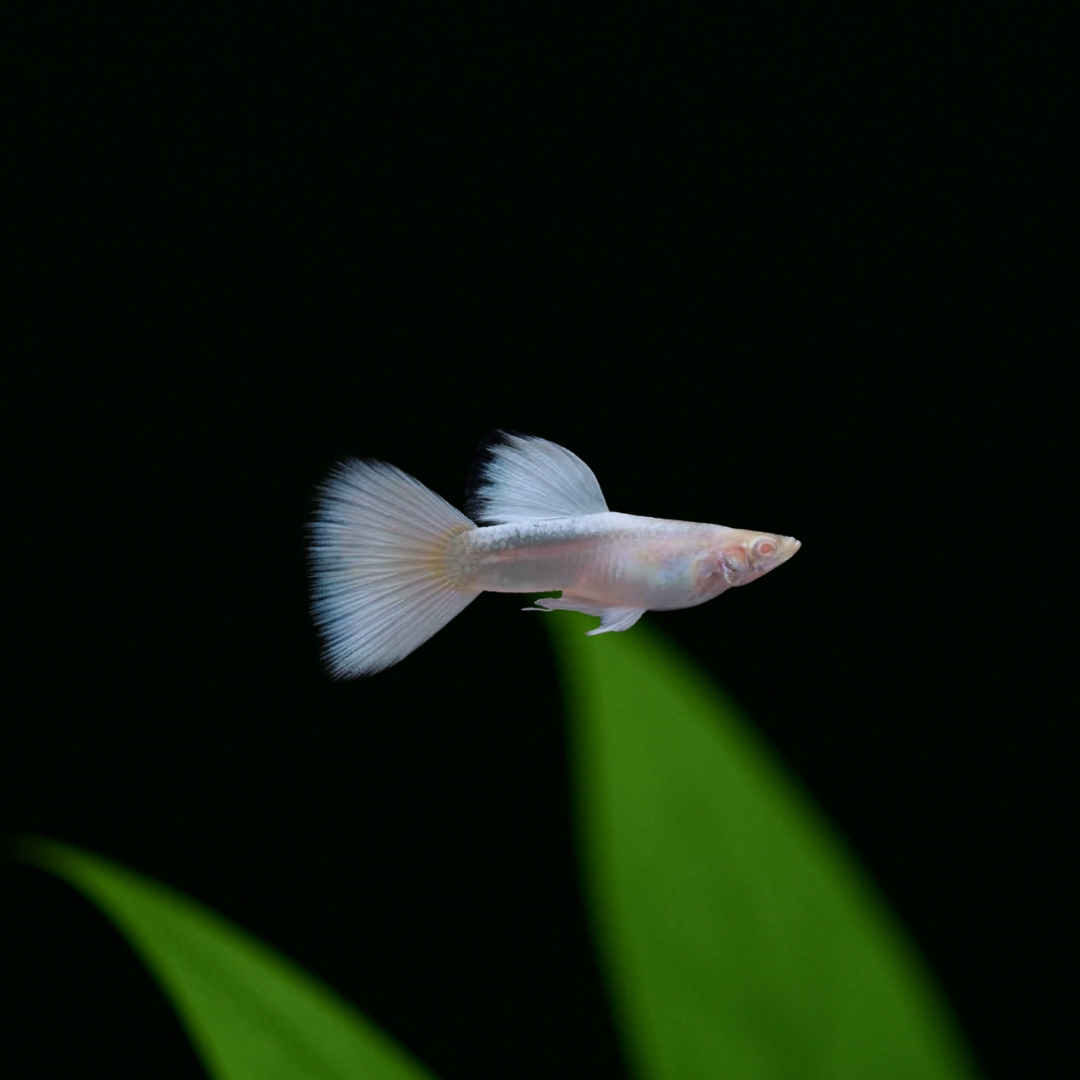
RREAドイツイエロータキシード・グッピーは、国産グッピーの定番品種として親しまれているドイツイエロータキシードに、リアルレッドアイアルビノの表現が加わった改良品種です。通常のドイツイエロータキシードでは体の後半に濃いタキシード模様が入りますが、RREA表現では黒色色素が抑えられるため、淡いチョコレート色やラベンダーがかった色合いに見えることがあります。白く広がる尾鰭と組み合わさることで、通常タイプとは異なるやわらかな雰囲気を楽しめるグッピーです。 The RREA German Yellow Tuxedo Guppy is a selectively bred variety based on the well-known German Yellow Tuxedo, with the Real Red Eye Albino expression added. In the normal form, the rear half of the body shows a dark tuxedo pattern, while the RREA expression reduces black pigment and may make the area appear softer, with chocolate or lavender-like tones. Combined with the broad white caudal fin, it gives a gentler impression than the normal form.
美しさの一方で、RREA個体は色素が少ない表現であるため、強い照明や急な環境変化ではストレスを受けやすい場合があります。飼育そのものはグッピーの基本に沿えば難しすぎる魚ではありませんが、尾鰭を傷めにくい弱めの水流、安定した中性付近の水質、食べ残しを出さない給餌管理が、長く美しく楽しむために重要です。 Although beautiful, RREA individuals may be more prone to stress under strong lighting or sudden environmental changes because they have reduced pigmentation. Their care is not excessively difficult if basic guppy husbandry is followed, but gentle water flow, stable near-neutral water quality, and careful feeding are important for keeping them healthy and attractive.
基本情報 / Basic Information
| 学名 / Scientific Name | Poecilia reticulata |
|---|---|
| 通称 / Common Name | RREAドイツイエロータキシード・グッピー、RREAドイツイエロー、リアルレッドアイアルビノ・ドイツイエロータキシードRREA German Yellow Tuxedo Guppy, Real Red Eye Albino German Yellow Tuxedo Guppy |
| 分類 / Family | カダヤシ科グッピー属Family Poeciliidae, genus Poecilia |
| 英名 / English Name | RREA German Yellow Tuxedo Guppy |
| 分布 / Distribution | 原種のグッピーはベネズエラ、ガイアナ、トリニダード、バルバドス、ブラジル北部など南米北部からカリブ海周辺に自然分布します。本品種は観賞魚として人為的に作出・維持されている改良品種で、野生分布はありません。Wild guppies naturally occur in northern South America and nearby Caribbean regions, including areas such as Venezuela, Guyana, Trinidad, Barbados, and northern Brazil. This variety is a selectively bred ornamental strain and does not have a natural wild distribution. |
| 最大体長 / Max Size | オスで約3〜4cm、メスで約5〜6cm程度。系統や育成環境により差があります。About 3–4 cm for males and 5–6 cm for females, depending on strain and rearing conditions. |
| 寿命 / Lifespan | おおよそ1〜2年程度を目安にします。飼育条件によってはさらに長く維持できることもありますが、高水温で代謝を上げすぎると短命になりやすいため、安定した水温管理が大切です。Usually around 1–2 years as a practical estimate, though individuals may live longer under good conditions. Excessively warm conditions may shorten lifespan by increasing metabolism, so stable temperature management is important. |
飼育環境 / Aquarium Environment
| 水槽サイズ / Tank Size | ペア飼育なら30cm規格水槽から飼育可能ですが、繁殖や選別まで考える場合は45cm規格水槽、できれば60cm規格水槽以上を用意すると管理しやすくなります。尾鰭をきれいに育てるには、水量に余裕を持たせて水質を安定させることが重要です。A pair can be kept in a standard 30 cm tank, but a 45 cm tank or preferably a standard 60 cm tank is easier to manage for breeding and selection. Extra water volume helps maintain stable water quality and supports better fin development. |
|---|---|
| 水温 / Temperature | 23〜26℃前後が扱いやすい範囲です。許容範囲はおおよそ20〜28℃ですが、低温では白点病などのリスクが上がり、高温では代謝が上がって短命になりやすいため、急変を避けた管理が必要です。 Around 23–26°C is generally suitable. They can tolerate roughly 20–28°C, but low temperatures may increase disease risk, while high temperatures can shorten lifespan by raising metabolism. |
| 水質 / Water Quality | 中性付近から弱アルカリ性寄りの安定した水質を好みます。目安はpH6.5〜7.5程度です。極端に酸性へ傾いた環境や、水換え不足による有機物の蓄積は、尾腐れ病や体調不良につながりやすいため注意が必要です。They prefer stable water from near-neutral to slightly alkaline, with a rough pH range of 6.5–7.5. Strongly acidic water or excessive organic buildup can increase the risk of fin rot and general health issues. |
| レイアウト / Layout | 大きな尾鰭を傷めにくい、すっきりしたレイアウトが向いています。マツモ、ウィローモス、浮き草などを適度に入れると、稚魚の隠れ家になり、RREA個体が強い照明から逃げられる場所も作れます。A simple layout that does not damage the large fins is recommended. Hornwort, Java moss, floating plants, and similar cover provide hiding places for fry and shaded areas for light-sensitive RREA individuals. |
| 注意点 / Precautions | RREA個体は色素が少ないため、強い光を避けられる環境を用意しておくと安心です。また、個体によっては餌への反応がやや遅く見えることもあるため、強すぎる水流やまぶしすぎる照明を避け、餌が行き渡っているかを観察することが大切です。フィルターはスポンジフィルターや弱めに調整した外掛け式など、穏やかな水流を作れるものが扱いやすいです。Because RREA individuals have reduced pigmentation, it is helpful to provide places where they can avoid strong light. Some individuals may also appear slower to respond to food, so avoid overly strong currents and harsh lighting, and observe whether all fish are feeding properly. Sponge filters or gently adjusted hang-on filters are easy to use for this variety. |
餌と給餌 / Feeding
| 餌の種類 / Diet | グッピー用のフレークフード、細かな顆粒フード、冷凍ブラインシュリンプ、孵化させたブラインシュリンプなどを与えます。稚魚には細かく砕いた人工飼料やブラインシュリンプ幼生が適しています。イトメなどの生き餌は嗜好性が高い一方で、入手経路や保管状態によっては水質悪化や病原体の持ち込みに注意が必要です。Suitable foods include guppy flakes, fine granules, frozen brine shrimp, and newly hatched brine shrimp. Fry can be fed finely crushed prepared foods or baby brine shrimp. Live foods such as tubifex are highly attractive, but depending on their source and storage conditions, they require caution due to water pollution and disease risks. |
|---|---|
| 給餌のポイント / Feeding Tips | 1回で多く与えるより、数分で食べ切れる量を少量ずつ与えるほうが安全です。RREA個体は餌への反応が遅く見えることがあるため、強い水流で餌が流されすぎないようにし、食べ残しは早めに取り除くと安心です。It is safer to feed small amounts that can be eaten within a few minutes rather than large meals. Since RREA fish may appear slower to respond to food, avoid currents that sweep food away too quickly and remove leftovers promptly. |
性格と混泳 / Temperament and Tank Mates
| 性格 / Temperament | 基本的には温和で、同種間でも大きな争いは少ない魚です。ただし、オス同士がメスを追う行動は見られるため、繁殖を前提にする場合はメスが休める場所を用意しておくと安心です。They are generally peaceful and rarely show serious aggression. Males may chase females, so cover and resting areas are helpful when keeping them for breeding. |
|---|---|
| 混泳の相性 / Compatibility | 小型で温和な魚との混泳に向いています。ネオンテトラ、コリドラス、小型ラスボラなどとは組み合わせやすい一方、ヒレをかじる魚、動きの荒い魚、強い水流を好む魚との混泳は避けたほうがよいです。品種維持や選別を目的にする場合は、単独種水槽での管理が重要です。They can be kept with small, peaceful fish such as neon tetras, Corydoras, and small rasboras. Avoid fin-nipping species, very active fish, and fish that require strong currents. For strain maintenance and selection, a species-only tank is strongly recommended. |
病気と対策 / Diseases and Prevention
| かかりやすい病気 / Common Diseases | 白点病、尾腐れ病、カラムナリス症、水質悪化に伴う体表の荒れなどに注意が必要です。大きな尾鰭を持つため、ヒレの裂けや欠けが悪化すると細菌感染につながる場合があります。Common concerns include ich, fin rot, columnaris-like bacterial infections, and skin irritation caused by poor water quality. Because the fins are large, tears or damage can develop into bacterial infections if conditions deteriorate. |
|---|---|
| 対策と予防 / Prevention | 水温と水質を急変させず、定期的な換水で清潔な環境を維持します。導入直後は隔離観察を行い、痩せ、ヒレの白濁、尾鰭の裂け、呼吸の荒さがないか確認してください。RREA個体はストレスを受けると立て直しに時間がかかることがあるため、早めの観察と軽症のうちの対処が重要です。Maintain clean water through regular water changes and avoid sudden changes in temperature or water quality. Newly introduced fish should be observed in quarantine for weight loss, cloudy fins, fin tears, or labored breathing. RREA fish may take longer to recover from stress, so early observation and prompt action are important. |
増やし方(繁殖) / Breeding
| 雌雄の判別 / Sexing | オスは体が小さく、尾鰭や背鰭が発達し、腹鰭付近に交接器であるゴノポディウムを持ちます。メスは体が大きく、腹部に丸みが出やすく、成熟すると腹部後方に妊娠斑が見えることがあります。Males are smaller, have more developed dorsal and caudal fins, and possess a gonopodium near the anal fin. Females are larger, more rounded in the abdomen, and may show a gravid spot when mature. |
|---|---|
| 繁殖形態 / Reproduction | 卵胎生で、メスは卵ではなく稚魚の姿で子を産みます。成熟したメスは条件が整うと周期的に出産しますが、親が稚魚を食べることもあるため、稚魚を残したい場合は水草を多めに入れるか、産卵ケースやサテライトを活用します。They are livebearers, giving birth to free-swimming fry rather than laying eggs. Mature females can give birth periodically under good conditions, but adults may eat fry, so dense plants, breeding boxes, or external nursery systems are useful when fry survival is desired. |
| 繁殖のポイント / Breeding Tips | RREAは一般に劣性形質として扱われるため、表現を安定させるにはRREA同士、または遺伝背景を把握した個体を用いる必要があります。ドイツイエロータキシードらしい白い尾鰭、尾筒の太さ、体型、ヒレの乱れ、シミの有無を見ながら選別します。リボンやスワローなどのヒレ変異を組み合わせた系統では、オスの交尾能力に制限が出る場合があるため、通常体型のオスと表現を持つメスを組み合わせるなど、系統に合わせた交配計画が必要です。Because RREA is generally treated as a recessive trait, stable expression requires breeding RREA individuals together or using fish with known genetic backgrounds. Selection should focus on the white caudal fin, caudal peduncle strength, body form, fin shape, and unwanted spots. In lines combined with ribbon or swallow fin traits, male fertility can be limited, so breeding plans may require normal-fin males paired with females carrying the desired expression. |
雑学と豆知識 / Trivia and Fun Facts
| 1. RREAが生む淡いタキシード表現 / 1. The soft tuxedo expression created by RREA | RREAはReal Red Eye Albinoの略称として用いられ、黒色色素であるメラニンの発現が抑えられたアルビノ表現として扱われます。通常のドイツイエロータキシードでは、体の後半に濃いタキシード模様が入り、白い尾鰭との対比が魅力になります。一方、RREAではその黒が淡く見えることで、後半部がチョコレート色、薄紫色、ラベンダー調に見えることがあり、同じタキシード系でも印象は大きく変わります。強いコントラストで見せる通常タイプに対し、RREAドイツイエロータキシードは淡い光を重ねたような上品さで楽しむ品種といえます。RREA is commonly used as an abbreviation for Real Red Eye Albino and is treated as an albino expression in which melanin is reduced. In the normal German Yellow Tuxedo Guppy, the rear half of the body forms a dark tuxedo pattern that contrasts with the white caudal fin. In the RREA form, this dark area appears softer and may look chocolate, pale purple, or lavender-toned. Rather than strong contrast, this variety is appreciated for its refined, softly glowing appearance. |
|---|---|
| 2. ドイツイエロータキシードと日本の美意識 / 2. German Yellow Tuxedo and Japanese aesthetic selection | ドイツイエロータキシードは、黄色系の尾鰭表現を背景に語られることが多い品種です。ただし日本国内の国産グッピーでは、尾鰭の黄色味を抑え、より白く清潔感のある尾鰭を重視する選別が行われてきたとされます。そのため、国内で高く評価される系統では、単に黄色い尾を持つことよりも、厚みのある白い尾鰭、体型の整い方、尾筒の力強さ、余計なシミの少なさが重視されます。RREA化した本品種でも、この白さをどう保つかが観賞価値と系統維持の大きなポイントになります。The German Yellow Tuxedo is often discussed in relation to yellow-tailed expressions. In Japanese domestic guppy lines, however, selection is said to have emphasized cleaner, whiter caudal fins with reduced yellow tones. As a result, highly valued domestic lines are judged not only by tail color but also by fin thickness, body balance, caudal peduncle strength, and the absence of unwanted marks. In the RREA form, maintaining this clean white impression remains a key point of both beauty and strain maintenance. |
| 3. 観賞魚としての美しさと、種親としての価値 / 3. Beauty as an ornamental fish and value as breeding stock | グッピーの改良品種は、1匹の見た目だけでなく、次世代にどのような形質を残せるかによっても価値が変わります。RREAドイツイエロータキシードでは、白い尾鰭、淡いタキシード表現、体型、ヒレの形、シミの少なさなど、複数の要素を同時に見ながら選別します。特にメスは、次世代の尾鰭や体型に影響する重要な種親として扱われることが多く、派手なオスだけを見て選ぶと、次世代の体型や尾鰭の仕上がりが思うように安定しない場合があります。観賞魚でありながら、遺伝と選別を身近に体験できるところが、国産グッピーの奥深さです。The value of a fancy guppy is not determined only by how a single fish looks, but also by what traits it can pass to the next generation. In RREA German Yellow Tuxedo Guppies, breeders evaluate multiple factors at once, including the white caudal fin, soft tuxedo pattern, body shape, fin form, and absence of unwanted spots. Females are especially important as breeding stock because they strongly influence the next generation’s body and fin quality. This balance between beauty and heredity is one of the deepest attractions of domestic guppy breeding. |
| 4. リボンやスワローとの組み合わせに潜む難しさ / 4. The difficulty of combining ribbon and swallow traits | 国内流通では、RREAドイツイエロータキシードにリボンやスワローといったヒレの伸長表現を組み合わせた個体も見られます。これらは見た目の華やかさを増す一方で、オスのゴノポディウムまで伸びてしまい、交尾が難しくなることがあります。そのため、表現を持つメスと通常体型のオスを使うなど、見た目だけではなく繁殖能力まで考えた組み合わせが必要です。美しい表現を重ねるほど、維持には計画性が求められる点も、グッピーブリードの面白さと難しさです。In the domestic market, RREA German Yellow Tuxedo Guppies may also be combined with ribbon or swallow fin traits. These traits can make the fish more ornate, but they may also elongate the male gonopodium and make mating difficult. For that reason, breeders often need to use females showing the trait with normal-fin males. The more elaborate the expression becomes, the more planning is required to maintain it, which is both the charm and the challenge of guppy breeding. |
まとめ / Conclusion
RREAドイツイエロータキシード・グッピーは、ドイツイエロータキシードの白い尾鰭とタキシード模様に、RREA特有の淡い体色と赤い目が加わった美しい改良品種です。派手さだけで押し切るタイプではなく、やわらかな色合い、尾鰭の白さ、体型のまとまりをじっくり楽しむグッピーと考えると魅力が伝わりやすいです。 The RREA German Yellow Tuxedo Guppy is a beautiful selectively bred variety that combines the white caudal fin and tuxedo pattern of the German Yellow Tuxedo with the soft body color and red eyes of the RREA trait. Its appeal is not only in brilliance, but in its gentle coloration, clean white fins, and well-balanced form.
飼育では、安定した水質、弱めの水流、強すぎない照明、食べ残しを出さない給餌管理が基本になります。繁殖まで楽しむ場合は、RREAの遺伝、白い尾鰭の選別、リボンやスワロー系統の繁殖上の制約も意識すると、品種の奥深さをより実感できるはずです。 For successful care, stable water quality, gentle flow, moderate lighting, and careful feeding are essential. When breeding this variety, understanding the commonly recognized inheritance pattern of RREA, selection for white fins, and the reproductive limitations of ribbon or swallow lines will help reveal the deeper appeal of this guppy strain.

気になる道具や飼い方を見つけてみませんか?
 アイのアクアグッズ案内水換え・底砂掃除の道具の選び方|砂利・砂・ソイルに合うクリーナーとポンプ道具の特徴や使い方、選ぶときのポイントをアイが紹介します。記事はコチラ →
 アイのアクアグッズ案内ラスボラ・ボララスの群泳を楽しむ飼育用品|水槽・ろ過・ヒーター・餌・水草道具の特徴や使い方、選ぶときのポイントをアイが紹介します。記事はコチラ →
さまざまな飼育テーマをご紹介。リンク先の記事には広告・商品紹介が含まれます。
案内・紹介記事一覧へ →▶ 記事の生体をAMAZONで買う ▶ 記事の生体をYahooで買う
参考文献
本記事では、RREAドイツイエロータキシード・グッピーの基礎情報、原種グッピーの分類・分布・繁殖形態、グッピーにおける色彩遺伝および赤眼アルビノ表現の理解を補助するため、以下の資料を参考文献として整理しています。品種名には観賞魚愛好家の間で使われる慣用的な呼称も含まれ、学術的な分類名とは異なります。
-
Froese, R. and Pauly, D. Editors. FishBase. Poecilia reticulata, Guppy. FishBase.
https://www.fishbase.se/summary/Poecilia-reticulata.html
原種グッピーの学名、分類、最大体長、繁殖形態、ゴノポディウム、稚魚を産む性質、水温や水草のある静かな環境を好む点など、基礎情報の確認に使用。 -
Global Invasive Species Database. Poecilia reticulata. Invasive Species Specialist Group, IUCN.
https://www.iucngisd.org/gisd/species.php?sc=683
原種グッピーの自然分布、観賞魚としての広い流通、遺伝研究で用いられる魚であること、導入先での生態的影響などの確認に使用。 -
U.S. Fish and Wildlife Service. Ecological Risk Screening Summary: Guppy, Poecilia reticulata.
https://www.fws.gov/sites/default/files/documents/Ecological-Risk-Screening-Summary-Guppy.pdf
分類階級、自然分布、体長、水質・水温耐性、温暖な水域を好む性質など、FishBaseやCABI等をまとめた公的資料として参照。 -
Chang, Y. et al. Identification of Candidate Genes for Red-Eyed (Albinism) Domestic Guppies Using Genomic and Transcriptomic Analyses. International Journal of Molecular Sciences, 2024.
https://pmc.ncbi.nlm.nih.gov/articles/PMC10888696/
国内外で観賞魚として扱われる赤眼アルビノ表現について、候補遺伝子やメラニン関連の理解を補助する資料として使用。この研究だけでは、RREAドイツイエロータキシード固有の遺伝様式までは確定できません。 -
Khoo, G., Lim, T. M., Chan, W. K. and Phang, V. P. E. Linkage Analysis and Mapping of Three Sex-Linked Color Pattern Genes in the Guppy, Poecilia reticulata. Zoological Science, 1999.
https://bioone.org/journals/zoological-science/volume-16/issue-6/zsj.16.893/Linkage-Analysis-and-Mapping-of-Three-Sex-Linked-Color-Pattern/10.2108/zsj.16.893.full
グッピーの黒い尾筒部、尾色、尾鰭模様など、性染色体に関連する色彩パターン遺伝子の研究として参照。タキシード表現や色彩遺伝を説明する際の背景資料。 -
Sato, A., et al. Genetic segregation for male body coloration and female mate preference in the guppy. BMC Research Notes, 2020.
https://link.springer.com/article/10.1186/s13104-020-4909-5
グッピーが性選択、体色、遺伝研究のモデルとして利用されていること、色彩形質の遺伝的背景を理解するための補助資料として参照。 -
Tripathi, N., Hoffmann, M., Willing, E. M., Lanz, C., Weigel, D. and Dreyer, C. Genetic linkage map of the guppy, Poecilia reticulata, and quantitative trait loci analysis of male size and colour variation. Proceedings of the Royal Society B, 2009.
https://doi.org/10.1098/rspb.2008.1930
グッピーの体サイズや雄の色彩変異に関する遺伝的背景を理解するための補助資料として参照。




コメント