

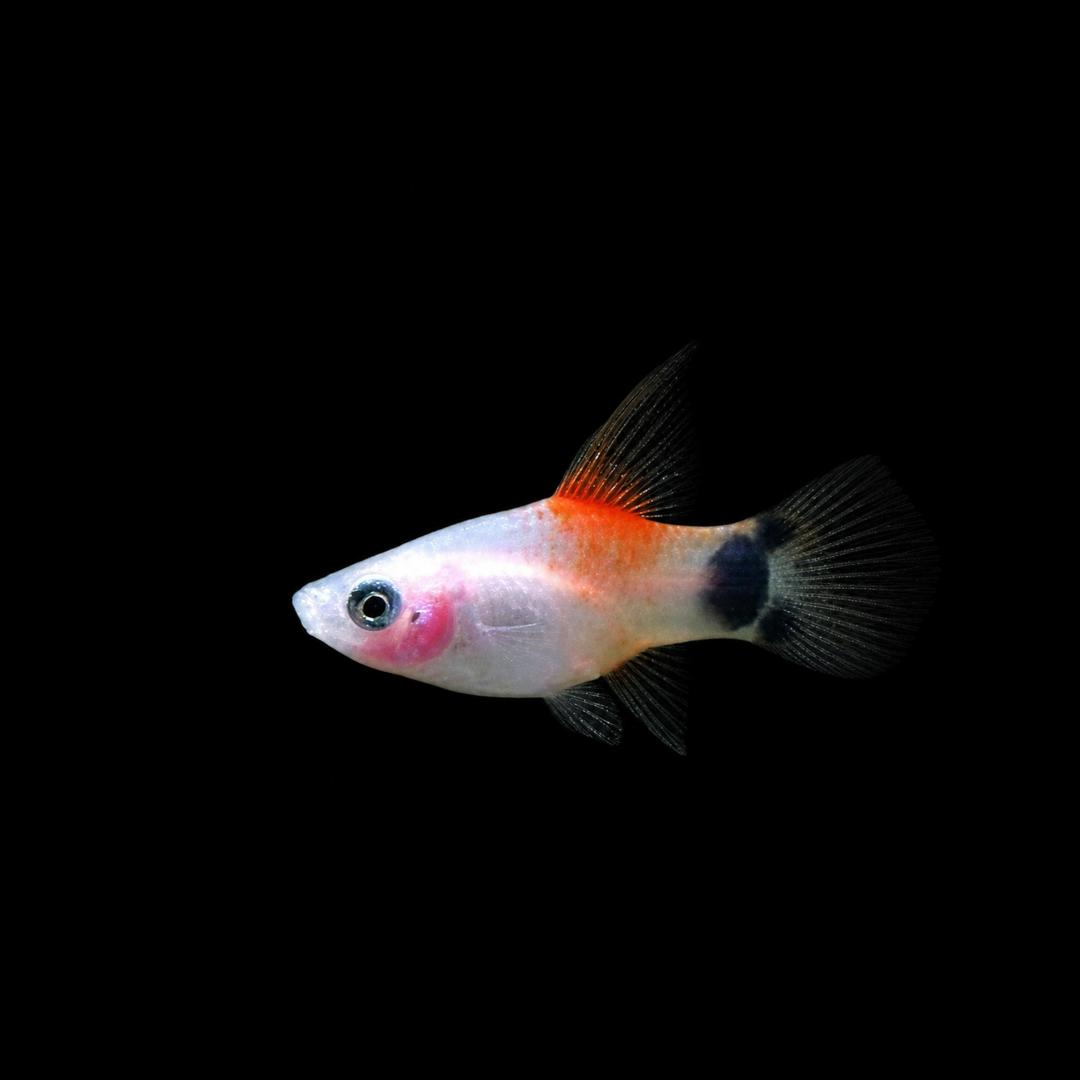
解説 / Description
ハイフィンレッドバックミッキーマウスプラティは、長く伸びる背ビレ、体の後半を鮮やかに彩る赤色、そして尾ビレの付け根に現れる3つの黒斑が生み出す「ミッキーマウス模様」をあわせ持つ、プラティの華やかな改良品種です。ずんぐりとした親しみやすい体型に赤・白・黒のコントラストが入り、ハイフィンの背ビレが優雅さを加えるため、小型魚ながら水槽内でよく目を引きます。人工飼料に慣れやすく、卵胎生で繁殖も観察しやすいことから入門魚として親しまれています。健康な状態を長く保つには、急激な水質変化を避け、中性から弱アルカリ性で適度な硬度のある水を安定させることが大切です。 The Hi-fin Red Back Mickey Mouse Platy is a striking ornamental platy combining three distinctive traits: an elongated dorsal fin, vivid red coloration over the rear half of the body, and three dark markings near the caudal peduncle that resemble the familiar “Mickey Mouse” silhouette. Its compact body, bold red-white-black contrast, and flowing dorsal fin make this small livebearer easy to notice in an aquarium. It readily accepts prepared foods and reproduces by livebearing, which makes it approachable for beginners. For long-term health, avoid abrupt changes in water conditions and maintain stable neutral to slightly alkaline water with moderate mineral content.
基本情報 / Basic Information
| 学名 / Scientific Name | Xiphophorus maculatus 系統の改良品種(観賞用プラティでは近縁種との交雑由来形質を含む系統があります) |
|---|---|
| 通称 / Common Name | ハイフィンレッドバックミッキーマウスプラティ、ハイフィン・ミッキーマウスプラティHi-fin Red Back Mickey Mouse Platy, Hi-fin Mickey Mouse Platy |
| 分類 / Family | カダヤシ目 カダヤシ科 キシフォフォルス属Order Cyprinodontiformes, Family Poeciliidae, Genus Xiphophorus |
| 英名 / English Name | Hi-fin Red Back Mickey Mouse Platy |
| 分布 / Distribution | 本品種は観賞魚として人為的に作出・維持される改良系統で、自然界に同じ姿で分布するものではありません。基礎となるサザンプラティフィッシュは、メキシコのベラクルス周辺からベリーズ北部にかけての大西洋側の河川、水路、湿地などに由来します。This ornamental form is a captive-bred strain and does not occur in the wild in the same appearance. Its principal wild ancestor, the southern platyfish, originates from Atlantic-slope rivers, canals, and wetlands from the Veracruz region of Mexico southward toward northern Belize. |
| 最大体長 / Max Size | 原種のサザンプラティフィッシュでは、全長の最大値としてオス約4cm、メス約6cmが報告されています。改良品種では系統や飼育条件によって体格に差が出るため、成魚でおおむね4〜6cm程度を目安にします。For the wild southern platyfish, reported maximum total length is about 4 cm for males and 6 cm for females. Domestic strains can vary with lineage and husbandry, so roughly 4–6 cm is a practical adult-size guide. |
| 寿命 / Lifespan | この改良品種そのものについて、系統差を除いて一律に示せる信頼性の高い寿命データは乏しく、飼育条件や繁殖負担によって差が出ます。安定した水質を保ち、過剰給餌や過密を避けることが長期飼育では重要です。Reliable lifespan data specific to this domestic strain are limited, and longevity varies with lineage, husbandry, and reproductive burden. Stable water quality and avoidance of overfeeding and overcrowding are important for long-term care. |
飼育環境 / Aquarium Environment
| 水槽サイズ / Tank Size | 小型水槽でも飼育自体は可能ですが、長期飼育では水質の安定と群れの管理を優先し、60cm規格水槽(約55L)を基本の目安にすると扱いやすくなります。オスの求愛によるメスへの負担を分散しやすく、混泳時にも遊泳スペースを確保できます。Although platies can be kept in smaller aquariums, a 60 cm standard aquarium of roughly 55 liters is a more practical baseline for long-term stability and group management. The additional space helps spread persistent male courtship and provides adequate swimming room in a community setup. |
|---|---|
| 水温 / Temperature | 20〜25℃程度を中心に安定させます。原種では18〜25℃が参考範囲として示されており、長期飼育では上限・下限を広げることより、急激な変化を避けることを優先します。 Keep the temperature stable at roughly 20–25°C. For the wild species, 18–25°C is reported as a reference range; for long-term care, avoiding abrupt changes is more important than trying to use the extremes of that range. |
| 水質 / Water Quality | 中性から弱アルカリ性のpH 7.0〜8.0を基本とし、原種では総硬度9〜19 dH程度が参考範囲として示されています。極端な軟水や酸性化した古い飼育水は避け、水質を安定させます。日本の軟水環境では、必要に応じてサンゴ砂をろ材へ少量加えるなど、硬度とpHを急変させずに補う方法が使えます。Neutral to slightly alkaline water around pH 7.0–8.0 is a sound baseline, and the wild species is reported from water around 9–19 dH. Avoid extremely soft or strongly acidified aged water and prioritize stability. In soft-water regions, a small amount of coral sand in the filter can be used to support hardness and pH gradually rather than causing abrupt changes. |
| レイアウト / Layout | 遊泳スペースを残しながら、有茎草やマツモなどを植えて隠れ場所を作るレイアウトが向きます。水草への食害は目立ちにくく、明るい緑の水草を背景にすると、白い体色、レッドバック、黒い尾筒模様がよく映えます。繁殖を狙う場合は、水面付近や水槽奥に細かい葉の水草を密生させると稚魚の逃げ場になります。Leave open swimming space while providing planted cover with stem plants, hornwort, or similar vegetation. Plant damage is usually limited, and bright green plants create a strong visual contrast with the fish’s pale body, red back, and dark tail markings. For breeding, dense fine-leaved vegetation near the surface and rear of the aquarium gives newborn fry places to hide. |
| 注意点 / Precautions | 急なpH変化や水温変化を避け、導入時は丁寧に水合わせを行います。過密飼育や過剰給餌は水質悪化と疾病の引き金になりやすいため、ろ過能力に余裕を持たせ、定期的な換水を行います。繁殖力が高いので、増えすぎを防ぐための雌雄管理も重要です。また、飼育個体を河川、池、水路などの自然環境へ放流してはいけません。Avoid sudden changes in pH or temperature and acclimate new fish carefully. Overstocking and overfeeding can quickly degrade water quality and increase disease risk, so provide adequate filtration and regular water changes. Because reproduction can be prolific, sex management may be necessary to prevent unwanted population growth. Never release captive fish into rivers, ponds, canals, or other natural habitats. |
餌と給餌 / Feeding
| 餌の種類 / Diet | 雑食性で、人工飼料への餌付きは良好です。スピルリナやクロレラなど植物質を含むフレーク・小粒顆粒を主食とし、補助的に冷凍アカムシ、ミジンコ、ブラインシュリンプなどの動物性飼料を取り入れると栄養バランスを整えやすくなります。This species is omnivorous and readily accepts prepared foods. Use flakes or small granules containing plant material such as spirulina or chlorella as the staple diet, and supplement with foods such as frozen bloodworms, daphnia, or brine shrimp for additional animal protein and variety. |
|---|---|
| 給餌のポイント / Feeding Tips | 1日1〜2回、1分ほどで食べ切れる量を目安に与えます。口が小さいため、細かな粒や砕いたフレークが食べやすい餌です。赤色の発色を意識する場合はアスタキサンチンを含む飼料を補助的に使えますが、色揚げだけに偏らず植物質とのバランスを優先します。食べ残しや肥満を防ぐため与えすぎには注意し、成魚では状態を見ながら給餌量を控えめにすることが長期飼育につながります。Feed once or twice daily, offering only what the fish can consume in about one minute. Small granules or finely crushed flakes are easy for them to take. Foods containing astaxanthin may be used as a supplement to support red coloration, but overall nutritional balance, including plant matter, is more important than color enhancement alone. Avoid overfeeding to reduce waste, obesity, and deterioration of water quality. |
性格と混泳 / Temperament and Tank Mates
| 性格 / Temperament | 基本的には活発で人前にも出やすく、観察しやすい魚です。オスは成熟するとメスに対して盛んに求愛するため、少数飼育では特定のメスに追尾が集中し、ストレスになることがあります。隠れ場所を作り、雌雄比と飼育数に余裕を持たせると落ち着きやすくなります。Platies are active, visible fish that are easy to observe. Mature males can court females persistently, and in small groups this attention may become concentrated on a single female. Providing cover and maintaining a sensible group structure helps reduce stress. |
|---|---|
| 混泳の相性 / Compatibility | 同程度のサイズで温和な小型魚との混泳に向きますが、本種は中性〜弱アルカリ性でやや硬めの水を好むため、水質の好みが大きく異なる魚とは長期管理で折り合いが悪くなることがあります。長い背ビレをつつく魚や、強く追い回す魚との組み合わせは避けるのが無難です。繁殖や模様の固定を重視する場合は、他系統のプラティや近縁のキシフォフォルス属との交雑にも注意します。It is generally suitable for community aquariums with peaceful fish of comparable size, but long-term compatibility is best with species that also tolerate neutral to slightly alkaline, moderately hard water. Avoid fin-nipping or highly aggressive tank mates that may damage the elongated dorsal fin. If preserving a breeding line is important, also avoid unintended crosses with other platy strains or closely related Xiphophorus. |
病気と対策 / Diseases and Prevention
| かかりやすい病気 / Common Diseases | この品種だけが特定の病気に特別弱いと断定できる根拠はありませんが、輸送直後や水質が悪化したときには、カラムナリス症などの細菌性感染症が問題になることがあります。ヒレをたたむ、底でじっとする、呼吸が速い、体表やヒレに白濁・充血が見られるといった変化は、病名を決めつけるのではなく体調悪化の早期サインとして捉えます。屋外養殖由来の個体では、寄生虫感染の可能性も完全には否定できません。There is no clear basis for treating this strain as uniquely susceptible to one particular disease, but bacterial infections such as columnaris can become a problem after transport or when water quality deteriorates. Clamped fins, bottom-sitting, rapid breathing, or whitening and reddening of the skin or fins should be treated as general early signs of poor health rather than as proof of a specific diagnosis. Parasitic infection also cannot be ruled out completely in fish originating from outdoor culture systems. |
|---|---|
| 対策と予防 / Prevention | 最も重要なのは、購入直後によく観察し、水温や水質を急変させずに導入し、過密を避けて清潔な飼育環境を保つことです。異常が見られた個体は早めに隔離し、薬浴が必要な場合は症状に合う観賞魚用薬を選び、製品の用法・用量に従います。食塩浴は補助的に使われることがありますが万能な治療ではないため、薬剤との併用可否や対象魚の状態を確認し、原因が分からないまま複数の治療を重ねることは避けます。The most important preventive measures are careful observation after purchase, gentle acclimation without abrupt temperature or water-chemistry changes, clean water, and avoidance of overcrowding. Isolate an affected fish early, and when medication is warranted, select an aquarium treatment appropriate to the symptoms and follow the product directions. Salt may sometimes be used as supportive care, but it is not a universal treatment; check compatibility with medications and avoid stacking multiple treatments when the cause is uncertain. |
増やし方(繁殖) / Breeding
| 雌雄の判別 / Sexing | 成熟したオスは尻ビレの一部が棒状の交接器「ゴノポディウム」に変化するため、雌雄判別は比較的容易です。メスの尻ビレは扇形のままで、成熟個体では腹部がふっくらしやすい傾向があります。ハイフィンや赤色の発現はオスで目立ちやすい系統もありますが、体色だけで雌雄を判断するのは確実ではありません。Mature males develop a rod-like gonopodium from the anal fin, making sexing relatively straightforward. Females retain a fan-shaped anal fin and often develop a fuller abdomen when mature. In some strains, males show more dramatic dorsal-fin development or red coloration, but color alone is not a reliable method of sexing. |
|---|---|
| 繁殖形態 / Reproduction | 卵胎生で、オスがゴノポディウムを使ってメスへ精子を送り、体内受精します。メスは体内で胚を発育させ、通常は24〜30日ほどを経て、自力で泳げる稚魚を直接産みます。メスは交尾後に精子を数か月保持できるため、1回の交尾の後でも複数回の出産が続くことがあります。This is a livebearing fish. The male transfers sperm using the gonopodium, fertilization occurs internally, and the female typically gives birth to free-swimming fry after about 24–30 days. Females can store viable sperm for months, so several broods may follow a single successful mating. |
| 繁殖のポイント / Breeding Tips | 成熟したメスは一度に20〜80匹ほどの稚魚を産むことがあり、大型個体ではさらに多くなる場合があります。親魚は稚魚を保護せず、見つけると捕食することがあるため、出産間近のメスを隔離ケースへ移すか、マツモやリシアなどを密生させて稚魚の逃げ場を作ります。生まれた稚魚には、細かく砕いた人工飼料やブラインシュリンプなどを1日2〜3回、少量ずつ与えます。系統維持を狙う場合は、若魚の段階で雌雄を分け、親に使う個体を選別することが重要です。A mature female may produce roughly 20–80 fry in a brood, with larger females sometimes producing more. Adults do not guard the young and may eat them, so use a breeding box for a female close to giving birth or provide dense cover with plants such as hornwort or Riccia. Feed fry small portions of finely crushed prepared food or brine shrimp two to three times daily. For line breeding, separate the sexes while young and select future broodstock carefully. |
雑学と豆知識 / Trivia and Fun Facts
| 1. 「ミッキーマウス模様」の背景には尾斑の多様性がある / 1. Natural tailspot diversity lies behind the “Mickey Mouse” pattern | 尾ビレの付け根に並ぶ3つの黒斑は、人が描いたマークのように見えます。キシフォフォルス属では、野生集団にも尾筒の斑紋に複数の型があることが古くから研究されています。一方で、現在「ミッキーマウス」と呼ばれる3斑の模様が、どの尾斑型をどのように組み合わせて成立したのかは、流通品種全体について一つの遺伝モデルだけで説明できるほど単純ではありません。自然界にもともとあった斑紋の多様性を育種家が選び、観賞魚として分かりやすい形へ整えてきた、と理解するのが適切です。The three dark marks at the base of the tail look almost deliberately designed. In wild Xiphophorus, however, several forms of tailspot patterning have long been documented. The exact breeding route that produced every domestic “Mickey Mouse” three-spot pattern cannot be reduced confidently to a single simple genetic combination across all strains. It is more accurate to understand the pattern as a domestic refinement of naturally occurring tailspot variation through selective breeding. |
|---|---|
| 2. シンプソン・ハイフィンはソードテールから広がった / 2. The Simpson hi-fin spread from swordtails | 現在の観賞魚で見られる代表的なハイフィン形質の歴史をたどると、プラティではなくソードテールへ行き着きます。セルマ・L・シンプソンが育てた高い背ビレのソードテールは1961年に紹介され、その形質は交雑育種を通じてプラティやバリアタスにも取り入れられました。現在は単に「ハイフィン」と呼ばれることが多いものの、「シンプソン・ハイフィン」という呼び名には、突然現れた特徴を見つけて残し、別の品種群へ受け継いでいった観賞魚育種の歴史が残っています。The history of the best-known domestic hi-fin trait leads first to swordtails rather than platies. The high-dorsal swordtails developed by Thelma L. Simpson were reported in 1961, and the trait was later introduced into platies and variatus through crossbreeding. Today it is usually shortened simply to “hi-fin,” but the older name “Simpson hi-fin” preserves the history of a conspicuous mutation being recognized, propagated, and transferred into other ornamental Xiphophorus lines. |
| 3. 現代のプラティは「一種だけ」で語り切れない / 3. Domestic platies are difficult to explain as a single pure species | ショップで「プラティ」として流通する魚の多くは、野生のサザンプラティフィッシュだけをそのまま固定したものではありません。バリアタスプラティやソードテールなど近縁種との交雑が長い年月をかけて繰り返され、色、体型、ヒレの長さ、丈夫さといったさまざまな特徴が組み合わされています。ハイフィンレッドバックミッキーマウスプラティは、その歴史を特に分かりやすく映し出す品種です。見た目の一つひとつをたどると、野生種の多様性、突然変異、交雑、選別という観賞魚育種の基本要素が何層にも重なっていることが分かります。Many fish sold simply as “platies” are not unchanged descendants of a single wild southern platyfish population. Over many generations, crosses involving variatus platies, swordtails, and related Xiphophorus have been used to combine color, body shape, fin form, and hardiness. The Hi-fin Red Back Mickey Mouse Platy makes that history especially visible: each feature points back to a different layer of natural variation, mutation, hybrid breeding, and selective propagation. |
| 4. シンプソン系ハイフィンは固定が簡単ではない / 4. Simpson-type hi-fin is difficult to fix completely | シンプソン系のハイフィンは、見た目には分かりやすくても、長い背ビレ同士を掛ければすべての子がハイフィンになる形質ではありません。古くからの育種記録では、この形質は優性として現れ、ハイフィン同士の交配でもノーマルフィンの子が生まれ、ハイフィン遺伝子を二つ受け継ぐ組み合わせは生存できないと説明されてきました。つまり、見た目だけを選んで完全に固定することが難しい形質です。そのため育種ではノーマルフィン個体も利用し、背ビレの高さだけでなく体型や泳ぎ、成長、繁殖力まで含めて次世代を選びます。Simpson-type hi-fin is visually obvious, but pairing two long-finned fish does not make every offspring hi-fin. Traditional breeding records describe the trait as dominant: normal-finned young can still appear from two hi-fin parents, while inheriting two copies of the classic hi-fin factor is described as lethal. In practical terms, the trait is difficult to make completely true-breeding. Breeders therefore keep normal-finned fish in the program and select not only for dorsal-fin height but also for body form, swimming ability, growth, and fertility. |
| 5. 卵胎生だから「命の始まり」が見えやすい / 5. Livebearing makes the beginning of life unusually easy to observe | プラティが長く入門魚として支持されてきた理由の一つは、繁殖の瞬間が非常に分かりやすいことです。卵を産みつけるのではなく、メスの体内で発育した稚魚が、すでに泳げる姿で水槽内へ現れます。しかもメスは交尾後に精子を保持できるため、オスが見当たらない水槽でも後から稚魚が生まれることがあります。初めて飼った熱帯魚から小さな稚魚が次々と現れ、その魚が成長して再び次の世代を残す。プラティは、家庭の水槽の中で世代交代そのものを観察できる魚なのです。One reason platies have remained popular beginner fish is that reproduction is remarkably visible. Instead of laying externally developing eggs, females release young that have already developed to the point of free swimming. Because females can retain sperm after mating, fry may even appear later in a tank where no male is currently present. Watching tiny newborns emerge, grow, mature, and eventually produce another generation makes platies one of the most accessible aquarium fish for observing an entire life cycle. |
| 6. 丈夫で増えやすいからこそ、野外へ放さない / 6. Hardiness and prolific breeding make release especially inappropriate | 丈夫で繁殖しやすいことは、飼育魚としては大きな長所です。しかし、その性質は野外へ放されたときには定着リスクにつながります。サザンプラティフィッシュは日本で特定外来生物には指定されていませんが、沖縄島では観賞魚の放逐に由来するとされる野外記録があり、定着の有無ははっきりしていません。近縁のカダヤシが強い繁殖力で各地に定着した例もあります。増えすぎた個体を川や池へ放すのではなく、水槽という閉じた環境の中で最後まで管理することが、観賞魚を楽しむうえで欠かせません。Hardiness and prolific breeding are major advantages in captivity, but those same traits can create establishment risks if fish are released outdoors. Southern platyfish are not currently designated as invasive alien species under Japan’s Invasive Alien Species Act, but records exist from Okinawa Island and are attributed to aquarium release; whether a population remains established there is unclear. The related mosquitofish also demonstrates how prolific livebearers can establish widely. Surplus fish should never be released into rivers or ponds and must be managed within a closed aquarium system for their entire lives. |
まとめ / Conclusion
ハイフィンレッドバックミッキーマウスプラティは、長い背ビレ、紅白の体色、愛嬌のある尾筒模様という三つの魅力が一匹の中にまとまった、小型の卵胎生魚です。人工飼料に慣れやすく、繁殖も比較的観察しやすい一方、中性から弱アルカリ性で適度な硬度のある水を安定させ、過密と急激な水質変化を避けることで、体調とヒレの状態を保ちやすくなります。 The Hi-fin Red Back Mickey Mouse Platy brings together three memorable features in one small livebearer: a flowing dorsal fin, vivid red-and-pale coloration, and a charming tail-base pattern. It readily accepts prepared food and offers an accessible introduction to breeding, while stable neutral to slightly alkaline water with moderate mineral content, along with avoidance of crowding and abrupt changes, helps maintain good condition and healthy fins.
ハイフィンが揺れ、赤い背中と黒い尾筒模様が水草の緑を横切る姿には、改良品種ならではの華やかさがあります。その見た目の背景には、キシフォフォルス属がもともと持つ多様性と、長い育種の積み重ねがあります。増えやすい性質まで含めて計画的に管理し、野外へ放さず終生飼育を続けることで、日々の行動や繁殖、世代ごとの模様の違いまでじっくり楽しめる魚です。 Tall dorsal fins moving above bright red backs and dark tail markings create the unmistakable appearance of a selectively developed ornamental strain. Behind that appearance lie the natural diversity of Xiphophorus and a long history of breeding. With planned population control, no outdoor release, and lifelong responsible care, this platy remains rewarding to observe through everyday behavior, reproduction, growth, and subtle differences between generations.

気になる道具や飼い方を見つけてみませんか?
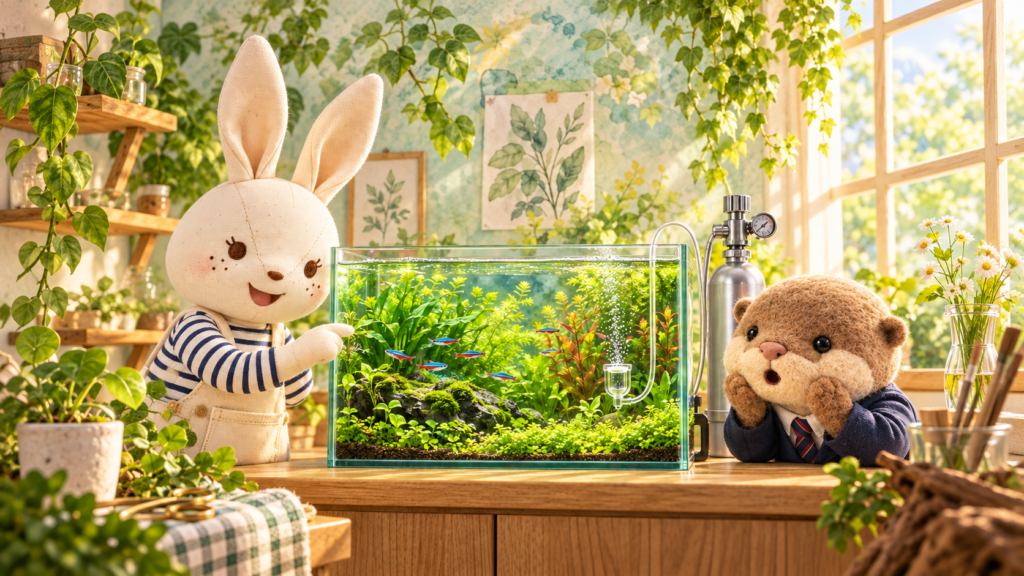 アイのアクアグッズ案内水草水槽のCO₂添加|3つの方式の選び方とおすすめ用品道具の特徴や使い方、選ぶときのポイントをアイが紹介します。記事はコチラ →
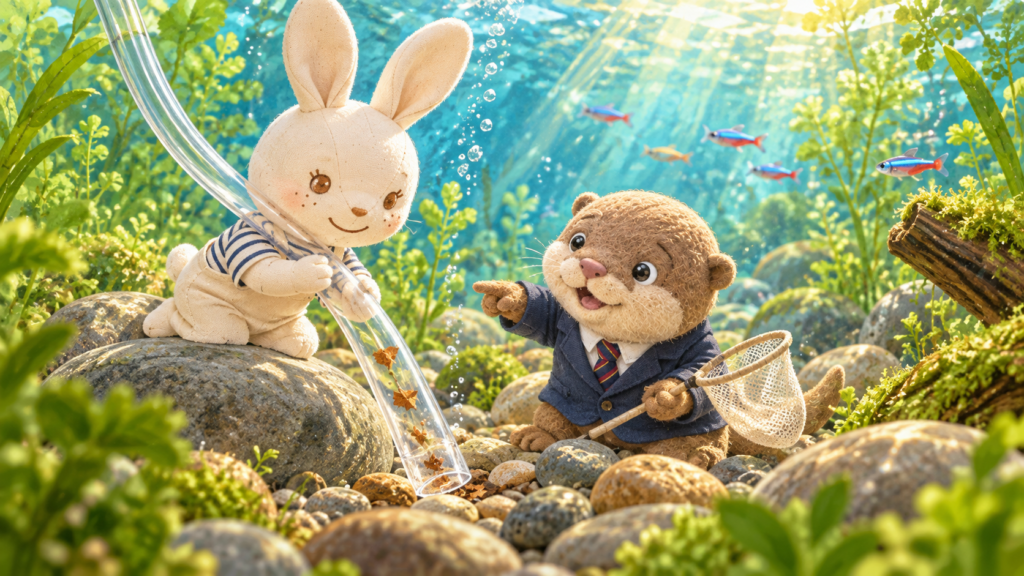 アイのアクアグッズ案内水換え・底砂掃除の道具の選び方|砂利・砂・ソイルに合うクリーナーとポンプ道具の特徴や使い方、選ぶときのポイントをアイが紹介します。記事はコチラ →
さまざまな飼育テーマをご紹介。リンク先の記事には広告・商品紹介が含まれます。
案内・紹介記事一覧へ →分布マップ
本品種は観賞用の改良系統で、自然界に同じ姿で分布するものではありません。基礎となるサザンプラティフィッシュ(Xiphophorus maculatus)は、メキシコのベラクルス周辺からベリーズ北部にかけての大西洋側の河川、水路、湿地などに由来します。
※この地図は、記事に記載された「メキシコのベラクルス周辺からベリーズ北部にかけて」という分布情報をもとにした概略表示です。マーカーは分布域を把握しやすくするために設定した代表地点であり、実際の採集地点・生息確認地点を示すものではありません。
参考文献
-
Integrated Taxonomic Information System (ITIS). “Xiphophorus maculatus (Günther, 1866), TSN 165922.”
分類・学名・分類学的位置の確認。
ITISで確認する -
Froese, R. & Pauly, D. (eds.). FishBase. “Xiphophorus maculatus (Günther, 1866), Southern platyfish.”
自然分布、生息環境、最大体長、水温、pH、硬度、食性、60cm水槽の目安、妊娠期間、産仔数の確認。
FishBaseで確認する -
Potter, H. & Kramer, C. R. (2000). “Ultrastructural observations on sperm storage in the ovary of the platyfish, Xiphophorus maculatus (Teleostei: Poeciliidae): the role of the duct epithelium.” Journal of Morphology, 245(2), 110–129. PMID: 10906746.
メスが交尾後に生存可能な精子を数か月保存できることの確認。
PubMedで確認する -
Merck Veterinary Manual. “Management of Aquarium Fish.”
水質管理、過密回避、新規導入魚の検疫、バイオフィルター、異常個体の管理など、飼育上の基本的な注意点の確認。
Merck Veterinary Manualで確認する -
Merck Veterinary Manual. “Bacterial Diseases of Fish.”
カラムナリス症、Flavobacterium columnare、輸送・水質悪化・温度変化・過密などのストレス要因と疾病管理の確認。
Merck Veterinary Manualで確認する -
国立環境研究所 侵入生物データベース「ムーンフィッシュ(Xiphophorus maculatus)」
日本国内での記録、観賞魚放逐を侵入経路とする情報、自然分布、生息環境、法的扱いの確認。
国立環境研究所で確認する
最終確認日:2026年8月24日




コメント